


Buy This Book


“I know always that I am an outsider; a stranger in this century and among those who are still men,” The Outsider. — H.P. Lovecraft: Gothic Tales
H.P. Lovecraft: Gothic Tales
by H.P. Lovecraft
14+
Score
6.5
64
In this collection of short horror stories, H.P. Lovecraft weaves three unsettling tales that question the very nature of our reality.
The Outsider is a first-person story told by a nameless figure reflecting on his upbringing. He was raised alone in a large, empty, and dark castle. The outside was surrounded by trees, and “the outsider” doesn’t recall ever seeing sunlight. He grew up reading a lot of books, so in the absence of other people, mirrors, or any sense of the outside world, “the outsider” formed his understanding of himself and his surroundings based on the books he read. One day, he decided to climb to the top of the tallest tower in the castle to get a better grasp of what lay beyond the dark forest. What he finds, however, changes his views on his life and his world forever.
The Music of Erich Zann is about a man who moves into a scarcely occupied building on a street called “the Rue d’Auseil.” The man, the first-person narrator, begins hearing strange music from a room above him, and he soon discovers his viol-playing neighbor Erich Zann. Zann’s music is both odd and entrancing, and the protagonist eventually asks Zann if he can watch him play. But as the man spends more time with Zann, the musician and his music seem to grow stranger and stranger.
Finally, The Terrible Old Man is the shortest of the three stories and the only one told via third-person narration. It follows three men, Angelo Ricci, Joe Czanek, and Manuel Silva, as they attempt to rob the titular Terrible Old Man. The man lives as a hermit in “a very ancient house on Water Street” and is the focal point of many rumors and mysteries amongst his neighbors. The robbers hear that the Terrible Old Man is supposedly rich, old, and weak, so they devise a plan to steal his wealth. Their plan goes awry very quickly in the most unexplainable of ways.
Gothic Tales is quintessential Gothic horror. Each story contains the eeriness, uncertainty, and romantic grandeur familiar to the genre. Questions about the supernatural and otherworldly are asked but never answered, leading to the overarching sense of existential helplessness that Lovecraft was perhaps best known for. First-person narration adds a layer of complexity to the first two tales, as the events are described within the unreliable prism of memory.
Grouped, these tales ultimately share a very similar structure: a mysterious man is introduced, strange things occur in his presence, and witnesses are left feeling confused and scared. Due to the formulaic nature of this collection, the strength of these stories lies not in their plot but in their descriptions. The elegant language that Lovecraft uses to describe everything, from the beautiful to the grotesque and frightening, is interesting to read. A dictionary may be helpful in deciphering the meaning of many out-of-fashion words that Lovecraft uses.
The thrill of these stories is meant to be derived from suspense, mystery, and fear of the unknown, but the formulaic tales are ultimately predictable and thus lack suspense. Lovecraft’s signature tone is present, but his “Lovecraftian” monsters (i.e., the infamous Cthulu) are not. Nevertheless, the tales in this collection are a good introduction to Gothic horror and Lovecraft’s works.
Sexual Content
- In The Music of Erich Zann, Erich Zann’s frantic viol playing is described as “a blind, mechanical, unrecognizable orgy that no pen could even suggest.”
Violence
- In The Outsider, when “the outsider” intrudes upon a party, the guests immediately run away screaming in a frightening display of chaos. “Scarcely had I crossed the sill when there descended upon the whole company a sudden and unheralded fear of hideous intensity, distorting every face and evoking the most horrible screams from nearly every throat.”
- In The Terrible Old Man, Angelo Ricci, Joe Czanek, and Manuel Silva plan to violently force the Terrible Old Man to reveal the location of his riches (a supply of “Spanish gold and silver”). They assume that “the screams of a weak and exceptionally venerable [sic] man can be easily muffled.”
- Czanek stays behind and keeps watch while his fellow robbers attack the Terrible Old Man. He hears “hideous screams” coming from the abode. The next day, the bodies of the three robbers, Czanek included, are found “horribly slashed as with many cutlasses, and horribly mangled as by the tread of many cruel boot-heels.”
Drugs and Alcohol
- In The Outsider, “the outsider” mentions “nepenthe,” a drug from Homer’s Odyssey that alters memory.
Language
- In The Outsider, the word hell is used once.
- When “the outsider” sees a monster at the party, it is in reality his own reflection in a mirror. He reaches out his hand and accidentally touches it. He narrates, “When in one cataclysmic second of cosmic nightmarishness and hellish accident my fingers touched the rotting outstretched paw of the monster beneath the golden arch.”
Supernatural
- In The Outsider, “the outsider’s” appearance and backstory are unusual and unexplained, but it is never specified whether he is a supernatural being or a human. Upon seeing himself in a mirror, “the outsider” describes the sight as “not of this world—or no longer of this world.”
- When “the outsider” realizes that he is the ghastly being in the mirror, he resigns himself to the life of a monster. He writes, “Now I ride with the mocking and friendly ghouls on the night-wind, and play by day amongst the catacombs of Nephren-Ka in the sealed and unknown valley of Hadoth by the Nile.” Nephren-Ka is a fictional pharaoh and sorcerer created by Lovecraft.
- In The Music of Erich Zann, Erich Zann’s music has an otherworldly quality: “It was not that the sounds were hideous, for they were not; but that they held vibrations suggesting nothing on this globe of earth.”
- In Zann’s apartment, just as Zann is attempting to write down an explanation for his strange music and activities for the narrator, the two of them hear a far-off music note coming from outside. Zann wordlessly and frightfully responds by picking up his “viol” and playing music “more horrible than anything” the narrator had ever heard.
- While Zann is frantically playing towards the noise coming from the window, the narrator describes almost seeing “shadowy satyrs and Bacchanals dancing and whirling insanely through seething abysses of clouds and smoke and lightning.”
- Zann’s strange back-and-forth with the music coming from his window is followed by intense wind that breaks the windowpanes and blows through the room. The narrator looks outside and sees “no city spread below, and no friendly lights gleaming from remembered streets, but only the blackness of space illimitable.” It seems as though the entire world has disappeared except for Zann’s apartment.
- The narrator hurriedly leaves Zann’s apartment after being unable to snap the musician out of his viol-playing trance. He exits the building and finds that the outside world is exactly as it had been. “There was no wind, and. . . the moon was out.” The supernatural occurrences seen from Zann’s room were gone.
- The narrator of The Music of Erich Zann ends his tale by stating that Zann’s apartment, “the Rue d’Auseil,” does not appear on any map, and no one has ever heard of it.
- In The Terrible Old Man, the supernatural qualities of the titular character are never specified. He does, however, have yellow eyes and unexplainable strength.
Spiritual Content
- In The Outsider, while reflecting on the wretchedness of his life, “the outsider” remarks, “Such a lot the gods gave to me.”
- “The outsider” sees a reflection of his horrifying appearance in a mirror, and he remarks, “God knows it was not of this world.”
- “The outsider” references “the rock tombs of Neb” in his final reflections on his life. Neb is a deity that Lovecraft created.
- In The Terrible Old Man, the Terrible Old Man has a collection of stones in his front yard that “resemble the idols in some obscure Eastern temple.”
by Gabrielle Barke


“I know always that I am an outsider; a stranger in this century and among those who are still men,” The Outsider. — H.P. Lovecraft: Gothic Tales
Latest Reviews

Elephant Secret

Archie Celebrates Diwali
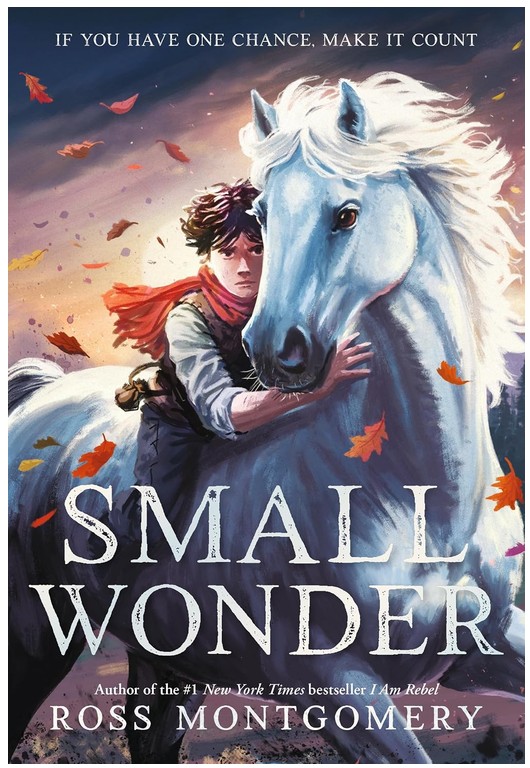
Small Wonder
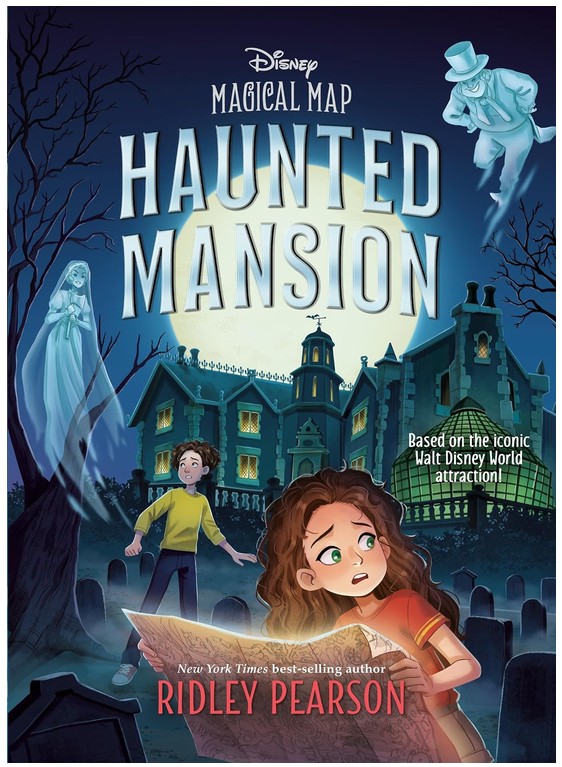
Haunted Mansion

Wabi Sabi

Impact: The Story of the September 11 Terrorist Attacks

Star Wars: The Wrath of Darth Maul

Olive Oakes and the Haunted Carousel

Star Wars: A New Hope: The Life of Luke Skywalker