

Buy This Book
Other books by Peter Mavrikis


“At one time, the Founders considered making the turkey the national bird of the United States.” –The First Thanksgiving
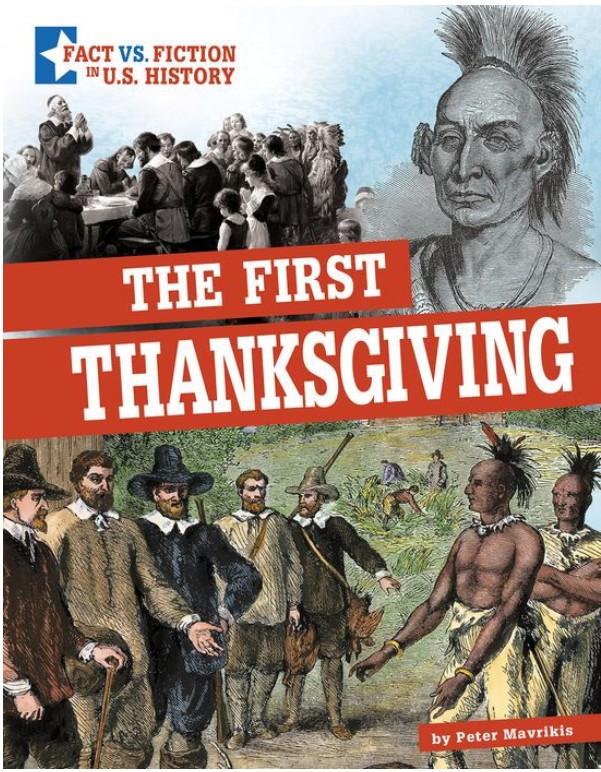
The First Thanksgiving
Fact vs Fiction in U.S. History
by Peter Mavrikis
AR Test
8+
Score
6.0
32
Every November, the United States celebrates Thanksgiving Day. But what actually happened at the first Thanksgiving? And when did it happen? Discover the facts and find out the fiction surrounding one of America’s favorite holidays.
The First Thanksgiving dispels many myths surrounding the Puritans’ emigration to America. Contrary to popular belief, they didn’t leave England to escape religious persecution—they had already moved to Holland, where they worshiped freely. They left Holland because they “hoped to make a good living and profit from the resources and land they had heard about.” The book provides detailed information about their voyage to America and their challenging first winter.
The narrative includes crucial but often overlooked information about the devastating impact Europeans had on Indigenous people. After traders and sailors visited Cape Cod, diseases decimated the native population. “Between 1616 and 1619, many thousands of Indigenous people—as much as 90 percent of the coastal population—may have perished.” Despite this tragedy, “the Wampanoag people taught the Pilgrims how to plant crops, farm, and hunt in the region.”
The Puritans celebrated their first harvest with a feast, but the event looked quite different from what is commonly portrayed. “Some people believe that Thanksgiving has been celebrated every year since the 1621 feast that the Wampanoag and Pilgrims shared. This is far from the truth.” The holiday wasn’t officially recognized nationally until 1941.
Using photographs and compelling facts, The First Thanksgiving explains how paintings and other sources created an inaccurate view of the holiday. Readers will gain a deeper understanding of the Wampanoag people’s instrumental role in helping the English colony survive and celebrate that first harvest.
The book is accessible and engaging because of its visual appeal, including large black-and-white photographs, colorful section titles, and short paragraphs. Fact boxes, a glossary, and a timeline enhance the reading experience while helping readers visualize life for both the Pilgrims and the Wampanoag.
Readers interested in early American history will find this book enlightening. It encourages children to question accepted narratives rather than take facts at face value. After all, “history isn’t set in stone. It has a way of changing over time depending on who’s telling the story.”
Sexual Content
- None
Violence
- Squanto had been kidnapped and enslaved by English explorers, which is why he knew English.
Drugs and Alcohol
- None
Language
- None
Supernatural
- None
Spiritual Content
- King James “believed that all people under his rule should join the Church of England.” Puritans went to Holland “to escape religious persecution.”
- After a good harvest, many cultures celebrated. “Ancient cultures, including the Egyptians, Greeks, and Romans, held special celebrations after a good growing season. They gave thanks to their gods and goddesses. The Pilgrims celebrated Harvest Home in England—a day spent singing hymns, praying, and sharing baskets of food.”
Other books by Peter Mavrikis

“At one time, the Founders considered making the turkey the national bird of the United States.” –The First Thanksgiving
Latest Reviews
The First Thanksgiving
A Sweet Diwali
Windows
Elephant Secret
Archie Celebrates Diwali
Small Wonder
Haunted Mansion
Wabi Sabi

Impact: The Story of the September 11 Terrorist Attacks
