

Buy This Book


"She could smell the wind in her fur and feel her long journey's steps deep in her bones" —Wabi Sabi
Wabi Sabi
by Mark Reibstein
AR Test, Picture Book, Teaches About Culture
4-8
Score
4.5
42
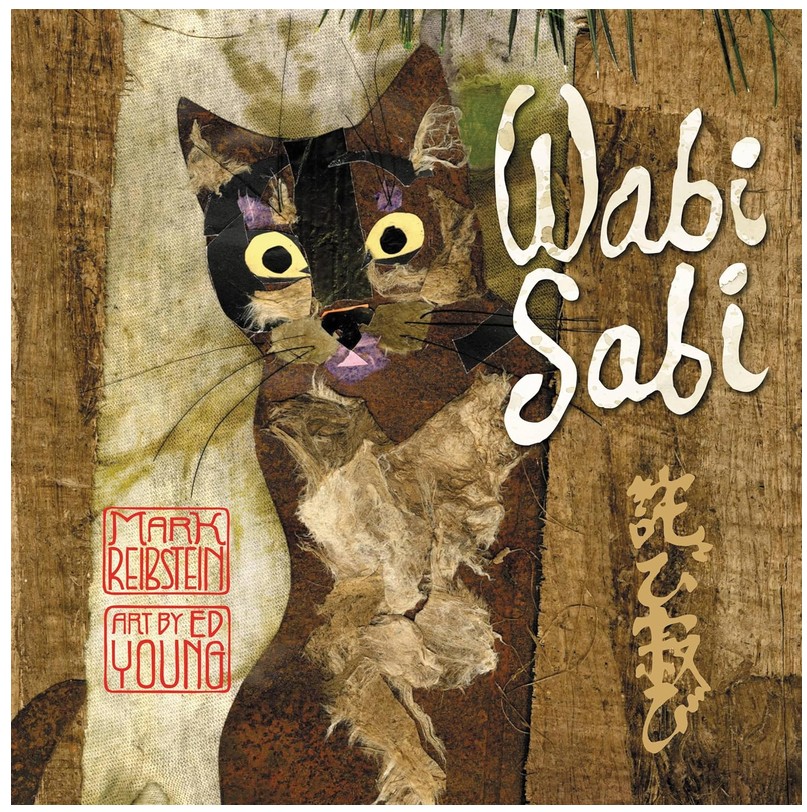
Wabi Sabi is an award-winning picture book that tells the story of an insightful cat living in Kyoto, Japan. Although a few human figures appear in the background, the story focuses almost entirely on a cast of animal characters, a feature that will delight animal lovers. More than a well-paced journey, the book is both poetic and philosophical, offering readers a gentle introduction to Eastern philosophy, primarily Taoism. It also invites readers to embrace new perspectives in unexpected ways. Even the book’s design reinforces this theme: its vertical orientation, rather than the traditional horizontal format, echoes the look of Japanese hanging scrolls and sets it apart from most picture books.
As the story begins, readers are introduced to Wabi Sabi, an inquisitive brown cat who longs to understand the meaning of her name. Her name is more than an identifier—it is a literary device. Wabi Sabi herself serves as a living metaphor for the book’s central philosophy, also known as wabi-sabi, a Japanese aesthetic and way of seeing the world. Her search for meaning unfolds through a series of conversations with other animals, each as self-aware as she is. Wabi Sabi’s search begins at home, where she asks the two animals she lives with to explain the meaning of her name. One offers a harsh response, while the other can only admit, “that’s hard to explain,” prompting her to continue her search elsewhere.
A bird kindly offers Wabi Sabi a solution: “There is someone who can help you. His name is Kosho and he lives on Mount Hiei, to the east.” The bird explains that Kosho, a wise monkey who lives in the forest, understands the meaning of wabi-sabi and can provide the answer the curious cat has been seeking. Determined to uncover the truth, Wabi Sabi embarks on a journey in search of meaning.
At this point, the story begins to feel less like a picture book and more like a timeless fable. Each page is enriched with traditional haiku, Japanese calligraphy, and the author’s original text, creating a layered reading experience that encourages readers to reflect on both the words and the artwork.
Rather than revealing its message all at once, the book allows readers to explore the meaning of wabi-sabi alongside Wabi Sabi, with each encounter adding another layer of understanding. A conversation over tea with the enlightened monkey is one of the story’s most memorable scenes. Its peaceful setting and thoughtful dialogue reflect the very philosophy the characters are exploring. The text explains that wabi-sabi is a way of “seeing the world that is at the heart of Japanese culture. It finds beauty and harmony in what is simple, imperfect. . . and mysterious.” Familiar examples from nature, paired with collage illustrations, help readers visualize and understand the philosophy of wabi-sabi. Ultimately, the monkey distills its meaning into a simple truth that Wabi Sabi—and readers—can easily understand: “Simple things are beautiful.”
Satisfied by her conversation with the monkey, Wabi Sabi begins her journey home. Along the way, she stops at a temple and quietly observes her surroundings. “There was nothing silver there, but she found the place to be very beautiful—in a wabi-sabi kind of way. Although the buildings and gardens were shaped by humans, they were neither fancy nor grand.” In this quiet moment of reflection, the story’s central message comes into focus. Inspired by what she has learned, Wabi Sabi composes poetry, affirming her understanding of her name while inviting readers to arrive at the same realization alongside her.
Wabi Sabi is an excellent choice for readers with an interest in Japanese culture. While its philosophical themes may present a challenge for younger readers, Ed Young’s collage artwork provides rich visual context that supports comprehension on every page. His artwork reflects the book’s central message of finding beauty in imperfection, a cornerstone of Eastern philosophy. Using cut paper, origami, foliage, splattered paint, and photographs, Young creates layered mixed-media collage illustrations that deepen the story’s meaning.
The book concludes with two pages of supplemental information that provide valuable background on the history of wabi-sabi and the art of haiku. Best suited for fluent independent readers, the story will appeal to readers of all ages: younger readers drawn to its inquisitive feline protagonist and older readers who appreciate its poetry, layered artwork, and philosophical themes. Throughout, the book evokes a quiet sense of curiosity, peacefulness, and contemplation, creating an almost meditative reading experience.
Sexual Content
- None
Violence
- None
Drugs and Alcohol
- None
Language
- None
Supernatural
- None
Spiritual Content
- None
by Maureen Lowe


"She could smell the wind in her fur and feel her long journey's steps deep in her bones" —Wabi Sabi
Latest Reviews
Windows
Elephant Secret
Archie Celebrates Diwali
Small Wonder
Haunted Mansion
Wabi Sabi

Impact: The Story of the September 11 Terrorist Attacks

Star Wars: The Wrath of Darth Maul

Olive Oakes and the Haunted Carousel
