
Buy This Book

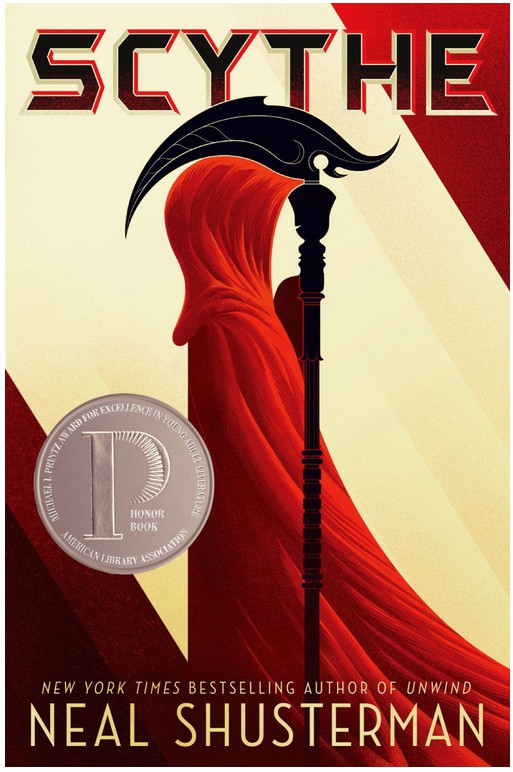
“The ending of human life used to be in the hands of nature. But we stole it. Now we have a monopoly on death. We are its sole distributor,” Scythe Curie. –Scythe
Scythe
Arc of a Scythe #1
by Neal Shusterman
AR Test, Must Read, Strong Female
12+
Score
6.5
446
Citra Terranova and Rowan Damisch live in a world where natural death has been eradicated. People who die are simply revived, and aging can be reversed. In place of natural death are scythes — humans who work as professional cullers, choosing people to kill, otherwise known as “gleaning.” These days, more and more scythes are needed to combat overpopulation, so scythes pick apprentices to train. But neither Citra nor Rowan expected Honorable Scythe Faraday to make them both his apprentices. They don’t want to be scythes, but Faraday believes that’s why they’d make great ones. The catch? Only one will become a scythe. The other will return to their old life. It’s a competition for a role neither want.
Soon enough, Citra and Rowan are learning the art of killing by training with weapons and memorizing poisons, studying the history of the world, and witnessing Faraday’s gleanings. But when it comes time for their first of three apprentice tests, both Citra and Rowan fail. As a result, one scythe argues that Faraday’s apprentices aren’t taking the competition seriously enough and then successfully rallies to add a deadly stipulation to the apprenticeship: the one who becomes a scythe will have to glean the other apprentice. Citra and Rowan are horrified, as is Scythe Faraday, who self-gleans as a result. This act of suicide should release his apprentices, stopping the competition. But it doesn’t, as two scythes step in to be Citra’s and Rowan’s mentors.
Citra is sent to study with Scythe Curie, and Rowan with Scythe Goddard. Curie is an old-guard scythe like Faraday, but Goddard is a controversial, flamboyant new-guard scythe who is intent on bending the Scythedom’s rules for his gain. Whichever apprentice wins will have a huge impact on the Scythedom, which is struggling from infighting between new and old guard scythes. As training continues, Citra makes an alarming discovery — Faraday might not have self-gleaned. He may have been murdered.
On the other hand, Rowan gets an inside look at just how far Goddard is willing to go to get what he wants. As Citra and Rowan peel back the layers of the Scythedom, they realize the corruption is beyond what anyone expected. What really happened to Scythe Faraday? Is Goddard breaking scythe law—and what’s his final goal? What will happen to the Scythedom? And of course, who will win the apprentice competition?
Citra and Rowan are very different characters, providing interesting contrasting perspectives. Citra is a driven, outspoken eldest daughter with a competitive spark, while Rowan is a sly but unexpectedly empathetic forgotten middle child who keeps to himself. Even though they live in a world drastically different from the reader’s world, they feel like characters readers could meet in high school. Plus, the fact that neither wants to be a scythe, and is appalled by the act of killing, mirrors readers’ thoughts, adding another element of relatability. Citra and Rowan are both easy to root for, which adds complexity to the read, as readers may struggle in deciding who they want to win the competition.
Scythe’s side characters, particularly Curie and Goddard, shine as contrasting perspectives to Citra and Rowan, challenging each to their core. Curie’s wise perspective as an older scythe who was flashy in her youth guides not only Citra but readers, offering critical moral lessons. However, she’s far from boring, bringing a calculated strength that is both engaging and surprising. Goddard, on the other hand, serves as a striking, charismatic, and manipulative villain whose sadism and god-complex put him at direct odds with Curie. As an avatar of human corruption, he drives much of the book’s suspense forward and becomes the ultimate villain readers love to hate.
The worldbuilding is extensive, with many different elements for readers to understand, but Shusterman makes the concepts easily digestible through explanations dispersed throughout the story rather than one large info dump at the beginning. Shusterman wastes no time at the start, throwing readers right into the action, which prevents the slow build-up that often plagues fantasy novels. The concept of scythes is incredibly interesting and only grows more intriguing as readers learn about their complex hierarchy and moral codes. Scythe‘s rich lore makes the world feel authentic, and Shusterman couples these fascinating concepts with an engaging plot and compelling characters to create a tight narrative that readers won’t want to leave — it’s a definite page-turner.
Scythe is darkly exciting, with grim humor that makes its heartfelt moments unexpectedly endearing and highly impactful. The book is well-paced, with a natural flow that guides readers between eventful action scenes and contemplative lulls. The twists are appropriately placed and induce shock. The ending isn’t one readers will see coming, but it feels completely fitting.
Shusterman is not subtle about his message, and his directness effectively highlights how this world is not the utopia it appears to be and how perfection remains elusive. He includes journal entries from scythes that question whether immortality is beneficial and what drives the will to live. These entries also highlight the corrupting nature of power and how humans often abuse it, address issues with governing bodies, and explore the inevitability of human nature. These themes, along with others such as greed, class divisions, information abuse, and the dangers of operating above the law, are demonstrated through the characters’ actions. The main villains even wear bejeweled robes, directly marking them as problematic. This straightforward approach to messaging is both refreshing and insightful while still allowing for critical thought and surprise.
Scythe is chilling in the best way possible, providing dark, thrilling entertainment while bluntly holding up a mirror to contemporary society through its dystopian landscape. Its relentless villains are as compelling as its strong but skeptical protagonists, and the interactions between friend and foe create excellent tension. The concept of scythes is fascinating, and the plot successfully twists and turns, maintaining suspense throughout the novel. Shusterman uses the idea of situations so horrifying you can’t look away to drive home serious messages while delighting audiences with a grim, intriguing, and riveting story.
Sexual Content
- Rowan comes into Citra’s room to check on her after a rough day. Rowan thinks romantic thoughts about Citra, and then she kisses him. “Rowan wanted to kiss her. There was no denying that anymore. He had suppressed the urge for a week. . . then, to his surprise, [Citra] lurched forward and kissed him.”
- Rowan stares at a girl in a bikini at one of Scythe Goddard’s parties. “Rowan realized a moment too late that he was staring. She grinned and he blushed, looking away.” She later gives him a massage.
- A member of Scythe Goddard’s posse, Scythe Rand, touches Rowan’s body and says things to him with sexual implications. For example, “Scythe Rand constantly slapped his glutes, threatening all kinds of lewd liaisons with [Rowan] once he was of age.”
Violence
- The very concept of scythes as professional, sanctioned killers is gruesome. This means much of the book features violence, killing (sometimes in mass quantities), and death. Some of the deaths in the book aren’t permanent, however.
- As part of their scythe training, Citra and Rowan learn “Black Widow Bokator—a deadly version of the ancient Cambodian martial art developed specifically for the Scythedom.” Bokator appears many times as part of the scythe training regimen.
- Rowan’s friend Tyger is a “splatter,” someone who repeatedly kills themselves for fun. Rowan goes to visit Tyger in the hospital after Tyger is revived from another splat. “Tyger Salazar had hurled himself out a thirty-nine-story window, leaving a terrible mess on the marble plaza below.” Splatting is mentioned a variety of times.
- A scythe shows up at Rowan’s school to glean his classmate Kohl. Rowan holds Kohl’s hand while the scythe gleans Kohl by electrocution. “The scythe pressed the [electrified] paddle to Kohl’s chest. Rowan’s vision went white, then dark. His entire body convulsed. . . It might have been painless for Kohl, but not for Rowan. It hurt. It hurt more than anything.”
- Scythe Faraday gleans a woman with a deadly pill as Citra and Rowan watch. “Scythe Faraday placed the pill on her tongue. She closed her mouth, but didn’t bite it right away. . . Then the slightest crunch. And she went limp.”
- Scythe Goddard and his posse brutally glean an entire plane of people with many kinds of weapons. One victim, a businessman, commits suicide on Scythe Goddard’s sword. “[Goddard’s friends] drew weapons and began the awful gleaning. . . [Goddard] pulled out his own blade but the businessman was ready. The moment the blade was drawn, he thrust himself forward onto it.”
- Goddard’s plane gleaning isn’t shown directly, but after the man’s suicide, the scythes pull out a variety of weapons in preparation, including, “Knives of various lengths. Guns,” “a machete” and other unnamed weapons. The exact number of deaths isn’t stated, but the flight was full and everyone on board — passengers and staff — are gleaned. This scene lasts five pages.
- Scythe Goddard and his posse mass-glean a food court. “Three of [the scythes] pulled out weapons that glistened even more than their bejeweled robes, and the fourth pulled out a flamethrower. ‘This food court has been selected for gleaning,’ their leader said. And then they began their terrible mission.” Their slaughter isn’t explicitly described.
- A young girl, Esme, attempts to escape the food court gleaning. While hiding, she sees “the man who had served her pizza slumped over the counter, dead.” Goddard and his crew leave Esme as the sole survivor. The scene lasts two pages.
- When Citra and Scythe Faraday go to glean a man, he fights back. “When Citra and the scythe entered the room, he ambushed them. . . he rejected his gleaning and fought the scythe.” Citra subdues the man, and then Faraday “slit the man’s throat.” Faraday’s jaw is broken, but Citra is fine. The scene lasts two pages.
- Scythe Curie performs a fast gleaning on an unsuspecting man. “Then [the man] suddenly gasped — because Scythe Curie’s blade had already been thrust up beneath his rib cage and into his heart.”
- Rowan’s mentor, Scythe Goddard, and three other scythes nearly beat Rowan to death. They torture Rowan, ensuring he feels the maximum pain by turning off his “nanites,” which are pain blockers put in everyone’s bodies. They believe that he needs to feel pain to learn how to be a scythe. “Scythe Chomsky. . . swung his fist, connecting with Rowan’s cheek so hard, he spun around, lost his footing, and fell to the dusty floor.” Rowan sustains multiple broken ribs, and his entire body is swollen and bruised. This scene lasts five pages.
- In the backyard of his borrowed mansion, Scythe Goddard orders Rowan to practice gleaning by temporarily killing 12 paid volunteers. “[Rowan] yelled and screamed and grunted with every thrust, slice, and twist. He had trained well. The blade sunk in with perfect precision.”
- Scythe Goddard and his posse perform a mass gleaning in an office building. “Blades and bullets and flames. The office was catching fire. . . The doomed were caught between fire and water, and the deadly sights of four master hunters. No one stood a chance.” Rowan helps a couple of workers escape. This scene is described over two pages.
- Citra and Rowan are forced to fight in a Bokator match, which they both try to lose. Rowan purposely disqualifies himself by making an illegal move and temporarily killing Citra. “[Rowan] flung his body into the air, twisting her head the other way. Her neck broke with a loud and horrible snap, and darkness came over Citra like a landslide.” This scene lasts three pages.
- Scythe Goddard and his posse mass-glean a cult, gleaning about 100 people. One of the posse members, Scythe Volta, gleans a classroom of children and then decides to self-glean in regret and grief. “Rowan realized the blood on Volta’s hands was not from his victims. It was from Volta’s own wrists. The gashes were jagged and long. They were made with very clear intent.” This scene is described over five pages.
- Rowan stands up against Goddard and his posse’s actions by beheading Goddard and fighting and killing posse-members Rand and Chomsky. He then sets the building they’re in on fire. “[Rowan] stepped back, withdrew his sword from Goddard’s gut, and swung it in a broad, sweeping arc that took off Goddard’s head in a single blow.” This scene is described over four pages.
Drugs and Alcohol
- Scythe Volta, one of Scythe Goddard’s friends, forcibly gives Rowan a glass of champagne. “Rowan took a sip, wondering if an underage scythe’s apprentice could get marked down for drinking. Then he remembered that such rules didn’t apply to him anymore. So he took another sip.”
- Rowan is taken to a wine cellar for the “pain training,” where his mentor Scythe Goddard and his posse torture him. “There was a wine cellar in the basement of the main house. Hundreds, perhaps thousands of bottles of wine rested in the brick alcoves.” The wine isn’t consumed.
- After Rowan defeats Citra in Bokator, Scythe Goddard breaks out the champagne to celebrate. “[Goddard] called for the butler to bring champagne and glasses for everyone. . . so they could toast Rowan’s audacity.” Rowan drinks the champagne.
- After Rowan escapes a fire, he talks to High Blade Xenocrates, the leader of Mid-Merican scythes. “A servant arrived with champagne and finger sandwiches.” Rowan does not drink.
Language
- Profanity is used occasionally. Language includes damn, hell, and ass.
Supernatural
- None
Spiritual Content
- In one of her journal entries, Scythe Curie reflects on how religion became obsolete when death became a thing of the past. “I think about religion, and how, once we became our own saviors, our own gods, most faith became irrelevant. What must it have been like to believe in something greater than oneself?”
- In the Scythe universe, groups called Tone Cults exist, which are pseudo-religions whose members worship “wavelengths and vibrations that are beyond the limits of human sight.” They have priest-like leaders and monasteries where they practice their beliefs with tuning forks, using them to create sounds. Their beliefs are “a hodgepodge of mortal age faiths slapped together.”
by Sarah Leberknight



“The ending of human life used to be in the hands of nature. But we stole it. Now we have a monopoly on death. We are its sole distributor,” Scythe Curie. –Scythe
Latest Reviews
Elephant Secret
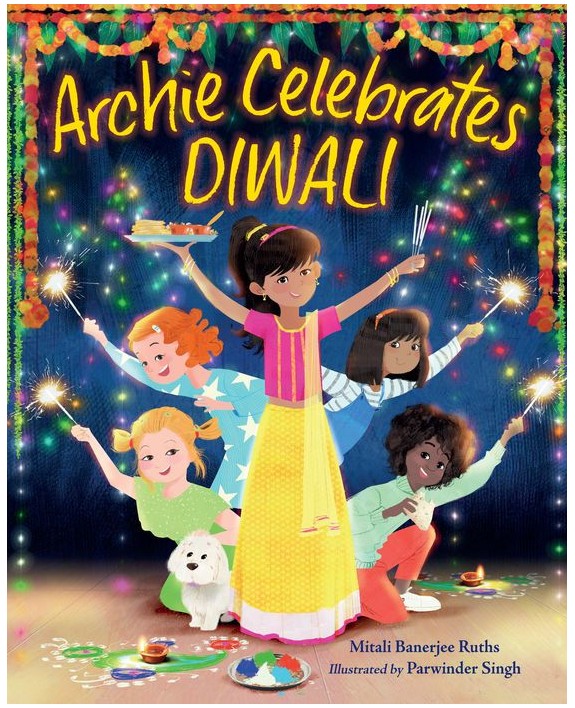
Archie Celebrates Diwali
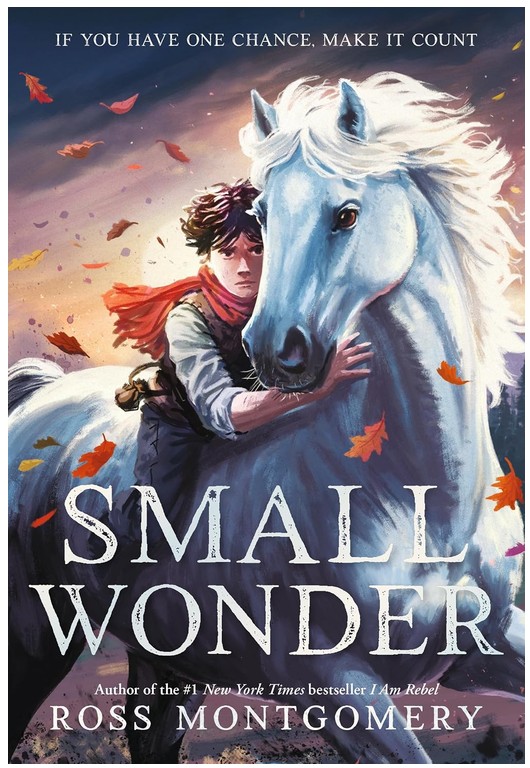
Small Wonder
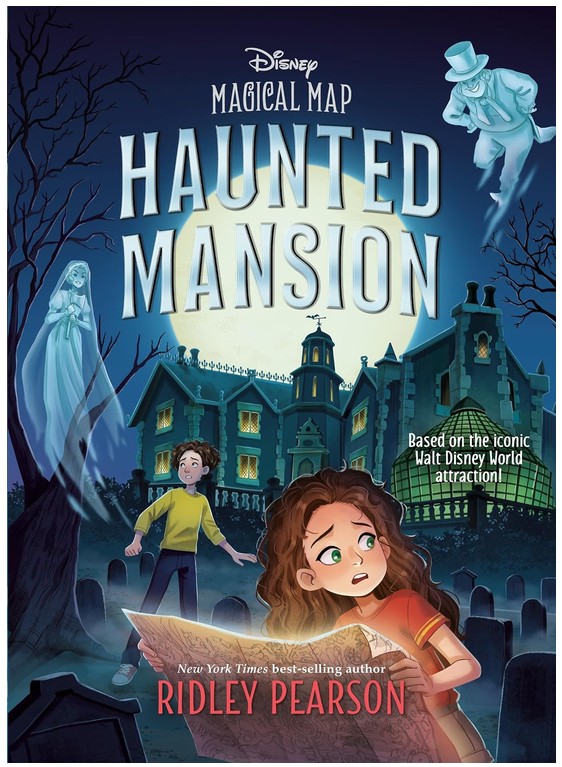
Haunted Mansion

Wabi Sabi

Impact: The Story of the September 11 Terrorist Attacks

Star Wars: The Wrath of Darth Maul

Olive Oakes and the Haunted Carousel

Star Wars: A New Hope: The Life of Luke Skywalker