

Cloth Lullaby: The Woven Life of Louise Bourgeois
by Amy Novesky
AR Test, Picture Book
5-7
Score
5.7
40
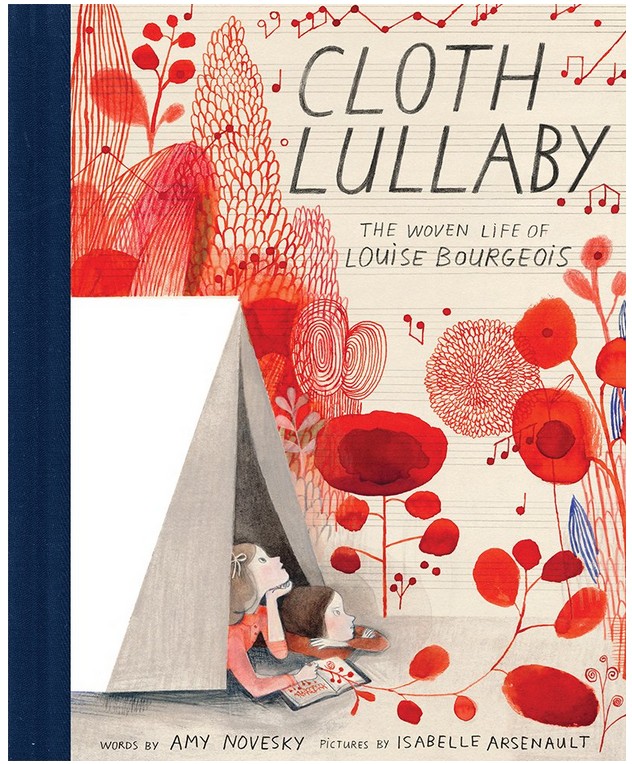
Imagine growing up in a grand Parisian home that also functions as a tapestry repair workshop along the banks of the Seine River in the 1940s. Cloth Lullaby follows Louise as her life gradually unfolds, offering insight into how a world-renowned artist takes shape. Through quiet, observant moments, readers watch a young girl grow up and eventually leave her childhood home to attend college in Paris.
The story of Louise Bourgeois demonstrates a rare level of sophistication for a children’s book through its use of literary devices such as allegory, along with the selective inclusion of a few French terms. At its core, the narrative honors the bond between mother and child, showing how loss reshapes a life and leads to a creative path of expression.
A central thread in the story is Louise’s mother. Readers can picture her repairing fabric on a summer afternoon and sense the care she brings to Louise’s life. As the text notes, “She loved to work in the warm sun, her needle rising and falling beside the lilting river.” When Louise turns twelve, her mother begins teaching her the family trade. Through lessons in form and color, readers glimpse the start of Louise’s lifelong artistic path and her understanding that textiles can communicate meaning: “Some bore elaborate patterns, others told stories.”
Cloth Lullaby unfolds with a steady, flowing narrative structure, yet attentive readers begin to notice underlying discontent. Louise’s father is largely absent from her life. When the text notes that “he was always leaving, which made Louise so mad, she threw herself into the river,” the phrasing is striking and unsettling. Within the context of a picture book, this moment reads as hyperbole, yet it signals deeper emotional unrest.
Difficult themes such as neglect and loss are handled gently, though adult readers may notice subtle cracks in what appears to be an ideal childhood. For young readers, the story returns to comforting moments, such as Louise pitching a tent with her siblings and falling asleep to “the rhythmic rock and murmur of river water.” The “big house on the river” serves not only as a home but also as a source of creativity and sustenance, as the tapestry studio, surrounded by gardens, “provided flowers and fruit, a lullaby and a livelihood.”
“Louise’s mother was her best friend.” This single line foreshadows the devastation Louise experiences after her mother’s death. While studying mathematics in college, grief redirects her path. Heartbroken, “she abandoned mathematics and turned to painting, applying the lessons she’d learned so far to art.” In this moment, the artistic life of Louise Bourgeois begins to take shape, leading eventually to her monumental, emotionally charged sculptures.
Through allegory, the spider becomes a symbolic stand-in for Louise’s mother and a lasting source of inspiration. As the text explains, “Her mother was not unlike a spider, a repairer of broken things.” Bourgeois’s best-known works, her towering spider sculptures, some reaching thirty feet tall, can appear frightening at first glance but become deeply meaningful when viewed through this lens. As the text describes, “she missed her mother so much she sculpted giant spiders made of bronze, steel, and marble.” She named them Maman, meaning mother.
Alongside these monumental works, Louise also created smaller-scale art. “She sewed. She stitched. She reworked. She wove.” She stuffed stockings to form cloth sculptures and figures, sewed colorful spirals and circular webs, and made cloth drawings and books, continuing the tactile traditions she learned at her mother’s side.
As the story unfolds over time, select French words appear, such as araignée (spider) and rentrayage (to reweave through a hole in fabric). The text also introduces weaving terms of the trade, including warp and weft, with the warp referring to the fixed vertical strands on a loom and the weft to the horizontal threads that interlace with them. These specialized terms are made accessible through clear context and accompanying illustrations that visually reinforce their meaning.
In conclusion, Cloth Lullaby is best experienced like a work of art, inviting readers to engage with its abstract, symbolic, and interpretive qualities rather than a strictly linear narrative. The last three pages of the Author’s notes add valuable context to Louise Bourgeois’s life, describing the recognition she began to receive. Her career culminated in a retrospective at the Museum of Modern Art at age seventy-one. Bourgeois remains one of the most renowned modern artists of her generation, and Cloth Lullaby offers young readers a meaningful introduction to art as a way of understanding personal history, loss, and creativity.
Sexual Content
- None
Violence
- None
Drugs and Alcohol
- None
Language
- None
Supernatural
- None
Spiritual Content
- None
by Maureen Lowe
Other books by Amy Novesky

"Weaving was her way to make things whole." —Cloth Lullaby
Latest Reviews
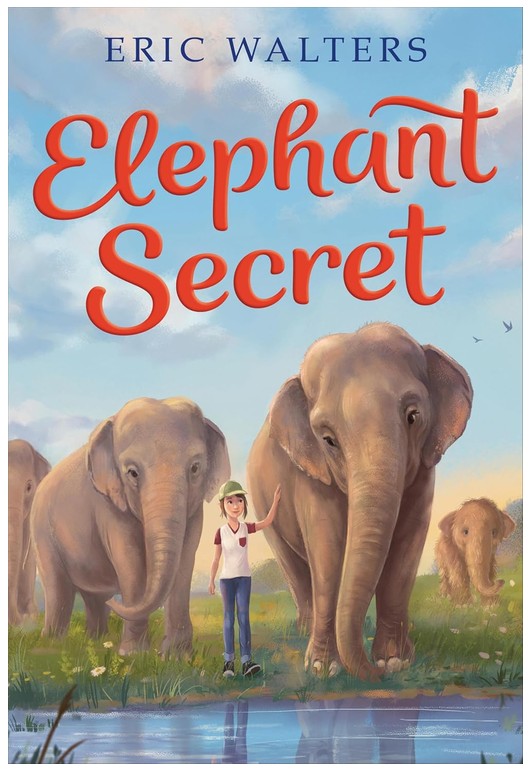
Elephant Secret
Archie Celebrates Diwali
Small Wonder
Haunted Mansion
Wabi Sabi

Impact: The Story of the September 11 Terrorist Attacks

Star Wars: The Wrath of Darth Maul

Olive Oakes and the Haunted Carousel

Star Wars: A New Hope: The Life of Luke Skywalker