
Buy This Book


“Life is short, sweetheart. You turn around, and it’s over. Why make yourself miserable?” Yevgeny’s grandmother. –I Wish I Didn’t Have to Tell You This
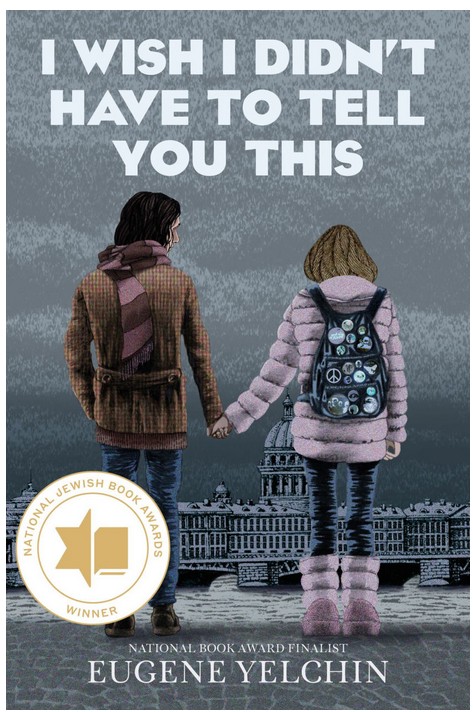
I Wish I Didn’t Have to Tell You This
by Eugene Yelchin
AR Test, Teaches About Culture
14+
Score
3.8
432
Yevgeny Yelchin is done with the Soviet Union. As a young artist trapped in Leningrad in the early 1980s, Yevgeny’s creativity feels stifled, and he worries for himself and his friends who make art that the Party and the KGB wouldn’t approve. Yevgeny is also obsessed with all things American. He dreams of donning their cool aesthetic of blue jeans and nice jackets and running away to a country that has more to offer him than just censorship and brutal winters. One evening, his friend Mark invites him to a secret exhibition that promises the presence of Americans. Excited by the mystery and intrigue, Yevgeny is desperate to have his work shown. Yet when he arrives, the exhibition is promptly raided by the KGB, and there is only one American—Libby, a college student his age studying abroad in the USSR.
Though Yevgeny is annoyed by the exhibition’s shutdown, he’s soon fascinated by Libby, whom he admires for her strong opinions and bravery in the face of Soviet propaganda and censorship. As Libby gives Yevgeny feedback on his artwork, she criticizes the Soviet government. They date for a few months, during which Soviet operations in Afghanistan worsen, and Yevgeny comes under more scrutiny for his art. Libby offers to marry him so they can go to the US together. However, as soon as they tie the knot and her study abroad ends, Yevgeny is left waiting for his exit visa from the USSR, which is intent on keeping its citizens there as long as it can. Inspired by Libby, Yevgeny refuses to censor his art to comply with government regulations, making him more vulnerable to being shipped off to Siberia.
Overall, the story is a detailed, complex examination of life in the USSR in the early 1980s, following a protagonist who is easy to root for and entertaining to learn about. Both Yevgeny and Libby are incredibly brave and ambitious characters who inspire the reader with their integrity and determination. Yevgeny is an empowering character who grows when challenged, leads by example and stands by his own moral principles. Libby is the one who challenges him, strengthening his pride in his art and his beliefs as he becomes increasingly subject to KGB surveillance. Even after being thrown into an asylum for disrespecting the USSR, he fights back and refuses to answer questions. The theme of overcoming obstacles enriches their romance, giving the reader powerful dilemmas and the occasional light romantic scene.
The art further emphasizes the story’s obstacles through its color scheme. This black-and-white graphic novel has well-organized panels that help the story’s flow. It is filled with beautiful illustrations that highlight the characters’ best features and the intriguing settings of Leningrad, Siberia, and Moscow. The panels alternate between close-up and wide shots, designed to capture the scene and the characters’ expressions perfectly. The plot is straightforward and fast-paced. The language is comprehensible, though for younger readers who know less about Soviet history, the numerous references to it might be confusing.
Readers who enjoy spy thrillers and historical fiction, complete with creative illustrations, will love I Wish I Didn’t Have to Tell You This. This book is filled with people who try to do the right thing in a world embroiled in international power struggles, censorship, and oppression. All told, this is a beautiful story with moments of unifying outrage.
Sexual Content
- On a date, Libby asks Yevgeny how he feels about everything, especially their budding relationship. Yevgeny doesn’t know how to respond, so Libby kisses him and cradles Yevgeny’s face. They are shown through the window of a train car, from the waist up, in a single frame.
- In an intense conversation about Yevgeny’s future in Russia, Libby suggests that they marry. In response, they kiss. The frame focuses on them from a bird’s eye view; Yevgeny’s arms are around Libby, and they’re pressed up against one another.
- When Yevgeny returns from Siberia, Libby finds him. Seeing each other for the first time in years, they kiss. Their close-up takes up the whole page. Yevgeny holds her face, and the reader can see their lips meeting.
Violence
- While discussing Soviet operations in Afghanistan, Yevgeny’s mother insists with a serious and solemn face that if he’s drafted, she’ll kill herself. “If they send you to the war, Yevgeny, I want you to know. . . I will kill myself.”
- When a next-door neighbor gets a letter about her son missing in action, Yevgeny’s grandmother explains that “We know what missing means. . . killed! Killed! Missing means killed in their language.” This refers to the Soviets’ operations in the Middle East. No violence is pictured.
- Yevgeny tells his American girlfriend, Libby, about a neighbor who died. The neighbor “used to beat me. . . He’d punch me until my nose bled, and he said he’d keep beating me unless my family leaves for Israel.” No violence is pictured.
- Since the story takes place in Soviet Russia, there are many references to the KGB hurting, killing, or torturing people. For example, Yevgeny is picked up by a Party man who warns him about hanging out with artists. The man says, “Word gets around. . . those so-called artists make certain people upset, and when certain people get upset, certain accidents happen. . . one such artist became a little too sure of himself. . . next thing he knows, his studio is on fire. With him inside.” No violence is pictured.
Drugs and Alcohol
- When explaining why he likes Americans, Yelchin cites their aesthetics, particularly when smoking cigarettes. “All American tourists looked like rock stars to me, rolling into our city in huge, shiny buses, cool in their blue jeans and fancy jackets, chewing peppermint gum, and smoking menthol cigarettes.”
- After Yevgeny graduates from the Academy of Theater Arts, he goes to a party with many bottles of alcohol and empty wine glasses on a table. It is implied by the way everyone is dancing that they have been drinking, but it isn’t explicitly depicted.
- While in the Siberian asylum, Yevgeny is told to swallow unlabeled pills even though he doesn’t initially have a medical condition. He is later depicted as exhausted and increasingly thin and gaunt.
- Later, Yevgeny tries to refuse the pills, so they inject him with an unlabeled serum. They hold him down while they inject him. The serum weakens and paralyzes him.
Language
- Profanity is used frequently and includes words like idiot, crap, and ass.
Supernatural
- None
Spiritual Content
- Trying to find a way out of the USSR, Yevgeny’s friend Mark suggests he emigrate to Israel, since they’re both Jewish. Mark also says, “Why are you such a terrible Jew, Yelchin? Our home is the Holy Land, the Promised Land of Israel.” Mark wears a yarmulke throughout the novel. There are numerous similar references to Judaism.
by Kate Schuyler


“Life is short, sweetheart. You turn around, and it’s over. Why make yourself miserable?” Yevgeny’s grandmother. –I Wish I Didn’t Have to Tell You This
Latest Reviews
I Wish I Didn’t Have to Tell You This
On Pins and Needles

American Dog: Poppy
Time Cat
Under the Surface
Star Wars: The Rise and Fall of Darth Vader
Lucky Enough
The Disappearing Otters
When Objects Talk: Solving a Crime with Science