
Roomies

Senior year is over, and Elizabeth is more than ready to leave her New Jersey town behind for Berkeley. When she receives an email from Berkeley Housing with her roommate assignment, she immediately reaches out to introduce herself to Lauren. Lauren is just as eager to escape—in her case, from the stress and chaos of her large family. But Elizabeth’s enthusiastic message lands poorly because Lauren had been hoping for a single room where she could finally have some peace and quiet. 

The two girls get off to a rocky start, but their emails gradually become more personal. Lauren reveals she’s the eldest of six, while Elizabeth shares that her parents are divorced and her father left her and her mother to live in San Francisco. Over the summer, as their worlds shift rapidly with new boyfriends and goodbyes to old friends, they begin to realize they’ll need to rely on each other through this pivotal transition. 

Lauren and Elizabeth are extremely relatable protagonists, as Zarr captures the complexity of the emotions surrounding the end of high school and the first time leaving the nest. For example, Lauren is desperate for her own life after helping parent her five siblings, yet she’s afraid of change. She’s afraid to leave her family, and she’ll miss being part of their daily lives. Elizabeth is unhappy with her life because of the growing distance between her and her friends and boyfriend. Additionally, Elizabeth has a complicated relationship with her mother, who often behaves in an immature way. Lauren and Elizabeth are flawed characters who make plenty of mistakes and struggle to communicate. However, they remain endearing because the strife they endure is part of growing up, which readers will relate to.    

Much of the emotional conflict and fear about change that Lauren and Elizabeth experience stems from the new men in their lives, Keyon and Mark. When Lauren meets Keyon, she’s unsure whether to start a relationship. But Keyon is sweet and confident, and the two slowly fall in love. Mark enters Elizabeth’s life and becomes a steadying presence, though his and Elizabeth’s love seems too fast to be real. He also has a strained relationship with his father, which allows him to give Elizabeth an outside perspective on her parental issues. Zarr accurately captures the emotional turmoil of eighteen-year-olds navigating new experiences.   

Roomies is a fantastic story about growing pains from two different perspectives and environments. Lauren and Elizabeth experience first love at the same time their other friendships are drifting apart. They’re afraid to be vulnerable with each other, but soon learn they can lean on each other to get through the last summer before college. Lauren discovers she can spread her wings without fear of leaving her family behind, while Elizabeth learns to appreciate her mother. Zarr emphasizes the importance of understanding different cultures and views, as Lauren and Elizabeth initially misunderstand each other, but eventually expand their worldviews and find acceptance in one another. 

Zarr’s ending is one of hope and excitement for the roommates’ futures. Lauren and Elizabeth have issues throughout the book that escalate to Elizabeth requesting a roommate change. However, the two girls resolve their conflict and become honest about their feelings. This exchange solidifies their friendship and their desire to live together through the ups and downs of freshman year. They leave their families behind, knowing they will always be there to support them, freeing them both to live their own lives. Roomies explores the complexities of growing up, including making friends and leaving others behind. It teaches those transitioning to college that all their complicated feelings are normal and that the right “path” is to trust themselves and their decisions. 

Sexual Content 

  • After seeing a red lipstick mark on a cup, Lauren’s dad jokes that the Garfield on his mug “has been violated.”  
  • While hanging with her friends and their boyfriends, Elizabeth decides to “kiss [her boyfriend] right there on the beach.” 
  • Lauren’s coworker, Keyon, stretches, and his shirt rises. Lauren tries not to “ogle his abs, regardless of their excellent condition.” 
  • Elizabeth’s boyfriend jokes that she “doesn’t put out that easily.”  
  • Elizabeth meets Mark at work, and she notices “the way his shorts hang a little bit too low on his hips.” Elizabeth also notices that Mark’s lip “sort of puckers when he talks and for sure when he kisses, too.” 
  • At the party, Elizabeth’s friends only talk about sex. “Justine was thinking of doing it with Danny that night, and Morgan and Mitch, who’ve already done it, kept talking about how it wasn’t a big deal.” 
  • Elizabeth calls her friend Justine a “lush who is hell-bent on losing her virginity.” 
  • Lauren is at a party where she gets really close to Keyon, and they kiss. Lauren describes it as “lusty. . . sometimes you want to make out with someone, anyone.” 
  • Elizabeth is worried about what Lauren will think because “I kissed a guy I barely know even though I already have a boyfriend.” 
  • Lauren is responding to Elizabeth’s email about pressure to have sex and thinks, “I can keep taking care of my own needs the few times I have the interest and the privacy.” 
  • Elizabeth and a boy she’s been dating, Alex, talk about their relationship, but Alex wants to give a “last-pitch plea for me to sleep with him to ‘deepen’ and ‘solidify’ our relationship,” which results in them breaking up. 
  • Mark comes over to Elizabeth’s house after the breakup, and Elizabeth is wearing a “tank [that] is sort of loose and I’m not wearing a bra and he seems incapable of not noticing.” 
  • While Mark is visiting, he and Elizabeth end up “kissing and our arms are entangled and we’re moving toward the wall.” They eventually stop so that Mark can run an errand for his mother, but he assures her they can meet up later. 
  • Elizabeth is nervous about a swim park date with Mark because they have been “kissing a lot, but always with clothes on. Lifted and pushed aside some but still on.” 
  • While driving and talking about the future of their relationship, Mark says he wants to “pull over and kiss some sense into [Elizabeth].” 
  • After a successful dinner with Keyon’s parents, “he kisses [Lauren] like [she’s] never been kissed before.” 
  • Elizabeth and Mark are about to have sex, but they are both nervous. “I ask, ‘Have you ever… before?’ ‘Once.’ He takes my hand. ‘For the wrong reasons. And it was pretty bad and I didn’t handle it all especially well so I decided to wait for the right reasons.’ ‘What if it’s bad again?’ I ask, looking at him. ‘Well, we’ll be bad together.’” They reassure each other of their feelings and walk into the motel together.  
  • Elizabeth tells her friend Justine about giving her virginity to Mark and how she “did it again, too. The other night. Under the boardwalk!” 
  • Mark comes over while Elizabeth is packing for college and “slides his arms around me and kisses me and kisses me.” They stop, and Mark helps her pack. 
  • Elizabeth jokes that she might bring “birth control” to college.

Violence 

  • None 

Drugs and Alcohol 

  • Elizabeth goes to a party where “everyone but [her] got annoyingly drunk.” 
  • Elizabeth ends up at the party alone, “holding a beer [she] wasn’t even drinking.” 
  • Mark comes to visit Elizabeth and offers her a beer, which she wants to drink to “feel loose and free.”

Language 

  • Profanity is used frequently. Profanity includes shit, fuck, hell, and bitch.

Supernatural 

  • None 

Spiritual Content 

  • Elizabeth believes in signs and thinks they could come from “fate, or the universe or God, if there is one.” 
  • Elizabeth thinks that “someone, some power” must have seen that she needed help because “he (or she or it) takes it upon himself (or herself or itself)” to decide her roommate placement. 
  • Elizabeth “hope[s] to God” that the kid she babysits didn’t pick her nose. 
  • Lauren “thank[s] God” that her little sister is behaving because her other siblings are not. 
  • The Ten Commandments are on Lauren’s mind after she learned from Elizabeth’s email that her mother is having an affair. 
  • Lauren says that being “Catholic must be in [her] blood because [she] feel[s] sort of judge-y” about Elizabeth’s mother’s actions. 

by Annamaria Lund

Rule of Wolves

The cursed king of Ravka, Nikolai Lantsov, is preparing for war against Fjerda’s massive artillery and an army of Grisha (magic-users) addicted to the drug jurda parem. Disputing Nikolai’s right to the Lantsov throne, the Fjerdans seem to outmatch the Ravkans on all fronts. To make matters worse, Nikolai is holding hostages—a Shu Han princess, Ehri, and a member of her guard named Mayu Kir-Kaat. He plans to marry Ehri and forge an alliance between Shu Han and Ravka. But the princess’s sister, Queen Makhi, would prefer to see Nikolai dead. Trapped between Fjerdan bombers and Shu assassins, Nikolai wonders if his time as king is coming to an end. 

Recently gifted the powers of Sankt Juris, Zoya is struggling with the death of her mentor. As a blight of darkness threatens to engulf her world, Zoya turns to the newly resurrected Darkling for answers. When the Darkling escapes from her grasp, she must divert her attention to the war brewing between Ravka and Fjerda. Nikolai and Zoya make their final stand to protect Nikolai’s throne and the kingdom of Ravka. Can they protect their people and all they hold dear without sacrificing the relationship between them? 

Grisha Nina Zenik and her Fjerdan companion Hanne Brum are fighting a different kind of war—one of espionage and trickery. Still undercover as the Fjerdan widow Mila Jandersdat, Nina must use her powers over the dead to gain intel on Fjerda’s plans while protecting the persecuted Grisha of Fjerda. Because of Nina, followers of the “New Saints” (in reality, Grisha spies) have emerged throughout the country. She and Hanne form a relationship with Prince Rasmus, the heir to the Fjerdan throne. With him, they hope to sway the Fjerdan government towards peace, even if it means giving up the relationship that they have formed together. 

Like its predecessor, King of Scars, Rule of Wolves has a constantly changing perspective. Every chapter features a new third-person narrator, whose name is announced in the chapter’s title. Perspectives include Nikolai, Zoya, Nina, Mayu (a Shu soldier), Queen Makhi, and “The Monk.” Each narrator focuses on their plot thread, making it challenging to follow their stories, which are interrupted every time a new chapter begins. While Nikolai is perhaps the central figure of the book, the wide cast of narrators expands the already vast world of the “Grishaverse” and encourages the audience to understand previously dismissed perspectives. Bardugo’s writing treats both the commoner and the royal with the same level of respect, and every character feels important to the story. Rule of Wolves reintroduces many figures from previous “Grishaverse” series, such as Malyen Oretsev from Shadow and Bone and Kaz Brekker from Six of Crows. Ample exposition is offered, but audiences who have not read the previous books will miss much of their backstory and characterization. 

The duology’s message of resilience remains present in this sequel, and each character faces challenges that they must overcome, utilizing both mental and physical strength. With the overarching threat of war, Rule of Wolves shows the multi-faceted impact of international conflict. Innocents die, malicious parties go free, and the protagonists are repeatedly forced to decide between mercy and vengeance. These issues make Rule of Wolves an extremely pertinent book for our modern era, as it combines fantasy elements with universal lessons of compassion in the face of brutality and open-mindedness amidst chaos. 

Sexual Content 

  • The Shu royal leader, Queen Makhi, remarks that her grandmother is free to “rusticate with a series of wildly handsome lovers.” 
  • The Ravkan Count Kirgin is infatuated by Zoya, and she feels “his eagerness, his longing” and imagines that his goals for their relationship “involv[e] bodies entwined.” 
  • Nina mentions having spent time in the “brothels of Ketterdam.” What occurs in the brothels is not described. 
  • Nina notices Jarl Brum’s (a Fjerdan military commander) eyes looking “lower” than her neck. She later fakes an affair with him, and the Fjerdan guard Joran asks her, “You did not want to be his whore?” Nina and Joran’s conversation regarding her affair takes place over two pages. 
  • Zoya “place[s] a kiss on [Nikolai’s] forehead” and expresses her desire to stay with him in his room. 
  • David kisses his wife Genya’s knuckles, and “Genya’s cheeks flus[h] pink with pleasure.” They later kiss at the altar during their wedding. 
  • Nikolai wonders if Zoya has “a lover,” and her romantic life is further alluded to. 
  • Nikolai jokes that Zoya is trying to get him “into bed.” 
  • Nikolai and Zoya’s romantic tension builds throughout the book. Nikolai’s guard, Tamar, tells him, “Your heart is in your eyes, Your Highness.” He thinks, “I am greedy for the sight of you [Zoya].” Later, Nikolai confesses to Zoya, “I would make you my queen because I want you. I want you all the time.” This confession scene lasts four pages. 
  • The Fjerdan royal guard to Prince Rasmus, Joran, pretends to have “presumed upon” the Grisha spy Nina. Prince Rasmus remarks, “It’s not as if he put her up against the wall and lifted her skirts.” 
  • The undercover Fjerdan Grisha, Hanne Brum, and Nina kiss in Nina’s bed. The scene picks up again, chapters later, when Hanne’s mother, Ylva, finds them, “gowns half on, a rumple of silk and mouths bruised from kissing.” 
  • Nikolai and Zoya kiss after she admits her love for him. “And she did, drawing him up to her, feeling the stubble at his jaw, the soft curl of his hair behind his ear, and at last, after all these long days of wanting, his witty, brilliant, perfect mouth.” After this, they kiss again several times. 
  • Nikolai says to Zoya regarding his alter-ego sending a message to Ketterdam, “If it involves you out of that dress, I have no doubt I can convince him.” 

Violence 

  • Since the book contains a substantial amount of violence, not all of it is detailed below.  
  • Queen Makhi planned to have her royal guards kill Nikolai: “Mayu’s task was to get close to King Nikolai, murder him, then take her own life.” The Queen also planned for her sister, Ehri, to be murdered by her royal guards in the ensuing Shu invasion that would cause many casualties. 
  • A blight of darkness is engulfing the world and causing everything in its path to die. Queen Makhi’s niece, Akeni, dies after being caught in the path of the “shadow. . . spreading like a stain.” 
  • Fjerda trains soldiers called drüskelle to “merrily go to murder Grisha.” 
  • Nikolai reflects on how Mayu is “the girl who had driven a knife into Isaak’s heart,” killing him. 
  • Nina has a nightmare that the wolf Trassel is “covered in blood . . . feasting on a corpse.” 
  • Zoya recalls how she “murdered a Saint bent on destruction, driven a blade into the heart of a dragon . . .” These events occur in the previous novel. 
  • Zoya and the Ravkan Count Kirgin’s meeting is interrupted by an assassination attempt. Zoya uses her powers to knock the first attacker into the wall “with a bone-breaking crunch” and kill him. The second assassin is knocked unconscious. 
  • The first battle of the Ravkan-Fjerdan war takes place over eight pages. Ravka places mines in Fjerda’s path, causing tanks to “burst into flames” and burning many soldiers alive. Grisha and non-Grisha soldiers fight the Fjerdans on the ground, and Zemeni airships join to fight on the Ravkan side. 
  • The previous king of Ravka was banished after being ousted for assaulting Genya Safin. 
  • Following their queen’s orders, the Shu royal guard “burst into flame” and died in the self-inflicted fire. They severely burn Ehri in the process, but she survives. 
  • Prince Rasmus hits his guard, Joran, with a riding crop. Joran is left with a bleeding cheek. This repeats for over a page. 
  • Zoya and an army of Sun Summoners fight the Darkling and his shadow soldiers. Shadows grab hold of Ravkan flyers and cause them to “plumme[t] toward the earth.” Zoya saves her allies and slightly wounds the Darkling. This is described over two pages. 
  • Ravka is bombed during David and Genya’s wedding. Nikolai sees “burning in the lower and upper towns” of the capital, and the castle is partially destroyed. Nikolai takes a flyer and uses his demon to attack the Fjerdan bomber. “Blood poured over the demon’s mouth—his mouth—hot and salty with iron.” The explosions kill David. This fight occurs over four pages. 
  • The stories of the Saints are filled with bloodshed. For example, Sankt Ilya was “thrown to his death” from a bridge. 
  • Mayu’s brainwashed twin, Reyem, “br[eaks] every bone in her hand” by crushing it. This scene evolves into a fight in which Tamar, a Shu Grisha loyal to Nikolai, and Mayu struggle against Reyem and the Tavgharad (the Shu Han royal guard). This battle spans two pages and concludes with Reyem joining his sister’s side. 
  • Nina reflects on Matthias’ (her late Fjerdan lover) murder, saying that Joran “shot an unarmed man and left him . . . to die.” 
  • The final fight between Ravka and Fjerda occurs over several chapters. It begins with the Fjerdans approaching by sea and Zoya and her fellow Grisha Squallers sending lightning into the water. “Nina could not hear the men in the shallows scream, but she could see their mouths open wide, their bodies shaking as current passed through them.” The result is a massive death toll. 
  • Nikolai, with the help of Ravkan Grisha, fights the Fjerdans. Fjerda attacks with drugged Grisha and large bells that incapacitate the Ravkans with a “horrifying, paralyzing sound.” Nikolai uses his demon to destroy the bells. 
  • Nina is sedated by the spiritual leader of Ravka, the Apparat, and kidnapped. He threatens to have a Heartrender “take the skin from her body inch by inch.” Zoya rescues her by “burning [the Apparat’s guards] from the inside,” creating corpses that Nina uses to escape. 
  • The khergud, mechanically altered Shu soldiers, join the battle between Ravka and Fjerda, flying onto the battlefield and ripping the arms off of Fjerdan soldiers. 
  • Zoya uses her dragon powers to scorch the Fjerdan tanks. She saves Nikolai and his soldiers from certain death. Nina is wounded by a bullet while riding on her back.  
  • Nina finds a “broken body” bent and bleeding beneath the observation tower. Later, it’s discovered that this is Prince Rasmus’ body. After Prince Rasmus slapped her, Hanne accidentally crushed his heart with her powers. 
  • Jarl Brum is shot after pointing a gun at Prince Rasmus. Joran shoots him thrice: “once in the leg, twice in the arm.” 
  • The Darkling’s final martyrdom is violent. “The thorn pierced the Darkling’s chest and he screamed, his head thrown back, the sound pure, human, and terrible.” 

Drugs and Alcohol 

  • Alcohol is used and referenced frequently. 
  • Nina expresses a desire to drink wine, but she laments that “Fjerdan women weren’t permitted alcohol, certainly not in public.” 
  • Jurda parem is a synthetic drug used to enhance a Grisha’s powers. It is highly addictive and usually deadly. Nina is a recovering parem addict, and she reflects on how the drug nearly ended her life. Fjerda weaponizes parem and bombs Ravkan armies with the substance. 
  • Nikolai tells his guard, Tolya, that he has faith in “Good engineering and better whiskey.” Nikolai frequently drinks at political and social gatherings as well as before battle. Drinks mentioned include wine and brandy. 
  • Count Kirgin pours Hiram Schenck, a Kerch member of the Merchant Council, an “extraordinary vintage that had come straight from Kirgin’s legendary cellars.” 
  • While in the Brum parlor, Nina mentions “a bottle of brännvin.” 
  • Vadik Demidov, a member of the Lantsov family who is vying for Nikolai’s throne, “does not partake of spirits” due to his religion. 
  • Genya and David hold a wedding where alcohol is served. 
  • “The Monk” finds his way to “a beer hall in Shura” and drinks “sour beer.” Later, while preparing for battle, he desires whiskey. 
  • Nikolai reflects on how he and David did not spend any “raucous nights . . . singing dirty drinking songs.”

Language 

  • Profanity is rarely used. Profanity includes bastard, damn, hell, ass, shat, and whore. 
  • Nikolai is repeatedly called the “bastard king.” One Ravkan says to him, “I said you are a bastard and not fit to sit that fancy horse.” 
  • Damn is used most frequently. Nikolai lists his enemies, thinking, “the Darkling, the Fjerdans, the Shu, jurda parem, the damned demon living inside him.” 
  • In Fjerda, “Djel” is used in place of “god”. Hanne says to Nina, “Sweet Djel, put a robe on.” 
  • Ravkans substitute “oh my god” with “All Saints” and similar phrases. During a meeting, Zoya thinks, “All Saints, how did [Nikolai] meet with these spineless, self-satisfied toads without committing murder once a day?” 
  • Nikolai thanks the Zemeni Kalem Kerko for his help in battle, saying, “You just saved our asses.” 
  • The Fjerdan soldier Redvin says of Prince Rasmus, “Only Djel knows how they shat out a weakling like that.” 
  • Jarl Brum calls someone a “whore mother” and another person a “Grisha whore.” 

Supernatural 

  • The Grisha are individuals born with special powers. There are three categories of Grisha: Corporalki, Etherealki, and Materialki. Ravkan Grisha are recruited into the Second Army, using their abilities in battle. David explains that Grisha’s power is linked to “the making at the heart of the world.” 
  • Nina is a Corporalnik whose powers over the living were altered after an experience with jurda parem. She now has control over the dead, and she uses her powers to hear the voices of the deceased while in the presence of the Fjerdan queen. “Kings and queens and favored retainers had been buried on the White Island since before the Ice Court had been built around it, and Nina could hear their whispers. An army awaiting her command.” 
  • Adrik Zhabin is a Grisha Squaller (order Etherealki) who can control wind. Zoya has similar abilities. 
  • Leoni Hilli is a Grisha Alkemi (order Materialki) who can control poisons. 
  • Nina’s appearance was altered by Genya, a Grisha Tailor. Nina is now “in Mila Jandersdat’s body, her face and form tailored to keep her true identity secret.” 
  • Hanne is a Corporalnik who can tailor appearances and manipulate the living. She repeatedly uses her powers to ease Prince Rasmus’ ailments, but she eventually accidentally kills him by crushing his heart. She later alters his corpse to look like her and changes her own appearance to mimic his. 
  • A vendor in Fjerda is a Grisha Tidemaker who creates “a wall of seething water” that drenches Brum’s soldiers. 
  • Nikolai is “host to a demon,” a winged creature linked to the Darkling’s power. It is attached to his soul, but he learns to control its powers. He uses the demon during a heist: “He was seeing through the demon’s eyes. He felt its arms—his arms—extend, muscles flexing, claws reaching.” 
  • The Darkling was resurrected in King of Scars, and he now inhabits the body of the monk Yuri Vedenen. He later regains his powers by driving a “piece of the thorn wood” through the hands of Alina and Mal and summons “nichevo’ya,” shadow soldiers, to defend himself. 
  • The blight of darkness comes from the Fold, a magic wasteland created by the Darkling’s abuse of Grisha power. People call the blight “Kilyklava. . . vampire, after a creature from myth.” 
  • After slaying a dragon, Zoya gains the power to see into other people’s minds and feel their emotions. She calls this a “sudden drop into someone else’s pain or joy.” 
  • Grisha infantry divisions use their powers to fight off the Fjerdans: “The Squallers drove back the Fjerdan tanks as the Heartrenders gave them cover. A squad of Inferni used the burning remnants of the tanks to create a wall of flame, another barrier the Fjerdan troops would have to breach.” 
  • The Sun Soldiers are special Grisha, who are “heirs to Alina Starkov’s power.” They control light and are able to defeat the Darkling’s shadows. 
  • After being burned, Ehri is saved by Grisha healers, “who had restored her body and kept her pain in check as they did it.” 
  • Zoya learns to harness the talents of other Grisha orders, using not only her abilities as a Squallor but also manipulating water as a Tidemaker. 
  • The Darkling, Aleksander, uses his powers on the statue of a Saint to gather followers. “Slowly, shadows curled from Sankt Ilya’s open hands; they began to bleed from his mouth.” 
  • Zoya unlocks the ability to shapeshift into a dragon. She is bulletproof with the power to breathe “silver lightning.” 
  • The Darkling is sealed into Sankt Felix’s thorn wood with a branch piercing his heart, sacrificing himself in a magic ritual that stops the blight of darkness and reverses its impact. 

Spiritual Content 

  • The royalty of Shu Han is referred to as “born of heaven.” 
  • The god of Fjerda is called Djel. Fjerdan soldiers are said to “hea[r] the words of Djel” at their initiation ceremony. Some Fjerdans claim that the Grisha are “the favored children of Djel. That their powers are actually a sign of his blessing.” 
  • People outside Fjerda worship the Saints, martyred figures who supposedly had otherworldly abilities. Saints have their own fables, temples, and monks. 
  • Cult followings of “the Sun Saint” and “Leoni of the Waters” appear in Fjerda, and Jarl Brum calls Saint worship “Corruption. Heresy.” 
  • Living Grisha also have religious followers. Zoya is worshiped as “Sankta Zoya” (Saint Zoya), and she gains a significant following after using her dragon form to save the Ravkans from Fjerda. 
  • The Apparat is the spiritual leader of Ravka. He defects to Fjerda, and, according to Brum, “He says the Ravkan king is possessed by demons, that Vadik Demidov was anointed by the Saints themselves to rule.” The Wellmother, leader of a Fjerdan convent to Djel, calls him “a heathen priest.” 
  • The Darkling is worshipped as “The Starless Saint” by a cult referred to as “The Starless.” After his “martyrdom,” he is recognized as a Saint by the Ravkan government. 
  • Nikolai calls the Tula Valley “the site of some of the holiest land in Ravka.” 
  • Nikolai is not religious but prays for help: “Right now, though, he hoped that each Ravkan Saint, Kaelish sprite, and all-powerful deity was looking down with some fondness in their hearts for his country.” 
  • The Lantsov family is considered “divinely chosen to lead Ravka.” 
  • Nina claims to have been “blessed by Djel” and pretends to be his prophet.  
  • The Darkling explains the history of the Grisha and Saints: “You know as well as I that the line between Saint and Grisha was once blurred. It was a time of miracles.” 
  • Genya says in her speech at David’s funeral, “May the Saints receive him on a brighter shore.” The Ravkan belief in an afterlife is never explained further. 

by Gabrielle Barke 

I Escaped the California Camp Fire

When 14-year-old Troy’s parents leave him in charge overnight, he has no idea his life in Paradise is about to change. Unaware of any danger, Troy and his kid sister dive into a huge junk-food-feast and watch movies until 2 a.m. 

When Troy’s dog, Rascal, jerks him awake at 9 a.m., he’s alarmed to see that it’s black as night outside. How can that be? Then, he gets a bunch of panicked texts from his best friend, “I see flames. Get out of town.” 

Terror slingshots down Troy’s spine. He sprints to the neighbor’s house, only to have Mrs. Jones tell him to stay put. Wildfires happen all the time. But Troy can see flames rushing toward their home. Unable to reach his parents, and with a kid sister, a dog, and a cat to protect, he knows he has to act. How can he get them all to safety? They’ll never be able to outrun the fire on foot. He has to make a decision, fast. Does he have what it takes to escape? 

Readers will empathize with Troy, who is forced to make adult decisions that could have dire consequences. At first, Troy wants to rely on adults to make decisions for him, but many of them do not think they need to evacuate. But Troy knows that to survive, he must leave Paradise. Despite his terror and uncertainty, Troy takes action. Troy’s quick thinking and courage are admirable, making him a very likable character. 

I Escaped the California Camp Fire is a fast-paced story that incorporates facts about the Camp Fire. Troy’s experiences highlight the unique situation that the people of Paradise faced, such as having only one road in and out of town. Reading the book will help readers understand how the fire affected people and why eighty-six people lost their lives. To enhance readers’ understanding, the backmatter provides additional information about the Camp Fire, a timeline, and a list of additional books about fires.  

Similar to the I Survived Series by Lauren Tarshis, I Escaped the California Camp Fire explores a natural disaster without using graphic descriptions. However, Troy’s experiences will cause the readers’ hearts to race as he fights for survival. The story’s short, suspenseful chapters will appeal to even the most reluctant of readers. The likable protagonist and high-interest topic will appeal to any reader who enjoys a good survival story.  

Sexual Content 

  • None

Violence 

  • The majority of the book focuses on Troy and his sister’s attempts to escape the fire. For example, Troy’s neighborhood is engulfed in flames. “Another series of explosions boomed, sounding like a giant’s machine gun mowing down the enemy. . . More patches of fire spots erupted in the distance.” 
  • Unsure what to do, Troy watches as “a propane tank exploded into a massive firebomb. The bright fireball lit the neighborhood. Flowing debris flew as if tossed by a fire god, casting destruction into the wind.” 

Drugs and Alcohol 

  • None

Language 

  • Troy tells his sister, “Don’t be a brat.” 
  • Troy’s sister calls him stupid. 
  • Troy thinks the town he lives in is a “H-E-double-hockey-sticks kind of place.” 
  • When Troy falls, he exclaims, “Banana boogers.” 

Supernatural 

  • None 

Spiritual Content 

  • At first, Troy says he doesn’t believe in God. Later, he says, “Maybe there is a God.” 
  • Troy’s neighbor refuses to leave because, “I was born here and if it’s God’s will, I’ll die here.” It is implied that the woman dies. 
  • A woman tells Troy that her husband is not in town. She says, “Thank the Lord I don’t have to worry about him out in this inferno.” 
  • While talking to his parents on the phone, Troy’s mom says, “Let’s pray. Dear Lord in heaven, like Shadrach, Meshack, and Abednego, give my babies safe passage through the flames, amen.” 
  • A neighbor tells Troy not to leave town. As Troy drives away, “he prays she was wrong because there is no turning back.” 
  • Several times, Troy prays. For example, “God, if you’re real. Let us outrun this fire.” 

Saving Animals After Earthquakes

On January 12, 2010, a massive earthquake rocked the island-nation of Haiti, destroying almost 300,000 homes and taking the lives of more than 200,000 people. Overshadowed by the terrible humanitarian crisis that followed was the fact that tens of thousands of helpless animals were left to fend for themselves among the rubble, many of them injured and without food. Would anyone rescue these animals after disaster struck? In Saving Animals After Earthquakes, kids will read the inspiring stories of organizations such as Best Friends Animal Society, which deployed a rapid response team to Haiti to rescue and treat injured animals in the debris-clogged streets. Readers will also meet animals such as Bells and Dieter, two pet dogs that were pulled out alive from the rubble in Haiti—less than five years after they were rescued in New Orleans after the devastation of Hurricane Katrina.  

Saving Animals After Earthquakes takes readers into the heart of disaster zones, showcasing the extraordinary people who risk everything to save animals in crisis. Through powerful photographs, the book reveals the devastating aftermath of natural disasters: buildings reduced to rubble with pets and people trapped inside, and flooded New Orleans streets following Hurricane Katrina’s destruction. 

The book features a diverse range of animals affected by disasters, from common pets like dogs and cats to farm animals, including donkeys and pigs, as well as endangered species such as the giant panda. While some images are difficult to witness, the stories of dedicated volunteers who leap into action to help these animals offer genuine inspiration and hope. 

The book’s accessible format draws readers in immediately. Each page features a large, eye-catching photograph accompanied by a text box containing a bold title and a concise paragraph. Every image includes both a descriptive caption and a purple circle highlighting fascinating facts. For instance, readers learn that “There are only about 1,600 giant pandas living in the wild. They live high in the mountains in central China. No one knows for sure how many wild pandas the earthquake affected.” 

The book concludes with a list of animals at risk from earthquakes, as well as famous earthquakes and rescues. There is also a helpful one-page glossary. Important terms appear in bold throughout the text, making vocabulary easy to identify and understand. 

Saving Animals After Earthquakes will captivate any animal-loving reader, but its true strength lies in the inspiring stories of rescue workers’ heroic efforts. The book successfully educates readers about the aftermath of an earthquake while building vocabulary with terms like dislodge, epicenter, and habitats. Most importantly, it presents complex information in manageable portions that inform without overwhelming.  

The book highlights two remarkable tools in disaster response. Specially trained rescue dogs use their exceptional senses of smell and hearing to locate both human survivors and lost pets trapped beneath debris. Meanwhile, social media platforms like Facebook have revolutionized pet reunification efforts. After the devastating 2011 Alabama tornadoes, an animal rescue center posted photographs of rescued animals on Facebook, successfully reuniting over 100 families with their beloved pets. 

Any reader seeking to understand natural disasters and their impact on both animals and the people who protect them should read Saving Animals After Earthquakes. Readers who want to learn more about natural disasters should read the fiction book series Disaster Squad by Rekha S. Rajan. 

Sexual Content 

  • None

Violence 

  • The book includes pictures of the rubble after an earthquake in Haiti. “More than 200,000 lost their lives during the earthquake in Haiti.”
  • After an earthquake hit China, many pandas “were shaking with fear.” Many had injuries, but “a nine-year-old panda named Mao Mao was crushed to death by falling debris inside her pen. Another adult panda died from his injuries shortly after he was rescued from the quake.” 
  • The earthquake in China also hurt other animals. A rescue worker, Chen, “found many survivors, including one dog dragging his crushed back legs through the dust and debris.” The dog was given care at a shelter. 
  • One woman was trapped “under a collapsed building. For more than eight days, the dogs remained with her. . . When rescuers finally reached the woman, the dogs barked loudly so that the rescuers could find her and pull her to safety.”  

Drugs and Alcohol 

  • None

Language 

  • None 

Supernatural 

  • None

Spiritual Content 

  • None 

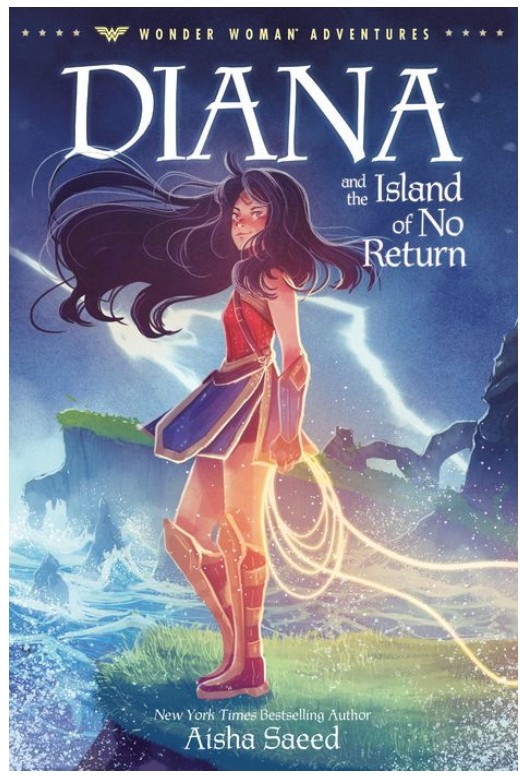
Diana and the Journey to the Unknown

Diana cannot rest until every kid is saved from Zumius, the alien boss who has kidnapped many children. After her voyage into the Underworld, Diana feels guilty that she couldn’t save every superpowered kid that Hades kidnapped. So, while the Amazons debate how to keep her safe, Diana decides to confront her enemies by herself. Determined to help, no matter the cost, Diana transports herself to a strange facility. 

After being drugged and thrown in a cage, Diana escapes outside, looking up to find three moons in the sky and no way home. However, nothing can stop Diana. She befriends some of the planet’s native inhabitants, but when the monsters tracking her threaten her new friends, Diana sacrifices herself by surrendering to protect them. This time, the guards take her to Zumius’s lair in the mortal world.  

When Zumius sends guards after Imani, the last superpowered child, Diana escapes once more. She emerges in an unfamiliar city filled with advanced technology and oddly dressed inhabitants. Despite facing extraordinary challenges for a twelve-year-old, Diana overcomes them with impressive resilience. Diana saves Imani and reactivates Imani’s powers. Then, Diana and Imani put themselves in danger to save the rest of the kids. With the power of the gods failing, no adults to help, and a skyscraper filled with guards in their way, Diana and Imani are bravely undaunted. Along the way, Diana discovers that, while she does have secret superpowers she never knew about, her real superpower is love—love for her family, friends, and people that push her to perform acts of wonder. 

Diana and the Journey to the Unknown serves as a perfect conclusion to the trilogy, although the sequence of events is somewhat overcomplicated. There are only a few implausible moments, such as guards repeatedly underestimating Diana, but these don’t overshadow the power of Diana’s character and the magic of this world. The Amazons are a great example of women empowering one another, and the kids Diana rescues will be an inspiration to kids everywhere. The rest of the story is well-constructed, using simple language and an easy plot that will engage the average reader.  

Readers who enjoy out-of-this-world adventures, Greek mythology, and amazing independent kids will love the world-jumping, new superpowers, and the brutish villains of Diana and the Journey to the Unknown. Diana travels to multiple worlds to save others, complete with monstrous aliens, magical poisons, and plenty of guards for Diana to outwit, all making for creative entertainment. Diana proves again that she’s a powerful character, accomplishing what even the gods could not by defeating Zumius. Overall, this is an inspiring story with a wonderful message: there’s always a way to adapt to the situation, no matter how hopeless it may seem. 

Sexual Content 

  • None

Violence 

  • After Diana escapes from the alien facility, she encounters an alien called a Targuni in the woods. Assuming the Targuni has come to imprison her, she attacks them. “With a swoop, she lassoed the creature with a final flourish. The Targuni rose unsteadily to their feet. They tugged at the rope encircling their shoulders, pulling frantically, struggling to break free. Diana tightened her grip.” The Targuni eventually tells Diana that they mean Diana no harm, and Diana lets them go.  
  • When Diana gets recaptured, she breaks the bars on her cage and interrogates a nearby guard for her friend Imani’s whereabouts. “Diana didn’t have time to negotiate. [The other guard] could be back any second, and it would be much harder to fight two. Swinging her lasso, she hurled it toward [the guard]. It launched into the air and wrapped itself around him. He pressed his arms against the lasso as though he could burst it with sheer force. His cheeks turned bright red. A few seconds later, as she expected, his shoulders drooped in defeat. His head hung low.” She gets the information from him and lets him go.  
  • The second guard comes back, and Diana attacks him. “Before [the other guard] could finish his sentence, Diana struck her sword out, upending the food in his hands and splattering the cheeseburger against his face. Then she shoved him as hard as she could. He fell backward onto the carpeted floor with a loud groan.” She runs past him and escapes.  
  • Once she finds the rest of the kids, she fights the guard so they can escape. “Diana crouched, waiting for [the guard] to approach. He was almost there. His hands inches from her wrist. She sliced the air with her sword; it skimmed his arm.” It’s a small wound, and while there are a couple more punches thrown, no one is grievously injured.  

Drugs and Alcohol 

  • After grasping the cage fragments and teleporting somewhere new, Diana is surprised by two scientists who are walking into the room. They see her and assume that she is in an altered state because of a gas triggered when someone teleports into that room. One of the doctors says, “Be that as it may, she’s under twice the usual dose, and she’s definitely not one of [the superpowered] kids. There’s a protocol to prepare for their arrival. Some sort of glitch must have occurred. It’s not the first time.” This implies they have drugged the other kids into submission. However, Diana is unaffected by the drug and pretends to be unconscious to buy time. 
  • While trying to rescue the kids from Zumius, Diana discovers that they’re being drugged by a substance that induces the feeling of hopelessness, ensuring the kids’ compliance. Diana’s friend Augustus says, “The kids won’t do anything. I can’t be absolutely certain what it is he’s given them to cause their apathy, but based on the scent when he administers it, I believe he’s using a pazzo bean. It instills hopelessness in whoever imbibes it.” Diana is briefly drugged by this substance but manages to ignore the effects. 

Language 

  • Language is tame. Words like stupid, idiot, and imbecile appear frequently

Supernatural 

  • Diana is a superhero, complete with superpowers and magical relics, like the Lasso of Truth. She fights monsters, aliens, and gods. Every page of this novel exhibits some kind of supernatural content. However, the magic is primarily wielded by kids with superpowers without spoken spells, just the wave of a hand. Magic is also present in the landscape, such as the magical island of Themyscira, hidden from the eyes of men. The monsters encountered are mostly aliens, and, while fantastically described, they do not have supernatural powers.  
  • The kids Diana is trying to rescue are described by two scientists trying to figure out how to contain Diana. “‘I’m just saying. If she’s one of those kids, her size doesn’t matter. You’ve seen them,’ [one scientist] replied defensively. ‘The metal bender nearly ripped the door apart when the charm wore off a smidge. And [another superpowered kid] had my arms go soft like jelly without even touching me before we got the second dose on her.’” 
  • Diana’s powers are described after she saves a kid from falling off a play structure.  “[A girl] held up her device [for Diana to see]. [In the video] there was a shifting of green grass—a blur—and then there was Diana; she swooped in, grabbing Fiona before she hit the ground. Someone had captured the moment. How is this possible? Diana stared at the image as it played and replayed. She wanted to wave it away as a trick of the eyes, except it was her. The blur in the image was Diana. She’d known she could run fast, but seeing herself doing it. . . it was far faster than she’d realized. In this video, she was. . . impossibly fast.” 
  • While Diana is trying to rescue the kids, she climbs up a building and falls, discovering a new superpower. “Diana hadn’t fallen. She was levitating in midair; her hands were up and swimming frantically inches from the edge of the beam she’d slipped from. Diana gritted her teeth and, reaching up, she grasped onto a ledge. Hastily, she scrambled atop it and climbed onto the balcony.” 
  • After defeating Zumius, the kids need to figure out how to escape the skyscraper. A new friend, Aristaeus, can control insects and the wind. While escaping, bees flew through the open window and “propelled Aristaeus in the air. Diana shivered. They held him much like the [aliens] had held Diana up not so long ago [to capture her]. But this time was different. These creatures promised safety. Imani tapped her hands against the bees and closed her eyes—and within seconds, they flew invisibly through the air. As the kids let the bees sweep them up, Imani guided them to her home.” 

Spiritual Content 

  • Princess Diana grew up among the Amazons, a community of warrior women who worship the Greek gods. In Diana and Journey to the Unknown, she meets, fights, and even collaborates with a couple of them. The Greek gods or references to them appear on nearly every page of this novel. For example, when Diana confronts Zumius, claiming the gods will come to her rescue, Zumius replies, “The gods! They’re frazzled as can be, aren’t they? Hades was dishing out the yummiest gossip before they neutralized him. But the fact of the matter is it’s too late for any of your gods to actually do anything at this point.” 
  • Diana’s friend Imani is a demigod and the child of Zeus. Diana mentions this when trying to get Imani to activate her abilities. “Zeus—your father—said you could stay in our world and learn more about your powers and who you were. He said returning to this world—the mortal world—with your memories and powers intact compromised your ability to live a normal life. You chose to forget. That is why none of what I’m telling you rings a bell. But it’s all true. Every last word.” 
  • Once the kids find their way back to Imani’s house, Zeus appears at the end to congratulate the kids on saving the day. “Lightning crackled in the distance. The home rumbled gently beneath their feet before a white burst of light appeared in the room. Diana blinked. It was Zeus. He wore a white tunic and a gold crown and held an enormous staff in his hands.” 

by Kate Schuyler 

White Smoke

Last year, Marigold almost died of an overdose. To get a fresh start, her family—mother Raquel, stepdad Alec, brother Sam, and stepsister Piper—is moving to the Midwest town of Cedarville. They move into a newly renovated house, but the rest of Maple Street is full of burnt, abandoned houses. As if that wasn’t unsettling enough, weird things begin to happen inside their home. Doors opening and closing, lights flickering, items moving around, and going missing. Weird smells and creepy noises. Marigold starts to suspect that they aren’t welcome in Cedarville, or in this house.

Marigold is the first-person narrator, and her honest, confessional tone sets the mood for this haunting tale. She reveals her past slowly, her narration mimicking her reluctance to get close to anyone after her ex-boyfriend’s betrayal led to her overdose. She struggles with past addiction, adjusting to a new place, making friends, and dealing with lasting anxiety and paranoia caused by a bedbug infestation. As she navigates these challenges, Marigold is also trying to reinvent herself. Though she can be selfish at times, she is ultimately a deeply relatable teenage girl, and through her narration, readers will feel her anxiety as if it were their own.

Marigold works with her brother Sam to uncover who is haunting their house. She cares deeply for him, and their relationship is at the heart of the story. Sam is the only one in the family who truly understands her, and Marigold learns to apply the care that he gives her to the people around her. The difficult process of Marigold connecting with her stepdad and stepsister creates a story about a flawed family that must rediscover how to care for one another.

Marigold also forms connections with Yusef and Erika. Yusef, her neighbor and reluctant crush, tells her of the town’s history, revealing that white families came in and drove out the Black community, sending fathers and brothers to prison on made-up drug charges. His optimism in the face of terrible circumstances forces Marigold to realize how lucky she is to have her family, even if she doesn’t like them all the time. Marigold receives a cold shoulder as the new girl, but Erika helps her settle into high school. Erika also has a painful past, but her humor and lighthearted perspective balance out Marigold’s pessimism. Marigold remains reluctant to create deep connections with anyone but is won over by Yusef and Erika’s friendship.

Trying to balance normal teenage problems with her increasingly unsettling house, Marigold discovers that this haunting might be a sign of deep-seated corruption within Cedarville’s leadership, one that threatens to eradicate what is left of the Black community. While eerie and suspenseful, White Smoke is not a typical ghost story. The connections made between the threats to the Black community and the haunting of Marigold’s home reveal the harm of prejudices, especially when intolerant people are in power. Marigold learns the importance of family and community, as well as the strength that people can achieve when they work together, whether for harm or for good.

White Smoke is a thrilling page-turner, but at times it moves too fast, leaving these connections feeling surface-level and resulting in a conclusion that feels rushed. Despite this, Jackson’s use of language to create a horror story, which vividly conjures images of a haunted house, is impressive and engaging.  Readers interested in racism and its impact on individuals should also consider reading Ghost Boys by Jewell Parker Rhodes and Stamped: Racism, Antiracism, and You by Jason Reynolds & Ibram X. Kendi.

 Sexual Content

  • When Marigold meets Yusef, she notices how attractive he is. “He’s a rich mocha brown. The hot chocolate with coconut milk on a chilly day by the beach type of brown. God, I hope these stupid flowery words dancing around in my head aren’t leaking out my mouth.”
  • Tamara, Marigold’s best friend, teases Marigold about Yusef’s flirting. “Dude, he was totally hitting on you, literally. I mean, he talked gardening, that’s practically foreplay.”
  • Marigold jokes with Erika about the town speculating that they are in a relationship. “Well, you ain’t bad looking. I’d smash.”
  • Marigold and Yusef talk about the girls who are attracted to Yusef. He reveals that he hasn’t had sex. Marigold says, “Well, anything is possible, especially when you’re having sex. . . Wait, are you seriously telling me you’re a virgin?”

Violence

  • When Marigold and Yusef first meet, he accidentally punches her in the face. As she’s leaving her house, Marigold “throw[s] the door open, running right into a fist.” She ices her head, but she isn’t injured, just bruised.
  • Marigold has a nightmare where her stepsister Piper attacks her. “[Piper’s] little hands tighten around my throat, thumbs pressing against my voice box. . . I strain, unable to feel my legs, my arms, or anything.” She wakes up right after this.
  • Another mother accuses Marigold’s mother of allowing Piper to hang out in abandoned houses. “Do y’all know how dangerous them houses are? Besides them falling apart, you know what kind of people be in there squatting, smoking, and shooting up drugs? These girls could get raped and we’d be none the wiser!” There’s not actually anyone squatting in the houses, but Piper stops going there after this.
  • Yusef tells Marigold the story of the first Devil’s Night (or Halloween) fire when Seth Reed, a white boy, went missing. “Then, after Devil’s Night, after they found Seth Reed. . . some folks from the Wood . . . they cornered Jon Jon and set his house on fire. [Jon Jon’s mother,] Ms. Suga, living next door, ran inside to save him. They never came out. Burned alive in the house.” Jon Jon and his mother are black, highlighting the race-based history of the town.
  • Jon Jon and Ms. Suga, who are alive and have been living in Marigold’s basement, attack Marigold. Jon Jon chokes her. “Something ropes around my throat, yoking me, and I catch air before landing on my back.” He also punches her in the stomach before Yusef tackles him.
  • Suga hits Marigold with a broom. “The broom whacks me in the face, and I fly backward down the stairs with a scream. My head bangs against the hardwood floor, tailbone hitting the bottom step.” She is seriously concussed and passes out.
  • During the fight, Ms. Suga attacks Marigold and bites her. “The old woman burst out of the closet, screeching, her arms flailing. Stunned by the sight, I’m frozen in place until she leaps, sinking two sharp teeth into my shoulder.” Marigold’s injuries are treated by EMTs.
  • Suga kidnaps Piper and ties her up in one of the abandoned houses. “Wrists and ankles bound, mouth gagged. Her eyes bulge as she screams through the dirty rag.” Marigold and Jon Jon rescue her; Piper is uninjured.
  • The town, incited into a mob, sets the house that Marigold, Piper, and Jon Jon are in on fire. Marigold’s ankle is injured while trying to get out. “I kick furiously. . . my ankle covered in blood where the wood sliced into me.” Jon Jon bandages it. Then, Piper and Marigold escape to Yusef’s house, where they clean her wounds.

Drugs and Alcohol

  • Before the story, Marigold was struggling with addiction to Percocet and overdosed on fentanyl-laced weed. “Last thing I really remember was walking into my room. [My brother] found me foaming at the mouth. Turns out the weed was laced with fentanyl . . . OD’ing is the type of mistake you never shake.”
  • Marigold struggles with her cravings for weed. “I need a blunt, a brownie, a gummy. . . hell, I’d take a contact high right about now, I’m so desperate for numbness.”
  • Marigold mentions her addiction to Percocet throughout the book. For example, when she starts hearing strange noises and smelling strange scents, she thinks: “If I were still on the Percs, I could’ve blamed it on a crazy trip.”
  • At a party, Yusef and Marigold drink. They are both underage. “Yusef pours [them] two vodkas and orange juices. . . [Marigold’s] not used to being at parties sober.”
  • At the same party, Marigold smokes weed that Erika gives her. “I grab the spliff, inhale hard, letting the smoke take up every corner of my lungs before exhaling with an ‘ahhh.’” She gets high.
  • Marigold’s mother forces her to take a drug test. “With a sigh, I grab the cup and head for the bathroom. The test is going to be negative, but just the thought that Mom felt she had to give it to me cuts deeper than a knife.”
  • Marigold is growing weed for herself in the backyard of one of the abandoned houses. She gets Tamara to send her the seeds. “I’m not asking you to send me a pack of blunts. Just some seeds! . . . Tamara, I need this.” Eventually, Yusef finds the garden and forces Marigold to remove it.

Language

  • Profanity is used regularly. Profanity includes hella, damn, shit, bitch, tit, ass, fuck, and dick.

Supernatural

  • There is a town legend that Ms. Suga haunts the house where Marigold’s family lives. Yusef says, “It’s just that everyone is surprised you’re still alive, with your house being haunted and everything. . . It’s this creature, a demon woman, who comes in the middle of the night while you’re sleeping, cast some type of spell on you.”
  • Marigold wakes up to a shadowy figure in her room. She calls Yusef, thinking it’s a demon. Marigold says, “Maybe a demon. It’s in the corner, holding my blanket.” The shadow turns out to be Jon Jon sleepwalking, but Marigold doesn’t find this out until the end of the book.
  • Marigold lists out the proof that her house is haunted. “Well, except for the whole basement door incident. And the wrinkled hand reaching into the shower. And the lights going out . . . That funky stench is not just coming from the basement. . . Doors opening and slamming on their own, the cabinets in the kitchen.” Marigold and Sam both believe that their house is haunted. At one point, they hear what they believe is a ghost, mimicking Sam’s voice.
  • Marigold and Sam believe that Piper is possessed because she has been acting strangely and getting angry often. Sam says, “We’ll need proof Piper’s possessed or the church won’t perform an exorcism on her.”

Spiritual Content

  • There is a pastor, Scott Clark, who preaches on television, and passages from his sermons are regularly interspersed throughout the novel. “And so I say to you, cast the wickedness out of your heart for the good of thy neighbor, cleanse thy soul with fire!”
  • At times, the passages are connected with the story but are more often used to represent the corruption of the town leaders that seeps into the church as well. For example, one of the longer passages reads, “. . . And children of God, I’m to provide the seeds that you will plant, and you will do the watering. Do not forsake his words. For the devil is among you! He has poisoned your minds, makes you feel you can’t trust the very people he put to care for you. . . ” This refers to the scam seeds Scott Clark sells that never grow.
  • Marigold’s family are “spiritualists” who “just believe in a higher power.”


by Abigail Clark

Reckless

Reckless follows the shocking events of the previous book, Powerless. In an act of self-defense and revenge, rebel traitor Paedyn Gray kills the King. To escape punishment, Paedyn flees Ilya, leaving the kingdom — and its princes — reeling in her wake. Crown Prince Kitt, shaken by his friend’s betrayal, becomes increasingly paranoid and withdrawn, refusing to leave his room. Prince Kai, Ilya’s Enforcer, swears to hunt Paedyn down, even if he once loved her.   

Kai tracks Paedyn to the nearby kingdom, Dor, where she has become an underground fighter. With his men, Kai captures Paedyn and forces her to hike through barren desert land to return to Ilya. However, a group of rebels captures them, hoping to trade Kai’s release for Paedyn’s pardon. Their plans are subverted when Rafael, Paedyn’s old boss at the fighting ring, captures her and Kai. To escape, Paedyn and Kai must set aside their differences and work together. In the process, forbidden feelings threaten to return, forcing the ultimate choice between old duty and new love.  

Paedyn is an underdog, relying on her wits to stay one step ahead of an entire government that is calling for her arrest, dead or alive. She often prioritizes survival over morality, though not without guilt. For example, she hesitates to steal from the hardworking people of Dor, yet ultimately does, lacking any other means to support herself. While Paedyn is dedicated to the rebel cause of seeking to uplift Ordinaries from Elite oppression, her lack of resolve may frustrate some readers. Despite swearing multiple times that she will kill Prince Kai, Paedyn does not do so. On an emotional level, readers will sympathize with Paedyn’s inability to harm someone she once cared deeply for. However, considering the greater good, Paedyn’s choices unintentionally come off as selfish, prioritizing her personal feelings over the survival of her people.   

Likewise, Kai’s charming and witty nature often clashes with the grim reality of his mission, which he rarely takes seriously. For example, Kai often flirts with Paedyn, which diminishes both the severity of his objective and his relationship with his late father. Readers looking for a fun enemies-to-lovers story, in which characters claim murderous intent but instead reignite their romance with a passionate kiss, will find much to appreciate in Kai’s character and his romance with Paedyn. While Kai often falls on the wrong side of the conflict, siding with the Elite, readers will understand that he is not an inherently bad person, but rather forced into a morally compromising position by his family. Readers will root for him to break free of his late father’s corrosive influence. However, a more cynical eye will question whether Kai can truly love the same person who killed his father, traumatized his brother, and threw his kingdom into chaos.  

Reckless focuses on the progression of Kai and Paedyn’s relationship as they fluctuate between enemies and lovers, against the backdrop of a country on the brink of revolution and ruin. In the kingdom of Dor, where the people do not have supernatural abilities, Ordinary Paedyn and Elite Kai are finally on even footing. In captivity, faced with a more pressing threat than their mutual animosity, Paedyn and Kai become reluctant allies with the potential for romance. While the conflict between the rebels and the established hierarchy provides thrilling action sequences, it contributes more to the development of Kai and Paedyn’s relationship than to the advancement of the plot. Large portions of the plot are repetitive and do not further the story, instead falling into a cycle of capture, escape, capture, escape, capture, escape – thereby negating any significance of the capture or the escape.  

This story is told from the dual points of view of Paedyn and Kai. Both rehash the major conflict of the previous book — the struggle between duty and love. They are forced to ask themselves if pursuing a romance is worth jeopardizing their worldviews, morals, familial obligations, and the future of their kingdom. Readers who instantly answer no will not enjoy this book. Due to the lack of stakes and consequences – unlike the major character deaths and world-shaking revelations featured in the previous book – Reckless ultimately feels like a placeholder for the conclusion of the series, Fearless 

Sexual Content   

  • After agreeing to a temporary alliance, Kai and Paedyn share an angsty, yet steamy kiss. Kai describes, “Our mouths crash together. I can taste the loathing on her lips, the anger in each swipe of her tongue. She kisses me hard, biting my lip to draw blood… Her fingers are buried in my hair while mine dig into her hips. This kiss is deep and anything but tender.”  On the brink of death, Kai and Paedyn share another passionate kiss. Kai describes, “I kiss her frantically, memorizing the feel of her lips against mine. . . Her arms slide from my wrists to wrap around my neck. She’s clinging to me as though I’m an anchor she’s willing to sink with.”  
  • The kiss is then described from Paedyn’s perspective. “I sigh against his mouth when his tongue meets mine… His teeth pull at my bottom lip… The action sets my body ablaze, spreading fire through every vein. My mouth moves in time with his, matching every swipe of his tongue, every move of his lips.” The scene lasts two pages. 
  • Kai’s inner monologue frequently emphasizes his attraction to Paedyn; however, he is often tormented by it. For example, he thinks, “She’s unbearable, really. But not in the way that makes it any easier to look away. No, everything about her is a bold sort of beauty, like a rose proudly displaying its thorns. She’s alluring in the way that most deadly things are. It’s captivating.” Paedyn is more reluctant to admit her feelings, though her heart often “beats hard” in Kai’s presence.     

Violence   

  • Kai and Paedyn falsely promise to kill each other. Upon gaining an opportunity to kill Kai, Paedyn thinks, “I could kill him… I’m hesitating… he makes his way out of the alley… I won’t hesitate again.”  
  • When pressed on whether he will complete his mission, which will presumably result in Paedyn’s execution, considering the severity of her crime, Kai sincerely replies, “Of course. It’s my duty.”  
  • To prevent Paedyn from running away, Kai throws a dagger at her. He describes, “with the flick of my wrist, I send the knife flying toward her… it meets its mark, slicing through her thigh as she leaps. Her cry of pain makes me flinch… she staggers to her feet, blood streaming down her leg.” The wound is superficial, leading to no serious long-term injury. 
  • In self-defense, Paedyn kills a guard attempting to collect her bounty. During a brief, yet bloody fight, “the back of his skull collides with my [Paedyn’s] nose. I cry out, already feeling blood… The guard throws me onto my back, his weight pressing down on me nearly as hard as his hands crushing my windpipe… I can barely see what it is I do next. The blade slides easily into his heart.”  
  • Kai and Paedyn attempt to escape Rafael, Paedyn’s ex-boss. After getting trapped in a tunnel filling with water, Kai and Paedyn believe they will drown. However, at the last moment, they escape into an alley.  
  • While working as an underground fighter, Paedyn fights. For example, during a match against a fan favorite, Slick, Paedyn describes, “Slick is persistent, raining down… He blocks my jab before barreling into me, pushing me hard against the cage… my foot finds the inside of his knee, kicking hard… Slick bites down a scream… [he is] clutching what is likely a dislocated kneecap… His elbow strains as I pull his arm down unnaturally, hyperextending the joint.” Paedyn wins the fight, which lasts around three pages. The gory action is interwoven with descriptions and brief flashbacks of her friendship with Adena, a character who died in the previous book.  
  • Ambushed by bandits while traveling through the desert, Paedyn witnesses an arrow strike Kai’s arm. He “slowly sinks to his knees, displaying the deep gash stretching across the length of his shoulder. I saw the flash of an arrow before it tore through his skin, splitting flesh in an instant.” Kai makes a full recovery, although he is left with a scar. 

Drugs and Alcohol   

  • After Kai and Paedyn are unable to remember important details of their capture, Kai speculates that “they may have drugged us.”  

Language  

  • Profanity is used often. Profanity includes damn, hell, ass, shit, and bitch. For example, before Paedyn kills a guard, he calls her a “crazy bitch.”   
  • As a result of getting back together, Kai tells Paedyn he now “believe[s] in a God” because she is “paradise.”  

Supernatural  

  • The Elites have superhuman abilities. For example, a “brawny” is an Elite with superhuman strength, depicted as smashing through a door.  

Spiritual Content   

  • None  

by Kerry Lum  

The Hammer of Thor

A couple of months ago, Magnus Chase’s life changed forever. . . because he died. But Magnus didn’t go down without a fight, and he earned himself a place in Valhalla, the Norse afterlife for heroes. It’s not easy getting accustomed to life in Valhalla, where Magnus’s days are filled with fighting and feasting amongst the honorable dead. But just when Magnus is finally settling in, his afterlife is disrupted by the news that Thor, the formidable god of thunder, has lost his hammer. A hammer-less Thor means a defenseless Earth, and armies of giants are lining up to invade while the god is weak.  

With his friends by his side, Magnus embarks on a perilous quest to find Thor’s hammer. With Loki, the cruel trickster god, pulling strings from his prison, will Magnus be able to complete his mission, or will he play right into his enemies’ hands? 

The Hammer of Thor is a witty and entertaining dive into the world of Norse mythology. Narrated by Magnus, readers will be guided through the story by his sarcastic sense of humor. Throughout the novel, Magnus often acts out of empathy and compassion for others. This, combined with his self-aware commentary, makes him a lovable and relatable character. Readers will find themselves invested in Magnus’s story. 

One of this book’s greatest strengths is its diverse cast of characters. On his quest, Magnus is joined by Sam, a devout Muslim whose faith is as strong as her work ethic and skills with an ax. Her knowledge and determination drive the plot and save Magnus on many occasions.  

Fan-favorite dynamic duo Hearth and Blitz also accompany Magnus. Hearth, a deaf elf with a skill for sorcery, and Blitz, a dwarf with a passion for fashion design, are fiercely protective of one another. The pair’s unique skills and personalities steal every scene they share.   

Finally, Magnus finds himself drawn to Alex, the shapeshifting child of Loki, who adds a bit of chaos to the story. Alex is a fierce fighter who is proud of her identity as both a shapeshifter and a transgender and genderfluid person. In addition to driving the plot and making this novel unforgettable, these characters offer readers an opportunity to consider new perspectives and learn about those who are different from them.  

The Hammer of Thor balances tension with moments of levity and handles serious topics in a way that is respectful and impactful. This novel addresses issues such as homelessness, ableism, transphobia, and child abuse in ways that are easy for younger audiences to understand. It also explores themes of trauma and grief, depicting the various ways characters mourn their losses. These subjects are explored in an age-appropriate manner that feels safe and inviting to children, as the story maintains its optimistic and entertaining voice. 

Readers do not have to be familiar with Rick Riordan’s previous works to enjoy the Magnus Chase and the Gods of Asgard Series. This trilogy is a strong standalone series with unique new characters and settings. Fans of Riordan will enjoy references to his other series, as well as his entertaining conversational writing style. Fans and new readers will be interested in reading the Magnus Chase and the Gods of Asgard Series because it opens a new world of magic and mayhem.  

This novel contains themes of friendship, perseverance, and strength. Throughout the story, Magnus and his friends often support each other through difficult situations. The bond the characters share empowers them as they work together to overcome every obstacle that comes their way. Despite facing setbacks, the heroes continue to work towards their goals, refusing to abandon their quest. Magnus and his friends are resilient, and readers can find strength through their actions. 

The Hammer of Thor is a must-read for middle-grade audiences that will entertain readers while encouraging empathy and introspection. This novel will help audiences find the joy of reading while taking them on an adventure that explores mythology and friendship. This fast-paced story will hook readers from the start and will be remembered long after they turn the last page.     

Sexual Content 

  • Magnus’s friend Halfborn implies that his girlfriend Mallory likes seeing him shirtless when they are preparing for a practice battle. Mallory comments that Halfborn “always goes into battle bare-chested.” Halfborn replies, “Are you complaining about that?” This causes Mallory to blush.  
  • Loki arranges a marriage between Sam and a giant against Sam’s will. Sam says, “We have to find Thor’s hammer before the first of spring or. . . I will have to marry a giant.” Sam and her friends prevent the wedding from occurring.   

Violence 

  • A magical goat named Otis is struck in the chest with an ax. “Living in Valhalla, I was used to deadly weapons flying out of nowhere, but I was still surprised when an ax sprouted from Otis’s furry chest. . . the ax had pierced his heart.” Otis dies, but due to his magical nature, he comes back to life.   
  • Magnus chases after Otis’s killer and engages in combat with them. “An ax hurtled from above, slicing the buttons off my denim jacket. An inch closer and it would’ve opened up my chest.” The fight scene is described over five pages. The killer escapes and leaves Magnus behind on a rooftop. 
  • Magnus and his friends participate in a practice battle in Valhalla against the other dead heroes who live there, such as Charlie, T.J., and Big Lou. During this battle, “Halfborn and Mallory chopped us a path through a pack of berserkers. T.J. shot Charlie Flannigan in the head. . . We dodged a volley of fiery tar balls from the balcony catapults. We had a brief sword battle with Big Lou from floor 401.” Because they are in Valhalla, everyone who dies in this battle will come back to life. This fight scene is described over 15 pages. 
  • Alex decapitates a wolf using a garrote after the wolves attack an old man in an alley. Alex “lashed out with her wire, using it like a whip. With a single flick, one of the wolves lost its head.” 
  • Alex is bitten on the neck and killed by a wolf. “The last beast took her by the throat. She wrapped her fingers around its neck, but her eyes were losing focus.” After her death, Alex is reborn in Valhalla.  
  • Hearth breaks his ankle after falling into a tomb. Magnus “heard a wet snap followed by Hearth’s grunt, and [he] knew immediately what happened.” Magnus heals Hearth. 
  • Magnus and his friends fight zombies in a tomb. “Sam thrust her spear under [a zombie’s] jaw. The weapon’s light burned away his head like a flame going through toilet paper.” This fight is described over four pages.  
  • Magnus’s Uncle Randolph stabs Blitz in the stomach with a magical blade called the Skofnung Sword because he is following Loki’s orders. “With a cry of horror he buried the Skofnung Sword in Blitzen’s gut.” Blitz is badly injured, but he eventually recovers. 
  • After Uncle Randolph stabs Blitz, Magnus retaliates by slashing “upward, and the Skofnung Sword flew out of Randolph’s grip, along with. . . a couple of pink things that looked like fingers.” Randolph recovers from his injuries.  
  • The police shoot Hearth as he and his friends run away from a party that had become dangerous. “Behind us, a shot rang out. Everyone flinched except Hearth. . . Hearth stumbled, a red stain soaking his shirt.” Hearth recovers from this injury. 
  • Sam kills a giant named Little Billy with an ax. “In one fluid moment, Sam turned and threw her ax right at Billy. The giants gasped. Little Billy’s eyes went even more cross-eyed as he stared at the hatchet now sprouting from his forehead.” 
  • Sam hits a giant named Thrynga in the side with an ax. “Samirah’s ax hurtled across the room and embedded itself in Thrynga’s side.” Thrynga recovers from this injury. 
  • Magnus breaks his ribs when he collides with a stalagmite during a battle. Magnus “slammed into a stalagmite. Something in [his] chest went crack.” 
  • Loki kills a snake by breaking its spine. Loki “grabbed the snake that had been dripping venom on him, yanked it off its stalactite, and snapped it like a whip.” 
  • Uncle Randolph falls into a pit and dies. Uncle Randolph “slipped sideways into the darkness without a sound.” 
  • Thor smites Thrynga, killing her. “Thor pointed his hammer at Thrynga as casually as if he were channel surfing. Tendrils of lightning shot from the runes engraved in the metal. The giantess burst into a million bits of rubble.”      

Drugs and Alcohol 

  • Sam goes into an alley that “heroin junkies liked to shoot up in. . . which made it a great place to get beaten, robbed, or killed.” No drug use is depicted in this scene. 

Language   

  • Halfborn calls someone a “meinfretr.” Magnus says that this is an Old Norse swear word that translates to “something like stinkfart.” 
  • Mallory makes a gesture with her hand that is equivalent to giving someone the middle finger. “Mallory made a V with her fingers and flicked them under her chin.”  
  • The word idiot is used many times. For example, Mallory tells Halfborn, “You’re an idiot.”

Supernatural 

  • Sam is a Valkyrie, a warrior who leads the souls of dead heroes to Valhalla, the Norse afterlife for heroes who died bravely in battle. Sam comments on her role, calling it her “part-time job reaping souls of the dead and running top secret missions for Odin.”  
  • Magnus comments on the various things he has done since his death and rebirth. Magnus “travelled the Nine Worlds meeting Norse gods, elves, dwarves, and a bunch of monsters with names I couldn’t pronounce. I’d scored a magical sword that presently hung around my neck in the form of a runestone pendant.” 
  • Magnus speaks with a magical anthropomorphic goat named Otis. “Otis climbed into the chair I’d reserved for Sam. He sat on his back haunches and put his front hooves on the table.” 
  • Magnus recalls fantastical things he did in the previous book. “I’d played catch-the-lava-ball with fire giants. I’d eagle-skied over the rooftops of Boston. I’d pulled the world serpent out of Massachusetts Bay and defeated Fenris Wolf with a ball of yarn.”  
  • Magnus learns that he will have to encounter a wight, which is “a powerful undead creature that likes to collect magical weapons.”  
  • Magnus has a magical talking sword named Jack. “As I bounded across Newbury Street, Jack sprang to full form in my hand. His blade—thirty inches of double-edged bone-forged steel— was emblazoned with runes that pulsed in different colors when Jack talked.” 
  • Alex can shapeshift because she is a child of Loki. “The animal grew into a regular teen, long and lanky, with a swirl of dyed green hair. . .”  
  • Sam and Magnus go for a ride on a flying horse. “Sam saddled a white stallion. She climbed on his back and pulled me up behind her, then we galloped out the gates of the stable, straight into the skies above Boston.”  
  • Hearth performs magic by casting runes. “From the inside pouch of his jacket, he produced a small collection of runestones.” 
  • Zombies come to life and attack Magnus and his friends. “To absolutely no one’s surprise, the twelve mummified warriors stepped out from their niches along the walls.” 
  • A pilot named Barry is briefly possessed by the mysterious person who killed Otis the Goat. “Barry’s new voice crackled with distortion and went up and down in pitch.” 
  • Magnus and his friends walk across the Bifrost, a rainbow bridge connecting Earth with Asgard, the home of the Norse gods. “Radiance surrounded us, fuzzy and hot. Rather than walking across a slick, solid surface, I felt like we were wading through the waist-high field of wheat.”  

Spiritual Content 

  • This novel is centered around Norse mythology and contains frequent depictions of and references to Norse gods. 
  • Sam is Muslim and comments on how she views the Norse gods. Sam says that she “doesn’t accept that Norse gods are gods. They’re just powerful beings. Some of them are my annoying relatives. But they are no more than creations of Allah, the only god, just like you and I are.”  
  • Magnus watches as Sam prays. “Sam took off her shoes. She stood very still at the foot of her rug, her hands clasped at her stomach, her eyes half-closed. She whispered something under her breath. . . Then she began her prayers, a soft, singsong chanting of Arabic that sounded like she was reciting a familiar poem or a love song. Sam bowed, straightened, and knelt with her feet tucked under her and pressed her forehead against the cloth.”    

 by Kelly Barker 

The Secret of Locker 24

One morning before classes start, Emily Turner sees something in her school’s hallway that brings her to a dead stop — Locker 24 is open. That locker has been shut for over two decades, and no one is allowed to talk about it or ask about it. . . and certainly not touch it. But Emily’s heard the rumors. She knows she should report it immediately. As a straight-A student and yearbook editor, Emily always does the right thing. But this time she just can’t. Instead, she finds herself unable to resist looking in the forbidden locker — and begins a journey that will change her life forever. 

As the yearbook editor, Emily believes it is her responsibility to create a yearbook that accurately reflects the perfection of her junior high. At first, Emily is so busy with schoolwork and other extracurricular activities that she doesn’t notice anything outside of herself. This all changes when she looks into Locker 24. For some reason, the locker’s past owner, Adriana, is trying to communicate with Emily. Even though Emily doesn’t want anything to do with Locker 24, her curiosity leads her to research Adriana. The mystery behind the locker propels the plot forward, and the actions of the past are connected to events currently unfolding at Emily’s middle school, allowing the reader to see that bullying has been and continues to be an often-overlooked problem.  

Emily is portrayed as a typical popular kid who is perfect and always wants to do the right thing. Despite this, Emily is neither judgmental nor arrogant. However, when she begins to research Locker 24, Emily realizes that she has a major flaw—she is completely focused on herself and her desire to portray junior high in a positive light. With Adriana’s help, Emily notices Hailey, who doesn’t have friends. Emily eventually steps in to protect Hailey from a group of bullies. However, Emily doesn’t stop there; the conclusion hints that Emily and Hailey will become friends, something that Hailey desperately needs. 

The Secret of Locker 24 is a compelling mystery that highlights the lasting impact of bullying. Both Adriana and Hailey give readers an understanding that being kind to others isn’t enough. Emily points out, “Okay, maybe I’m not actually doing the bullying myself. But that doesn’t mean I’m totally blameless. I still saw it. I still heard about it. And I did nothing. Nothing.” In the end, Emily steps up and stops Hailey from being bullied, demonstrating both compassion and courage. But more importantly, Emily befriends Hailey. This suggests that Hailey’s life will significantly improve because Emily took the time to notice what was going on around her. 

As part of the West 44 collection, The Secret of Locker 24 features a straightforward plot that employs simple language, appealing to students who may be overwhelmed by challenging vocabulary and complex sentences. The book enables students to explore bullying in a safe and age-appropriate manner, facilitating meaningful discussions. The hi-lo format makes the West 44 collection perfect for struggling readers.  

The Secret of Locker 24 is a fast-paced and suspenseful book that has many positive life lessons. Emily’s life seems a little too perfect—she’s a straight-A student, has two loving and supportive parents, and is liked by her peers. Despite this, Emily is a likable character who shows character growth. Emily’s eyes are opened to the problem of bullying, and she realizes that “asking for what you need isn’t a sign of weakness.” Readers who enjoy The Secret of Locker 24 should also read Haze by Erin Thomas. 

Sexual Content 

  • None 

Violence 

  • Emily’s mom remembers Adriana, a girl she knew from middle school. Emily’s mom said, “She met some of the other kids from school at the mall. Some real jerks. It was all a setup. I don’t know what happened, exactly, but I heard she was never the same after that.” 
  • Adriana was not only bullied by some of the kids in school, but some of the teachers were mean to her as well. “The kids said mean things to her or threw things at her. . . And the people who worked at the school would be nasty to her, too.” 
  • When Adriana was walking down the hallway, a teacher said, “Where do you buy your clothes, Adriana? From the mall on Mars?. . . Is that how you wanted to wear your hair today? Or did a crow get stuck in it?”

Drugs and Alcohol 

  • None

Language 

  • Emily’s mom talks about a person she knew in middle school. Emily’s mom says, “Truthfully, most kids thought she was a freak.” 

Supernatural 

  • One day at school, Emily notices that Locker 24 is open. Because of the rumors regarding the locker, Emily closes it. But then, the next day, it is open again. Emily realizes that the locker had only been open when Emily was alone in the hallway. Emily discovers that Adriana, the last person who used the locker, died “the same day. . . that [Emily] found the locker open.” 
  • Emily starts talking to the locker. “Then, just as Emily was about to walk away, the door began to open further. . . the door moved by itself.” As Emily looks at the contents of the locker, she sees a movie ticket stub. As Emily reads the ticket, the locker closes by itself, “the lock firmly back in place.” 
  • Emily helps Hailey, a girl who was being bullied. Afterward, “the heart sticker that had been on the inside of Adriana’s locker door was now on [Emily’s]. And the single word that was printed on it seemed more important than ever—love.”

Spiritual Content 

  • None 

Recipe for Disaster

Remy is anything but ordinary. He walks upright, reads, and boasts an exceptional sense of smell and a refined palate. Living in the attic of an old cottage, his colony is content to eat garbage and has no understanding of his sophistication. Tasked with sniffing out poison, Remy grows frustrated and longs to pursue finer things. When he discovers a French cookbook in the cottage kitchen, he pores over its pages and begins to experiment with cooking. Its author, Auguste Gusteau, becomes his guiding inspiration as he hones his craft. After the colony is abruptly discovered and forced to flee, Remy’s life takes a momentous turn. 

After nearly drowning and being separated from his family, Remy reaches Paris and, by sheer luck, finds himself at Gusteau’s, the famed restaurant founded by the cookbook author he idolizes. He discovers, to his sorrow, that Gusteau has died. Yet, in an extraordinary turn, the late chef returns as a spirit guide, a vision of memory and imagination who nudges Remy forward with advice and encouragement. Determined to cook in this fine restaurant, he forges a secret alliance with a kitchen employee. His disguise holds—until it doesn’t. Can he pursue his dreams in the human world? Will he reunite with his family and follow the passion for cooking that defines him? 

Recipe for Disaster is a chapter book told in first-person narration, spinning a delightfully improbable tale: a rat with rare skills and passions makes his way to Paris to follow in his mentor’s footsteps. Themes include bias, friendship, and resilience. The title is telling because a sense of looming disaster builds toward a surprising finale. Readers will eagerly anticipate what happens next and be rewarded with a heartwarming ending. 

In Chapter Two, Gusteau returns as a spirit guide, reminding Remy of the lesson from the opening chapter and his cookbook title, Anyone Can Cook! Remy takes this philosophy to heart. Soon, the contrast between the late, celebrated French chef—whose Parisian restaurant made him famous—and a rat with culinary ambitions exposes the tensions that arise when a rat enters the human world. Beyond the near-universal disdain humans have for rats, the very idea of a rat cooking seems preposterous. This reality torments Remy. He knows all too well the bias humans hold against rodents. He laments, “no human was ever going to see past the fact that I am a rat.” 

Unlikely as it sounds, Remy bonds with the kitchen helper, Linguini—the first human to treat him kindly. After Linguini botches a soup, Remy rescues it and turns it into a masterpiece. “Pretty sure I just made restaurant history as the first rat chef,” Remy jokes. From there, they create the impression that Linguini has extraordinary talent, prompting the executive chef to bring in a senior cook to train him. Hidden under Linguini’s hat, Remy steers him skillfully: “We discovered I could get Linguini to move in different ways by tugging his hair—one pull to chop, another to crack an egg.” In marionette-like fashion, they create delicious food that brings the restaurant acclaim. Soon, France’s top food critic takes notice and the story races toward a tipping point. 

As with any good reveal, readers will relish how far Remy has come since his days in the cottage attic. He’s shown courage by refusing to give up on his dream. With the help of a human ally, he devises a way to cook in a fine Parisian restaurant. Even the critic’s review is full of praise. A parallel storyline reveals Linguini’s true identity: the corrupt executive chef has been hiding documents that prove he is Gusteau’s son. “The will said he was the rightful owner of Gusteau’s!” But the revelation strains their friendship. As fame goes to his head, Linguini becomes arrogant and begins to sideline Remy, nearly forgetting the friend who got him there. 

Ratatouille: Recipe for Disaster features a handful of whimsical line illustrations by Caroline LaVelle Egan. At 80 pages, it’s a satisfying, lighthearted read full of colorful characters and steady momentum. It also raises surprising philosophical questions about the personal truths we hold and the pursuits we follow when faced with adversity. Remy may be a rat, yet he embodies the courage of those who chase their dreams: “Like Gusteau had said, I had to be fearless if I wanted to be great!” 

Sexual Content  

  • None 

Violence  

  • None 

Drugs and Alcohol  

  • None 

Language   

  • None 

Supernatural  

  • The late Gusteau appears in several instances as Remy’s spirit guide, offering advice and encouragement like a trusted friend.  

Spiritual Content  

  • None 

by Maureen Lowe

The Jumbies

Young Corinne La Mer isn’t afraid of anything, especially things that go bump in the night. While all the other kids in her small island village are scared of the creatures in the forest, Corinne lives on its edge and has seen nothing to validate her friends’ fears. After her mother passed, Corinne refused to be afraid of anything anymore.  

A practical and shrewd protagonist, Corinne is suspicious of a new woman who arrives on market day. The other children avoid her like the plague, whispering that she reeks of the forest, and their murmurs intensify when she approaches the witch’s table. Yet this mysterious figure intrigues Corinne. When the stranger stops at Corinne’s fruit stand, Corinne greets her politely. The woman, who introduces herself as Severine, raves about the oranges and insists they possess an almost magical quality. Soon, Severine seems to be everywhere in Corinne’s life—seducing her father and attempting to mother her. The longer Severine stays, the more strange phenomena occur.  

Strange incidents begin plaguing the village: Corinne’s friend Bouki nearly drowns while playing by the river, the local witch grows increasingly on edge with ominous warnings about Corinne’s family, and an unnatural stench fills Corinne’s house whenever Severine attempts to cook. As an accomplished cook herself, Corinne refuses to let her father eat anything Severine prepares. But one evening, she returns home late to find her father in a strange trance, staring at a bowl of Severine’s soup. 

Severine then reveals her true nature as a jumbie—a supernatural, hideous forest creature who claims to be Corinne’s aunt. She insists that Corinne is half jumbie herself, which explains her extraordinary talent for growing divine fruit. Severine demands that Corinne join her in reclaiming the village and island for the jumbies. When loyal, honest Corinne refuses, Severine uses magic to banish her from her own home and begins controlling the villagers one by one, starting with her father. 

Left with no resources and shaken by questions about her origins, Corinne recruits several friends to defeat Severine and protect their village—because failure means none of them will have a home to return to. 

The Jumbies is a wonderfully macabre story with a straightforward plot and accessible language, perfect for younger readers. However, readers averse to horror may want to avoid it due to some heavy, scary elements. The adult characters, aside from the witch, play disappointingly weak roles—Corinne’s father succumbs to Severine’s influence with little resistance, which feels somewhat lazy. Despite this flaw, the novel proves inspiring and creative, expertly weaving Caribbean folklore themes into well-crafted worldbuilding that remains descriptive without becoming overly complicated. 

The Jumbies offers a creepy atmosphere, imaginative monsters, and youthful wit that will captivate readers. The book features supernatural creatures ranging from evil to good, and Corinne discovers that many are simply seeking a better home in a world that has banished them to the forest. While some use horrifying methods to reclaim their territory, Corinne proves to be a kind and intelligent protagonist who recognizes that monsters like Severine don’t represent all of her kind. Ultimately, this beautiful story delivers a sweet message: blood doesn’t define family, and home can always be found elsewhere. 

Sexual Content 

  • None 

Violence 

  • When Corinne first meets brothers Bouki and Malik, they steal her necklace, tie it to an animal, and giggle as Corinne runs into the forest to retrieve it. When she returns with her necklace, she finds one of them “[holding] a small frog in his hands over the top of the well. It was struggling, but he held it firmly. Their next victim, Corinne thought. Corinne let [her necklace] dangle from her fingers. Its smooth surface gleamed. The smile slid off the boy’s face.” The boys run away, though they later become friends with her. 
  • When Corinne sets up her food stand, a woman insists that Corinne stole her spot. “‘Go somewhere else, darling,’ the seller said. Her lips smiled, but her eyes were as hard as pebbles.” Corinne decides it isn’t worth fighting and sets up elsewhere.  
  • To get back at Bouki and Malik, Corinne sets a trap for them, making them fall into a pit of scorpions. Bouki “barely noticed the small insect that scrambled up the rope and out of the well. Soon there was another and another. Bouki jumped back. ‘Scorpions!’ he cried out. Malik dropped the rope and ran to his brother. There was a scorpion hanging onto Bouki’s tattered shirt.” Nobody is hurt, and this settles the score between Corinne and the brothers. 
  • While Corinne swims in the river with her friends, Severine attacks them. The witch notices Severine trying to drown Bouki and dives in after Severine. “[The witch] knocked [Severine] away from the children. The jumbie turned and dug her bony fingers into the witch’s flesh. She bore down hard. The witch raised her right arm and struck mightily at the jumbie’s chest. At the same time, she felt a sharp pain as her other arm snapped in two.” The children are fine, but the witch loses her arm. The scene is one page.  
  • After Corinne kicks Severine out of her house, Severine storms into the forest. In her anger, she kills an animal. “[Severine’s] hand shot out and grabbed a small furry creature by the neck. It wriggled as Severine squeezed tighter and tighter with her thumb and forefinger until the small bones snapped and the creature became still.” 
  • When Severine cooks a trance-inducing dinner for Corinne and her father, Corinne refuses to eat it. “Severine pushed the bowl of stew toward Corinne. Corinne jerked away, causing Severine to slop stew onto the floor. Severine grabbed Corinne’s wrist and shoved her to the ground, right into the foul-smelling stew. ‘You can’t resist me!’ Severine shrieked.” The stew burns Corinne. 
  • There is a brief mention of slavery as Severine recounts her history with her sister. “I had a sister. She pitied people. She went inside the ships and saw that some of the people were chained below. She helped them escape and swim to the island while I dealt with the others. Some of the people [on the ship had] chained up others and left them to rot in the bottoms of their ships. My sister felt sorry for them. I never did.” 
  • Corinne tries to escape from Severine with her father, Pierre. “Corinne grabbed her papa around the waist and tried to hoist him out of the chair. He was much too large and heavy and they both fell on the floor. She got up and began to pull him away, but Severine grabbed his other hand and pulled Pierre back into his chair. Then she picked Corinne up by the neck. Corinne struggled and kicked at the air as Severine’s fingers began to squeeze tighter and tighter around her throat.” Corinne escapes with minimal bruising. 
  • Frustrated with Corinne, Severine decides to call all the monstrous creatures of the forest to her aid. One of them, a soucouyant, attacks Bouki and Malik. “As they crawled back toward the fighting, they picked up several stones and shoved them into their pockets. When they were finally at the side of the road, they loaded up their slingshots and started to shoot. The soucouyant backed up at first, but then it barreled toward them in a blur of flame. Just as it was about to engulf the boys, an oar smacked it to the ground.” The boys and Hugo, the baker who saves them with the oar, are unharmed. 
  • In the aftermath of the creatures attacking their village, Corinne describes the bloody scene. “Every now and then, the children stepped over gory tracks where the wounded had been dragged off into the woods. Whether the victims were human or jumbie, they could not tell. The island had never been so quiet.” This is the only part of the battle described.  
  • However, the jumbies soon come back for Bouki and Malik, kidnapping them and dragging them to the forest. “A little jumbie man was right behind Malik. Bouki grabbed Malik’s arm quickly, but the [jumbie] caught Malik’s other arm and Bouki’s leg in a vicious grip. It dragged the brothers back between the trees. The fighting adults never noticed. In seconds, all that was left of the brothers was one fake coconut husk foot and the small straw hat.” The boys are recovered unharmed.  
  • Corinne’s friend Dru has to fend off a jumbie alone when she gets separated from her friends. She sets her attacker on fire. “The smell of burning fur filled the air. The lagahoo rushed forward and fell against the bush that had entangled Dru. The force of the crash freed Dru. Only torn bits of her shirt and a few strands of hair were left behind.” Dru is unharmed; however, she loses most of her hair. 
  • When Corinne confronts Severine, Corinne’s father is under Severine’s control and restrains Corinne. “Pierre put his hands over Corinne’s mouth. She stamped on his feet and struggled to get free but it was no use. Fishing out on the sea had made her father a strong man, and now that Severine had changed him, he was even stronger. Corinne looked at the fallen oranges. She brought her foot down on a large one and turned her face away as the juice flew right up into Pierre’s face. He howled again and loosened his grip long enough for Corinne to pull away. Corinne grabbed another orange and threw it right at her father’s face.” Corinne’s father gains control of himself, and no one is harmed.  
  • After Pierre frees himself, Severine accidentally falls off a cliff. “Severine flailed and managed to grab onto the rock face, but her green cloth snagged in the branches of the tree. She tugged at the cloth. The tree tipped again and tore away from the cliff. A branch swept her hand off the rock, and Severine spiraled down, down, down with the tree toward the sea far below.” There is no description of her beyond this, and the story implies that Severine is dead.  

Drugs and Alcohol 

  • The story features magical potions, though characters only reference them rather than actually drinking them. While advising Corinne, the witch explains that “everybody wants a fast, easy solution. Maybe if you took care of your skin, you wouldn’t have gotten the boil in the first place. Maybe if you worked harder, you would make more money. Maybe that person isn’t the right one for you. Maybe if you found a better way to farm, your crop would come up better. But nobody wants to hear those things. They want a bottle. Instant success! Something to drink, or sprinkle, or spill on the ground. They want magic from nothing.” 
  • In an effort to kidnap Corinne, Severine drugs Pierre. “Severine leaned in to make sure every single drop went in. She watched him intently as the liquid went down his throat, and something in his eyes began to change. They became cloudy, as if a storm was swirling right in his eyes. She watched Pierre scoop more of the stew into his mouth. Then he dropped the spoon and attacked the bowl like a greedy animal.” 

Language 

  • Language is tame, but words like stupid, idiot, and hell appear frequently. 

Supernatural 

  • This novel uses Caribbean folklore and references to the supernatural on nearly every page. Corinne and her friends have many interactions with magic, mostly through magical creatures called jumbies and potions, though Corinne does have abilities of her own.  
  • For example, Severine is a jumbie. Before obtaining human form, Severine cries about her missing sister, and as her tears hit the ground, “they turned into centipedes that scattered over the graves.”  
  • The villagers have many stories about jumbies. Corinne explains that the villagers talk about “creatures with backward feet, and women who could shed their skin, and women with hooves for feet. Even though her papa told her these stories were not true, there must have been a reason no one ever came this far into the forest.” 
  • While saving Bouki from drowning, the witch notices Severine “turn herself invisible.” 
  • When Corinne figures out that Severine is a jumbie, Severine lets her façade fade. “Severine came closer. As she did, her body shrank down a little. Corinne could see insects were crawling up and around Severine’s body. Hundreds of millipedes and centipedes, cockroaches, and beetles crawled in and out of the crags of her body. They dashed in and out of the fine fur and bored their way through her chest, so that Corinne could see straight through it like an old rotten tree.” 
  • Severine studies Corinne’s necklace and notes that “it was Forming Magic, an ancient power that was created at the same time that the very earth was made. It was bigger and more powerful than she herself — more powerful than anything she had ever known.” This is why Corinne can grow oranges unnaturally well.  
  • When Bouki and Malik defeat the soucouyant, they describe her. “She was a soucouyant — a malicious fireball that would suck the lifeblood out of anyone, even a baby. Her skin pooled around her, leaving Bouki holding the empty shell of her hand. He shuddered and let it fall with a slap against the rest of the discarded skin while the flame-body gathered up into a ball and hovered a few feet above the ground.” 
  • Standing a ways away from where the jumbies are attacking her village, Corinne spots a jumbie who has clearly broken away from the fight. “When Corinne looked up, the woman smiled, then shed her skin and burst into yellow flames.” 
  • In her final confrontation with Severine, Corinne cries out of hopelessness. However, “The tears that streamed down Corinne’s cheeks had formed a tiny, muddy pool around [a] seed. The seed trembled. Then it split open at the bottom and a tiny shoot of the palest green emerged from it and rooted itself into the ground. Corinne blinked. This was not the witch’s magic. It was her own.” The tree grows and tempts Severine to climb it.  
  • In the aftermath of Severine, Corinne and the witch heal the village by planting new orange seeds. “‘Grow,’ [Corinne and the witch] said together. The seeds began to sprout. A few people in the crowd gasped. The orange trees curved upward. They hardened and turned brown as they grew into each other and formed a solid wall that reached far into the sky. The trees looked beautiful, but more than that, they smelled delicious. The people in the village couldn’t resist picking the fruit and eating it on the spot.” 

Spiritual Content 

  • The book begins on All Hallows’ Eve. While walking with her father, Corinne overhears villagers talking about how “the spirits are out tonight,” and the children whisper about wanting to stay inside for fear of jumbies and the spirits.  

by Kate Schuyler

Our Crooked Hearts

When unusual events start to take place around Ivy, she begins to question what she knows to be true. First, Ivy has a mysterious interaction with a naked woman in the woods. Then she finds a mutilated rabbit in her driveway. And her mom goes MIA – what is going on? As Ivy searches for the truth, she discovers that magic exists and, in fact, has played a large role in her life. Along with this, Ivy unveils family secrets that force her to confront past relationships as well as form new ones.  

Each chapter alternates between Ivy’s present-day perspective and a flashback perspective of Dana, Ivy’s mother, teenage years. Both the present day and the past are equally covered throughout the book. Best friends Dana, Fee, and Marion began practicing magic in their teens and were enchanted by the wonders and possibilities of it. However, after a disagreement, a rift is formed, and Marion practices dark magic. Dana becomes unsettled by the dangerous magic that Marion wants to unleash and does what she feels is needed to protect herself.   

Determined, Ivy begins to unveil the dark witchcraft that her mother has kept from her and begins to put together the missing pieces of her life. However, she still can’t find her mom or Aunt Fee anywhere, but her curious and strong-willed nature won’t let her quit. Ivy soon realizes that they are in danger, and she must save both from enemies who are seeking revenge. Will she be able to save them from powerful witches seeking vengeance? 

As a teenager, Marion Peretz introduced Dana and Fee to magic. For her whole life, Marion has felt lonely and has lacked a real connection with those around her. Once she discovered magic, Marion was infused with confidence. Her thirst for magic reflects her desire to feel empowered, causing her to take magical risks. However, this comes at a cost, and Marion’s selfish tendencies lead her to put herself, Dana, and Fee in danger. Readers are likely to find Marion’s vindictive behavior and actions grating as she only grows worse throughout the book. 

This magic-filled book explores the possibilities that magic has to offer and how it can be abused. Many of the characters struggle with immense curiosity, guilt, and selfish tendencies. Because of this, the story takes unexpected turns and keeps the reader in suspense. Moreover, the events that take place display the author’s imagination as well as a peek into the world of witchcraft. For example, one imaginative element is the occultists book. “You couldn’t look for things in the occultists book, couldn’t read it cover to cover . . . it worked. . . like a tarot deck, delivering the pages you needed to see.”  

The changing perspectives throughout the book provide the necessary background information for the plot and help to connect the past with the present. These perspectives make the reader wonder about Ivy and Dana’s strange relationship. Dana is very distant from her family, especially from Ivy. So, reading about Dana’s teenage years allows for the reader to understand her behavior and the events that led up to this. The author transitions from each perspective seamlessly, and it does not get confusing for the reader switching back and forth. Overall, the changing perspective adds to the story. 

Our Crooked Hearts’ eerie events grab the reader’s attention from the start, and the tension escalates, making the book hard to put down. The book’s creative storyline will leave readers impressed and searching to read another book by the same author. In particular, the unique content regarding the supernatural world makes the story all the more appealing. The author explores the ideas of friendship and betrayal but focuses on the importance of trust. This is a must-read for those interested in the world of magic and witchcraft. Its creative storyline will leave readers impressed. 

Sexual Content     

  • Ivy and her neighbor Billy, who happens to be her romantic interest, find themselves in Billy’s backyard treehouse, the same one that they used to play in as kids. They are lying beside each other, and they begin to kiss. “We smiled at each other, and when he kissed me, we were still smiling. Until we weren’t. He was beside me, then above me, propped up on one arm. He ran a hand firmly down my body, rib cage to thigh, then held me there and pulled me up closer. We kissed and kissed.” 

Violence 

  • During their teenage years, Marion, Dana, and Fee performed a spell that involved the death of a rabbit. “[The rabbit] was wild this time, and skinny despite the season . . . It fought and fought, twisting in Marion’s grip, finally jerking its head into a broken angle to bite her. Even through the pain of its yellow teeth she was silent. The rest of us hissed in dismay as her blood hit the wax. With a decisive stab her knife went in . . . Dying, it twisted free; Marion wrestled it back. She held it more efficiently this time, sawing away so fiercely a spurt of arterial blood hit my knuckles.” 
  • During the same spell, the three girls slice their palms with a knife. “[Marion] signaled to us and we sliced our palms, dropping to our knees to press them to the floor.” 
  • When Marion’s spell does not go to plan, she blames Fee and begins to go after her physically. Dana steps in, protecting Fee. “I pulled Marion off my best friend by her hair… Fee socked her in the gut to make her let go. Marion went at her again and I caught her around the stomach, hauling her down and pressing an arm to her throat.” 

Drugs and Alcohol     

  • At a high school party, Ivy and her best friend, Amina, discussed Ivy’s ex-boyfriend, Nate. “‘Did you see what he was drinking last night? Absinthe.’ Amina had big tattletale energy. ‘To be fair it was probably vodka with green food coloring, but still.’”    
  • Ivy and Billy illegally buy alcohol one evening. Ivy is using her fake ID to prove to Billy that it works. Ivy “marched him over to the liquor aisle and considered what I could afford, settling on a bottle of strawberry wild vines.” 
  • Marion, still stuck in the mirror world she had been bound to, drinks liquor, although she cannot get drunk because of the magical world she is in. “She couldn’t get drunk, but she drank anyway . . . Marion drank from every one of those bottles . . . Their liquors were bitter or treacly or sharp as a lightning bolt.” 

Language  

  • Profanity is used often, including fuck, motherfuckers, fucking, fucked, shit, bitch, asshole, and bullshit. 
  • The naked woman who appeared in the woods attempts to lure Ivy and Nate out from behind the trees they are hiding behind. In this creepy scene, the woman says, “Come out, come out, whoever you are . . . I said show yourselves, motherfuckers.” 
  • In response to the naked woman in the woods, Ivy and Nate are increasingly scared. “I felt the terror in Nate as he saw how this was gonna go. ‘Fuck this,’ he muttered.” 
  • When Dana and Fee discover that Marion is a witch, they are fascinated and want her to show them what she knows. When Marion asks what specifically they would like to learn, they respond with, “just… all of it. Fucking all of it.”  
  • Dana and Fee meet another witch, Sharon, and begin to learn a little bit about her past. Sharon tells them briefly about her brother, “He saved me when nobody else could be fucked to try.” 
  • Marion, Dana, and Fee get into an argument, and Marion grows increasingly angry. “Marion’s flat blue eyes came alive with rage. ‘You bitch,’ she said to Fee and charged her.” 
  • In a flashback, Dana and her future husband, Rob, meet for the first time at a bachelorette party. During their flirty banter, Dana says, “Don’t be the asshole quoting Tennyson to girls at the party.” 

Supernatural     

  • Two older, creepy men bother Dana, Fee, and Marion at the restaurant where they worked as teenagers. Marion performs a spell. “Marion went still . . . When she spoke, the words came low. A cadenced murmur that played havoc with my heart. ‘Let all his thoughts be seen . . . Let their dark matter touch the air. Let them trouble him from without.’”  
  • As the two men began to leave the restaurant, weirded out by Marion and what she is saying, cicadas begin landing on the men, one by one. “He [went] down, he was screaming with his lips closed, he was mashing his face into the sand. I didn’t know whether the insects were stinging or biting or just crawling over his skin, but they kept coming.” 
  • Marion shares her occultist book with Dana and Fee. Marion explains, “You couldn’t look for things in the occultists book, couldn’t read it cover to cover . . . it worked. . . like a tarot deck, delivering the pages you needed to see.” 
  • Marion, Fee, and Dana do their first spell together. “It began with a purification ritual. For three days we stayed inside, playing sick so we could avoid mirrors, direct sunlight, and human touch. We drank herbs steeped in spring water, briny with rock salt, and performed ablutions once an hour between sundown and sunup. . .  At sundown on the fourth day we gathered the spell’s ingredients.” This was meant to prepare them and their space for future spells.  
  • As Dana and Fee discover the world of magic and the power that it gives them, they practice with the occultists book. “We learned the many uses of moonlight. Every piece of magic the book gave us worked like a gateway drug, until we couldn’t imagine our lives without that thrill, that bend, that shock of the world giving way beneath our hands.” 
  • Marion describes the dead owner of her occultists book: Astrid Washington. Astrid is referred to on numerous occasions. Marion said, “Astrid was amazing. She wasn’t just an occultist; she was a healer.” 
  • Fee, Dana, and Marion perform a love spell, but the spell does not go as planned due to Marion’s deception and alternate agenda; summoning Astrid Washington. “The occultists book showed us a love spell. Its ingredients were for a wedding bouquet: ribbons, roses, lavender . . . In the middle of the spell Fee screamed. She reached under her shirt for the necklace that always nestled just below her throat’s hollow. . . When she pulled up her shirt to look, there was a fine cross-shaped mark where the crucifix had lain.”  
  • Marion proposes that they do a spell to increase their magical force. “Marion pinned the page with her finger and read aloud. ‘A blessing of power for those bold enough to take it. That my gifts may not stagnate . . . A spell for eight hands . . . Increased magical force. That’s the spell.’” However, due to Marion’s deception, the spell that they perform does not increase their magical strength but instead puts them in danger. 
  • Marion tricks Fee and Dana into doing a summoning spell. Fee says, “We were dragging Astrid Washington out of, what, Hell? Mother of God, Marion!” At the last minute, Dana and Fee figure out how Marion was deceiving them, and they put a stop to it.  
  • As Dana, Fee, and Marion begin another spell, they could feel that “Astrid was with [them], a presence at [their] backs, ahead of [them], pressing in from the sides.” 
  • Marion once again tricks Dana and Fee into casting a binding spell. “Holding the drifting veil above the manhole of mirror, [Marion] began to speak. ‘I charge you Astrid Washington, to do my bidding. To serve me. I charge you to bind yourself to me. To be my helpmeet and my familiar.” During the spell, Astrid begins to rise out of the mirror world. “Astrid hefted herself through the glass, crouching on its edge with her toes still dipped into mirror world.”  
  • Once Fee and Dana realize what is going on and see how angry Astrid feels, they try to break the spell and save Marion from Astrid’s resentment. Fee said, “Draw tight the power of three, add blood to a loving cup, and if ever the three should part, let the river swallow them up.” The spell begins working, and “the chant, multiplied by three, fizzing with the unwieldy charge of Astrid’s borrowed magic.” They are then pulled into the magic circle/mirror world, where Astrid was trapped, and they are forced to face her.  
  • Astrid threatens Fee. To stop the binding spell, Dana has only one choice. Since Marion and Astrid are bonded together, Dana thinks that “maybe I could steal just enough time to kill Marion. If she died, Astrid died, too. The circle broke. We were free.” Dana heaves Marion’s body through the mirror. Marion and Astrid are trapped in the mirror world and cannot be released without a spell.  
  • Ivy has magical abilities. She has lucid dreams and pulls other people into her dreams.  
  • Dana explains magic to Ivy. Dana says, “Some kinds of magic are just for you – the magic that grows in your blood. Everyone is well fed by different springs, different traditions. Folk magic, myth magic, we’ve got lots of that in our tree. You have to be careful, you’ve gotta keep your eyes off of other people’s paper . . . [Fee and I] learned when we were young not to siphon off springs that don’t belong to us.” 
  • Dana travels to see Mr. Lazar, an old man who sells obscure magical objects. She buys a forgetting box, which is used to make Ivy forget that she is a witch and can use magic.  
  • Dana gets fired from her waitressing job and stumbles upon Linh, an old friend of hers who can talk to the dead. Linh explains, “It’s never a good thing when a spirit comes looking for me. It’s way, way better when I’m the one doing the courting.” 
  • Ivy performs a spell in her room. “Ivy propped a mirror against her footboard. She pressed a blend of clarity oils into seven crucial places. She looped a thread of dark hair around her right ring finger – spirited off of her best friend Billy’s shoulder – and incanted as she used that fingertip to trace a sigil over the mirror. Mist spilled into the glass, displacing her reflection.” She can now see what Billy is doing through the mirror.  
  • Ivy discovers a man not moving in the home that Marion had broken into. She panics and asks Marion what is wrong with him. Marion explains what she had done to the man. “They’re not dead. While they’re sleeping, they won’t die, or age, or thirst. They’re as safe as it’s possible to be in this world. Their house fulfills a need, and I’ll give it back when I’m through.” 
  • Marion gives Ivy the forgetting box that Dana used on her years ago, hoping Ivy will regain her memories. Ivy attempts to open it, “The box didn’t glow or hover or hum. It just warmed to my skin, loosening like a tablet of wax. I could see the seam now, and the catch, as easy as if they’d always been there.” 
  • Marion performs a scrying spell. “Steadily Marion poured water into a heavy silver bowl. She sprinkled its surface with Dana’s blood and spoke the words and waited to see what would come. There was a haze, pearlescent, then a figure came into view: Dana’s red hair.” This spell allows Marion to see the real world and escape her entrapment.  
  • Astrid Washington and Marion perform a spell together to release them from the world they have been trapped in. “Astrid began the incantation that would unwind their world. As she incanted Marion closed her eyes against a cast melancholy.” 
  • There is a scene that essentially tells the entire story of Ivy’s life, which was trapped in the forgetting box. It recounts all her experiences with magic, Billy, and the life she was forced to forget.  
  • When Ivy finds her mom and Fee under a spell, she tries to save them. “If they [are] sleeping, there [is] a chance I could reach them. I could fall asleep right here and pull them out of Marion’s nightmare, and into a dream of my own.”  
  • Ivy puts Marion’s soul into the forgetting box, ultimately saving both her mom and Aunt Fee from Astrid and Marion. “I . . . pulled out the golden box, and pressed it to the place I’d drawn [Marion’s] blood . . . the box opened its hungry mouth.” 

Spiritual Content     

  • None    

The Reappearance of Rachel Price

The disappearance of Rachel Price has haunted the small New Hampshire town she called home, and Bel Price, her daughter, has grown up in the shadow of an unsolved mystery. Now, Bel, along with her father Charlie, her aunt Sherry, her uncle Jeff, and her cousin Carter, are being asked to revisit Rachel’s disappearance for a documentary. While Bel wrestles with unanswered questions and painful memories triggered by Ramsey and his documentary crew, she finds herself drawn to the chemistry she shares with the crew’s goofy camera assistant, Ash. However, all of this falls by the wayside when Rachel reappears.  

What should be a happy moment for Bel’s family becomes something far more sinister. As Rachel tells her story of being held captive for sixteen years, Bel begins to catch her mother in lies. Further isolating Bel, Charlie is distancing himself from the family for reasons Bel cannot figure out. Ash and Bel team up to expose Rachel, but in the process, uncover secrets that will destroy the Price family. Meanwhile, Charlie disappears, and Bel must fight for him. She must decide whether to return everything to its previous state or move forward, leaving the past and Charlie behind.  

While the plot twists range from horrifying to outrageous, the thread holding the story together is family. “Family first” is the motto of the Price family, and Bel will have to choose who she trusts and whose secrets she is willing to keep. A witty and tenacious narrator, Bel is at times more investigator than daughter, allowing her to keep a tight hold on her emotions. However, when she allows herself to feel, she proves to be a good cousin and a loyal daughter. The rest of the Price family is often looked at with suspicion through Bel’s lens, but they are bonded by the loss of Rachel, even as her return shakes these bonds. Bel and her father Charlie’s relationship is especially tested as he sways between a dependable father and a coward, unwilling to face the new developments in his family. 

While Bel can be weighed down by her familial relationships, Ash is a lighter presence. Bel finds herself in a tentative romance with him, a relationship that is often overtaken by the reveal of further family secrets. Ash is committed to helping Bel solve the mystery of Rachel’s reappearance, despite Bel’s attempts to keep him on the outside. Even as Bel tries to avoid being vulnerable, Ash brings that side of her out, and the two still find space for a few romantic moments.  

The Reappearance of Rachel Price moves fast, and readers will find themselves unable to put the book down, propelled by twist after twist. Sometimes, the plot moves too fast, leaving less room for the characters and their relationships with each other. While the twists can feel sudden and, at times, random, they mostly just add to the suspense. The making of a documentary brackets the thrilling mystery, and Holly Jackson uses this frame to ask a deeper question: can you choose your family?  

Sexual Content 

  • Ash attaches a microphone to Bel. He has to put the wire down her shirt and attach the mic pack to her back pocket. Bel teases him about it, “Don’t we need to do more conversation if you’re about to touch my ass?” Later in the book, she makes another joke about the situation: “Like when you felt up my top the second time we met… played with my ass too.” 
  • Charlie makes a joke about a story that Sherry, Bel’s aunt, tells during filming. Sherry describes Carter, Bel’s cousin, being named after Carter Dome – where she and Jeff got engaged. Charlie jokes, “I thought you were going to say it was where Carter was, y’know, conceived.” 
  • Bel makes a sex joke in her head about Dave Winter, the police captain. He tells her that the man who held Rachel captive will come to justice. Bel thinks, “Was that Dave’s motto—come to justice? Did he use it in bed with his wife?” 
  • Bel and Ash kiss while they’re investigating Bel’s grandfather’s apartment. “Their eyes met. Then their lips. Ash’s warm hand cupped the back of her neck, a different kind of shiver, one that moved down instead. Bel’s bottom lip slid between his, parting, like this was the easiest thing in the world.” Bel pulls away, slightly regretting the kiss because she was too vulnerable at the time. 
  • Bel and Ash kiss again outside Bel’s home. “Her eyes found his, his lips found hers. Hand through his scruffy hair, pulling him in deeper, making it count. His fingers brushed her neck, moving up, but the glow moved down.” Bel pulls away, knowing that Ash is going to leave soon.  

Violence 

  • Ramsey asks Bel what she thinks happened to her mother. Bel speculates, “She left. Then maybe she was killed by an opportunistic killer—that’s the term the media uses. Or maybe she got lost in the White Mountains and died in the snow, and an animal got to her remains.” 
  • Bel tells Ramsey about an experience that happened when she was eight. Phillip Alves, a crazed fan, kidnapped her to ask her about Rachel’s disappearance. “He didn’t really take me anywhere, and I didn’t disappear for long… he was kind of screaming from the start. Sweating, angry. Tell me what you saw that day.” The police found her quickly, and she wasn’t harmed. 
  • Rachel describes the man who took her sixteen years ago, but she doesn’t identify him. “He dragged me through the snow to his car. Slammed my head against the truck before he pushed me inside. I couldn’t get out. He drove away. No one could hear me screaming.”  
  • Rachel has a scar from being chained up while she was being held captive. “Bel followed her gaze: red blistered skin in a band of raw flesh.” 
  • Phillip Alves breaks into Bel’s house and attacks her when she tries to run from him. “She pulled the door as he grabbed her ponytail, jerking her head back, exposing her neck.” Bel fights back. “Bel’s arm shot up, elbow first. She slammed it into his face, right between those eyes. Heard a crunch.” Phillip pulls her hair again and pins her to the ground. Rachel attacks Phillip with a rake, defending Bel. “Rachel swung but Phillip scrabbled back, the rake catching one of his ankles.” Phillip runs, and Bel is unharmed.  
  • Rachel abducts Charlie, chaining him up in the same container where she was kept. “And Dad was sitting against the far wall… There was a metal cuff around his ankle.” 
  • Rachel reveals that Charlie had planned to get his father to kill Rachel. She tells Bel, “He thought I was dead, because that’s what he told [his father] to do… But your grandpa wasn’t supposed to just take me at two o’clock that day. He was supposed to kill me.” 
  • Rachel had a baby when she was held captive. “I delivered her myself. Thought I was going to die, but there she was, screaming up at me.” Charlie’s father stole the baby from Rachel after two weeks. “I only let him close for one second, and he took her, where I couldn’t reach her.” Charlie was the father, and the baby was taken to Charlie’s brother Jeff, and his family. The baby was Carter, and she was raised as Bel’s cousin.  
  • Charlie and Jeff chase Bel and Rachel. Charlie catches Rachel and restrains her. “Charlie had one arm around Rachel’s neck, forcing her to the ground. She fought back, ankle buckling, scrabbling at his face.” Jeff holds Bel back. “Jeff held on to her, pinning her arms down.” 
  • Charlie tries to kill Rachel with an axe. Carter shoves him off the cliff to save Rachel. “[Charlie] glanced over, just as Carter bounded into him, a double-handed push, shoving him away from Rachel. He stumbled, tripping over Rachel’s arm. Dropped the axe, and tripped on that too, staggering back.”  
  • Charlie grabs Jeff and pulls him over the edge with him. “Charlie disappeared over the edge. He didn’t let go, dragging Jeff with him. One of them screamed, all the way down.” Rachel hides the bodies, and they all lie and say Charlie and Jeff ran away to Canada.  

Drugs and Alcohol 

  • Ash offers Rachel’s mother a beer. Ramsey declines on her behalf, telling him to get her water instead. 
  • Bel catches Carter smoking. “‘You smoking?’ Bel asked… ‘What gave you that idea?’ Carter raised the cigarette to her lips.” Bel takes the cigarette away. “Bel pushed the end between her lips for one deep drag. Then she stubbed it out on the wall.” Bel is eighteen, and Carter is fifteen. Carter states that Bel smokes regularly, but this was Carter’s first time.  
  • Bel asks to drink at a family dinner. “‘Can I drink?’ Bel said, throwing out a bomb herself.” Her dad says no.  

Language 

  • Profanity is used regularly. Profanity includes damn, ass/asshole, shit, fuck, and variations of fuck.  
  • Bel uses inventive curses like “horsefucker” and “masshole.”  

Supernatural 

  • None 

Spiritual Content 

  • None 

by Abigail Clark 

Dirk Bones and the Mystery of the Haunted House

Meet Dirk Bones, a reporter from the town of Ghostly. Dirk covers all the pressing stories for the local newspaper and sometimes solves mysteries along the way. When Dirk’s boss tells him that a house occupied by ghosts on Ghoul Street is being haunted by another ghost, Dirk jumps into action to unveil the truth. 

As Dirk searches the home, he hears unusual noises. “Click, Click, Clickity! I looked around. No one was there.” He searches everywhere — the cellar, a nearby graveyard, and an old tomb — and collects stories from the people he passes along the way. With the help of the people in town and Dirk’s investigative skills, will he be able to find out who is haunting the ghost’s house? 

Dirk Bones is both brave and practical. He’s always looking for facts before drawing conclusions. Readers will admire his calm presence, especially as it contrasts with the townsfolk’s fear of the haunted house. Dirk’s admirable heroism will make young audiences feel connected to him as they follow him on his courageous journey. His presence serves as a reminder that even the scariest of mysteries can be solved with bravery and an open mind.  

Cushman builds suspense not only through Dirk’s journey but also through the use of sound. Each neighbor describes the sounds that have led them to believe the house is haunted. While one neighbor heard “Clack, cluckity-cluck bing, blub, blub,” another heard “click, cluck-clackity cling, flub, flub.” These onomatopoeic phrases are repeated eleven times and will encourage children to take the time to sound them out. The repetition of these sounds not only adds humor but also supports an interactive reading experience. Additionally, with multiple sight words on every page, Dirk Bones and the Mystery of the Haunted House is a great choice for beginner readers.  

Along with the creative sounds, each page features a sketch of Dirk — a skeleton reporter in a trench coat — as he explores the town and interacts with its neighbors. Readers will be able to see the eerie environment that Dirk experiences, from the disheveled haunted house to a graveyard with leafless trees. The illustrations will help readers envision the world and allow them to feel as though they are searching through the mysterious town with Dirk.  

Overall, Dirk Bones and the Mystery of the Haunted House blends an easy-to-follow plot with engaging writing, playful sound effects, and atmospheric illustrations. Cushman’s story is a perfect fall read and will entertain any early reader who is interested in the mystery genre. Beginning readers who enjoy ghostly fun should also read Poultrygeist and Fitz and Cleo Get Creative. 

Sexual Content 

  • None 

Violence 

  • None

Drugs and Alcohol 

  • None 

Language   

  • None 

Supernatural 

  • None 

Spiritual Content 

  • None 

by Madeline Hettrick

That’s Not My Name

A girl wakes up in a ditch on the side of the road, injured, with no memory of how she got there or of who she is. After being picked up by a police officer, she is eventually reunited with her dad, Wayne Boone, who tells her that her name is Mary Boone and that she was involved in a car accident. However, as Mary begins to experience flashes of memory, she begins to suspect that Wayne’s story might not be entirely truthful, which leads to another, more important question: If she is not Mary Boone, then who is she?  

At the same time, in a nearby small town in Washington, Andrew “Drew” Carter-Diaz is under suspicion for the murder of his girlfriend, Lola Scott, who went missing five weeks ago. He fights to clear his name and locate his missing girlfriend. At the same time, he faces an internal battle, consumed by guilt. He knows something happened on the night of the disappearance—something he’s keeping from the police.  

Mary struggles to adjust to her life after her accident. With no memory of who she is and only Wayne’s word to go off of, she fights to remember something, anything, about her life before her accident. As her memory begins to return in flashes, she realizes that Wayne isn’t being entirely truthful about her identity. As Wayne becomes progressively more controlling, Mary begins to doubt his story and wonder if he might be up to something nefarious. After catching him in multiple lies, she decides that she can’t trust him and must figure out a way to escape him.  

Drew is shut out by the entire town except for his dad and his cousin, Max. Everyone believes that he is responsible for the disappearance and presumed death of his girlfriend, Lola. Drew fights to prove his innocence, and he spends his time creating missing person flyers to post around town. With the sheriff constantly on his back, every one of Drew’s moves seems suspicious. Additionally, Drew is keeping a secret about that night: he had broken up with Lola, which prompted her to get out of his car and walk two miles into town, during which she disappeared. After receiving a tip of a possible Lola sighting, Drew, Max, and their friend Autumn decide to take the investigation into their own hands and prove Drew’s innocence once and for all.  

That’s Not My Name is a well-written thriller novel that alternates points of view between Mary and Drew, providing readers with both sides of the story and allowing them to piece together the details to solve the mystery. This alternating perspective adds to the overall suspense and keeps readers hooked as they are left on small cliffhangers between chapters. Mary’s chapters are exciting and riveting as readers discover things along with her. At the same time, both Drew’s and Mary’s sections are intense and emotional in a way that is realistic and believable, given their situations. 

The book builds an engaging, fast-paced mystery that will keep readers interested and invested in both characters’ stories, keeping them on the edge of their seats until the very end. The reveal includes a shocking twist that is emotional and action-packed, delivering a strong conclusion that readers will enjoy. 

That’s Not My Name revolves around trusting yourself and fighting for what you believe is right. Even though Drew faces animosity and accusations from everyone in town, he doesn’t let that stop his search for his girlfriend. Similarly, even though Mary is being fed details about her life from Wayne, she learns to trust herself and the small pieces of memory that have returned to her, giving her the courage to fight for her life and safety. While the characters often break the rules set by authority figures, they gain confidence in themselves and learn to fight for what is right. 

Sexual Content 

  • When a police officer finds Mary, he suggests that she should get “checked out by a doctor” and “get a rape kit.” 

Violence 

  • When searching for Lola, Drew, Autumn, and Max assume that a serial killer has kidnapped her. Max threatens to “punch Ted Bundy” multiple times during their discussions about her disappearance.  
  • While debating whether to run away, Mary spots a coyote holding part of a man’s corpse. She finds the remains of a body. “Bite marks from animal teeth on the side of a partially dirt-covered face. Blood. Ripped skin. Open milky eyes. Giant gaping wounds on a mutilated neck.” Mary realizes that Wayne has killed this man, as he was last seen speaking to him outside their cabin.  
  • Wayne chases Mary, who is attempting to run away. “Mary smashes a rock into his temple, driving his whole head to the side. He drops to his right knee, his eyes unfocused as a river of blood runs down his cheek.” Although this deters him for a few seconds, he is able to get up and grab her as his injuries are not grave. 
  • Before Mary can scream for help, Wayne catches up to her. “A hand wraps around [her] throat from behind. Dots pepper [her] vision until they wipe [her] out completely.” He chains her up in a basement, and when she wakes up, she notices bruising on her neck. 
  • After capturing Mary again, Wayne punishes her by “[backhanding her] so hard [she] falls off the cot and onto the floor.” 
  • Drew finds Mary chained in the basement of the cabin and attempts to save her. Wayne catches them, and a fight occurs. Wayne attacks Drew, and they “roll around and hit each other.” The two struggle and land a few more punches, during which Wayne punches Drew in the face. The fight scene spans five pages and results in serious injuries for both of them.
  • As Mary attempts to free herself from her restraints, she “[hears] a crack like two rocks slamming together, and Drew reels back, hand going to his nose as blood rushes from it.” As Wayne strangles Drew, Mary “[picks] up the cot and slams it into Wayne’s back… again and again.” She then picks up some clippers and “[slams] the clippers into the back of Wayne’s neck.”  
  • Wayne manages to get up and, once again, attacks Drew. Wayne “stomps on him with the heel of his boot.” As Drew lies on the ground, Wayne and Mary struggle. She “[grabs] the little metal shovel and [drives] it straight into his leg.” Then she grabs a fire poker, “[wielding] the fire poker like a bat… [powering] it down and catching him in the forearm… the face… then [she kicks] him down the stairs.” Wayne dies.  

Drugs and Alcohol 

  • Wayne mentions Mary misbehaving, mentioning “the sneaking out. The drinking. The boys.”   

Language 

  • Profanity is used occasionally. Profanity includes fuck, shit, asshole, and whore.  

Supernatural 

  • None 

Spiritual Content 

  • None 

by Gabie Rivas 

Mirage

All eighteen-year-old Amani has ever dreamed of is her coming-of-age ceremony. She loves her community and her home, even though she lives on the planet Andala’s more impoverished moon, Cadiz. Growing up, Amani’s family’s finances never worried her. She always focused on the positives: her family’s two farms, plenty of room to run wild, and her distance from the Andalan capital, Walili. Living on Cadiz, she can fully immerse herself in her favorite forbidden hobby: poetry. Ever since the Vathek Empire appeared in Andalan skies twenty years prior, the Empire’s been trying to erase their culture. The Vathek Empire only cares about important nobles and revolutionary leaders. No one worries about her family living on the edge of the world. Or at least, that’s what Amani believes. Then, Imperial soldiers appear at her coming-of-age ceremony and kidnap her.  

Trying to be brave despite her fear, Amani proves herself to be a strong and fierce protagonist with relatable flaws. She is taken to the Ziyaana, the Vathek palace in Walili, and left at the feet of the princess, whom she bears a strong resemblance to. The half-Vathek, half-Andalan princess, Maram, is on the cusp of receiving her inheritance, the Vathek Empire. However, the entire Andalan population despises Maram due to her cruelty. Therefore, Maram requires a body-double—and that is Amani.  

Imprisoned by the Empire, Amani is forced to contend with manipulative courtiers, Maram’s handsome though mysterious fiancé, Idris, and a stubborn underground rebellion that waits for her allegiance. Amani isn’t sure where to turn or whom she can trust. She doesn’t even know if she can trust Idris, for whom she is developing feelings. She only wants one thing: to go home. The longer she stays, the more danger she is in, as any wrong step would condemn her to death. However, she also realizes how much power this position gives her and that no empire can last forever, especially one as spread thin as the Vatheks.    

Amani is an independent and clever character who grows when challenged, leading by example and standing firm in her moral principles. The light romance between her and Idris doesn’t distract her from her goals. She exhibits a capacity for kindness and acceptance in both her budding love for Idris and for the family and friends she cultivates and learns to trust along the way. Overall, by following Amani’s example, the other characters grow and learn from their mistakes.  

Daud crafts powerful characters with unique personalities. Unfortunately, their development sometimes feels too rushed and is not as thoroughly explored as it could be. The Emperor, Mathis, is flat, and his daughter, Maram, goes from overly cruel and abusive to kind and sincere too quickly. While this doesn’t happen with Amani, it does detract from the overall story, which is very creative and complex in a fun way.  

The story is easy to follow, though there are occasionally words in Arabic that aren’t explained, but they’re simple to deduce from context clues. On the whole, Mirage boasts plenty of interesting political intrigue, inspiring female characters, and a wonderful science fiction atmosphere, all while incorporating elements of Middle Eastern and North African culture.  

Readers who enjoyed Children of Blood and Bone, Cinder, and Iron Widow will love the flair of the court drama, the otherworldly technology, and the fierce rebellion of a teenage girl who finds her voice in Mirage. The book is filled with people trying to find their place in the world, even when their culture, traditions, and religion are being stolen from them. Mirage tells a beautiful story with an uplifting message: true leadership potential exists in everyone, regardless of their economic background, family lineage, or personal doubts—they simply need to find the courage to advocate for themselves first. 

Sexual Content 

  • Amani and Maram’s fiancé, Idris, fall in love. Then, he discovers she is not Maram. Soon after he tricks Amani into revealing herself, they have a deep, emotional conversation and go swimming together. While in the water, “[Idris’s] hands tangled in the wet mass of [Amani’s] hair. [She] felt as though [her] whole body was waiting for his kiss. [Her] fingers tightened in his and [she] rose up on her toes to meet him. . . He drew [Amani] closer until the lines of [their] bodies were pressed against one another.” It ends after the kiss.  
  • After an argument with Maram, Idris finds Amani, and they play a game together. At the end of it, “[Idris] leaned forward and kissed [Amani].” They kiss, but they break away quickly, going to sleep individually.  
  • While visiting his family, Idris gifts Amani his parents’ old poetry book. It contains a lot of romantic poetry, including the lines, “I urge you to come on feet faster than the wind, /Come and rise over my breast and take root in me and plough me. /And no matter what befalls you while we’re entwined, / Don’t let me go until you’ve flushed me thrice.” Amani blushes from reading it and sets it down. They talk a little more, and Idris kisses her goodnight. 
  • After an assassination attempt on Amani, Idris finds her, worried about her. “[Amani’s] heart gave a painful thud as he leaned down and kissed [her]” to calm her down. He asks her to run away with him, and she declines, so he leaves.  

Violence 

  • When Amani is abducted by the Imperial droids and taken from her coming-of-age ceremony, the robots attack her friend, Khadija, and her brother, Husnain. “There was no sound as the phaser went off, only the sudden weakening of Khadjia’s grip around my hand. Her fingers slipped from mine, and her body fell forward. Her knees hit the ground, and then she fell sideways, eyes open in shock. Red bloomed on her shoulder like a flower, staining the green lines crisscrossing her arms.” As Husnain protests Amani being taken, he is “[thrown] back nearly halfway across the courtyard. He landed against the fountain with a bloodcurdling sound, then fell to the floor, unmoving.” Neither of them dies from their wounds.   
  • As Amani meets Maram, she talks back to her, angry about being taken from her family. In response, Maram “move[s] quickly, like a viper, and backhand[s] [Amani] with her ringed hand. Pain was quick and hot; it radiated over [Amani’s] cheekbone and down [her] jaw.”  
  • After the slap, Amani continues to talk back to Maram. Maram calls for her pet bird and orders it to attack Amani. “The [bird] was silent as its claws slammed and then dug in [Amani’s] shoulders. They clenched, digging into flesh and bone, before it lifted [Amani] off [her] feet and dragged [her] back several feet.” The bird releases her, and Amani is dismissed from Maram’s presence. She heals quickly from the shoulder wounds. 
  • Maram’s fiancé, Idris, is an Andalan hostage, forced to be engaged to Maram as part of a peace treaty. When Amani asks her servant, Tala, about his history, she discovers that he was forcibly taken from his family. Tala says, “There was no trial, no warning. A year passed. And then one night, Vathek forces stormed the strongholds of all the dissident families, pulled them from their beds, and shot them. Idris was allowed to live.” This is the extent of the violence described in terms of the Vathek takeover of Andala.  
  • As Amani poses as Maram in a council meeting, the emperor, Mathis, suggests that they “bomb the coastal cities” to quiet the rebellion. They just discuss it during the meeting, but they don’t take action. 
  • During Maram’s coronation as the official Imperial Heir, Amani is again posing as Maram when there is an assassination attempt against her. “One of the [guards] collapsed in front of [Amani]. [She] stared at him for a moment, uncomprehending, and watched a red stain spread across his chest.” The assassin approaches Amani, but she reveals herself as Maram’s body-double, and he pauses. The guards apprehend the assassin and handcuff him with no further violence. It is unclear if the shot member of the guard died or not.  
  • When Maram and the emperor’s steward discover that Amani knew about the assassination before it happened, they punish her by showing her a live feed of her family being attacked. “One of the [guards] moved on screen, and slammed the butt of his gun against the back of her head. [Amani’s] mother was silent, though her face contorted into a grimace.” Nobody is fatally injured. After Amani begs, the steward shuts the live feed off, leaving Amani crying on the floor.  

Drugs and Alcohol 

  • None 

Language 

  • None 

Supernatural 

  • None 

Spiritual Content 

  • The Andalans and people on Cadiz have their own monotheistic religion. They worship the god, Dihya, and the prophetess, a Jesus-like figure, Massinia. Before her secular coming-of-age ceremony, Amani thinks about how “when Dihya wanted to give you a sign He slipped a feather into your hand [from a bird]. When He wanted to command you to a calling, to take action, He sent the bird itself. It was a holy and high calling.” At the end of the novel, Amani receives one of these birds, a sign she believes to be a reminder to stay brave. 
  • Before her coming-of-age ceremony, Amani explains that “Massinia was the prophetess of our religion and though we all loved her, I loved her above all other things in our faith.” 
  • Sent in Maram’s place to visit her grandmother’s palace, Amani visits the catacombs under the building, finding a religious statue. Amani “was transfixed by the image of [Massinia] on a horse, her black robes whipping in an unseen wind.” Amani comes across similar statues of Massinia during her travels and duties as Maram’s body-double. 

Heidi Heckelbeck Has a Secret

Heidi is not excited to go to school for the first time. While her 5-year-old little brother, Henry, is thrilled to be transitioning from homeschooling to Brewster Elementary, Heidi is terrified to be entering second grade in a public school. What if the teacher is mean to her? What if her classmates are gross? Heidi spends her morning in a very grumpy mood, thinking about how much she wants to stay home with her mother. 

Heidi remains grumpy when she gets to school and enters Mrs. Wellington’s second-grade classroom. A girl sitting next to her, named Melanie, makes fun of Heidi for being smelly, and it makes Heidi feel even more like an “alien” outcast. Still, Heidi’s day improves when her classmate Lucy Lancaster is nice to her and sits next to her at lunch. The two quickly become friends. Later, though, Melanie puts Heidi in an even worse mood by ruining Heidi’s self-portrait in art class. The bully ends up going to the principal’s office, but Heidi is left feeling miserable. 

Melanie returns to class when Mrs. Wellington’s second-graders are in the auditorium rehearsing for The Wizard of Oz. Heidi would rather not participate in the play, but much to her dismay, Melanie (who plays Dorothy) tells the drama teacher that Heidi should play the part of the “scary apple tree.” When the teacher agrees, Heidi is furious. As the school day comes to a close, Heidi thinks of ways to get back at Melanie. At home, Heidi gets an idea. Melanie might be a bully, but Heidi is something better. Heidi is a secret witch! Back in her room, Heidi pulls out her favorite book, her Book of Spells. She finds a spell for memory loss, gleefully planning her wicked scheme against Melanie. 

Heidi Heckelbeck Has a Secret is told through third-person narration and follows 8-year-old Heidi’s first day of public school. Heidi’s “secret” remains a secret for the audience until the very end, adding a minor twist that sets up the fantastical elements of the next books. This installment focuses less on Heidi’s life as a witch and more on slice-of-life issues that children could face, such as bullying and isolation. 

Despite Heidi’s grumpy mood, she is a very compelling protagonist. She is very smart and ahead of her class, but she doesn’t come across as a know-it-all. Melanie’s harsh treatment of Heidi is inexplicably cruel, and readers will feel empathy for Heidi. Heidi’s feelings of anger, sadness, fear, and confusion are depicted realistically, and children of all ages can relate to her struggles. 

Heidi Heckelbeck Has a Secret is ideal for children navigating life changes or those who feel different from their peers. It teaches that, while things may be difficult at first, there are always friends to be made. Heidi’s method of dealing with Melanie’s bullying is retaliation (through painting Melanie’s smock, planning to throw apples at her in the play, and planning to cast a spell on her). The implicit lesson is one of self-reliant retribution, but the book does depict multiple adults intervening on Heidi’s behalf. School administration, however, is unable to effectively stop Melanie’s teasing. 

Heidi Heckelbeck Has a Secret features a large, spaced-out font, making it an ideal early chapter book for children to read independently. The book also includes illustrations on every page that are both aesthetically pleasing and helpful in understanding the story. Illustrator Priscilla Burris effectively conveys the characters’ emotions and actions, as well as the various settings and objects, through her simple yet effective drawings.

Children who enjoy reading about Heidi Heckelbeck may also enjoy the Lucy Lancaster Series, another magical series set in Heidi’s world. Between homework assignments and elementary school bullies, a little bit of witchcraft can go a long way. 

Sexual Content 

  • None 

Violence 

  • When Melanie paints a zig-zag over Heidi’s self-portrait in art class, Heidi retaliates by wiping her paintbrush “across Melanie’s smock.” Melanie tries to do the same to Heidi, but the art teacher, Mr. Doodlebee, grabs Melanie’s arm before she can get paint on Heidi. 
  • Melanie is playing Dorothy in the school play, The Wizard of Oz, and Heidi is playing the evil apple tree. Heidi imagines throwing apples at Melanie, and the scene is illustrated. 

Drugs and Alcohol 

  • None 

Language 

  • Heidi’s favorite “growly word” is “merg,” and she says it every time she feels annoyed. She even writes it on the car window on the way to school. 
  • Heidi thinks that a “winter wonderland mural” in her school’s hallway looks “dumb.” 
  • Melanie is cruel to Heidi, calling her “smelly” in front of the whole class. 
  • Heidi and her classmates practice writing homophones, and Heidi writes: “School is a big, fat bore. Melanie is a mean, nasty boar.” 
  • Heidi teases her little brother Henry, calling him “a total Froot Loop.” 

Supernatural 

  • Throughout the day at school, Heidi feels like an alien compared to the other children. In art class, Heidi is told to draw a self-portrait, and she thinks, “Should I draw my alien self or my regular self? 
  • Heidi’s secret is that she is a witch. After her rocky first day of school, Heidi pulls her Book of Spells out from a keepsake box in her room. In the book are the signatures of “The Witches of Westwick.” She opens a page that says, “How to Make Someone Forget,” and plots to use it against Melanie during the play to make her forget her lines. The spell is not cast in this book. 

Spiritual Content 

  • None 

by Gabrielle Barke 

The Wild Robot on the Island

Roz, a robot, lives in a box that crashes onto the side of an island. While there is no one on the island like her, she feels that she belongs there. Many wild animals inhabit the island with Roz. Though Roz is very different from the animals, she learns to move, hide, and communicate like them. Soon enough, Roz and the animals become good friends. All the creatures on the island, including Roz, form a community where they help each other when needed. 

One day, Roz finds an abandoned goose egg and decides to care for it. When the gosling hatches, Roz names the bird Brightbill and raises him as if he were her own child. Brightbill learns to talk, walk, swim, and fly like any other bird. While Roz cannot teach Brightbill how to behave like a bird, she teaches him how to be a good friend to all creatures. 

Eventually, the seasons begin to change, and Brightbill feels that he is changing too. Like the other birds on the island, Brightbill needs to fly south for the winter. Roz supports her son’s decision to leave with the other birds even though it makes her sad. During the colder months, the rest of the island’s creatures hibernate together. The animals support Roz as she misses Brightbill. When the seasons change again, all of the birds, including Brightbill, fly back to the island. Roz feels that all is right on the island because everyone is welcome. 

Roz is a fun protagonist that kids will love. She is silly and stands out among the wild animals. Readers might not relate to Roz because she is a robot, but she still teaches young children many lessons about friendship, such as sharing, adapting, and inclusion. However, the ways in which she demonstrates these values are completely unrelatable to humans. For example, when Roz is teaching Brightbill how to be a good friend, they watch as a duck gives a beaver “a fallen tree as a gift.” While this doesn’t happen for humans, it provides a simple and engaging way for people to learn the values of friendship. 

The animals and Brightbill on the island demonstrate the key themes that Peter Brown weaves throughout The Wild Robot. The island’s wildlife illustrates the value of approaching strangers with curiosity rather than fear. Once Roz masters their language, the animals confess they initially believed she was “a monster,” revealing how prejudgment can prevent meaningful connections. Their eventual acceptance of Roz shows that open-mindedness and inclusivity are essential for creating a thriving community. Brightbill embodies another central message: while genetics determines what we are, our upbringing shapes who we become. Though he migrates south with other geese following his natural instincts, his capacity for friendship and loyalty stems directly from Roz’s nurturing care. Through these relationships, Brown shows that community bonds can transcend biological differences when built on understanding and compassion. 

The Wild Robot on the Island is a shortened version of Peter Brown’s The Wild Robot. This version includes brighter pictures with scenes that are easy for young children to understand. Roz’s attempts to become an animal are humorous, and the pictures of Roz’s actions will entertain younger audiences as well. The clear images and short sentences make this book enjoyable for kids of all ages. This picture book adaptation simplifies an already beloved story, allowing younger audiences to read and understand the messages that Peter Brown conveys. 

Like The Wild Robot, this story explores the profound theme of extending kindness to those who are different from us. Though it may appear to be a simple tale of a robot finding her place among forest animals, Brown weaves deeper messages about compassion and open-mindedness triumphing over fear and exclusion. Communities are built on shared spaces, and everyone who inhabits those spaces deserves friendship regardless of their origins. Brown demonstrates this principle through Roz’s nurturing relationship with Brightbill and the mutual support that develops among all the island’s inhabitants. Through these interconnected acts of care and cooperation, Roz discovers that the island truly becomes “a safe place for all.” 

Sexual Content 

  • None 

Violence 

  • None 

Drugs and Alcohol 

  • None 

Language   

  • None 

Supernatural 

  • None 

Spiritual Content 

  • None 

The Girl Who Fell Beneath the Sea

For generations, Mina’s homeland has faced destructive storms that have destroyed the land. In the hopes of stopping the destruction, a young woman is chosen to be the Sea God’s bride and thrown into the sea as a sacrifice to him. This year, Mina’s brother’s lover, Shim Cheong, is chosen. But before Cheong can be thrown into the ocean, Mina jumps in her place. She’s willing to sacrifice herself to protect her brother and his love, her family, and her home.

After jumping, Mina finds herself in the Spirit Realm, where a Red String of Fate binds her to the Sea God. . . who’s asleep. Worse, she encounters mysterious attackers who seek to disrupt her connection to the Sea God. They steal her soul, the very thing she needs to save her home, as it is what binds her to the Sea God. Despite being lost in a world she doesn’t understand, and facing visible and hidden foes, Mina sets out to save the Sea God, her community, and herself. It’s a race against time because she only has 30 days before she succumbs to the Spirit Realm.

Mina navigates the unfamiliar realm with the help of spirits, landing herself in the perfect place to regain her soul—and hopefully her connection to the Sea God. But in a twist of fate, she finds herself instead bound to Shin, one of the very people who severed her connection with the Sea God. Mina becomes his bride instead of the Sea God’s, once again pushing her further from her goal of saving her home. As she looks for a way back to the Sea God, adversaries—powerful spirits and even a goddess—are hunting her in an effort to gain power. And yet another opposition arises, this time from within herself, as Mina realizes that she is falling in love with Shin. Can Mina escape the clutches of those hunting her? Will she be able to reunite with the Sea God before it’s too late? And will Mina have to sacrifice what she loves to save her people?

Mina is a bright teenage girl with a strong will and a big heart, resulting in youthful passion and emotionally driven recklessness. A coward she is not. She describes herself as “stubborn,” and that’s not a bad thing, rather a manifestation of her love and fierce determination to help others and do what’s right. She’s deeply sympathetic and selfless, quick to help others at the expense of her own well-being. Mina is also not afraid to admit that she’s not perfect and that she can be wrong, which really contributes to her strength and likability as a character. Yes, she has her moments of immaturity, but her behavior makes sense given that she’s carrying a heavy burden and has just been dumped into a brand-new world.

Mina is backed by a slew of great side characters, including cheeky and clever spirits, as well as Shin and his guards, Namgi and Kirin. Namgi and Kirin are opposites of each other—Namgi is humorous while Kirin is stoic—and, as a result, they serve as two different kinds of guides to help Mina on her journey. Shin works as an excellent counterpart and love interest, as he is apathetic to the human world Mina is working so hard to protect, but he shares the values of love and duty that Mina embodies. His mysterious backstory unravels throughout the narrative, adding complications to the tale. Their love story—working like a gentle enemies-to-lovers relationship—intertwines with the characters’s progressions and the book’s lessons.

The Korean mythology on which the book is based creates the endlessly intriguing, immersive, and stunning setting of the Spirit Realm. Readers experience the world like Mina does—with a bewildered awe. The action scenes are an energetic rush that help break up some of the slower scenes, and a number of well-placed twists successfully keep readers on their toes without overwhelming them.

The narrative is full of heart, coming not just from the soft romance but also from Mina’s personality and her interactions with all the characters. There are certainly elements of the world and certain character backstories (especially Kirin’s and Namgi’s) that feel underdeveloped and warrant more expansion. Many details about the world and the characters are introduced but not followed up on, leaving readers with outstanding questions, which can be frustrating. There were also plot points and events that felt slightly repetitive, with sometimes too much back-and-forth between certain settings and characters.

Oh’s tale is an ocean of messages and lessons, addressing the relationship between people and gods, the power of belief, balancing duty to others versus individual desires, sacrifice and honor, and the importance of making decisions for oneself. Mina says early on, “I am the maker of my own destiny,” and that idea is carried through the rest of the story despite the pressures working against that very notion. The Girl Who Fell Beneath the Sea submerges readers in a charming, heart-filled tale that, despite minor flaws, shares powerful messages while delighting readers with a collection of curious characters and introducing them to the magical world of Korean mythology.

Sexual Content

  • Mina and Shin are having a heartfelt conversation that includes flickers of romance and handholding. “Shin’s breath catches. My heart begins to beat painfully in my chest. . . he slips his hand over mine, the pebble pressed between our palms, holding tight.”
  • To comfort her after a time of distress, Shin acts romantically towards Mina. “Shin lightly brushes back the wisps of hair that have escaped the tangle of my braid, clinging to my forehead and cheeks. The gentleness of his touch almost undoes the fragile walls I’ve built around my heart.”
  • Mina and Shin cuddle together in bed. “. . . He’s reaching for me, and I go to him, his arms circling around me. His breath whispers against my neck as he pulls me close.”
  • Mina sees Namgi “flirting with a boy in the crowd.”
  • Mina kisses Shin. “I lean forward, holding his shoulders for balance, and press a kiss to his lips.” Shin responds by kissing Mina back. “He takes my hand, pulling me forward until I’m in his arms, and then I’m kissing him. . . I throw my arms around his neck, returning each of his kisses with equal fervor.”
  • When Mina’s brother Joon reunites with his partner Shim Cheong, they kiss. “Joon gathers Cheong to him, kissing her soundly.”

Violence

  • One of the book’s core events is the sacrifice of a woman to the Sea God by throwing her into the ocean, where she’ll die by drowning. In a flashback, Mina and a woman preparing to be sacrificed discuss the deadly tradition. “There are even girls who truly believe all of this is real, and that they won’t drown, but will be saved by the Sea God.”
  • Shin fights off and kills intruders in a bloody fight to protect Mina. “[Shin] grabs the shoulder of the other thief, stabbing him through the stomach; [the thief] slumps to the floor.” This scene lasts two pages. Shin’s arm is wounded in the fight.
  • Mina burns her hand in a hearth. “My hand rips through the flames. A terrible sound comes from my throat, an agonized cry.”
  • Kirin cuts his hand to heal Mina’s burns with his magic blood. “With a quick motion, he makes a deep cut across his palm. Blood the color of starlight oozes from the wound.”
  • Lord Yu, the leader of Crane house (a rival house of Shin’s Lotus House), aggressively handles Mina because he wants to kill her, which, through the mechanics of the Red String of Fate, would also kill Shin. “Suddenly he lashes out, grabbing my wrist. I try to pull away but his grip is vise-like.” This results in a “great bruise” on Mina’s arm.
  • A hoard of Imugi, large, serpent-like creatures, attack Mina and the marketplace she’s in. Namgi transforms into an Imugi and battles the other Imugi, while two assassins hunt Mina, one of whom tries to strangle her. She has to fight them off with Mask and Dai, who are child spirits she befriended on her way to retrieve her soul, using daggers and firecrackers. “Arms wrap around my neck, hauling me off the ground. . . I struggle to breathe, my arms weakening, my vision blackening at the edges.” Mina kills one of the assassins and suffers minor injuries. Dai is severely injured, but lives. This scene lasts nine pages.
  • An assassin shoots Mina with a bow. “The bolt pierces my shoulder. I scream in pain. . . Blood pools beneath me.” She goes unconscious, but lives. This scene lasts two pages.
  • Another Imugi attack occurs, and Shin’s friend, Kirin, kills an Imugi to protect Mina. At the same time, Namgi fights off other Imugi. “[Kirin] unsheathes his sword and plunges the blade into the snake’s neck. . . the snake’s body begins to writhe in its death throes, spewing blood and venom.” Namgi is very injured and nearly dies but ends up recovering. This scene lasts four pages.
  • In a memory, Mina sees the Sea God get shot with an arrow and almost die. “The arrow pierces the Sea God’s chest. . . The arrowhead protrudes from his back, soaked in blood.” This scene lasts two pages.

Drugs and Alcohol

  • Namgi asks Mina for more “wine-spirits.” He is clearly drunk, as he slurs his words. A guard says Namgi is drunk.
  • Lord Yu offers Mina “wine-spirits,” which she drinks. “He lifts the bottle and pours some of the golden liquid into a cup. . . The liquor tastes bitter in my mouth.”
  • Namgi offers Mina alcohol to ease the pain from an injury. “‘What about a drink?’ Namgi suggests. ‘Liquor helps with the pain.’” Mina drinks the alcohol.

Language

  • Curse words are not used, though characters are occasionally said to be cursing. For example, Mina says, “inwardly, I curse.” She later describes, “Shin curses beneath his breath.”

Supernatural

  • This book takes place in the Korean Spirit Realm, so it is inherently magical, featuring many creatures from Korean legends.
  • The “servant” of the Sea God is “a massive, silver-blue dragon” that appears numerous times.
  • A core element of this book is the mythical “Red String of Fate,” a red ribbon tied between the hands of two people that’s only visible in the Spirit Realm. “The Red String of Fate ties a person to her destiny. Some even believe that it ties you to the one person your heart desires most.”
  • The Sea God’s city features many magical qualities. “Brightly colored fish swim along the breeze, as if the sky were an ocean. Whales like clouds float lazily overhead. And in the distance, the dragon slips through the air.”
  • When Mina’s attackers die, their bodies dissolve. “The bodies of the thieves begin to fade, smoke swirling after them. After a few minutes, all that’s left are piles of empty clothing and discarded weapons.”
  • The Imugi are first introduced when they interrupt a party. Imugi are “snakelike creatures, as large as dragons, but without horns or limbs. They blend with the sky in colors of deep red, indigo, and black” and can switch between humanoid and snake form.
  • Mina meets a “fox demon” who appears as “a white fox” with a “tail split in two.” Fox demons, according to legend, are “evil spirits that prey solely upon men.” This fox demon possesses a priestess to speak through her.
  • Kirin is a creature referred to as “the Silver One.” He has magic blood with the ability to heal wounds, and he can turn into a “four-legged beast with two horns and a mane of white fire. It has the shape, body, and legs of a deer, but the height and strength of a horse.” In this form, he can walk on water.
  • The “River of Souls” is a river filled with human souls rushing from the mortal plane to the Spirit Realm or the afterlife.
  • The Goddess of Moon and Memory rides on “what looks like a horse but with hooves of fire.”

Spiritual Content

  • Gods are a central part of the plot, worldbuilding, and even the book’s themes. They are mentioned frequently and appear numerous times.
  • The book revolves around the Sea God, the god of the seas and ruler of the Spirit Realm and all other gods. He ravages the human world every year with destructive storms because he is consumed by anger. When Mina first meets him, she discovers him “slumped over the throne, his face shadowed by a magnificent crown. . . dressed in beautiful blue robes, stitched silver dragons climbing up the fabric.”
  • Mina describes the existence and functionality of the gods. “The world is filled with small gods, for each part of nature has a guardian to watch over and protect it.”
  • Mina’s soul is taken out of her body and turned into a magpie. Namgi explains, “When Shin severed the Red String of Fate, it took your soul.”
  • Shin discusses the functionality of souls. “Every being has a soul, whether it’s hidden inside you, as it is for humans, or in a different form, as it is for beasts of myth. Gods also have souls” which are the things they are gods of.
  • Mina meets the Goddess of Women and Children and asks for another’s wish to be granted. A dying pregnant woman asks for her child to be saved. The Goddess cruelly declines, stating, “This girl is dead. Her child is dead,” and then she “flings the paper boat into the fire.” The paper boat is a physical manifestation of the dream.
  • The Goddess of Moon and Memory appears multiple times. “A bolt of lightning flashes and silhouettes her against the darkness. She’s the most awe-inspiring being I’ve ever seen, terrible and terrifying at once.”
  • One of Mina’s spirit friends, Dai, discusses the afterlife, including heaven. Dai says, “Beyond this world, there are others. One of those other worlds is heaven.”
  • Mina and Shin encounter Shiki, “the death god.” Shin describes him as “One of the more powerful gods.”

By Sarah Leberknight

Class President

It’s time to pick a class president, and Mindy really wants to win—and she’s basing her entire campaign on snacks and being kind, so how could she NOT be chosen?

But there is one big thing that Mindy is not sure she can do—make a speech to her class about why she would be the best pick for president. Can Mindy face her fears and show the class—and herself—that she can be the best class president ever? 

The story’s protagonist, Mindy Kim, is a realistic and kind third grader with a relatable conflict—speaking in front of the entire class. Mindy’s fear is described in kid-friendly language that leaves readers empathizing with Mindy’s fear of public speaking. For example, when Mindy tries to give her speech to her babysitter, Mindy’s, “face felt really hot like I had a fever. I was holding the speech-planning sheet, but my hands were shaking so much that I couldn’t read what it said.” Mindy has a supportive network of people who advise her on overcoming her fear. For example, before giving her speech to anyone, Mindy practices speaking to her stuffed animals.  

Mindy’s struggle with public speaking highlights the importance of preparing and practicing before a big event. Even though Mindy didn’t win the vote to be class president, she is happy for the winner and doesn’t complain. Plus, Mindy’s father is proud of her for trying. Her father says, “I think you still deserve a prize for working so hard on your speech. You improved so much, and that’s a really big accomplishment!” 

After Mindy loses the election, her father reminds her that “the things that you promised in your speech—being everyone’s friend, being nice to everyone, and giving out snacks—those are all things you can do on a day-to-day basis. You don’t have to be class president to do all three!” Mindy’s story encourages readers to be kind, even when it’s difficult. Parents will want their children to emulate Mindy’s positive behavior and kindness.   

Class President is intended for readers who are ready to read chapter books. The story has fourteen short chapters, easy vocabulary, and illustrations approximately every four pages. The pages have oversized text and some complicated sentence structure. The black-and-white illustrations will help readers visualize the characters and understand the plot. Even though Class President is the fourth book in the Mindy Kim Series, the book focuses on one event that is concluded at the end of the book, allowing readers unfamiliar with the series to enjoy Class President as a stand-alone book.   

Class President introduces readers to the voting process, gives advice on overcoming the fear of public speaking, and includes fun Halloween scenes. The mixture of home and school life blends into an entertaining story that will help readers navigate through their own conflicts and disappointments. Readers who want to learn more about running for class president should also read Jada Jones Class Act by Kelly Starling Lyons. 

Sexual Content 

  • None 

Violence 

  • None

Drugs and Alcohol 

  • None

Language 

  • Mindy’s friend, Sally, calls a mean boy a jerk. Later, Sally says, “He’s such a big baby!” 

Supernatural 

  • None 

Spiritual Content 

  • None

Crocodile Encounters!: And More True Stories of Adventures with Animals

Crocodile Encounters follows National Geographic explorer Dr. Brady Barr as he comes face to face with crocodiles and learns more about their behavior. Crocodile Encounters has four short stories, each broken into three short chapters.  

“Undercover Crock”: To catch a crocodile, Dr. Barr usually snares it with a rope, wrestles with it, jumps on its back, and then ties its mouth and legs. It’s difficult and dangerous. While visiting a school, a student asked, “Dr. Brady, why don’t you dress up as a crocodile and join the club?” So, Dr. Barr did just that. Scientists and artists made a strong crocodile that Dr. Barr could climb into. When Dr. Barr used the suit, he got an eye-to-eye view of a crocodile. 

“Toy Story”: While visiting a school, Dr. Barr asked students for ideas on how to catch a crocodile. One student suggested using a remote-controlled toy car with a camera attached. Dr. Barr thought the idea was great. He waited until the crocodiles were basking in the sun and drove the toy car into the area where the crocodiles were sunning. Unexpectedly, a big old crocodile jumped out of the water and ate the toy car. Months later, another scientist found the toy car and the camera. The camera had recorded the crocodile’s stomach.  

“Deep Dark Den”: In Costa Rica, 13 big crocodiles lived in a lake near humans. Dr. Barr was hired to move the crocodiles to a safer place, but first, he had to catch them. Since finding crocodiles in a lake is difficult, Dr. Barr drained the lake. When the lake was empty, the crocodiles had disappeared. Another scientist found a large hole. When Dr. Barr climbed into the hole, he heard a hiss. When he turned on his flashlight, crocodile eyes stared back at him! 

“Croc in a Box”: A very large and very smart crocodile lived close to a village in Uganda. The crocodile had to be moved. Dr. Barr wanted to move the crocodile to a zoo in the United States, but first, he had to catch it and find an airliner to fly it to the U.S. Dr. Barr caught the croc and put it in a large box. Dr. Barr didn’t think the crocodile would escape, but it did! Luckily, that was before it was put on an airplane. 

Crocodile Encounters takes a deep dive into the world of crocodiles from Dr. Barr’s point of view. Readers will be amazed as they learn facts about crocodiles and how to keep them safe from humans.  

Based on the hit feature in National Geographic Kids magazine, National Geographic Chapter Series features true stories that are divided into three short chapters. The book is packed with full-color photography, lists, and infographics. Some pages also include orange boxes that contain additional facts about the animals. For example, “Humans only have two sets of teeth, but crocs lose teeth and grow new ones throughout their lifetime.”   

Readers who are fascinated by crocodiles will find Crocodile Encounters entertaining and educational. The pictures will help readers understand how crocodiles see at night and other interesting facts. Dr. Barr’s love of crocodiles comes through on every page, but readers who don’t already love crocodiles will quickly become bored. Crocodile Encounters is an excellent book to use for crocodile research. If you love crocodiles, you may also want to read the Ancient Animals Series by Sarah L. Thomson. 

Sexual Content 

  • None 

Violence 

  • In Costa Rica, crocodiles in a lake were labeled problem crocs. “They were upsetting human neighbors by attacking dogs, cats, and even cows!”  
  • In most countries, when crocodiles are labeled problems, they are killed.  

Drugs and Alcohol 

  • None 

Language 

  • Darn is used once. 

Supernatural 

  • None 

Spiritual Content 

  • None 

Dodsworth in London

Dodsworth, a distinguished mouse, and his mischievous friend—a white duck known only as “the duck”—are visiting London. Join this charming duo as they tour the city and take in the familiar landmarks of a fictional early 20th-century England, bustling with a menagerie of impeccably dressed animal characters who go about their days and speak in proper British accents. 

Their first stop is a pub, and almost immediately, the duck’s shenanigans land the friends in trouble. After attempting to join a city tour on a red double-decker bus, a crowded station separates the pair, setting off a comical series of events that brings as much distress as they do delight. From losing his duck friend to a case of mistaken identity, Dodsworth is left feeling utterly devastated. Will Scotland Yard solve the case of the missing duck—and will these two friends find a way to reunite? 

In this chapter book, Egan’s themes of friendship, loss, and perseverance run through a simple narrative that is sure to keep young readers in suspense. Picking up where Dodsworth in Paris left off, the duo arrives in England by hot air balloon, and the duck immediately causes havoc. Dodsworth is constantly trying to ensure his friend behaves appropriately, while the duck—driven by earnest curiosity—seeks mischief at every turn. Spotting the pub’s darts and dartboard, Dodsworth warns, “Don’t even think about it.” You can guess what happens next! The two friends have a lighthearted way of coexisting, and ever-practical Dodsworth decides the best way to tour the city is by bus, so he can keep an eye on his friend and avoid losing him in the fog. But the plan backfires. 

What comes next steers the story toward a spectacular final twist. Young readers will relate to the heartbreak Dodsworth feels when he realizes he’s lost track of his friend, but that realization doesn’t come right away. Playfully, Egan introduces another duck into the story, and through a case of mistaken identity, Dodsworth meets a “Royal Duck.” A series of hilarious exchanges soon makes it clear that this duck, who speaks “with a British accent,” isn’t his duck. Fortunately, the Royal Duck proves to be a soothing and empathetic presence, becoming a pivotal ally in the search for Dodsworth’s missing friend. 

The story is suitable for fluent readers who are ready for a book with multiple plotlines. Cheerful watercolor and ink illustrations appear on every page. Many of the illustrations depict the characters’ facial expressions, which will help readers understand their emotions more clearly. Additionally, readers can use context clues and illustrations to understand the meanings of unfamiliar words, such as pub. The story subtly introduces British English vocabulary, such as crumpets and tea, as well as landmarks including Buckingham Palace and Big Ben. Although Dodsworth is a series, the books do not need to be read in order, as each focuses on a distinct storyline. 

Reminiscent of the Shakespearean play Much Ado About Nothing, this lighthearted story unfolds as readers try to discover where the duck actually is. This all unfolds against Dodsworth’s unwavering perseverance to find his friend. With help from the Royal Duck, Scotland Yard, the Buckingham Palace guards, and the Queen herself, the story concludes on a happy note sure to satisfy young readers and parents alike. The story concludes when “Dodsworth laughed and hugged the duck again. And this time, as the night fell on London, the duck actually hugged him back.” 

Sexual Content 

  • None 

Violence 

  • None 

Drugs and Alcohol 

  • None 

Language 

  • None 

Supernatural 

  • None 

Spiritual Content 

  • None 

Bloodmarked

All Bree wanted was to uncover the truth behind her mother’s death. So she infiltrated the Legendborn Order, a secret society descended from King Arthur’s knights — only to discover her own ancestral power. Now a medium, her ancestors’ voices sit in the back of her head along with the new arrival of Arthur’s presence, who is fighting to take over her body.  

Nick, the boy Bree loves, is missing. Both Bree and Selwyn, the mage sworn to protect Nick, want to search for Nick. But the arrival of the Regents, the group in charge of the Legendborn, makes their departure difficult. The Regents aim to contain and control Bree and eliminate the potential threat posed by Selwyn. After a daring escape from the Regents, Bree, Selwyn, and their friends begin their mission to find Nick. However, to find Nick, they will have to face the Shadowborn, demons drawn to Bree’s power, and the Mageguard, Merlins employed by the Regents.   

Bree struggles to understand and use her power. She needs to be a leader, but to do that, she may have to let go of Nick and save herself. She battles the expectations of the white supremacist Legendborn society against the expectations of her ancestors, all while grappling with the knowledge that her power exists because her ancestor was raped. After the Regents kidnap her, she desperately wants to find independence, but she is unable to abandon her friends, even for her own safety. While her friends advise her to save herself, she occasionally takes advantage of her role and orders them to obey her and do as she wants, but readers still find themselves rooting for her and her clear vision of justice.  

Bree continues to rely on her friends, making Bree and Selwyn’s relationship deepen, as does Nick and Bree’s romance. Nick and Bree are drawn together in their longing for each other and in Bree’s bloodwalks, where they are able to visit each other in Bree’s mind. Alice is also much more developed as a character; her friendship with Bree again provides a touchstone of stability amid the chaos of Bree’s life. Readers will enjoy the return of familiar characters and the arrival of interesting new ones. Almost everyone who meets Bree is won over by her selflessness and kindness, even in the face of threats to her life, and they return her loyalty in kind.  

Bloodmarked takes a deeper look at what it means for Bree to inherit power as a Black girl. Stunned by how much each of her friends cares for her, she strives to be worthy of their sacrifice. Bree also deals with relatable conflicts such as questioning authority, building confidence, and figuring out her identity. While much of the conflict is interpersonal, there are still moments of action and violence that sustain the fast-paced narrative. The novel concludes with a twist that will lead readers directly to Oathbound, the next book in the series.   

Sexual Content 

  • While Nick and Bree are separated for most of the novel, they are still in love, and the few times they do see each other, they hug and kiss. “Nick’s lips crash against mine, warm and fierce . . . What one of us wants, the other gives with lips, tongue, heat.” 
  • Nick and Bree are making out, but then are interrupted, as Bree is pulled out of the vision that allows them to visit each other. “Power cycling from his body to mine in a slow loop between his skin and mine . . . He moans, tugging us to the ground.” 
  • There is tension between Sel and Bree, as they both are attracted to each other, and they flirt with each other. Sel says, “I would say you look . . . devourable.” 
  • Sel has been creating an illusion of himself to trick Bree. She thinks that he was doing it to make her attracted to him, but he was really trying to disguise how unhealthy he looked. “What I thought felt like falling into him, maybe even for him, had been me, falling into Sel’s illusion.” 
  • Sel and Bree kiss. “Before he can respond, I pull his head down and press my mouth to his indignant scowl until it turns soft and warm . . . his palm wraps around the nape of my neck, turning the kiss fierce, his mouth open and hot. He pulls me in by the hip, closer, a pulse building between us, a shared demand.” 

Violence 

  • While practicing summoning her magic, Bree’s powers manifest in flames that burn her skin.  “The fine hair on my forearms singes; there’s a charred smell in my nose . . . The magic bites into my skin, the burns going deeper.” 
  • Bree is fighting intruders. She attacks with, “A right hook to their ribs. They pivot away before it lands—too fast—grasp my forearm, use my momentum, pull me off balance. I stumble into them, nearly slipping off the branch. They hold my wrist tight.” The fight is interrupted before anyone is seriously injured. 
  • Bree is pulled into Arthur’s memories, which are often scenes of war. “A battlefield soaked in red. My tunic and leathers, shining with it . . . We are always arguing, even here with our comrades screaming on the ground around us, bleeding— 
  • When a boy tries to restrain Bree, she accidentally breaks his hand. “This time I do use Arthur’s strength to break his grip . . . I hear a pop. A bone broken.”  
  • Demons attack the car Bree is in. The car crashes, and “a deep thwunk as the car hits something. . . I end up pressed against the seat looking at the sky through the front window . . . The car tilts again. I go tumbling . . . I hit the floor shoulder-first. Pain shoots across my chest.” 
  • Someone in Arthur’s bloodline raped Bree’s ancestor. Bree and other characters make references to the rape throughout the book. Bree says, “I am Arthur’s heir not by choice or honor, but by violence . . . I am the Scion of Arthur by rape.” 
  • William, one of Bree’s friends, tortures a demon after she attacks it. “When bones crack beneath the skin, they make a deep, wet popping sound. That sickening crunch echoes around us in the yard until there are no more bones to break. . . William’s forefinger and thumb have just . . . twisted her elbow joint completely apart. Her limb is still held together by flesh. But now it’s in two pieces.” They release her after she answers their questions, but Selwyn kills her as she’s running away. 
  • Max kills Nick’s father, Lord Davis, because he betrayed the Legendborn Order. “And the spear pierces Lord Davis’s chest straight through with a wet, loud thunk.”  
  • In retaliation, Nick beheads the attacker. “Nick’s crossed blades meet his opponent’s throat, then part — cleaving Max’s head from his body.” 
  • A demon attacks Bree. “My right ribs and side are opened in stripes. Muscle, glistening wet. A steady stream of red flowing down into the dirt.” She is seriously injured.  
  • Bree attacks the Mageguard after they threaten her and her friends. Bree shoves the Mageguard and hears “a deep snapping sound, mixed with wet. A bone breaking as he lands.” The Mageguard is unconscious for the rest of the fight.  
  • In an attack, Bree accidentally hurts Alice. Bree “pull[s] the attacker [Alice] up and over by their arm, throwing them into the broadside of the van with a heavy thunk.” 

Drugs and Alcohol 

  • The Regents kidnap Bree and keep her drugged to contain her powers. “I blink slowly and register the odd feeling in my chest . . . I feel hollowed out . . . It doesn’t occur to me until the end of the second day of confinement without the return of my abilities that the serum is probably in the food.” 
  • Bree, Sel, William, and Alice go to a bar where they are served drinks, but they don’t drink them. “[The waitress] looks down at Sel mischievously, then over her shoulder, before lifting a final, double shot glass.” 

Language   

  • Profanity is used regularly. Profanity includes damn, shit, hell, fuck, and asshole. 
  • Racist language is used toward Bree. One emissary of the Regents tells Bree that she should change her hair, “perhaps smooth things down for a cleaner look.” No racial slurs are used.  

Supernatural 

  • As a result of her Rootcraft and Bloodcraft, Bree has magic that is borrowed from her ancestors. She is the Scion of Arthur. Because she is a medium, she can communicate with Arthur, and she has his strength. Her root manifests in flames. She struggles to control both elements of her power.  
  • Bree explains her power. “Mediums can’t control the dead. Even if I could contact Arthur at will, I can’t—and won’t—rely on possession to wield his power.”  
  • Sel and the Mageguard are Merlins—humans with demon ancestry—who have heightened senses, strength, and speed. They can manipulate aether, and mesmer people, erasing their memories or creating illusions.  
  • Merlins are always fighting against succumbing to demonia, a loss of their human side. “If our latent demonic natures overcome us, we lose empathy, sympathy, kindness…Eventually, all that remains are the core hungers of demonia: the inescapable desires to create and consume human misery.” 
  • There are other Scions, descendants of the knights of the Round Table, who possess the powers they inherited from their ancestors.  
  • Bree performs bloodwalks, during which she communed with Arthur and her other ancestors. In these instances, when she touches Lancelot, she can summon Nick, as his descendant, and communicate with him. “I reach toward Lancelot—something Arthur did not do—and Lancelot does not react . . . My fingertips touch Lancelot’s shoulder. . . Lancelot flashes bright—and becomes Nick once more.” 
  • Bree and her friends go to a bar owned by a crossroads demon, who makes deals with humans to give them temporary magic powers.  
  • Bree and her friends visit a community of Rootcrafters, where Bree performs a ceremony to communicate with her ancestors. “Think of this place and ceremony like an amplifier for the ancestral stream. Volition and the communion circle will boost your call so you can talk to all of them at once”.   

Spiritual Content 

  • None 

Diana and the Island of No Return

Twelve-year-old Diana has always wanted to be a warrior. She has spent her childhood growing up on the magical island of Themyscira among Amazons—powerful, female warriors—where men are forbidden. Now that she’s twelve, Diana is convinced it’s time for her to start training to be a warrior, but her mother, the Queen of the Amazons, refuses to let her. Diana is a natural with weapons and footwork and she sees no danger in training.  

But Diana knows her mother is hiding something, which frustrates her to no end. So, when the annual Chará festival comes to Themyscira, bringing boatloads of fearsome women from around the world, Diana watches them train and socialize with envy. Diana’s best friend, Sakina, helps distract her. When Diana goes looking for Sakina’s missing pet, she hears someone in need. Venturing all the way down to the waterfront, Diana sees something she’s never seen before—a boy, named Augustus, bruised, battered, and starving.  

Diana is a fierce, intelligent, and curious protagonist. When she finds Augustus, she approaches the situation rationally and, though she doesn’t trust him, she wisely gives him the benefit of the doubt.  Diana promises to return with food and to hear his story. Back at the palace, she discovers all the festival-goers in magic-induced comas. Panicked, she returns to the boats and finds Sakina interrogating Augustus. Together, the girls use Diana’s Lasso of Truth to compel the boy to tell them about what happened to their families. Augustus explains that a demon has hypnotized everyone on his island and blackmailed potion-expert Augustus to fetch Princess Diana for the demon. Without any other options, the girls take pity on Augustus and swear to save his family, and their own, regardless of the danger. They courageously leave Themyscira on a flying chariot to confront a demon all by themselves.  

The novel features fantastic and inspiring young heroes who drive the story and develop beautifully as characters. However, the demon is a flat and generic villain who lacks a backstory. The novel gives very little description of the demon, which makes him seem weak and diminishes Diana’s triumph. The rest of the story is well-constructed, using simple language and an easy plot that will keep the average reader entertained. The settings of Themyscira and Sáz (Augustus’s home island) are magically and wonderfully described. In addition, the Amazons serve as a great example of women empowering each other, and the community in Sáz is kind and tight-knit. Regardless of the book’s flaws, it’s a sweet and creative read.  

Readers will love the strong warriors, independent young protagonists, and intricate mythology and magic of Diana and the Island of No Return. Diana and her friends encounter all kinds of challenges and traps, from pits of spiders to flying chariots to hypnotized prisoners, which makes for inspiring entertainment. Diana is a sweet and spirited character who grows when challenged, leads by example and stands by her own moral principles. Overall, Diana and the Island of No Return is a beautiful story with moments of magical wonder, unwavering self-confidence, and lovely, budding friendship.  

Sexual Content 

  • None 

Violence 

  • While all the guests of Themyscira, Diana’s home island, party at the palace, Diana wanders down to the waterfront, where she discovers a boy—which is strange since boys are forbidden on Themyscira. He is visibly bruised and injured. It takes some time to get the answers, but he eventually confesses that a demon had blackmailed him to kidnap Diana. “‘I’m sorry,’ the boy said. His eyes brimmed with tears. ‘I tried to refuse. First I pretended I’d done it and made a fake potion; but when he tested it out and saw that it didn’t work, he beat me.’ The boy waved at his bruises. ‘When he threatened to kill my father then and there, I buckled.’”  
  • As Diana, Sakina, and Augustus confront the demon, their plan to capture the demon fails, and Diana attacks him unsuccessfully. “Diana glanced about for something—anything—to throw at [the demon] and noticed a boulder, loosened from the fence. Gripping it, she heaved it up and hurled it at the demon. The rock flew through the air, whizzing toward him—and passed straight through the demon’s torso and out the other side, landing with a sharp crack on the street beyond the bonfire.”  
  • When Diana’s attack on the demon fails, the demon reacts, and “one arm clamped around Diana’s neck and she was lifted into the air by her throat. Diana coughed and wheezed, her breathing growing strained. The hold pressed tighter against her windpipe. Stars began to dance in and out of Diana’s vision. She scrambled against the grip, her nails scratching into flesh.” She breaks free and makes it out largely unscathed. 
  • After regrouping and coming up with another plan, Diana and her friends confront the demon. While Diana distracts him, he is violent. “In a split second, the demon darted forward. He grabbed Diana’s wrist. Sparks of pain shot up Diana’s arm.” Diana gets free, and they get rid of the demon, so no further harm is done. The whole confrontation scene is only about five pages. 

Drugs and Alcohol 

  • During Themyscira’s annual festival, Diana returns to the palace to find all the partygoers asleep. “The first thing Diana noticed once she stepped inside the guest hall was the scent filling the room: bittersweet, like the rind of an orange. She clasped a hand to her nose; her eyes watered.” Diana discovers that everyone had been drugged. Diana and her friends find the antidote and eventually wake everyone. 

Language 

  • None 

Supernatural 

  • While not a superhero yet, Diana has special abilities and grows up surrounded by magical happenings on a magically hidden island. This book has many references to magic on almost every page. An example of Diana’s abilities appears when she breaks free of the handcuffs the demon put on her. “The reality of what she’d done settled in on her. It should have been impossible to break out of those cuffs. And yet—she’d done it.” 
  • Diana also carries a family heirloom called the Lasso of Truth. She uses it multiple times against suspicious people. Diana says, “[The Lasso of Truth] shines a light on the truth. And you can’t break free of it. May as well stop trying.” Once ensnared by the Lasso, whoever Diana captures is compelled to tell the truth to any question posed to them.  
  • Diana’s friend, Sakina, also possesses special abilities that she frequently utilizes. Diana describes Sakina as “a Scholar, but [Sakina] also had a special ability to speak with animals.” Sakina has multiple pets that she converses with daily, and she often uses their help to set traps for the demon.  
  • Diana meets a new friend, Augustus, who comes from an island that makes magical, flying chariots. When Diana first meets him, he explains, “I brought a chariot with me. Uh, snuck it in the hull so no one would discover it. Thought I’d visit my family while I was here.” Diana asks, “It can fly all on its own?” Augustus responds, “with a certain potion, yes.” Augustus often uses magical potions to solve their problems, like protecting Diana and Sakina with force fields and defeating the demon. 
  • The demon also has several magical abilities that he uses for nefarious purposes. He hypnotizes Augustus’s loved ones to make Augustus do the demon’s bidding. “It’s hard to see them like that,” Augustus says, “They’re good people. There’s a ninety-nine-point nine percent probability that not one of those people hunting for us would hurt so much as a fly. But now they have clubs. And their eyes. . . It’s scary to see them so blank. Like the lights are off and no one is home.” 

Spiritual Content 

  • Diana is the child of an Amazonian warrior. Therefore, she often references the Greek gods and Greek mythology. An example of this happens when she describes the palace of Themyscira, which has “columns with marble statues of the goddesses Athena, Artemis, and Hera [gazing] down on the Amazon warriors [who are training].” They do not interact with any gods in this novel.  

by Kate Schuyler 

Latest Reviews