Digger Man

A little boy imagines driving a great big digger – scooping and pushing mud to make a playground for his baby brother. The boy scoops rocks, pushes mud, and honks the horn, and “sometimes my mom and dad can bring my brother to see me.”  

Any child who is fascinated by trucks will love Digger Man. Each page features bold colors that highlight various types of trucks used for digging. But this isn’t just a book about trucks; it’s a book about family. The boy’s family is depicted in some illustrations, and the narrator discusses teaching his brother. “As soon as my brother gets bigger, I will teach him so he can be a digger man, too.”  

Each two-page spread has a single sentence and an array of trucks. The end pages depict the park the boy created by digging a hole for the ducks, building a dirt mountain, and designing a playground. One of the best parts of the book is that the boy is creating something that he and his brother can enjoy together.  

Digger Man will leave readers dreaming about all of the things they can create. You don’t have to dig into a library shelf to find more transportation-related books. Instead, scoop up Bulldozer Helps Out by Candace Fleming, Go, Go, Trucks! by Jennifer Liberts, and Construction Site: Taking Flight! by Sherri Duskey. 

Sexual Content 

  • None 

Violence 

  • None

Drugs and Alcohol 

  • None 

Language 

  • None 

Supernatural 

  • None

Spiritual Content 
  • None 

When the Stars Came Home

When Ojiig moves to the city with his family, he misses everything they left behind. Most of all, he misses the sparkling night sky. Without the stars watching over him, he feels lost.

His parents try to help, but nothing seems to work. Not glow-in-the-dark sticker stars, not a star-shaped nightlight. But then they have a new idea for how to make Ojiig feel better — a special quilt stitched through with family stories that will wrap Ojiig in the warmth of knowing who he is and where he came from. Join this irresistible family as they discover the power of story and tradition to make a new place feel like home. 

Despite his parents’ attempts to help Ojiig adjust to city life, Ojiig’s depression worsens, and soon “Ojiig didn’t know how to wish anymore.” Then Ojiig’s mother, who is Anishinaabe, begins to sew a quilt. As she sews, she narrates stories about her ancestors and their challenges, such as hiding from the government agents who wanted to take the children to Boarding School. When his mother presents the quilt to Ojiig, he “thought about all the stories his mama had stitched into the quilt. He thought about how all his ancestors’ stories lived inside him. And he wondered what kinds of stories future generations might tell about him.” 

The last page shows Ojiig wrapped in the quilt, surrounded by family, and he realizes, “Home is where you learn who came before you. Home is where you discover who you are. Home is where you imagine who you might become.” The back of the book gives more information about the Indigenous Boarding Schools and the Anishinaabe quilting tradition. 

When the Stars Came Home is beautifully illustrated using deep purples and blues to imitate the night sky and includes illustrations of Ojiig’s ancestors. The natural tones in the pictures of Ojiig’s ancestors emphasize Indigenous peoples’ connection with nature. Each page features one to five complex sentences, making it essential for an adult to read the book to their child instead of having a child read it independently. 

While When the Stars Came Home focuses on the Indigenous experience, any reader who has moved to a new place will understand Ojiig’s emotions. The illustrations and story are a beautiful reminder that home is where the heart is. To reinforce the importance of storytelling, pair When the Stars Came Home with Octopus Stew by Eric Velasquez. However, if you’d like to read more stories that show the Indigenous experience, read Remember by Joy Harjo, Dragonfly’s Tale by Kristina Rodanas, and Berry Song by Michaela Goade.  

Sexual Content 

  • None 

Violence 

  • None

Drugs and Alcohol 

  • None

Language 

  • None 

Supernatural 

  • None 

Spiritual Content 
  • None 

Jingle Dancer

Jenna loves the tradition of jingle dancing that has been shared over generations in her family and intertribal community. She hopes to dance at the next powwow. But with the day quickly approaching, she has a problem—how will her dress sing if it has no jingles? 

Jenna turns to her Indigenous community to help her prepare for the powwow. First, she watches a videotape of her Grandma Wolfe to learn the bounce step of the jingle dance. To get her dress ready, Great-Aunt Sis gives Jenna a row of her jingles and tells her a story. Then, Jenna asks three other women to borrow a row of jingles, making sure that she didn’t take so many that the others “dresses would lose their voice.” With her Grandma Wolfe’s help, Jenna helps sew the jingles onto her dress and practices her bounce-steps. 

Jingle Dancer focuses on Jenna’s community and traditions. When Jenna dances, she doesn’t just represent herself; she dances for the women who helped her get enough jingles to make her dress sing. The story illustrates how Indigenous women support one another and the significance of preserving and passing down traditions. 

The watercolor illustrations show Jenna in a typical suburban community. Many illustrations focus on the traditional jingle dancer, and the conclusion shows Jenna dancing at the powwow. Jingle Dancer helps readers understand traditional Native American customs and highlights the importance of storytelling in these cultures. The author’s note includes information about the Muscogee (Creek) Nation and the traditions behind jingle dresses. It also includes a glossary that explains the following terms: fry bread, Indian taco, powwow, and regalia. 

Jingle Dancer is a beautifully written story about Native American traditions. While the story is heartwarming and encouraging, wiggly readers may struggle to follow along with a reading of the book due to the text-heavy pages. However, the story focuses on community and storytelling, and it will appeal to many children and adults. Jingle Dancer encourages readers to learn about their culture and traditions, reminding them of the importance of remembering their ancestors.   

Sexual Content 

  • None 

Violence 

  • None 

Drugs and Alcohol 

  • None 

Language 

  • None 

Supernatural 

  • None

Spiritual Content 
  • None 

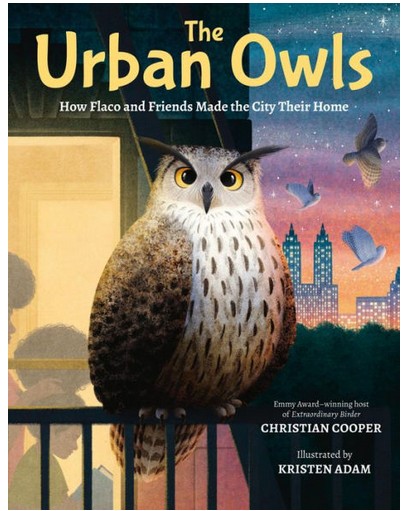
The Urban Owls

Lifelong birder Christian Cooper introduces us to the majestic owls that have made New York City their home, beginning with Flaco, the Eurasian Eagle-Owl that escaped from the Central Park Zoo. When Flaco escaped, “some people worried that he might not survive. But Flaco surprised everyone—he could do just fine on his own.”  

Another owl that makes its home in Central Park is Barry the Barred Owl, who likes to roost in the same spot along a path in the park. Barry captivated “curious people” who liked to go see her. Geraldine, the Great Horned Owl, also made Central Park her own, “even though she hurt her foot and it never healed right. Geraldine doesn’t let that stop her.”  

But not all owls want to make Central Park their home. Rockey the Saw-whet Owl lived in the quiet woods until she fell asleep and woke up in the big city. Her tree ended up in Rockefeller Center, “where it would soon be decorated with lights for everyone to see.” Luckily, “kind people helped Rocky get far away from the city and back to the woods.”  

The Urban Owls introduces readers to New York City’s owls while including many interesting facts about each type. The beautiful digital spreads focus on the owls by using light from the moon, neon signs, and the glow of windows. While all readers will find the owls beautiful, older readers may want to try to identify the owls’ differences, which are explained in the back matter. The backmatter also includes information about how to spot an owl and how to be a good owl neighbor. 

Throughout the book, Cooper draws parallels between the owls and people. For example, Flaco “worked the night shift, like most owls do (and like some people do too).” The illustrations also feature other animals, including a lightning bug, mice, a squirrel, and a dog in the window of an apartment. Plus, readers can learn about perseverance through Geraldine, who survives despite an injury: “A body that’s different doesn’t mean you’re not able to do great things.” 

Younger readers will enjoy examining the illustrations in The Urban Owls; however, the text-heavy pages and the inclusion of numerous facts make the book more suitable for older readers. Although The Urban Owls is a picture book, the story must be read aloud to young children, rather than read independently by the child. Readers may need help with some of the more advanced vocabulary, such as roost, perch, and fiercer. The Urban Owls is worth reading because it educates readers about owls and helps them become interested in protecting wildlife. Readers who want to learn more about animals should also read Polar Oceans by Bobbie Kalman and One Tiny Turtle by Nicola Davies. The Rocket Series by Nathan Bryon will also encourage a child to care for our world.   

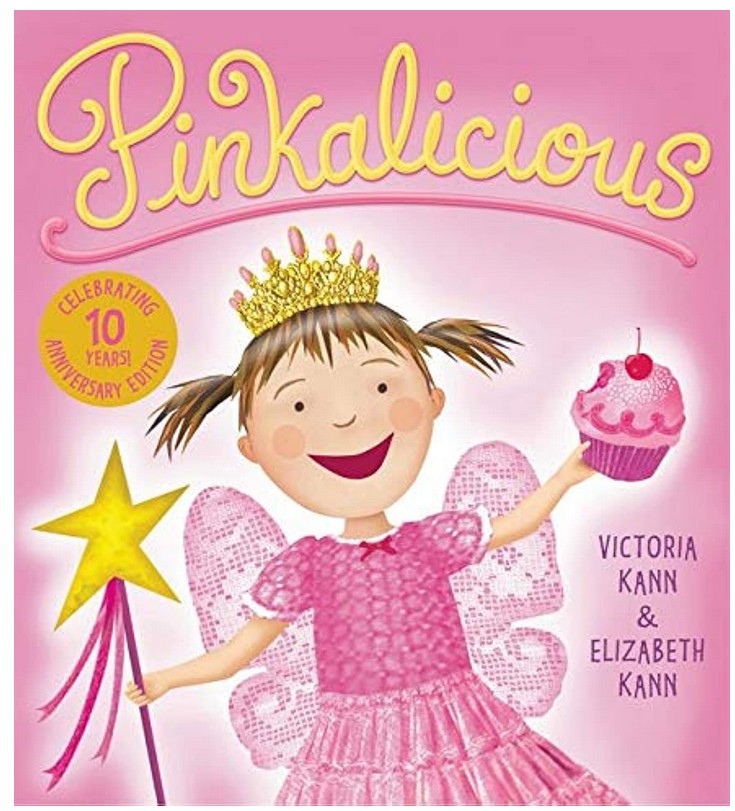
Pinkalicious

Pinkalicious begins on a rainy day, when Pinkalicious’ mother suggests that the family bake cupcakes. Pinkalicious adamantly requests that they make the treats pink, and when they are finished, she finds them delicious. After waking up from her nap, Pinkalicious continues to ask for more treats, and she eats more cupcakes after dinner. This prompts a sugar high that prevents her from sleeping for some time. The next morning, Pinkalicious awakens to find that her skin and hair have turned pink, the color of the cupcakes.

Pinkalicious is delighted at her new look, calling herself “Pinkerbelle.” After discovering that their daughter’s pink hue cannot be removed, her parents take her to the doctor. He diagnoses her with “Pinkitis” and prescribes a new diet of only green food. Pinkalicious, her little brother Peter, and her mother stop by the park on their way home from the doctor, and Pinkalicious’ skin causes her to attract a terrifying swarm of insects and birds. Despite this, when they get home, Pinkalicious asks for another pink cupcake. Her parents instead give her a dinner of green vegetables, but after they go to sleep, Pinkalicious sneaks one more cupcake. To her shock, she wakes up bright red the next day. Understanding the necessity of the doctor’s orders, she eats piles of green food to reverse the effects of the cupcakes. The trick works, and Pinkalicious returns to her normal color. The story ends with her little brother Peter appearing with pink skin and a partially eaten treat in his hand, signifying that he has eaten the rest of the cupcakes.

Pinkalicious teaches the importance of restraint and appreciating good things in moderation. The main character’s refusal to limit her cupcake consumption is initially of no concern to her, but she eventually faces the startling consequences. She learns that, although the cupcakes are delicious, she should not eat too many. She also learns to listen to the adults in her life, including her parents and her doctor, when they advise her on what to do. It is only by doing so that she cures herself.

The story’s plot conveys the central message through the logical progression of Pinkalicious’ actions; the lesson she learns is directly tied to her decisions and character arc. However, despite the story’s insistence that pink sugary foods are best in moderation, Pinkalicious does little to convince readers that green, healthy foods are good. They are the catalyst for the main character’s recovery, yet she describes them as icky and gag-worthy.

Pinkalicious features full-size illustrations on every page that mimic collages, with characters and objects that appear almost glued onto the background, rather than being drawn. The text is in a large font that is easy for children to read themselves, and each page may contain anywhere from zero words (in which case, the adjacent page may have a few paragraphs) to several lines.

Pinkalicious is a must-read story suitable for all ages, thanks to its simple yet timeless message. Young and old readers can understand the moral about self-restraint, and its unique aesthetic makes for an engaging experience that readers will not soon forget.

Sexual Content

  • None

Violence

  • The main character, Pinkalicious, is “surrounded by bees, butterflies, and birds” at the park due to her pink skin, and the illustration shows her fearful expression as she is circled by a whirlwind of creatures.

Drugs and Alcohol

  • None

Language

  • In response to her doctor’s recommendation that she eat healthy and green food, Pinkalicious narrates “BOO!” and “YUCK!”

Supernatural

  • The story revolves around a young girl who contracts “Pinkititis” after eating too many pink cupcakes.
  • Pinkalicious later turns red after eating one more cupcake: “I was a deeper pink than I had ever seen. In fact, I was no longer pink. I was red!”

Spiritual Content

  • None

by Gabrielle Barke

My Friend Maggie

Paula and Maggie have been friends forever. Paula thinks Maggie is the best—until mean girl Veronica says otherwise. Suddenly, Paula starts to notice that Maggie is big and clumsy, and her clothes are sort of snuggish. Rather than sticking up for Maggie, Paula ignores her old friend and plays with Veronica instead. Luckily, when Veronica turns on Paula, Maggie’s true colors shine through.  

Paula, a groundhog, enjoys spending time with Maggie, an elephant. The two are completely different, but they still have fun together. Maggie helps Paula “reach the reddest apples,” and “lifts me up when I can’t see.” But that all changes when Veronica starts whispering in Paula’s ear. Suddenly, Paula is embarrassed to be seen with Maggie because she’s “too big,” “clumsy,” and her clothes are “a little snuggish.” Soon, Paula spends all her time with Veronica and purposely ignores Maggie.   

When Veronica starts teasing Paula, saying her “teeth stick out too far,” Maggie steps in and defends Paula. Even though Paula’s behavior had hurt Maggie, she forgives her friend, proving that “she’s the best.” The heart-warming story will resonate with young readers who have felt left out. Just like Paula, readers will learn the value of friendship as well as the dangers of trying to fit in.   

My Friend Maggie uses brightly colored illustrations to bring the story to life. The illustrations magnify the difference between Paula and Maggie, showing that you can be friends with people who are different from you. The other characters include a polar bear, a pig, a panda, and more adorable animals. The animal characters add interest and humor to the story. For example, readers might giggle when the animals are having a pool party because the pig is wearing a snorkel, and the rabbit has floaties on its arms. On another page, Maggie “hides” behind a small tree, and is clearly visible.   

Each page features large illustrations, and most pages contain only a single sentence, making My Friend Maggie the perfect book to read to a child when time is short. However, the book also gives adults an opportunity to discuss bullying, fitting in, and friendship with young readers. Preschool and kindergarten students learning how to navigate friendships will also benefit from reading the following books: Clovis Keeps His Cool by Katelyn Aronson, Shawn Loves Sharks by Curtis Manley, and Angus All Aglow by Heather Smith.  

Sexual Content 

  • None 

Violence 

  • None 

Drugs and Alcohol 

  • None

Language 

  • None 

Supernatural 

  • None 

Spiritual Content 
  • None 

Dogku

Wandering through the neighborhood in the early-morning hours, a stray pooch follows his nose to a back-porch door. After a bath and some table scraps from Mom, the dog meets three lovable kids. It’s all wags and wiggles until Dad has to decide if this stray pup can become the new family pet. Has Mooch finally found a home? Told entirely in haiku by master storyteller Andrew Clements, this delightful book is a clever fusion of poetry and puppy dog. 

Dogku is a tale full of joy and laughter that focuses on a stray dog, Mooch, who finds a new home. Like any puppy, Mooch loves playing with kids, but when he gets lonely, he causes mischief by rolling around in the laundry basket and trash and finally taking a nap. Clements tells Mooch’s story using haikus, which adds to the book’s joyful tone.  

Young readers will fall in love with Mooch and his family—a traditional family with three kids. The illustrations use primary colors that focus on the adorable dog and the family’s facial expressions. Each page has a large illustration that will pull at your heartstrings. While some two-page spreads have two haikus, most of them only have one, which makes the book a quick read. 

Dogku is the perfect book for anyone who loves dogs. The story highlights the fun of having a pet. But be warned—if you do not currently have a pet, your children will be clambering for one after reading Dogku 

Sexual Content 

  • None 

Violence 

  • None

Drugs and Alcohol 

  • None 

Language 

  • None 

Supernatural 

  • None

Spiritual Content 
  • None 

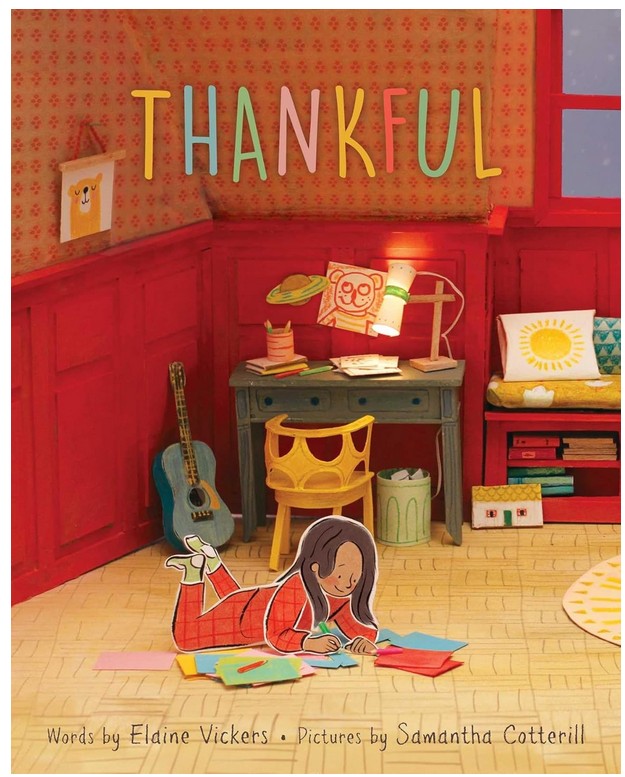
Thankful

At the first snowfall of winter, a young girl and her family begin a yearly tradition: they jot down everything they are thankful for on strips of paper. These strips are then assembled into “thankful chains,” which decorate the family’s house giving comfort during the cold months. While the chains are easy to make, the girl finds herself stumped as she faces the blank pieces of paper. It’s difficult to list all the things she has been thankful for during an entire year. The girl decides to start with the things in her room, like her bed and her books. By finding the value and comfort in these small things, she is able to find more things to be thankful for than she believed. 

Thankful is a moving and inspiring book by award-winning author Elaine Vickers. The girl’s exercise allows her to fully appreciate the value of the little things in her life, which have wider effects on her than she realized. Looking about her room, she realizes she is thankful for her dog, who comforted her before her first day of school. This small act helped the girl understand that her nerves were perfectly natural. The girl finds that she is thankful for pen and paper, which let her create stories and express her creativity. By the end of her exercise, the girl’s chain is longer than she had expected.  

The book is accessible to younger readers, with simple vocabulary and only one to six short sentences per page. Vickers’ lullaby-like prose is perfectly matched by Samatha Cotterill’s stunning illustrations. Characters are drawn on cutout pieces of paper, then placed in studio-lit, hand-made dioramas, mixing traditional illustration with photography. Cotterill’s style is a perfect match for Vicker’s story: familiar and comforting elements portrayed in a way you have never seen before. 

Thankful is a warm story that invites readers to find value and beauty in their everyday lives. Thankful is an excellent pick if you are looking for a comforting nighttime read with a strong message. 

Sexual Content 

  • None

Violence 

  • None 

Drugs and Alcohol 

  • None 

Language 

  • None 

Supernatural 

  • None 

Spiritual Content 
  • None 

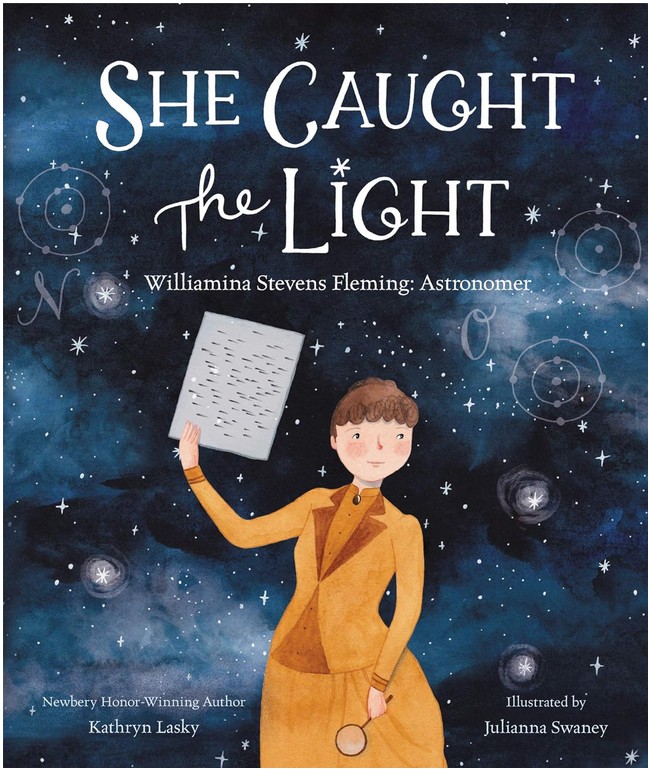
She Caught the Light: Williamina Stevens Fleming: Astronomer

Williamina Fleming changed the course of astronomy by devising the world’s first classification system of the universe. Alongside paving the pathway for future discoveries, Fleming also showcased the importance of women’s role in science and astronomy by becoming the first woman to become the curator of astronomical photographs. However, Fleming’s place in history didn’t come easy, as her success required hard work and patience.  

Williamina Fleming, affectionately known as “Mina,” was born in Dundee, Scotland on May 15, 1857. As a child, Mina showed interest in her father’s photography work and constantly asked questions about the nature of photographs, such as, “Why do the chemicals work?” or “How does the light get onto the plate?” After Mina’s father died, she became the maid for Professor Pickering, the renowned director of the Harvard College Observatory. For a while, Mina did the typical jobs of dusting, sweeping, and scrubbing, but when Professor Pickering became frustrated at his assistants with their astronomical calculations, Pickering turned to Mina for the job. Could Mina seize this opportunity to showcase her intelligence and change astronomy forever? 

The book gives a third-person narration about Mina’s life, demonstrating how her persistent determination, calm composure, and astute decisions impacted her growth from a curious child to an influential lady. The story depicts Mina as a strong, intelligent, and inquisitive person, and her ability to ask questions and learn from others makes her an aspiring and influential figure. Many readers will relate to Mina’s desire to know the secrets of the cosmos, and her slow climb to the position of curator of astronomical photographs feels realistic and genuine. 

She Caught the Light is a rousing illustrated story that exemplifies the power of hard work and patience. After all, Mina’s chance to showcase her intelligence and impact on the astronomical world took time. When her opportunity finally arose, Mina built a long-lasting career that served as a testament to seizing the opportunity. The book also encourages readers not to grow disappointed when things take time to develop. For Mina, although she started as a maid, her past gave her the foundation to eventually create “a portrait of the universe that astronomers would use for over a century.” 

She Caught the Light features simple, watercolor illustrations that aid the story’s plot with helpful character depictions and scenery. The story also contains supplementary material at the end of the book, such as a timeline, glossary, biography, and author’s note, which complements and fortifies Mina’s legacy as “a hero of the stars.” However, for an illustrated children’s book, She Caught the Light uses complex concepts, such as the inner workings of a spectroscope, and large, tricky paragraphs that may frustrate younger readers. As a result, She Caught the Light is a tale for more experienced readers. Mina’s story will leave readers more informed, inspired, and curious about the celestial objects in our skies.  

Sexual Content 
  • None 

Violence 

  • None 

Drugs and Alcohol 

  • None 

Language 

  • None

Supernatural 

  • None 

Spiritual Content 
  • None 

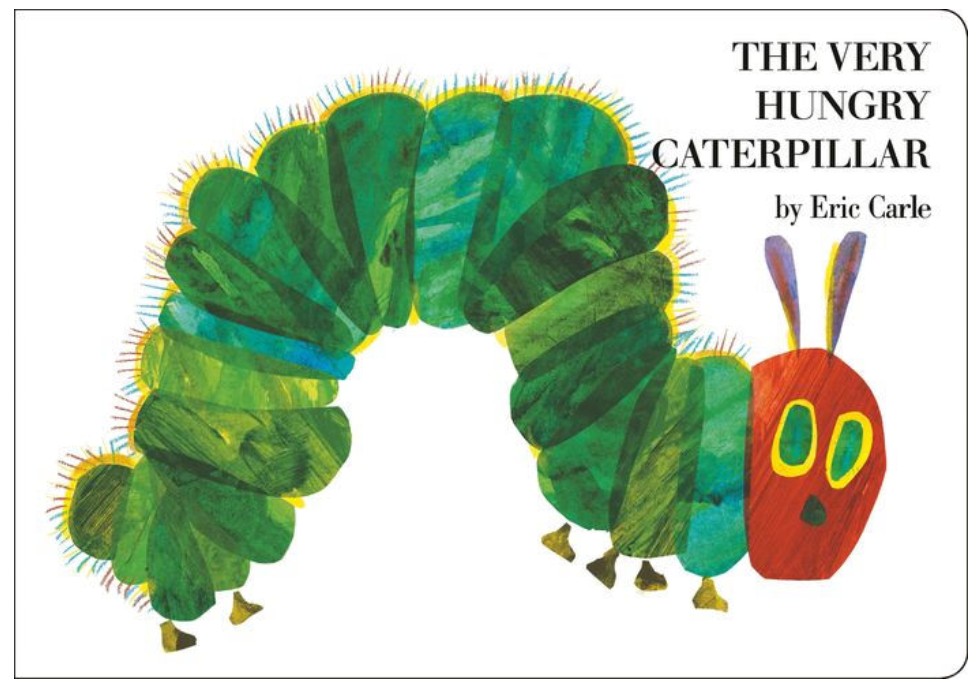
The Very Hungry Caterpillar

Told in the third person, The Very Hungry Caterpillar follows a small caterpillar on a weeklong journey of eating, growing, and finally transforming into a beautiful butterfly. Despite not being a human character, the caterpillar is curious and determined, making him relatable to young children who are beginning to explore the world. His constant hunger, mistakes, and eventual transformation mirror the stages of growth young readers will experience themselves, making him an admirable figure.

While there are no side characters, the caterpillar does interact with a variety of foods that are introduced in a rhythmic and engaging way. A pear, an apple, cake, and sausage are some foods this caterpillar indulges in, making it humorous and teaching early learners’ skills such as counting, identifying colors, and understanding the days of the week. The foods guide the caterpillar through his transformation and drives the plot.  The sun, moon, and cocoon can also be viewed as additional side elements that represent the passing of time.

The book combines vibrant collage illustrations with simple text to encourage reader participation. Carle’s use of repetition makes it a strong read-aloud book that encourages language development and memory retention. There is also an interactive factor, as the book features holes in the paper where the caterpillar eats, making it a great choice for tactile learners by keeping them engaged. Plus, the plot and pacing are the perfect fit for young readers.

The Very Hungry Caterpillar is a childhood classic for a reason. It’s a joyful story about change, patience, and self-discovery.  Even with its simplicity, it’s heartfelt and blends early education with imagination and wonder. The themes of change, curiosity, and growth are truly powerful. Overall, The Very Hungry Caterpillar carries a meaningful message that even the smallest beginnings can lead to something beautiful.

by Rayna Burlison

Sexual Content

  • None

Violence

  • None

 Drugs and Alcohol

  • None

Language

  • None

Supernatural

  • None

Spiritual Content
  • None


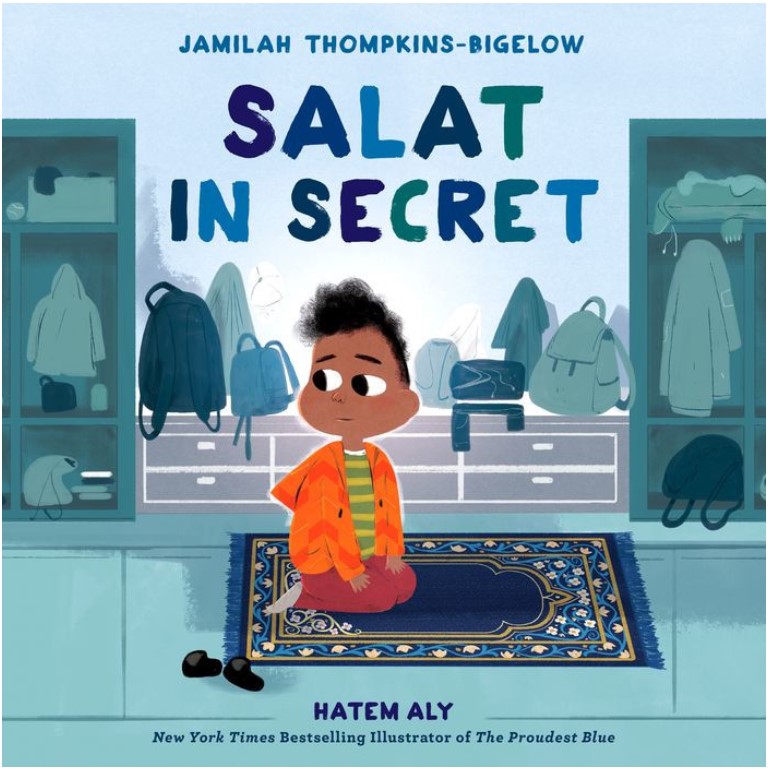
Salat in Secret

In this beautiful story of community, family, and acceptance, a boy named Muhammad receives a special salat rug on his seventh birthday. Seven is the age when Muslim children are encouraged to pray, and Muhammad is determined to do all five daily prayers on time. But one salat occurs during the school day—and he’s worried about being seen praying at school. His father parks his truck to worship in public places, and people stare at and mock him. Will the same thing happen to Muhammad?

In the end, with help from his teacher, he finds the perfect place to pray. Salat in Secret, created by two highly acclaimed Muslim creators, is a poignant and empowering look at an important facet of Islam that many observant children cherish but might be scared to share. 

Muhammad’s story illustrates how participating in salat is difficult in the United States. Muhammad watches his father pray on a public street. “Once, some teenagers laughed. Daddy kept moving up and down, slow and brave. I watched from the truck, hands shaking.” Because of this experience, Muhammad is afraid to talk to his teacher about his desire to pray during class. In the end, Muhamad bravely talks to his teacher, and she helps him find a place where he can pray. 

Muhammad’s emotions are explained in ways that children will understand. For example, “I open my mouth. I try to push my questions out, but in my head, I see people starting at Daddy. I hear rough laughs. Would Mrs. Baker think salat is funny?” The story also includes illustrations that show other people’s negative reactions when Muhammad’s father prays. One illustration shows two police officers looking confused, and another illustration shows an angry woman scowling at Muhammad and his father. 

Salat in Secret uses simple language and bright illustrations to help children understand the importance of salat. Each page has one to seven sentences with basic vocabulary and a glossary defining the Arabic words. The story focuses on Muhammad’s fear of praying in public and his need for bravery in order to share his desire to pray. While Muhammad has witnessed others’ negative reactions to his father’s prayer, Muhammad also knows that prayer makes him feel “sunniness inside.” 

Anyone who wants to foster acceptance and understanding of other people’s cultures will find Salat in Secret an engaging book that positively portrays the Muslim tradition of salat. In addition, the relationship Muhammad has with his father is endearing. In the end, readers will celebrate when Muhammad finds the courage to advocate for his need to pray. Readers will also learn the importance of speaking up when they need help. While Salat in Secret will resonate with Muslim children the most, the book can also teach non-Muslim children the importance of respecting other’s beliefs.  

To help young readers understand the importance of accepting people of different cultures, read the picture books Golden Domes and Silver Lanterns: A Muslim Book of Colors by Hena Khan, All Are Welcome by Alexandra Penfold, and Danbi Leads the School Parade by Anna Kim. 

Sexual Content 

  • None 

Violence 

  • None 

Drugs and Alcohol 

  • None

Language 

  • None 

Supernatural 

  • None 

Spiritual Content 
  • The book explains the Muslim tradition of prayer, including wudu and salat.

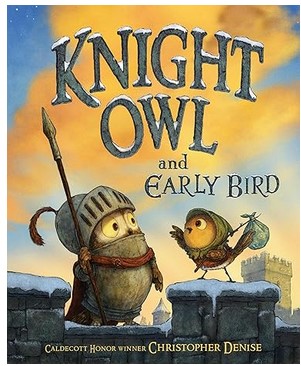
Knight Owl and Early Bird

In this exciting adventure and follow-up to the #1 New York Times bestselling and Caldecott Honor award-winning classic, Knight Owl makes an unlikely friend in the over-zealous Early Bird—who wants to be a brave knight, too.  

Early Bird wants to be brave and protect the castle, just like Knight Owl. But she falls asleep on the job and then keeps her hero up during the day with her enthusiastic chattiness, well-meaning questions, and cheerful owl impersonations. But there are strange happenings in the forest, and soon Knight Owl and Early Bird find themselves in the throes of danger. Will these two learn to work together to keep themselves and the kingdom safe?  

Adventurous Early Bird likes to chatter, ask questions, and be busy all day. Her cheerful nature is endearing, and readers will be sad when Knight Owl tells Early Bird, “You are not an owl! You are not a knight! You are a very early bird . . . Please go away.” Later, Knight Owl regrets his actions and goes to the forest to search for Early Bird. When the wolves surround Knight Owl, Early Bird—and a group of very large knights—come to the rescue. Ultimately, Early Bird and Knight Owl learn to respect each other’s sleeping schedules. Early Bird keeps busy all day, Knight Owl paroles the castle at night, and “the two friends talked about their day and night over pancakes.”  

Knight Owl and Early Bird begins with a dark and foreboding picture of wolves in the forest that is reminiscent of Beauty and the Beast. Many of the castle illustrations are dark and dreary, with cute little details such as the dragon stuffed animal that Knight Owl snuggles with and the pogo stick horse that Early Bird rides. The pictures are amazingly detailed, and young readers can spend hours studying them. Each time you read through the book, you are sure to find another cute detail that will make you smile.  

Even though Knight Owl and Early Bird is a picture book, the story is intended to be read aloud to a child rather than for the child to read it for the first time independently. Each page has one to eleven sentences. The story’s repetition and onomatopoeia make Knight Owl and Early Bird a fun book to read aloud. However, the story’s length and text-heavy pages may make it difficult for really young readers. 

Knight Owl and Early Bird is a wonderful story highlighting the importance of embracing your differences. Knight Owl and Early Bird are adventurous and brave, but their personalities and sleep schedules are completely different, which doesn’t stop the two knights from being friends. In addition, even though Knight Owl hurts Early Bird’s feelings, the two work through their difficulties and come to a compromise, which is an important skill for everyone. Readers will fall in love with both Knight Owl and Early Bird as they learn that bravery and forgiveness are needed in every friendship.  

Sexual Content 

  • None 

Violence 

  • While the story hints that wolves have been eating knights, most of the story revolves around Knight Owl and Early Bird’s contrasting sleep habits.  
  • Knight Owl enters the forest, and a pack of wolves surrounds him. Early Bird, who is carrying a large wooden spoon, yells, “Stop! Stop! Stoppity! Stop! Stop!” When the wolves see the large knights behind Early Bird, they run.  
  • An illustration shows the knights chasing the wolves. The knights are carrying weapons. 

Drugs and Alcohol 

  • None 

Language 

  • None 

Supernatural 

  • None 

Spiritual Content 
  • None

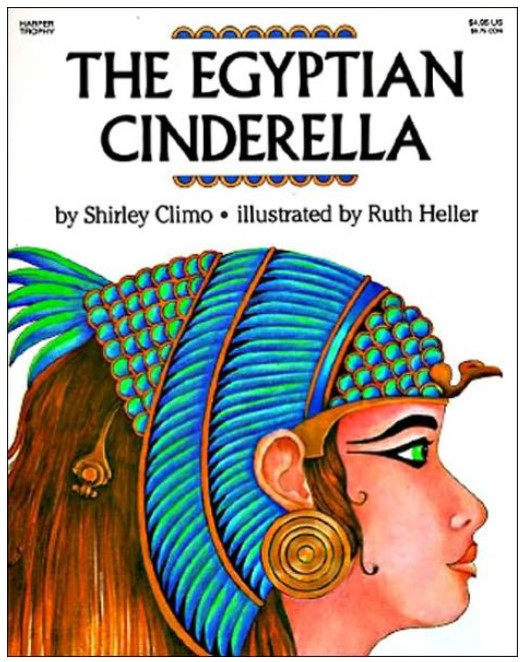
The Egyptian Cinderella

This Egyptian spin on the classic Cinderella tale was initially recorded in the first century by a Roman historian and is retold here by folklorist Shirley Climo. 

Poor Rhodopis! She has nothing—no mother or father, and no friends. She is a slave from the far-off country of Greece. Only the beautiful rose-red slippers her master gives her can make Rhodopis smile. So, when a falcon swoops down and snatches one of the slippers away, Rhodopis is heartbroken. For how is she to know that the slipper will land in the lap of the great Pharaoh himself? And who would ever guess that the Pharaoh would promise to find the slipper’s owner and make her queen of all Egypt? 

The Egyptian Cinderella follows the same story format as the original fairy tale. However, instead of stepsisters, Rhodopis is treated badly by three servant girls who tease Rhodopis about her looks. Instead of having brown eyes, straight hair, and skin “like copper,” Rhodopis has green eyes and hair that “the breeze blew. . . into tangles.” However, her unique looks are what sets Rhodopis apart from the others. The Pharaoh says, “She is the most Egyptian of all…For her eyes are as green as the Nile, her hair as feathery as papyrus, and her skin the pink of a lotus flower.” 

Illustrator Ruth Heller uses bright and bold colors to bring Rhodopis’ world into vivid detail. Almost all of the illustrations include aspects of nature, such as plants, birds, and a monkey. The jewel-colored illustrations help highlight Egyptian culture. Even though The Egyptian Cinderella is intended for young readers, many of the pages are text-heavy, which may make it hard for younger readers to sit through a reading of the book. In addition, the complex sentence structure and advanced vocabulary make the book best read to a child rather than for the child to read it independently. 

Anyone who enjoys fairy tales will find Rhodopis’ story captivating. The beautiful illustrations and familiar story will allow readers to imagine Egypt. In the end, the Pharaoh overlooks the fact that Rhodopis was a slave, which gives the story a happy-ever-after that everyone will enjoy. The story is based on Rhodopis, a Greek slave girl who indeed married a Pharaoh, which makes the story’s conclusion even sweeter. Readers who enjoy fairytales can find more retellings by reading the Whatever After Series by Sarah Mlynowski and the Once Upon a Fairy Tale Series by Anna Staniszewski. 

Sexual Content 

  • None 

Violence 

  • Rhodopis is kidnapped and sold into slavery.

Drugs and Alcohol 

  • None 

Language 

  • None 

Supernatural 

  • None 

Spiritual Content 

  • The story mentions “Ra the Sun” climbing into the sky. 
  • The god Horus appears as a falcon. When Rhodopis sees him, she “bowed her head and felt a rush of air on the back of her neck.” 
  • When a falcon drops a shoe in the Pharaoh’s lap, he says, “The god Horus sends me a sign!” Afterward, the Pharaoh searches for the maiden to whom the shoe belongs.

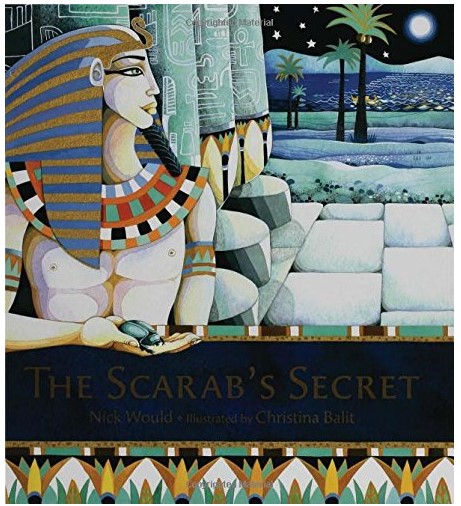
The Scarab’s Secret

The tiniest of creatures can change the fate of a great Pharaoh.

The chance meeting of Khepri, the small scarab beetle, and a powerful Pharaoh turns out to be a life-altering experience for both, ultimately shaping the fate of the young leader. After Khepri uncovers a mysterious plot to murder the Pharaoh, he is determined to put an end to it. The tiny scarab with a big heart helps the Pharaoh avert danger and saves his life. 

The Scarab’s Secret is a beautiful story that shows that even small things—like the scarab—can make a big impact. The scarab beetle narrates his own story to show the reader how he came to be honored. When the scarab is accidentally taken into the Pharaoh’s tomb, he learns that one of the passageways has a trap. When the Pharoah’s men try to lead him down the trap, the scarab warns the Pharoah and saves his life. The scarab’s tale shows “how even a little beetle can play its part in the life of a great prince.” 

Christina Balit’s illustrations use vivid colors and geometric shapes to bring Egypt to life. The first illustration shows the Pharaoh kneeling in a field with the Nile River in the background, the prince carefully holding the scarab in his hand. This scene sets up the scarab’s importance. The other pages focus on the Pharaoh’s tomb, depicted with elaborate illustrations in predominantly gold and blue. Readers will be captivated by the detailed illustrations and will have fun finding the scarab on each page. 

While The Scarab’s Secret is intended for young readers, many of the pages are text-heavy, which may make it hard for wiggly readers to sit through a reading. The complex sentence structure and advanced vocabulary make the book best read to a child rather than for the child to read it independently.

Anyone who wants to introduce Egyptian culture to a child will find The Scarab’s Secret an entertaining story. The fact that the Pharaoh takes time to notice the scarab reinforces the importance of nature and the idea that everything has a purpose, even a scarab. The author’s note gives more information about pharaohs. Young readers who would like to learn more about Egypt should also read Escape from Egypt by Wendy Mass as well as Mary Pope Osborne’s books Mummies and Pyramids and Mummies in the Morning 

Sexual Content 

  • None 

Violence 

  • The Pharaoh’s men plan to murder him. 

Drugs and Alcohol 

  • None 

Language 

  • None 

Supernatural 

  • None  

Spiritual Content 

  • The god Ra is mentioned several times. “The great god Ra created all things. . . This beetle is as precious to Ra as the pharaoh himself. Ra has placed him here for a reason.”  
  • This historical background at the end of the book discusses the Egyptians’ belief in gods. 

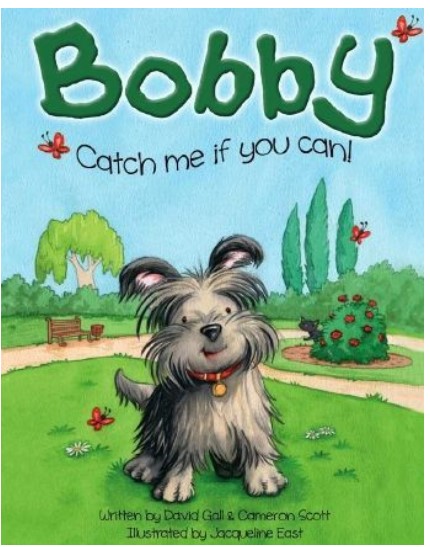
Bobby: Catch Me If You Can

Bobby is a cheeky little dog that likes chasing cats. So when a big black cat disturbs his daily nap, it results in a chase full of twists and turns that are not always to Bobby’s liking.   

Readers will fall in love with the adorable long-haired terrier, Bobby, who causes a bit of mischief as he chases a black cat. The story includes some unexpected humor, such as when the cat runs into a joke shop, and then “the cat leaped into a box. But when it popped its head out, it looked just like a fox. The fox was just a mask of course, stuck on the brave cat’s head. But Bobby didn’t know that, and with such a fright, he fled. Now the cat ran after Bobby, with the mask upon its face.” The cute full-page illustrations are adorable and will help the readers understand the jokes. 

Bobby: Catch Me If You Can uses text of different shapes and sizes to highlight specific words. In addition, the book uses onomatopoeia and rhyme, which makes the story fun to read aloud. Each page has two to four sentences printed in oversized text. The full-colored illustrations follow the dog’s chase and include fun details. For example, when Bobby follows the cat into the joke shop, readers will see a jar of colorful eyes, a frog, masks, and the cat jumping out of a fox in the box (similar to a jack-in-the-box).  

The book was inspired by Greyfriars Bobby, who became known in 19th-century Edinburgh for spending 14 years guarding his owner’s grave. Even if readers are unfamiliar with the references to the famous story, Bobby: Catch Me If You Can will quickly become one of their favorite books because the combination of words and pictures makes the story enjoyable to read. The book can’t be purchased through Amazon. However, you can order it through Lomond Publishing. Any child who loves animals will find Bobby: Catch Me If You Can an entertaining book that they will want to read over and over again.

Sexual Content 

  • None 

Violence 

  • None 

Drugs and Alcohol 

  • None

Language 

  • None 

Supernatural 

  • None 

Spiritual Content 

  • None 

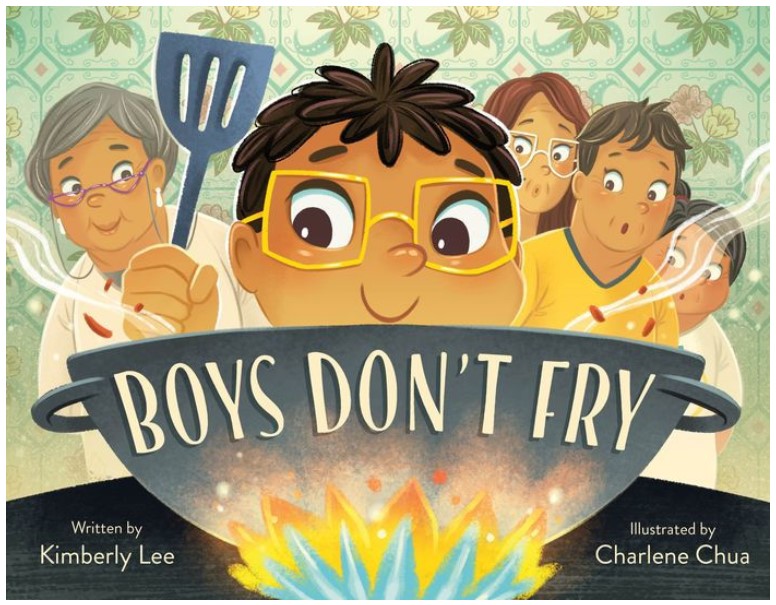
Boys Don’t Fry

It’s the eve of Lunar New Year, and Jin can’t wait for the big family reunion dinner. He loves the aromas and the bubbly chatter coming from the kitchen. His grandmother, Mamah, is cooking up a storm! 

As his aunties dice, slice, and chop, there’s nothing Jin wants more than to learn about the history of his family’s cooking and to lend them a helping hand. After all, no one else can tell the difference between ginger and galangal as well as he can! But his aunties shoo him away, claiming he’ll just get bored or be in the way. Luckily, Mamah steps in and asks Jin to help her prepare their special meal. Soon, Jin is squeezing, slicing, and stirring, too! 

Jin is a loveable Malaysian boy who doesn’t understand why he isn’t allowed to help prepare dinner for the Lunar New Year. However, Mamah doesn’t exclude Jin just because he’s a boy. When Mamah leads him into the kitchen, Jin’s joy is palatable, and he loves the smells and colors of the food. “He watched as the fire danced in the same way his insides were leaping, the pot on the stove bubbling over like his laugh.” When the meal was served, everyone agreed that “it was the best meal they’d ever had. Mamah told them it was because they had a special ingredient this year.”  

Boys Don’t Fry is a celebration of the author’s Peranakan Chinese heritage, including the food, family, and traditions. Every full-page illustration pops with vivid colors that enhance the feel of family and culture. Readers will love seeing Jin’s eyes widen in excitement and the joy on his face as he helps his Mamah cook. Each page has one to five complex sentences that are intended to be read aloud to a child rather than for a child to read independently. However, the dialogue, the onomatopoeia, and the beautiful descriptions make Boys Don’t Fry a joy to read.  

The family’s love of each other shines in Boys Don’t Fry, but Jin’s family initially doesn’t understand why he wants to cook. With Mamah’s help, he is allowed to defy gender expectations and proves that boys can also cook a traditional dish, Peranakan Pongteh Chicken. Jin’s story will warm your heart and make you hungry. The author’s note includes her family’s recipe for Peranakan Pongteh Chicken so readers can savor the story and the stew. For more stories that show how food can bring people together, read Gigi and Ojiji: Food for Thought by Melissa Iwai and Octopus Stew by Eric Velasquez. 

Sexual Content 

  • None 

Violence 

  • None 

Drugs and Alcohol 

  • None 

Language 

  • None 

Supernatural 

  • None 

Spiritual Content 

  • None

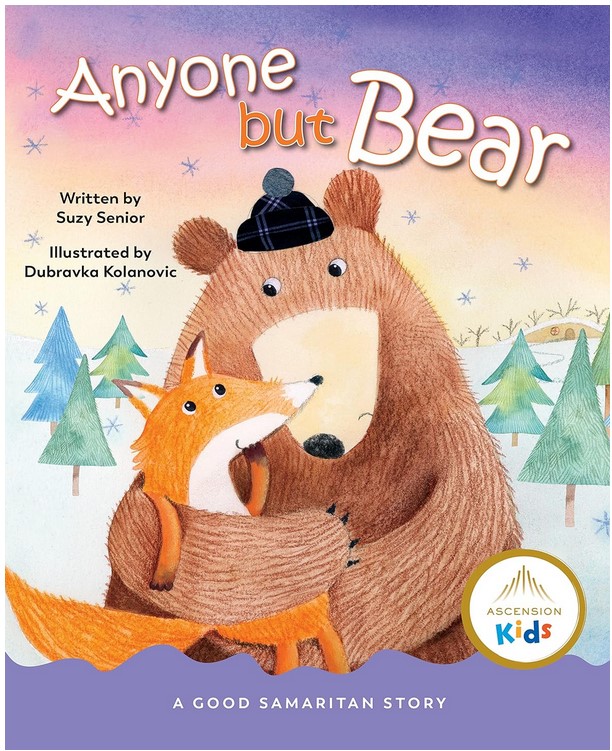
Anyone But Bear

Excited to plan a party for his closest friends, Fox scampers around the forest thinking about whom he should invite and setting up decorations, snacks, and games. His fun is brought to a halt when he runs into falling rocks from the mountain above. Who will stop to help Fox when he needs it most? Will his closest friends stop to help him, or will he be surprised by who lends a helping hand? 

Anyone but Bear is a children’s story based on the parable of the Good Samaritan told by Jesus. This engaging and age-appropriate story introduces children to the teachings of Jesus. When Fox plans his party, he gives essential facts about two of his animal friends—Deer and Squirrel. Deer is beautiful and interesting; Squirrel always brought snacks. These facts come into play later in the story when Deer sees Fox lying in a heap. Deer doesn’t help because Fox is “a mess.” Deer thinks, “I shouldn’t really be seen with anybody in that state.” When Squirrel sees Fox, his first thought is about the nuts he is carrying. Squirrel thinks, “If I put these nuts down, they might be stolen.”  

When Fox is in trouble, Deer and Squirrel don’t help. On the other hand, Bear—fierce-looking and terrifying—stops to help Fox. Bear takes Fox back to his den, gives him food, and reads a story to the baby fox cubs. “Fox never forgot the love that Bear had shown him. Anyone could have stopped to help—but Bear actually did!” Fox realizes that he misjudged Bear based on his appearance. 

The story’s last page gives a list of questions that will help readers connect to the story. For example, “We are sometimes told to ‘love our neighbour’ but what does that really mean? Who even is our neighbour?” With the help of Fox and his friends, young readers will discover the power of kindness, how to be a good friend, and God’s call to treat others with love and respect. 

Illustrator Dubravka Kolanovic uses soft colors that appear in nature to bring Fox’s world to life. The full-page illustrations have fun elements. For example, a snail, an owl, and a bird are near when Fox is injured. These three reappear on multiple pages. For example, the snail and bird reappear, and this time, the snail is clearly frowning and worried. Each page has one to five sentences that are intended to be read aloud to a child rather than for the child to read it for the first time independently. Anyone but Bear is a quick read and has many elements, such as onomatopoeia, alliteration, and repetition, that make it fun to read aloud.

Anyone but Bear teaches important lessons based on the Bible’s parable; however, the book never references Jesus, making the story appropriate for believers and nonbelievers. The story’s message should be taught to all children—don’t make assumptions based on how someone looks and help others in need. For more inspirational books based on Biblical concepts, meet a curious raccoon in the Adam Raccoon Series or go on an adventure through time by reading the The Secret of the Hidden Scrolls Series by M.J. Thomas.

Sexual Content 

  • None 

Violence 

  • None 

Drugs and Alcohol 

  • None

Language 

  • None 

Supernatural 

  • None 

Spiritual Content 

  • None 

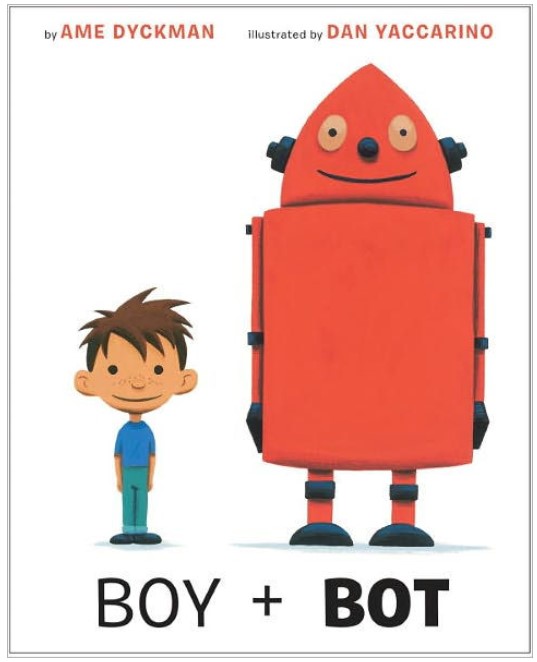
Boy + Bot

From bestselling author Ame Dyckman comes a simple and charming story sure to entertain readers of all ages. One day, while collecting pinecones, a boy encounters a lost robot. The two become fast friends, and the boy’s creativity and adventurous spirit delight the pragmatic robot. However, the pair’s fun comes to an abrupt halt when the robot bumps his off-switch. Concerned for his friend, the boy takes the deactivated robot home. There, he treats and cares for the robot in the only way he knows how: he feeds him applesauce, reads him a story, and tucks him in for bed.   

That night, the power switch bumps again and awakens the robot. Assuming that the sleeping boy is deactivated, the robot carries the boy to his home: a laboratory belonging to the robot’s kind inventor. There, the robot treats and cares for the sleeping boy in the only way he knows how: he reads him an instruction manual. He prepares a battery for him. When the robot’s inventor returns home, the boy finally awakens. The boy and robot are delighted to see that the other is perfectly okay. The inventor drives the boy back to his parents, but the boy and robot agree to play tomorrow. 

Boy + Bot is a very easy read, with only one to seven short sentences per page and no challenging vocabulary. The book is illustrated by prolific illustrator Dan Yaccarino. An author himself, Yaccarino matches the book’s simple story with illustrations that do not draw the reader’s focus away from the narrative. The main characters’ outfits are drawn with vibrant colors that catch the reader’s eye. Meanwhile, the backgrounds are limited to no more than two muted colors, and many pages have no background at all. Through this, the reader is able to focus on the Boy and Bot’s story without getting distracted by details of their environment. 

While not a challenging read, Boy + Bot is a warm and comforting story that teaches young readers the value of accepting and uplifting their friends. Boy and Bot could not be any more different on the surface, but their mutual love of play and exploration forms a quick and tight bond. If you are looking for a fast and easy read that tells an enjoyable story with a strong message, Boy + Bot is an excellent choice. 

Sexual Content 

  • None 

Violence 

  • None 

Drugs and Alcohol 

  • None 

Language 

  • None 

Supernatural 

  • None

Spiritual Content 

  • None 

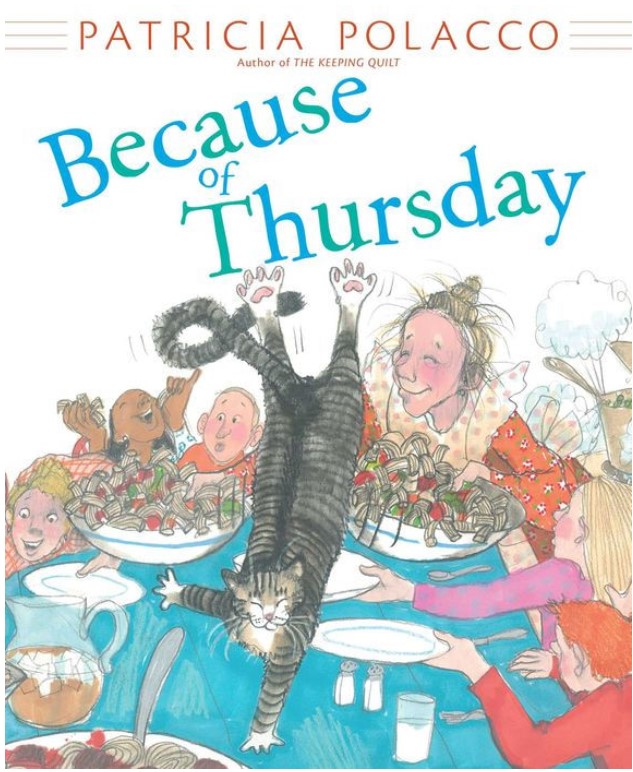
Because of Thursday

Thursdays have always been Annie’s lucky day. She was born on a Thursday and married on a Thursday. Each of her two children was born on a Thursday.  She opened her diner on a Thursday, and it was on a Thursday that she made the famous pasta salad that became a staple of her small town. As Annie grew older, she looked back on her life with pride and satisfaction. She had married the love of her life, achieved her dream of opening a restaurant, and raised two amazing children. However, one Tuesday, Annie’s husband tells her that he isn’t feeling well. On a Monday, her husband passes away. This loss upsets the joy that Annie once felt. Not long after, she closes her restaurant.  

Now, Annie spends most of her time at home. One day, she finds a dish towel on her porch with the word “Thursday” embroidered on it. Annie notices small movements and sounds coming from underneath. She lifts the towel and is delighted to find a kitten bundled up inside! Annie takes the kitten in and quickly finds herself taking care of it. She names the kitten “Thursday” and enjoys tending it. Soon, Annie is inspired to begin cooking once again. It doesn’t take long for the people of her town to hear. Soon enough, everyone helps Annie restart her restaurant. With this, Annie’s restaurant is restored as the heart of the town, and Thursday is adored by every customer who comes in. 

The author of over 70 children’s books, Patricia Polacco writes her stories with a natural grace. As in all her works, Because of Thursday is told with a heartfelt and human touch. Polacco speaks to her reader less like an omnipotent narrator and more like an old friend telling a story, elevating little moments into engaging pieces of a narrative. She describes the smaller details of the story, like the ingredients of Annie’s famous “Ugly Pasta” recipe, with a unique humor and conceit. “It looked like it had been kicked around in the dirt with all the burned pepper flakes in it,” she writes. “And wiped through someone’s armpit with all the lumps of garlic on it and blown across a dusty field with all the grated cheese on it.”  

While this kind of writing should not be a challenge for advanced readers, younger readers may need help navigating the book’s long paragraphs. Each page features four to twelve sentences. Parents’ assistance may also be needed to explain adjectives like “delectable” and “gelatinous.” Polacco’s dynamic illustrations add spirit and energy to the book. Each page features a double-spread illustration with vivid colors and attention to background detail. For example, the final page features Annie’s majestic and colorful manufacturing plant, complemented by a giant fountain shaped like a stack of noodles.  

While Polacco’s pleasant written voice and lively illustrations always make a good story, the resolution of Because of Thursday features a shift in tone that makes the story ultimately feel a little uneven. The book’s climax involves Annie achieving nationwide fame when a TV chef discovers her recipe. Although the chef’s name is never stated, he is drawn to look like Guy Fieri. Even though it’s satisfying to see Annie reach such a high degree of success, the inclusion of a specific real-life celebrity feels out of place in a fictional story. Readers familiar with Fieri will likely be confused by his appearance and may incorrectly assume that the book is a true story. 

With this being said, Because of Thursday is still a worthwhile read. Parents can use the story as a way to discuss the topic of grief with their child, specifically how it can affect someone’s mood and motivation. Additionally, readers can learn the importance of being there for others. Just as Annie gave joy to her town through her cooking, her town was there for her when she returned to her restaurant. As with any book by Patricia Polacco, Because of Thursday is a heartfelt and beautifully illustrated story that allows parents to discuss meaningful themes and messages with their children. 

Sexual Content 

  • None 

Violence 

  • None 

Drugs and Alcohol 

  • None 

Language 

  • None 

Supernatural 

  • None  

Spiritual Content 

  • None

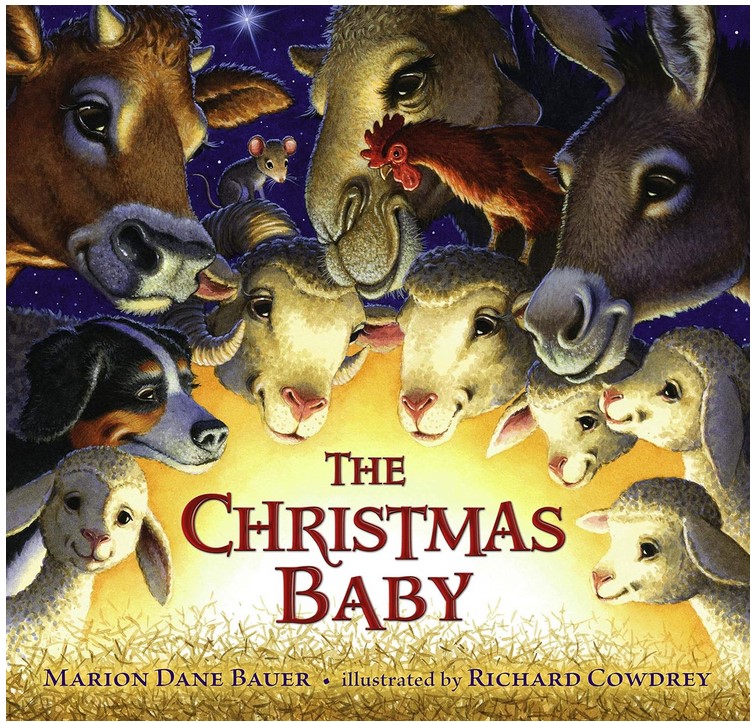
The Christmas Baby

Mary and Joseph travel by donkey to Bethlehem, but when they arrive, the only place to stay is a barn. When the baby was born in the manger, Mary and Joseph rejoiced. The angels sang, and kings journeyed to bring gifts. When the baby was born, he “smiled at the world with God’s own smile.”  

The Christmas Baby is a heartwarming retelling of the birth of Jesus. Using natural colors of blue and brown, the illustrations focus on the animals and the sky. When the baby is born, a two-page spread shows the animals’ joy as they “brayed and mooed and barked and bleated he is come!” The book connects every child to the Christmas baby because babies bring joy. The last page speaks directly to the reader because when you were born, “you smiled back at us all with God’s own smile.” 

Celebrate the Christmas season by reading The Christmas Baby. Each page has two to four short sentences that use repetition to increase the excitement of Jesus’s birth. Even though the story focuses on Jesus’s birth, the story also shows how Jesus came for everyone—wisemen, kings, animals, and you. Not only will The Christmas Baby remind readers that God loves them, but it also shows readers how important they are to other people. For more Christ-centered picture books, read Mortimer’s Christmas Manger by Karma Wilson. 

Sexual Content 

  • None 

Violence 

  • None 

Drugs and Alcohol 

  • None

Language 

  • None 

Supernatural 

  • None 

Spiritual Content 

  • None 

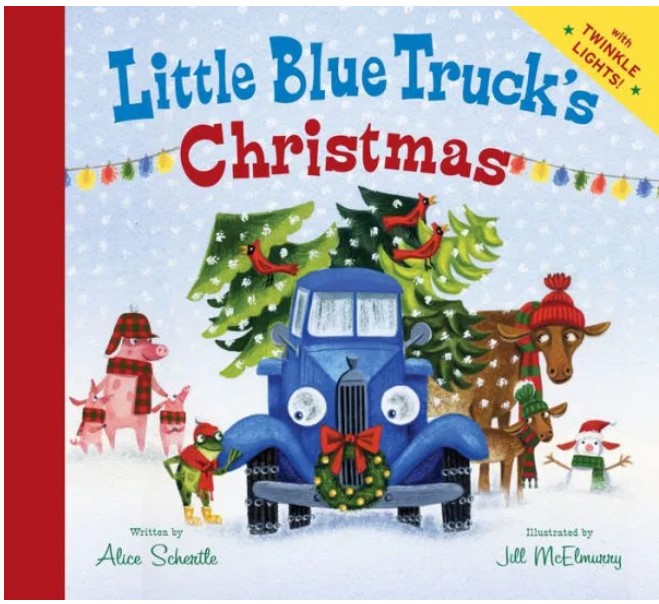
Little Blue Truck’s Christmas

It’s the most wonderful time of the year! Little Blue Truck is spreading cheer by delivering Christmas trees to his animal friends. Can you help count each green tree from one to five and back again? Don’t forget to save one for Blue! Beep! Beep! 

Follow Blue’s adventure as he delivers trees to his friends. Along the way, readers will learn counting as they keep track of how many trees Blue has to deliver. Each two-page spread also has other items that adults can encourage readers to count. For instance, one page has four red birds, while another has four cute piglets. The last page of the book shows Blue’s final delivery; this tree’s glowing Christmas lights will give the reader one last glimpse of holiday cheer. 

Little Blue Truck’s Christmas is a fun book to read because of the rhyming and onomatopoeia words. Each page has four short lines of text, and each number and onomatopoeia is shown in a different colored font. The illustrations show a snow-covered world that is full of Christmas cheer. Blue wears a wreath and many scenes show Christmas lights and fun details, such as two rabbits wearing brightly colored scarves and hats while making a snowman.  

Get ready for the holiday season by reading Little Blue Truck’s Christmas. The fun illustrations, decorations, and sparkly lights make this book a wonderful Christmas treat while emphasizing the joy of giving during the holiday season. For even more great holiday reads, grab a blanket and snuggle up with Bear Stays Up for Christmas by Karma Wilson, and The Christmas Tree Who Loved Trains by Annie Silvestro. 

Sexual Content 

  • None 

Violence 

  • None 

Drugs and Alcohol 

  • None

Language 

  • None 

Supernatural 

  • None 

Spiritual Content 

  • None 

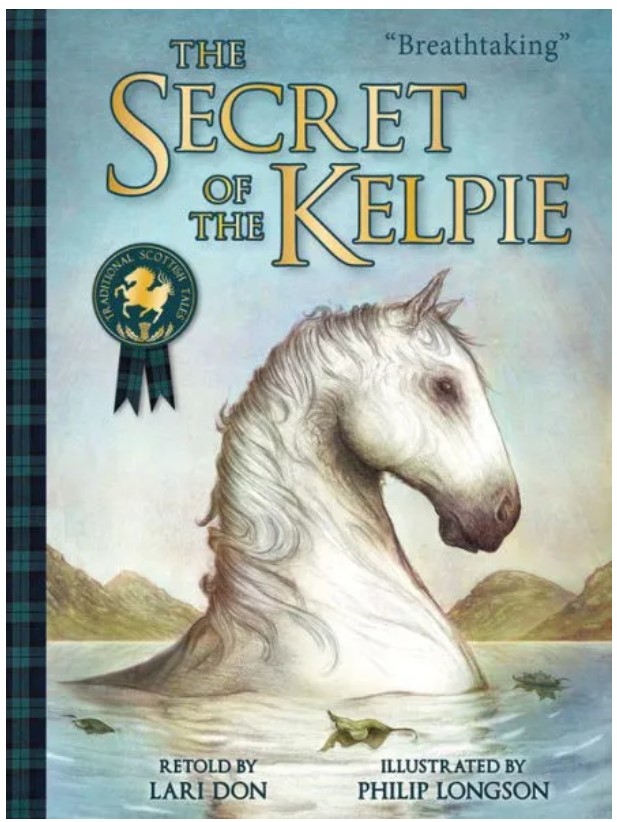
The Secret of the Kelpie

Flora is playing with her brothers and sisters by the loch when she notices a stunning white horse. While her siblings demand a chance to ride the beautiful animal, Flora is worried. Where has this strange horse come from? And why are its hoof prints wet? 

Too late, Flora realizes this is no horse! It’s a kelpie: a shape-shifting water horse from Scottish folklore known to steal children. Can Flora reveal the secret of the kelpie in time to save her family?  

The Secret of the Kelpie introduces young readers to the kelpie, a creature of Scottish mythology. This engaging tale shows how the shape-shifting water horse tricks kids into jumping onto its back. Once the children are on the Kelpie’s back, they become entangled in its mane. Unlike her siblings, Flora does not ride the beautiful horse because she wonders why the horse leaves watery footprints. Flora then recognizes the horse for what it is: “It’s a kelpie! Remember the old stories? It’s tricked you onto its back, now it’s taking you into the loch to drown you and eat you!” 

The Scottish landscape and loch appear in stunning full-page illustrations that use muted browns, while the children’s clothes are soft blues and browns. The Kelpie grows as each child gets on its back, and the illustrations excellently show its increasing size. When the kelpie returns to the loch, Flora bravely faces the angry sky, violent waves, and the kelpie itself. The kelpie’s beauty will transfix readers; however, the ending shows the kelpie transform into a dragon-like creature that is “huge and ugly and hungry. Steam swirled from its nostrils, waves swirled round its hooves.”  

The Secret of the Kelpie is not a book for the easily frightened, as the kelpie’s desire to drown the children and its dramatic change may scare some readers. Most of the book pairs one page with a picture, while the other page contains oversized text. Each page has five to 15 sentences with complex sentence structure and advanced vocabulary such as spluttering, flank, snickering, and daft. Because of this, younger readers may have difficulty sitting through a reading of the book. 

The story of the kelpie reminds readers of the dangers that lurk in a loch, waiting for children to come close. However, Flora uses her power of observation to determine that the “pretty princess’s horse” is a kelpie in disguise. Flora also uses runes on a stone to discover the kelpie’s weakness. Ultimately, Flora’s curiosity and bravery help save her siblings from “the dark, cold depths of the loch.” The Secret of the Kelpie mixes a variety of Scottish traditional tales into a story that will give young children shivers of fear and delight. 

Sexual Content 

  • None 

Violence 

  • The kelpie’s secret weakness is metal. One of the children stuck on the kelpie’s back, Magnus, uses this knowledge to get free. Magnus “swung the key on its chain and hit the horse’s flank. The kelpie screamed and reared high in the air.” Magnus and two of his siblings fall off the kelpie when it rears.  
  • Flora uses a knife to free her brother. She “jumped up and slashed at the kelpie’s mane. The horsehair sizzled when the iron blade touched it. Fergus ripped his hands free and fell into the water.”  

Drugs and Alcohol 

  • None

Language 

  • None 

Supernatural 

  • None 

Spiritual Content 

  • None 

Construction Site on Christmas Night

The mighty construction trucks are busy building a very special gift in time for Christmas Eve. But there’s a surprise waiting for them too! Excavator, Bulldozer, Crane Truck, Dump Truck, and Cement Mixer all receive a special present as each truck finishes their part of this important job, before rolling off to a sweet and sleepy goodnight.  

Construction Site on Christmas Night uses a repeating pattern to tell the story. In the first section, Bulldozer is working hard to clear the ground. Once he has completed his part of the job, he finds “a massive gift with cable ‘ribbon’ from the yard, it’s topped off with a thank-you card. An awesome carbon steel blade.” After Bulldozer opens his gift, he goes to sleep. The story repeats this format with each of the other trucks, with each gift reflecting the truck’s unique personality. For example, Dump Truck receives new tires and Cement Mixer receives a new drum. Then the conclusion shows the firetrucks snuggled into their newly built firehouse while the other trucks sleep outside in the snow.  

Even though Construction Site on Christmas Night is a simple story, it still has positive lessons. Each truck has a job that is unique to their design. Without each truck completing its work, the firehouse could not be built. In addition, the story shows the joy of giving and the value of work.  

Even though Construction Site on Christmas Night is a picture book it is intended to be read to children instead of having them read it independently. The story uses rhyming and onomatopoeia which make the story fun to read. The illustrations use primary colors as well as festive details, such as ribbons and bows. Each page has one to six sentences that keep the story flowing at a fast pace. 

Any child who loves trucks will find joy in reading Construction Site on Christmas Night. The story reinforces the importance of appreciating others and the importance of using your own unique talents. The book is perfect for snuggling up and reading on a cold winter’s night. Plus, it will leave readers with sweet dreams of what they will find under the Christmas tree. To read more about hard-working trucks, chug to the nearest library and check out Bulldozer Helps Out by Candace Fleming. 

Sexual Content 

  • None 

Violence 

  • None

Drugs and Alcohol 

  • None 

Language 

  • None 

Supernatural 

  • None 

Spiritual Content 

  • None 

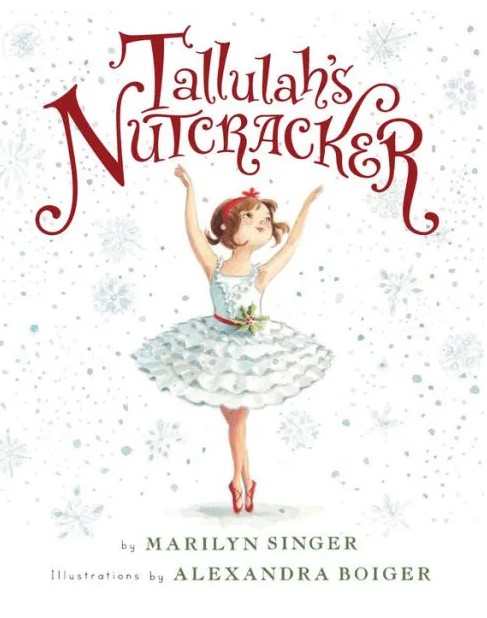
Tallulah’s Nutcracker

It’s Christmastime and Tallulah finally gets what she’s been wishing for—a part in a professional production of The Nutcracker. She’s only a mouse, but she works as hard as if she had been cast as the Sugar Plum Fairy. 

On the night of the show, everything is perfect. But then disaster strikes! Does Tallulah have what it takes to become a real ballerina? 

Tallulah is a charming character who wants to shine. When she finds out that she will be one of eleven mice in The Nutcracker, “Tallulah hoped that she would stand out.” When the night of the performance arrives, Tallulah looks at the older dancers and dreams of one day being like them. However, Tallulah was just a little bit scared when she first got on stage. She began to dance and “then all of a sudden she stepped on a tall mouse’s tail. . . Tallulah tried to get up, but another mouse tripped over her, followed by two toy soldiers. They all lay in a stunned heap in the middle of the stage.” After the performance, Tallulah hides because she wanted to be the best mouse but instead she “was the total worst.”  

Even though Tallulah hides, the teenage dancers and the dance master find her after the show. Instead of being upset and criticizing Tallulah for making a mistake, they encourage her. The dance master, the Sugar Plum Fairy, and Clara all tell their own stories of doing something embarrassing. Their encouraging words are heartwarming, and they help Tallulah learn that “in ballet, embarrassing things happen all the time, but a REAL dancer keeps right on dancing.”  

The story’s winter theme is illustrated in soft blues, while Tallulah’s clothing has pops of red. The beautiful pictures include snowy landscapes, Tallulah’s dance class, and several scenes from The Nutcracker. The children in Tallulah’s dance class are diverse and include several boys, while the illustrations of Tallulah as a mouse are adorably cute. To help readers distinguish the narration from Tallulah’s thoughts, her thoughts are written in large, bold letters. Since each page has two to seven sentences, parents will need to read the story to their children.  

If you’re ready for some Christmas cheer, Tallulah’s Nutcracker is a wonderful picture book that has enchanting pictures and teaches that while everyone makes mistakes, what’s important is that you don’t let that stop you from reaching for your dreams. Whether you’ve read all of the Tallulah books or this is your first, Tallulah’s Nutcracker is sure to enchant. Younger readers interested in dance will enjoy seeing Tallulah’s ballet lessons. However, most readers will relate to Tallulah’s embarrassment and will feel joy when Tallulah realizes, “I’m not the best mouse or a star, but I am a real dancer – at least, I’m going to be.”   

Sexual Content 

  • None

Violence 

  • None 

Drugs and Alcohol 

  • None 

Language 

  • None 

Supernatural 

  • None 

Spiritual Content 

  • None 

Latest Reviews