
Halloween Is Coming!

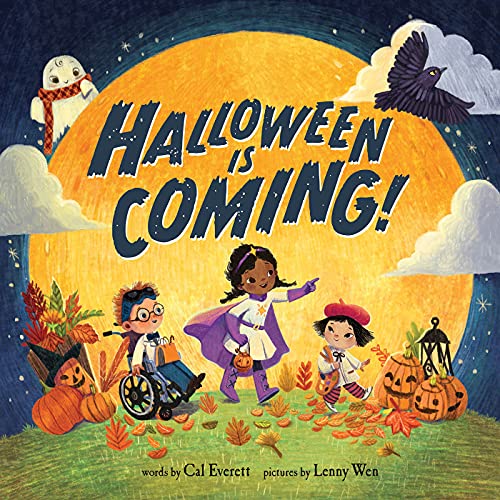
Halloween Is Coming! follows three unnamed friends delighting in the early signs of Halloween. Together, the friends enjoy the fall weather, hayrides at their town fair, picking pumpkins to carve into Jack-o’-lanterns, dressing up for their school parade, and several other activities. Finally, they make their own costumes to wear for trick-or-treating. Then, the long-anticipated night arrives. 

This sweet and short book is a celebration of autumn and Halloween, clearly written and illustrated by lifelong Halloween enthusiasts. Halloween Is Coming! is a great pick for younger readers who are looking for a story that captures Halloween’s fun side, while staying away from its scarier side. 

Most illustrations are spread across two pages, with monsters, ravens, and other symbols of the holiday hidden in the background. Typically using shades of orange and yellow, the illustrations feature multicolored trees, candy store windows brimming with detail, and unique costumes for every character. Younger readers will enjoy the characters’ diverse and elaborate variety of costumes, ranging from checkerboarded jesters to scaly dinosaurs. The narration is a passionate love letter to Halloween, told in rhyme and limiting itself to one to three sentences per page. 

Although the book does not follow a traditional story, readers will still detect themes of friendship, enthusiasm, and creativity. The relationship shared by the three main friends will teach kids that Halloween should be less of a day dedicated to scaring, and more of an opportunity for you to express your creative, unique self alongside the people closest to you. 

Sexual Content 

  • None 

Violence 

  • None 

Drugs and Alcohol 

  • None 

Language 

  • None 

Supernatural 

  • Friendly ghosts and monsters appear in the background of several pages, but none are threatening.

Spiritual Content 

  • None 

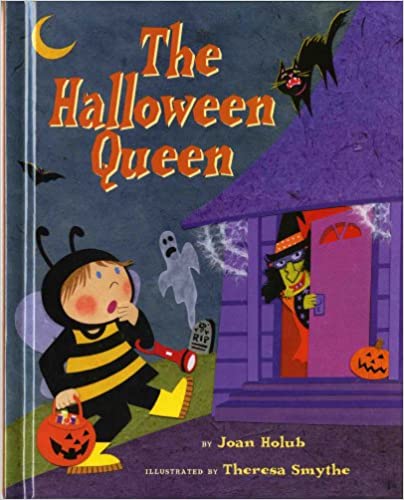
The Halloween Queen

It’s Halloween and time for trick-or-treating. But there is one little girl who is afraid to go near her neighbor’s house. However, the Halloween Queen has the best candy on the whole block and hosts a fun party too. What is the little girl to do?  

Young readers will relate to the little girl, who is excited to dress up for Halloween but scared by the neighbor house’s scary decorations. The person who lives in the house clearly loves Halloween, because “a ghost haunts her front yard, and bats hang out back. Wolves howl from her rooftop. Cats hiss from her trees.” Once inside the woman’s house, the little girl realizes there was no reason to be afraid. The cute conclusion reveals that the woman, who dressed as a witch, is actually the little girl’s teacher. 

The book’s full-page illustrations use all the fall colors and are full of black cats, orange pumpkins, and white ghosts. Despite skeletons hanging from the trees, flying bats, and a green witch with spiders on her glasses, the illustrations are not scary but are festive and cartoonish. Each page has two to four short, rhyming sentences. Even though The Halloween Queen is a picture book, the story is intended to be read aloud to a child rather than for the child to read it for the first time independently.  

The Halloween Queen is best suited for young readers who are still frightened by the thought of monsters being out on Halloween night. Readers will enjoy looking at all the kids who are dressed up: a monster, a vampire, a cat, and a cowboy can all be found within the pages of the book. For a fun, Halloween read that reminds readers that there is nothing to fear on Halloween night, be sure to grab a copy of The Halloween Queen! For more wonderful, witchy fun, add The Witch Who Was Afraid of Witches by Alice Low to your reading list. 

Sexual Content 

  • None 

Violence 

  • None 

Drugs and Alcohol 

  • None 

Language   

  • When the girl is afraid to go up to the door of a house, some of the kids call her chicken. 

Supernatural 

  • None 

Spiritual Content 

  • None 

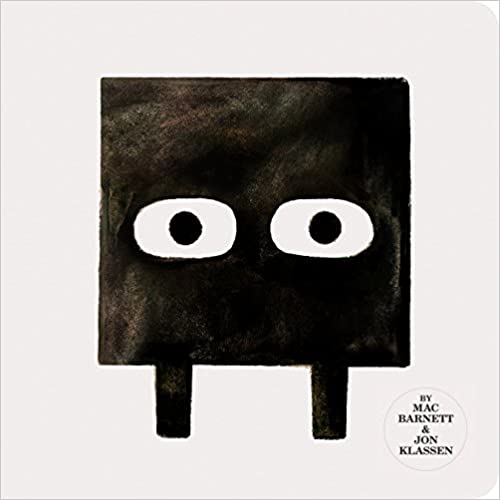
Square

Every day, Square takes a block from his cave and pushes it up a hill, where he has gathered a pile of blocks. This is his work. One day, his ritual is interrupted by his friend Circle, who mistakes the blocks for sculptures. Circle is amazed by Square’s talent and calls him a genius. She then asks if he can make a sculpture of her by tomorrow morning. With that, she leaves Square before he can tell her the truth.

Square starts to worry. He thinks that Circle deserves a sculpture that is just as perfect as her but he doesn’t believe he is capable of making such a thing. Nonetheless, Square fretfully starts chipping away at a block. The more progress he makes, the less perfect the sculpture is. To make matters worse a rainstorm starts!

By morning, all that is left of the block is rubble. When Circle returns, she is amazed by what she finds. The rubble forms a circle, and the rain has formed a puddle inside that reflects Circle. Circle tells Square that his work is perfect and that he is a genius. However, after Circle leaves, Square doubts that her praise was earned.

 Square is a charming picture book with one to six sentences per page, making it an easy read. Its watercolor illustrations are simple, but make great use of light to show glistening minerals in Square’s cave and darkening clouds before the climactic rainstorm that perfectly captures Square’s mood. Characters are drawn as shapes with only two eyes, but the illustrator makes their expressions easy to discern through these features. For example, as Square works on his sculpture, you can see his frustration from his narrow squint.

While the vocabulary and story are easy to follow, Square presents complicated personal issues such as insecurity, inferiority, and perfectionism. While Square gets away with his lie, his last thought of doubt sends an important message to the reader: they should embrace their differences and not pretend to be someone else. Square’s struggle with his sculpture also teaches readers not to obsess over perfection as such a concept can never be entirely attained and that they should instead do what they love. Square does not clearly state this message, but it allows parents the opportunity to discuss these ideas with their child.

Sexual Content

  • None

Violence:

  • None

Drugs and Alcohol

  • None

Language

  • None

Supernatural

  • None

Spiritual Content

  • None

by Luke  McClain

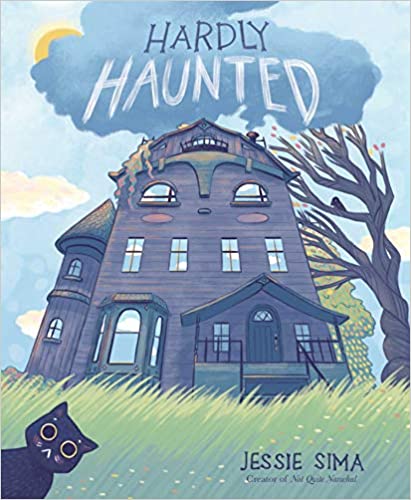
Hardly Haunted

After years with no residents, a lonely house on a hill comes to realize that she is haunted. The revelation scares her even more than any of the strange noises and rumblings inside her ever have. Who would ever want to live in a haunted house? The house starts to fear a lifetime of living alone, until she hatches a plan.  

The house believes that if she is on her best behavior, no one will know her secret. She tries her best to keep quiet, to keep her doors from creaking, her stairs from squeaking, and her pipes from rattling. After a long effort, she finally manages to hold still. Unfortunately, she is quickly ambushed by a rush of wind, and her efforts are immediately squashed. The branches of the tree beside her scratch at her windows. Her lights flicker. Her chimney howls. The wind passes, but the house thinks that the experience was fun. She realizes that she enjoys being noisy and haunted and does not want to pretend not to be. However, this doesn’t change her feelings of loneliness. After some thought, the house decides that she should look for people who like that she’s haunted. Just then, a family of ghosts approaches the house and steps inside. They make themselves at home, much to the haunted house’s delight.  

Hardly Haunted is a fun and delightfully scare-free picture book for the Halloween season. Each illustration is spread across two pages. The story takes place throughout one day, beginning in a sunny background with bright blue skies and ending in a dark violet background with twinkling stars and a glistening full moon. Young readers will enjoy the illustrations of the personified house with windows for eyes and a water pipe for a mouth. Plus, detail-driven readers will have a fun time finding the black cat in every page.  

The book uses simple and short vocabulary, with 1 to 4 sentences per page – though the font is relatively small on some pages. To help immerse the reader into the story, words such as creak and squeak appear in large, messy font and make the story fun to read aloud. 

By reading Hardly Haunted, readers will be introduced to such themes as loneliness and insecurity. The house’s decision to happily stay haunted will teach readers that they don’t have to change themselves to be accepted. The arrival of the ghost family at the end of the book shows that the right people will find you in time. This story will particularly appeal to those looking for a Halloween-themed story that is light on scares. 

Sexual Content 

  • None 

Violence 

  • None 

Drugs and Alcohol 

  • None 

Language 

  • None 

Supernatural 

  • The narrator is a talking haunted house. 
  • At the end of the novel, a family of ghosts appears. 

Spiritual Content 

  • None 

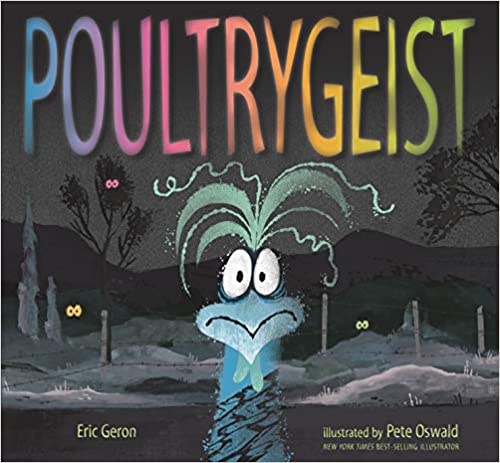
Poultrygeist

A chicken crosses the road and is promptly run over by a passing truck. When the chicken awakes, it realizes that it is now a floating spirit separate from its flattened body, and that the world around it is suddenly dark. From the darkness, the eyes of other spirits appear. The spirits explain to the confused chicken that while it was crossing the road, it got to what they call “the other side,” a realm where the spirits of animals exist. They tell the chicken that he has become a “poultrygeist.” 

Terrified, the chicken asks if he can be a friendly ghoul. His fellow spirits insist that they must haunt the living for eternity. The chicken declares that even though he’s a ghost, he will not haunt anyone, no matter what. When the chicken declares this, he suddenly takes on a form with disheveled feathers, furious eyes, and jagged teeth. When the chicken scares the other spirits away, he smiles and goes on his way, wishing the spirits good riddance. 

Poultrygeist is a fast and funny read with a darkly comedic twist on a familiar joke. The chicken’s violent fate might disturb younger readers, but his experience in the afterlife teaches them a thoughtful lesson about the dangers of peer pressure. Readers will be drawn to the vivid and colorful illustrations of the living realm, while the other side will interest them with a unique art style full of glowing, single-colored characters and muted backgrounds.  

The book does not feature any narration and instead uses illustrations and the characters’ dialogue to tell the story. Each character’s speech is distinguished by separate font colors that match the color of their spirit. For example, the font of the chicken’s dialogue is blue, matching the chicken’s blue spirit. Each page contains 1-6 sentences with simple vocabulary. Readers will enjoy the spirits’ habit of speaking in rhyme. Though the spirits’ furious eyes and sharp teeth may frighten younger readers, they can take comfort in the chicken’s unconditional kindness and ability to resist peer pressure. On one page, the chicken even breaks the fourth wall to check in on the reader, asking “Psst…you doing okay?” 

Poultrygeist is a particularly great read for readers adjusting to new situations and searching for the right crowd. The story teaches readers to be the version of themselves that they are comfortable being and to not allow the negative influence of others to change them. Poultrygeist readers will be amused by the exaggerations of the spirit world as well as the story’s wordplay. 

Sexual Content 

  • None 

Violence 

  • The chicken’s body is shown after it is run over. The chicken is flattened with a tire mark across its body and crossed-out eyes. While it is not explicitly violent, it could upset younger readers, particularly animal lovers. 
  • The spirit of a rat tells the chicken, “Time for you to play dead . . . then twist your head!” 
  • The last page of the book shows a squirrel starting to cross the road while a truck quickly approaches, implying that the squirrel will share the chicken’s fate. 

Drugs and Alcohol 

  • None 

Language 

  • The spirits use rude language when trying to pressure the chicken into joining them. They call him names such as “weak”, and (ironically) “chicken.” 

Supernatural 

  • The story revolves around the ghosts of animals.  

Spiritual Content 

  • None 

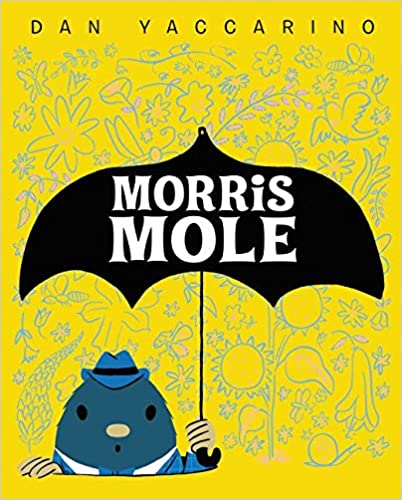
Morris Mole

Beneath the Earth’s surface, a small mole named Morris lives with his big brothers. They spend their days digging for food and spend their nights eating what they found. However, Morris is not like his older brothers. He is the littlest of the group. He dresses nicely and prefers to think outside of the box.  

One day, the brothers come to a startling realization—they are out of food! The older brothers agree that the best solution is to dig even deeper, while Morris suggests that they look elsewhere. Not hearing him, the brothers start their dig. Morris has a moment of fear. He has never done anything alone before. Eventually, he gathers his courage, announcing that his size does not limit his abilities. With that, he does something no mole has ever done before—he digs up. He digs until he reaches the surface, and he is amazed by what he finds. 

Morris Mole is a short and sweet picture book with illustrations that put readers into Morris’ shoes. The underground is drawn as pitch black with the only color being the single-shaded brown dirt. Meanwhile, the outside has a blank background that allows the beautifully blended colors of the flowers, animals, and insects to shine. Plus, the characters’ heights and clothing display their personality. For example, Morris is well-dressed and small compared to his near-identical big brothers. On the other hand, the antagonizing wolf he faces outside is dressed in a hilariously stereotypical leather jacket and jeans. His towering height and razor-sharp teeth give him a menacing presence, making Morris’ kindness and bravery all the more impressive. 

Morris Mole will teach readers that even the smallest of creatures can do big things. Young readers can learn from Morris’ creative problem-solving and the unconditional kindness with which he treats his fellow animals. Plus, the book’s alliteration makes the story fun to read aloud. For another picture book that shows that someone’s small size doesn’t determine their destiny, check out Knight Owl by Christopher Denise. 

Sexual Content 

  • None 

Violence 

  • Fox finds Morris and tries to “swallow him up in one gulp.” 

Drugs and Alcohol 

  • None 

Language 

  • None 

Supernatural 

  • None 

Spiritual Content 

  • None 

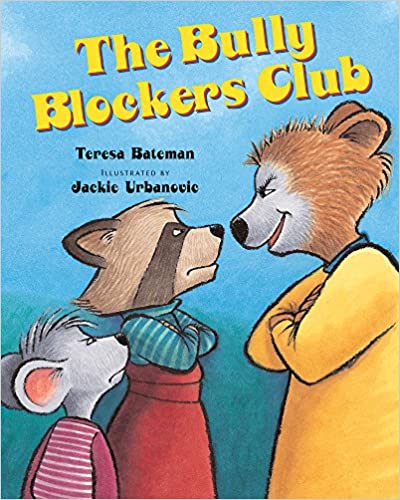
The Bully Blockers Club

Lotty Raccoon is excited. This year she has a new teacher, new backpack, and new shoes. But her enthusiasm quickly wanes when Grant Grizzly begins bullying her. At the advice of her brother and sister, Lotty tries ignoring Grant and then tries to make a joke of it all, but neither approach works. When her parents hear about Grant, Lotty’s dad talks to the teacher. Although the teacher speaks to Grant and Lotty, now Grant just bullies her when no adult is around. 

After talking to her family again, Lotty comes up with an idea. She notices other kids are being bullied by Grant too. She gathers everyone together and they form a club—The Bully Blockers Club. Now when Grant tries to bully someone, the other kids speak up. That gets an adult’s attention, and Grant stops his bullying! 

The Bully Blockers Club will help readers understand what to do when someone is being bullied. Besides giving different ways to try to deal with a bully, the book also covers the topic of being a tattletale. The story reinforces the importance of telling an adult when you do not feel safe. Another positive aspect of the story is that Lotty and the other students are never mean to Grant, even when he is being a bully. The conclusion implies that Grant is going to stop his bullying ways, which may be a bit unrealistic.  

The book’s cartoonish pictures will appeal to readers and show the different ways Grant is bullying others. When Grant is being mean, the different students clearly show their anger and fear. Even though The Bully Blockers Club is a picture book, the story is intended to be read aloud to a child, rather than for the child to read it for the first time independently. Each page has three to 15 sentences and many of the sentences are complex. Because of the text-heavy pages, younger readers may have a difficult time sitting still until the end of the story. 

The Bully Blockers Club educates readers on bullying and encourages them to talk to an adult. Several times, Lotty’s family demonstrates healthy communication skills that require listening to each other. Plus, the teacher spends class time discussing bullying. On the chalkboard, readers will find a list of what characteristics makes a bully and what characteristics make a friend. The relatable topic and the educational value of The Bully Blockers Club make the picture book an excellent read. To explore more picture books that teach about friendship, check out Shawn Loves Sharks by Curtis Manley and Angus All Aglow by Heather Smith. 

Sexual Content 

  • None 

Violence 

  • Grant steals a classmate’s eraser and then “kicked the back of her chair all morning.” The girl ignores Grant’s “nasty whispers.” 

Drugs and Alcohol 

  • None 

Language   

  • Grant loudly tells someone that a classmate is “so stupid she doesn’t even know when someone’s talking to her.” Then he yells, “Hey, Stupid.”  
  • Grant tells Lotty, “I’m allergic to ugly. And you’re giving me a rash.” Then he calls her “Stink-O.” 
  • Grant knocks Lotty’s books off her desk. 

Supernatural 

  • None 

Spiritual Content 

  • None 

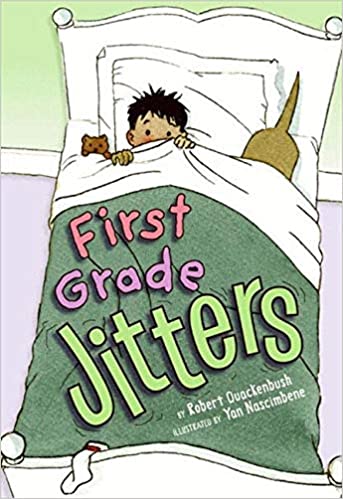
First Grade Jitters

Here is the story of a young boy who is about to enter first grade and doesn’t know quite what to expect. Will his friends be there? Will he have to know how to read and spell? What if he can’t understand anything his teacher says? Looks like a case of the first grade jitters! 

An unnamed boy worries about school and all the what-ifs that could happen. While most of the boy’s worries are relatable, some are silly. For example, the boy asks, “What if I can’t understand what the teacher says? She might say, ‘Oogly, boogly.’” With the help of his parents and his friends, the boy realizes that he has nothing to be scared about. 

Bright, realistic illustrations use small details to highlight the boy’s worry. For example, in one picture his shoulders are slumped as he kicks a rock. By the end of the story, the boy is jumping with joy and has a big smile on his face. Even though First Grade Jitters is a picture book, the story is intended to be read aloud to a child, rather than for the child to read it for the first time independently. Each page has zero to seven simple sentences that make the story easy to understand. 

Any child who is worried about going to school will relate to the boy in First Grade Jitters. The story will reassure readers that there is nothing to be afraid of. If your child is worried about attending school, First Grade Jitters will help calm his or her fears. Readers may also want to read Danbi Leads the School Parade by Anna Kim, which is a school-themed story about friendship. 

 Sexual Content 

  • None 

Violence 

  • None 

Drugs and Alcohol 

  • None 

Language   

  • None 

Supernatural 

  • None 

Spiritual Content 

  • None 

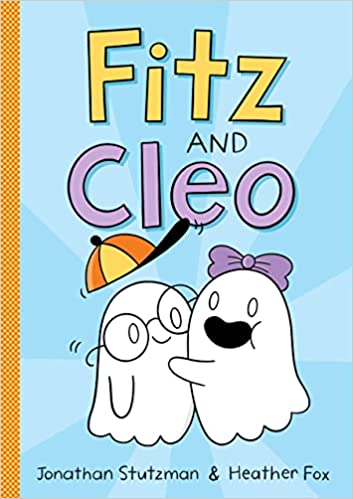
Fitz and Cleo #1

Meet Fitz and Cleo. They’re ghosts, siblings, and friends. This is their first book filled with eleven (that’s more than ten!) fun-filled adventures. Join them as they go to the beach, fly paper airplanes, play baseball, do science, and adopt a cat! 

Much like Casper the Friendly Ghost, Fitz and Cloe are adorable, friendly ghosts that readers will love. The two ghosts make everyday mundane events into something fun. The siblings’ adventures come to life in large, colorful panels similar to a graphic novel’s panels. The illustrations use bright colors and simple backgrounds that appeal to young readers. Although the illustrations are simple, the ghost’s emotions are clearly conveyed. Plus, some of the illustrations are humorous, such as a pink fairy pig with wings, and the cat Mister Boo who loves to sleep on Fitz’s head.  

Fitz and Cloe’s chapters range from three to eight pages. Each page has two to eight short sentences. The story is fun to read aloud because most of the text is comprised of dialogue; plus, there is plenty of onomatopoeia. While each chapter contains humor, there are also plenty of sweet moments. For example, while looking at other planets through a telescope, Cloe tells Fitz that Earth is the best planet “because you’re on this planet Fitz. And Mister Boo is on this planet. We’re on this planet TOGETHER. So it HAS to be the best!” 

If you’re looking for an entertaining book that will appeal to young readers, then Fitz and Cloe is the perfect book for you. The two ghosts and their cat make everything from playing baseball to flying paper airplanes into a fun adventure. Plus, young readers will relate to the siblings, who get brain freezes, spend a day at the beach, and play with a ball of yarn. Small details in the illustrations make the story even more engaging.  

Even though each chapter of Fitz and Cloe is short, readers will be eager to continue until they reach the end of the siblings’ adventures. The story has widespread appeal because of the everyday conflicts, the ghost protagonists, and an adorable cat. Another one of the story’s positive aspects is that the two siblings are kind to each other. For more fun reading, check out the Unicorn and Yeti Series by Heather Ayris Burnell. 

 Sexual Content 

  • None 

 Violence 

  • None 

 Drugs and Alcohol 

  • None 

 Language   

  • None 

 Supernatural 

  • None 

 Spiritual Content 

  • None 


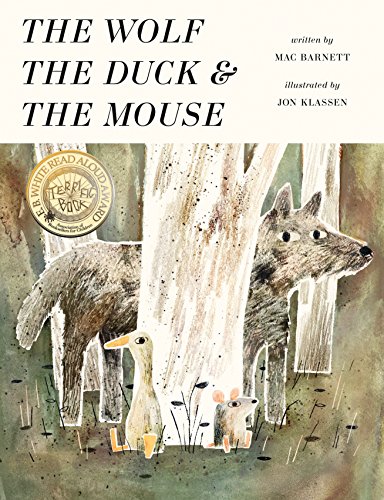
The Wolf, the Duck, & the Mouse


Early one morning, a mouse is swallowed whole by a wolf. The mouse believes this is the end until he is greeted by a voice. This voice belongs to a duck, who was swallowed by the wolf some time ago. Since then, the duck has made a comfortable home out of the beast’s belly. He teaches the mouse that their situation is not as hopeless as it seems. In fact, it may even be better than the lives they had before being eaten. Inside the wolf’s stomach, they never have to search for food, since they can feast on whatever the wolf swallows. Best of all, they never have to worry about being eaten by another wolf!

The mouse forms a fast friendship with his new roommate, and the two enjoy the safety of their new home. However, all is threatened when the wolf is discovered by a hunter. The mouse and the duck must decide whether to stay in the safety of the wolf’s stomach or act against the new threat.

 With its witty sense of humor and its twists on familiar fables, The Wolf, the Duck, & the Mouse will entertain readers of all ages. Its simple illustrations add to the hilarity of the plot. The characters are drawn with blank expressions that contrast their outgoing personalities and the ridiculousness of their situations. Readers will also laugh at the variety of outfits that the mouse and the duck wear throughout the story. They wear silly outfits from chef’s uniforms to tuxedos, as well as the random items found in the wolf’s stomach, from sports equipment to an entire kitchen. Each page has six to ten short sentences that are easy to follow. However, young readers may need help understanding some more advanced words, including “remedy,” “grant,” and “intention.”

Readers will appreciate the optimism and creativity of the duck and his ability to make the best out of any bad situation. The Wolf, the Duck, & the Mouse is a must-read because it teaches readers that their greatest challenges are also their greatest opportunities and that the presence of friends and creative thinking can brighten almost any situation.

Sexual Content

  • None

Violence

  • The mouse is “quickly gobbled up” by the wolf, but the mouse survives unscathed.
  • A hunter carrying a rifle follows the wolf. At one point he “fires a shot” at the wolf. The illustration shows the hunter firing the rifle, but the hunter misses.

Drugs and Alcohol

  • When convincing the wolf to consume items, the duck includes “a flagon of wine!”
  • The mouse and the duck are shown in tuxedos at a fancy dinner table, holding glasses of wine.

Language

  • When the duck and the mouse pursue the hunter, he exclaims, “Oh death!”

Supernatural

  • The hunter mistakes the duck and mouse for “wraiths.”

Spiritual Content

  • None

by Luke McClain


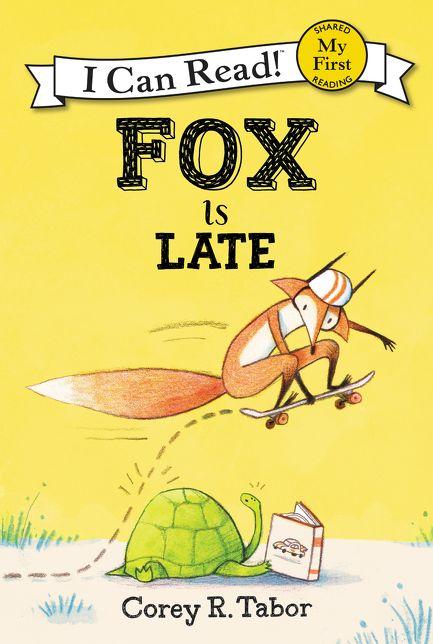
Fox is Late

Fun-loving, mischievous Fox is late for lunch, so he hops on his skateboard. Go, Fox, go! What is this winning trickster character doing, zooming over and under and around on his skateboard? His animal friends follow him home to find out—and get a big surprise!

Fox is in a hurry to get somewhere, but as he zooms on, around, under, and over his friends, they angrily chase after him. Soon, Turtle, Frog, Rabbit, Elephant, and other animals are chasing Fox. Then, they come to an abrupt halt because they learn that Fox was in a hurry to get home for lunch—with his friends, who, moments ago, were angry at him. In typical Tabor style, the author’s conclusion is surprising and sweet. Readers will love seeing Fox at the table with his friends. Careful readers will notice the flowers that Fox gathered while zooming around end up in vases on the kitchen table.

Fox is Late uses simple, but adorable pictures that have a hint of humor. For example, Fox zooms through the grocery store. As he pays for groceries, the text says, “Fox gets food. Fox gets fast food.”  Each page has 2 to 3 simple sentences. As a My First I Can Read Book, Fox is Late is perfect to read to your little one. The story uses basic language, word repetition, and large illustrations on each page.

Fox is an interesting character who is always surprising. Readers will love following Fox on his adventures, and they will love the large illustrations that bring the story to life. As Fox races around, the other animal’s facial expressions clearly show their anger and their surprise when they discover why Fox was in a hurry. Readers who love books with humor should also check out the Splat the Cat Series by Rob Scotton.

Sexual Content

  • None

Violence

  • None

 Drugs and Alcohol

  • None

Language

  • None

Supernatural

  • None

Spiritual Content

  • None

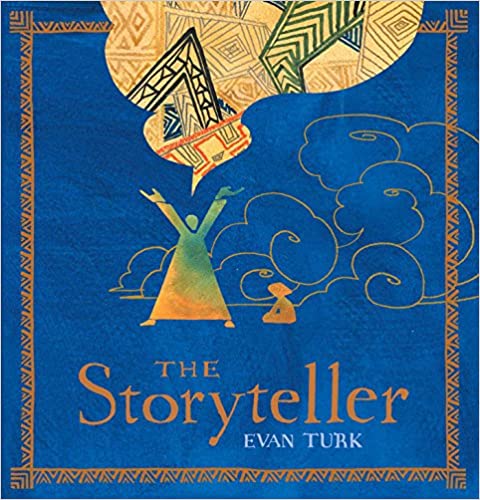
The Storyteller

Long ago, cool water from fountains and engaging tales from storytellers sustained the kingdom of Morocco despite the conditions of the surrounding desert. However, as the peoples’ fear of the desert faded, so did their memory of these stories. Storytellers began to disappear. Soon after, the fountains dried up, leaving the kingdom in a severe drought. Many years later, a young boy’s encounter with a remaining storyteller might be the only hope the kingdom has to save them from division, thirst, and a coming sandstorm.  

The Storyteller is set in a fictionalized Morocco where storytelling and weaving are significant artforms of the kingdom’s cultural history. The narrative teaches readers that well-made art has the power to preserve culture and give its listener a clearer understanding of themselves and of others. In the book, artists can literally create and sustain life, whether that be through stories that give water to its listener, or through magical threads that weave kingdoms.  

The Storyteller is distinguished by its abstract illustrations. Often spread across both pages, the story’s illustrations help the reader to believe the sheer scope of the kingdom, the allure of the glistening blue water and gold threads, and the looming threat of the massive sandstorm. Blending hurriedly pencil-drawn characters reminiscent of cave drawings with multi-layered, watercolor backgrounds and figures, the art of The Storyteller strengthens its narrative’s stance as an ode to storytelling old and new. 

Even though The Storyteller is a picture book, the story is intended to be read aloud to a child, rather than for the child to read it for the first time independently.  Each page ranges from 1 to 13 sentences and younger readers may need help understanding some of the book’s vocabulary, including “spindle,” “buoyant,” and “sapphire.” The Storyteller becomes a story within a story with each new tale the title character weaves. While the book uses different colored fonts to separate the stories, parental assistance will be needed to help younger readers follow the layered narrative.  

The Storyteller is sure to engage readers by introducing them to the world of its several tales. While the nameless protagonist of the book might lack significant personality, readers will nonetheless identify with his fascination with stories, his bravery, and his lesson of a well-told story’s power. Plus, its lesson on the importance of storytelling makes it a must-read for any reader learning storytelling and artmaking. If you’d like to read another fun book that shows the importance of storytelling, check out Octopus Stew by Eric Velasquez; it is sure to make young readers smile.   

 Sexual Content 

  • None 

 Violence 

  • The sandstorm repeatedly threatens to “destroy” the city. 

 Drugs and Alcohol 

  • None 

 Language 

  • None 

 Supernatural 

  • Stories and weaving literally create what their listeners and makers need. 
  • After being weaved, a carpet becomes “a beautiful clear pool.” 
  • In her story, the old woman says that through weaving she “birthed an entire kingdom.” In another instance, “a glorious bird awakened and emerged from the loom.” 
  • The sandstorm is personified as a “djinn.” 

 Spiritual Content 

  • None 

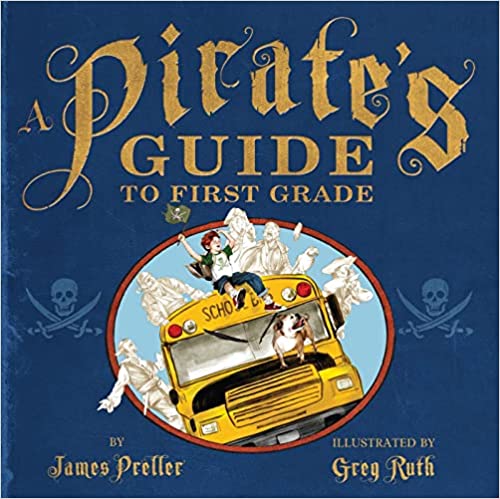
A Pirate’s Guide to First Grade

Arr! It’s the first day of first grade, and it’s all hands on deck for a young pirate and his crew. How much trouble can they get into? What will they do at recess? And, most important, what treasure awaits them at school? 

Shiver me timbers, summer’s almost over and one boy is ready for first grade. He “shined me snappers, and got dressed double quick” and headed off to school. His teacher, “Old Silver,” says he’s “in for a treat.” But after working all day, and playing with his friends, the boy wants to know, “But where’s me treasure?” With a map marked with X, will the boy find the treasure he’s been waiting for? 

Even though Pirate’s Guide to First Grade is a picture book, adults should practice their pirate voice and get ready for a fun read-aloud picture book. Both landlubbers and seaworthy pirates will be ready to hop aboard and learn about one boy’s first day in first grade. If you’re not up to speed on your pirate talk, the back of the book has a glossary that explains the pirate vocabulary. While the pirate talk is a lot of fun, young readers may need a little help understanding what’s going on. 

Since the pirates are only in the boy’s imagination, they appear in light brown penciled sketches. The boy and his surroundings are illustrated with realistic, full-color drawings. The kids in the classroom are a diverse group. Each page has one to five sentences, but the advanced sentence structure and pirate vocabulary may be a struggle for young readers. Still, readers will have a lot of fun looking at the pirates and their pirate parrots interacting with the kids at school.  

If your child isn’t sure what to expect on the first day of first grade, Pirate’s Guide to First Grade can help them overcome their fears. While kids will enjoy the pirate talk and the pirate illustrations, the book makes it clear that real treasure is found in books. Readers looking for more books filled with pirate fun should add Pirates, HO! by Sarah L. Thomson, and the Stinky Spike Series by Peter Meisel to their reading list. 

Sexual Content 

  • None 

Violence 

  • None 

Drugs and Alcohol 

  • None 

Language   

  • None 

Supernatural 

  • None 

Spiritual Content 

  • None 

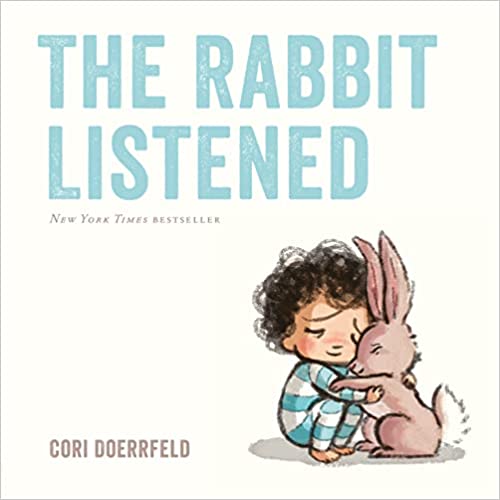
The Rabbit Listened

When something sad happens, Taylor doesn’t know where to turn. All the animals are sure that they have the correct answer. The chicken wants to talk it out, but Taylor doesn’t feel like chatting. The bear thinks Taylor should get angry, but that’s not quite right either. One by one, the animals try to tell Taylor how to act, and one by one they fail to offer comfort. Then, the rabbit arrives. All the rabbit does is listen . . . which is just what Taylor needs. 

Everyone can relate to Taylor, who doesn’t want anyone’s advice. When Taylor’s block structure falls, everyone is ready to tell Taylor what to do. Chicken says Taylor should, “Talk about it!” Snake’s advice is, “Let’ssss knock down someone else’sss.” When the rabbit listens to Taylor, Taylor is able to process his emotions and soon he is ready to build something new. Taylor’s story is about how to help a friend just by being near and listening. 

The picture book’s message is told with very few words. Each page has one to four short sentences and some pages have as few as two words. The illustrations are simple but impactful. In one picture, the ostrich hides his head in a pile of blocks and advises, “Let’s hide and pretend nothing happened.” In each illustration, Taylor’s emotions are shown through his facial expressions and his body language, making it easy for readers to understand Taylor’s feelings. The simple illustrations are perfectly paired with the story’s text and do an excellent job of getting the message across. 

The Rabbit Listened is a wonderful story about friendship and the ability to help someone through a difficult situation just by being near. The picture book is a perfect tool to use to help children understand the importance of listening to their friends. Parents and teachers that want to teach a child about the importance of listening should definitely add The Rabbit Listened to their must-read reading list. 

Sexual Content 

  • None 

 Violence 

  • None 

 Drugs and Alcohol 

  • None 

 Language   

  • None 

 Supernatural 

  • None 

 Spiritual Content 

  • None 

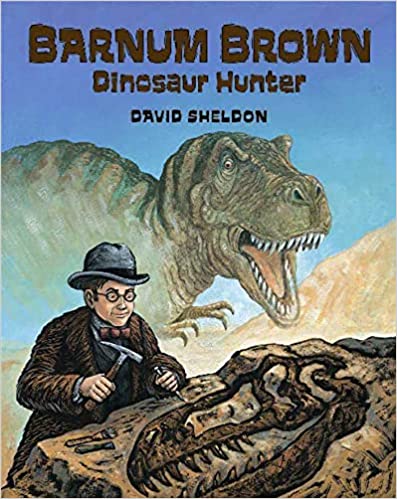
Barnum Brown Dinosaur Hunter

Barnum Brown had one ambition as a child: to grow up to be a great dinosaur hunter. And that’s just what he did when he was hired by the American Museum of Natural History—working to build their astounding collection.

Barnum had a knack for finding dinosaur bones, a skill that rivaled the paleontologists before him. His most amazing discovery was uncovering one of the largest carnivores that ever walked the earth, the “tyrant lizard king,” Tyrannosaurus Rex!

Barnum’s biography begins when he was a child living in Kansas. As a boy, he was amazingly curious, and this curiosity served him well throughout his career. The picture book describes Barnum’s work, and younger readers will need help decoding the advanced vocabulary and dinosaur terms. The illustrations show the work behind finding the fossils as well as the actual dinosaurs. The dinosaurs are often shown next to their bones which allows readers to imagine the dinosaurs behind the fossils. Plus, the illustrations show both the beauty and ferocity of the beast.

Barnum’s life story is exciting and interesting. Despite this, younger readers will not want to tackle this picture book alone. While the pages have 2 to 5 sentences, the sentences are long and complex. However, Barnum Brown Dinosaur Hunter is an enlightening book that dinosaur-loving readers of all ages should put on their must-read list, especially because Barnum is responsible for discovering 11 new dinosaurs. Without Barnum’s eye for finding fossils, the science of paleontology may be missing important fossils. Readers who want to learn more about Barnum’s life should also read Finding the First T. Rex by Kathleen Weidner Zoehfeld.

Sexual Content

  • None

Violence

  • None

 Drugs and Alcohol

  • None

Language

  • None

Supernatural

  • None

Spiritual Content

  • None

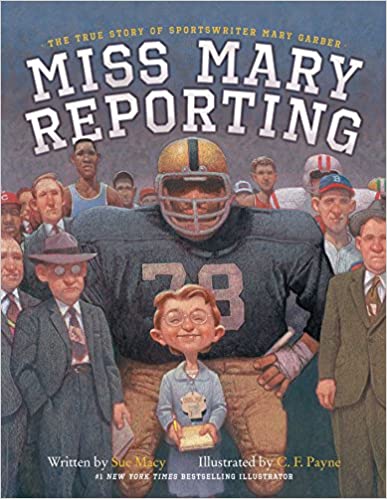
Miss Mary Reporting: The True Story of Sportswriter Mary Garber 

“Press Box: Women and children not admitted.” So read the press pass that Mary Garber had to wear as a reporter at sporting events. It was embarrassing, even insulting, but in the 1940s, sports—and sports reporting—was a man’s world.

Mary didn’t let that stop her. She never let anything stop her really. As a kid, she played quarterback for her local football team. Later, as a reporter, she dug in her heels and built up her own sports beat. For close to fifty years, Mary shined the spotlight on local heroes whose efforts might otherwise have gone unnoticed. “‘That’s Miss Mary Garber,’ one boy said at a soapbox derby. ‘And she doesn’t care who you are, or where you’re from, or what you are. If you do something, she’s going to write about you.’”

This is the story of a woman who pursued her dream and changed the world.

If you’re looking for an inspirational story that will encourage young readers to follow their dreams, then Miss Mary Reporting is the book for you. While the story focuses on the hard work and dedication that made Miss Mary an excellent reporter, the story also shows how others helped Miss Mary along the way. In addition, the book briefly mentions the segregated Negro leagues as well as Jackie Robinson and the discrimination he faced.

While Miss Mary’s story is inspirational, younger readers may have a difficult time sitting through a reading of the book because of the text-heavy pages. Each page has four to seven complex sentences and the text includes difficult vocabulary. The full-page illustrations use muted tones that reflect the serious topic of discrimination. The illustrations will give readers a peek into the past because it shows the clothing, hairstyles, and other aspects of the time period. Readers who want to learn more will find an author’s note, a timeline, and a list of more resources at the end of the book.

Miss Mary’s biography will inspire readers and show how one woman impacted the world of sports. However, the heavy topic makes the picture book more suited to older readers. While Miss Mary’s story is interesting, it’s not necessarily entertaining; the book is best read by those who have an interest in sports and journalism. Readers who would like to learn more about women in sports should also read Catching the Moon: The Story of a Young Girl’s Baseball Dream by Crystal Hubbard and She Persisted in Sports by Chelsea Clinton.

Sexual Content

  • None

Violence

  • None

 Drugs and Alcohol

  • None

Language

  • None

Supernatural

  • None

Spiritual Content

  • None

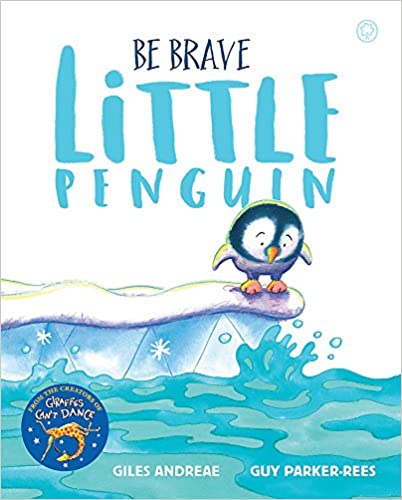
Be Brave Little Penguin

Little Penguin Pip-Pip would love to join in with all his friends swimming in the sea, but there’s just one problem . . . he’s scared of water. Can Pip-Pip overcome his fear and finally take the plunge? This irresistible story shows that sometimes all it takes is a little bit of encouragement – and a whole lot of heart – to finally make that leap and be brave!

At first, Pip-Pip watches the other penguins playing in the water. They tease him, calling him “Scaredy-Pip-Pip.” Little Pip-Pip is so sad that a single tear runs down his cheek. Pip-Pip’s mommy treats him lovingly as she reminds him, “we all have certain fears that might be hard to understand.”

Readers will relate to Pip-Pip, who worries about all the what-ifs. “What if the water’s freezing? And what if there are monsters who smell me from their den, and they slither up and eat me and I’m never seen again?” Mommy penguin asks Pip-Pip to turn his what-ifs into something positive. “What if in that water there are friends for you to meet? And what if it is light and warm and full of treats to eat?”

Pip-Pip finally takes the jump and discovers that swimming is so much fun. The cute story uses a beautiful blue color pallet that contrasts with the black-and-white penguins. The full-page illustrations are adorable and have fun elements, like the penguins playing with fish. Plus, the illustrations help readers visualize Pip-Pip’s fears. For example, one illustration shows a large, scary octopus deep underwater.

Be Brave, Little Penguin is a fantastic, fun story that uses rhymes to help young readers face their fears. Because Mommy penguin is loving and encouraging, she is able to help Pip-Pip learn that “sometimes all you have to do is just be brave and jump.” By the end of the story, Pip-Pip is smiling and laughing, which will leave readers with a big grin as well.

Readers will fall in love with Pip-Pip and the other penguins because of the adorably cute illustrations, but the story will become one of your child’s favorite picture books because of the relatable conflict. Each page has one to four sentences that are easy to understand. Plus, some of the words are in bold and some of the sentences are curved to add even more emphasis.

Be Brave, Little Penguin is a must-read because of the entertaining storyline as well as the positive message that will help readers overcome their fears and gain confidence. If you’d like to explore more books that will help young children face their fears, check out Otis and the Puppy by Loren Long and The Pout-Pout Fish in the Big-Big Dark by Deborah Diesen.

Sexual Content

  • None

Violence

  • None

 Drugs and Alcohol

  • None

Language

  • The other penguins tease Pip-Pip, calling him “Scaredy-Pip-Pip.”

Supernatural

  • None

Spiritual Content

  • None


32    3.3    5 worms   AR    picture book, must read


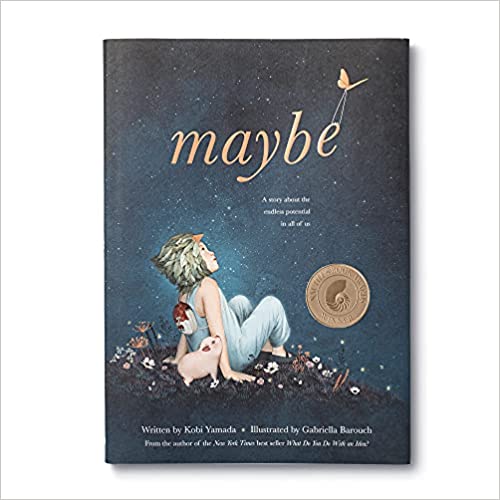
Maybe

You are the only you there ever has been or ever will be. You are unique. Just the odds of you being here at this exact place and this exact time are so great and so rare that they will never happen again. This is a story for everything you will do and everything you could be. It’s for who you are right now, and it’s for all the magical, unbounded potential you hold inside.

Unlike most picture books, Maybe isn’t a story with a plot. Instead, the book gives advice interspersed with questions to consider. The text asks, “Maybe you will help others to see the beauty of each day? Maybe you are here to shine a light into places that have been dark for too long.” While all of the advice and questions encourage readers to think about their unique abilities, many of them are deep questions that require thought and meditation. Because of this, younger readers might have a difficult time staying focused through the end of the book.

The whimsical illustrations focus on a girl and her pig. The young girl has a cap made of leaves with a beak-like beak. While the illustrations are beautiful and interesting, some of them are odd and do not match the words. For example, in one picture the girl is standing inside a giant flower and watering it. In the picture, the pig is chasing a ladybug. The text asks, “What if you are only scratching the surface of what you can do and who you can be?”

Another negative aspect of the story is the quickly shifting focus. The questions do not seem to flow naturally but instead jump from thought to thought. Instead of having a unified theme, Maybe reads like a motivational speech from a stranger. Because of this, young readers may wiggle and squirm throughout the reading of the book. If you’re looking for a motivational picture book, you should bypass Maybe and instead check out I Believe I Can by Grace Byers and The Power of One: Every Act of Kindness Counts by Trudy Ludwig.

Sexual Content

  • None

Violence

  • None

 Drugs and Alcohol

  • None

Language

  • None

Supernatural

  • None

Spiritual Content

  • None

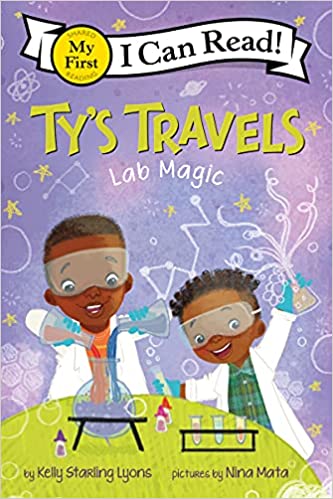
Ty’s Travels: Lab Magic

Corey and Ty take an exciting trip to the museum, where they get to be scientists. First, they study bugs. Then, they study the wind. Ty is disappointed when he discovers that he is too little to do science experiments at the museum. But Ty doesn’t let that spoil his day.

Once Corey and Ty get home, Momma helps them set up a science experiment that is perfect for younger kids. Before they begin, Corey and Ty make sure they are safe by putting on a lab coat (Dad’s shirt), goggles, and gloves. With their parents’ help, Corey and Ty learn that they like being scientists.

Lab Magic is part of the My First I Can Read Series, which uses basic language, word repetition, and illustrations that are ideal for emergent readers. Each page has one to four simple sentences with large, brightly colored illustrations. The illustrations will introduce different types of science such as using test tubes or learning about butterflies. Plus, the pictures will help young readers understand the plot.

Young readers who are learning how to read will enjoy Lab Magic. The short sentences and large illustrations make the story accessible to emergent readers. Like the other books in Ty’s Travels Series, Lab Magic shows Ty’s two-parent family in a positive light. Readers will enjoy learning about Ty’s adventure and all of the different ways science can be studied. For more science fun, check out Cece Loves Science by Kimberly Derting & Shelli R. Johannes.

Sexual Content

  • None

Violence

  • None

 Drugs and Alcohol

  • None

Language

  • None

Supernatural

  • None

Spiritual Content

  • None


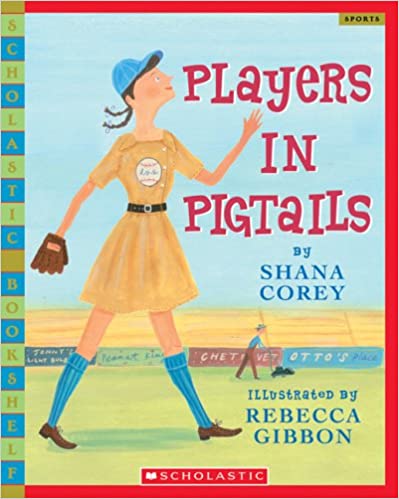
Players in Pigtails

Did you know that one of America’s favorite songs, “Take Me Out to the Ball Game,” was written about a girl? And that in the 1940s girls all across America were crazy for our country’s favorite game?

These little known facts inspired Shana Corey to imagine a story about how one determined girl made her way to the big leagues & found a sisterhood of players in pigtails. With the same exuberant spirit that fueled the formation of the All American Girls Professional Baseball League, Players in Pigtails celebrates these brave girls’ love of the game & the league they called their own.

Players in Pigtails begins with Katie Casey, who “wasn’t good at being a girl.” The story explains the 1950s view on women in a way that is both relatable and understandable. In order to play baseball, girls had to attend charm school and wear dresses as uniforms. Despite society’s views about girls and baseball, the players in the All American Girls Professional Baseball League showed that they could play baseball. During the first game, “no one was asking what good baseball was to a girl. They were all too busy talking about how good girls were for baseball.”

The bright full-page illustrations reflect the clothing and culture of the 1950s. However, some of the illustrations use humor to show Katie Casey’s plight. For example, the pictures show how Katie Casey couldn’t knit and her dancing was horrendous. Even though Players in Pigtails is a picture book, it is intended to be read aloud instead of having the child read it independently. Each page has 2 to 4 sentences and many of them are complex. Young readers will need help reading the book as well as understanding societies’ views on women. Younger readers may have a difficult time listening to the entire story because of the text-heavy pages.

Younger readers may wonder why girls had to learn how to drink out of a teacup and have good posture in order to play baseball. However, Players in Pigtails shows how women overcame obstacles to play the game they loved. The charming story will encourage readers to chase their dreams even when they may seem impossible. Anyone who loves baseball should read Players in Pigtails because of its historical value. Nevertheless, if you’re looking for an encouraging book to read to your baseball-loving child, Players in Pigtails is a must read. Readers may also want to check out Catching the Moon: The Story of a Young Girl’s Baseball Dream by Crystal Hubbard and Baseball Saved Us by Ken Mochizuki which are wonderful and motivational baseball picture books.

Sexual Content

  • None

Violence

  • None

 Drugs and Alcohol

  • None

Language

  • None

Supernatural

  • None

Spiritual Content

  • None

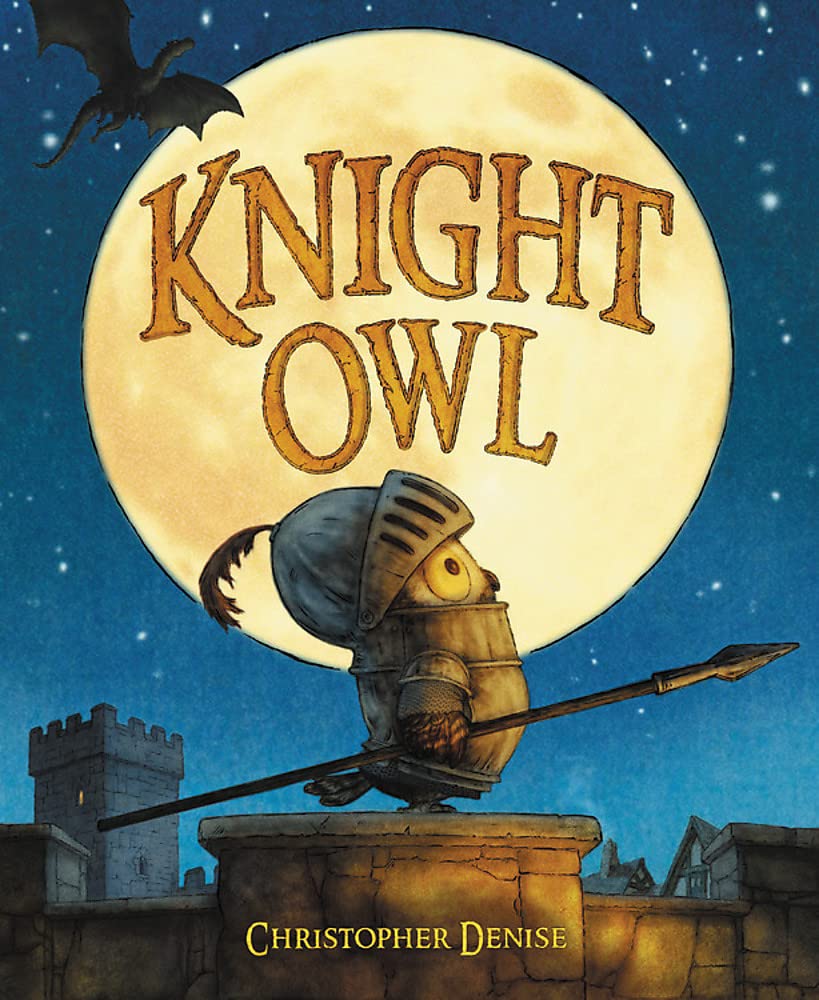
Knight Owl

Since the day he hatched, Owl has dreamed of becoming a real knight. He may not be the biggest or the strongest, but he believes that his sharp nocturnal instincts can help protect the castle, especially since many knights have recently gone missing. While holding guard during Knight Night Watch, Owl is faced with the ultimate trial—a frightening intruder. It’s a daunting duel by any measure. But what Owl lacks in size, he makes up for in good ideas.

Owl’s story comes to life in beautifully detailed illustrations that are shades of brown and blue. Owl’s small size is shown when he is working with the other knights, when he needs a ladder to see over the castle wall, and when a dragon towers over him. Despite his size, Owl reminds himself that he is a knight and knights are brave. When the dragon first appears, his face takes up an entire page, which allows his scales, angry eyes, and large teeth to pop off the page. Even though the dragon is frightening, Owl finds a way to connect to the dragon. Soon the two are talking about “how each of them had hatched from eggs [and] how much they liked the night.”

The story incorporates humorous wordplay. It also shows how Owl’s owlish traits help him be a good knight. For example, “the other knights usually fell asleep during the long Knight Night Watch, but Owl didn’t mind.” The illustrations also have fun elements such as the huge dragon reclining on the castle wall while enjoying a pizza.

Even though Knight Owl is a picture book, the story is intended to be read aloud to a child, rather than for the child to read it for the first time independently. Each page has 1 to 4 sentences. The story’s word play and onomatopoeia make Knight Owl a fun book to read aloud.

Young readers who dream of dragons and knights will fall in love with Owl. The relationship between Owl and the dragon is endearing and it teaches the importance of not making assumptions based on how someone looks. Once Owl and the dragon talk, they discover “they really had a lot in common.” Owl doesn’t save the day by using his strength or a sword, but by being brave enough to befriend the dragon. Readers who love dragons should also read When Dragons are Dreaming by James Mayhew & Lindsey Gardiner. Readers ready for chapter books should read Roland Wright: Future Knight by Tony Davis.

Sexual Content

  • None

Violence

  • It is implied that the dragon ate some of the knights.

 Drugs and Alcohol

  • None

Language

  • None

Supernatural

  • None

Spiritual Content

  • None

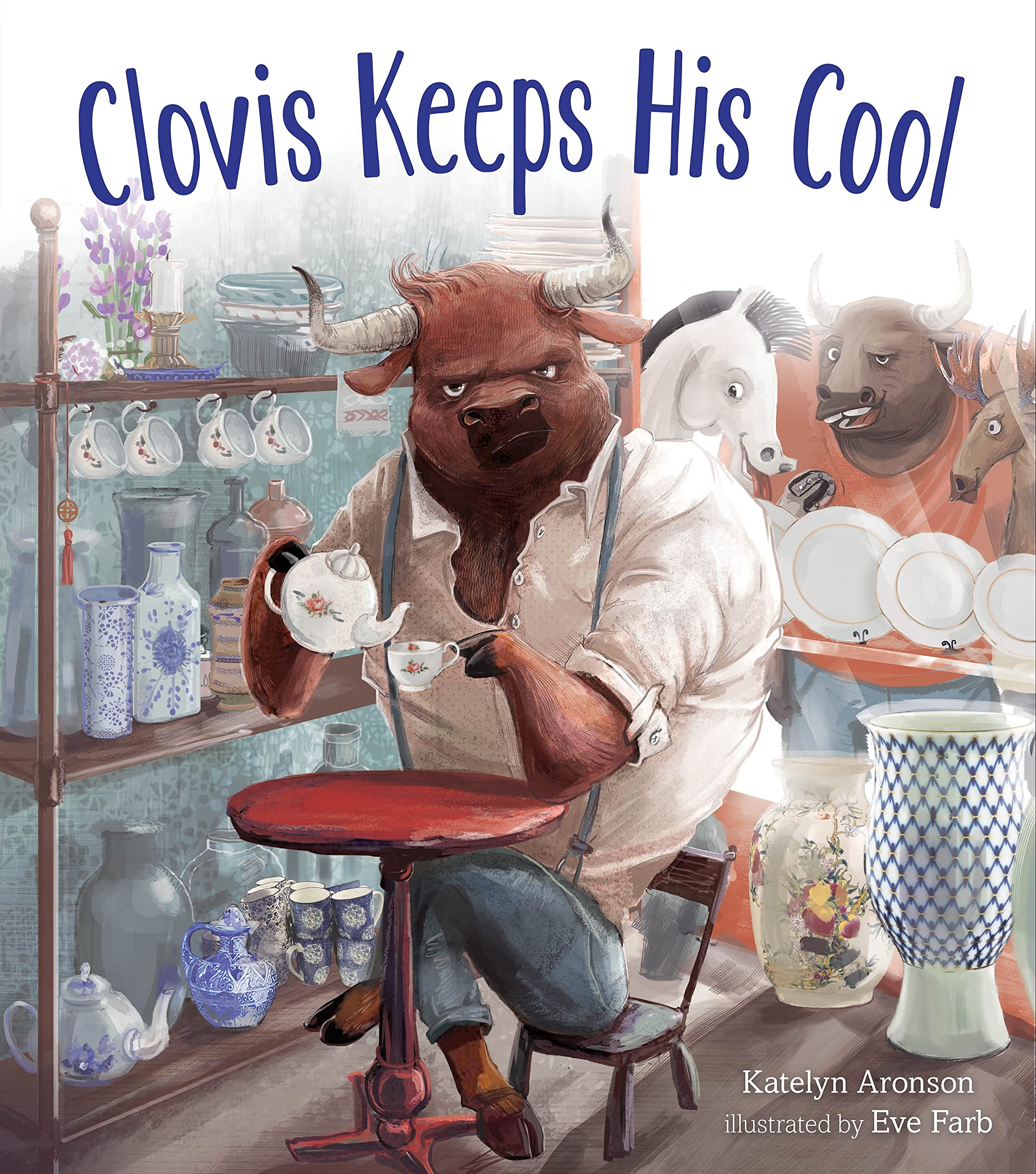
Clovis Keeps His Cool

Clovis has a terrible temper. He’s been learning how to control it with calming tea, deep breaths, and his beloved late granny’s wise words in mind: “Grace, grace. Nothing broken to replace.” His new job running her old china shop helps put him at peace.

But when bullies from his football days come to heckle him at the shop, Clovis faces a big challenge that even deep breaths and Granny’s words might not be enough for. Will Clovis give in to the urge to charge even if it means destroying something he loves?

In stressful situations, Clovis tries his best to stay calm. However, when heckler’s break his granny’s teacup, Clovis charges. When he has the hecklers cornered, Clovis is reminded of his granny’s words, which allows him to calm down. In a unique twist, Clovis invites the hecklers to have a cup of tea with him. In the end, the hecklers help Clovis clean up the mess in granny’s shop. “Little by little, they helped Clovis pick up the pieces, putting right what had gone wrong. And always Clovis served tea. By the time his shop reopened, a few things had changed. Clovis had old hobbies, new friends, and plenty of grace to go around.”

Through Clovis’ experiences, the reader will learn ways to destress. For example, Clovis listens to soothing music, he does yoga, he has chamomile tea, and he breathes to the count of ten. However, Clovis isn’t perfect and he loses his cool, but he finds a way to make everything right. When Clovis was being bullied, he could have retaliated, but instead, he treated the hecklers with kindness and they found common ground. Some younger readers may not understand all the underlying themes in Clovis Keeps His Cool, but it will give parents the opportunity to discuss anger, bullying, and forgiveness with their children.

While Clovis Keeps His Cool is an entertaining story on its own, the illustrations are wonderfully fun and humorous. For example, the contrast between Clovis’ large size and the tiny china in the tea shop will make readers smile. Clovis’ facial expressions are detailed and help the reader understand his varied emotions. Readers will also enjoy looking for the cat that pops up in several pages.

Even though Clovis Keeps His Cool is a picture book, the story is intended to be read aloud to a child, rather than for the child to read it for the first time independently. Each page has 2 to 4 sentences. However, some of the sentences are complex and readers may need help understanding some of the vocabulary. The varying size of the text adds interest to the page and also helps reinforce when Clovis is angry. The story’s alliteration, onomatopoeia, and dialogue make the story fun to read aloud.

Clovis Keeps His Cool will resonate with every young child because everyone gets angry at times. The unique setting, animal characters, and entertaining story will keep readers engaged as it teaches the importance of staying calm. Whether you’re looking for an educational book or a book to read just for fun, Clovis Keeps His Cool is an excellent choice.

Sexual Content

  • None

Violence

  • Hecklers come into the tea shop and one throws a teacup at Clovis. Angry, Clovis “tore through town, hot on the hecklers’ hooves. The stampede didn’t stop until he’d chased them to the end of a dark alley. . . Clovis snorted and pawed the ground.” Clovis controls his temper before he hurts anyone.

 Drugs and Alcohol

  • None

Language

  • Someone calls Clovis a wimp.

Supernatural

  • None

Spiritual Content

  • None

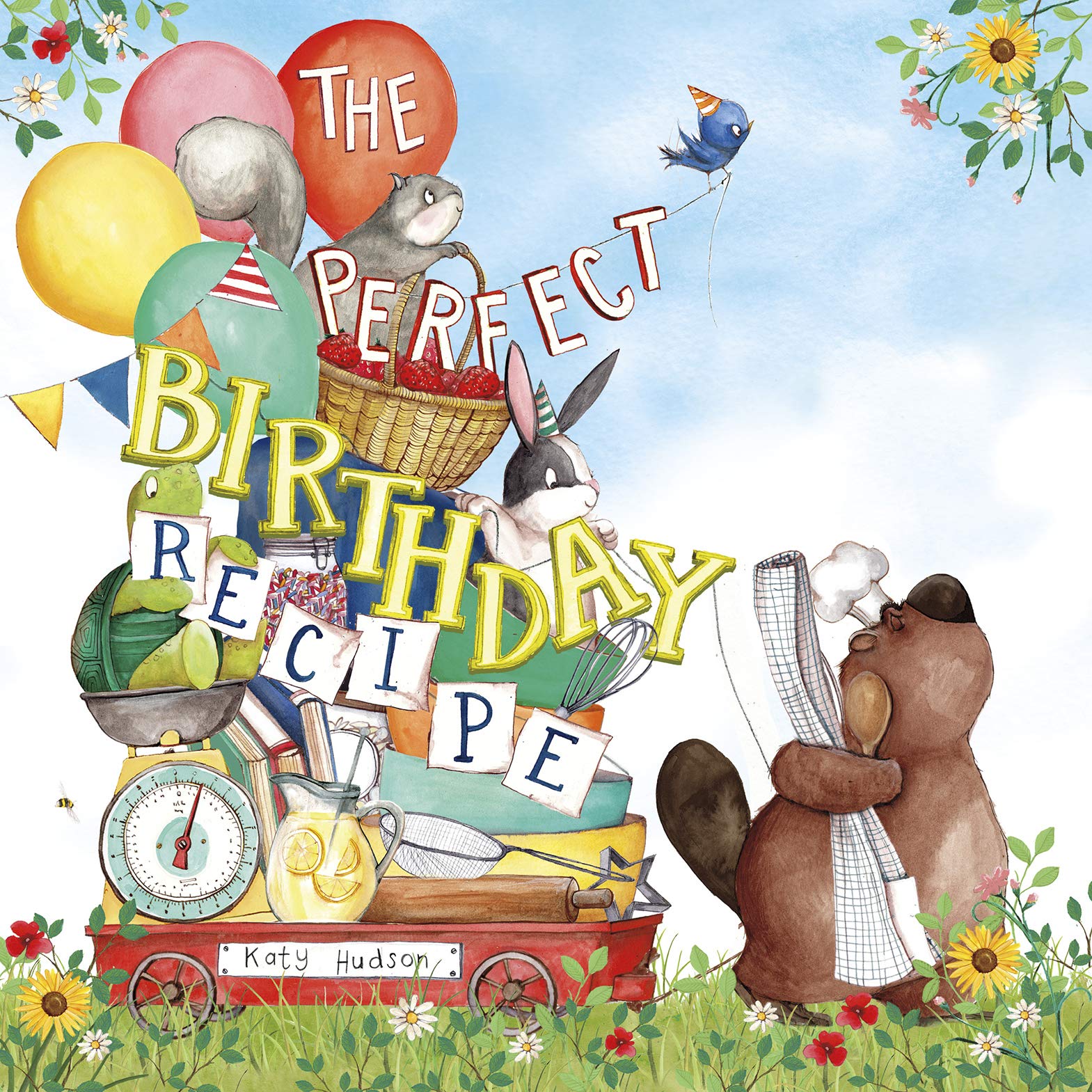
The Perfect Birthday Recipe

Summer birthdays can be lonely, but not when you have great friends like Beaver’s! This year Tortoise, Bird, Rabbit, and Squirrel insist on baking Beaver’s birthday cake, but Beaver isn’t so sure. He is the ultimate perfectionist and would rather do it himself, following the recipe exactly. Will Beaver’s nitpicky ways ruin his birthday and his friendships? The Perfect Birthday Recipe is the fourth and final story in Katy Hudson’s best-selling set of seasonal picture books, which include Too Many Carrots, A Loud Winter’s Nap, and The Golden Acorn.

 Every perfectionist will relate to Beaver, who makes step-by-step plans and wants everything done exactly as specified. When his friends insist on helping, Beaver worries and frets and grumbles his way through the process. Readers will giggle as each of Beaver’s friends “helps” make the cake. Tortoise works slowly and messily. Bird adds her family’s secret ingredient to the cake mix—pickled worms. Once Beaver sees the finished cake, which looks nothing like the recipe picture, Beaver “snaps” and yells, “This is the ugliest, most disgusting cake I have ever seen!”

Beaver leaves his friends and goes off in a huff to create a new, perfect cake. When the new cake is complete, Beaver cries because he has no one to share it with. In the end, Beaver learns that a perfect birthday only needs one ingredient—his friends.

Hudson’s seasonal picture books capture readers’ hearts as they teach about the importance of friendship. Each page is beautifully illustrated in bright colors and contains wonderful details. For example, when Rabbit misreads the cake recipe and adds two hundred carrots, the illustration shows Tortoise and Squirrel trapped under a mound of carrots with only their heads peeking out. Readers will want to look at the illustrations again and again, finding new details every time.

The Perfect Birthday Recipe will keep young readers engaged until the story’s end. Most of the text is dialogue and some words are bolded for added emphasis. Each page has 1 to 3 sentences, which makes it a quick read. The Perfect Birthday Recipe will please parents and children alike because of the adorably cute animals, a relatable conflict, and a positive message. Plus, Beaver’s story highlights the downfall of perfectionism and the importance of friendship.

Sexual Content

  • None

Violence

  • None

 Drugs and Alcohol

  • None

Language

  • None

Supernatural

  • None

Spiritual Content

  • None

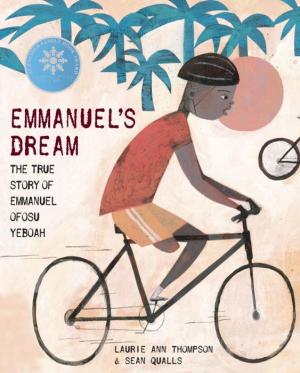
Emmanuel’s Dream: The True Story of Emmanuel Ofosu Yeboah

Born in Ghana, West Africa with one deformed leg, Emmanuel was dismissed by most people—but not by his mother, who taught him to reach for his dreams. As a boy, Emmanuel hopped to school more than two miles each way, learned to play soccer, left home at age thirteen to provide for his family, and, eventually, became a cyclist. He rode an astonishing four hundred miles across Ghana in 2001, spreading his powerful message: disability is not inability. Today, Emmanuel continues to work on behalf of the disabled.

Even though Emmanuel only had one good leg, he was determined to do what the other children did—go to school, play soccer, and ride a bike. Unlike most children today, Emmanuel also had to work shining shoes and selling vegetables to help support his family. Because of his disability, people told him to “go out and beg, like other disabled people did.” However, Emmanuel refused to give up, and his experiences led him to ride 400 miles across his country to show that “being disabled does not mean being unable.”

Even though Emmanuel’s Dream is a picture book, most young readers will not be able to read the book independently because of the advanced vocabulary and text-heavy pages. Each page has 2 to 4 sentences and many of the sentences are long and complex. The simple illustrations use bright colors and show Emmanuel’s world. Through the pictures, readers will get a brief look at Ghana’s culture.

Because of his disability, Emmanuel faced many hardships and discrimination. However, his story focuses on how he overcame each difficult situation. Emmanuel’s Dream will entertain readers as it teaches them the importance of perseverance and hard work. Because of Emmanuel’s dedication, he was able to succeed in spreading his message. “He proved that one leg is enough to do great things—and one person is enough to change the world.”

If you’re looking for more inspiring sports related books that focus on people overcoming difficult situations, pick up a copy of She Persisted in Sports by Chelsea Clinton and Catching the Moon: The Story of a Young Girl’s Baseball Dream by Crystal Hubbard.

Sexual Content

  • None

Violence

  • None

 Drugs and Alcohol

  • None

Language

  • None

Supernatural

  • When Emmanuel was born, most people thought he would be “useless, or worse—a curse. His father left, never to return.”

Spiritual Content

  • Emmanuel was given his name because it means “God is with us.”
  • Emmanuel asked the king of his region “to give him a royal blessing.”


Latest Reviews