
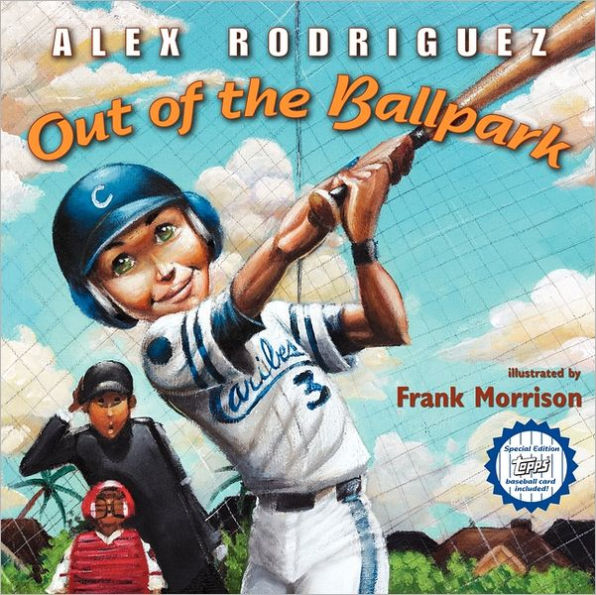
Out of the Ballpark

Before he hit 400 home runs, before he was named American League MVP, before he was ARod to millions of fans, he was Alex. He was just a kid who wanted to play baseball more than anything else in the world.

Baseball superstar Alex Rodriguez has drawn from his own childhood experiences to write Out of the Ballpark. Alex knows what it’s like to swing at a wild pitch or have a ball bounce right between his legs. Alex is determined not to let his mistakes set him back—even if it means getting up at the crack of dawn to work on his hitting and fielding before school starts.

Baseball fans will be drawn to Out of the Ballpark because of the brightly colored cover and Alex Rodriguez’s name. Alex struggles during a game, but during the championship, Alex’s grand slam won the game. Unfortunately, the story is predictable; however, the story does show the importance of hard work, determination, and practice.

The picture book is comprised of bright, cartoon-like pictures that capture the motion of the baseball games. The unique pictures often use two-page spreads to give the baseball field depth and to showcase the celebrating players. Out of the Ballpark is intended to be read aloud to a child, rather than for a child to read it for the first time independently. Each page has 1-6 sentences; however, some of the sentences are complex, which makes the pages text-heavy.

At the end of the story, readers will find a letter from Alex Rodriguez encouraging them to stay away from drugs, work hard, and respect their elders. There are also many pictures of him during his childhood. Even though the story is not memorable, Out of the Ballpark will appeal to baseball fans, and parents can use the story to start a conversation about achieving one’s dreams.

Sexual Content

  • None

Violence

  • None

 Drugs and Alcohol

  • None

Language

  • None

Supernatural

  • None

Spiritual Content

  • None

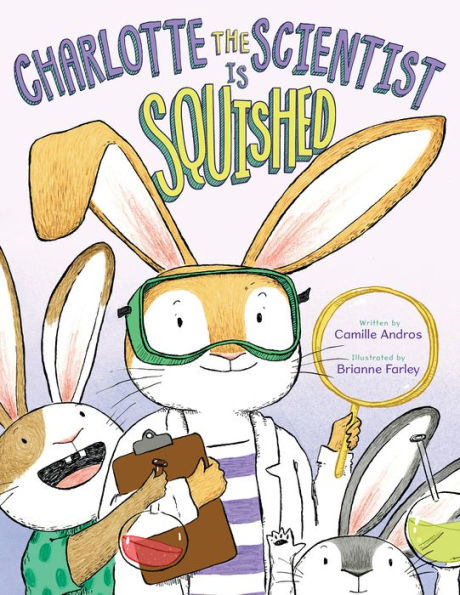
Charlotte the Scientist Is Squished

Charlotte is a serious scientist. She solves important problems by following the scientific method. She has all the right equipment: protective glasses, a lab coat, a clipboard, and a magnifying glass. But Charlotte has a problem: she needs more room.

Charlotte has so many brothers and sisters (she is a rabbit, after all) that she is too squished to work on her experiments! Can she use science to solve her problem?

Charlotte introduces readers to her 13 brothers and sisters and to the five steps of the scientific method. Charlotte’s dilemma comes to life in bright, humorous, full-colored illustrations. Even though each page is packed with adorable bunnies, Charlotte is easy to recognize because she always has on her safety glasses. Readers will enjoy counting all of Charlotte’s siblings, who are a bit rambunctious.

Charlotte decides to use the scientific method to answer her question: How can I get some space around here? Readers will giggle as Charlotte conducts her experiments and feel joy when Charlotte finds peace and quiet on the moon. Once there, she discovers that being alone is lonely. But Charlotte’s solution to her loneliness brings the story to a sweet conclusion.

Charlotte the Scientist is Squished will entertain and delight young readers who will want to read the book over and over. Charlotte has a relatable conflict and is a determined, funny main character. The story uses humor to introduce readers to the scientific method. However, this science-based book also is a story about her family, who can be annoying but also bring joy to Charlotte.

Each page of the picture book has 1 to 4 sentences. Because some of the sentences and vocabulary are complex, young readers will need an adult to read Charlotte the Scientist Is Squished to them. The end of the book explains how Charlotte followed the scientific method to solve her problem.

Charlotte the Scientist Is Squished is a wonderfully illustrated picture book that young readers will love. Adults will appreciate the story’s educational value. Another amazing picture book readers will enjoy is Mars Needs Moms by Berkeley Breathed. Both stories use humor to show the importance of family.

Sexual Content

  • None

Violence

  • None

 Drugs and Alcohol

  • None

Language

  • None

Supernatural

  • None

Spiritual Content

  • None


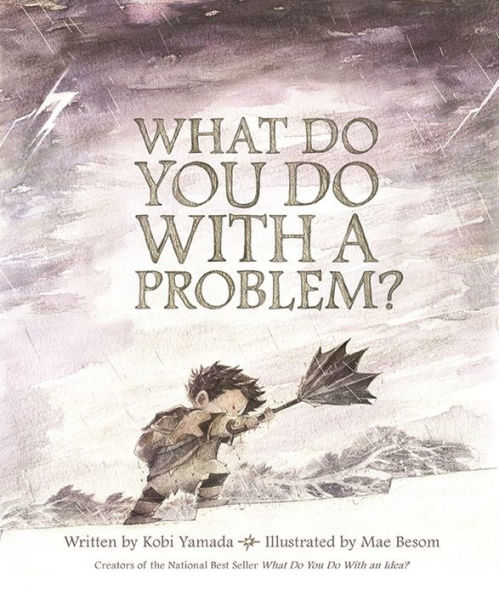
What Do You Do With A Problem?

What do you do with a problem? Especially one that follows you around and doesn’t seem to be going away? Do you worry about it? Ignore it? Do you run and hide from it?

This is the story of a persistent problem and the child who isn’t so sure what to make of it. The longer the problem is avoided, the bigger it seems to get. But when the child finally musters up the courage to face it, the problem turns out to be something quite different than expected.

This picture book gives a problem the form of a black cloud that grows larger and stormier as the story progresses. The beginning of the book uses dark shades that are predominantly dark and gloomy. The unnamed boy’s worry is apparent because of his facial expression and body language. At one point, the boy wonders, “What if it takes away all of my things?” The illustration shows the boy trying to protect his toys and stuffed animals.

Everyone can relate to the boy, who tries to run from a problem. What Do You Do With A Problem shows the importance of tackling problems by coming up with a plan to overcome them. Eventually, the boy jumps into the dark cloud and discovers that the problem “had something beautiful inside. My problem held an opportunity! It was an opportunity for me to learn and to grow. To be brave. To do something.”

While What Do You Do With A Problem has a positive message about overcoming obstacles, the problem and the solution are vague and illustrated with abstract ideas that show the boy’s emotion, rather than an actual solution. Despite this, the story would make an excellent conversation starter about different ways to approach a problem.

Even though What Do You Do With A Problem is a picture book, the story is intended to be read aloud to a child, rather than for the child to read it for the first time independently. Each two-page spread has 1 to 4 sentences. Detailed, interesting illustrations and a conflict that everyone can relate to make What Do You Do With A Problem a wonderful book to read with children. The story’s conclusion leaves the reader with this thought: “Every problem has an opportunity for something good. You just have to look for it.”

Sexual Content

  • None

Violence

  • None

 Drugs and Alcohol

  • None

Language

  • None

Supernatural

  • None

Spiritual Content

  • None

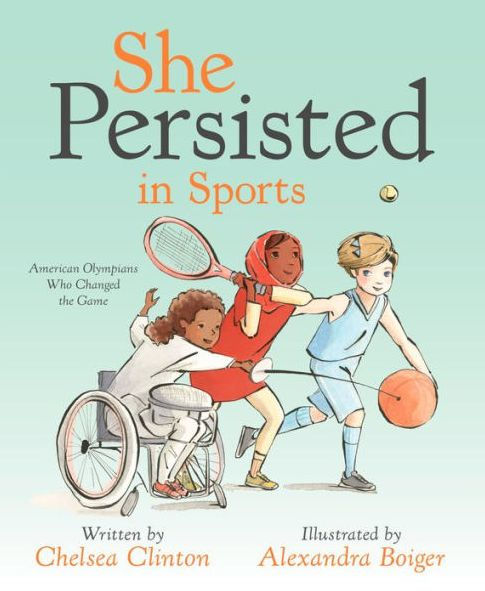
She Persisted in Sports

Throughout history, in every sport and at all levels of play, women athletes have been told they were never going to be fast enough, strong enough, or good enough. This book introduces readers to women athletes who have excelled in their sports because of their passion, their skills, and their persistence.

She Persisted in Sports begins with Margaret Ives Abbot, who was the first American woman to become an Olympic champion in the 1800s, and ends with Jocelyne and Monique Lamoureux, who helped the U.S. Women’s Hockey team win their first gold medal in twenty years. The book introduces 16 women athletes across a 200-year time span. The women are of different races and abilities, including one woman who raced in a wheelchair.

She Persisted in Sports has a positive message that women can do anything with persistence. The can-do attitude of the women’s profiles is inspiring. The book covers women who overcame many obstacles including sexism, a club foot, loss of hearing, and other hardships. Each athlete is introduced in a two-page spread. One page includes a short introduction of the athlete and the other page has a beautiful watercolor illustration with a motivational quote. Throughout the book, the words “she persisted” appear in colored ink, highlighting the theme.

Even though She Persisted in Sports is a picture book, it uses advanced vocabulary and sentence structure. In addition, the text-heavy pages make the book better suited for elementary students. While She Persisted in Sports is an inspirational book, each profile is short and does not tell how the athletes overcame their circumstances. While many of the athletes competed in individual sports, many of the women, such as Mia Hamm of the 1996 Olympic soccer team, were able to help propel their teams to victory.

She Persisted in Sports would be an excellent conversation starter about persistence and overcoming obstacles. It will also springboard some reader’s interest in athletes, which will lead them to learn more about the women featured in the book. The wide variety of sports, the diverse women, and the unique obstacles make She Persisted in Sports an inspiring book for girls to read.

Sexual Content

  • None

Violence

  • None

 Drugs and Alcohol

  • None

Language

  • None

Supernatural

  • None

Spiritual Content

  • None


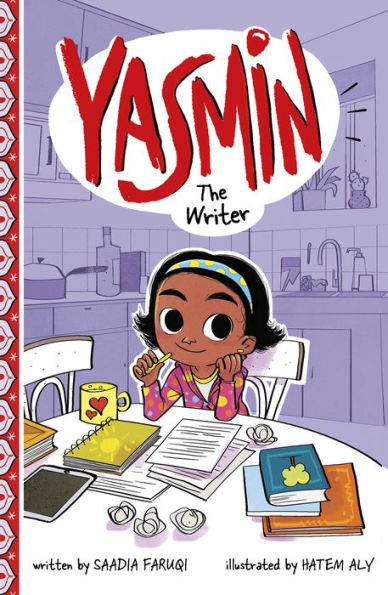
Yasmin The Writer

Ms. Alex has assigned Yasmin’s class to write about their heroes. Yasmin loves to write, but she can’t decide who her hero is. After tossing out lots of ideas, could it be that Yasmin’s hero has been right beside her all along?

 Yasmin is a relatable character who struggles with choosing a topic for her writing assignment. At first, Yasmin looks at famous athletes, music stars, queens, presidents, and other leaders. But it’s the day-to-day events that make her choose her topic—her mother. While her mother is not famous, she cooks dinner, helps Yasmin find her pajamas, and comforts her when she has a bad dream.

Even though the story’s plot is predictable, young readers will enjoy the story as it shows both Yasmin’s home life and her school life. The story has three short chapters and each page has large illustrations that will help readers understand the plot. The full-color illustrations use cheerful colors and Yasmin’s class has diverse students. Yasmin is Pakistani and her mother wears a hijab. Yasmin’s mother also uses Urdu words, which are defined in a glossary that appears at the back of the book.

Yasmin the Writer will help emerging readers feel confident with their reading. Each page has 1 to 4 short sentences which are printed with oversized text. The conclusion has an illustration of a piece of paper that shows Yasmin’s writing assignment. At the end of the book, there are questions that will help students connect to the text, some fun facts about Pakistani, and directions to make your own journal.

Yasmin the Writer uses an everyday situation that will make young readers think about the definition of a hero. The story will also remind readers that mothers are heroes because they care for their children. Readers who enjoy the Yasmin Series should put the Sofia Martinez Series by Jacqueline Jules on their reading list.

Sexual Content

  • None

Violence

  • None

 Drugs and Alcohol

  • None

Language

  • None

Supernatural

  • None

Spiritual Content

  • None

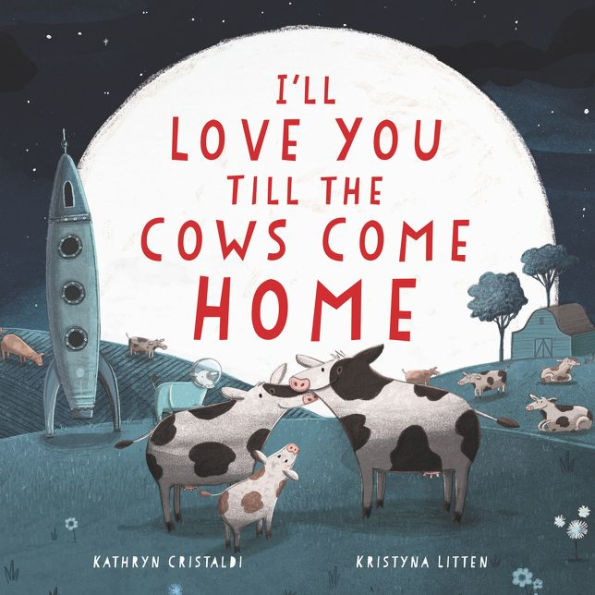
I’ll Love You Till the Cows Come Home

I’ll Love You Till the Cows Come Home uses cows and other animals to show that love has no bounds. However, the cows are not normal farm animals. Instead, these amazing cows take a “trip to Mars through skies unknown in a rocket ship made of glass and stone.” The story includes yaks, sheep, frogs, and other animals. Each refrain reminds readers that, “I’ll love you until . . .” and then refers to the animal in the picture.

Using hyperbole and humor, I’ll Love You Till the Cows Come Home wonderfully captures the idea that love knows no boundaries. Beautiful illustrations in muted natural colors depict whimsical animals. Young readers will enjoy looking at all of the pictures’ details. For example, one page shows four frogs “riding on big-wheeled bikes going superfast in a circus of sea horses, shrimp, and bass.” The dancing sea horses and shrimp in top hats will leave readers giggling. Even though the illustrations are silly, readers will easily understand the book’s message: love never ends.

Even though I’ll Love You Till the Cows Come Home is a picture book, it will resonate with readers of all ages. If you’re at a loss for words and don’t know how to express your love, then this picture book would make the perfect gift. After all, what better way to express your love than to say, “I’ll love you till the ants march in wearing tiny hats and tiny ant grins and birthday cake crumbs on their tiny ant chins. I will love you till the ants march in.”

Sexual Content

  • None

Violence

  • None

 Drugs and Alcohol

  • None

Language

  • None

Supernatural

  • None

Spiritual Content

  • None

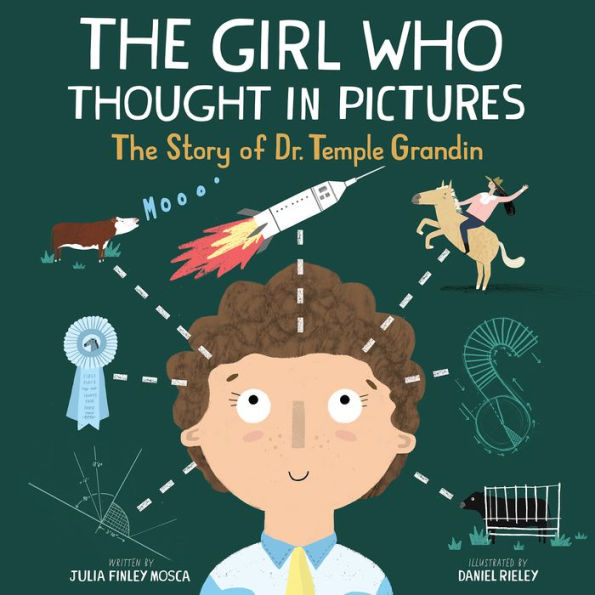
The Girl Who Thought in Pictures: The Story of Dr. Temple Grandin

When young Temple was diagnosed with autism, no one expected her to talk. Some people told Temple’s mother that, “Her brain’s not quite right. You must send her away.” But Temple’s mother never gave up on her. A special teacher helped Temple learn to speak and encouraged her by saying that Temple was “different, not less.”

School was difficult for Temple, and her mother sent her to live on her aunt’s ranch. Temple loved the animals and finally felt like she was fitting in. “Fitting in on a farm was less stress since the pigs didn’t care if your hair was a mess.” Temple loved cows and she wanted to make farms better.

While many believed that Temple would “never be normal,” others saw Temple’s potential. One of her teachers told her, “When you find what your good at, like science—you’ll soar.” Because of the encouragement of others, Temple was able to go to college and became one of the most powerful voices in modern science.

Temple’s inspiring life story shows how Temple’s autism helped her connect with animals and find her life’s work. The Girl Who Thought in Pictures explains autism in a kid-friendly manner and shows how Temple’s thinking allowed her to connect with animals in a special way, helping her invent groundbreaking improvements for farms around the globe. The book ends with a biography, fun facts, a timeline, and even a note from Temple herself.

Each page of the picture book has 2 to 4 rhyming lines. Some of the words have added emphasis and they appear in all capitals. Each page uses colorful illustrations that bring Temple’s world to life. In addition, some of the pictures contain thought bubbles so readers can understand Temple’s thinking process and her inventions. Even though The Girl Who Thought in Pictures is a picture book, the story is intended to be read aloud to a child, rather than for the child to read it for the first time independently.

The Girl Who Thought in Pictures should be read by every child because it will help them become more empathetic towards others. For those who feel different, the story will help them realize that they are not alone and that they too can accomplish great things. In addition, the story will help children understand the behaviors of autistic children. But best of all, Temple’s story reinforces the idea that the things that make people different are the things that make them unique. The Girl Who Thought in Pictures shows that with hard work and dedication, everyone can make a positive impact on the world.

Sexual Content

  • None

Violence

  • At school, “Kids taunted and chased her [Temple] all over the yard.” Then one day, Temple “snapped” and “threw a book at a kid and was kicked out of school!”

 Drugs and Alcohol

  • None

Language

  • None

Supernatural

  • None

Spiritual Content

  • None

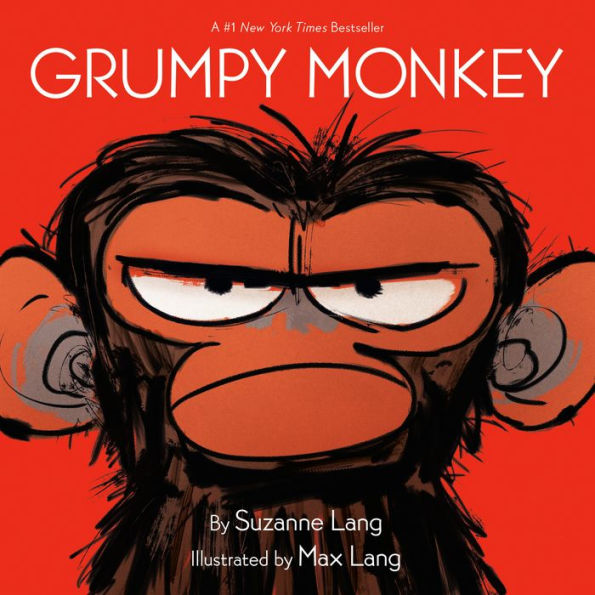
Grumpy Monkey

Jim Panzee is in a terrible mood for no good reason. His friends just can’t understand it—how can he be in a bad mood when it’s such a beautiful day?

They encourage him to stop hunching, to smile, and to do things that make him happy. But Jim can’t take all the advice. . . and has a bit of a meltdown. Could it be that he just needs a day to feel grumpy?

Grumpy Monkey tackles the problem of having a down day with humor. His friends just don’t seem to understand why Jim is grumpy, and their advice leads to some silly situations. For example, when Jim puts on a smile, it doesn’t look happy. Instead, his smile looks more like a grimace. Soon the whole forest—a snake, a lemur, a frog, zebras, peacocks, birds, and even a lion—is talking about Jim’s grumpy mood.

The animals are illustrated using the muted browns and greens of the jungle. A gorilla named Norman appears in all of the illustrations as a fun contrast to Jim. The animals’ expressions add to the story’s humor and younger readers may enjoy counting all of the hidden insects and critters that appear on each page.

Anyone who has ever had a bad day will relate to Jim. The ending is endearing and humorous because Norman dances with Porcupine and gets a butt full of quills. The last page shows Norman and Jim sitting on a tree branch, and they both agree that “It’s a wonderful day to be grumpy.” The Band-Aids on Norman’s behind will have little readers giggling.

Each page of the picture book has 1 to 7 sentences. Even though the story is a picture book, the story is intended to be read to a child instead of a child reading it independently.

While Jim stays grumpy through the entire story, Grumpy Monkey will have readers giggling. Whether you are in a bad mood or a good mood, Grumpy Monkey will put a smile on your face. Readers who would like to meet another moody character should check out the Pout-Pout Fish Adventures by Deborah Diesen.

Sexual Content

  • None

Violence

  • None

 Drugs and Alcohol

  • None

Language

  • None

Supernatural

  • None

Spiritual Content

  • None

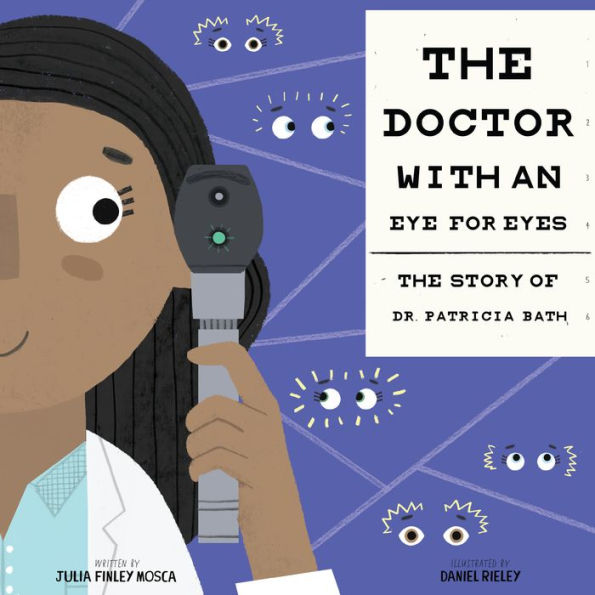
The Doctor With An Eye for Eyes: The Story of Dr. Patricia Bath

When Patricia Bath was little, she loved playing with boys and doing everything her big brother did. A girl coming of age during the Civil Rights Movement, Patricia, who was African American, was determined to be a doctor even though most were men. The only nearby high school was only for white kids, but this didn’t stop Patricia from graduating high school and going on to college.

While at college, Patricia meets unfair restrictions, but she is determined to help blind people. During her time as a doctor, she teaches others about the eye and starts an eye doctor training program. Patricia eventually develops a laser probe that “fixed the eyeballs of patients all over the globe.”

Patricia didn’t let racism, sexism, or poverty get in the way of her goal. Her story will inspire readers to reach for their dreams. The story ends with this thought: “So, if helping the world seems too hard, you are wrong. If some say you can’t do it, don’t listen. Be STRONG. Like Patricia, stay FOCUSED. Push FORWARD. Shine BRIGHT. . . And you’ll find all your dreams will be well within SIGHT!”

Each page of the picture book has 2 to 4 rhyming lines. Some of the words have added emphasis and appear in all caps. Each page uses colorful illustrations to bring Patricia’s world to life. Some illustrations show how Patricia faced discrimination. Even though The Doctor With An Eye for Eyes is a picture book, the story is intended to be read aloud to a child, rather than for the child to read it for the first time independently.

The Doctor With An Eye for Eyes should be read by every child because it will help them understand the importance of perseverance and education. The story shows how Patricia used her knowledge to teach others and make a positive impact on the world. Because of Patricia, “those without sight for years (like fifteen or twenty or THIRTY more years), they could finally SEE!”

The Doctor With An Eye for Eyes shows how Patricia overcame many obstacles before she reached her goal. However, one of Patricia’s greatest accomplishments was to open the American Institute for the Prevention of Blindness. “She CREATED a place. . . A place to bring HOPE to the whole human race. Its motto is this: Rich or poor, black or white, healthy vision’s important. It’s everyone’s right.”

Sexual Content

  • None

Violence

  • None

 Drugs and Alcohol

  • None

Language

  • None

Supernatural

  • None

Spiritual Content

  • None

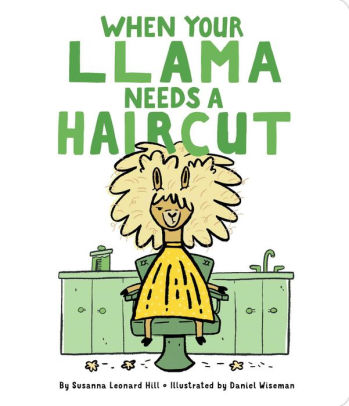
When Your Llama Needs a Haircut

It’s picture day and a boy’s llama needs a haircut. Before the llama has a haircut, however, his hair needs to be washed and brushed. Once that’s done, the boy decides what style of haircut to give the llama. Once that’s decided, the boy gives the llama “a simple trim from nose to tail.” The llama is wiggly and the boy accidentally cuts too much hair. To make sure they have matching haircuts, the boy cuts his own hair too.

When Your Llama Needs a Haircut will engage readers as it uses humorous illustrations to show the boy’s conflict. Young readers will laugh at the llama’s different hairstyles, which range from a bowl cut to a green mohawk. When the boy and his llama finally get their picture taken, they have very little hair left.

Even though When Your Llama Needs a Haircut is a picture book, the story is intended to be read aloud to a child, rather than for the child to read it for the first time independently. Each page has 1 to 2 lines of text. The simple vocabulary and short sentences make the story a quick read. The story’s simple plot and funny illustrations will engage young readers and leave them with a smile.

Sexual Content

  • None

Violence

  • None

 Drugs and Alcohol

  • None

Language

  • None

Supernatural

  • None

Spiritual Content

  • None

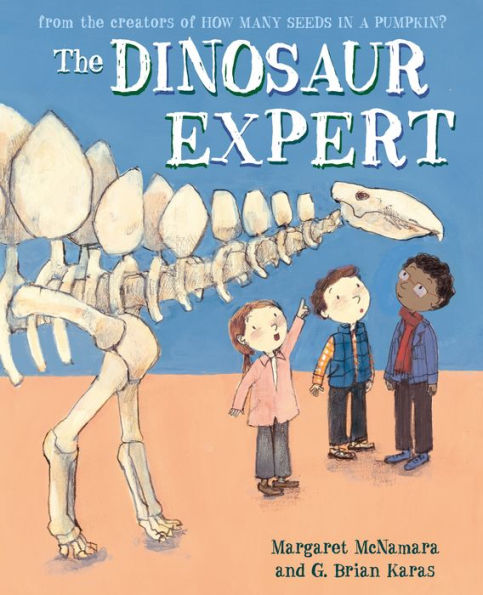
The Dinosaur Expert

Mr. Tiffin and his students are back in another picture book; this time the focus is on dinosaur-loving Kimmy. During a field trip to the natural history museum, Kimmy is thrilled to share what she knows about the Stegosaurus, the Archaeopteryx, and even the ginormous Titanosaurus. But that all changes when one of her classmates questions whether girls can be paleontologists, and Kimmy starts to feel shy. What if girls can’t be paleontologists? What if no one wants to hear what she has to say? It will take some help from Mr. Tiffin—and from a famous scientist—for Kimmy to find her voice again.

The Dinosaur Expert has many positive aspects, including Mr. Tiffin, who encourages Kimmy to share her dinosaur knowledge. Mr. Tiffin shows her an exhibit of Dr. Brandoni de Gasparini’s hunting fossils. Seeing a woman paleontologist gives Kimmy the courage to tell her classmates about dinosaurs. The end of the book includes a short biography of seven of Kimmy’s favorite women paleontologists.

Every dinosaur-loving kid should read The Dinosaur Expert, which has many fascinating facts as well as detailed illustrations of dinosaurs. Readers will enjoy seeing Kimmy’s character grow from a timid girl who doesn’t want to talk, to a confident girl who shares her knowledge.

Each page has large illustrations that show a diverse group of children. Almost every page shows an illustration of a dinosaur as well as many dinosaur facts. Each page has 1 to 5 sentences. However, readers will need help with some of the dinosaur names and advanced vocabulary.

Young readers will enjoy going on a field trip with Mr. Tiffin’s class and will relate to Kimmy’s fear of speaking up. The story blends Kimmy’s conflict and dinosaur facts, which will keep readers interested in the story. Plus, girls will love seeing real women scientists who have made contributions to the study of dinosaurs. One of the best parts of The Dinosaur Expert is that it shows that anyone can become a scientist. Readers who can’t get enough of dinosaurs should add The Dino Files Series by Stacy McAnulty to their reading list.

Sexual Content

  • None

Violence

  • None

 Drugs and Alcohol

  • None

Language

  • None

Supernatural

  • None

Spiritual Content

  • None

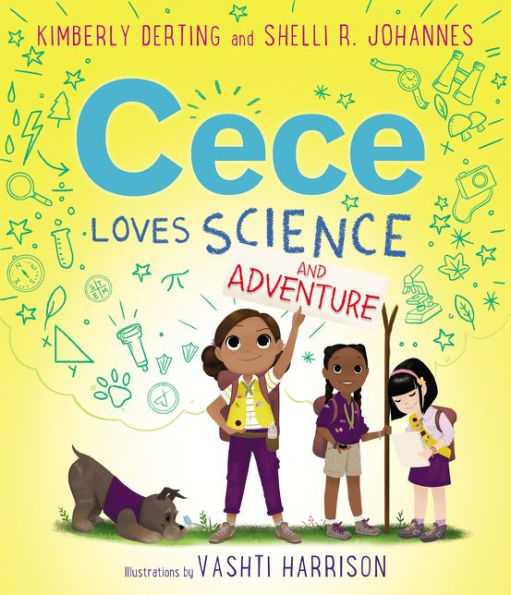
Cece Loves Science and Adventure

Cece and her Adventure Girl group are going on a camping trip. Cece has packed everything including the marshmallows. Her friends, Caroline and Daisy, help set up a tent. Once that is complete, Cece’s mom and the three friends go on a nature hike. They see all sorts of interesting things like a twisty oak tree and a fork in the path. Cece uses her camera to take lots of pictures.

A sudden rainstorm surprises the girls, but they’re prepared. They make a shelter out of their rain ponchos. When Cece’s mom loses her cellphone signal, the girls use the pictures that Cece took to make a map. Soon they are back at camp! The Adventure Girls are excited that they earned their camping pin.

Cece wants to make sure she is extra prepared for the camping trip, so she uses two lists—Adventure Girls Camping Checklist and Cece’s Camping Checklist. As the girls go on their adventure, they also use a list to make sure they are able to earn their camping pin. While on the camping trip, the girls have fun and have to use math to build a tent, figure out how far away a storm is, and find out how far they are from their camp.

Several times, Cece thinks about what her teacher, Ms. Curie, has taught her in class. While the story has some scientific facts, the lessons seem rushed and have little detail. For example, when a storm approaches, Cece thinks about the different types of clouds, which are identified in a thought bubble. The story quickly moves on, without teaching more about clouds. In addition, Cece and her friends are able to use pictures to create a map back to their campsite, which is unrealistic.

While the story’s plot is not as well developed as the first book in the series, younger readers will enjoy seeing Cece and her friends work together to solve problems. While the science is kid-friendly, younger readers will need help reading the text-heavy pages because of the complex sentence structure and difficult vocabulary such as Mississippi, cumulus, and gnome.

Cece Loves Science and Adventure uses an easy-to-understand format and brightly colored, full-page illustrations to engage students. Several of the illustrations show the math problems that the girls are trying to figure out. The illustrations highlight the characters’ facial expressions which helps readers understand their emotions. The story ends with a STEM Pin Worksheet that shows how the camping trip meet the requirements to earn a STEM Adventure Girl pin. A two-page glossary appears at the back of the book.

The Cece Loves Science Series introduces young readers to science in a fun and educational way. Each story makes science fun and shows the importance of working together. With supportive adults, a diverse group of characters, and an adorable dog, Cece Loves Science and Adventure will entertain and educate readers.

Sexual Content

  • None

Violence

  • None

 Drugs and Alcohol

  • None

Language

  • None

Supernatural

  • None

Spiritual Content

  • None


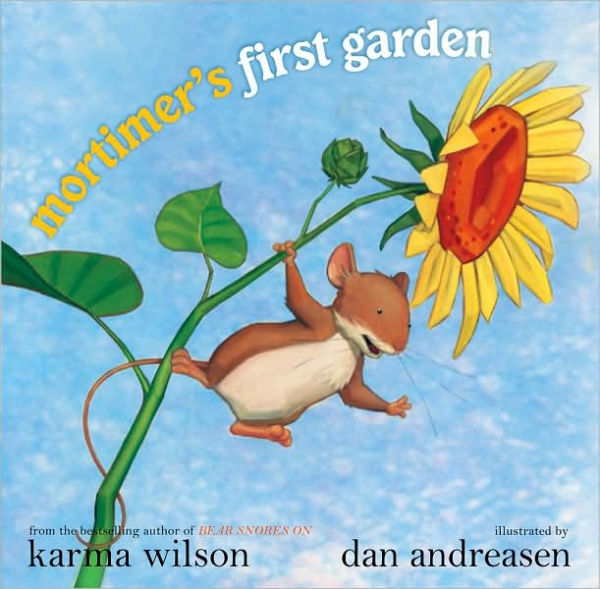
Mortimer’s First Garden

Winter is just ending, the sky is gray, and the ground is brown. Little Mortimer Mouse munches on sunflower seeds and longs to see some green.

Upon overhearing the story of how springtime rain and sunshine nurtures little seeds to grow into great big green plants, Mortimer is skeptical, but decides to plant one of his seeds just to see if such a miracle really can happen. Mortimer finds a perfect spot to plant the seed, and then. . . he waits. And waits. And waits.

Impatient, Mortimer thinks nothing is ever going to happen to the little seed. But then something does happen. Something wonderful. Something divine. Something green! Mortimer discovers the miracle of springtime.

Mortimer’s First Garden is a wonderful story about discovering the wonders of gardening. As he waits for his sunflower to appear, Mortimer weeds, waters and cares for his growing plant. Through Mortimer’s experiences, readers will discover the joy of planting and caring for seeds and the excitement of growing a garden.

Mortimer’s environment comes to life in colorful, full-page illustrations. The illustrations are colored with muted spring colors and show the beauty of spring. Readers will fall in love with the little mouse, as he waits for his flower to grow. Readers will relate to Mortimer’s impatience, and smile when Mortimer tells God, “I wouldn’t mind a friend to help me eat these [seeds].” Just when Mortimer needs it, a friendly spider appears and the two friends snuggle down to sleep. Some readers may wonder why a spider would make a good friend for Mortimer. However, this would be an excellent opportunity to discuss the beneficial qualities of spiders.

Each page of Mortimer’s First Garden has 1-6 simple sentences that use repetition, onomatopoeia, and alliteration. The simple story is intended to be read aloud to a child, rather than for the child to read it for the first time independently. Both the text and the pictures combine into an engaging story that highlights the miracle of a seed. Parents who are looking for more books that encourage children to plant a garden should also read We Are the Gardeners by Joanna Gaines.

Sexual Content

  • None

Violence

  • None

 Drugs and Alcohol

  • None

Language

  • None

Supernatural

  • None

Spiritual Content

  • Mortimer hears a voice whisper, “Wait.” At first, Mortimer doesn’t know who spoke. But then, “Mortimer felt warm and protected. Then Mortimer knew the voice. Mortimer bowed his head. ‘I will wait, God. But please, make my seed grow.’”
  • When Mortimer’s seed begins to grow, he says, “Thank you, God!”
  • When Mortimer sees the sunflower, he says, “It is a miracle! Thank you, God!”
  • After all the seeds have been harvested, Mortimer prays, “And please, God, I wouldn’t mind a friend to help me eat these.”

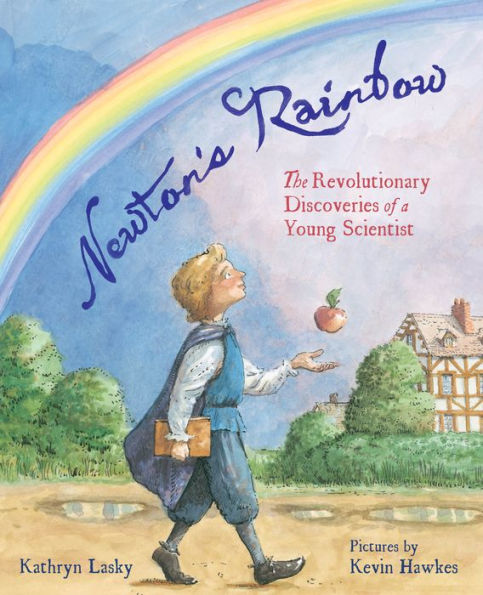
Newton’s Rainbow: The Revolutionary Discoveries of a Young Scientist

Famed for his supposed encounter with a falling apple that inspired his theory of gravity, Isaac Newton (1642–1727) grew from a quiet and curious boy into one of the most influential scientists of all time. Newton’s Rainbow tells the story of young Isaac—always reading, questioning, observing, and inventing—and how he eventually made his way to Cambridge University, where he studied the work of earlier scientists and began building on their accomplishments.

When a bubonic plague outbreak interrupted his formal schooling in 1665, he made discoveries that illuminated the mysteries of gravity, motion, and even rainbows—giving mankind a new understanding of the natural world that changed science forever.

While most people recognize Isaac Newton’s name, they do not know how extraordinary his discoveries were. Newton’s Rainbow details many of Newton’s experiments, including when he made a mouse-powered mill. “Isaac attached a string to a mouse’s tail and put the mouse on a treadmill. When he tugged on the string, the mouse ran.” Readers who love science will be intrigued by Newton’s experiments.

Newton studied many great men who came before him including Aristotle, Plato, Johannes Kepler, and Galileo Galilei. The book includes a one-paragraph biography of both Galileo and Kepler. As Newton studied these great men, he also conducted experiments to prove or disprove a hypothesis. While the story of an apple falling on Newton’s head was not true, Newton was able to develop the theory of gravitation. He also developed calculus and his theories became the basics for modern physics.

Newton’s Rainbow is a picture book that has large full-colored illustrations that show Newton’s activities and experiments. However, the book will need to be read by an adult because of the text-heavy pages and the difficult vocabulary. Some difficult words, such as philosophy and chamber pot, are defined in the text. While the book does an excellent job of explaining Newton’s impact on today’s world, Newton’s Rainbow may not appeal to young readers. However, the book would be an excellent resource for a research paper.

Newton’s Rainbow will help readers understand Newton’s contributions to math and science. Readers who love science should add Newton’s Rainbow to their must-read list. However, highly active children may find it difficult to sit through a reading of the book. To introduce young readers to science, parents should read these books to their children: Questioneers Collection by Andrea Beaty and the Zoey and Sassafras series by Asia Citro.

Sexual Content

  • None

Violence

  • At school, Newton was often bullied. But then, “he beat up the school bully in a fight—even though the bully was much bigger.”

 Drugs and Alcohol

  • Newton lived with an apothecary, who made medicines. “One required the patient to drink a mixture of mint, the bitter herb wormwood, and three hundred headless millipedes ‘well beaten with ale.’”
  • While at Cambridge, Isaac’s first roommate “liked to go to pubs and parties throughout the night.”

Language

  • None

Supernatural

  • None

Spiritual Content

  • None

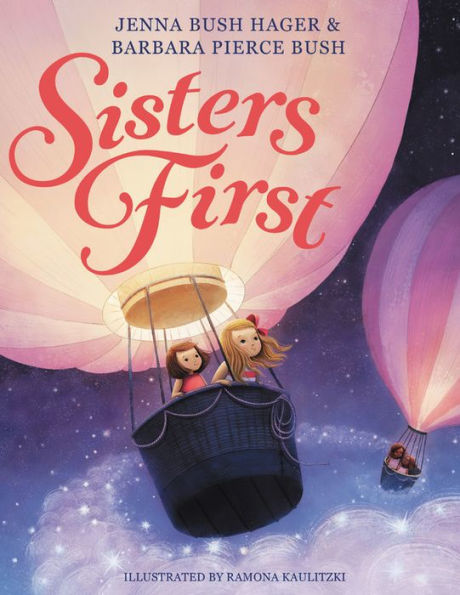
Sisters First

A young girl’s wish is granted when a new sister arrives. However, the baby can’t do much. When the little girl’s sister finally arrives, she’s surprised that “you cried and you ate, but not much more. (My baby sister was a bit of a snore.)”

Over time the big and little siblings become inseparable, playing and dancing, imagining and laughing. By each other’s side, they are smarter, kinder, and braver than they ever thought they could be. And they are forever sisters first.

This exquisite celebration of the bond between sisters is inspired by the spirited childhood of Jenna Bush Hager and Barbara Pierce Bush, authors of Sisters First: Stories from Our Wild and Wonderful Life.

 Sisters First uses beautiful, imaginative illustrations to show the bond between three sets of sisters. The illustrations have some fun details, such as two sisters and their dog wearing masks while they “break” into the cookie jar. The illustrations perfectly match the text’s words which help bring the sisters’ imaginations into focus. For example, as two sisters pretend to be “cat pirates sailing across the rough sea,” the sisters are dressed in cat pajamas sailing on a pirate ship with a purple and white sail.

Whether the sisters are pretending to be mermaids riding alligators or wearing high heels to become president and VP, the sister are always kind and support each other. The girls’ adventures are shown in full-page illustrations that use bright colors and fun details that younger readers will want to look at again and again. Each two-page spread has one to five sentences. Even though Sisters First is a picture book, the story is intended to be read aloud to a child rather than for a child to read it for the first time independently.

Sisters First is a must-read because it will empower little girls to be kind and supportive. It doesn’t matter if you’re flying through space with your stuffed animals or baking cookies, it is important to remember this prayer: “Please make us kind, with enormous hearts, clever too, and very smart. With soft hands to hold and warm arms to hug, and gentle eyes that show deep love. Accepting and patient, yet strong in our views, hopeful and joyful in all that we do. And through many days, the best and the worst, help us remember we are sisters first.”

Sexual Content

  • None

Violence

  • None

 Drugs and Alcohol

  • None

Language

  • None

Supernatural

  • None

Spiritual Content

  • When a little girl is lonely and wants a sister, she “said a prayer as I pictured your face. Please make her kind, with an enormous heart, clever too, and very smart. With soft hands to hold and warm arms to hug and gentle eyes that show deep love.”

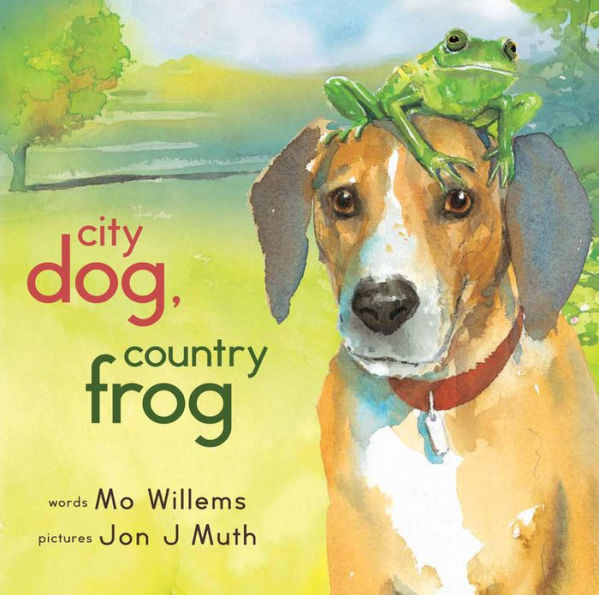
City Dog, Country Frog

In spring, when City Dog runs free in the country for the first time, he spots Country Frog sitting on a rock, waiting for a friend. “You’ll do,” Frog says, and together they play Country Frog games. In summer, they meet again and play City Dog games. Through the seasons, whenever City Dog visits the country he runs straight for Country Frog’s rock. In winter, things change for City Dog and Country Frog. Come spring, friendship blooms again, a little different this time.

 City Dog, Country Frog explores the beautiful concept of friendship by focusing on two unexpected friends. When City Dog meets Country Frog, the two teach each other games. Their friendship is beautifully portrayed through watercolor illustrations that use muted colors. The illustrations enhance the concept of friendship by showing the two spending time together. For example, one illustration shows the two friends relaxing; Country Dog is floating in a pond and Country Frog is sitting on the dog’s head. Another illustration shows the wise frog protecting Country Dog from a summer shower by holding a large leaf over Country Dog’s head.

The story goes through the four seasons. But in winter, Country Frog is missing from the scenes. The story implies that the frog has died, and City Dog’s sadness is evident. However, when spring arrives City Dog meets a chipmunk. At this point, City Dog repeats Country Frog’s words: He says he is “waiting for a friend, but you’ll do.” And then City Dog “smiled a froggy smile.”

Even though City Dog, Country Frog is a picture book, the story intended to be read aloud to a child, rather than for the child to read it for the first time independently. Each page has 1 to 3 sentences and some of the sentences are complex. City Dog, Country Frog is a touching story that both young and older readers will enjoy. It’s a perfect book to put in your reading library because children will begin to understand the underlying themes as they grow.

The story has several underlying themes such as the rhythm of the seasons, the loss of a friend, and learning from each other. While younger readers may not understand the deeper themes, they will still fall in love with the two unusual friends. The captivating illustrations perfectly blend with the text’s words to create a lovely vision of friendship.

Sexual Content

  • None

Violence

  • None

 Drugs and Alcohol

  • None

Language

  • None

Supernatural

  • None

Spiritual Content

  • None

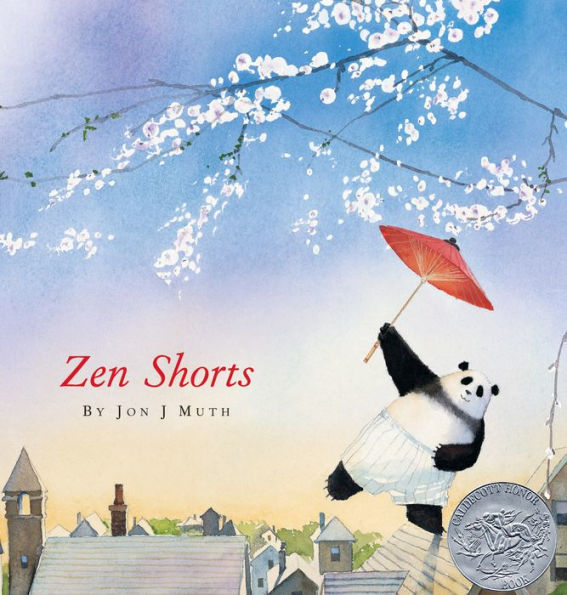
Zen Shorts

When Stillwater, a giant panda, moves into Addy, Michael, and Karl’s neighborhood, he tells them the most amazing stories.

He tells Addy the tale of a poor man who gives gifts to a robber. He tells Michael of a farmer who knows that luck can be neither predicted nor judged. And to Karl, he tells the tale of a monk who carries the weight of a burden long past. Stillwater imaginatively presents three classic Zen stories that abound with enlightenment and love.

Using watercolors, the full-page illustrations beautifully bring Stillwater and the three children to life. The illustrations capture the huge size of Stillwater, but still portray him as a kind and cuddly panda. Stillwater’s patience is shown through his willingness to let Michael climb on his head and jump from his stomach, and when he ignores Michael’s complaining.

Each time one of the children arrives at Stillwater’s house, he tells them a story. The story pages are delineated by using a solid background color with black-and-white illustrations. When Stillwater tells the stories, some of the pages become text-heavy, which may make it difficult for squirmy children to sit through the entire book. Stillwater shows that spending time with someone and telling them a story is a gift.

Zen Shorts connects classic Zen Stories to the children that visit Stillwater, which allows readers to understand how Zen stories apply to modern life. The author’s goal is to help children realize that, “When you look into a pool of water, if the water is still, you can see the moon reflected. If the water is agitated, the moon is fragmented and scattered. It is harder to see the true moon. Our minds are like that. When our minds are agitated, we cannot see the true world.”

Even though Zen Shorts is a picture book, the story is intended to be read aloud to a child, rather than for the child to read it for the first time independently. Each page has 1 to 10 complex sentences. Younger readers may not understand the meaning of Stillwater’s stories. However, much like Aesop’s Fables, Zen Shorts would be an excellent book to use as a conversation starter. Even though younger readers may not understand all of the stories’ messages, the book will still spark readers’ imagination. After reading Zen Shorts, readers will want a panda of their own.

Sexual Content

  • None

Violence

  • None

 Drugs and Alcohol

  • None

Language

  • None

Supernatural

  • None

Spiritual Content

  • None

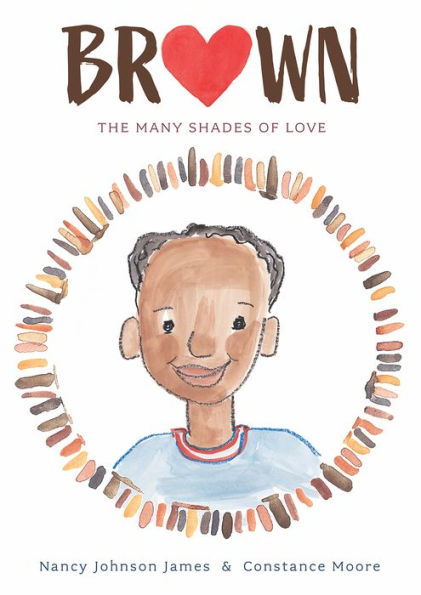
Brown: The Many Shades of Love

The narrator, an unnamed boy, describes the varied skin tones of his immediate and extended family. The boy starts with his mama whose brown “is chocolate. It’s clear, dark, and sweet.” The book ends with the boy explaining that “I love to paint our shades of skin, and give each one a name. I love my family.”

Each page has two short lines. The lines describe a family member’s skin. For example, “Sister’s brown like polished pine—fragrant, tall and strong.” The boy describes eleven members of his family and uses nature and food to describe each person’s skin tone. Even though each person is a different shade of brown, the boy acknowledges, “We’re different and the same.”

The picture book’s illustrations look similar to watercolors. One side of the page is shaded brown, like the person’s skin. The illustrations celebrate the unique skin color of each person. For example, “Uncle’s brown like coffee beans, a dark and fragrant blend.”

Brown: The Many Shades of Love uses child-friendly language to show how each person in a family looks different, but they all share one thing—love. Even though Brown: The Many Shades of Love is a picture book, the story is intended to be read aloud to a child, rather than for a child to read it for the first time independently. The poem uses easy vocabulary and each page has two lines of text. Readers who enjoy Brown: The Many Shades of Love, should also read Love by Matt De La Peña which also shows the importance of a family’s love.

Sexual Content

  • None

Violence

  • None

 Drugs and Alcohol

  • None

Language

  • None

Supernatural

  • None

Spiritual Content

  • None

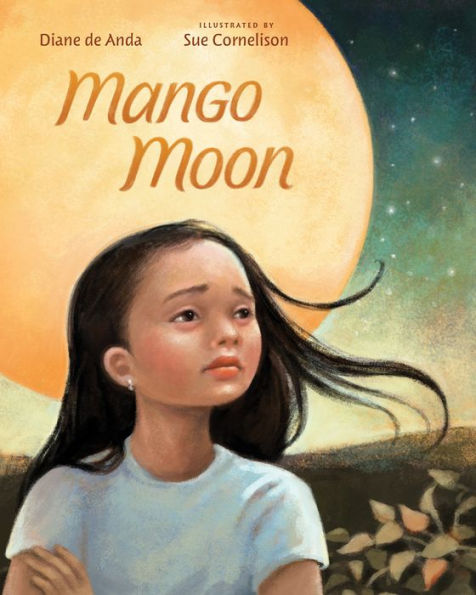
Mango Moon

One day Maricela’s father doesn’t come home. With her father in a detention center awaiting deportation, Maricela’s whole life changes. Her mother has to work two jobs, her family had to move in with Maricela’s aunt, and she has to change schools.

Maricela misses her father so much that it makes her stomach hurt. And everywhere she looks, she’s reminded that her father is gone. She misses him pushing her on the swings. She misses him coaching her soccer team. And she misses him whenever she sees the moon, the bright orange moon that is just like the mango Maricela was eating the last time she and her father looked at the night sky together from their porch.

Mango Moon tackles the difficult topic of deportation by focusing on one girl’s struggle. Maricela and her brother were born in the United States, and her mother has a visa. But Maricela doesn’t understand how her father can be sent to a dangerous county because “Papi never did anything wrong; he just didn’t have papers.”

Beautiful illustrations show Maricela’s range of emotions—confusion, loneliness, fear, and sadness. Her father’s absence is felt in every picture. On one page, Maricela hugs her father’s picture, and on another, she reads her father’s letters. The most touching picture is when both Maricela and her father are looking up at the same moon, but Maricela is in her backyard and her father is in a detention center. In the illustration, her father is holding a card that Maricela made for him. The illustrations highlight Maricela’s emotions, which often contrast with the bright illustrations. Most of the illustrations have mango color, which helps remind the reader of Maricela’s last night with her father.

While Mango Moon doesn’t talk about the political aspect of immigration, the story does show the devastating effects of families being separated. Unlike many stories, Mango Moon doesn’t end on a happy note. Instead, Maricela expects her father to be sent to another country, alone. Like many children of undocumented immigrants, Maricela is teased at school which only adds to her worries. Maricela’s story is heartbreaking because it shows how Maricela’s life is shattered.

Any parent who wants to broach the subject of immigration should read Mango Moon with their child. Even though the story is a picture book, young readers will need help understanding the difficult subject. De Anda writes about immigration’s hardships in a child-friendly manner that shows it is “all right for us to cry.” Many children may face similar hardships to Maricela, and Mango Moon can help them process the confusing emotions of having a parent deported. Even if you are not in a similar situation, Mango Moon can help kids grow empathy and understand the pain of losing a parent.

Sexual Content

  • None

Violence

  • None

 Drugs and Alcohol

  • None

Language

  • None

Supernatural

  • None

Spiritual Content

  • None

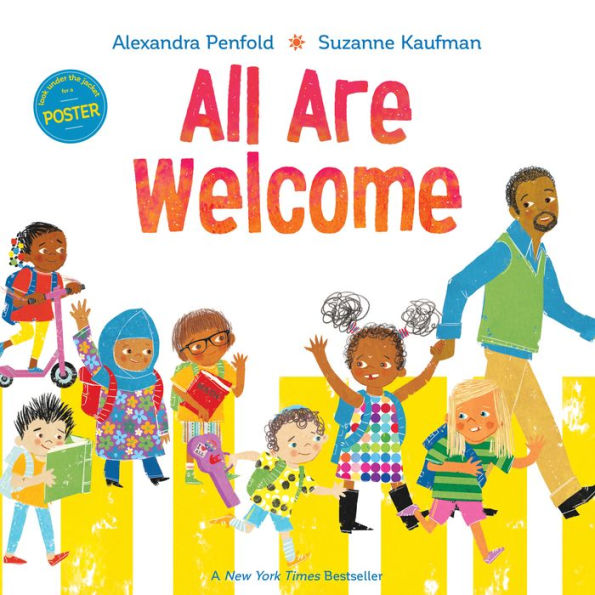
All Are Welcome

Follow a group of children through a day in their school, where everyone is welcomed with open arms no matter their race, religion, or background. The picture book begins with families being welcomed to school. The story shows events that happen during a typical school day such as playing at recess, making music, having lunch, and presenting science projects. Each page repeats the refrain, “All are welcome here.”

The end of the book transitions to the children’s home life. Two pages show some of the kids sleeping, but in their dreams, they are playing with a special friend. Even though everyone is different, “we’re part of a community. Our strength is our diversity. A shelter from adversity. All are welcome here.” The picture book shows the importance of accepting others despite differences.

The picture book’s illustrations are bursting with colorful details. The book includes a diverse group of children including a girl in a wheelchair and a blind boy. One page includes a Muslim girl praying. The children’s clothes are bright, colorful, and full of patterns. Parents may want to point out the two girls who seem to be special friends and are playing in most of the pictures. The children’s hair is messy, and many of them have missing teeth which adds charm to the pictures.

All Are Welcome is a quick read since each two-page spread contains 2 to 4 rhyming lines of text. The end of the book has folded pages that can be removed and used as a poster. Both the words and the illustrations celebrate a group of diverse people that make up a community. A world map appears in several of the pictures which reinforces the idea that “No matter how you start your day. What you wear when you play. Or if you come from far away. All are welcome here.”

All Are Welcome would be a wonderful read-aloud book that will introduce readers to the concept of being accepting of everyone despite their differences. In a world filled with division, All Are Welcome will help young readers understand the importance of being kind, inclusive, and accepting others. Angus All Aglow by Heather Smith is another wonderful book about accepting people’s differences.

Sexual Content

  • None

 Violence

  • None

 Drugs and Alcohol

  • None

Language

  • None

Supernatural

  • None

Spiritual Content

  • None

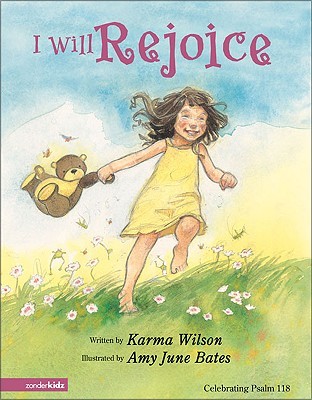
I Will Rejoice

Based on Psalm 118:24, I Will Rejoice teaches how to find joy in each day God has made. We can appreciate the simple, everyday things we do, from a “warm, cozy lap,” to being glad “in the evening light.” There are lots of reasons to rejoice. The story follows one little girl’s day as she plays with a friend, takes a nap, and wrestles.

Beautiful pictures in muted colors illustrate one girl as she goes through her day. The illustration highlights the many people (and the teddy bear) that love the girl. The story focuses on small delights such as being able to play, snuggle, and listen to a story. I Will Rejoice will help young readers appreciate the many simple blessings they receive each day.

Each page has a rhyming couplet and most pages begin with, “I will rejoice. . .” The repetition and rhyming that appear in each short sentence, make I Will Rejoice the perfect book to read aloud. Each page contains 1-4 sentences. Even though I Will Rejoice is a picture book, the story is intended to be read aloud to a child, rather than for a child to read it for the first time independently.

I Will Rejoice combines beautiful pictures and poetry to create a picture of all of God’s blessings.

Sexual Content

  • None

Violence

  • None

 Drugs and Alcohol

  • None

Language

  • None

Supernatural

  • None

Spiritual Content

  • I Will Rejoice focuses on celebrating Psalm 118: “This is the day the Lord has made, and I will rejoice and be glad in it.”

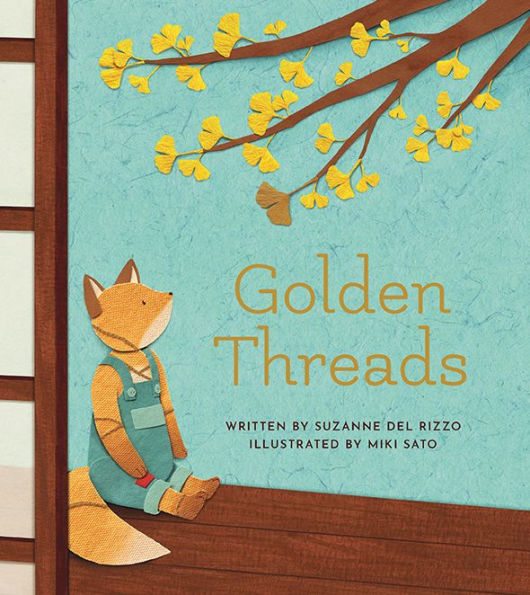
Golden Threads

When a storm sweeps Emi’s beloved stuffed fox away from their mountain home, he ends up tattered and alone on a distant shore. A kind old man finds the fox and gives it to his granddaughter, Kiko. As she recovers from an injury of her own, Kiko mends the fox lovingly with golden thread.

As the seasons pass, Kiko cares for the fox as her own. While the fox is with his new friend, Kiko sews him with golden thread. After discovering his origins, she sets out with her grandfather’s help to bring the fox back to its original home. Once together, Emi and Kiko piece together the fox’s journey and find delight in their newly forged connections.

Told from the stuffed fox’s point of view, readers will relate to the fox who is lost and misses his friend, Emi. The fox worries that because of his “tattered paws and matted fur” that Emi will no longer want him. The illustrations depict Kiki’s injury and imply that both Kiki and the fox will be better than before after they heal. The story shows how the fox brings Emi and Kiki together and helps them form a friendship.

Golden Threads is inspired by the Japanese art form of kintsugi, or golden joinery, where broken pottery is repaired with resin painted gold. Kintsugi values repairing, rather than replacing, believing that the cracks give the broken item its story. This book is also a warm celebration of wabi-sabi, the Japanese idea that there is beauty in things that may be incomplete or imperfect.

Any child who has a favorite stuffed animal will love Golden Threads and understand the themes of getting lost, healing, and coming home. The sweet story has beautiful paper-cut illustrations with depth and warmth. Even though Golden Threads is a picture book, the story is intended to be read aloud to a child, rather than for the child to read it for the first time independently. The alliterations and descriptions make the story fun to read aloud. However, younger readers may have difficulty with the complex sentence structure and the vocabulary. Each page has 1-4 sentences, which makes Golden Threads perfect to read aloud. Golden Threads beautifully conveys the message that people and stuffed animals do not need to be perfect in order to be loved.

Sexual Content

  • None

Violence

  • None

 Drugs and Alcohol

  • None

Language

  • None

Supernatural

  • None

Spiritual Content

  • None

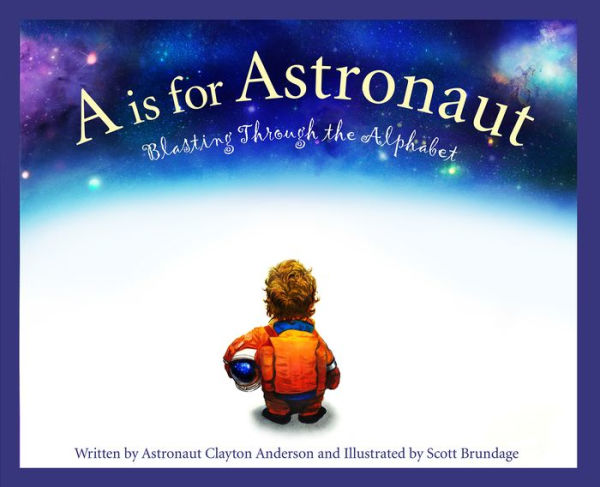
A is for Astronaut: Blasting Through the Alphabet

Retired astronaut Clayton Anderson takes readers on an A to Z flight through the alphabet from astronaut and blastoff to spacewalk and Zulu Time. Topics cover science, the history of NASA, and practical aspects of being an astronaut. In addition, A is for Astronaut has other astronaut facts that books usually overlook—such as how astronauts take out the trash while in space!

Even though younger readers may not understand all of the scientific information in A is for Astronaut, this picture book will captivate readers of all ages. Each letter has a fun poem paired with longer expository text. The main text appears in the form of a rhyming poem. Most pages have a sidebar that explains more about each topic. These sidebars have 2-3 paragraphs that use some difficult vocabulary. For younger readers, the poem will give enough information without reading the sidebars, while older readers will enjoy the additional tidbits in the sidebars.

The illustrations in A is for Astronaut are so beautiful that they would make gorgeous pictures to hang on the wall! The full-page illustrations use a kaleidoscope of color to show the beauty of space and the wonder of space travel. For example, one picture shows a child’s face, clearly captivated by a space shuttle launch which is reflected in the child’s sunglasses. Each illustration has beautiful details that show different aspects of space flight such as the planets, the astronauts, and the people on earth. While most illustrations focus on planets and astronauts in space suits, the pictures include a diverse group of men and women which will allow all readers to picture themselves in a space-related career.

Every child should read A is for Astronaut because the text and illustrations combine to show the wonder of space flight. For those who do not already love science or space, A is for Astronaut will provide a basic understanding of space flight. But more importantly, the book might just spark readers’ interest in space flight, the planets, or a career in science.

Sexual Content

  • None

Violence

  • None

 Drugs and Alcohol

  • None

Language

  • None

Supernatural

  • None


Spiritual Content

  • None

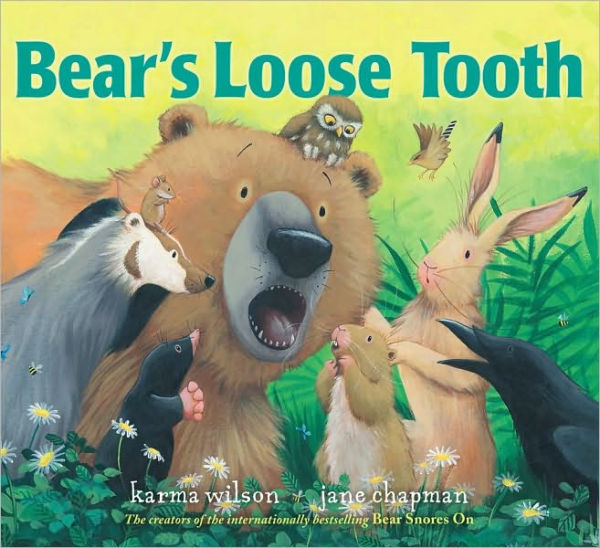
Bear’s Loose Tooth

Bear and his friends are munching on their lunch when all of a sudden Bear feels something wiggling and wobbling in his mouth. It’s Bear’s first loose tooth. Bear’s friends ease his concern about his tooth and help him understand that losing a baby tooth is perfectly natural. Bear puts his tooth on a plate and the tooth fairy replaces the tooth with fresh berries for the bear to munch.

Everyone, whether they have lost their first tooth or not, will fall in love with Bear and his forest friends. Bear’s friends want to help him by pulling out the tooth. First, the little wren tries, then the owl. All of his friends try to remove the tooth, which doesn’t come out until Bear uses his tongue to nudge and wiggle the tooth. The cute ending will both surprise and delight readers.

Bright, colorful illustrations chronicle the process of Bear losing his first tooth. The full-page illustrations are adorably sweet and have just a bit of humor. Readers will giggle as all of Bear’s friends look into his mouth as the rabbit wiggles the tooth. All of the animals’ faces are expressive and show emotion, but the story focuses mainly on Bear’s emotions which allows the reader to see his sadness and his joy.

Bear’s Loose Tooth is perfect for younger readers. Each two-page spread has 1-6 sentences that contain alliteration and some rhyming words, which makes the story fun to read aloud. The picture book is intended to be read aloud to a child, rather than for the child to read it for the first time independently. Bear’s Loose Tooth is a fun story that will help younger readers understand why their teeth become wiggly and fall out.

Sexual Content

  • None

Violence

  • None

 Drugs and Alcohol

  • None

Language

  • None

Supernatural

  • None

Spiritual Content

  • None

Latest Reviews