
Ice Wolves

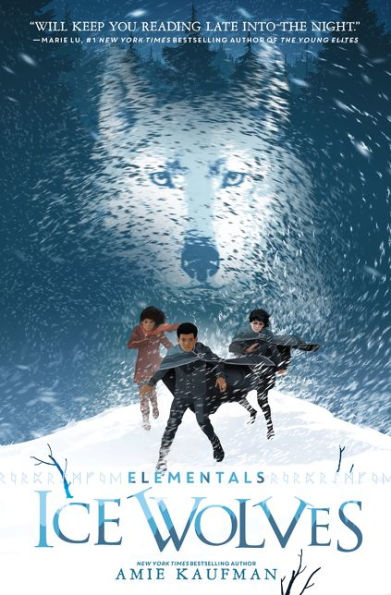
Twelve-year-old orphans Anders and Rayna don’t know who their parents are, and they have always relied on each other to get through each day. The pair know all of the back streets of Vallen and they know to avoid the Wolf Guard as much as possible. When Anders is almost caught stealing, the twins join a group of twelve-year-olds who are in line to discover if they are elementals—humans that can transform into wolves.

When Anders takes the form of a wolf and his sister Rayna takes the form of a dragon, Anders wonders if they are related at all. Everyone knows that a wolf and a dragon cannot come from the same family. Even worse, after Rayna transforms two dragons appear and claim her as one of them. The only thing that Anders knows for certain is that Ice Wolves and Scorch Dragons are enemies. But despite the feud between the wolves and dragons, Anders is determined to find his sister.

To rescue Rayna, Anders must find the dragon’s hidden capital city. The only way to get the information he needs is to enlist at the foreboding Ulfar Academy, a school for young wolves. Anders only wants to find the dragons and save his sister; he wasn’t expecting to find friends. Will Anders have to betray his new friends in order to save his sister? And what will Anders do if he finds his sister only to discover that Rayna has become just like the cruel dragons that took her?

Ice Wolves begins with a heart-stopping surprise and plenty of action, but the story starts to drag when the main character enters Ulfar Academy to learn about Ice Wolves. Because Anders doesn’t understand the elementals or the Ice Wolves, the reader gets to learn along with him. However, when the story ends there are still many unanswered questions that will nag readers.

Anders is not a unique character, but middle school readers may relate to his insecurities and his desire to find a place to fit in. As the story progresses, Ander not only builds confidence in his abilities, he also begins to understand what it means to have friends “who’d back you up without needing to know the reason why.” Even though Anders clearly cares for his pack, he never loses sight of his ultimate goal to find his sister.

Amie Kaufman has created a world with multicultural, diverse people who live in peace—people who fear the Scorch Dragons, but the reason for this fear is never explained. Although the threat of dragons brings suspense, the dragons only appear at the very beginning and end of the book. Kaufman includes many diverse characters in the story, however, at times it felt as if she was trying too hard to incorporate every type of person. One character is referred to using the pronoun “they.” The use of the pronoun is never explained, which may cause readers some confusion. One positive aspect of the story is Lisbeth, a strong female who isn’t content with following orders. Lisbeth spends much of her time engrossed in books, and it is through her that Anders begins to understand friendship. Lisbeth is curious, loyal, and determined to do the right thing no matter what.

Fans of fantasy will enjoy Ice Wolves even though the plot is not fast-paced. Even though the characters are not unique, the story of friendship and family will entertain strong readers. The conclusion contains a surprise, a battle, and a cliffhanger that sets up the second book in the series—Scorch Dragons. Readers will love how Anders learns that bravery is “doing what you must” even when you are afraid. Readers interested in Ice Wolves will also want to read the Simon Thorn series, which also has shape-shifting characters, but has much more action.

Sexual Content

  • While telling Anders about a female professor, a girl says that the professor has a wife.
  • Lisbeth’s father “was a mercher from Baseyda who was back on a ship before I was born. I’m not sure he even knows I exist.”

Violence

  • During a celebration, a dragon appears in Holbard. The dragon “had breathed fire as it circled above the city, then vanished into the darkness. An hour later, a set of stables in the north of the city was ablaze with the ferocious, white-and-gold dragonfire that was almost impossible to put out. . .” No one was injured.
  • When Rayna turns into a dragon, the Wolf Guard attacks her. An ice wolf “reared onto its hind legs, then crashed back down to earth. As its front paws hit the cobblestone, two long spears of ice burst from the ground, sharp and jagged, flying straight at the dragon’s gleaming side. They were like huge, deadly icicles with razor-sharp points. . . When they struck Rayna, her scales instantly turned gray with cold. She screamed, spreading her wings, and more wolves brought down their front paws on the ground, launching ice spears at her. . .” When Anders tries to help her, he grabs the staff and turns into a wolf.
  • Rayna again turns into a dragon and “when she thrashed her tail, a shop front flew to pieces like a house of cards.” Ice wolves run towards Rayna, while “everyone else in the street was turning to run now.” When the wolves attack Rayna, two other dragons appear and lead her out of the city. The scene takes place over three pages.
  • The wolves believe that the dragons take children and “sacrifice them on the day of the equinox.”
  • A fire begins in the city and the Wolf Guard helps put out the fire. “With a great hissing the spears immediately began to melt, sending up steam, creating billows of white smoke against the night sky as golden sparks rained down on the cobblestone of the square. . . Many people have to escape through windows and some of the street children are trapped on a roof. A scream came from above as the flames licked higher, clouds of smoke enveloping the children.” Anders helps the children and everyone escapes unharmed. The fire scene takes place over three pages.
  • When Lisbeth and Anders go to the dragons’ city, the wolves follow them and attack. “Those dragons in human form were fighting however they could, swinging chairs, a few brandishing knives—they had overturned the huge table, which must have been the crash he heard, and some were fighting from behind it. The wolves were fighting with teeth and ice spears, his classmates acting with trained precision.” Several dragons and wolves are injured. Ander’s friend pauses, and “it was all the chance the human he was fighting needed—she swung the pastry pole hard at him, connecting with his head and shoulders and sending him flying backward.” Ander’s sister is hit with an ice spear that “caught her shoulder, knocking her back into the crowd, and she hit the ground.” The wolves eventually retreat. No one is seriously injured. The battle scene takes place over ten pages.

Drugs and Alcohol

  • None

Language

  • None

Supernatural

  • One of the characters explains how elementals change. “Essence is the magic that’s found all around us. In nature, in the earth itself. When we transform from human to wolf, we channel it instinctively so we can make the change. Wherever they’re from in the wolf, elementals always have gifts linked to nature, because nature is where we find the essence that gives us our power.”
  • When elementals touch the Staff of Hadda, they turn into wolves or dragons. When Rayna touched the staff, “Rayna rolled onto her back, arms out flung. Her face darkened to a deep, unnatural burgundy, then shifted to shades of bright crimson, as if all her skin was bleeding at once. . . her arms and legs seemed to stretch impossibly long, and the arms of her coat stretched and slit. . . The fabric shredded and vanished in seconds as Rayna’s body grew, doubling in size, then tripling, her neck lengthening, her mouth open in a hoarse, unending scream.” Rayna turns into a fifteen-foot-long dragon and flies away.
  • The first time Anders transforms into a wolf, his clothes are shredded. The Ice Wolves use an amulet that keep makes the clothes transform with them. The amulet “helps your shirt stay where it belongs when you change. Helps you control when you change at all.”
  • In the past, dragons and wolves crafted magical objects with runes. Many of the objects are magical and the “runes are what channeled the essence—the power that came from nature, from the earth itself—into artifacts.” For example, “high above the entrance to the port were the huge, metal arches of the wind guards, the biggest artifacts in all of Vallen. . . The arches were marked with runes forged all along their length—the runes were the sign of an artifact—and were big enough for even the largest ship to pass under it.” The arches keep out the wind, making the harbor always peaceful.
  • While picking pockets, Anders almost “reached for a thiefcatcher. If he’d laid his hands on the zips to open her pockets, the charms would have started blaring a quick, high alarm, turning every face in the square toward him.”
  • One of the wolves has a mirror that “allows two-way communication.”
  • Anders discovers that he can create icefire—blue-and-silver fire. When he uses the fire, “the white fire and the ice spear both vanished into nothing as they connected with his blue-and-silver flames.”

Spiritual Content

  • None


Stealing the Sword

Chase and Ava buy an old suitcase at a flea market. Even though the lady who sold it to them said that it was broken and would not open, Chase and Ava want it. Soon, they discover that they can open the suitcase and it is filled with strange objects. One of the objects looks like a dragon-headed doorknob. When the object jumps out of the suitcase, Chase grabs it. Suddenly Chase and Ava jump back in time and end up in King Arthur’s castle.

Chase and Ava overhear two knights plotting King Arthur’s death. They have to find a way to help King Arthur. As they sneak around the castle, they meet the king’s wizard Merlin. Merlin tells them the dragon-headed object is really a piece of Excalibur. Chase and Ava have to figure out how to fix the king’s sword and get it back to him. But a man with two different colored eyes wants the dragon-head object for himself. How can they help King Arthur? Will they ever make it back home?

Siblings Chase and Ava not only enjoy spending time together, but they also work together to help King Arthur. Although the two easily find the clues they need to solve the mystery, younger readers will appreciate the non-scary suspense and the glimpse of King Arthur’s time period. Even though Chase and Ava go back in time, the story focuses on the two sibling’s dilemma and has few historical facts. Even though the story contains few historical facts, Stealing the Sword combines non-stop action, mystery, and a little bit of history to create a story that independent readers will enjoy.

Stealing the Sword is part of Scholastic’s Branches early chapter books, which have easy-to-read text and illustrations on every page. The story uses short descriptions and dialogue to keep the story moving at a fast pace. The black and white illustrations appear on every page and help break up the text into manageable sections. The villain Randall, who has two colored eyes, pops in and out of the story which keeps the suspense high. Stealing the Sword introduces several characters that reappear in later books, which requires the Time Jumpers series to be read in order. Stealing the Sword focuses on a positive sibling relationship and will entertain readers who are ready for chapter books.

Sexual Content

  • None

Violence

  • Someone plots King Arthur’s death and hires Big Bob to kill him during a tournament. King Arthur and Big Bob fight, and when Big Bob swings his sword, “Arthur raises his shield to protect himself.”

Drugs and Alcohol

  • None

Language

  • None

Supernatural

  • When Chase opens a suitcase and touches one of the objects, “the ground begins to rumble and shake. . . Ava clings to her brother as they begin to spin. . . Faster and faster they spin! Images blur in front of their eyes—mountains, oceans, cities, faces!” When they stop spinning, they discover they went back in time. When they return home, they discover that “even though they were at the castle all day, it’s still late afternoon here.”
  • Because the suitcase will only open for Chase and Ava, Chase compares to it King Author’s sword. Chase “loves the story of how King Arthur got his sword. Excalibur’s blade was stuck in a rock and no one could pull it out until King Arthur came.”
  • A man chases Chase and Ava, trying to steal an object. Merlin throws his hands into the sky, “a loud thunderclap fills the air, followed by a plume of smoke.” When the crowd begins to run, Chase and Ava are able to escape.
  • Merlin tries to fix Excalibur, but cannot. When Chase and Ava work together, they are able to fix the sword. “Chase brings the end of the blade down onto the hilt. . . They hold their breath as the hilt and the blade knit together, strands of steel twisting and bending into one. For an instant the whole sword glows red, then hardens. Excalibur is whole again.”

Spiritual Content

  • None


The Princess in Black and the Science Fair Scare

Princess Magnolia is excited. Excited and nervous. She’s going to the Interkingdom Science Fair today to present her poster about seeds and plants. Even better, when she arrives, she sees that her friends are there too! Princess Honeysuckle made a mole habitat, Princess Sneezewort has built a blanket fort, and Tommy Wigtower has a talking volcano that’s saying “EAAAAT!” Wait, what?

Instead of a volcano that spews lava, Tommy’s volcano has a goo monster living inside. But every time the goo monster tries to eat or find a new home, the goo monster gets yelled out. The goo monster needs a new home and the Princess in Black is willing to help. Will the Princess in Black be able to defeat the goo monster?

Although the science fair is the scene of the story, the story only has a smattering of science. In one part, in order to carry the goo monster, the princesses must figure out how to distribute the weight. The science portion introduces some basic concepts but does not go into confusing detail. This story also highlights the importance of working together.

Readers will love the princesses who are prim and proper when they need to be, but they are also a little bit awkward. Even though the Goat Avenger only makes a small appearance, he adds humor to the story. The Goat Avenger loves to “wage battle.” When the Goat Avenger “wages battle,” he uses a duster to tickle a monster back to his home.

The Princess in Black and the Science Fair Scare is an excellent book for beginning readers. Colorful illustrations appear on almost every page to help readers visualize the story’s actions. The chapters are short with easy-to-understand language. Each page has eight or fewer sentences that appear in large font. The monster of the story is more humorous than scary. Even though The Princess in Black and the Science Fair Scare is the sixth installment of the series, readers do not have to read the previous books to understand and appreciate the story.

The easy text and the detailed illustrations will make younger readers want to read the story over and over. The illustrations are sometimes funny, but they always do an excellent job of capturing the character’s emotions. If you’re looking for a high-energy, enjoyable book with strong female characters, then The Princess in Black series should be added to your reading list.

Sexual Content

  • None

Violence

  • The hungry goo monster eats Princess Mongolia’s poster. Then “the goo monster and the Princess in Black waged battle. Volcano Rumble. Bucket Bash! Twinkle Twinkle Little Smash.”
  • The goo monster jumps into a mole habitat, but “the moles and the goo monster couldn’t all fit in there. The moles felt jammed. The moles felt crammed. The moles bit the goo monster. It yelped. It leaped out of the mole habitat.”

Drugs and Alcohol

  • None

Language

  • None

Supernatural

  • Tommy accidentally makes a goo monster. The goo monster hides in Tommy’s volcano.

Spiritual Content

  • None

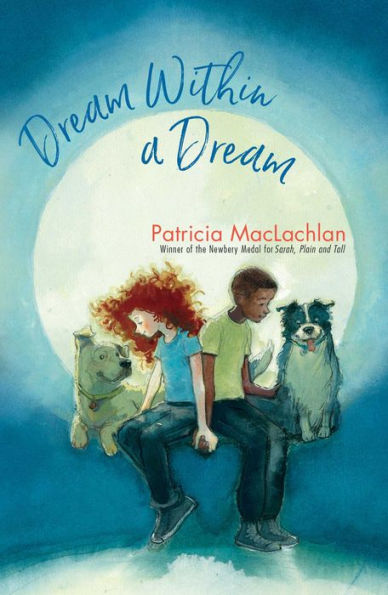
Dream Within a Dream

While her parents are off bird-watching, Louisa and her brother spend time with their grandparents, Jake and Boots. Louisa isn’t looking forward to spending the summer with her grandparents. Louisa dreams of traveling with her globe-trotting parents, whereas her brother would like to find a way to stay on Deer Island forever.

While staying with her grandparents, Louisa worries about her grandfather Jake, whose eyesight is failing. Jake has always driven Boots around, and he loves his car. And Jake’s worsening eyesight isn’t the only that that is changing. This year, twelve-year-old Louisa’s summer takes an unexpected turn when she is introduced to George. Can Louisa find a way to embrace the changes that come with growing up?

George pushes Louisa to move out of her comfort zone, allowing her to see herself in a new light and finally realize that she is beautiful. Louisa and George are friends from the start and soon must navigate growing feelings for each other. George and Louisa go on a “date,” they kiss, and they decide they are in love with each other within a short period of time. The romance is sweet, and the author hints that George and Louisa’s love will last a lifetime.

Most of the story is told through the character’s dialogue, which takes place in short phrases. The majority of the paragraphs are one to two sentences. The dialogue, short paragraphs, and simple vocabulary make the story easy to read. However, Dream Within a Dream will appeal to adults more than children because it revolves around relationships and contains little action. The story portrays healthy, long-term relationships and shows the importance of helping each other.

Louisa is a very likable character who is kind to others. With George’s help, Louisa interviews people in their community and writes poetry about each person she meets. Since the story is so short, readers may have a difficult time keeping track of the many characters. Dream Within a Dream shows the importance of embracing change. Even though Dream Within a Dream has many positive aspects, only readers who enjoy realistic fiction that focuses on relationships should pick up the book. Readers who are eager for action, adventure, or fantasy will find the story difficult to enjoy.

Sexual Content

  • Louisa’s grandfather comes into the room and, “he puts his arms around [his wife] and kisses her for a long, long time. I don’t know if I’ve ever seen such a long kiss.”
  • George says that his parents kiss often. Louisa says her parents “don’t kiss in front of us.” Louisa’s brother jumps into the conversation and says, “My friend Joey says my parents have kissed two times—once for Louisa and once for me.”
  • Louisa’s brother sees George’s parents and says, “They’re kissing now.”
  • Louisa is swimming when she gets a cramp in her leg. George jumps in the water to help her. “And then George kisses me. . . Our bodies are as close as friends can be. And to make him feel better, I kiss him back. And we begin to laugh, our lips together, like Jake and Boots laughing when they kiss.”
  • Louisa’s grandmother tells her, “Jake and I were in the sixth grade when we kissed each other for the first time.”
  • During a storm, Louisa kisses George “too fast for Boots and Jake to see.”

Violence

  • None

Drugs and Alcohol

  • None

Language

  • None

Supernatural

  • None

Spiritual Content

  • None


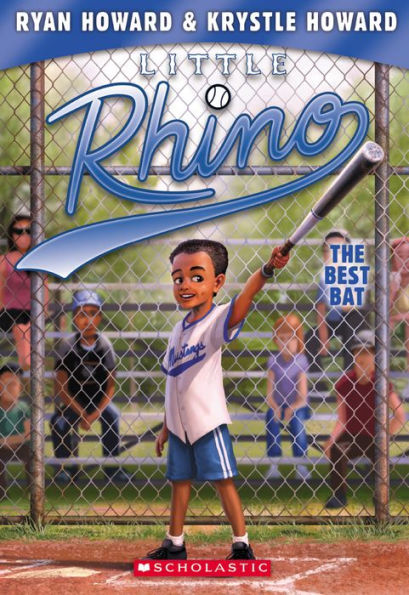
The Best Bat

Little Rhino is so excited for his team, the Mustangs, to play their first baseball game. They’ve been having some good practices. The team is starting to come together. Grandpa James even bought Little Rhino a new bat to use.

In the last practice, Little Rhino’s bat goes missing. He’s convinced that Dylan, the bully on his team, is the one who took it. But Little Rhino learns quickly that he can’t blame someone without any proof. Will Little Rhino find out who took his bat before the first game?

The second book in the Little Rhino series, The Best Bat focuses more on baseball and has more play-by-play descriptions of the game. The Best Bat has all of the same characters as the first book. Even though the characters are the same, they are still not well-developed. Rhino’s grandfather continues to play a prominent role and guides Rhino through life. Rhino’s grandfather knows that baseball is important, but he makes sure Rhino knows that school always comes first. Throughout the story, Rhino’s grandfather reinforces the importance of taking responsibility for your belongings and your words.

Even though Rhino’s coach talks about the importance of teammates encouraging each other, Rhino and his team do not work as a team. Rhino comes across as overconfident and acts as if his team cannot win without him. When Rhino loses his bat, he is convinced that the team bully stole it. The person who took Rhino’s bat leaves clues, but clues are confusing and the story never explains why the clues were important. The ending has a surprise that teaches Rhino the importance of forgiving others.

Younger readers who enjoy sports will enjoy The Best Bat. However, readers who are just transitioning into chapter books may have difficulty reading My New Team because of the text-heavy pages. Although black-and-white pictures appear approximately every three pages, the pictures are similar to those found in a coloring book and do not have much appeal. Readers who enjoy Little Rhino will also want to read the Ball Park Mysteries series.

Sexual Content

  • None

Violence

  • None

Drugs and Alcohol

  • None

Language

  • None

Supernatural

  • None

Spiritual Content

  • None


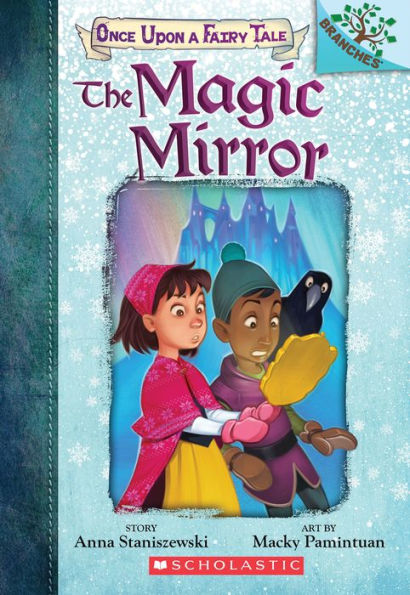
The Magic Mirror

The Enchanted Kingdom is in a heatwave until the Ice Princess uses her magic mirror to make winter come—no wonder Kara and Zed are too hot. But the magic mirror is broken! And no one else wants to help the princess. Can Kara and Zed find out how to fix the mirror and bring back winter? Or will it be summer forever?

Kara, the shoemaker’s daughter, loves books and adventure. When she reads Princess Aspen’s letter, Kara is ready to jump to the rescue. Her best friend, Zed, is reluctant to travel to the Ice Princess’s castle, but his love of food gets the best of him. In the hopes of getting ice cream, Zed takes the journey with Kara. Although Zed goes along for the trip, Kara is definitely the lead character who comes up with all of the plans to save the day. Despite that Zed’s main focus is food, he is a kind friend who adds humor to the story.

Younger readers will enjoy the mischievous monkey, the hardworking winter troll, and the ice palace. Princess Aspen is stereotypically cold and mean until the very end of the story. In the end, both princesses apologize and make peace with each other. The story focuses on relatable conflicts that highlight the importance of sharing and forgiveness.

The Magic Mirror is part of Scholastic’s Branches early chapter books, which have easy-to-read text and illustrations on every page. The story uses short descriptions and dialogue to keep the story moving at a fast pace. Black and white illustrations appear on every page and help break up the text into manageable sections. The engaging pictures will help readers follow the plot. In order to help readers understand a character’s thought process, numerous pictures contain a thought bubble with an illustration above the character’s head.

As Kara and Zed rush to solve the mystery of the broken mirror, they take the reader on a fun adventure where frozen fish slush is served for dinner, guards can be frozen into statues, and a crow can solve a mystery. The fast-paced story includes a page of comprehension and critical thinking questions. Readers who are transitioning to chapter books will enjoy the fun adventure. Readers who enjoy The Magic Mirror may also want to try the Tales of Sasha Series by Alexa Pearl.

Sexual Content

  • None

Violence

  • None

Drugs and Alcohol

  • None

Language

  • None

Supernatural

  • Princess Aspen’s magical mirror broke, and “she can’t make it snow without her mirror.” Princess Aspen says she tried to fix it, “But one piece of glass is missing. Without it, I can’t use the mirror to call the cold and snow to the Enchanted Kingdom.”
  • Princess Aspen thinks her sister broke the mirror because “This room is protected with a magic spell. Only Sola is powerful enough to get inside.”
  • Princess Sola uses her magic mirror to fix Princess Aspen’s broken mirror. “As Kara watched, the gold mirror grew bright and brighter, and then — flash! — a golden beam of golden light shot out. It hit the silver mirror, and the broken glass started to glow.”

Spiritual Content

  • None

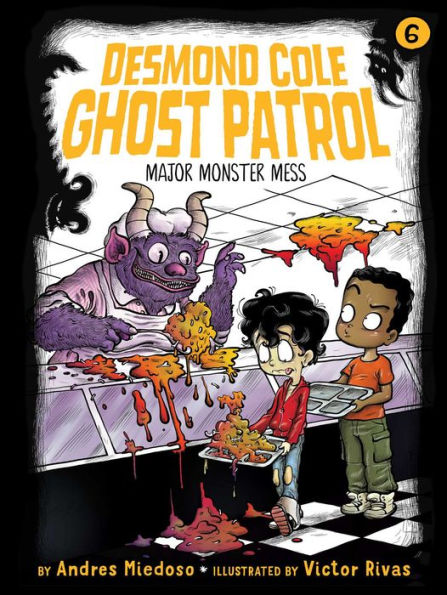
Major Monster Mess

Welcome to Kersville, a town with a spooky history and a collection of ghosts and spirits who are major mischief-makers. Most kids spend their days without ever seeing or dealing with a ghost, but some kids get stuck with a haunt. When that happens, they call Desmond Cole Ghost Patrol. There’s no job too spooky, icky, or risky for Desmond.

Andres Miedoso is not like that at all. He is Desmond’s best friend and ghost patrol partner. Desmond Cole loves the cafeteria food, but Andres always brings his lunch. Unlike most schools, the lunch at Kersville Elementary is great. Desmond always has a plate heaping with food. When a cafeteria worker smells Andres’ lunch, strange things begin happening. Andres soon wonders if a monster is after his lunch.

In the sixth installment of the Desmond Cole Series, Andres takes center stage as he tries to find out why he comes home smelling like a monster. Another conflict is introduced when a shadow keeps trying to take Andres’s lunch, which is made up of traditional Hispanic foods. Major Monster Mess has a lot of aspects that will have younger readers turning the pages. Besides featuring a ghost that lives in Andres’s basement, there is also the threat of monsters, as well as the mystery of the shadow. As usual, Desmond and Andres discover that there is little to fear when it comes to monsters. Even though they may have scary appearances, they have good intentions—to cook the students of Kersville a delicious lunch.

The Major Monster Mess has a unique and humorous plot that has mystery and a satisfying, unexpected conclusion. The story contains just enough gross factor and scary monsters to keep readers turning the pages. Even though The Monster Mess is the third book in the Desmond Cole series, readers do not have to read the previous book. The story is told in ten short chapters with easy-to-read vocabulary; perfect for emerging readers. A black-and-white illustration appears on almost every page. The often humorous illustrations use exaggerated facial expressions so readers can tell what the characters are feeling. Readers will laugh as Desmond and Andres find themselves in unexpected situations. Readers who enjoy The Scary Library Shusher should also try the Notebook of Doom series by Troy Cummings.

Sexual Content

  • None

Violence

  • On the way to school, a black shadow tries to take Andres’ lunch. “A black shadow streaked across the ground and flew right behind me! Then something grabbed my backpack and wouldn’t let go! The shadow was trying to pull me off my bike.” Andres pedals into a brier bush and the shadow “yowled and let go.”
  • While in the cafeteria, a black shadow tries to take Andres lunch. “. . . There was no way I was going to let some monster tear it away from me. So I fought back. The next thing I knew, we were in a tug-of-war. . .Before I knew it, he had pulled me into the air. We zoomed around the lunchroom while the monsters kept eating their food, splattering glop all over the place.” Desmond tries to help Andres and they both end up in a pile of goop. “It was filled with apple cores, pencil shavings, and toenail clippings.”

Drugs and Alcohol

  • None

Language

  • None

Supernatural

  • Zax is a ghost that lives in Andres’s basement.

Spiritual Content

  • None


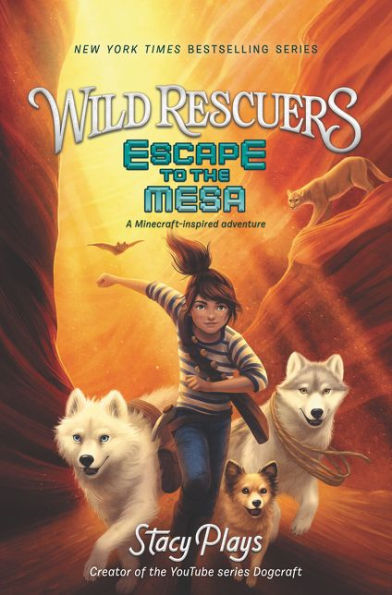
Escape to the Mesa

Stacy and her wolf family know it’s important to protect each other and the animals of the taiga. After a fire rages through the forest, Stacy and the wolves try to avoid humans at all costs. But when a reporter takes a picture of one of the wolves, animal researchers begin searching for intelligent wolves that raised Stacy. Stacy and her pack know they must leave the forest and escape to a place where no arctic wolf has ever gone before: the desert.

The mesa is unlike anything the wolves have ever seen. With no source of freshwater, the group knows they must find a place to hide. Even though they are in unfamiliar territory, the group still finds animals in need of rescue. When the wolves find themselves in new situations, Stacy discovers that the wolves have hidden abilities. As Stacy tries to help keep her pack safe, she must enter the human world, which makes her wonder—where does she belong?

Stacy is a relatable character who loves her wolf family and the wilderness. Stacy and the wolves learn about the mesa, including what plants are safe to eat as well as some of the dangers that lurk in the desert. Although the plot is similar to the first book, the new setting helps keep the story interesting. Stacy tries to avoid humans, but she has several encounters with people that show them in a positive light.

Like the first book of the series, Escape to the Mesa has non-stop action, danger, and a unique plotline that will keep readers turning pages until the very end. Parents and teachers will appreciate Escape to the Mesa because of the educational value. Not only does the story highlight the need to care for nature, but it also helps readers gain new vocabulary skills. The book contains some difficult vocabulary such as cacophony, cladode, hoodoo, and podzol; however, these words appear in the glossary at the back of the book. Another positive aspect of the story is the black-and-white pictures that are scattered throughout the book.

Escape to the Mesa’s conclusion has a hopeful tone that highlights the importance of preserving nature. Because the story is the second book in the series, readers should read Guardians of the Taiga first because there are several characters and plot points that are introduced in book one. The book ends with a selection of other reading material—the inspiration for one of the characters and an interview with an animal expert.

Escape to the Mesa will appeal to a wide range of readers including those who love animals, daring characters, and action. Readers who enjoy this series should add the Simon Thorn Series to their list of must-read books.

Sexual Content

  • None

Violence

  • When a wolf is trying to help a porcupine, the porcupine shoots quills at it. “The wolf turned toward her [Stacy] with a face full of quills and whined softly, crouched down in the long grass.
  • Stacy finds a crashed helicopter that had “a few white bones among the ashes, and Stacy felt sick at the sight. Humans had died here.”
  • A researcher shoots a wolf with a tranquilizer dart.
  • Stacy and the wolves are swept away by a flash flood. “Stacy tumbled over and over, losing track of which direction was the surface. Her arm scraped stingingly along the side of the canyon. Stacy’s chest felt like it was burning. She needed to breathe, soon.” Everyone survives.

Drugs and Alcohol

  • None

Language

  • None

Supernatural

  • Stacy and the wolves are able to communicate, and the wolves can perform some human-like tasks.
  • A dog can communicate with bats through echolocation and is also able to understand Stacy’s words.
  • Some of the wolves have supernatural abilities. Basil has “superwolf speed” and can run “incredibly, unnaturally fast.” Noah can breathe underwater and Addison can read.

Spiritual Content

  • None

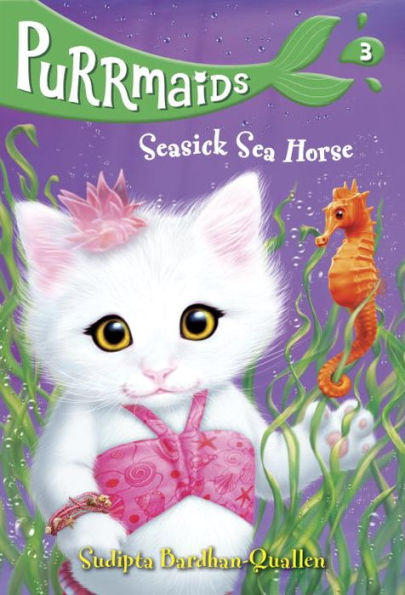
Seasick Sea Horse

Shelly always has to share everything. At home, she shares with her sister. At school, she shares with her best friends, but sometimes she just does not want to share. When Ms. Harbor shows the class the new class pet, a sea horse, the students are excited to take care of it. When Shelly is chosen to take the sea horse home, she is excited that the pet will be her responsibility. But Shelly’s two friends also want to help take care of the sea horse. Shelly tells her friends that they can’t help, but taking care of a sea horse is harder than Shelly thought it would be. Will Shelly’s friends be angry with her? Can she take care of the class pet without any help?

A fun and entertaining story, Seasick Sea Horse focuses on the importance of taking care of the ocean and the creatures that make the ocean their home. Ms. Harbor tells the class, “It is important for purrmaids to learn how to treat the creatures we encounter in our ocean.” Throughout the story, the reader will learn several interesting facts about sea creatures as well as the importance of picking up trash so it does not end up hurting sea life. When the purrmaids need more information about sea horses, they go to the library and check out books so they can research sea horses.

Seasick Sea Horse also reinforces the idea that something does not always need to be done the same way. For example, when Shelly’s friend cuts salad ingredients differently than Shelly, the salad still tastes good. Shelly needs to learn that “you can be in charge and let other purrmaids help you.” The story highlights that purrmaids often need help in order to get everything done.

Seasick Sea Horse is perfect for readers who are able to read chapter books. The story has easy vocabulary, short sentences, and cute black-and-white illustrations approximately every three pages. Younger readers will enjoy the cat puns and sea similes that are incorporated into the story, like “fin-tastic,” “cat-tastrophe,” and “big as an orca.” Even though Seasick Sea Horse is part of a series, the stories do not have to be read in order. The Purrmaid series takes readers on an underwater swim that teaches valuable lessons as well as entertains.

Sexual Content

  • None

Violence

  • None

Drugs and Alcohol

  • None

Language

  • None

Supernatural

  • None

Spiritual Content

  • None

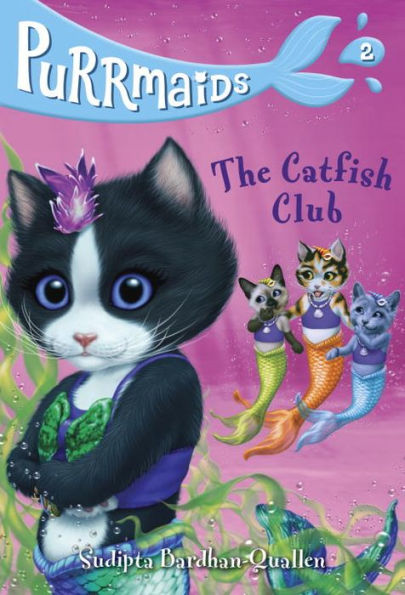
The Catfish Club

Coral, Shelly, and Angel love to do everything together. They are excited to be in the same class. When their teacher assigns an art project, the girls know they will be partners. When they go to an art museum, they get in an argument with three other girls—the members of the Catfish Club. Coral, Shelly, and Angel, and the Catfish Club both think they can create a purr-fect project that their teacher will love.

Angel lets anger get the best of her and makes a bet. If the teacher likes her group’s project the best, the Catfish Club has to give her their purple pearl necklaces, and if the teacher likes the Catfish Club’s project best, Angel has to give them her purple pearl earrings. Angel is afraid that she will lose the earrings that were a special present. Will Angel and her friends be able to find a way out of this mess?

The Catfish Club uses a relatable conflict—mean girls and wanting to be first—in a story that will captivate younger readers. Angel, who cares about fashion, also gets angry easily. Angel loves her friends and thinks they are “fin-tastic friends.” However, her group of friends doesn’t get along with the Catfish Club, a group of three friends. At one point, Angel thinks, “I wish I hadn’t lost my temper and made that bet.” As the story progresses, the reader will learn about the importance of working together and the dangers of anger.

Readers will also learn about art. The story teaches that art can be found in unlikely places. The author takes some famous artists and changes their names to fit the purrmaid world. For example, the teacher talks about Pablo Picatso, and Vincent Fang Gogh. The story shows that when it comes to art, it’s important to try new things. Ms. Harbor explains, “The artist didn’t worry about what others told them to do. They didn’t follow the rules. They followed their hearts!”

The Catfish Club uses relatable conflicts to teach about the importance of being kind and working together. The story shows that purrmaids do not have to have the same qualities in order to be friends. Besides the relatable conflicts, younger readers will also enjoy the cat puns and sea similes that are incorporated into the story. For example, purr-ty, cat-tastrophe, and big as a blue whale. The puns are a little bit over the top, and although younger readers may enjoy them, parents might want to avoid reading The Catfish Club aloud.

The Catfish Club is perfect for readers who are able to read chapter books. The story has easy vocabulary, short sentences, and cute black-and-white illustrations approximately every three pages. The Catfish Club is part of a series, but the stories do not need to be read in order even though the story has some of the same characters and a similar conclusion to the previous books. Readers who like the Pet Fairies series will also find the Purrmaid series purr-fect. The Catfish Club uses adorable purrmaids to teach younger readers that, “If we work together, I know we can create a masterpiece.”

Sexual Content

  • None

Violence

  • None

Drugs and Alcohol

  • None

Language

  • None

Supernatural

  • None

Spiritual Content

  • None

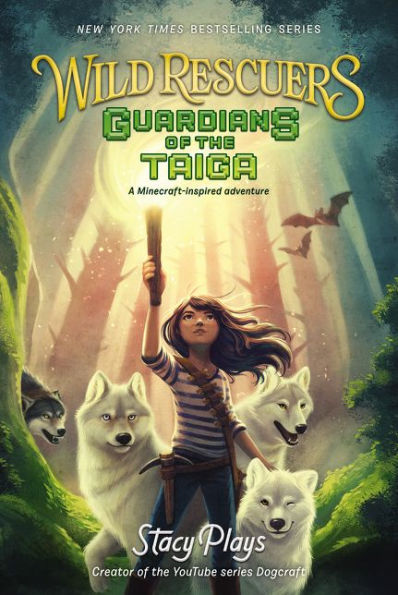
Guardians of the Taiga

Stacy doesn’t remember her human family. She has been raised by wolves who taught her how to survive in the wild. Stacy and her wolf family rely on each other for all their needs. The powerful, playful wolves—Addison, Basil, Everest, Noah, Tucker, and Wink—are the only family Stacy has ever needed.

As much as possible, Stacy and her pack avoid humans and try to keep the other forest animals safe. Full of courage, Stacy and the wolves are able to accomplish risky rescue missions. But Stacy soon finds that humans pose a risk to their home. Developers want to change the landscape, destroying the animal’s habitat and forcing them to leave the forest. Powerful businessmen are determined to make their resort a reality. How can Stacy and her pack face the dangers that threaten them?

Stacy takes precarious risks to care for animals in need. From the first page, readers see Stacy jumping into danger and relying on her wolf family to protect her. The Guardians of the Taiga’s non-stop action will have readers eager to turn each page. The story is not only entertaining, but it also teaches about animals, the dangers that humans pose to wildlife, and how developers can encroach on animal’s habitats. The story never feels like a lecture or a textbook, but instead teaches lessons through the characters’ experiences. For example, Stacy talks about an electric company that destroyed the beauty of nature when they “leveled a great swath of the forest for the electrical substation, and then shot at the wild creatures for trespassing on ‘their land.’ And the worst part was they acted entitled—as if the forest belonged to them more than it did to the wolves and the deer and the rabbits and even the bats.”

Even though Stacy is a unique character, readers will relate to her daring attitude, her concern for her wolf family, and her awkwardness around humans. Each wolf has a distinct personality, and although they do not talk, the reader is still able to connect with the animals. Even though Stacy is being raised by wolves, the wolves make sure Stacy has an education. For example, Stacy reads books such as Physics for Dummies, and at one point, Stacy uses physics in order to save a dog’s life. The physics is described in kid-friendly terms.

Readers will love the story because of the non-stop action, the danger, and the unique plot. Parents and teachers will appreciate Guardians of the Taiga because of the educational value. Not only does the story highlight the need to care for nature, but it also helps readers gain new vocabulary skills. The book contains some difficult vocabulary such as pelage, crepuscular, biomes, and satiated; however, many of these words appear in the glossary in the back of the book. Another positive aspect of the story is the black and white pictures that are scattered throughout the book.

The only negative aspect of the story is the abrupt conclusion that leaves many unanswered questions. Instead of wrapping up the story, the author sets up the sequel—Escape to the Mesa. The book ends with a selection of other reading material—an author interview, the inspiration for one of the characters, and an interview with a wolf researcher. Guardians of the Taiga will appeal to a wide range of readers including those who love animals, daring characters, and action. Readers who enjoy this series should add the Simon Thorn series to their list of must-read books.

Sexual Content

  • None

Violence

  • During a fire, a tree “cracked in two and toppled over, flames licking at its branches. It fell right in the middle of the wild pack, crushing several of its members. Stacy screamed, unsure of how many wolves had just been killed right in front of her.” Stacy tries to convince the wolves to follow her but Dusty, who was the alpha, wouldn’t move. Dusty “was illuminated by the flames, and Stacy could see a large patch of dark red on the wolf’s hindquarters. . . blood. Dusty wasn’t placing any weight on her back left leg. She’d been shot!” Stacy couldn’t help Dusty and eventually “the flames enveloped what was left of the den and consumed Dusty.”
  • Lightning strikes a wolf. “The wolf had a jagged, bloody strike down the left side of her body. . . Basil was stunned but alive.”

Drugs and Alcohol

  • None

Language

  • Stacy wonders, “why are there so many dang bats here?”

Supernatural

  • Stacy and the wolves are able to communicate, and the wolves can perform some human-like tasks.
  • A dog can communicate with bats through echolocation and is also able to understand Stacy’s words.

Spiritual Content

  • None

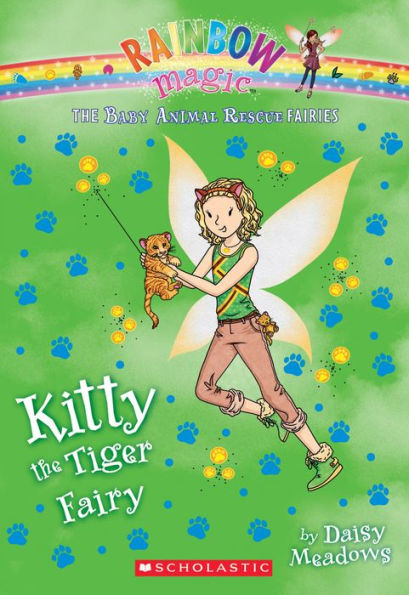
Kitty the Tiger Fairy

Rachel and Kirsty are spending a week of their summer vacation volunteering at the Wild Woods Nature Reserve. While the girls want to help others, Jack Frost is up to no good. He has stolen the Baby Animal Rescue Fairies’ magic key chains and is planning on kidnapping baby animals for his icy zoo.

The girls have to help the fairies keep the zoo animals safe. When Jack Frost’s goblins try to capture Sheba the tiger cub, Rachel and Kirsty have to keep the tiger cub safe. Can they keep Sheba safe or will the cute tiger cub end up in Jack Frost’s zoo?

The Baby Animal Rescue Fairies follows the same format as the Pet Fairies series. Both series combine fairies, animals, and Jack Frost’s goblins to create an entertaining story that younger readers will enjoy. While the goblins spend most of their time running away from the tiger cub, younger readers will enjoy guessing what the goblins will do next. The story highlights the importance of volunteering and taking care of the environment.

Rachel and Kirsty are likable characters who use their time to help others. The characters are not well developed and the plot structure is repetitive of the previous books. Despite the predictable plot, readers of The Baby Animal Rescue Fairies will enjoy seeing Rachel and Kirsty defeat Jack Frost’s goblins. Black-and-white illustrations help readers visualize the plot while illustrations of the animals’ lives add to the story’s cuteness.

This book has easy vocabulary and short sentences, which make it perfect for readers just transitioning to chapter books. Younger readers will be able to read The Baby Animal Rescue Fairies without assistance, and the stories will help them build confidence and a joy for reading. There are seven books in The Baby Animal Rescue Fairies series in addition to a Sports Fairies series, the Fairy Tale Fairies series, and Special Editions.

Sexual Content

  • None

Violence

  • None

Drugs and Alcohol

  • None

Language

  • None

Supernatural

  • Jack Frost uses a magic ice bolt to steal the Baby Animal Rescue Fairies’ charms—“the tiny furry animal key chains that helped them care for the wildlife. Jack Frost then gave the key chains to his goblins, and ordered them to hurry away to the human world and bring him some animals for his zoo.”
  • The fairies use their magic and “granted Rachel and Kirsty the power to talk to animals.”
  • A fairy shakes her wand, “conjuring up a cloud of glittering fairy dust. The girls were whisked gently away and, in the blink of an eye, Rachel and Kirsty found themselves thousands of miles from the nature reserve.”
  • With a flick of her wand, a fairy “scattered magic sparkles around the girls, turning them both into fairies.”
  • Rachel and Kirsty use fairy dust to go to the fairy world.
  • A fairy puts fairy dust on a log. “The log immediately rose up out of the water, floated through the air, and came to a rest on the bank of the stream.”

Spiritual Content

  • None


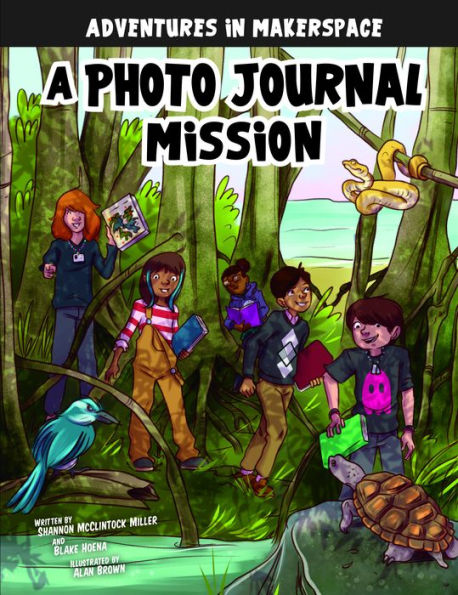
A Photo Journal Mission

Cyrus’s English teacher has given the class a photo journal assignment. Cyrus isn’t sure what to put in his journaling notebook. He and his friends head to the library and talk to the librarian Ms. Gillian. In order to help Cyrus figure out what to put in his notebook, Ms. Gillian takes him and his classmates into the past to meet two historical figures that used different methods of creating notebooks that documented their area of study. When Cyrus returns to school, he uses what he learned to begin his own notebook.

A Photo Journal Mission, which is a graphic novel, features Cyrus who isn’t afraid to ask for help on a difficult assignment. The diverse cast of characters jump back into time and meet John Audubon who wrote about birds. Audubon explains how he studied nature and wrote about it in a scientific journal. Audubon explains the importance of pairing illustrations with observations. After speaking with Audubon, the group meets an English botanist Anna Atkins, who was the first person to use photographs in a book. Atkins shows how she used photosensitive paper to create her images.

The story has a lot of positive aspects—it teaches vocabulary, introduces historical figures, and has wonderful illustrations. Each page contains six or fewer easy-to-read sentences, and the plot moves at a fast pace. For those who want to learn more about keeping a research journal, the book includes a list of further resources. The full-color drawings are interesting, detailed, and have both white text bubbles that show characters’ dialogue as well as black boxes for the narration. Words that readers may be unfamiliar with are in bold text, with a glossary in the back of the book. The back of the book also contains directions for making a photo journal.

Because the story is so short and the characters and the plot are not well developed, more advanced readers will quickly become bored with the Adventures in Makerspace series. However, for readers who are just transitioning to chapter books or are reluctant readers, A Photo Journal Mission will give them a simple, entertaining story that will help them build reading skills.

Sexual Content

  • None

Violence

  • None

Drugs and Alcohol

  • None

Language

  • None

Supernatural

  • When the librarian opens a book of Birds of America, the librarian and the students poof and enter the past.

Spiritual Content

  • None

Focused

Clea can’t control her thoughts. Some days, her thoughts repeat in an endless loop. Other days, her mind jumps from topic to topic. Either way, she can’t focus on her homework. Even when she tries to focus really, really hard, she still gets distracted. Someone is always chewing their gum too loudly or making annoying noises.

But that’s not her only problem. Everything that Clea thinks pops out of her mouth. She can’t seem to keep the words from jumping out. Clea’s issues are starting to cause problems in other areas of her life—when she’s playing chess, or when she’s hanging out with her best friend. What’s worse is that other kids are starting to notice.

When Clea keeps doing poorly in school, her parents want to have her tested for ADHD. Clea is convinced that she doesn’t have ADHD. If she tried a little harder, everything would be fine. Then, when Clea has an epic fight with her best friend, she knows that something has to change. But how do you change something that is in your head?

Anyone who has struggled in school will be able to relate to Clea. Even when Clea tries her best, she still can’t focus. She constantly berates herself, thinking that she’s just too dumb to do well. Told from Clea’s point of view, Focused allows Clea’s frustration to take center stage. With the assistance of a cast of helpful adults—psychologists, teachers, parents, counselors—Clea gains new time management skills and learns how to speak up for herself.

Even though the story focuses on Clea’s difficulties, the reader will be drawn into the conflict between Clea and other characters in the story. Clea’s best friend is dealing with family problems while one of the chess players constantly puts Clea down. The story also adds a little romance, a little chess, and a host of imperfect characters. Clea’s sister Henley is one of the best parts of the story. The sweet little sister who struggles with talking is always cheering for Clea. Clea realizes that having a person love you unconditionally is amazing. She thinks, “It feels like magic that there’s a person in the world who thinks I’m definitely going to win, no matter what, just because I’m me.”

This easy-to-read story explains how ADHD works and teaches management skills as well. Best of all, it shows that having a learning disability is nothing to be ashamed about. Anyone who reads Focused will come away with a better understanding of ADHD plus empathy for those who struggle with their emotions. The story also highlights the importance of perseverance and forgiveness. Anyone who has ever struggled with feeling inferior or has struggled with school work should read Focused. The story will encourage young readers to ask for help when needed as well as never to give up.

Sexual Content

  • Red’s father moved to Colorado and has a new girlfriend. Red finds out that his dad married his girlfriend and that she is going to have a baby.
  • While talking to Dylan, Clea slips her hand into his, and “he wraps his fingers around mine and squeezes, like he doesn’t want to let go. My stomach flips.”
  • After Dylan asks Clea to be his girlfriend, they kiss. Clea smiles at him, and then “before I know it, his lips are on mine and we’re kissing. It’s soft and sweet and mint chocolate flavored, and I’m not sure what I’m supposed to do with my hands, so I leave them exactly where they are, because I never want the kissing to stop. I want to stay like this forever.”
  • Clea and her friend talk about kissing a boy. It was both of the girl’s first kiss. When Clea’s friend worries that she was bad at kissing, Clea googles “Am I bad at kissing?” Clea then asks her friend, “Okay—did you bump teeth? Or move your head all over the place? Or slobber?” When Clea’s friend says no, the girls laugh and decide they are good at kissing. The conversation takes place over a page.

Violence

  • None

Drugs and Alcohol

  • None

Language

  • Clea thinks she is “an idiot.”
  • Jerk is used four times. Once Clea thinks a boy is a “jerk.” Later she tells the boy that he was acting like “a jerk.”
  • OMG is used six times.

Supernatural

  • None

Spiritual Content

  • None


The Scary Library Shusher

Welcome to Kersville, a town with a spooky history and a collection of ghosts and spirits who are major mischief-makers. Most kids spend their days without ever seeing or dealing with a ghost, but some kids get stuck with a haunt. When that happens, they call Desmond Cole Ghost Patrol. There’s no job too spooky, icky, or risky for Desmond.

Andres Miedoso is not like that at all. He’s Desmond’s best friend and ghost patrol partner. When our teacher gives us a research project, we’re excited to research the library. There should be nothing scary about the library, right? But once we begin our research, there’s a ghostly mystery woman who is causing all sorts of mischief. Can Desmond and Andres figure out what the ghostly woman is up to?

Desmond Cole and Andres are fun characters who are complete opposites. Desmond wants to chase after the zombie, while Andes wants to run in the other direction. Although the library isn’t the most exciting scene for a story, the flying books and spooky woman will demand the reader’s attention. Desmond and Andres learn that the book-loving ghost has a unique problem; one that the two kids help solve. The story has a humorous, unexpected conclusion that will leave readers smiling.

Although The Scary Library Shusher has a common plotline, it still has enough action, humor, and a non-scary ghost to keep readers interested until the very end. The story is told in ten short chapters with easy-to-read vocabulary which is perfect for emerging readers. A black-and-white illustration appears on almost every page. The often humorous illustrations use exaggerated facial expressions so readers can tell what the characters are feeling. Readers will laugh as Desmond and Andres find themselves in unexpected situations. Night of the Zombie Zookeeper is the fifth installment in the Desmond Cole series, however, none of the books need to be read in order. Readers who enjoy The Scary Library Shusher should also try the Notebook of Doom series by Troy Cummings.

Sexual Content

  • None

Violence

  • Books float off a shelf “all by themselves. Then they started flapping their covers like wings until, suddenly, the flying books swooped down toward Desmond. My best friend was under attack!”

Drugs and Alcohol

  • None

Language

  • None

Supernatural

  • Desmond and Andes hear a strange shhhhhh sound even though no one is there.
  • Computers start turning on all by themselves and “in the darkness, we could hear typing, and whoever was typing was doing it really fast. . . Plus, they were typing the same thing on every single computer. At the same time! It was just one very long word: Shhhhhh.”

Spiritual Content

  • None


My New Team

Every day when Little Rhino comes home from school, he finishes his homework, grabs his bat and his glove, and runs outside to meet Grandpa James. They always practice catching and hitting in the backyard. Playing baseball with grandfather is Little Rhino’s favorite thing to do, especially when he pretends to be a real Major League home run hitter.

One afternoon, after a long day of second grade, Little Rhino comes home to find out that Grandpa James has signed him up for a baseball league! Little Rhino will finally be a part of a team! But Little Rhino will quickly learn that it is not always so easy to be a good teammate, especially when there’s a bully wearing the same uniform as you.

Even though the characters in My New Team are not well-developed, the story will appeal to younger readers who love sports. The story doesn’t only focus on baseball but also includes a conflict with a bully, as well as the difficulty of being in new situations. Throughout the story, Rhino shows the importance of putting schoolwork before sports as well as the necessity of practice. One positive relationship in Rhino’s life is his grandfather, who plays a prominent role, and has taught Rhino the importance of thinking before he speaks.

My New Team uses realistic situations that younger readers can relate to. When Rhino is faced with a bully, he tries to understand the boy’s actions, and instead of being mean to the bully, Rhino tries to show the boy kindness. Readers who are just transitioning into chapter books may have difficulty reading My New Team because of the text-heavy pages. Although black-and-white pictures appear approximately every three pages, the pictures are similar to those found in a coloring book and do not have much appeal. My New Team uses realistic conflicts to teach important lessons about friendship, perseverance, practice, and the importance of thinking before you act. Readers who enjoy Little Rhino will also want to read the Ball Park Mysteries series.

Sexual Content

  • None

Violence

  • None

Drugs and Alcohol

  • None

Language

  • A bully calls Rhino a “wimp” twice.

Supernatural

  • None

Spiritual Content

  • None


Spark

In Algorria, storm beasts and their guardians create perfect weather every day, bringing prosperity and peace to Algorria. Twelve-year-old Mina has been carefully tending a storm beast egg, and is eager for the egg to hatch. Everyone is surprised when a lightning beast hatches from Mina’s egg. Mina’s family thinks that their quiet, shy daughter should not be paired up with a lightning beast, a creature of fire and chaos.

Unlike her family, Mina is sure that she, her storm beast, and Pixit are perfect for each other. Mina and Pixit are enrolled in lightning school and begin to learn the skills of lightning guardians. Even though Mina has always dreamed of completing daring acts, she struggles at school. She is unable to learn the basic skills and often feels as if she doesn’t fit in anywhere.

When Mina accidentally learns that Alorria’s perfect weather comes at a devastating cost, she discovers that powerful people are willing to do anything to hide the truth. Mina has never been able to speak out, but now without her help people will die. Mina and Pixit both dream of being like storybook heroes that change the world for the better. Is there any way that Mina can find her voice?

Readers will pick up Spark because of the beautiful cover of a storm beast, but they will keep turning the pages until the very end because of the beautiful relationship between Mina and Pixit. Anyone who has been afraid to speak up will relate to Mina, who is happy to let others take over the conversation. Yet within the quiet girl’s heart is the dream of making a positive impact in the world. Mina often struggles with feelings of insecurity, but with Pixit’s help Mina learns that being “different isn’t wrong.” In order to help others, Mina does not need to change herself. Instead, she only needs to use her own unique talents.

This engaging story uses a unique setting to bring modern-day problems to the forefront. As part of Mina’s studies, she is introduced to the idea of isolationism which is explained as follows: “Isolationism—defined as caring only about your own country—had the benefit of limiting the area that the early storm beast and guardians had to protect. Here’s the important bit to understand: all the world’s weather is connected, and more complex than you can comprehend.”

As Mina learns more about her country, she gets a lesson in false propaganda and how the political leaders are willing to suppress the truth because they fear change. However, the message is clear: “you can’t dismiss the facts just because you don’t like where they lead.” Even though Mina is quiet, she finds a way to become a leader. However, becoming a leader was not an easy choice for Mina. Her self-doubt and worry come through because Pixit can hear Mina’s thoughts. The relationship between Mina and her storm beast is so endearing that it will leave readers wishing they had a storm beast of their own.

Not only is Spark an exceptional story, but it also teaches readers that it is possible to change the world for the better. By the end of the story, Mina and Pixit feel like friends who have made a positive impact on you. Spark is an unforgettable story that will resonate with children and leave them wanting to be kinder, better people who do good in the world.

Sexual Content

  • None

Violence

  • A fight broke out in the school’s dining hall. A student “launched herself across the tables, and dozens of her friends joined her. . . dozens of other students threw themselves into the battle. . . Mina, unable to run, unable to move, stared as students and beasts fought in front of her, over the tables, and up on the metal ladders, chains, and other obstacles.” Pixit joins the fight, and Mina “felt pain shoot through her arm as another beast bit into him.” Some students began throwing potatoes. A teacher breaks up the fight, which lasts for two pages.

Drugs and Alcohol

  • None

Language

  • One of the students tells Min, “Mina, tell him he’s an idiot. He doesn’t believe me when I say it.”

Supernatural

  • Storm beasts and their guardians create perfect weather every day. Wind beasts blow the clouds away, sun beasts produce balmy temperatures, rain beasts water the crops, and so on.
  • When a person is chosen to care for a storm beast’s egg, the person must spend time each day with skin-to-egg contact. When the egg hatches, the person and the storm beast are linked. Mina’s brother “Gaton had told her what it felt like to be linked mind-to-mind to a storm beast: he couldn’t hear all of Arde’s thoughts the way he heard his own, and Arde couldn’t always hear his, but he could always feel Arde’s emotions like a constant hum in the back of his mind. . . And when he wanted to talk to Arde, all he had to do was concentrate on both the words and his beast. It was like shouting. But quietly.”
  • Mina and Pixit can feel each other’s emotions. For example, when Mina and Pixit were about to fly into a storm, Mina “felt Pixit’s nervousness, like bubbles in her veins.”
  • Lightning beasts can store lightning, and the guardians can then discharge the lightning’s energy. During a storm, Mina “rose in her seat, and she reached her arms up, hands high over her head, fingers spread. . . Roaring, Pixit flew into the lightning. Mina felt it hit her fingers and rattle down her arms. She brought her hands together, holding the lightning steady above her. . . Mina opened her hands and released the electricity. Some of it spread through the air and slammed down, harmlessly, on the blackened hills below. But most of the energy was absorbed into Pixit, causing him to glow an even more brilliant yellow.”

Spiritual Content

  • None

Jada Jones Rock Star

When fourth-grader Jada Jones’s best friend goes away, she doesn’t want to go to school. Now, Jada doesn’t have anyone to share her love of rock collecting. When the class is given a rock and minerals project, Jada misses her best friend even more. Jada is excited to share her rock knowledge with her group of three. But being in a group of three has its own problems, especially when one of her teammates doesn’t seem to like any of Jada’s ideas. Is there any way Jada and her group can work together to make a winning science project?

Jada Jones is a relatable character who struggles with missing her best friend and all of the changes that happen when her best friend moves. Jada’s struggle comes to life with black and white pictures that have a pop of purple. As Jada tries to make new friends, she learns the importance of showing kindness to others, even when they are not nice in return. Even though the story focuses on Jada, it also shows how her teammate was mean because she was afraid Jada would steal her best friend. Jada Jones Rock Star highlights the importance of trying to understand others as well as the importance of trying new things.

Jada Jones Rock Star is intended for readers who are transitioning to chapter books. The story has seven short chapters, easy vocabulary, and illustrations on almost every page. The story does have several pages with only text, and some complicated sentence structure. Jada Jones is a relatable character that has many positive qualities—she’s kind, smart, creative, and isn’t afraid to share her love of rocks. Jada Jones Rock Star is an entertaining story that has positive life lessons.

Sexual Content

  • None

Violence

  • None

Drugs and Alcohol

  • None

Language

  • None

Supernatural

  • None

Spiritual Content

  • None


Ghostopolis

Garth Hale is going to die, but he is still surprised when he is accidentally zapped into the ghost world by Frank Gallows, a washed-up Ghost wrangler. Frank doesn’t believe in himself, but he’s determined to fix his mistake and bring Garth home. But getting Garth home isn’t going to be easy. The power-hungry, evil ruler of Ghostopolis wants to trap Garth. With Garth under his control, the evil ruler can tighten his grip on the spirit world. While in the ghost world, Garth meets his grandfather, who promises to help Garth return home. With the help of a bone horse, his grandfather, Frank Gallows and others, Garth may just find a way out of the ghost world.

TenNapel creates a complex, interesting ghost world using comic-style illustrations that do an exceptional job showing the character’s emotions. Younger readers will enjoy the many multi-paged, action-packed panels that contain onomatopoeias like “shink, hack, putt, snuff.” The story contains surprising pockets of humor that will make the reader laugh out loud. However, many younger readers may not understand the historical reference to Benedict Arnold, which adds to the story’s humor.

The plot is not necessarily original, but the ghost world does have frightening, fantastic creatures. Integrated into the plot are lessons about not giving up, using your imagination, as well as the fact that children do not need to make the same mistakes as their parents. Garth meets his grandfather, who illustrates the idea that it’s never too late for second chances, even if you’re a ghost.

A man named Joe created Ghostopolis. Joe is similar to Christ, and although he is portrayed in a positive manner, his appearance in the story is random and does nothing to advance the plot. The story does contain a love triangle, and although the relationship happened before the story began, one of the characters comes to realize that, “Love is in the acts, not in the feels.”

Ghostopolis uses a creative story about the afterlife to focus on relationships. Younger readers will enjoy the spooky adventure that allows a boy to be friends with a bone horse. Older readers will appreciate the story as it explores family relationships. Ghostopolis will engage readers because of the easy-to-read text, spooky spirit world, and protagonist that they can root for.

Sexual Content

  • Claire, who broke up with her boyfriend, tells him, “If I had known what a slime you were, I’d have left you even sooner!”

Violence

  • A dog bites Frank on the nose.
  • When Garth gets to the afterlife, dinosaur skeletons chase him. The scene is illustrated over nine pages.
  • Bugs on four-wheelers chase Garth and his grandfather, but they are able to hide.
  • Bugs try to capture Garth, who uses his power to get away. During the fight, Frank tries to help Garth, but an old woman hits him. Then Frank’s friend hits the old woman, and a brawl begins in the street. The fight is illustrated over eight pages.
  • In order to save the boy from the bugs, Frank grabs him out of a flying vehicle. Grandpa hits the bug in the face. Garth eventually uses his power to whap the bug. The scene is illustrated over four pages.
  • A skeleton holds a sword against a woman’s throat and leads her away. Garth and Frank follow. The woman is not injured.
  • The story ends with an epic battle over 54 pages. The bugs attack and kill the bone king. The villain pulls a gun on Garth’s friends. In the end, Garth uses his power to defeat the evil villain, who flees and then comes back. The villain grows large and throws a man. He is defeated in the end.

Drugs and Alcohol

  • Garth’s mother tells him, “Grandpa was a drunk.”

Language

  • Heck and crud are used once.
  • Frank calls Benedict Arnold a jerk.

Supernatural

  • Garth is accidentally zapped into the afterlife.

Spiritual Content

  • When people die and go to the afterlife, they go to a city called Ghostopolis, which was created by “A mysterious Tuskegee airman named Joe. He made every mountain you see, laying one chunk of sand at a time. He stacked every brick in Ghostopolis so that ghosts would have a place to live. . . Joe is a mysterious guy. Most of us have never even seen him. We only know him by the work he’s done.”
  • Garth meets Joe, who is helping people leave Ghostopolis through a crack in the wall. He helps the children, the widows, and the infirm go first. Joe will not take Garth through the crack, because “it’s not for you. . . yet.” Joe tells Garth, “I know a lot of things about you, Garth. And I’m rooting for you anyway.”
  • The afterlife has seven kingdoms—the bone kingdom, the mummies, the specters, the wisps, the zombies, and the boogeymen.
  • In the afterlife, people “get put back to our internal age. It gives us a chance to take care of unfinished business.”
  • After the villain throws a man, and when someone saves him, the man says, “Thank God!”

The Scaredy Cat

Coral, Shelly, and Angel are best friends. They are excited about meeting their new teacher on the first day of school. Their teacher asks the kids to bring something special to share with the class. The three friends decide that they need to search Tortoise-shell Reef to find something special enough to share. Coral is anxious about going to the reef because it is on the edge of the cove. However, she agrees to go because it’s important to her friends.

When the purrmaids get to the reef, Coral’s friends discover that she doesn’t know how to complete flips. Angel and Shelly are eager to teach Coral a new skill, but soon they have flipped so many times that they don’t know where they are! Can the three friends find their way home? Can Coral learn to be brave?

The Scaredy Cat mixes kittens and mermaids in a story about friendship that will have younger readers enthralled. The unique idea and the adorably cute black-and-white illustrations will draw readers to the book. The story focuses on the purrmaids’ homework assignment as well as Coral’s cautious attitude. When the group goes to Tortoise-shell Reef, Coral shows bravery several times; each time her friends are in danger, Coral jumps in to protect them. The story highlights the importance of trying new things, but also of being cautious.

As part of the adventure, Coral meets a misunderstood catshark named Chomp. The shark gives the story an added dose of danger. After she gets to know him, she learns that he isn’t dangerous. Chomp complains that “Catsharks always get a bad rap. Everyone in the ocean thinks we’re out to eat them!” Coral is able to learn that it is wrong to judge a shark just because he’s a shark.

The Scaredy Cat is perfect for readers who are able to read chapter books. The story has easy vocabulary, short sentences, and cute black-and-white illustrations approximately every three pages. Younger readers will enjoy the cat puns that appear often, like “cat-tastrophe,” “paw-sitive,” and “purr-omise.” The puns are a little bit over the top, and although younger readers may enjoy them, parents might want to avoid reading The Scaredy Cat aloud.

Readers who like the Pet Fairies series will also find the Purrmaid series purr-fect. While the Pet Fairies series has a non-scary villain, the Purrmaid series focuses more on friendship and the quest for the perfect item to share with the class. The Scaredy Cat will delight younger readers, who will want to read every book in the series because the stories are so much fun. The satisfying conclusion will have readers squealing in joy as the story shows that friendship is the best gift of all.

Sexual Content

  • None

Violence

  • None

Drugs and Alcohol

  • None

Language

  • None

Supernatural

  • None

Spiritual Content

  • None

The Friendship War

Grace and Ellie have been best friends since second grade. Grace doesn’t mind that Ellie always gets her way and is always the center of attention. When it comes to Ellie, Grace is used to tagging along and doing what Ellie wants.

Everything changes when Grace shares part of her button collection at school, and accidentally starts a new fad. Soon students in her grade, and then the entire school is trading and fighting over buttons. Grace has always been okay with fading into the background, but when button fever hits her, she just has to have the button with a blue pinwheel. Soon Grace and Ellie argue over a button, and it looks like their friendship might just be over. Button collecting may have cost Grace one friend, but it also leads her to a new one—Hank, the biggest button collector in the sixth grade. Is there any way the two new friends can figure out how to stop the button craze?

Readers will relate to Grace, who connects to the world through math. Grace is always counting, collecting, and overthinking. Her unique flaws and the way she connects with others will give readers a unique perspective as well as show how people with different personalities and interests can still be friends. Throughout the book, readers will learn new words because Grace explains several scientific words and ideas. The vocabulary is so ingrained into the plot that learning new concepts never feels like a school lesson. Learning about science, math, and the history of buttons has never been so much fun!

Another positive aspect of the story is Grace’s strong relationship with her family, who understands her crazy collections. Her family relationships extend to her grandfather, who writes letters and texts to Grace. Scattered throughout the story are conversations about Grace’s recently deceased Gramma, which gives insight into the grieving process.

The Friendship War, which is written by the same author of Frindle, is a fast-paced story that highlights the complicated nature of friendship. Through Grace’s experiences, the reader will learn not only the value of friendship but also how friendship should not be one-sided. At one point, the school principal tells Grace, “It’s a great thing to have one good friend, but to have two looking out for you? That’s nothing short of wonderful.” The story also highlights the importance of forgiveness and taking responsibility for your actions. The Friendship War is a highly entertaining story that not only shows the family in a positive light but is also packed with life lessons that are so ingrained in the story that the message is never preachy.

Sexual Content

  • None

Violence

  • None

Drugs and Alcohol

  • None

Language

  • Grace thinks that her brother is “acting like a jerk today.”

Supernatural

  • None

Spiritual Content

  • Grace and her mom have a two-page conversation about what happens after someone dies. Grace’s mom says, “If you’re asking me if your grandmother is still herself, still somewhere, then I would say yes, I believe she is. But do I know that, the same way I know that the sun comes up every morning? Then, no, I don’t know it like that. . . I believe that Gramma is still herself, still thinking, still loving you and Ben and your dad and me and Grampa. . . And I guess I won’t completely know any of this for sure until that moment when I die, or rather, when I don’t die—when I figure out that I haven’t stopped thinking or stopped being myself. Where I will be at that moment, or what any of that will be like—I have no idea.”


A Coding Mission

Ms. Gillian has set up The Makerspace in the library so students can work together on projects. A group of students built a diorama of a labyrinth, complete with the Minotaur and the Greek hero Theseus. A group of students decides they want to make a code to help Theseus find his way out of the labyrinth. What better way to try out the code than use Ms. Gillian’s magic book to take them into the center of the labyrinth? Will the students be able to write a code that leads them out of the labyrinth before the Minotaur finds them?

A Coding Mission, a graphic novel, has a diverse cast of characters that aren’t afraid of showing that they are smart. The story weaves together coding and Greek mythology. The kids, with the librarian’s help, use trial and error to design a code to help them find the way out of the labyrinth. The code is illustrated on a device, so readers can get a general idea of what code looks like.

The full-color drawings are interesting, detailed, and have both white text bubbles that show the characters’ dialogue as well as black boxes for the narration. Words that readers may be unfamiliar with are in bold text, with a glossary in the back of the book. The back of the book also contains directions for making a maze and using an algorithm to solve the maze.

The story has a lot of positives aspects—it teaches vocabulary, introduces a Greek myth, and has wonderful illustrations. Each page contains six or fewer easy-to-read sentences, and the plot moves at a fast pace. For those who want to learn more about coding, the book includes a list of further resources. However, because the story is so short, the characters and the plot are not well developed. More advanced readers will quickly become bored with the Adventures in Makerspace series. However, for readers who are just transitioning to chapter books or are reluctant readers, A Coding Mission will give them a simple, entertaining story that will help them build reading skills.

Sexual Content

  • None

Violence

  • None

Drugs and Alcohol

  • None

Language

  • None

Supernatural

  • When the librarian opens an old book, the librarian and the students poof and enter a labyrinth.

Spiritual Content

  • None

Drama

When Callie’s middle school decides to produce Moon over Mississippi, Callie doesn’t want to be on stage. She loves theater, and as part of the stage crew, she wants to create a set worthy of Broadway. But bringing her big ideas to life won’t be easy with a middle school budget and her lack of carpentry knowledge.

Once the actors are chosen, Callie finds herself in the middle of drama onstage and offstage. The actors don’t all get along, and Callie has a confusing crush on an eighth-grader. When two cute brothers enter the picture, things get even crazier.

Drama focuses mostly on the stage crew, which gives the readers a unique look at the hard work that takes place behind the scenes. Told from Callie’s point of view, many fans will be able to relate to Callie as she deals with the confusing world of middle school. Callie is naive, cheerful, and obsessed with having a boyfriend. Callie seems to fall in love with any boy that is nice to her, which causes her heartache. However, Callie does seem to finally realize that having a boyfriend isn’t necessary.

The drawings are colorful and do an excellent job of showing the character’s emotions through their facial expressions. Reluctant readers will appreciate that many of the pages do not have words, but instead tell the story through drawings. Readers will love the manga-infused art, which shows the jealousies and misunderstandings of the cast members.

Although Drama does revolve around the students’ production of Moon Over Mississippi, a majority of the story focuses on the characters trying to discover themselves and their sexual orientation. Like a soap opera, the characters in the book are very interested in who likes who, and who broke up with who. When Callie’s friend tells her that he is gay, Callie easily accepts it and promises to keep the information secret. Drama highlights the importance of being accepting and open-minded, and not judging those who are exploring their sexuality—whether they are straight, gay, or bisexual. Although many readers will enjoy the graphic novel Drama, Callie and the plot are not unique or memorable. There is too much romantic angst and not enough action focusing on the production of the play.

Sexual Content

  • Callie has a crush on Greg. When Greg tells her that he broke up with his girlfriend, she kisses him on the cheek. Greg asks, “What was that for?” Callie tells him, “Oh, I don’t know. Just something I’ve been wanting to do for a while.” They have a short conversation, and then Greg kisses her on the lips. The next day at school, Greg ignores her.
  • In order to make Greg jealous, Callie walks by the baseball field with two of her guy friends.
  • One of Callie’s guy friends tells her that he’s gay. Later, when they discuss the eighth grade dance, the boy says he won’t ask another guy because “my dad would probably flip out, and I’m not sure if he’s ready for that. I’m not sure if I’m ready.” The boy says his parents suspect he’s gay, but “we don’t discuss it.”
  • Callie and a group of theatre kids go into the school’s basement to look at the costumes. They find a girl and a boy hiding behind a rack of clothes, kissing.
  • During the school production, a boy breaks up with the lead girl right before the play is about to begin. The girl melts down and refuses to continue acting in the play. In an act of desperation, one of the boys dresses in an evening gown and steps in for the missing girl. During the kissing scene, two boys kiss. There is an illustration of the shocked expressions of the audience.
  • A boy likes another boy, but he’s unsure if they will become a couple because “West still doesn’t know if he’s really gay. Or, I dunno, Bi, or whatever.”

Violence

  • None

Drugs and Alcohol

  • None

Language

  • Callie calls her brother a “fuzzbrain.”
  • Callie’s friend calls Greg a “dork.”
  • A boy calls his brother a “jerk-face.”
  • “Heck” is used twice. “Darn” is used once.

Supernatural

  • None

Spiritual Content

  • None

Jada Jones Class Act

The nominations are in, and Jada is officially a student council candidate! At first, Jada isn’t worried about running against her friend Miles in the election. She’s sure that they can support each other even though they are both running for class representative. But it isn’t long before Jada’s classmates start taking sides. Could winning votes mean losing friends?

Still, Jada is excited to run for student council, and she has the perfect slogan: “Vote for Jada, the voice of a friend.” Soon Jada learns that running a campaign comes with a lot of conflicts. Jada’s class learns the characteristic of a leader, but soon the candidates are only focused on winning. As the class’s conflict heats up, Jada struggles to overcome her fear of public speaking and is distraught when a rumor about her becomes the talk of the class. To make things worse, Jada’s friends start pressuring her to make promises she can’t keep. As the campaign heats up, Jada Jones Class Act focuses on relatable conflicts including the dangers of rumors, the fear of public speaking, and the pressure to lie to keep friends.

Jada Jones Class Act has relatable characters, realistic conflicts, and reinforces real-life lessons. Throughout the story, Jada’s family plays a positive role, and Jada treats her brother with kindness. Even though Jada and the other candidate do not act like leaders, in the end, they learn from their mistakes and are able to repair their friendships. Jada Jones has many positive qualities—she’s kind, smart, creative, and honest. Readers will want to emulate Jada’s positive characteristics and parents may want to use the story as a stepping stone to discuss gossip, honestly, and friendship.

Jada’s struggle comes to life with black and white pictures that have a pop of purple. Jada Jones Class Act is intended for readers who are transitioning to chapter books. The story has eight short chapters, easy vocabulary, and illustrations on almost every page. The story does have several pages with only text and some complicated sentence structure. Overall, Jada Jones Class Act is an entertaining story that has positive life lessons. Readers who enjoyed Katie Woo by Fran Manushkin or Sofia Martinez by Jacqueline Jules will also enjoy Jada Jones.

Sexual Content

  • None

Violence

  • None

Drugs and Alcohol

  • None

Language

  • None

Supernatural

  • None

Spiritual Content

  • None

Latest Reviews