
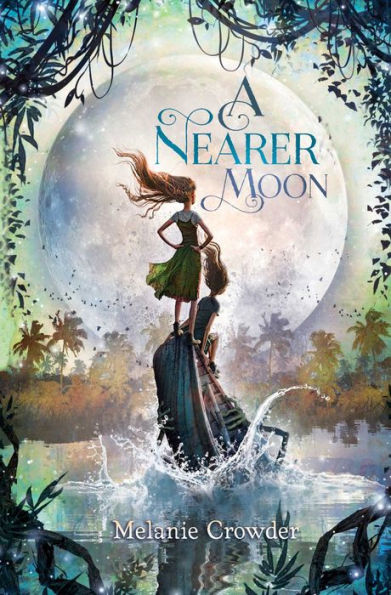
A Nearer Moon

Luna’s world revolves around her little sister, Willow. Willow is happiness and sunshine, and she brings the family together. When Willow becomes sick with the mysterious river sickness, everyone tells Luna there is no way to save her sister. They say she will be dead in three weeks. Luna refuses to sit by her sister’s side and watch her die. Luna and her friend Benny embark on a series of adventures to find a cure for Willow.

Interwoven into Luna’s story is the story of Perdita, a spunky river sprite. The fairies moved to a new world, far from humans. But in a devastating twist of fate, Perdita was left behind when the fairies went through the magical door to a new home. All alone, Perdita flees to the bottom of a swamp and hates anything that shows joy.

Luna offers herself to Perdita in exchange for Willow’s life. Luna hopes the sprite can save Willow but has Perdita’s grief made her blind to others’ needs? Can Perdita find hope again?

A Nearer Moon is a beautifully written story about the love of sisters. The parallel stories about Luna and Perdita add interest. Luna is a plucky character who younger readers will love. The story has beautiful, vivid descriptions of Luna’s world. The only downside to this story are the long descriptions that slow the action.

Sexual Content

  • None


Violence

  • While riding in a boat, Willow’s laughter disturbs Perdita, who goes up and tips the boat. When Willow is dunked into the water, she “sputtered and coughed the filthy swamp water off her tongue . . . Willow leaned over the side of the boat, her stomach heaving as she retched, her eyes teary and her nose running . . . The creature slid, unseen, back to its cave, the silence, smothering its aching heart like a damp blanket over hot coals.” Both Willow and Luna know the water will give Willow the river sickness.

Drugs and Alcohol

  • None

Language

  • None

Supernatural

  • The sprites used magic to build a door to take them to another world because humans poisoned the sprites’ world. “Only a hazy wrinkle of air betrayed that any magic had been done in that place or that anyone had passed through at that spot, passed through from one world into another.”
  • A girl’s grandmother “told us a story about a wood sprite that lived in her rafters when she was little. They never once saw it, but if they so much as dusted the beam where its bundle-of-sticks house was, the milk would turn sour and vegetables would rot overnight.”
  • Gia, a sprite, makes two lockets, one for herself and one for her sister. “These, when opened, would be like doors of their own. Private doors through which to call a lost thing home.” If both lockets were open, Gia could speak a word and her sister would be magically transported to wherever she was.
  • When Willow becomes sick, Luna tries to discover how to cure her. Some people “call it a sickness. Call it a curse . . . Maybe it was all the same thing, only different words used by different people struggling to understand the sort of thing no one can comprehend.”
  • Luna finds a book that has fairy recipes in it. Luna makes “a dram of flower essence for use in the purification of soured water.” When she uses the potion, she whispers a phrase. “She didn’t know if this was magic. It was pleading. It was hoping. It was speaking the deepest wish of her soul and asking the air to hear her.”

Spiritual Content

  • When Willow becomes sick, her mother “sank to her knees beside her own bed, clicking her prayer beads around and around again.” Willow’s mother goes to the chapel often to “click” her prayer beads.
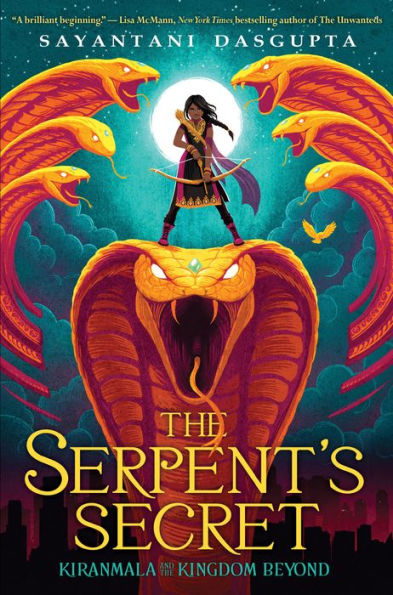
The Serpent’s Secret

Kiran’s parents are just a bit odd, and she has never really fit in. Even so, she thought she was just a regular sixth grader living in New Jersey. Then, on her twelfth birthday, her parents disappear and a rakkhosh demon crashes through her house to try to eat her.

When two princes show up, trying to rescue her, she realizes that her parents’ stories are really true—she really is a princess that comes from another world. With the help of the two princes, Kiran is taken to another dominion, one with magic, winged horses, moving maps, and annoying talking birds. Before she can save her parents, she must fight demons, unlock riddles, and avoid the Serpent King of the Underworld.

The Serpent’s Secret is an interesting and action-packed retelling of Indian mythology. Filled with riddles, jokes, and a talking bird, the story will entertain middle school readers. Black and white illustrations will help readers visualize the characters. As Kiran learns about her cultural background, she also learns to accept herself. Although there is violence, the scenes are appropriate for younger readers because they are not described in detail and much of the action is running away from demons instead of battling them.

Kiran and the two princes talk like stereotypical teenagers. The main character’s dialogue is filled with slang and idioms such as when Kiran looks at the prince and thinks, “While I got my fill of Lal-flavored eye candy.” There is a lot of creative name-calling throughout the story, which does not involve cursing.

A dynamic story with a strong heroine, The Serpent’s Secret will delight those who like a good adventure story.  For readers interested in adventure stories or India’s mythology, Aru Shah and the End of Time is a must-read.

Sexual Content

  • The king has multiple wives.

Violence

  • A rakkhosh, or demon, swallows Kiran’s parents and then tries to swallow her. When Lal tries to help, the rakkhosh knocks him out. “I shrieked as the monster’s fist managed to connect with Lal’s head. The prince slumped forward, unconscious, and then began to slip off the rakkhosh’s neck.” The fighting takes place over several chapters.
  • A teenager spits at Lal. “The goober hung on a lone blade of grass, shimmering like a disgusting jewel.”
  • The Demon Queen attacks Kiran. “. . . The rakkhoshi ripped a handful of her own hair from her head and threw it at me . . . As soon as the magical hair hit me, I couldn’t move at all.” Neel saves Kiran, but not before the Demon Queen turns Neel’s brother and friend into spheres. The battle lasts over several pages.
  • When Kiran and Neel try to steal a stone that is being protected by a python, the “snake grabbed a hold of Neel, wrapped itself around him, and began to squeeze. . . Neel’s face got redder as the snake squeezed.” The battle scene takes place over a chapter. In the end, the python is defeated. “The python’s giant body lay still, oozing dark blood on the cavern floor. Trying to reach the jewel, it had instead split itself in two on Neel’s sword.”
  • A baby rakkhosh wants to eat Kiran, her parents, and Neel. “That snot-nosed newborn demon transformed himself into a whirlpool.” When the rakkhosh “eats” them, they end up in a cave with a seven-headed snake, who “wrapped Ma, Baba, and even poor terrified Tuntuni in his coils. As a last flourish, he slapped his nasty tail over all their mouths.”
  • The serpent king imprisoned Neel in a flaming sphere. “The prince screamed in pain—a sound that made my blood run cold. He writhed around within the glowing orb, his body twisting in unnatural contortions, as if he were being tortured.”
  • Kiran and the Serpent King battle. “He shot bolt after bolt of green fire, but I met them all with the shimmering, diamond light of my own.” Kiran’s moon mother shows up, and “as he launched the cracking lightning from his hands, the moon shot a white-hot beam at the Serpent King. He glowed an incandescent green, but then began to writhe and decay, his energy going from green to brown to gray to black.” The Serpent King disappears and everyone is safe.

Drugs and Alcohol

  • A rakkhosh sings a song, “Hob, gum, goom, geer! Pass the blood! Pass the beer!”
  • A “band of drunken demons” chase Kiran and Neel.
  • Kiran sees a warning sign that reads, “After whisky, fighting demons risky.”

Language

  • A bangle seller says her bracelets are for “generously proportioned and the skinny-butt offspring of slimy snake creatures alike.”
  • The Demon Queen calls Kiran a “snake in the grass” and “cobra dropping.
  • When Kiran is fighting a python, she thinks, “Holy serpent poop.”
  • Kiran thinks that Neel’s “Granny still had some chutzpah left in her.”
  • Kiran calls Neel a “Royal Pain-in-the- Heinie.”
  • Crap is used twice and heck is used once.

Supernatural

  • The story focuses on Indian mythology, including mythological monsters and demons.
  • Kiran’s parents are “swallowed by a rakkhosh and whisked away to another galactic dimension.”
  • Kiran’s father was a serpent king and her mother was a moon maiden. Her adoptive parents found her “in a clay pot floating down the River of Dreams.”
  • Kiran’s biological mother exiled her to New Jersey and put a protection spell over her and her adoptive parents. “Anyway, an expired spell also makes everything around it unstable—in this situation, the boundaries between the various dimensions . . . which is how the rakkhosh came into your world.”
  • Kiran’s tears have healing properties. “I remembered how Tuni had seemed dead, but how he’d come to life in my arms.”
  • Kiran can understand horses. “And then, as clearly as if the horse were speaking to me, I heard his voice in my mind.”

Spiritual Content

  • Kiran explains that her “Baba always tells me we’re all connected by energy—trees, wind, animals, people, everything. . . He says that life energy is a kind of river flowing through the universe.” Neel continues the thought and says, “When our bodies give out, that’s just the pitcher breaking, pouring what’s inside back into the original stream of universal souls . . . so no one’s soul is ever really gone.”

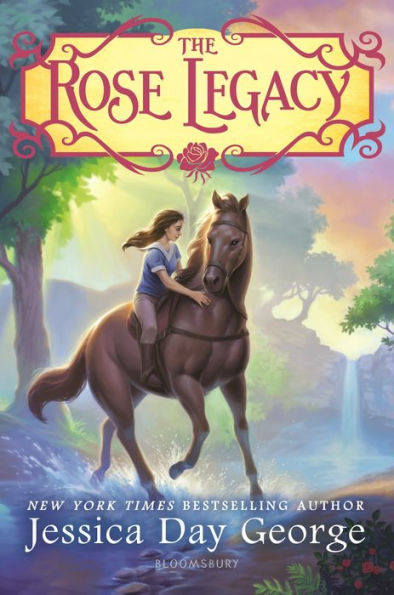
The Rose Legacy

Since the death of her parents, Anthea has never felt wanted. Her family shuffles her from relative to relative. Her life is uprooted when she receives a letter from an uncle who lives in the exiled lands. Anthea dreams of being a Rose Maiden to the queen like her mother, but she fears that being sent to live beyond the wall will end her dream. Feeling scared of living beyond the wall, Anthea’s nightmare becomes worse when she learns that her uncle breeds horses—animals thought to be extinct after bringing a plague to Corona.

Anthea questions everything that she has been taught as she learns more about her family, her country’s political history, and herself. When Anthea tries to flee, she meets Florian, a horse from her childhood. For years, Florian has dreamed of being reunited with Anthea. With the help of Florian and a mix of interesting characters, Anthea learns that things are not always what they seem.  When danger threatens her new family, Anthea learns to trust others as well as herself in order to save the horse that she has come to love.

Jessica Day George’s cast of characters in The Rose Legacy is diverse, interesting, and captivating. The story is told from both Anthea’s and Florian’s points of view. This allows the readers to understand Anthea’s confusion, fear, and her desire to be wanted. The connection between Anthea and Florian is remarkably sweet and shows the true meaning of love.

Anyone who loves a good story should add The Rose Legacy to their reading list. Full of suspense, emotion, and surprises, the story will captivate readers of all ages. The story isn’t just about horses, but the power of friendship and overcoming one’s fears as well.

Sexual Content

  • As part of the narration, Anthea mentions that a man had “gotten fresh” with her teacher.
  • A boy gives Anthea a necklace for her birthday and “kissed her on the cheek and then fled.”  Anthea thinks, “It had been a very nice kiss. . . . His lips had been very warm and soft.”

Violence

  • When Anthea tries to save an owl, a horse named Constantine gets angry and tries to trample her. Another horse, Florian, intervenes, and the stallions fight. “Constantine bit Florian’s neck with his yellow teeth. . . . Constantine came thundering toward them, seeing that Anthea was about to escape . . . lashed the boards, trying to break through to get to them.”
  • One of the horses gets caught in a hunter’s snare. When Anthea tries to free him, “the wires that were still wrapped around his legs arced through the air with a singing noise. . . . A wire slashed open her face just below the left eyebrow, narrowly missing her eye, and a rivulet of blood obscured her vision.”
  • A hunter shoots and hits a horse and Anthea. “When the bullet ripped through her side, Anthea honestly didn’t understand what had happened.”

Drugs and Alcohol

  • A train conductor offers Anthea’s uncle a glass of whiskey.

Language

  • None

Supernatural

  • People who have “the Way” can communicate with horses and feel the horse’s emotions.

Spiritual Content

  • One of the characters says, “Then they’ll probably find some long-lost sacred tablet that says that horses are the devil’s pets and we have to destroy them all or burn in hell!”

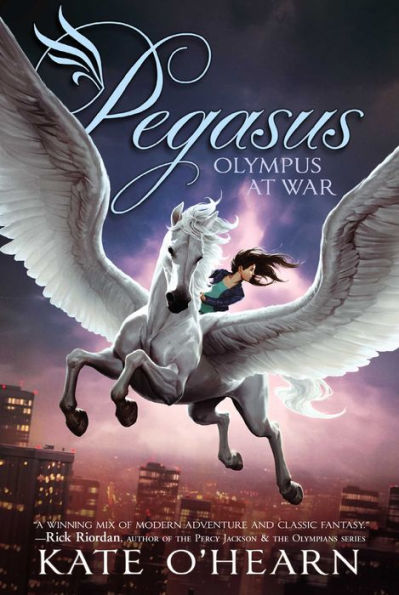
Pegasus: Olympus at War

Olympus is under attack, which gives Emily the chance to save her father from the clutches of a dangerous government organization. In order to find her father, she returns to New York with Paelen and Joel. Unbeknownst to the three, Cupid follows them in an attempt to help Emily.

While the Olympian gods fight for their survival, Emily and her friends try to free Emily’s father.  However, they soon discover that Olympus’s fight has followed them to New York. Soon Emily is captured by the Nirads and has to decide how far she will go to save the people she loves.

Pegasus: Olympus at War will capture the reader’s interest from the beginning. The suspense begins on the first page and doesn’t let up until the end of the story. Cupid is a welcome addition to the cast of characters. The Roman gods are not seen as perfect individuals but as complex characters. As the group tries to save Emily’s father, Cupid learns to overcome his fear in order to help his friends.

Emily is an interesting heroine who is a good role model for young readers. As she fights to control her powers, she realizes that there are some things that can never be done, even if that means sacrificing those she loves. Another positive aspect of Pegasus: Olympus at War is that Emily learns to take a look at the Nirads as individuals, and as she does this, she learns the real power of understanding others.

Sexual Content

  • When Cupid travels to New York, he is attacked by a mob of women. He says, “Women used to worship me. They were shy and needed coaxing. But tonight those girls were mad.  They were ripping at me . . . It was as if they were trying to steal a piece of me.”
  • Emily has a crush on Cupid. When she looks at him, her heart flutters. “He bent down and gave her the softest kiss on the lips.”

Violence

  • Emily is shot. “She flew backwards and fell to the floor. It felt as if she had been hit by a baseball bat. Her chest was on fire, and the blood was rushing in her ears.” Because she is now an Olympian, she does not die.
  • Emily and her friends are attacked by the government agents. The fighting takes place over several pages. “As the fight intensified, Cupid was struck by Agent T’s plank of wood. The force of the blow sent him hurtling across the restaurant. He landed on his wings and cried out in pain.”
  • When Emily’s father escapes from his cell, he attacks an agent. “. . . He launched himself at the agent. Knocking him to the floor, he started to pound him.”
  • While trying to escape from the government compound, there is a fight between the Nirads, the agents, and the Olympians. The fighting continues for several pages. “Howling in pain, the creature swung a brutal fist and knocked the golden blade out of Joel’s hand, sending it flying. The creature roared and lunged at him.” The Nirads capture Cupid, Paelen, Joel, and Emily’s father.
  • During a fight, Emily’s dad is accidentally shot.
  • Emily cannot control her power. As Emily and her friends try to escape being captured, Emily ends up wounding many Nirads. “The red beam struck the ferocious nightmare and burned right through the creature, cutting it in half. The air filled with howls of pain as it fell to the floor and died.”
  • In order to control the Nirads and Emily, the Gordons turn Nirad children to stone. They also turn several Olympians to stone. “The child’s frightened wails turned to howls of pain as its skin darkened slowly and became solid . . . With a final agonized cry from the child, it was done.”
  • Paelen was turned into stone. “Already he could feel his blood slowing as each cell in his body turned to stone. Paelen experienced pain he’d never known before. It was like freezing and burning at the same time. He could no longer move. All he knew was pain and then . . . black nothingness.”
  • There is a final battle between the Nirad, the Gordons, and the Olympians. During the battle, Emily is turned to stone, and then she ends up killing the Gordons. “Unlike Euryale, who had burned, Stheno simply disappeared in a soft, soundless puff. Black ash filled the air and rained down where the Gordon had been standing.”

Drugs and Alcohol

  • A character in the book tells about a government worker who disappeared. “A few months back we were all out at a bar. He was drunk as a skunk and spoutin’ stories of them bringin’ in these big, four-armed gray aliens.”

Language

  • None

Supernatural

  • Emily has the power to heal others as well as to harness the power of the sun. Cupid explains Emily’s transformation. “Emily, the human in you died in the Flames back in Olympus. Your other life ended that day. Now you are as we are. You can no longer be killed.”
  • Cupid unwillingly uses his charms to put people under his control.

Spiritual Content

  • None

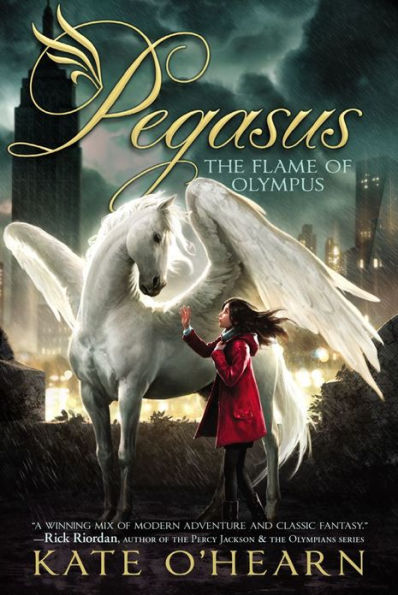
Pegasus: The Flame of Olympus

Manhattan is thrown into darkness during the worst storm in history, so when Emily hears a crash on the top of her apartment, she is reluctant to go investigate. However, her curiosity gets the best of her, and what she finds changes her life forever.

Pegasus has fallen from Olympus during a terrifying fight against the Nirads, stone warriors who are out to destroy everything in their path. In an effort to help Pegasus, Emily teams up with Joel. Along the way, the two are greeted with danger from both the Olympian world and the Earth world. Fighting monsters isn’t Emily’s only worry. She must also learn how to avoid a government agency that wants to capture Pegasus. In the end, will Emily and Joel be strong enough to protect Pegasus and themselves?

Pegasus is a fast-paced story with a lovable heroine, Roman gods, and plenty of action. Because the story is told from Emily’s point of view, the reader is able to connect with not only Emily, but with the other characters as well. Even though the story has violence, the descriptions are mild and allow the reader to imagine the details. O’Hearn weaves the Roman myths into a modern setting that will leave readers wanting more.

Sexual Content

  • None

Violence

  • When Nirads fight to destroy Olympus, many of the Roman gods are hurt. Mercury was, “lying on his side, a spear sticking out of his chest. Blood matted his fair hair, and his face was covered with bruisers.”
  • Paelen, an Olympian thief, was captured by a government agency. They put him in a secret government facility and restrain him with chains. “. . . Two men in white overalls rushed forward and caught hold of his hands to restrain him. But when Paelen proved too strong for them, more men arrived. They wrestled his hands down until he was finally handcuffed to the sides of the bed.”
  • The Nirads try to kill Pegasus and Emily. The fight lasts several pages. “Emily lunged forward and jammed the points of the pitchfork into its black eyes. Howling in rage, the creature fell to the ground and raised two hands to its face. Black liquid oozed between its fingers and dripped onto the tarmac.”
  • Paelen will not answer Agent J’s questions. “Driven to fury, the older man started to slap Paelen violently across the face.” When Agent J leaves, someone said, “If he keeps pressing Agent J like that, the man will have him sliced and diced and poured into Mason jars.”
  • Paelen finds a dead Nirad at the prison. “Instead his eyes were drawn to a deep scar burned on the folded-back skin of the Nirad’s open chest. Closer inspection revealed several other similar scars along its exposed body.”
  • When Paelen is trying to escape, he is shot with a tranquilizer gun. He, “felt the sharp stinging of bees. He looked down at his chest and saw darts sticking into him.”
  • In order to get Emily to talk, an agent grabs her wounded leg. “The pain was blinding. Emily had never known such agony. It stole the screams from her throat and drove the wind from her lungs. Stars appeared before her eyes as the sound of water rushed in her ears. A moment later she passed out.”
  • When a guard calls Pegasus a horse, Diana (Roman Goddess) shoves the agents against the wall. “The wind was driven from their chest with such strength that they were instantly knocked out and crumbled to the floor.”
  • When the government’s agents try to stop Pegasus and others from escaping, Pegasus fights. “The stallion rose on his hind legs and lunged forward. One golden hoof struck Agent O, leaving a deep horseshow impression on his chest. The other hoof hit Agent J in the head with a lethal impact.”

Drugs and Alcohol

  • Joel’s parents were killed when “a drunk driver lost control of his car and crashed into us.”
  • While being held captive, Paelen is given a truth drug. “As the drug took effect, Paelen started to feel what it must have been like to be Medusa. His head was full of writhing, angry snakes; his veins were coursing with fire.”
  • One of the guards at the government agency said, “Want to join me and the boys for a beer later?”

Language

  • None

Supernatural

  • When Emily looks into Pegasus’ eyes images appear. “. . . Strange images suddenly flooded her mind. She saw Pegasus in a dark room, storm-filled sky with lightning flashed all around him.  She felt his determination, his fear. . .”
  • Emily must sacrifice herself to relight the flame of Olympus. “The flames were coming from each part of her, consuming her and spilling out of her every pore. As she stood in the center of the flames, the pain slowly ebbed and finally disappeared completely.”
  • When Emily doesn’t die in the flames, Vesta (Roman Goddess) explains, “You have been reborn.”

Spiritual Content

  • None

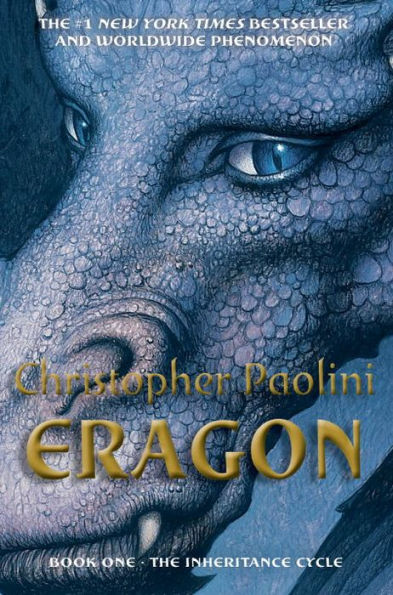
Eragon

Dragons are all but extinct in Alagaesia, which is why Eragon is confounded when a blue rock mysteriously appears in the woods. Hoping to make a profit, he tries to sell the pretty stone. But the dragon inside has chosen a different path for the boy who found her.

Eragon is an exciting story that will enthrall readers. Although it is written at a junior high reading level, it contains much violence and alludes to some sexual content. If your junior higher is mature this tale will no doubt delight them. But if your child has not yet been exposed to adult content such as the brutality of war, this series may not be the best fit.

Sexual Content

  • Eragon asks his friend, “Did you kill someone important or bed the wrong woman?”
  • The elf reveals that while in captivity, “His methods were . . . harsh. When torture failed, he ordered his soldiers to use me as they would.”

Violence

  • In the opening chapter, an elf is ambushed by a Shade. The Shade “saw three of his charges fall in a pile, mortally wounded…Black Urgal blood dripped from her sword, staining the pouch in her hand.”
  • Eragon finds his uncle wounded. “His skin was gray, lifeless, and dry…Deep, ragged burns covered most of his body. They were chalky white and oozed clear liquid. A cloying, sickening smell hung over him—the odor of rotting fruit. His breath came in short jerks, each one sounding like a death rattle.”
  • Eragon and his friend Brom steal food, money, and supplies several times while on the run. “The thievery made him feel guilty, but he reasoned, It’s not really stealing. I’ll pay Gedric back someday.” “Brom pocketed the money with a wink. ‘Anyone who gulls innocent travelers for a living ought to know better than to carry such a large sum on his person.’”
  • Eragon comes across much slaughter on his travels. Once an entire village is killed. “A mountain of bodies rose above them, the corpses stiff and grimacing. Their clothes were soaked in blood, and the churned ground was stained with it. Slaughtered men lay over the women they had tried to protect, mothers still clasped their children, and lovers who had tried to shield each other rested in death’s cold embrace. Black arrows stuck out of them all. Neither young nor old had been spared. But worst of all was the barbed spear that rose out of the peak of the pile, impaling the white body of a baby.”
  • Eragon learns to fight with magic. “He shot, yelling, ‘Brisingr!’ The arrow hissed through the air, glowing with a crackling blue light. It struck the lead Urgal on the forehead, and the air resounded with an explosion.”
  • Eragon’s dragon fights on several occasions. “Saphira whirled on the monster, roaring savagely. Her talons slashed with blinding speed. Blood spurted everywhere as the Urgal was rent in two.”
  • Slavery exists. “He watched helplessly as the slave was sold to a tall, hawk-nosed man. The next slave was a tiny girl, no more than six years old, wrenched from the arms of her crying mother.”
  • There are many times where Eragon and his companions are attacked and fight to defend themselves. “An angry snarl from behind made Eragon spin around, sword held high…’Brisignr!’ barked Eragon, stabbing out with magic. The Urgal’s face contorted with terror as he exploded in a flash of blue light. Blood splattered Eragon, and a brown mass flew through the air…He caught a second one in the throat with Zar’roc, wheeled wildly, and slashed a third through the heart.”
  • Eragon threatens a soldier to get him to talk. “Do you know how much pain a grain of sand can cause you when it’s embedded red hot in your stomach? Especially when it doesn’t cool off for the next twenty years and slowly burns its way down to your toes! By the time it gets out of you, you’ll be an old man…Unless you tell me what I want.”
  • Murtagh kills a Shade. “The next arrow caught him between the eyes. The Shade howled with agony and writhed, covering his face. His skin turned gray. Mist formed in the air around him, obscuring his figure. There was a shattering cry; then the cloud vanished.”
  • Eragon rescues an elf who had been imprisoned and tortured. “The elf’s back was strong and muscled, but it was covered with scabs that made her skin look like dry, cracked mud. She had been whipped mercilessly and branded with hot irons in the shape of claws. Where her skin was still intact, it was purple and black from numerous beatings…Eragon silently swore an oath that he would kill whoever was responsible.”
  • Eragon and Murtagh argue over killing a man who attacked them. “Murtagh gazed at him coldly, then swung his blade at Torkenbran’s neck. ‘No!’ shouted Eragon, but it was too late. Torkenbrand’s decapitated trunk crumpled to the ground in a puff of dirk. His head landed with a hard thump.” Eragon says they should have let him run, Murtagh says “I’m only trying to stay alive…No stranger’s life is more important than my own.”
  • Angela says, “I loathe Shades – they practice the most unholy magic, after necromancy. I’d like to dig his heart out with a dull hairpin and feed it to a pig!”
  • There is a great battle. “At a command, the cauldrons of pitch were tilted on their sides, pouring the scalding liquid into the tunnel’s hungry throat. The monsters howled in pain, arms flailing. A torch was thrown onto the bubbling pitch, and an orange pillar of greasy flames roared up into the opening, engulfing the Urgals in an inferno.

Drugs and Alcohol

  • Eragon drinks alcohol a few times. “The inn’s food was barely adequate, but its beer was excellent. By the time they stumbled back to the room, Eragon’s head was buzzing pleasantly…What was I thinking? wondered Eragon in the morning. His head was pounding and his tongue felt thick and fuzzy.”

Language

  • Variations of damn are used several times. “I won’t deal with anything you bring back from those damned mountains!” “Damnation! It’s not locked.”
  • Bastard is used a few times. “I find that I prefer them when they’re greedy bastards.” “There’s only one reason for the king to gather such a force – to forge a bastard army of humans and monsters to destroy us.”

Supernatural

  • There are many races in Alagaesia. They include elves, dwarves, dragons, and Urgals.
  • Shades are created when a human tried to control spirits in order to practice magic but is overpowered. The spirits take over the human body and control it.
  • Many people can use different types of magic, whether speaking words from the ancient language or by harnessing spirits.
  • Eragon can communicate with animals by touching their minds. He can speak to people in the same way, hear their thoughts, and attack their minds using magic.
  • Eragon meets a were-cat. They can see the future, speak using their minds, and transform into small humanoid figures.
  • An herbalist uses bones to tell Eragon’s future.

Spiritual Content

  • Eragon and his friend Brom lie often since they are fugitives on the run. “Eragon knew he had to lie.”
  • When Eragon’s adopted father dies, he shouts “What god would do this? Show yourself! He didn’t deserve this!”
  • Eragon comes across a town that has been slaughtered and wonders, “What does our existence mean when it can end like this?”
  • Brom describes the religion of the city Dras-Leona. “Their prayers go to Helgrind. It’s a cruel religion they practice. They drink human blood and make flesh offerings. Their priests often lack body parts because they believe that the more bone and sinew you give up, the less you’re attached to the mortal world.”

by Morgan Lynn

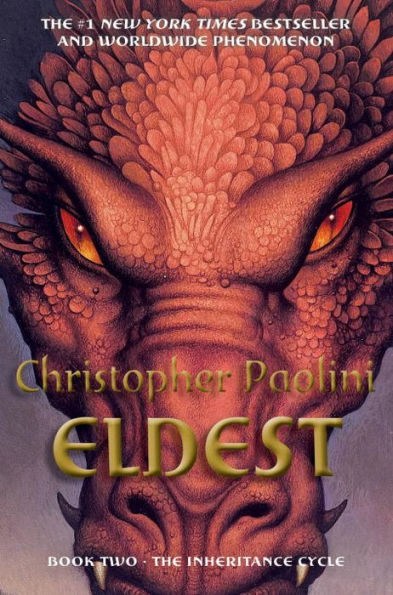
Eldest

Eragon has accepted the responsibility that comes with being a Rider. As the only one who can stop the evil King Galbatorix, Eragon travels to Ellesmera to finish his training among the elves. He studies fighting, magic, and history. He grows stronger, but also weaker as the Shade’s dark magic continues to course through his veins. As its evil festers, Eragon begins to wonder if Saphira was wrong to choose him. For if he fails, all hope will be lost.

The second installment in the Eragon series, Eldest could have been cut in half and not lost anything necessary to the story. Eragon’s journey to the elves dragged on too long, as did his training. A good chunk of the book is told from the point of view of Eragon’s cousin, but his personality is flat and unengaging. There were, however, very interesting moments during Eragon’s time with the elves and the book ended with plenty of action. As with the first novel, this story has a lot of gory violence that might be too frightening for some readers.

Sexual Content

  • Eragon and his teacher wash in a stream after working out. “Going to the stream by the house, they quickly disrobed. Eragon surreptitiously watched the elf, curious as to what he looked like without his clothes…No hair grew upon his chest or legs, not even around his groin.”
  • During a festival, “the two elves raised their hands to the brooches at their throats, unclasped them, and allowed their white robes to fall away. Though they wore no garments, the women were clad in an iridescent tattoo of a dragon…Slowly at first, but with gathering speed, [they] began to dance, marking time with the stamp of their feet on the dirt and undulating so that it was not they who seemed to move but the dragon upon them.”
  • A woman “even went so far as to insinuate that one of his grandparents had mated with an Urgal.”

Violence

  • Eragon remembers a great battle he fought in. “Beyond that, he no longer believed that life possessed inherent meaning—not after seeing men torn apart by the Kull…and the ground a bed of thrashing limbs and the dirt so wet with blood it soaked through the soles of his boots. If any honor existed in war, he concluded, it was in fighting to protect others from harm. He bent and plucked a tooth, a molar, from the dirt.”
  • Eragon’s cousin, Roran, gets in many fights, lies, cheats, and kills many people with his friends. Some are in self-defense, some are initiated by him. “Sloan howled like an enraged beast, threw his cleaver, and split one of the men’s helms, crushing his skull…Sloan yanked him closer and gored him through the eye with a carving knife from his belt…almost prancing with a terrible, bloody glee.”
  • After a fight, “The boy, Nolfavrell, was kneeling by the body of a soldier, methodically stabbing him in the chest as tears slid down his chin.”
  • Ayra tells the story of a woman who murdered the man who spurned her. “She found him with the woman and, in her fury, she stabbed him to death.”
  • Eragon learns how to kill with magic. “All it takes is for a single artery in the brain to be pinched off, or for certain nerves to be severed. With the right spell, you could obliterate an army.”
  • When the braying of a donkey almost reveals his hiding place, “Without hesitation, Roran dropped to one knee, fit arrow to string, and shot the ass between the ribs.”
  • When a man finds out Roran is a fugitive, he “jabbed forward with his spear, catching the white-haired soldier in the throat. Scarlet blood fountained. Releasing the spear, Roran drew his hammer and twisted round as he blocked the second soldier’s poleax with his shield. Swinging his hammer up and around, Roran crushed the man’s helm.”
  • Before a battle, a woman poisons the soldiers on the other side. “Not a very honorable way to fight, I suppose, but I’d rather do this than be killed.”
  • There is a great and lengthy battle. “Eragon could not tell from whose mouth emanated the ravenous jet of flame that consumed a dozen soldiers, cooking them in their mail, nor whose arm it was that brought Zar’roc down in an arc, cleaving a soldier’s helm in half.”

Drugs and Alcohol

  • Wine/mead is consumed at many meals, by Eragon as well as Saphira.
  • Eragon and Saphira get drunk. “They abandoned their food and filled their stone tankards with beer and mead…Even Saphira took a sip of mead, and finding that she liked it, the dwarves rolled out a whole barrel for her.” They both wake up hungover the next morning.
  • A trapper says, “After a few steins of ale—to lubricate my speaking, you understand…”
  • During a feast, Eragon “drank the cup’s clear liqueur and gasped as it blazed down his throat. It tasted like mulled cider mixed with mead.”
  • Orik gets drunk on Faelnirv, “A mosht wonderful, ticklish potion. The besht and greatest of the elves’ tricksty inventions.”
  • After a battle Eragon, “took a small sip of the liqueur to revitalize himself and gasped as it raced down his throat, making his nerves tingle with cold fire.”

Language

  • Bastard is used a few times. When Roran sees the men who killed his father, he says “That’s…they’re the bastards…”
  • Ass is used to describe a donkey.

Supernatural

  • Elves, dwarves, dragons, Urgals, and many other creatures live in Eragon’s world.
  • Eragon has a premonition about a battle. When he asks his friend about premonitions, she tells him, “The elf Maerzadi had a premonition that he would accidentally kill his son in battle. Rather than live to see it happen, he committed suicide, saving his son, and at the same time proving that the future isn’t set. Short of killing yourself, however, you can do little to change your destiny.”
  • Eragon tries to bless a child in the ancient language, but accidentally curses her. His teacher tells him, “Instead of protecting this child from the vagaries of fate, you condemned her to be a sacrifice for others, to absorb their misery and suffering so that they might live in peace.”

Spiritual Content

  • An elf argues with a dwarf over their religion, since “elves do not hold with ‘muttering into the air for help.’ “
  • When Eragon learns to hear the thoughts of living creatures, he finds he can no longer stomach the idea of eating meat. “Gripped by revulsion, Eragon thrust the meat away, as appalled by the fact that he had killed the rabbits as if he had murdered two people. His stomach churned and threatened to make him purge himself.”
  • Eragon’s teacher tells him that his and Saphira’s “souls, your identities—call it what you will—have been welded on a primal level…Do you believe that a person’s soul is separate from his body?” Eragon replies, “I don’t know.”
  • When Eragon says an animal isn’t a person his teacher says, “‘Do you truly believe that any of us are so different from a woodrat? That we are gifted with a miraculous quality that other creatures do not enjoy and that somehow preserves our being after death?’ ‘No,’ muttered Eragon.”
  • The elves, “do not worship at all…if gods exist, have they been good custodians of Alagaesia? Death, sickness, poverty, tyranny, and countless other miseries stalk the land. If this is the handiwork of divine beings, then they are to be rebelled against and overthrown, not given obeisance, obedience, and reverence.”
  • Murtagh is under a spell. Eragon asks Murtagh for permission to kill him, as it is the only way to stop him. “‘It would free you from Galbatorix’s control. And it would save the lives of hundreds, if not thousands, of people. Isn’t that a noble enough cause to sacrifice yourself for?’ Murtagh shook his head. ‘Maybe for you, but life is still too sweet for me to part with it so easily. No stranger’s life is more important than Thorn’s or my own.’ ”

by Morgan Lynn

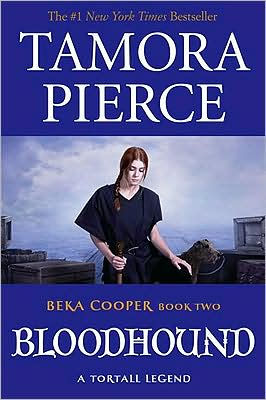
Bloodhound

The second self-sufficient book in the Beka Cooper series expands Beka’s word beyond the walls of her city. Off to Port Caynn to hunt down the mysterious origins of a colemongering ring that may have the power to bring an entire kingdom to its knees, Beka can’t afford any mistakes. Pounce is off in the Devine Realm, but a new friend might be able to help her catch the Rat behind this dangerous game.

Bloodhound is an excellent book that keeps Beka’s story fresh with new characters and scenery. The language and sexual content is slightly escalated from Terrier, but the long chase at the end will have readers rooting for Beka to succeed.

Sexual Content

  • Kora tells Beka, “You told the third one you’d lop his hands off if he put them on you again.”
  • Rosto, “kissed me so very gently on the forehead. He knows I might have punched him in the gut if he’d tried to kiss me on the mouth, him with blood on his hands.”
  • Beka mentions that her adopted cousin was illegitimate. “His mother being a peasant that my lord’s father had kept for a mistress on their home estates.”
  • Beka takes a fancy to a man named Dale. When he whispers in her ear, “Suddenly the cloth over my peaches felt over-tight, and I was finding it a little hard to breathe.”
  • A friend of Beka says, “Inside I am a beautiful woman . . . The Trickster tapped me in my mother’s womb and placed me in this man’s shell.” I’d heard of many tricks done by the gods, but surely this was nearabout the cruelest.”
  • Dale sits Beka on his lap. She protests, but “then said nothing else . . . I only know that my dress, decent enough before, now seemed scandalously low cut. Moreover, from the way his arm drew its fabric and the fabric of my shift tight over my peaches, he knew I was not thinking of the cards.”
  • Dale teases Beka, kissing her fingertips and the palms of her hands. She thinks, “The peaks on my peaches went so tight I thought they might pop clean off.”
  • Beka kisses Dale several times. “And then he did kiss me. Oh, I came all undone. He wrapped me about in his arms . . . He fit his lips to mine and went very quiet and gentle, breathing my breath, settling his hold on me until we matched, twined about like vines.” Another time, “He kissed me so sweetly, his arms just strong enough as he drew me tight to his chest. His tongue slid gentle into my mouth as I wrapped my hands around the back of his head, feeling his silky hair against my fingers.”
  • Beka thinks about how far she wants to go with Dale. “Will I bed Dale? Should I? Surely what is between us cannot last . . . I think I should stop at a healer’s in the morning and purchase a new charm to prevent babies. It’s been so long since I needed one, I don’t even remember where the last one went.”
  • Beka beds Dale. “Last night was the finest I have had in my life. Dale took me to a good supper . . . After that, we returned to his room. Not that I will be writing the details of that. I’ve heard tell of folk who write little books that are nothing but what happens when folk canoodle. How can anyone bear to write such things where other folk might read them?”
  • “Dale picked up my hand and kissed the inside of my wrist slowly, as he liked to do. I’d thought that perhaps, now that we’d had a tumble, his touch wouldn’t unravel my tripes as it had before. I was wrong.”
  • Dale gives a maidservant, “a pat on the bum. I kicked him under the table. ‘I was just being polite!’ he protested. ‘Mayhap she’d like to keep her bum to herself,’ I told him. ‘If you need to be patting someone, pat me.’ “

Violence

  • Beka is attacked by a slave. “She rushed me from behind, her hands gripped together over her head in one giant fist. Only my instincts got me out of the way, or my head would have been crushed. The blow glanced off my left elbow, numbing it.”
  • Rosto tells Beka that when he found criminals using false coin, he “had them branded we did . . . A coin with an X through it, on their right hands. So every time they shake a dice box or pick up a card, folk will know.”
  • Goodwin says she used to be loose with the law, many years ago. “I ended in the gutter, buried under two corpses and not sure I wouldn’t be the third by dawn. I promised the Goddess I would change my ways if I lived.”
  • When a friend says, “Mind those saucy sailor coves, Beka. Their hands are nimble, and they mean no good to a pretty mot like you,” she replies, “I smile all the time. I just don’t do it for nonsense from coves who only mean to get under my skirts.”
  • When a group jump Goodwin and Beka, Goodwin “in a flash she had her knife at his eyes. She had her other hand dug firm into his gems. His knees buckled. His face turned red in the dim light.”
  • Beka meets several acquaintances in a gambling house. “Hanse [gave a woman] a slap on the bum that made her squeal and smack him back.”
  • While eating seafood, Beka thinks about how, “Everyone knows the reputation oysters have for putting folk in the mood for canoodling.”
  • Beka arrests men who were stealing children for the slave trade. “The redheaded one came at me first, doubtless thinking the sword would scare me off. I let him reach a bit too far and slammed him on the wrist, breaking it.”
  • Beka is part of a group of Dogs that raids the Rogue’s Court. “He carried a length of firewood gripped in both hands. It would crush my shoulder if it struck, so I darted under his swing and, one-handed, smacked both of his kneecaps with my baton. When he stiffened, his grip on his weapons going loose, I jammed the end of my baton between his thighs and yanked it up.”
  • Beka is attacked while chasing a criminal. “He thrust out with a short sword that would have skewered me, had I still be in front of it. I seized the hand on the sword hilt, slamming my baton down on the forearm just above my grip. Bone crunched.”
  • Beka finds several murdered people. “One had bought passage to the Peaceful Realms with a neck slash from a very sharp blade . . . I almost missed the death sign on the other cove, until I saw the blood that ran from his ear. I crouched to inspect the wound. At a guess, I’d say that someone very knowing in the ways of murder shoved a thin blade into the cove’s ear all the way to his brain.”
  • Pearl fights, rather than let herself be captured. “She had knives in both hands. I learned that when I caught one knife on my dagger’s hilt, and took the blade of her second knife along my right hip. It hurt like fire had chopped in to my side . . . I twisted my knife hand around her arm, trapping it. Pearl shook and thrashed, trying to make me let her go as the tide dragged on us.”

Drugs and Alcohol

  • Beka tells her partner, “You walk a bit, and you stop for a jack of ale.”
  • Beka talks to a cruel Dog. “I could smell the drink on him. He was swilled, and the hour not even noon.”
  • When visiting friends, Goodwin says, “I am off duty, and I will have ale.” Ale is often drunk and served at dinner and other casual events, though Beka rarely partakes.

Language

  • Beka writes, “I should have known tonight’s watch would kiss the mule’s bum when Sergeant Ahuda stopped me after baton training.”
  • Insulting, but not profane, words such as cracknob are used as insults or exclamations of disgust. Once Beka says, “he’s a lazy, jabbernob, pudding-livered scut,” and Goodwin calls Tunstall a “jabbernob.”
  • The word bastard is used twice. Tansy says, “A flea I put in my cove’s ear, not stopping the plague bastard before handling a citywoman like me!”
  • Ass is said several times. Tunstall tells a criminal that he shouldn’t want, “us chewing at your ass.”
  • The Rogue of Port Caynn calls Beka and Goodwin bitches seven times throughout the book. “I know what you two bitches are doin’, sniffin’ about my turf.”
  • Piss and summer are used often, usually in reference to work with a scent-hound or to Beka’s pigeons. “Phelan had said things with piss or scummer on them were the best. I don’t know how poor Achoo can stand it. Mayhap the smells that made me like to puke were perfume to her.”

Supernatural

  • Beka has a cat who is, “a constellation, as close to a god as makes no difference.”
  • Beka can hear the unhappy ghosts that ride pigeon-back until they move on to the Black God’s realm. “I gathered the complaints of the dead from the pigeons while they ate. There were few ghosts complaining of their lot today.”
  • Many people have variations of the magical Gift, which can be used for healing, fighting or many other things. Beka’s Gift allows her to hear bits of conversations that are picked up by wind spinners. “Stuck in one place like they are, their veils of air spinning tall or small depending on the weather, they savor the taste of other places. In return they give me the bits of talk they’ve gathered since my last visit.”


Spiritual Content

  • Pounce tells Beka, “Have faith that the gods know what they are doing with your life.” Beka thinks, “It never goes well for the god-chosen! Pounce can just tell the gods to leave me be.”
  • There are many gods in Tortall, such as the Goddess, the Black God and the Drowned God. Different people honor different gods, and some people are more devout than others. The gods names are also used in greetings, or as exclamations of surprise. One man tells Beka, after she is almost killed, “I would give the Trickster, the Goddess, and great Mithros some offerings, if I were you.” Beka takes his advice, “and did all the offerings to the gods that I promised in return for their help in the last few days.”
  • Goodwin tells Beka, “This stream has a sprite in it. They hate mortal magic . . . Except for the tail, they look like people.”

by Morgan Lynn

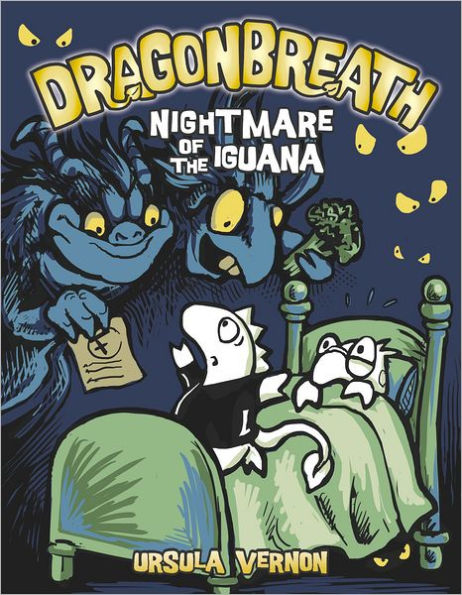
Dragonbreath: Nightmare of the Iguana

Horrifying dream monsters are keeping Wendell awake. In an attempt to help his friend, Danny Dragonbreath and Suki the Salamander go in search of advice from Danny’s wise mythological great-grandfather Dragonbreath. Danny and Suki must defeat the Dream Wasp before it can lay eggs in Wendell’s dreams, which would cause Wendell to go crazy. So Danny, Suki, and a sleepy dream eater enter the “dark horrors of Wendell’s subconscious.” They climb mounds of healthy food, run from a school bully, and search a massive library before they find the Dream Wasp and smash her eggs.

Nightmare of the Iguana is hilarious, action-packed, fun. Wendell’s dreams are the frightening things that kids can relate to—not doing well on a pop quiz, a mother who is a health food nut, and a girl finding out that he likes her. Danny’s wise mythological great-grandfather Dragonbreath’s hearing problems lead to humorous statements. As Danny and Suki enter Wendell’s subconscious and fight dream monsters, the battles involve more running than actual fighting.

Green and black illustrations add to the allure of the book. Drawing with dialogue balloons helps break up the text and keep the action moving. Dragonbreath shows the value of friendship and will get even the most reluctant readers engaged in the story. Although Night of the Iguana is the eighth book of the Dragonbreath series, the story can be enjoyed as a stand-alone story.

Sexual Content

  • Suki kisses Wendell on the cheek.

Violence

  • Monsters chase Danny and Suki, yelling “We will crush their bones and then give them pop quizzes!” They hide in the library, and when a monster finds them, “the monster with the battle-ax swung and hit the weakened bookcase. It collapsed slowly. Books slid off in a waterfall of paper.” They find a staircase in a book and are able to escape unharmed.
  • The dream eater (baku)  fights the Dream Wasp. “The floor shook as the two collided. The Wasp slashed with its bladed forearms, but the baku’s hide was thick and knobby . . .” Danny and Suki began throwing it’s eggs at the Wasp. The battle is described over a chapter and with the dream eater killing the Wasp.

Drugs and Alcohol

  • None

Language

  • When being chased by monsters, Suki says, “Oh, crud.”
  • While squishing the Wasp’s eggs, Suki says, “Oh god, this is disgusting.”

Supernatural

  • Danny and Suki enter Wendell’s dream world and see the “dark horrors of Wendell’s subconscious.”
  • Dream monsters enter Wendell’s dreams. The main one, the Dream Wasp, lays its eggs in Wendell’s mind. “The Dream Wasp was the size of a house . . . Its stinger was as long as a car and tapered to a wickedly sharp point. Its jaws were serrated and meshed together like a bone zipper. Its forelegs looked like steak knives, assuming that by ‘steak’ you meant ‘the entire cow.’”

Spiritual Content

  • Danny’s great-grandfather is helping Suki. “He’s teaching me meditative techniques. To help with being a ninja in a past life.”


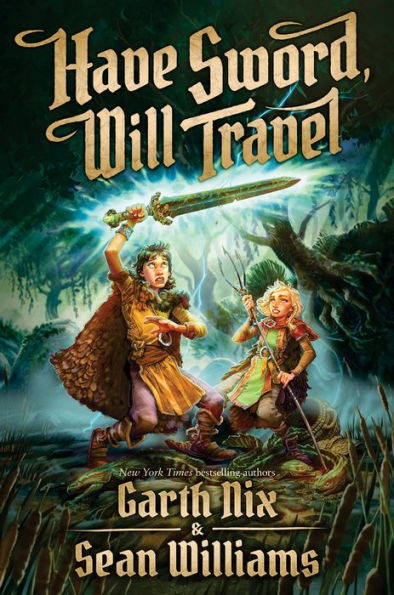
Have Sword, Will Travel

Odo never dreamed of leaving his small town. His best friend, Eleanor, longs for adventure. Everything changes for the two of them when Odo pulls an enchanted sword, Biter, from the river.

Even though Odo doesn’t want adventure, Biter knights him and demands that Odo go on a quest to discover why the town’s river has dried up. Eleanor goes along, excited for the chance to explore the unknown. Along the way, Odo and Eleanor discover that life outside of their village is full of both good and evil and that danger often lurks in unexpected places.

A fast-paced story full of interesting characters—human and non-human— Have Sword, Will Travel takes the reader on an epic adventure. Eleanor is a feisty heroine and Odo is a reluctant hero that children will love. Written with humor, the story teaches lessons such as not bending the truth, fighting for what is right, and defending those in need.

Sexual Content

  • None

Violence

  • When two boys make fun of Odo, the sword attempts to attack them. The sword slices “a figure-eight through the air despite Odo’s efforts to keep him grounded.” Odo manages to stop the sword, and the boys run off.
  • Odo must fight Fyrennian, a cruel smith. When Biter attempts to kill Fyrennian, Odo “managed to pull back on the sword at the last moment, deflecting the sword from a killing thrust.”
  • Eleanor is corned by a huge dog. She flings hot coals on the floor, trapping the dog.
  • Someone hits Fyrennian on the head, and “the smith toppled forward like a stone.”
  • A refugee tells a story about “corpses drifting down the river, the bodies of people cooked to death in boiling water.”
  • Sir Saskia challenges Odo to a duel to keep the citizens entertained. The battle is described over several pages. Odo is outmatched, and Sir Saskia strikes Odo’s shoulder twice. “His shoulder felt like it was swelling up inside the armor.” She hits Odo in the same spot a third time, “on his shoulder again, jarring it so much he lost feeling all the way down his arm. His nerveless fingers could no longer hold the sword, and the grip on his left hand was too weak.” Odo is forced to yield.
  • A dragon attacks Odo and Eleanor. Odo strikes the dragon. “The blade scored a vivid line in the blackened hide, exposing softer bone-white flesh beneath . . . he stabbed forward and pierced one wing right up to the cross-guard.” An older woman comes and helps the children escape.
  • A group of Sir Saskia’s troops attacks Eleanor. A person trips and “impaled himself” on the sword. In the end, there is, “one wounded, one dying . . . maybe . . . and one surrendered.”
  • Odo and Eleanor blow up a dam that has been built to stop the river from flowing. When they do, Odo almost drowns. “Odo lay weakly on his stomach, coughing up dirty water while Eleanor pounded his back.”
  • Odo and Eleanor get into a battle with bandits. The battle lasts over several pages. “Biter came down point-first on Mannix’s shoulder, shearing through his armor as if it were no more than river mud. Mannix screamed and swore and clutched at the wound with his left hand, his right arm now useless.” During the fight, Eleanor is kicked with steel-clad boots, and “the pain was like fire.”

Drugs and Alcohol

  • At home, Eleanor drinks weak ale because water isn’t always clean.
  • Odo and Eleanor find a group of men passing around mugs. One of the men is telling a story. In the middle of the story he stops, and they see his “eyes suddenly rolling back into his head and his falling backward, unconscious. Fortunately, the arms of his friends were ready to catch him . . .”

Language

  • None

Supernatural

  • Biter, an enchanted sword, is able to talk and control his own movements. He teaches Odo how to wield a sword and act like a knight. Later in the story, the children find Biter’s sister, who believes she is cursed and will bring death to those who wield her.
  • A smith has a firestarter that came from a dragon. He uses it to terrorize others into working for him.
  • A dragon appears to judge several of the characters in the book. The dragon looks at Odo, “really looked at him. He felt her ancient, knowing gaze penetrate into the very depths of his being.” Mannix is found guilty and the “dragon’s tail moved again, whipping around like a scorpion’s, the long spike on the end stabbing Mannix right through the middle and then flipping him back into the dragon’s mouth. It happened so quickly he didn’t even have time to scream.” Another person is cursed and forced to do as the dragon commands.
  • Urthkin, “pale-skinned, reed-slender demi-humans” that have “paws like a mole’s, with digging claws,” only come out at night because light hurts their eyes. They believe that “wisdom comes from closer to the ground.”

Spiritual Content

  • None


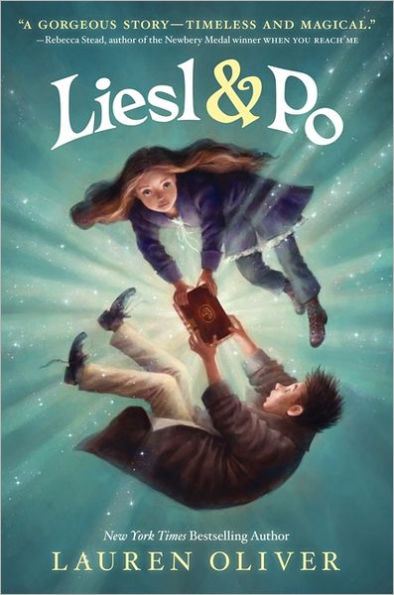
Liesl & Po

Liesl’s cruel stepmother keeps her locked away in an attic. With nothing to do, Liesl spends her time looking out a tiny window and drawing. One lonely night, a ghost named Po appears from the Other Side. Both Liesl and Po are less lonely when they are together. When Liesl’s father dies, she is determined to take his ashes to a special place. With Po’s help, Liesl is able to escape and the two embark on a dangerous adventure to bury her father.

The alchemist’s apprentice, Will, leads a miserable life. His one joy is to look at the small girl in the attic window. Late one night, Will accidentally mixes up a major delivery. Now, the person who ordered the most powerful magic in the world will stop at nothing to get her potion that Will failed to send to her.

The lives of the children—Will, Leisl, and Po—intersect as they help each other avoid the adults who would like to capture them.

Lauren Oliver writes a beautiful story that shows the power of friendship. Although Liesl & Po is age-appropriate, the story shows a frightening version of the Other Side—a place where the dead lose their shape and their memories. Another aspect that may frighten younger readers is the terrible actions of the adults in the story. The alchemist verbally abuses Will. Liesl’s stepmother plots the murder of Liesl’s father and attempts to kill Liesl. The other adults (except one) in the story are just as vile. However, the story ends in a satisfying way, leaving the reader with hope.

Sexual Content

  • None

Violence

  • One of the alchemist’s apprentices was accidentally turned into a mouse, “just as the alchemist’s scrawny, always hungry tabby cat had come swishing in through the cat door.”
  • Augusta wants to kill her husband and stepdaughter, but she is afraid to kill both at the same time. Therefore, she uses poison to kill her husband because “the slow death of a middle-aged man is hardly likely to be attributed to poison, especially when the poison is administered teaspoon by teaspoon, a bit in the soup every day, over the course of a year.”
  • Will overhears a conversation when a factory worker says, “The problem is the boys. We’re running through ‘em! We’re running out! Boys are losing limbs, fingers, toes. One of the boys had his head chopped off last month.”
  • Someone tries to grab Liesl. “During her frantic struggles against the Lady Premiere, she had smacked her head against the door jam and gone as limp as a lettuce leaf.” Lady Premiere then locks Liesl in a room.
  • Augusta tries to feed Liesl soup that she has poisoned. When Liesl refuses to eat it, “Augusta, enraged, sprang to her feet. She grabbed Liesl by the shoulders and shook her . . . Augusta shook Liesl so hard that her teeth knocked together.” Augusta then tells Liesl she can eat the soup and die slowly or she can starve to death.
  • Two siblings are seen “hopping and twisting and slapping each other.”

Drugs and Alcohol

  • Po meets a ghost who died in a bar brawl.
  • Augusta kills her husband with poison.
  • Augusta says that her maid was, “dropped on her head quite frequently as a baby. Her mother was a hopeless drunk.”
  • An innkeeper thinks about a time when she served her customers “weak wine.”

Language

  • None

Supernatural

  • Po is a ghost who explains how death works. Some people go “straight on,” and others go to the Other Side. The Other Side is “vast and filled with ghosts.” When new people cross over to the “dark and twisting corridors,” people lose their shape and memories. When people first get to the Other Side, “they become a part of darkness, of the vast spaces between starts.”
  • When people die, they blend and become part of the Everything. “The ghost reminded itself that losing form was natural, and good, and the way things were in the universe.”
  • Po takes Liesl to the Other Side. “. . . She was aware of the sensation of Po inside her, urging her forward, like suddenly feeling a division down your middle and being two people . . .” Po leads Liesl through the Other Side, and then opens a passage so Liesl can go back to the living world.
  • When people first get to the Other Side they are often confused because they do not understand where they are. “All those new ghosts: All they wanted was to go back to the Living Side.” In order to help Liesl, Po tells the new ghost to follow him because the path would lead them home. Instead, they go to the Living World. “Because they were very new ghosts, they had not started to blend yet, and so were quite visible. . . Some had holes in their faces, or were missing arms or legs, where their physical selves had begun to dissipate and merge with the rest of the universe.”
  • Liesl’s father returns from the Other Side and accuses his wife, Augusta, of killing him. Augusta then reveals that the alchemist gave her “Pernicious Poison: Dead as a Doorknob, or Your Money Back.”
  • After helping Liesl, Po and Bundle appear as solid shapes. “They were golden—they’d been dipped in gold—no—they were made of gold. And then the golden Po-shape turned into tan brown arms and shoulders, a ring of curly yellow hair, and a laughing smile. . . ” Then he disappeared “to Beyond.”
  • Will works for an alchemist who makes spells. For one spell, Will “spent the whole day grinding up cow eyes, and measuring the blood of lizards into different-sized vials . . .”
  • The alchemist can make spells that “turned frogs into goats and goats into mugs of tea. He made people grow wings or third legs. Recently he had mastered a tincture that would make a person disappear entirely.”

 Spiritual Content

  • None

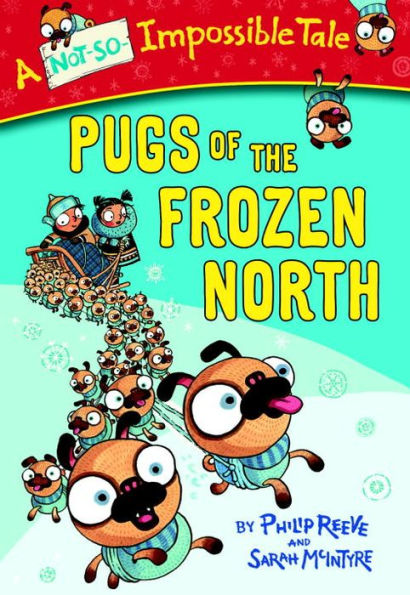
Pugs of the Frozen North

True Winter comes once in a lifetime. It turns everything into a magical wonderland and gives people an opportunity to win a legendary sled race. Whoever wins can make one wish that will come true.

Two friends, Siska and Shen, embark on a fantastical journey to win the race with sixty-six pugs pulling their sled. Along the way, they encounter many obstacles, including spaghetti-eating yetis, singing snow, and other racers. As they complete the journey, they discover that friendship is more important than winning.

Pugs of the Frozen North is a fun-filled story with outrageous characters, interesting obstacles, and snow that comes to life. Although the story focuses on Siska and Shen, the other characters are extremely funny and help add suspense to the story. The race generates kid-appropriate conflict that will keep the reader guessing and giggling as they watch pugs (and polar bears and dogbots) race to the top of the world.

The story is easy to read and engaging. However, the story doesn’t come to an end when the racers arrive at the top of the world and meet Snowfather. Once the racers reach their destination, the story becomes less interesting and readers may have a difficult time reaching the end of the story. The ending deals with the death of Siska’s grandfather, which may cause some children to have questions about what happens at the end of one’s life.

Sexual Content

  • None

Violence

  • While in the race, Siska and Shen encounter weresnow that tries to form itself into scary snowdogs. The pugs bite “the snowmen’s snowy bottoms. After that the weresnow stopped its tricks.”
  • One of the racers goes over a bridge that breaks. As she is clinging to the edge, snowtrolls shout from the abyss. “They had been looking forward to Helga falling so that they could eat her. They started hurling big splinters of ice up at the bridge, hoping to dislodge her.” In the end, Siska and Shen are able to save her.
  • Siska and the other racers are kidnapped by yetis who feed them spaghetti in order to trick them. The yetis want them to wash dishes, because yetis like to make spaghetti but not clean up the mess.
  • One of the racers uses a rocket launcher to try to stop the other racers from making it to the finish line first. “’Take this, you scum!’ sneered Sir Basil. But just as he pulled the trigger, Side-Plate’s snow boot kicked the rocket launcher upward. The rocket whizzed harmlessly off into the sky.”

Drugs and Alcohol

  • None

Language

  • None

Supernatural

  • During True Winter, there are various types of magical snow. For example, shrink snow makes one of the racers shrink to the size of a toy soldier.
  • When the racers meet Snowfather, he shows them a special type of snow. He says, “Everything you see here is made of snow . . . the special anything snow that falls only here, at the top of the world. Shape it into whatever you want, and it will become real.” The Snowfather then creates a bird that comes to life.
  • The Snowfather visits Siska’s sick grandfather. The Snowfather blows on snow that begins to float upward. “The snow that was under Grandpa’s bed caught against the slats and the underneath of the mattress and kept rising, so that the bed was lifted with it.” When Siska’s grandpa floats into the air, Sika’s mother says, “He’s going on that one last journey that he always wished for.” The Snowfather replies, “He’s going to places even I have never seen.”

Spiritual Content

  • None

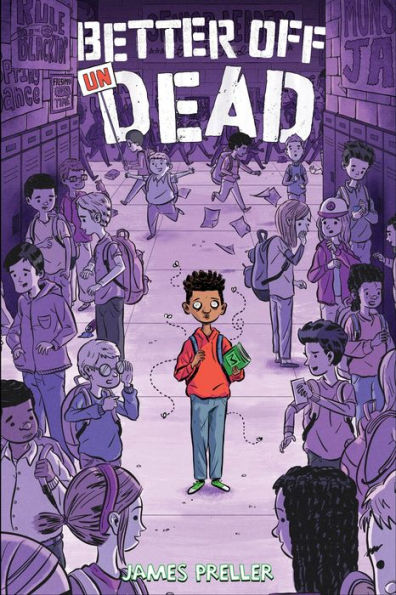
Better Off Undead

Adrian Lazarus has always felt like an outcast. But now that he’s dead, life gets even worse. Even though Adrian does not have a beating heart, he still feels the pain of people talking behind his back. When the school bully, Daryl, decides to target him, Adrian isn’t sure what to do. Then a mysterious girl, a beekeeping boy, and a seventh-grade sleuth enter his life. Can his friends help Adrian stay safe?

Now that Adrian is a zombie, he notices that the world is changing. Forest fires burn, super-flues spread, and bees vanish. While advertisements claim everyone is safe, Adrian and his friends are worried. Is there anything they can do to help the earth?

Better of Undead takes a humorous look at the inside of a junior high school and explores the need to fit in. When the school bully targets Adrian, he and his friends come up with an interesting way to stop the bullying. As Adrian suffers through junior high, he learns that being beautiful isn’t important. It’s what inside that matters. He also realizes that he does not have to let his zombie instincts take over.

Adrian tells his story in a humorous way that will make readers laugh. At the end of the story, the action slows as the author reinforces the messages. One message is that the environment is changing and you should do something about it. The danger of having personal data mined is also shown.

Sexual Content

  • None

Violence

  • Daryl, the school bully, pushes a girl and then hits Adrian in the face. “He turned away from me, head ducking down, then turned back and landed a sharp, compact punch to my face.”
  • Gia talks about all of the bad things that have happened. “Outside Quebec, massive fireballs incinerated part of a town. Thirty buildings melted into a thick greasy mass. Cars burned like crumpled paper. Forty-seven people died, and five of those bodies were never found. They were vaporized by the sudden blast of radiant heat.”
  • Adrian found a dead squirrel outside of his house and ate it. “A fresh kill, blood still leaking from its nose, but otherwise not too shabby.”
  • Adrian is taken to see a man who is interested in learning about Adrian’s condition. When a bodyguard tries to block his path, he thinks about biting him. “I felt a surge of power inside me that was beyond myself. It was something other, and greater, than my ordinary being . . . My eyes locked on the vein in the bodyguard’s neck. As I was about to attack, teeth bared. . . “
  • In order to trick the school bully, Adrian and his friend stage a fight at a school dance. “Adrian grabbed Zander by the shoulder, spun him around, and landed a right cross to his face. Zander fell backwards . . .” The two are kicked out of the dance and meet in the woods. “Zander charged forward, tackling me to the ground. . . Zander gained the advantage and viciously kicked me in the stomach . . . I leaped on Zander’s fallen body . . . I burst a large packet of fake blood that had been planted inside Zander’s shirt. While Zander shrieked in agony, my two hands tore up the string of sausage that had been hidden in the hollow. They dripped with bloody sauce.”
  • A doctor wants to run experiments on Adrian. In order to get him to agree, Adrian’s little brother and Adrian’s friends are kidnapped and held hostage. In order to escape, Zander “was punching the bodyguard on the head . . . The guard shrugged him off and with one backhanded blow swatted Zander to the ground . . . He snarled and gave me a two-handed shove that propelled me into the window. My forehead cracked against the thick pane.” When the house catches on fire, everyone is able to escape.

Drugs and Alcohol

  • Pretty Pillz are mentioned several times. The Pillz claim to make everyone beautiful. “It’s as easy as swallowing a pill.”

Language

  • Profanity is used rarely, but includes: jerkwads, school butt, hell, and damn.
  • A kids at the smells the air near Adrian and says, “Stinks in here, don’t it? I mean, crap, it’s totally disgusting.”
  • A kid at school threatens to kick Adrian’s butt. When someone tells him to stop, the kid says, “Who. . . in the hell . . . are you?”
  • After being hit, Adrian yells, “Get out of here now or I’ll fire-trucking eat your brains! Only I didn’t say ‘fire-trucking.’ Because, like, who would? Is it even a word? No, I said a different f-word, one that I have heard before, plenty of times (I used to ride the school bus, after all).”
  • “Oh my God” is said several times. When told a story, Adrian replies, “Oh my God.”

Supernatural

  • Adrian dies when hit by a car. He describes himself as a “shuffler, ankle-dragger, shape-shifter, howler, freak. I am a living dad, soulless corpse, brain-sucker, crawler, spitter, wraith, wuss, dumb butt, flailer, mutant, haunt.”
  • Gia, who is allergic to bees, was stung by a swarm of them. “I woke up. I was alive, and I wasn’t supposed to be alive. . . That’s when I saw her, the queen bee. She sat on my chest, and I swear, Adrian, we regarded each other in perfect silence, like equals. . . And she spoke.”  The queen bee told Gia, “It all connects.”

Spiritual Content

  • None


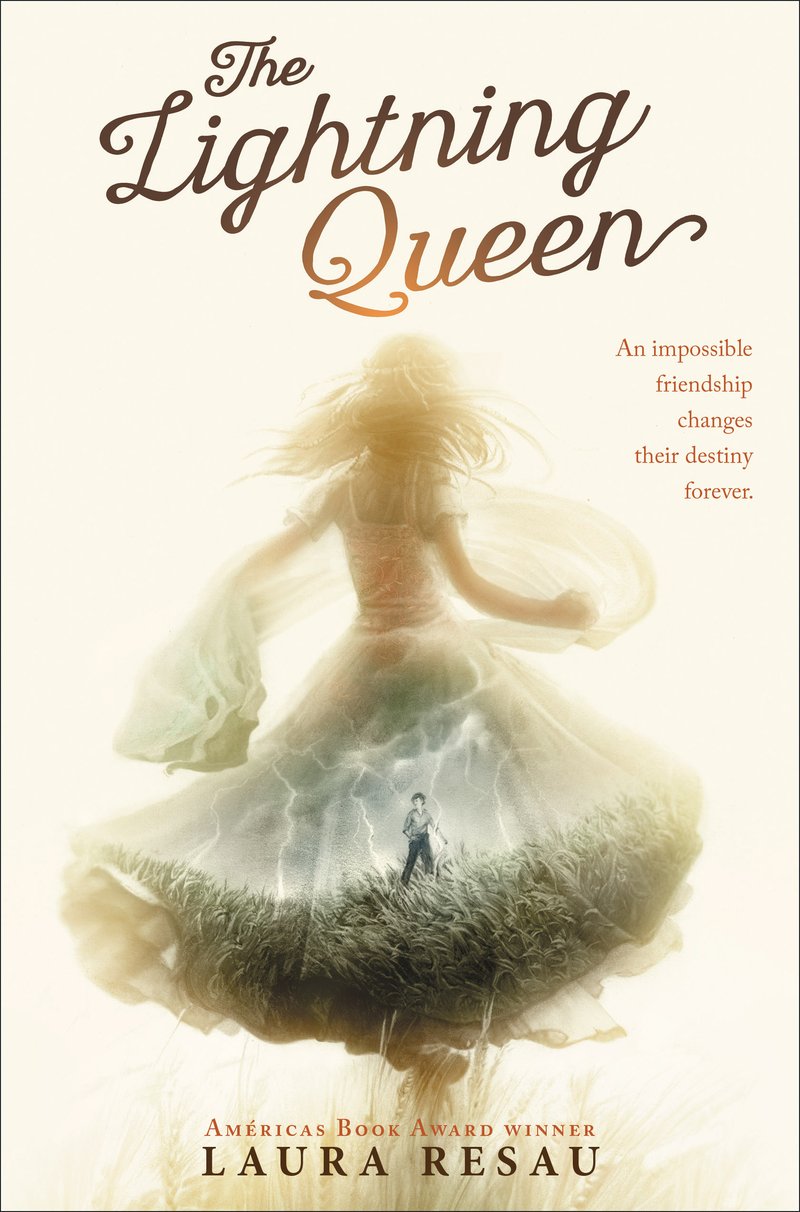
The Lightning Queen

Eleven-year-old Teo lives in the Hills of Dust, where not much happens. His life is dull and there is not much hope of things changing in the future. Then a gypsy caravan arrives. The caravan’s Mistress of Destiny tells Teo his fortune–Esma, Queen of the Lightening, will be his lifelong friend. Once Teo and Esma know their fortune, they band together to make it come true.

Teo tells his own story in The Lighting Queen. Teo and his companions, a duck, a blind goat, and a three-legged skunk, bring the story of rural Mexico to life. However, what ultimately drives the story is Esma. She is a plucky heroine who believes that anything is possible, and her optimistic attitude brings inspiration to both Teo and the reader.

The Lightning Queen has plenty to love for readers of all ages. The characters (including the animals) are loveable. The story is engaging and sprinkled with humor. The storyline shows the harshness of life without going into graphic detail or adding unneeded violence. Through the story, the reader sees the importance of looking beyond the physical appearance of people and finding friendship in unlikely places.

Sexual Content

  • Teo and Esma kiss goodbye once. “Our lips touched like two bird wings brushing against each other for the tiniest of moments, then flying apart on their own separate journeys.”

Violence

  • Teo tells the story of when his father was hit by a car. “There was a screech and a thump . . .I remember blood and tears on his eyelashes . . . I remember the driver standing over my father, talking to another driver. Calmly. Too calmly. And most of all I remember their words . . . ‘It’s just an indio.’ Then the other man shrugged and said, ‘What’s one less indio?’ They dragged my father to the side of the road. They wiped his blood from their shirts with handkerchiefs. Then they got back into their cars and drove off.”
  • When Teo’s uncle sees the gypsies giving fortunes, he becomes angry and, “flipped the table over. Cards scattered . . . other Romani woman gasped and skittered backwards with the toddlers. My aunts pulled away, against the wall, holding their own children. My uncle lunged toward Uncle Paco, trying to restrain him.”
  • The schoolteacher hits a boy’s hand with a ruler. “Tears streamed down his cheeks and he cried out. Twice. Now the boy was sobbing, trembling. Three times. Snot and tears covered his face, and his eyes were wide with fear.”
  • The schoolteacher hits Teo’s hand with a ruler. “There was a crack, a bolt of pain like fire that shot through my entire body. My hand wanted, more than anything, to pull away.”

Drugs and Alcohol

  • None

Language

  • None

Supernatural

  • The gypsies tell fortunes. At the beginning of the story, a gypsy tells Teo’s fortune—that he and Esma were destined to be friends for life. The two decided to do everything they can to make the fortune come true.
  • Esma puts a “pretend” curse on the schoolteacher in order to make the teacher kinder to the students. Teo’s grandfather tells the two that he doesn’t like curses, even pretend ones.
  • Teo dies. In death, he sees his sister, father, and grandfather. Esma comes and sings to Teo’s dead body. Teo, “felt the strain of the silvery thread pulling me towards my body. At the same time, I felt the tug of the other world, so easy and glittering and colorful, the promise of an eternity playing with Lucita [his sister], basking in the warmth of Grandfather and Father . . . My soul string was stretched to a single, quivering delicate strand.” When Esma sings, Teo “floated downward” and comes back to life.
  • When Esma sings, people say they can feel their dead loved ones. “I can almost feel my grandmother here with me, as though Esma’s song has opened a path to somewhere hidden.”

Spiritual Content

  • Teo and Esma find a statue that looked like, “a raccoon wearing a giant crown of corncobs.” Teo tells Esma, “We call them diositos—little gods. People say they’re good luck. Most of us have one or two at home. But don’t tell the priest about it.”
  • Teo’s grandfather gives his uncle a “limpia to clean his spirit. That meant spitting on him with cactus liquor and beating him with bundles of herbs.”


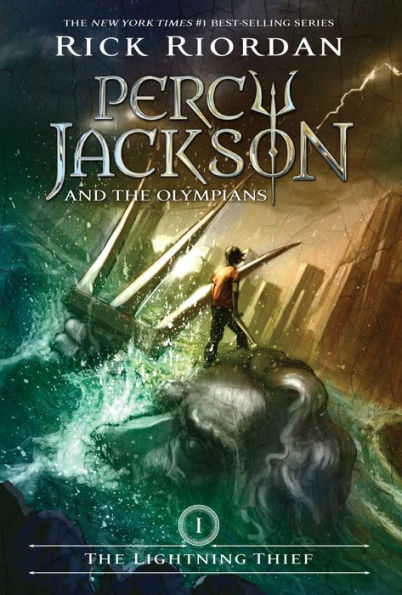
The Lightning Thief

Percy’s life consists of him being moved from boarding school, to military school, to private school. Pretty much any school that will take him. Because no matter where he goes, or how good he tries to be, something always goes wrong.

At the end of sixth grade, Percy figures out why is life has always been so difficult. He is the son of the Greek god Poseidon, which makes him a half-blood. A demi-god. Monsters are attracted to him. To protect himself, Percy goes to Camp Half-blood, where he learns sword fighting, archery, and a myriad of other skills that he will need to survive. He soon learns that his father is on the brink of war with Zeus and that he may be the only one who can stop it. The Lightning Thief is an enjoyable adventure that will keep readers engaged. There is a lot of fighting with monsters, but asides from that this book is friendly to younger readers.

Sexual Content

  • Dionysus is on probation because he, “took a fancy to a wood nymph who had been declared off-limits.”

Violence

  • Percy is taught in class how Kronos ate his children “And later, when Zeus grew up, he tricked his dad, Kronos, into barfing up his brothers and sisters.”
  • It turns out Percy’s teacher is a monster in disguise. “She snarled, ‘Die, honey!’ And she flew right at me . . . I did the only thing that came naturally: I swung the sword. The metal blade hit her shoulder and passed clean through her body as if she were made of water. Hisss!”
  • Percy is in a car crash. “There was a blinding flash, a jaw-rattling boom!, and our car exploded. I remember feeling weightless, like I was being crushed, fried and hosed down all at the same time.”
  • Percy loses his mother. “Then, with an angry roar, the monster closed his fists around my mother’s neck, and she dissolved before my eyes, melting into light, a shimmering golden form . . . A blinding flash, and she was simply . . . gone.”
  • Furies attack Percy. “I turned and sliced the Fury on the right. As soon as the blade connected with her neck, she screamed and exploded into dust.”
  • Percy kills Medusa. “I slashed up with my sword, heard a sickening shlock!, then a hiss like wind rushing out of a cavern – the sound of a monster disintegrating . . . I could feel warm ooze soaking into my sock.”
  • A Chimera attacks Percy. “Before I could swing my sword, it opened its mouth, emitting a stench like the world’s largest barbecue pit, and shot a column of flame straight at me. I dove through the explosion. The carpet burst into flames; the heat was so intense, it nearly seared off my eyebrows.”
  • Percy kills a monster. “The ropes readjusted themselves at my command. Crusty’s whole head struck out the top. His feet stuck out the bottom . . . I had no qualms about what I was about to do . . . I swung the sword. Crusty stopped making offers.”
  • Percy goes to the Underworld. “Even from far away, I could see people being chased by hellhounds, burned at the stake, forced to run naked through cactus patches or listen to opera music. I could just make out a tiny hill, with the ant-size figure of Sisyphus struggling to move his boulder to the top. And I saw worse tortures, too – things I don’t want to describe.”
  • Percy kills a wild boar in self-defense. “I slashed upward. The boar’s severed right tusk fell at my feet, while the disoriented animal charged into the sea . . . a wave surged up from nowhere and engulfed the boar, wrapping around it like a blanket. The beast squealed once in terror. Then it was gone, swallowed by the sea.”
  • Percy’s mother turns her abusive husband to stone with Medusa’s head.

Drugs and Alcohol

  • The director of Camp Half-Blood is Dionysus, the god of wine. “He waved his hand and a goblet appeared . . . The goblet filled itself with red wine.”

Language

  • None

Supernatural

  • Percy Jackson is a demi-god, the son of Poseidon. He goes to Camp Half-Blood, where there are demi-gods, satyrs, nymphs, a centaur, and even a minor god. All the monsters of Greek mythology are real too.


Spiritual Content

  • Percy and Chiron discuss the existence of the Greek gods. Percy said, “You’re telling me there’s such a thing as God.” Chiron replies, “God – capital G, God. That’s a different matter altogether. We shan’t deal with the metaphysical . . . gods, plural, as in, great beings that control the forces of nature and human endeavors: the immortal gods of Olympus. That’s a smaller matter.”
  • Percy visits the Underworld, ruled by Hades.
  • After every meal at camp, “everyone was taking a portion of their meal and dropping it into the fire, the ripest strawberry, the juiciest slice of beef, the warmest, most buttery roll . . . Burnt offerings for the gods.”

The Battle of the Labyrinth

The inevitable fight with Kronos is still building, and this time Percy must travel with his friends into the depths of the ever-changing Labyrinth. No one knows who to trust, as Kronos continues to convert monsters, half-bloods, and demons to his side of the war. Percy finds himself battling monsters he has never seen, all while dealing with his confusing relationship with Annabeth and helping Grover finally track down the lost god Pan.

The setting is full of tension and excitement.  New characters arrive on the scene, adding intrigue and mystery. The ending will leave the reader gasping in surprise as they reach for the next book in the series.

Percy has finally reached high school, and begins to notice the opposite sex; however, there is no romantic relationship. There is a burgeoning physical attraction between him and Annabeth. The Battle of the Labyrinth is a little more mature, and the fight scenes become slightly more graphic. Despite this, the novel is appropriate for younger readers.

 Sexual Content

  • When Percy meets two empousai (monsters similar to vampires) they use their powers to charm him. One asks Percy for a kiss. He thinks, “She smelled like roses and clean animal fur–a weird but somehow intoxicating smell.”
  • Sea demons watch a video about puberty. “As a young sea demon matures, the narrator said, changes happen in the monster’s body. You may notice your fangs getting longer and you may have a sudden desire to devour human beings. These changes are perfectly normal.
  • Annabeth kisses Percy. “Annabeth glared at me like she was going to punch me. And then she did something that surprised me even more. She kissed me.”

Violence

  • An empousai attacks Percy and Rachel. “I slashed with Riptide. Tammi tried to dodge my blade, but I sliced straight through her cheerleader uniform, and with a horrible wail she exploded into dust all over Rachel.”
  • Percy meets flesh-eating horses. “Come inside! Eat you! Tasty half-blood! . . . Poseidon can come in, too! We will eat you both! Seafood!”
  • Percy fights a monster called Geryon. “I went on the attack. Geryon parried my first strike with a pair of red-hot tongs and lunged at my face with a barbecue fork. I got inside his next thrust and stabbed him right through the middle chest.”
  • Daedalus kills his nephew. “Somehow he managed to grab the rim of the tower with his fingers as he fell. ‘Uncle!’ He screamed. ‘Help me!’ The old man’s face was a mask. He did not move from his spot.”
  • Percy meets Antaus, who decorates his court with skulls. “They grinned from pikes at the back of the stands and hung on chains from the ceiling like horrible chandeliers. Some of them looked very old–nothing but bleached-white bone. Others looked a lot fresher. I’m not going to describe them. Believe me, you don’t want to know.”
  • Percy kills Antaus. “I stabbed the giant in the stomach. He bellowed, and sand poured out, but he was too far up to touch the earth, and the dirt did not rise to help him. Antaeus just dissolved, pouring out bit by bit, until there was nothing left.”
  • During a battle, Nico summons the dead to help him. “The earth trembled. A fissure opened in front of the dracaenae, and a dozen undead warriors crawled from the earth.”

Drugs and Alcohol

  • Half-bloods drink nectar when they are injured. The nectar heals and strengths them.

Language

  • None

Supernatural

  • Nico, son of Hades, summons the dead. ” ‘In my day, we used animal blood,’ the ghost mumbled . . . The grave started to bubble. Frothy brown liquid rose to the top like the whole thing was filling with soda . . . Nico had summoned the dead with Coke and cheeseburgers.”
  • Percy meets many monsters, such as giants, hundred-handed ones, and Kampe. “It was sort of like a centaur, with a woman’s body from the waist up. But instead of a horse’s lower body, it had the body of a dragon–at least twenty feet long, black and scaly with enormous claws and a barbed tail.”
  • Kronos possesses Luke’s body. “Luke sat bolt upright. His eyes opened, and they were no longer blue. They were golden, the same color as the coffin. The hole in his chest was gone. He was complete.”

Spiritual Content

  • Percy and his friends discuss how immortal gods and monsters can still die. “Even immortality has limits. Sometimes . . . sometimes monsters get forgotten and they lose their will to stay immortal.”
  • Daedalus, who has cheated death for two millennia, decides to pass on. ” ‘Whoa,’ I said. ‘Pass on? But you can’t just kill yourself. That’s wrong!’ He shook his head. ‘Not as wrong as hiding from my crimes for two thousand years . . . My time has come.’ “


The Last Olympian

Percy has reached sixteen, the age at which the Great Prophecy will be revealed. Percy can’t spend time worrying about what the prophecy means because Kronos has stepped out of the shadows and has declared war against Olympus. It will take all the Olympians and demigods that Percy can muster to stop Kronos, and that might not even be enough.

The Last Olympian’s content grows with Percy, who must deal with death and war. The entire second half of the book spans a series of battles that take place in New York City. This is by far the most action-packed book in the series. While a couple of deaths are intense, the majority are monsters simply disintegrated into dust and the war is not graphically described.

Sexual Content

  • Rachel hints that she wants Percy to kiss her. Rachel says, “And so . . . hypothetically, if these two people liked each other, what would it take to get the stupid guy to kiss the girl, huh?”
  • Percy thinks about how demigods aren’t related to the children of other gods. “A demigod would never think about dating someone who had the same godly parent . . . But a daughter of Aphrodite and a son of Hephaestus? They’re not related. So it’s no problem.”
  • Annabeth kisses Percy. “Then she laughed for real, and she put her hands around my neck . . . When she kissed me, I had the feeling my brain was melting right through my body.”

Violence

  • Percy kills a giant crab monster. “I jabbed Riptide into the chink in its armor . . . The monster shuddered and hissed. Its eyes dissolved. Its shell turned bright red as its insides evaporated.”
  • Percy and Beckendorf blow up an enemy ship, but Beckendorf doesn’t make it out. “The Princess Andromeda blew up from both sides, a massive fireball of green flame roiling into the dark sky, consuming everything. Beckendorf, I thought. Then I blacked out.”
  • Percy gets frustrated with a stubborn satyr. “I grabbed him by the shirt, which seriously wasn’t like me, but the stupid old goat was making me mad.”
  • Percy fights an army of the dead. “There was nothing left of them but weapons in the sand and piles of smoking, empty uniforms. I had destroyed them all . . . I looked down at my clothes. They were slashed to pieces and full of bullet holes, but I was fine. Not a mark on me.”
  • Conner thinks about looting a candy store when everyone in New York City is asleep.
  • Luke destroys Kronos by killing himself. “He stabbed himself. It wasn’t a deep cut, but Luke howled. His eyes glowed like lava. The throne room shook.”
  • The last half of this book is a giant war that takes place in New York City. There is a lot of violence and some deaths, but most of it is not graphically described.
  • “An entire phalanx of dracaenae marched in the lead, their shields locked together, spear tips bristling over the top. An occasional arrow would connect with their snaky trunks, or a neck, or a chink in their armor, and the unlucky snake woman would disintegrate.”
  • “I tossed [the Minotaur] over the side of the bridge. Even as he fell, he was disintegrating.”
  • “Annabeth and I raced from block to block, trying to shore up our defenses. Too many of our friends lay wounded in the streets. Too many were missing.”
  • “Her features, once beautiful, were badly burned from poison. I could tell that no amount of nectar or ambrosia would save her.”

Drugs and Alcohol

  • None

Language

  • Percy says “Oh, gods” once or twice.

Supernatural

  • The Oracle gives prophecies about the future that always come true.
  • Percy rides on a hellhound, who can travel through shadows.
  • Luke’s mother sees horrible visions of the future. “My child . . . Must protect him! Hermes, help! Not my child! Not his fate – no!”
  • Morpheus puts the city of New York to sleep.
  • Percy is dipped in the River Styx and becomes invincible.
  • Kronos resides in Luke’s body because Kronos has no form of his own.
  • Percy is a half-blood, the son of Poseidon. The Greek gods, monsters, and most things from the old Greek tales are all true.

Spiritual Content

  • Percy feels guilty for the deaths of the demigods who were killed when he blew up the enemy ship. Poseidon tells Percy, “They all chose to battle for Kronos . . . they chose their path.”

by Morgan Lynn

The Titan’s Curse

Percy, Annabeth, and Thalia are working together to save a pair of half-bloods from the monster who kidnapped them. But when Annabeth is lost, Percy will stop at nothing to save her. Meanwhile, Kronos bides his time, forever scheming to take over the world. His General has escaped eternal punishment and is amassing an army to take down Olympus.  A prophecy tells of a quest to stop the upcoming terror, and Percy joins despite not being chosen to go. Soon he is traveling across the country with Thalia and three of Artemis’ Hunters on a journey to save Annabeth, a goddess, and the world itself.

This installment of the Percy Jackson and the Olympians series is riveting and full of suspense. As Percy grows he comes into his own as a powerful son of Poseidon. New characters keep this book fresh, while the constant action keeps readers on the edge of their seats. Aside from the frequent, non-graphic violence, there is little in this book that would exclude younger readers.

Sexual Content

  • None

Violence

  • When Apollo’s sun bus crashes into a lake, “steam billowed up . . . ‘Well,’ said Apollo with a brave smile . . . ‘Let’s go see if we boiled anyone important, shall we?'”
  • Thalia and Percy get into a fight. “Thalia pushed me, and a shock went through my body that blew me backward ten feet into the water . . . Anger roared in my ears. A wave erupted from the creek, blasting into Thalia’s face and dousing her from head to toe . . . Thalia yelled, and a blast of lightning came down from the sky, hit her spear like a lightning rod, and slammed into my chest.”
  • Percy fights a lion with his friends. “Immediately, arrows pierced the lion’s maw—two, four, six. The lion thrashed wildly, turned, and fell backward. And then it was still.”
  • Percy fights skeleton creatures. “I thought I was doing pretty well, until the other two skeletons shot me in the back . . . I landed face down in the street. Then I realized something . . . I wasn’t dead. The impact of the bullets had been dull, like a push from behind, but they hadn’t hurt me.”
  • Bianca climbs into a giant robot to stop it from killing her and her friends. When Bianca stops the robot, it collapses, and Bianca “was gone.” Bianca’s friends assumed she died.
  • Dionysus, the god of wine, saves Percy from a manticore (a flying monster) and skeletons. “SNAP! It was the sound of many minds breaking at the same time. The sound of madness. One guard put his pistol between his teeth like it was a bone and ran around on all fours . . . the planks under his paws erupted into grape wines, which immediately began wrapping around the monster’s body . . . until he was engulfed in a huge mass of vines, leaves, and full clusters of purple grapes. Finally the grapes stopped shivering, and I had the feeling that somewhere inside there, the manticore was no more.”
  • Zoe is wounded in a fight. “She leaped between her father and Artemis and shot an arrow straight into the Titan’s forehead, where it lodged like a unicorn’s horn. Atlas bellowed in rage. He swept aside his daughter with the back of his hand, sending her flying into the black rocks.”
  • Luke is mortally wounded. “Talia kicked Luke away. He lost his balance, terror on his face, and then he fell . . . We rushed to the cliff’s edge . . . They were staring at Luke’s broken form on the rocks.”
  • The Olympians debate whether to smite Percy and his friends. Poseidon says, “They are worthy heroes. We will not blast my son to bits.”
  • While fighting a monster, Percy is injured. “My coat and shirt were pinned to the wall by some kind of spike—a black dagger-like projectile about a foot long. It had grazed the skin of my shoulder as it passed through my clothes, and the cut burned. I’d felt something like this before. Poison.”

Drugs and Alcohol

  • Thalia’s mother died. Someone explains her death: “heavy drinker, and apparently she was out driving late one night about two years ago, and . . . “
  • Dionysus mentions wine several times and procures it once or twice. “He glanced up innocently from the pages of Wine Connoisseur He said, ‘Ah, pinot noir is making a comeback.'”

Language

  • Percy and his friends visit Hoover Dam and start making jokes about “the dam snack bar” and “some dam French fries” and “the dam restroom.”

Supernatural

  • The ancient Greek gods, heroes, and monsters are all real.
  • Bianca pledges herself to Artemis, and when she becomes one of Artemis’ maidens, she is granted immortality.
  • Zeus brings a pair of angel statues to life, so they can help his daughter.

Spiritual Content

  • After a battle, Artemis thinks the monsters are stirring. She says, “Let us pray I am wrong.” Percy asks, “Can goddesses pray?”

by Morgan Lynn

The Sea of Monsters

Percy is a year older, but much remains the same. Once again, Percy is expelled from school when attacked by monsters, and he must flee to Camp Half-Blood. But Camp Half-Blood is not the safe haven Percy was looking for. The camp’s magical boundaries are dying, and soon Percy is on another quest. Joined by Annabeth and his new half-brother Tyson, Percy traverses the Sea of Monsters to both rescue Grover and save the future of Camp Half-Blood.

A wonderfully engaging story, Percy takes readers on an epic journey of strength and heroism. The reader will learn about acceptance alongside Percy because one of the themes is not to judge someone based on his or her looks.  The Sea of Monsters has many, well, monsters. As a result, there is much fighting, but the violence is not portrayed in a bloody manner.

Sexual Content

  • When they win a race, “Annabeth planted a kiss on [Percy’s] cheek.”

Violence

  • Percy plays dodgeball with cannibals. One cannibal says, “We Laistrygonians aren’t just playing for your death. We want lunch!” Then the cannibal “waved his hand and a new batch of dodgeballs appeared on the center line . . . They were bronze, the size of cannon balls, perforated like wiffle balls with fire bubbling out the holes.”
  • Annabeth kills one of the cannibals. “Suddenly the giant’s body went rigid. His expression changed from gloating to surprise. Right where his belly button should’ve been, his T-shirt ripped open and he grew something like a horn—no, not a horn—the glowing tip of a blade.”
  • Tantalus tells the story of why he was punished. “No one noticed that his children were missing. And when he served the gods dinner, my dear campers, can you guess what was in the stew?”
  • Percy is attacked by a Hydra. “There was a flash of light, a column of smoke, and the Hydra exploded right in front of us, showering us with nasty green slime that vaporized as soon as it hit, the way monster guts tend to do.”
  • Percy’s boat explodes. “I spun in the air, got clonked on the head by something hard, and hit the water with a crash . . . The last thing I remembered was sinking in a burning sea, knowing that Tyson was gone forever, and wishing I were able to drown.”
  • Percy runs into piranha sheep. “The deer stumbled and was lost in a sea of wool and trampling hooves. Grass and tufts of fur flew into the air. A second later, the sheep all moved away, back to their regular peaceful wanderings. Where the deer had been was a pile of clean white bones.”
  • Percy and Clarisse fight the Cyclops. “She charged the Cyclops again and again. He pounded the ground, stomped at her, grabbed at her, but she was too quick. And as soon as she made an attack, I followed up by stabbing the monster in the toe or the ankle or the hand.”

Drugs and Alcohol

  • Percy drinks a potion that turns him into a guinea pig.

Language

  • None

Supernatural

  • Percy is a half-blood, the son of Poseidon. The Greek gods, monsters, and most things from the old Greek tales are all true.

Spiritual Content

  • None

by Morgan Lynn

13 Treasures

Tanya can see fairies—evil fairies who want to keep their existence secret. When Tanya writes about the fairies in her diary, they come to punish her. They pinch her, rouse her from her sleep, and cast spells on her. Tanya’s strange behavior can’t be ignored or explained, and her mother isn’t sure what to do. In an effort to get Tanya to behave, her mother sends her to Elvesden Manor, her grandmother’s secluded estate.

In the hopes of learning more about how to protect herself from the fairies, Tanya sneaks into her grandmother’s library. Soon Tanya is mixed up in a fifty-year-old mystery of a missing girl. But as Tanya tries to unravel the mysteries of her second sight, she soon discovers that there is more to the fairy realm that she first believed. And if she is not careful, she may be pulled into the fairy world and never be able to return home.

Right from the start, 13 Treasures creates suspense as the fairies attack Tanya. Tanya struggles to keep the fairies secret (or they will seek revenge) but also explain her strange behavior. When Tanya is sent to her grandmother’s house, no one is particularly glad to see her, except Fabian the care keeper’s son. The tension in the house creates suspense. The evil fairies, the unwelcoming grandmother, and the string of missing children all lead to a creepy mystery. However, Tanya proves to be a compassionate, plucky heroine that befriends a goblin.

13 Treasures is full of fairy lore, strange creatures, and complicated characters who add interest to the story. Younger children will enjoy having a few scares that don’t leave them frightened. Even though the story is written for 8-12-year-olds, the language and the long descriptive passages may be difficult for some children.

Sexual Content

  • None

Violence

  • When Tanya writes about the fairies in her diary, they come into her room and warn her to stop.  One fairy makes Tanya float in the air and turn somersaults. Then, she is dropped and crashes to the floor.
  • When a goblin tells Tanya too much information, the other goblins beat him. “The goblin howled as Toadface drove a heavy fist into his stomach . . . The bruised goblin was left weeping in a heap on the ground. He had sustained several cuts to his face and was bleeding profusely, his lower lip split and swollen.”
  • When Warwick sneaks up and grabs Tanya’s shoulder, she kicks him in the shin.
  • When Tanya and Fabian try to go into the woods, a raven attacks Fabian. “It hooked onto the back of Fabian’s mud-drenched clothes with long, black talons, and began a frenzied attack on the back of his head.”
  • A drain dweller grabs Tanya’s wrist, trying to rip off a bracelet. As Tanya struggles to get the drain dweller to let go of her, it bites her. “She felt, rather than saw, the blood running down her arm and dripping from her elbow.” When the drain dweller gets the bracelet, it runs out the door and is eaten by the cat. “The creature did not scream when the cat’s claws found their target, or even whimper as the broken, aged teeth clamped down on its windpipe for the kill.”
  • In order for a human to escape the fairy realm, they must have another to take their place. Tanya is tied to a tree with spider twine so she can be forced to go into the fairy realm.

Drugs and Alcohol

  • None

Language

  • When Fabian sees a drain dweller he yells, “And what the hell is that?”

Supernatural

  • There are fairies, goblins, and other creatures.
  • Tanya has the second sight because someone in her family was switched with a changeling. “The second sight comes from having fairy blood.”
  • A gypsy who lives in the woods is said to be able to see into the past. The gypsy gives Tanya a compass that will show the direction of her home.
  • The fairies threaten to use rosemary that grows in the piskies’ domains to wipe Tanya’s memory.
  • Fabian believes that a girl he saw in the woods could be a ghost. “Maybe she’s trying to tell us that he did kill her all those years ago. Maybe she can’t move on until justice is done.”
  • The fairies use a glamour to disguise a fairy child that was switched with a human child. One of the characters is afraid the glamour will wear off and the baby would be, “put under observation in a laboratory somewhere—analyzed, poked, prodded, and experimented on.”
  • Tanya is told that she must destroy anything that the fairies could use to control her. “Blood. Saliva. Fingernail and toenail clippings. Teeth. All the stories of witchcraft, of people being controlled by a witch in possession of a lock of their hair or a tooth—it all stems from the truth. You don’t leave anything to chance.”
  • Tanya is given a potion to rub on Fabian’s eyes so he can see the fairies.

Spiritual Content

  • None


A Plague of Bogles

Bogles don’t hide in closets; they hide in small, dark places where they lie in wait for children they can devour.  Many adults don’t believe bogles exist, but Jem has seen a bogle.  When a child is sent to fetch some sherry from a basement and never returns, Mable goes in search of help and finds Jem.  Jem searches out the only person who can help, a bogler named Alfred.

In order to catch a bogle, Alfred needs some bait—a singing child.  In order to get off of the streets, Jem agrees to be bogle bait.  Jem and Alfred meet several interesting characters who have bogles that need eradicating. Soon they discover they need the help of Birdie, a gutsy girl with a beautiful voice.

To complicate the story, Jem is also trying to hide a secret.  As Jem tries to help solve the mystery of why there are so many bogles in one area, he is also trying to find Sarah Pickles, the woman who sold him as bogle food.

The story begins with suspense and mystery that make it more interesting for readers, but the language may be difficult for younger audiences.  For example, Jem says, “I never prigged a thing, save for that morsel o’ cheese.” The book also mentions debtors’ prisoners and homeless children.  The complicated themes and adult nature of some scenes may not be suitable for all children.

Jem is frightened of going to prison because of his past misdeeds, and he thinks about this often. Even though Jem does not want to end up in prison, he does not feel bad about stealing. Instead, Jem seems to think thievery is acceptable.  Jem, “had always favored the idea of bogling, because bogling was such a flash occupation, like smuggling or highway robbery.” As Alfred and Jem go about the city, they spend time in a tavern, where alcohol is served. (Although Jem would like some, Alfred won’t allow it.)

Sexual Content

  • None

Violence

  • When Jem picks a morsel o’ cheese off the floor and eats it, he is beaten.
  • Jem is in a circle of salt when a bogle puts its two viscous arms around him. Then he jumps out of the way when he hears “a cry and a loud hissing noise. The air filled with foul-smelling steam,” and the bogle is dead. (In total there are three bogles that are killed, in a similar fashion.)
  • Jem thinks about Newgate prison, a place he fears, because he knew “several people who had been hanged there.”
  • At one point in the story, Jem remembers a time when he “once helped to rob a woman’s house while she was making her regular weekly visit to her dead child’s grave.”

Drugs and Alcohol

  • A child was working for a tavern. She was sent to fetch some sherry when she disappeared; she’s presumed to be eaten by a bogle.
  • Jem sings the following song: “There is a nook in the boozing ken,/Where many a mug I fog,/and the smoke curls gently, while cousin Ben/keeps filling the pots again and again,/ if the covers have stumped their hogs./The liquors around is diamond bright,/And the diddle is best of all;/ But I never in liquors took much delight,/For liquors I think is all bite.”
  • After Alfred and Jem dispose of a bogle, they go to a tavern where Alfred was jostled by “loud men in dirty clothes, many of whom were so drunk that only the press of bodies kept them upright.  Jem noticed at least two gaping pockets just asking to be picked-pockets belonging to men who would never know, by morning, whether they had spent their missing money or been fleeced of it.”
  • The following is another song Jem sings: “The heavy wet in a pewter quart/ As brown as a badger’s hue, More than Bristol milk or gin,/ Brandy or rum I tipple in, With me darling blown, Sue.”

Language

  • None

Supernatural

  • To catch a bogle, Alfred must lay out a circle of salt with a gap in the ring so the boggle can enter it. In order to kill a bogle, it must be hit with a spear.
  • When a bogle is near, a child feels a sense of despair.

Spiritual Content

  • None


The Last Bogler

Alfred Bunce is out to rid Victorian London of bogles. In order to reach his goal, Alfred needs all the help he can get. Alfred and his apprentice, Ned, work with the Sewers Office to find and eliminate bogles. However, the bogles are acting unpredictably and Ned wonders if he has enough skill to become the next bogler.

To add to the suspense, an old enemy is out for revenge, and Ned’s life is in danger. Can Ned survive long enough to help Alfred rid London of bogles?

Ned is thankful that Alfred has taken him off the street, but Ned doesn’t think he wants to take Alfred’s place as the last bogler. The Last Bogler focuses more on Ned and his internal conflict, which makes the book less interesting than the previous two.

Although new characters are added, none of them are particularly memorable. The Last Bogler is not a stand-alone book; if the first two books haven’t been read, it may be hard to follow the plot. Additionally, much like the first two books, the language may be difficult for some readers.

Sexual Content

  • None

Violence

  • Alfred and Ned kill bogles. None of the deaths are described in detail. When one bogle is killed, it “reared up, frothing and hissing, its tentacles writhing, caught in the glittering trap—Bang! It exploded like a giant grape, releasing a geyser of black liquid.”
  • Alfred kills another bogle. “Suddenly there was no bogle. Nothing remained except a rapidly deflating, crusty black thing that looked like an oversized boil. Alfred’s spear was sticking out of it.”
  • Mr. Harwood is attacked, but it is not described. “By the time Alfred and Ned rounded the next corner, Mr. Harwood was already on his back in the middle of the alley, with both hands clamped over his nose.”
  • Someone tries to kill Ned, but the attack is not described. Ned’s “hair was ruffled, his knuckles were grazed, and there was a rip in the knee of his trousers.” Later, the attacker confesses that he was paid to kill Ned.
  • Jack Gammon tries to kill Ned and Alfred. Jack threatens to “chop him into pieces.” In the end, Jack falls to his death. Ned “would never forget the horror of shouting for help . . . with Jack Gammon’s shattered body lying in a pool of blood at his feet.”

Drugs and Alcohol

  • Alfred and another man talk about a missing person. They are unsure if he was taken by a bogle or “he’s tucked away in the Nell Gwynne public house, drinking himself witless.”

Language

  • When a newsboy is seen following Ned, someone says, “Why, what a damnable cheek!”
  • Alfred tells someone that a lady only cares about “that hoard o’ coins in her piss pot.”

Supernatural

  • Alfred is called a “Go-Devil Man.”
  • To catch a bogle, Alfred must lay out a circle of salt with a gap in the ring so the bogle can enter it. In order to kill a bogle, it must be hit with a spear.
  • When a bogle is near, a child feels a sense of despair.
  • Alfred visits a lady known for making potions and curses. She also talks about types of herbs that are “for deathwork” and others that drive away the devil, or attack magic.
  • Alfred learns that his spear is made from “blackthorn with a consecrated point on it” and that it has herbs that are “used for cursing.”

Spiritual Content

  • None

The Hypnotists

Jax’s eyes have always changed colors. And when people begin doing exactly what Jax tells them, he wonders if there is more to his color-changing eyes than he knows. Soon, Jax finds himself invited to meet Dr. Mako. Dr. Mako promises to teach Jax to harness the power to hypnotize people.

Excited by the prospect of learning more about his powers, Jax falls under Dr. Mako’s spell. However, Jax begins to wonder why Dr. Mako is so interested in his powers. Jax isn’t sure if Dr. Mako can be trusted. Soon Jax is tangled in a web of deception. Jax must figure out how to save his best friend, his parents, and the United States from Dr. Mako’s evil plan.

Jax’s newly emerging power adds humor and suspense to The Hypnotist. Younger readers will enjoy watching Jax learn to use his power and struggle with the responsibility of being able to hypnotize others. Jax works through many of his problems by talking to his best friend Tommy. This allows the reader to understand Jax’s emotions. The relationship between Jax and Tommy adds to the story’s plot and helps keep the story’s tone kid friendly. Even though much of the conflict revolves around Dr. Mako, who turns out to be an evil villain, the violence is age appropriate for children because it is not described in detail or in a scary manner.

Sexual Content

  • None

Violence

  • A man is hypnotized and ordered to jump off a bridge. Jax, “could hear the sound of someone in terrible distress, sobbing as if the end of the world were at hand . . . they watched in horror as the young man hoisted himself over the barrier and stood poised, trembling, on the narrow ledge.” Jax re-hypnotizes the man and saves his life.
  • Dr. Mako puts a post-hypnotic suggestion on Jax’s parents. If Jax doesn’t do what Dr. Mako wants, he will tell Jax’s parents to kill themselves. Dr. Mako tells Jax, “I won’t mention the trigger word yet. It’s too dangerous. When they hear it, both your parents will proceed to the nearest subway station and throw themselves in front of an uptown train.”
  • Jax parents throw themselves in front of a train. No one is injured.
  • Dr. Mako hypnotizes Jax and has him jump off a building. A mob of people hold up curtains and catch Jax, which prevents him from being killed.

Drugs and Alcohol

  • None

Language

  • None

Supernatural

  • Many of the characters in the book can hypnotize others. One of the character’s specialties is, “A series of post-hypnotic suggestions that could be activated later.”
  • Throughout the story, many characters are hypnotized without their knowledge.
  • When Jax is learning to hypnotize others, he learns that, “the mesmeric connection is a powerful coupling of two minds. . . When you ‘see’ through your subject’s eyes, you’ve admitted a stranger’s consciousness into your head.”

Spiritual Content

  • None


The Dragonfly Effect

Jax is unsure if the military is protecting him or keeping him prisoner. The military promised to protect Jax and his family from Mako, a hypnotic mastermind who wants Jax dead.

Soon Jax learns that the military’s protection comes at a price. They want to use Jax’s hypnotic powers as a military weapon. The military wants to figure out how to use Jax’s ability to control people through video broadcast, but Jax only wants to use his powers for good. Soon Jax is using his hypnotic power in military experiments that could cost people their lives.

Then Mako escapes from prison. With the help of a young boy with hypnotic powers, Mako plans to put the entire world into a hypnotic state, which will not allow people to move as the world falls apart without them. Jax, with the help of two friends, must avoid being captured by the military or Mako in order to save the world.

The Dragonfly Effect is filled with suspense and adventure. Jax is stuck between following the orders of the adults around him and doing what he knows is right. Although there is violence in the book, it is not described in detail and is age-appropriate for children.

One likable aspect of the story is Jax’s parents. They know about Jax’s hypnotic powers, and even when Jax uses his skills to hypnotize them, they are smart enough to know that Jax is trying to manipulate them. Even though Jax is the main focus of the story, his parents come across as a smart, loving couple, which is rare in today’s books.

Sexual Content

  • None

Violence

  • Jax puts a pilot into a hypnotic state. While in the hypnotic state, the pilot crashes his plane. “The fireball lasted only a split second before the video went blank.” Jax becomes upset that “You made me kill him!” It is only then that Jax finds out the pilot was in a simulator and is fine.
  • When Jax breaks into a military facility, he is caught. “MPs stormed the room. Rough hands grabbed him, threw him to the floor, and flipped him over on his face. He felt his arms pinned behind him as cuffs were slapped on his wrist.”
  • In an experiment, Jax puts an entire town under a hypnotic state. The people are given an order to stop moving. As the people are frozen in place, disaster happens around them. Cars crash, houses burn, and other disasters begin, but the people never move.
  • Jax’s friend drives a Bobcat into a police station to free his friends.
  • Jax is kidnapped and put into a “chokehold. A knee in the small of his back lifted his heels slightly off the floor . . . He hung there paralyzed with pain.”
  • There is a fight between boys, which is described over a page. “Jax charged his enemy, grabbed him around the midsection, and drove forward like a wrestler.” In the end, no one is injured.
  • Under a hypnotic state, Jax is told, “The only thing that will make you feel more wonderful . . . is to take the pistol from that security man, hold it to your temple, and squeeze the trigger.”
  • A plane carrying Jax’s parents almost crashes when the pilot is put into a hypnotic state and freezes, unable to move.

Drugs and Alcohol

  • None

Language

  • None

Supernatural

  • None

Spiritual Content

  • None


Latest Reviews