
All About Stephen Hawking

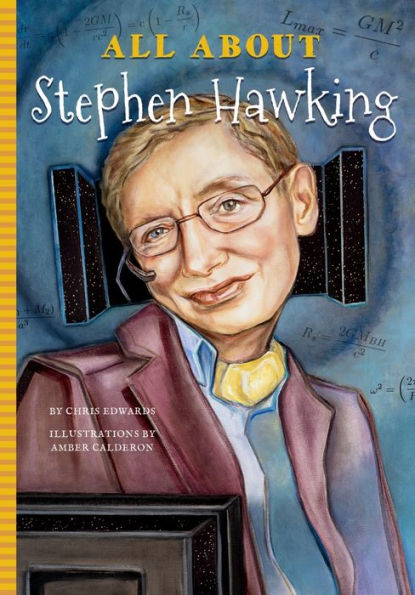
From an early age, Stephen Hawkings dreamed of making the study of the universe accessible to everyone. Diagnosed with ALS at the age of twenty-one, he overcame the challenges of ALS to become an expert on black holes and the origin of the universe.

Stephen realized his boyhood dream of educating people about the universe. While his disease broke down his body, Hawkings’ mind remained strong. He advanced our knowledge of black holes by discovering Hawking radiation, the energy emitted by black holes. Speaking through a computer, Hawkings continued trying to help people understand the universe around them. Stephen has also dedicated his life to several causes such as making buildings accessible to wheelchairs.

All About Stephen Hawkings begins with how Stephen’s parents met and how World War II affected their lives. The story takes a winding road that often quickly switches topics, and includes Stephen’s personal life, his goals, his accomplishments, and information on his wife, Jane. The many topics covered in the story may cause some confusion.

Stephen’s story comes alive both through the text as well as black and white illustrations. The simple illustrations appear every one to three pages. Both the oversized text and the frequent illustrations will appeal to readers. The text explains the meaning of some of the more difficult vocabulary words and there is also a glossary of terms at the end of the book. It also contains a timeline of both Stephen’s life and of world events.

All About Stephen Hawkings would be a great book to use for research about Stephen Hawkings’ life. Anyone who is interested in science will also enjoy the book. The quickly changing topics and the difficult vocabulary make the book best for strong readers. All About Stephen Hawkings will encourage readers to follow their dreams.

Sexual Content

  • None

Violence

  • At one point, some people thought that “Stephen’s wife, Elaine, was hurting Stephen.” One of Stephen’s children called the police. “The police asked Stephen’s nurses how he was getting hurt. . . [Elaine] was accused of breaking one of the bones in his arm, cutting him on the cheek, and leaving him out in the hot sun for so long that he got heat stroke and a sunburn.”

 Drugs and Alcohol

  • None

Language

  • None

Supernatural

  • None

Spiritual Content

  • The book occasionally mentions someone going to church. For example, Stephen’s wife “continued to go to church on Sundays, though Stephen wouldn’t go with her.”

The Sky is Full of Stars

On a clear, dark night, go outside and look at the stars. They may all look alike to you at first. But soon you will notice differences. Some stars are brighter than others, some have colors and some stars even seem to form pictures. You can find these constellations whatever the season and wherever you live if you just know where to look for them.

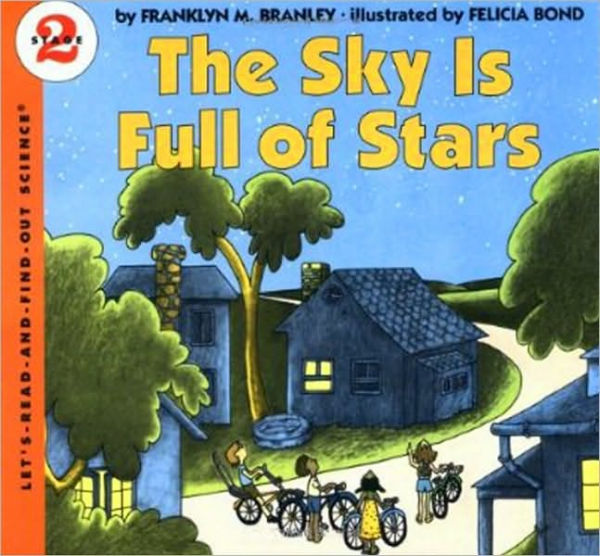
Anyone who wants to learn more about stars should read The Sky is Full of Stars. The illustrated book shows a diverse group of kids and a cat, who all decide to go stargazing. Not all of the pages have illustrations. However, many pages have an illustration and include 2-5 sentences. The book explains not only what the constellations are, but also the history behind them. The book has many illustrations of the night sky that show constellations. The Sky is Full of Stars’ illustrations also include some fun elements such as a cat that appears in many of the illustrations.

The Sky is Full of Stars includes directions for an art project that will allow readers to create their own constellation. The book is packed full of interesting information that is presented in a kid-friendly manner. Through both text and illustrations, readers will learn how to find the constellations in the night sky and understand why stars move.

Readers will enjoy learning both the history and the science behind the stars. Readers may have difficulty pronouncing the stars’ names. The book explains that “some of the names of stars sound strange to us. That is because they are not English words. Hundreds of years ago the Arabs and Persians named many of the stars. Today we still use many of those names.” The Sky is Full of Stars is designed for primary-grade readers who are ready to explore more challenging concepts. The Sky is Full of Stars uses an entertaining format that helps readers understand more about science.

Sexual Content

  • None

Violence

  • None

 Drugs and Alcohol

  • None

Language

  • None

Supernatural

  • None

Spiritual Content

  • None

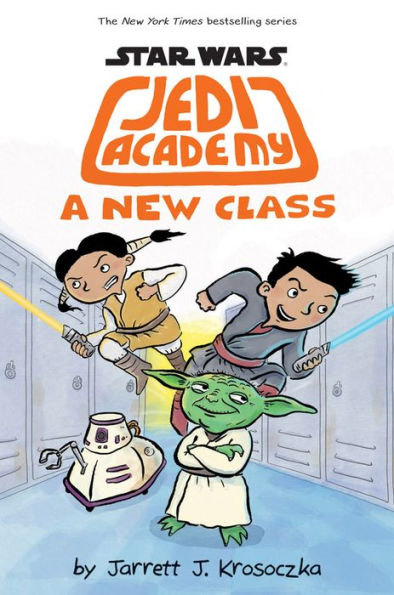
A New Class

Victor is thrilled when he is accepted to study at the Jedi Academy! His old school wasn’t a good fit for him, as his overenthusiastic use of the Force often got him in trouble. But at his new school, Victor is sure he will become a great Jedi Master. The only trouble is, Victor’s awesome new friends may not be as awesome as they appear. Victor also struggles to focus in class and he suspects his roommate is a Sith in training. As his grades suffer, Victor can’t stop getting into trouble. He’s warned if he doesn’t improve both his grades and his behavior, he may be sent home from the Jedi Academy – permanently.

A New Class teaches the importance of being true to yourself and shows the difference between true friends and those who are friendly simply because they want something from you. For instance, Zach tries to tell Victor, “if you want somebody to like you, you just need to completely change who you are.” But Victor insists, “my mom told me that if people didn’t like me for who I am that was their problem, not mine.”

By the end of the story, Victor realizes Zach isn’t a true friend at all. As he gets more comfortable with himself and stops trying to be cool, he discovers his true friends were right in front of him the whole time. Victor realizes, “I was looking for friends in all the wrong places. I was looking in places that just weren’t ME!”

Victor is an extremely relatable character for young readers because he struggles to focus in class and accidentally gets into mischief. His friends are diverse and supportive, and they challenge Victor to grow in positive ways. Victor’s teachers range from supportive to silly to strict, which adds an enjoyable aspect to the story. As Victor learns self-control and how to focus, his grades start to improve.

Told from Victor’s point of view, much of the story is written in an easy-to-read, diary format. The diary entries are frequently broken up by school newsletters, fun galaxy feeds, and space-themed comics. In addition, part of A New Class is told in graphic-novel format. Large, often comical, black and white illustrations appear on every page. The illustrations show Victor’s range of emotions and bring the other human and alien characters to life. The illustrations break up the text, making each page accessible to most readers. A New Class is listed as the fourth book in the Jedi Academy series, but it starts a brand-new storyline with a new main character. The previous books do not need to be read in order to enjoy and understand A New Class.

 A New Class is chock-full of fun, with Star Wars references galore and plenty of fun twists and turns. Parents will love the positive messages about friendship, while readers will enjoy the silly adventures. With loads of amusing pictures, humor, and middle school drama, A New Class is sure to delight tweens.

Sexual Content

  • When Victor joins Drama Club, he “had these visions of sharing the spotlight with Maya on stage. Maybe there would even be a scene where we got to kiss!”

Violence

  • Victor draws a comic where he “easily destroyed the evil droids” with a lightsaber.
  • When Victor sneaks away from a school field trip, he is attacked by an enormous gorax. His classmate, Artemis, uses the Force to pull Victor out of harm’s way, then cuts a tree trunk with a lightsaber. The tree tips over and falls on the gorax’s head, and the boys run away.
  • When Zach gets angry, he punches a locker and calls a droid a “hunk of junk.”
  • Zach shuts Victor’s new friends in a locker. When Victor tries to save them, Zach uses the Force to throw a droid. Then, Victor attacks Zach with his lightsaber. They duel until Victor’s sister saves the day, using the Force to throw Zach and free Victor’s trapped friends.

Drugs and Alcohol

  • None

Language

  • Zach calls Victor’s new friends “dweebatroids.”

Supernatural

  • Victor lives in a Star Wars inspired time, with lightsabers, aliens, star ships, and more. He goes to a school that trains future Jedis, and he learns to use the Force.

Spiritual Content

  • None

by Morgan Lynn

The Race to Space Countdown to Liftoff

Step back in time, beginning in 1232 when a Chinese alchemist accidentally discovered gunpowder, after which the Chinese created rockets for the battlefield. Since then, many have worked to advance rocket science. While some men dreamed of using rockets to travel into space, other men used rockets to win wars.

Then flashforward to the 1920s, when Wernher von Braun began creating a liquid-fueled rocket ship but was soon creating bombs for the Nazis. After the war, von Braun worked for the US Government. “Although von Braun wanted to achieve the means for space exploration, he once again found himself building weapons.” During this time, the Russians and Americans raced to create weapons as well as to send a man into space.

Finally, it’s 1957 when the Soviet Union launched the world’s first satellite into orbit, America had barely crossed the starting line of the great Space Race. Later that year, the United States’ first attempt at a similar feat was such a failure that the media nicknamed it “Kaputnik.” Yet American scientists and engineers refused to give up. With each failure, they gleaned valuable information about where they went wrong and how to avoid those mistakes in the future. Neil Armstrong may have made it look easy when he set foot on the lunar surface, but America’s journey to the moon was anything but simple.

The Race to Space Countdown to Liftoff is packed full of interesting historical information and explains how the Cold War spurred the United States into developing the first spacecraft. Instead of overlooking the many failures that occurred, the book explains how those failures were used to gain knowledge. For example, “The Apollo 13 mission is considered by NASA to be a ‘successful failure,’ meaning that the crew had failed to land on the moon. But NASA had learned so much during the operation, including techniques that would go on to aid in the development of new mission protocols and better technological advancements for future missions.”

Readers will learn new vocabulary and mythological references. Some readers will struggle with the advanced vocabulary words, such as diametrically, infiltrating, propaganda and détente. Even though some vocabulary is defined, a glossary would have been helpful. Despite the difficult vocabulary, The Race to Space Countdown to Liftoff breaks the text into manageable parts and uses subtitles, which make transitions to different topics easy. Both historical pictures and cartoonish, black and white illustrations appear on many pages. These illustrations show various acts of space travel and add humor.

The Race to Space Countdown to Liftoff uses a conversational tone that makes learning about history fun. The best part of the book is that it highlights events that could have been seen as “epic fails.” However, each failure was a learning opportunity that advanced space travel. The Race to Space Countdown to Liftoff shows how hard work, dedication, and perseverance can help everyone reach for the stars.

Sexual Content

  • None

Violence

  • In 1969, three men died when a spark created a fire. The spark became a “fire that spewed thick black smoke through the cockpit. The crew, still strapped into their seats, were unable to eject through the hatches before they succumbed to the smoke and fire.”

 Drugs and Alcohol

  • None

Language

  • None

Supernatural

  • None

Spiritual Content

  • None


Target: Earth

Klawde is not your average cat. He is an exiled emperor from across the universe with a hunger for battle and a thirst for revenge. He’s cruel. He’s cunning. He’s brilliant. He’s also Raj’s best friend.

With Klawde now stuck on a dismal planet, he sets his sights on a new target to conquer: Earth. But to succeed, he needs two simple things: an army of zombie squirrels, and money. Lots of money.

Raj is simply trying to make some cash for a cool virtual reality headset. But when a neighbor catches wind of Klawde’s nefarious plan, Raj may end up paying for his cat’s schemes.

Even though Klawde is devious and deceitful, he is also very likable. In the fourth installment of the Klawde: Evil Alien Warlord Cat Series, both Klawde and Raj need money, but in true Klawde style, he devises a way to make virtual money. Klawde’s obsessive desire to regain control is hilarious, especially because he always underestimates the hairless ogres of Earth. The power-hungry cat doesn’t understand why humans “were so addicted to consumption. To shopping. To their possessions. Did they not realize that the most important things in life are those you cannot touch or possess, let alone buy? Like power domination. And humiliating your enemies!”

Klawde’s plotting brilliantly connects to Raj, who starts a lawn care business with his two friends. But with Klawde’s newfound millions, Raj has everything his heart desires—a virtual reality game, a skateboard, new shoes, and pizza. Raj thought his new game would make him happy, but in the end, he realizes that “The VQ had totally been messing with my mind.” At one point, Raj spends so much time playing a virtual reality game that he doesn’t sleep, do his homework, or spend time with his friends. In the end, Raj learns that “Money didn’t matter when you already had everything you need. . . family and friends.”

Klawde: Evil Alien Warlord Cat Series is exceptionally engaging, humorous, and fun to read. Readers will appreciate the short paragraphs, the easy vocabulary, and the hilarious blue-and-black illustrations. Not only do the illustrations help the readers imagine the story’s events, they also highlight Klawde’s emotions of misery, distaste, and disgust.

Readers will laugh out loud as Klawde tries to use squirrels to take over Earth. The conclusion introduces a new enemy—Colonel Akornius Maximus, a squirrel bent on keeping his Earthy brothers and sisters safe. Readers will be eager to read the next book in the series, Emperor of the Universe. Fans looking to put more humor into their reading should also check out the Mac B. Kid Spy Series by Mac Barnett.

Sexual Content

  • None

Violence

  • Klawde is upset at his “ogre” Raj and scratches him. Klawde “swiped his shin with my claws, leaving a trail of four bloody lines.”

 Drugs and Alcohol

  • None

Language

  • Klawde is upset that some of the cats from his home planet are calling him “Dog Lover” and “Wyss-Kuzz the Butt-sniffer.”
  • Occasionally, Klawde calls his minion, Flooffee, names that include dolt, idiot, and imbecile.
  • When FBI agents appear on Raj’s doorstep, Klawde thinks FBI stands for “Furless Brainless Idiots.”
  • Someone says to Raj, “I heard the FBI raided your house. When did it become illegal to be a loser?”
  • Dang is used once.

Supernatural

  • None

Spiritual Content

  • None

Alien Scout

Harris is the only person who knows Zeke’s secret—Zeke is an alien. When Harris decides to go on a Beaver Scout wilderness trip, he wants Zeke to go with him. Zeke is confused about all of the fun activities that will happen at camp, but he is excited to spend time with Harris and learn more about humans. The only problem is that Zeke is a little careless with his powers. When one of the other scouts becomes suspicious of Zeke, Harris isn’t sure how to keep Zeke’s identity a secret from the other scouts.

Zeke and Harris go on a fun adventure where Zeke learns all about scout camp. During most of the activities, Zeke isn’t shy about using his alien powers. For example, he floats to the top bunk, and he rows a canoe with his mind. Despite knowing the importance of hiding his true identity, Zeke continues to use his powers, especially to help others. When one of the scouts falls into a raging river, Zeke jumps in and saves him. The only suspense in the story comes from one camper who is suspicious and thinks that Zeke is different.

Even though the plot lacks suspense, seeing human activity from an alien’s point of view is entertaining, especially when Zeke gets confused by human speech. For example, when a camp counselor says, “Time to hit the hay,” Zeke wonders, “Why would I want to hit hay?” While Alien Scout isn’t as entertaining as the previous books in the series, readers will enjoy the relationship between Zeke and Harris.

Besides the fun topic, Alien Scout has a variety of other elements that are perfect for readers who are transitioning to chapter books. Each page contains a large black and white illustration that helps break up the text. The illustrations will help readers understand the wide range of emotions each character feels. The large font, simple vocabulary, short chapters, and dialogue make Alien Scout a fun book to add to a beginning reader’s book list.

Sexual Content

  • None

Violence

  • At camp, someone tells a scary story about a witch. Two kids find her at their house and the witch says, “So you’ve decided to have dinner at home. Excellent. In fact, I just finished eating my appetizers, though you knew them as Mom and Dad.”

 Drugs and Alcohol

  • None

Language

  • None

Supernatural

  • Zeke is an alien. He can float, heat objects, and project what he sees in his head onto screens.
  • When the camp bus gets a flat tire, Zeke fixes it. “I’m redirecting energy from the Earth’s sun through my hands to heat the rubber enough so it’ll melt and seal the hole in the tire.”

Spiritual Content

  • None

Stargazing

Moon is everything Christine isn’t. She’s confident, impulsive, artistic . . . and though they both grew up in the same Chinese-American suburb, Moon is somehow unlike anyone Christine has ever known.

But after Moon moves in next door, these unlikely friends are soon best friends, sharing their favorite music videos and painting their toenails when Christine’s strict parents aren’t around. Moon even tells Christine her deepest secret: that she has visions, sometimes, of celestial beings who speak to her from the stars. They reassure her that Earth isn’t where she really belongs.

Moon’s visions have an all-too-earthly root, however, and soon Christine’s best friend is in the hospital, fighting for her life. Can Christine be the friend Moon needs, now, when the sky is falling?

Readers will relate to Christine, who is at first reluctant to be Moon’s friend. As she becomes friends with Moon, Christine learns to step out of her comfort zone and try new things, including wearing nail polish. When Christine’s father sees the nail polish, he tells her, “things like clothes, makeup, and nail polish are just things to keep smart girls like you from succeeding.” While Christine’s father encourages her to be friends with Moon, he reminds her, “just because Moon does something doesn’t mean it’s right for you, too, okay. You’re different girls with different paths. Remember who you are.”

In order to make her parents happy, Christine tries to be perfect, but she secretly wishes she could be more outgoing like Moon. At one point, Christine worries that Moon will make new friends and no longer like her. Christine intentionally embarrasses Moon, and when Moon gets sick, Christine avoids her. Despite this, Christine and Moon eventually talk about their conflict and are able to repair their friendship.

The graphic novel’s panels use pastel colors and expressive faces to bring the girls’ world to life. Throughout the novel, the pictures in Moon’s sketchbook are featured, which allow the reader a peek into Moon’s imagination. Wang’s illustrations expertly convey the characters’ emotions through facial expressions as well as actions. Much of the story is told through illustrations without words. Despite this, the reader can easily understand the story’s plot. While some pages do not have words, other pages have up to eight simple sentences that use easy vocabulary and is perfect for even the most reluctant reader.

Anyone who feels ordinary will understand both Moon’s and Christine’s struggles with loneliness and the need to feel special. The two girls’ friendship is imperfect, yet endearing. In the afterword, Wang explains that one reason she wrote Stargazing was to show “the diversity of experiences even within a very specific community. As our society continues to diversify (as I would hope), I imagine there will be many more Moons and Christines out there wondering which parts of them are ‘not Asian,’ and which parts are just uniquely and wonderfully them.”

Sexual Content

  • Moon draws a picture of her teacher, Mr. Pennypacker, in a boat. Moon is next to her teacher and has hearts drawn around her head. When Christine sees the picture she says, “OH MY GOD, MOON! Ewww Eww Eww!!” Moon blushes.

Violence

  • A boy is mean to Christine’s little sister. Moon finds the boy and tackles him. The fight is illustrated over two pages. Two teachers break up the fight. As Moon is walked to the office, she hands Christine’s little sister the boy’s tooth.
  • Christine purposely puts the drawing of Moon and Mr. Pennypacker where other kids can see it. When a girl says, “Here you go, Mrs. Pennypacker,” Moon smacks her across the face and then punches her. A parent breaks up the fight.

 Drugs and Alcohol

  • None

Language

  • Moon tells her friend, “It’s okay if you eat meat, though. Some animals are probably jerks. I won’t tell.”
  • “Oh my God” is used as an exclamation four times.

Supernatural

  • None

Spiritual Content

  • Moon doesn’t eat meat because she’s Buddhist. Moon says, “We don’t eat animals because we believe in respecting life.”
  • When a professional athlete is interviewed, he says, “I’d just like to thank my parents, and God, for being there and helping me follow my true path in life.”
  • Doctors discover that Moon has a tumor. Christine’s father tells her, “Let’s keep her [Moon] in our prayers. That’s all we can do for now.”

Pony Problems

A new petting zoo has opened in River Heights. Nancy, George, and Bess can’t wait to check it out — especially since the zoo has the cutest Shetland pony named Buttons. And it looks like the Clue Crew won’t have to wait very long to get a glimpse of Buttons — he keeps escaping from his pen and showing up all over town!

Buttons is getting pretty famous for eating the flowers in everyone’s front lawns. As much as Nancy secretly wishes Buttons would turn up on her lawn, she knows it’s important to make sure he stays put. The only trouble is, no one knows how he’s getting out. Sounds like it’s time for the Clue Crew to saddle up and settle this pony problem.

Nancy Drew and the Clue Crew are determined to find out how Buttons keep escaping and they plan on using their powers of observation to solve the mystery. As they investigate, their friend tells them interesting facts about Shetland ponies. The Clue Crew uses these facts and other clues to solve the mystery.

During their investigation, the Clue Crew also meets Amanda, who lives on the farm. At first, when Nancy tries to talk to Amanda, Amanda completely ignores her. This doesn’t deter Nancy and her friends. Finally, Amanda is honest and tells the girls that she misses her old home. Luckily, Amanda’s father agrees to take Amanda to visit her old friends. In the end, the Clue Crew become Amanda’s new friends and Amanda’s conflict is solved in a hopeful manner.

The Nancy Drew and the Clue Crew Series has main characters that young readers can emulate. The girls are obedient, friendly, and nice. For instance, when Mr. Drew tells the girls not to pet Buttons, “the girls are careful to keep their distance as Mr. Drew asked.” In addition, the girls are given a five-block range that they can roam, and they stay within their parent’s set perimeter.

Pony Problems has many elements that will entertain readers, including black and white illustrations that appear every 2 to 5 pages. The pictures break up the text and help readers visualize the events in the plot. The last page of the book gives directions for making a craft pony as well.

Buttons’ behavior will make readers laugh and readers will enjoy solving the mystery. While readers will be drawn into the story because of the pony, parents will approve of the characters’ good behavior. Pony Problems is a wholesome story that will entertain both mystery fans and horse lovers.

Sexual Content

  • None

Violence

  • None

 Drugs and Alcohol

  • None

Language

  • Nancy tells George, “Your brother is a nut.”
  • George says, “My brother can be such a spaz sometimes.”

Supernatural

  • None

Spiritual Content

  • None


Spaceman (Adapted for Young Readers): The True Story of a Young Boy’s Journey to Becoming an Astronaut

From the time he was seven years old and saw Apollo 11 land on the moon, Mike Massiamo dreamed of becoming an astronaut. But Long Island is a long way from space. Kids like him, growing up in working-class families, seldom left the neighborhood. But with the encouragement of teachers and mentors, Mike ventured down a path that took him to Columbia University and MIT.

It wasn’t easy. There were academic setbacks and disappointments aplenty—and NASA turned him down three times. Still, Mike never gave up. He rose to each challenge and forged ahead, inching closer to realizing his boyhood dream. His love of science and space, along with his indomitable spirit and sense of teamwork eventually got him assigned to two missions to fix the Hubble Space Telescope as a spacewalker.

Growing up, Mike didn’t know anyone who could tell him how to become an astronaut. “There was no science club at school where we could build and launch rockets. None of my friends were into space; it was something I did on my own. I had my spaceman costume, my Astronaut Snoopy and my library books, and that was it.” However, Mike learned that “being the smartest isn’t always the most important trait in school or in life; working hard, having a positive attitude, and getting help when you need it can be more important.” Mike chronicles his life’s failures, his successes, and the people who help him along the way.

Mike tells his story as if he were sitting down to coffee with a friend. His conversational tone and plenty of life lessons make his story even more interesting. He doesn’t leave out the difficult decisions he had to make, or the mistakes he made along the way. Mike says, “I don’t know if there are any lessons to take from this except to realize that the things you think are mistakes may turn out not to be mistakes. . . if you make the most of what you’ve got, you can find a way to keep moving forward.” In the end, what makes Mike stand out is his determination to find a way to overcome life’s obstacles.

Throughout Mike’s journey, he shows how people at MIT and NASA work together as a team. People helped Mike not to get something out of it, but “because that’s what you’re supposed to do. That’s how a team works. You help the people around you, and everybody’s better off for it.” Despite receiving help from others, Mike didn’t always know what to do, and he wasn’t always confident in his abilities.

Many of the lessons in Spaceman are told in such a matter-of-fact way, that it sounds like advice from a big brother. Mike reminds readers that, “If you get caught up worrying about things you can’t control, you’ll drive yourself crazy and waste valuable time. It’s better to focus on the things right in front of you that you can control.” Throughout his time at NASA, Mike’s experiences changed his perspective. To Mike, one important aspect of space travel is that “every person who goes to space, every person who gets to peek around the next corner, is someone with the potential to help change our perspective, change our relationship with the planet, change our understanding of our place in the universe.”

While Spaceman is full of encouraging advice, life lessons, and interesting anecdotes, younger readers may have a difficult time understanding the significance of Mike’s experiences. The ending’s pace is slow and uneventful because it explains how the termination of the space program affected Mike. However, anyone who loves space should read Spaceman. In addition, high school readers would greatly benefit from reading Spaceman because Mike shows how hard work and determination can help a person fulfill their dreams.

Sexual Content

  • None

Violence

  • None

 Drugs and Alcohol

  • None

Language

  • None

Supernatural

  • None

Spiritual Content

  • When Mike went to work for NASA, he loaded up his car and “prayed I didn’t break down in the backwoods of Appalachia along the way.”
  • When Mike interviewed for a job as an astronaut, he worried that he couldn’t pass the eye exam. He “was praying for something so far out of my control that I could throw up my hands and say, ‘Well, that’s life. Nothing I can do.’”
  • When Mike reapplied to be an astronaut, he “prayed I’d be ready in time.”

Roscoe and the Pony Parade

The spring festival is in town! Happy Go Lucky and his friends from Big Apple can’t wait to see what it’s all about. There will be games, decorations, and the ponies will even march in the big parade!

But then Rosco goes missing at the festival. A trip to town could be dangerous for a tiny barn mouse! Can Happy find his big-eared buddy—or will Roscoe be lost forever?

Roscoe, a curious mouse, can’t wait to explore everything at the festival! While at the fair, Roscoe doesn’t intend to get trapped in a bag of cotton candy or go swimming in one of the games, but he seems to find trouble around every corner. Readers will laugh at Roscoe’s antics and wonder what the little mouse will do next.

With a simple plot, the book is easy to read and will capture the attention of horse fans. Roscoe and the Pony Parade will have readers giggling as it reinforces the importance of staying together and not wandering away from a group. When Roscoe gets lost, Happy and the other horses worry about his safety. Roscoe’s friends don’t want the mouse to get left behind when everyone heads back to Big Apple Barn. The message is clear: “One of the rules is that we have to stick together.”

Readers will be drawn into the story because of the beautiful horses, the wise barn cat, and the little mouse, Roscoe. Black and white illustrations appear every 2 to 4 pages and help break up the text in order to keep readers engaged. The text is easy to read, with short sentences and colorful dialogue that gives the horses personality. The last page of the book explains how a horse sees. Roscoe and the Pony Parade’s action and adventure will please all readers who love animals.

Sexual Content

  • None

Violence

  • Roscoe is chased by a group of people. “Everyone was darting in different directions. Happy thought he could make out the vendor, the booth owner, and the cheesemaker zigzagging across the square, their arms stretched out in front of them.”

 Drugs and Alcohol

  • None

Language

  • None

Supernatural

  • None

Spiritual Content

  • None


Cowgirl Grit

Sydney Todachine wasn’t expecting to spend the summer at her grandpa’s ranch on a Navajo reservation. But when her parents go on a research trip, Sydney has to leave San Diego and go to the Navajo reservation. When she gets to her grandpa’s place, she is even more upset that her cousin Hadley is also staying at the ranch because he has always been mean to her. Without any of her friends, Sydney is prepared for a terrible summer.

But then Sydney bonds with a beautiful horse named Midnight. She doesn’t want to embarrass herself, so she rides the horse in the middle of the night. Sydney thinks she can never be as good of a rider as the experienced cowboys and cowgirls. How can Sydney find the courage to saddle up and compete in the upcoming rodeo?

Readers will relate to Sydney, who is having a difficult time adjusting to being at her grandfather’s. Even though she loves riding, Sydney doesn’t want anyone to see her riding Midnight because she is afraid others will make fun of her skills. In addition to that worry, Sydney is upset because Hadley teases her for dressing like a city girl. Hadley’s teasing makes Sydney want to avoid him at all costs, but how can she avoid her cousin while they are living together?

Readers will relate to Sydney’s insecurities and her desire to fit in. Cowgirl Grit focuses on Sydney and her fears, but it also introduces readers to the rodeo. While the characters are undeveloped and the story conclusion is unrealistic, Sydney grows and becomes more confident over the course of the story. She also learns to get along with her cousin and make new friends.

Sydney and her family are Navajo and the story takes place on a Navajo reservation, but the Navajo culture is never introduced. The story misses the opportunity to share cultural knowledge. While the story has diverse characters, the characters are one-dimensional and generic.

Horse lovers will enjoy the story and the cute black and white illustrations that appear every 4 to 7 pages. The story has a simple plot, easy vocabulary, and realistic conflicts. The ten short chapters and full-page illustrations make Cowgirl Grit a quick read. For those who would like to use Cowgirl Grit as a learning opportunity, the end of the book has a word glossary, discussion questions, writing prompts, and a glossary of rodeo events. Readers who want more horse stories should add the Big Apple Barn Series by Kristin Earhart to their reading list.

Sexual Content

  • None

Violence

  • None

 Drugs and Alcohol

  • None

Language

  • None


Supernatural

  • None

Spiritual Content

  • None

Merhorses and Bubbles

Zoey and Sassafras go to a stream to look for bugs, but they discover that there are no bugs! Things get even more urgent when they learn that the magical creatures living in the stream are in danger because the bugs that the merhorses eat to survive have all disappeared. Zoey and her mom must solve the mystery of the stream. Can Sassafras, Zoey, and her mom find where all the bugs went? Will they be able to save the merhorses?

In Merhorses and Bubbles, Zoey uses everyday objects to create an underwater viewer. When Zoey goes to the stream, she teaches her cat, Sassafras, about her favorite stream bugs. Sassafras loves bugs and loves to chase and eat them. However, when Zoey and Sassafras can’t find any bugs, her mom helps test the water and they discover that the water is polluted. The remainder of the story focuses on investigating how the stream is being polluted and finding a way to fix the problem.

Readers will relate to the adventurous Zoey and her desire to help the merhorses. Zoey uses her “thinking goggles” and data to conclude that the stream is polluted. She relies on her parents’ help and eventually meets the magical frog named Pip. Zoey’s father cannot see the magical creatures and this creates some humorous situations that will have readers giggling. With the help of her parents, a magical frog, and Sassafras, Zoey is able to use the scientific method to save the stream.

Even though the merhorses do not play a major role in the story, readers will still enjoy the mystery of the polluted stream. Throughout the story, many lessons are taught about the environment, including how pollution affects pond creatures, how pollution gets into streams, and how something like soap can be harmful. Zoey and her parents finally discover that the pollution is caused by a group of teens who are raising money by having a car wash. Instead of taking over, Zoey’s parents allow Zoey to educate the teens, and then her parents help the teens come up with an alternative fundraiser.

Zoey’s adventure is shown through large black and white illustrations that appear on almost every page. When Zoey writes in her science journal, the font changes to large, kid-like font. While Sassafras plays a tiny role in the story, the cat appears in many of the pictures. Readers who are not fluent will need help with some of the vocabulary. However, with short paragraphs, plenty of dialogue, and a simple plot, Merhorses and Bubbles is accessible to most readers. Even though Zoey and Sassafras is a series, the books do not need to be read in order.

Zoey is a strong girl who uses science to solve problems. Through her experiences, readers will be encouraged to positively change their world for the better. Even though Zoey is a child, she still finds a way to help keep pollution out of streams. Zoey’s parents are portrayed in a positive manner and they exhibit healthy communication skills. Merhorses and Bubbles teaches valuable lessons about nature by using a fun story and a relatable character. The end of the book has a glossary that explains unfamiliar terms.

Sexual Content

  • None

Violence

  • None

 Drugs and Alcohol

  • None

Language

  • Zoey calls Sassafras a goofball.

Supernatural

  • Zoey and her mom are the only people that can see and talk to the magical creatures that live in the forest.

Spiritual Content

  • None

The Maze of the Menacing Minotaur

Zeus the Mighty and the gods of the Mount Olympus Pet Store are exhausted from the sweltering heat. In order to restore Greece to a cooler temperature, Zeus and Poseidon team up to defeat the menacing Minotaur. As Zeus and Poseidon argue their way through the Minotaur’s Maze, they meet an unlikely ally. However, the minotaur isn’t the only threat. The bully Sinis, a Harpy, and the soothsayer Phineus all want to teach Zeus a lesson. Is there any way Zeus and Poseidon can work as a team and make it out of the maze alive?

Join Zeus the hamster, Athena the wise cat, Demeter the loyal grasshopper, Poseidon the proud pufferfish, and Ares the treat-loving pug on their newest adventure.

In The Maze of the Menacing Minotaur, everyday objects become the relics and monsters of ancient Greece. Boyer uses imagination and comedy to bring the myth of Theseus and the Minotaur to young readers. A high-action plot, humorous situations, and black and white illustrations blend to make a fun series that will keep readers turning the pages. Each illustration shows the Greek gods, which gives the reader a visual and helps them understand the plot and the gods’ emotions. Large illustrations appear every 1-5 pages.

The second installment of the series focuses on Zeus and Poseidon, who both want to call the shots. As the two learn to work together, they discover that the soothsayer Phineus is really Cronus, who wants to teach Zeus how to be a better ruler. According to Cronus, a leader should “delegate” instead of lead others on adventures. Cronus says, “Why, I had your minions running all over Greece, doing my bidding. And I didn’t have to lift a paw. That’s how you rule.” However, Zeus realizes that it is important to work as a team and allow others to make decisions.

The Maze of the Menacing Minotaur takes the reader on a fun adventure and introduces Greek mythology. Readers that are unfamiliar with Greek mythology will want to read the historical information about the Olympians, Theseus, and the Minotaur that appears at the end of the book.

The Zeus the Mighty series is perfect for young readers who aren’t ready to jump into The Percy Jackson series. The Maze of the Menacing Minotaur will not only have readers eager to read, but it will also spark their interest in Greek mythology.

Sexual Content

  • None

Violence

  • A Harpy tricks Zeus into jumping into a ladle. Poseidon and the Harpy play tug-of-war with Zeus. Zeus “held fast, caught between the lord of the sea and a fiend of the sky. Zeus’s paws ached. They began to slip… He released his grip and plummeted to the ground… Zeus flopped onto his back…”
  • When Zeus upsets Poseidon, “Poseidon had poked Zeus’s rump with” a spear.
  • With Poseidon’s help, Zeus attacks the Minotaur (a furnace). Zeus “took a deep breath and heaved the spear, burying its tip directly into the orange pit of the beast’s nostril… He pulled on the spear, but it was stuck up the nose of the beast… The Minotaur’s teeth began to unclench, exposing the black pit of its mouth. The boiling gale increased, blowing bits of animal fur dislodge from the Minotaur’s teeth.” Zeus is able to extinguish the Minotaur’s fire.

 Drugs and Alcohol

  • None

Language

  • Zeus calls Poseidon “puff-’n-stuff” and “fish lips.”
  • Periphete calls Zeus a rodent.
  • A Harpy calls Zeus a “flea-ridden fool.”
  • Zeus calls Sinis a jerk, and Demeter calls him a “blowhard.”
  • Twice, Cronus calls Ares a fool.
  • Zeus uses “oh gods” as an exclamation one time.

Supernatural

  • None

Spiritual Content

  • None

Rain Forest Relay

Russell was the one that convinced his friends to try out for the race around the world. That’s why he’s so surprised that all four of his friends are in the same group, but he’s in a group with strangers. Running the race will be extra difficult for a team that knows nothing about each other. Despite this, Russell and his team are eager to begin the first leg of the course.

As they race through the lush Amazon rain forest, Russell and his team see amazing animals, raging rapids, and toxic venom. But the animals aren’t the only danger in the race. In order to win, Russell’s friends aren’t afraid to be sneaky and cheat. Russell isn’t sure what he should do. He knows what his friends are doing is wrong, but he doesn’t want them kicked out of the race. Can the red team learn to work as a team? Is there any way Russell and the red team can finish the race ahead of the sneaky green team?

Rain Forest Relay is a fast-paced story that takes the readers on a race through the Amazon. Although the story has plenty of adventure, it also hits on the topic of cheating in order to win. Throughout their journey, they continue to struggle with the green team’s ability to show up unexpectedly. Russell explores his conflict with his friends’ behavior and his desire to keep his friends’ activity a secret. By the end of the book, Russell has not answered these questions, but he knows that his team can win if they use teamwork.

With nine short chapters, each chapter packs a lot of adventure into it. While the race is interesting, a lot of animal information is thrown at the reader. Occasionally, the story seems more like a textbook than an adventure story. The four main characters are featured on the cover and are diverse—one is African American, one is Indian, one is Hispanic, and one is Caucasian. However, the characters’ races are never discussed and the characters are generic. While the characters are likable and competent, they are not alone on their journey. Instead, each group has an adult that keeps an eye on the contestants and makes sure they are safe.

Black and white illustrations appear every 3-6 pages, and the beginning of each chapter has interesting facts about the rainforest and the animals who make the Amazon their home. Fluent readers will enjoy trying to solve the race’s clues and learning about the Amazon. Rain Forest Relay is an engaging story that will entertain any reader who loves animals and adventure.

Sexual Content

  • None

Violence

  • None

 Drugs and Alcohol

  • None

Language

  • None

Supernatural

  • None

Spiritual Content

  • None

The Case of the Secret Tunnel

When one of the boarders gets married, girl detective Maisie Hitchins is disappointed that her grandmother found a boring-looking man to replace the lady. Fred Grange claims to work as a clerk for a biscuit company, but he’s out and about on the London streets at odd hours, and Maisie soon discovers a list of stolen paintings hidden in his room. Maisie is determined to unmask him as a thief, but the truth is far more complicated—and dangerous. Before long, Maisie and her dog are led into a web of mystery lurking in the London Underground. Can Maisie solve the mystery before the thief strikes again?

Maisie is curious, daring, and has big dreams of being a detective. She uses her powers of observation to solve the mystery. During Maisie’s investigation, she finds many clues and the end of the story explains what Maisie learned from the clues. The plot is easy to understand and the conclusion doesn’t leave any loose threads or end in a cliffhanger. Some readers may need help understanding some of the vocabulary since Maisie and the other characters use old-fashioned vocabulary such as tuppence, wittering, deportment, and hobnobbing.

For the most part, Maisie wants to do what is right. However, she does sneak out of the house and isn’t always truthful. When Gran thinks Maisie is going across the street to see her friend, Maisie really goes to investigate the theft. Maisie justifies the lie because “detectives must bend the truth sometimes.” Another aspect that may upset parents is that the police officers are portrayed as incompetent. For example, Maisie easily finds clues that the police officer missed, and a boarder says police are “a useless lot.” Even though the police officer plays an important role in saving Maisie from the thief, he was incapable of solving the mystery.

The Case of the Secret Tunnel focuses on Maisie’s investigation which leads her on an interesting adventure. Black and white pictures that focus on the characters’ actions appear every two to four pages. The boarders and Maisie’s dog only make a slight appearance and their presence is missed. However, the story is fast-paced and will appeal to young mystery lovers. While the vocabulary may be difficult for some readers, the short chapters and non-scary plot make The Case of the Secret Tunnel a good bedtime story. Readers looking for a good mystery with another curious and brave girl as the main characters should read Kitty and the Moonlight Rescue by Paula Harrison.

Sexual Content

  • Alice thinks her father, who is a widower, is smitten with her governess.

Violence

  • An art thief tries to grab Maisie, but “Eddie snapped at his trouser leg, throwing him off balance and giving Maisie time to dart away.” Maisie runs, but the thief catches her, and “a huge hand covered her mouth. . . Eddie barked madly as Maisie kicked and struggled and tried to break free. But the man was holding her too tightly and began to pull her back down the alley.” Maisie is saved by the police.
  • A boarder finds Maisie snooping in his room. “Maisie tried to back away, but Mr. Grange caught her arm and she panicked.” After the two talk, Mr. Grange lets Maisie go.

 Drugs and Alcohol

  • None

Language

  • Drat is used twice. For example, someone says “dratted boys.”

Supernatural

  • None

Spiritual Content

  • None

The Other Side of the Wall

It’s Christmas break. Tess and Max are in London staying at the posh Sanborn House with their Aunt Evie. As they wait for their parents to arrive, there is an unusual snowstorm that makes the city seem as if it’s caught in a snow globe. It’s the perfect weather for an adventure in Hyde Park. But when Max, Tess, and Aunt Evie leave to search for a cab, they find a horse, carriage, and driver curiously waiting for them at the curb. And that’s just the beginning…

Soon Tess is charmed by a mysterious boy named Colin who lives at the hotel all year round—on the 8th floor. Max is sure the elevator only had 7 floors the day before. How come everyone at the hotel seems to ignore Colin? Things seem to get stranger and stranger. There’s a 1920s costume party in Colin’s parents’ apartment, a marble that seems to be more than it appears, and a shadow that passes mysteriously by Tess and Max’s hotel window.

Tess wants to figure out what’s going on, but she finds only more questions. Is it just a coincidence that Colin’s last name is Sanborn, the same as the hotel? Why does the cat’s-eye marble look eerily similar to the crystal at the top of their hotel room key? And, most importantly, what happened in that hotel one Christmas long, long ago?

Tess and Max are realistic characters who travel back in time. The world building is beautiful, but some readers will quickly become bored because the beginning of the story lacks action. When Tess and Max meet Colin, they are slow to realize that he is a danger. When Colin possesses Max, Tess begins calling him “the person who used to be Max.” This phrase was used too often, and the repetition is annoying. Despite this, Tess’s dedication and love for her brother is both realistic and enduring.

Unlike traditional Christmas stories, The Other Side of the Wall is both mysterious and creepy. The story takes the reader back in time and ends with the sad death of Colin. Readers who have not read the first two books in the series will be slightly confused. Even though the story hints that Tess sometimes sees things that are not really there, her behavior is never explained. The Other Side of the Wall ends abruptly leaving many unanswered questions.

Anyone who wants to add a little fright to their Christmas night will want to read The Other Side of the Wall. The unique story replaces jingle bells for spooky spirits. However, if you’re looking for a fast-paced adventure, you will want to leave The Other Side of the Wall on the library shelf. For those looking to put a little scare into the holiday season, you might want to ask Santa to put Young Scrooge: A Very Scary Christmas Story by R.L. Stine into your stocking.

Sexual Content

  • None

Violence

  • None

Drugs and Alcohol

  • Tess and Max go into the hotel’s lobby. “There were two young men in the library (which also had a fully stocked serve-yourself bar in a small room adjacent to it).”
  • Tess’s aunt tells her that, “My friend Bobbie rang up and asked if I’d run down the road to a pub for a holiday drink.”

Language

  • None

Supernatural

  • Tess and Max go to a party where they meet a seer. She tells them, “I ask the question, or you do, but it’s the cards that tell me the answer. I’m not much more than a conduit.”
  • Tess and Max meet a boy named Colin. When Colin begins to go pale, “Max reached out to touch him, but it was as if his hand seemed to go right through Colin’s arm. As if he had become transparent or he wasn’t really there, as if. . .” When Max moves away, Colin “started to walk towards Max, purposefully, step by step, directly to him, almost as if Colin was playing chicken or else he wanted to whisper something to Max. . . But then there was the most startled look on Max’s face. . . as Colin walked directly into him and simply disappeared.” Colin takes over Max’s body.
  • Tess pets a terrier. The dog suddenly vanishes “and Adele the psychic was standing in front of her.” Tess wonders how the dog could transform into Adele.
  • Max walks “straight through the wall. . . and simply disappeared.” Frightened Tess runs out of the room and talks to a man. “But before she could finish the sentence, she saw the gentleman’s face begin to crack and tiny pieces start to break away, first his cheek and then part of his nose as if he was made of plaster.”
  • Tess follows Max into a dark hallway where orange vectors appear. As Max walks on the vectors, Tess follows.
  • Following Max, Tess jumps in a carriage. The horse, Comet, raced so quickly, “it was as if Comet was able to, levitate would be the right word, or simply fly just off the ground, carrying the carriage behind her through mid-air, cold air, spectacularly dotted with snow. . .”

Spiritual Content

  • None

Top Prospect

Travis is starstruck when Elvis Goddard, head coach for the Gainesville Fighting Gators, comes to his house to offer his older brother, Carter, a football scholarship. Carter isn’t the only one who gets an offer.  When Coach G sees Travis’s talent as a quarterback, the coach offers him a scholarship even though he’s just an eighth-grader. This once-in-a-lifetime offer turns Travis into an overnight sensation, landing him VIP access to the Gainesville University gym and football field, an interview with ESPN, and instant popularity at school.

Meanwhile, Carter is learning the ropes of being a college football player. He and his roommate, Alex, start part-time jobs at a car dealership under the guidance of Walter Henry. Walter secretly gives Carter hundreds of dollars, something for which the Gainesville team has already been investigated. Carter feels guilty but accepts the money. When Alex tears his ACL in a football game, he miraculously recovers.  Alex confesses that he is taking steroids to help his healing process. Although Carter doesn’t agree with Alex’s decision, Carter promises to keep it a secret.

Back home, as Travis graduates eighth grade and enters high school, the pressure of keeping a scholarship gets more intense. He is chosen as the high school quarterback, but he feels used because the coach just wants a job at Gainesville University. For the three players, everything is going according to plan until Alex collapses from an apparent heart failure at a football practice and dies. Carter knows the real reason for Alex’s death—the steroids—but chooses not to tarnish Alex’s name by sharing his secret.

Shaken by Alex’s death, Travis’s skills deteriorate. During a game, Travis injures his elbow and must begin a slow, painful recovery. After a devastating loss of a game that costs Travis’s team the championship, Walter Henry offers Travis steroids. Travis hesitantly accepts the steroids, but he decides to ask for Carter’s advice on whether or not he should take them. Carter, knowing the steroids killed Alex, blows up and attacks Walter. Although Walter is investigated, nothing happens to him; however, Coach Goddard resigns, and Travis’ scholarship is withdrawn. Even though Travis is heartbroken, he is happy to be relieved of the pressure of keeping a scholarship.

Football players and fans will enjoy Top Prospect because it explores different aspects of football. The story explores multiple football issues including steroid use, the never-ending pressure to perform well, and under-the-radar payment from sponsors. Readers will relate to Travis’s, Carter’s, and Alex’s passions for football. However, the games and practices are tediously described, which might bore readers. In an afterword, Paul Volponi recounts a few real-life stories of eighth graders being offered college scholarships that inspired this book.

In addition to football issues, Travis also goes through personal issues. Travis’s parents are divorced, and he has to deal with his dad’s emotional and physical distance. The story is told mostly from Travis’s point of view, but there are also several short chapters from Carter’s perspective. Carter is initially frustrated to always have Travis tailing behind him, but the time they spend together ends up strengthening their relationship. Besides his brotherly bond and love of football, Travis is not a relatable character. He overcomes many conflicts, and he learns not to push himself too hard and to always be honest with Carter. However, Travis does not change as a person. He is self-centered and is never humbled. There is no real plot to the story, and the book ends abruptly. However, Top Prospect will suit older readers looking for a football-intense story.

Sexual Content

  • Travis recounts a date with Lyn, a girl he has a crush on. Travis “had even worked up the nerve to kiss her by the end of it. My first real
  • Travis goes to a party where “five or six cheerleaders kissed [him] hello on the cheek.”
  • Travis, a freshman, is going on a date with a sophomore. His mom has “the talk” with him and tells him, “This is an older girl. I just want to make sure that you’re ready for these relationships.”
  • At the movies, Travis runs into Lyn, who is on a date with a junior boy named PJ. Before the movie starts, PJ “gave [Lyn] a quick kiss,” which makes Travis jealous.

Violence

  • During a Gator’s football game, Carter blocked a defender. “You could hear the huhh of air leaving that defender’s lungs as Carter flattened him like a pancake.”
  • During a Gator’s football game, Alex tears his ACL. “Alex caught a cleat in the turf while he was making a sharp cut. His left knee twisted with a ton of torque, buckling beneath him. He fell to the field screaming in pain, with both hands clamped around his knee.” As he is brought to the locker room on a cart, he “slammed the cart’s metal railing so hard [Travis] thought he might have broken his hand.”
  • During a game, Carter gets tackled in mid-air. “At the height of [Carter’s] leap, a defender hit him in the thigh, sending Carter into a mid-air backflip. He crashed into the ground.”
  • During a game, Travis takes his first sack of the season. “A heavyweight lineman…pounded me pretty hard. But I went with his momentum and didn’t try to fight his force. I bounded up off the ground right away.”
  • During a game, one of Travis’s D-backs “absolutely drilled” the opposing team’s receiver, “burying his shoulder pads into the receiver’s chest and causing the loudest pop [Travis had] heard in a long time.”
  • During a game, Travis decides to ram into a senior linebacker. Travis “lowered [his] right shoulder and stuck it square into his midsection. The crowd let out a roar as my body shook from the collision. But that all-state linebacker flew back almost as far as I did.”
  • During a game, Travis dives for a football that lands close to his feet. Travis “got to the football first and tucked it beneath [him] when the Bruiser slammed into [his] left elbow. A bolt of pain shot through [his] entire body. Then it happened again and again as other players piled on top.”
  • Believing Coach Harkey, the Gainesville fitness coach, gave Travis the steroids, Carter “grabbed [Coach Harkey], running Harkey back against a wall… [Carter] tried to shove that vial down Harkey’s throat.”
  • When Carter realizes Walter gave Travis the steroids, Carter drives to Walter’s dealership. Carter “aimed the car straight for [Walter], jumping the curb… By the time Walter looked up, [Carter] was almost on top of him… [Carter] slammed on the breaks, stopping just a few feet away, nearly pinning him against the glass of the showroom.” After Carter gets out of his car, he “grabbed Walter by the collar and rammed him against the hood of the car.” Then, Carter “punched [Walter] in the solar plexus.”

Drugs and Alcohol

  • Alex tells Carter he is taking PEDs to help his knee recover quickly.
  • Alex explodes on Carter and Travis for talking too loudly while he is trying to sleep. Carter knows this is a side effect of Alex taking PEDs. In his inner thoughts, Carter thinks, “PEDs—that was the only way I could explain what I’d witnessed.”
  • Walter Henry tries to give Travis steroids to help his elbow heal. Walter justifies using steroids by saying, “Travis, steroids are everywhere in society. They’re in the feed we give chickens and cows to make them healthier. These are for humans… The mildest you can take. Just a few steps above aspirin or Tylenol. But instead of making pain, they heal the problem at the source and promote growth… It’s what plenty of scholarship athletes do to compete when they’re injured.” Walter gives Travis “two vials of pills.”
  • When Walter initially offers Travis steroids, Travis tells him, “I can’t. They’re drugs. Anyway, it’d be cheating.” Later that day, though, Travis “talked [himself] into believing [he] really wouldn’t be cheating… taking steroids would be about getting healthy, not about becoming a better player. [He] already had the talent in the first place.”
  • Walter hands Travis the steroids and gives directions for taking them. Walter “produced two vials of pills. ‘It’s a seven-week cycle,’ [Walter] explained. ‘The first four weeks, you take the ones in the container with the blue stripe. The next three weeks, take the ones from the red. They’re stronger.’”

Language

  • When Travis is offered a scholarship, Carter wonders, “Why was I busting my butt in the weight room and staying up nights studying the playbook?”
  • When Travis does an ESPN SportsCenter, his mom asks if it’s live. When he nods, she mouths, “My God!”
  • Damon, a member of Travis’ football team, fumbles a ball and calls himself “a moron” and “a fat idiot.”
  • Alex tells Carter they need to talk, and Carter wonders if it’s about Alex’s mom or “God forbid, somebody from the NCAA heard about Walter’s money.”
  • After a bad first half of Travis’s football game, his coach furiously yells at the players, “If you’re going to get your butts whipped, at least keep your heads up!”
  • When Travis shows Carter the vial of steroid pills, Carter asks him, “Who gave you this crap?”
  • When Carter realizes Walter Henry gave Travis the steroids, he says, “God, I should have seen it.”
  • When Carter tells Coach Harkey he knew Alex was taking steroids, Harkey says, “Relationships aren’t easy. Lord, I only wish I’d had a better one with Alex Moore.”
  • Travis “wished to God [he] could have been there when Carter beat [Walter’s] behind.”

Supernatural

  • None

Spiritual Content

  • In testimony to Alex, Coach Goddard says, “[Alex] was totally committed to fight back from his injury and to play to the very best of his God-given abilities… I’m sure that his spirit and memory will remain a vital part of this team.”
  • Carter says, “After the EMTs put Alex in the ambulance, we all held hands in a circle and got down on one knee to pray.”
  • After swearing he will never tell anyone about Alex taking PEDs, Carter says, “God bless you, fam.”
  • After he dies, Alex’s jersey hangs inside his open locker. “Players passed by it and crossed themselves or bowed their heads, like it was a sort of shrine.” Travis “ran [his] fingers over the fabric, trying to feel Alex’s spirit.”
  • Carter tells Alex’s mom he took steroids. She responds, “I’ll let God judge my son’s mistakes.”

by Jill Johnson

I Survived the Sinking of the Titanic, 1912

George Calder must be the luckiest kid alive. He and his little sister, Phoebe, are sailing with their aunt on the Titanic, the greatest ship ever built. George can’t resist exploring every inch of the incredible boat, even if it keeps getting him into trouble.

Then the impossible happens: the Titanic hits an iceberg and water rushes in. George is stranded, alone and afraid, on the sinking skip. He’s always gotten out of trouble before…but how can he survive this?

Readers will relate to George, whose curiosity gets him into trouble. Because George loves to explore, the reader is able to see different areas of the Titanic. In the end, George’s curiosity helps him save his sister and aunt. Even though the story focuses on the Titanic, George is also dealing with the death of his mother, which has caused friction between George and his father. However, George’s relationship with his sister is sweet and adds some humor to the story. Because George has many facets to his personality, the conclusion has several surprises that give depth to the story.

I Survived the Sinking of the Titanic, 1912 answers the broad questions about the day’s events without giving readers a graphic image of the passengers’ deaths. When the ship begins to sink, George’s curiosity and perseverance help keep him and others safe. Even though the story is historical fiction, the ending doesn’t focus on those who died. Instead, the story leaves the reader with a sense of loss and with a sense of hope. In the end, George and his father begin to repair their relationship.

I Survived the Sinking of the Titanic, 1912 uses a relatable character and suspense to answer readers’ questions about the sinking of the Titanic. The story is accessible to all readers because Tarshis uses short paragraphs and simple sentences. Realistic black and white illustrations are scattered throughout the story and break up the text. While the story weaves interesting facts through, the book also ends with more facts about the Titanic. I Survived the Sinking of the Titanic, 1912 uses kid-friendly descriptions to educate readers about the Titanic and can be used as a springboard for learning more about the sinking of the ship. Proficient readers who would like to learn more about the Titanic should add Survival Tails: The Titanic by Katrina Charman to their must-read list.

Sexual Content

  • None

Violence

  • George snuck into the baggage room, trying to find a mummy that was rumored to be on the ship. While there, “something leaped out of the shadows and pushed him to the ground.” George sees a man “with glittering blue eyes and a scar running down the side of his face.” Before the man could hurt George, “there was a tremendous rumbling noise… A trunk tumbled off a shelf and hit the scar-faced man on the head.”
  • When the Titanic begins to sink, a steward locks a gate so the third class passengers cannot go up deck. As the passengers begin to get rowdy, the steward “took a pistol from his pocket. His hand shook as he waved it toward the crowd.”
  • George’s aunt and sister are able to get on a lifeboat, but George is left on the ship’s deck. As the Titanic was sinking, “Lounge chairs sailed past them and crashed over the side. People clung to the rails. A few slipped and were swept overboard.” A man helps George jump into the water and swim away from the sinking ship.
  • When the ship goes down, George hears “people calling for help. More and more people, screaming and yelling, hundreds of voices swirling together like a howling wind.”

 Drugs and Alcohol

  • None

Language

  • None

Supernatural

  • None

Spiritual Content

  • None


Lost in the Snow

Fluff, a barn cat, is desperate to find a home of her own. Sadly, no one seems to want her. Then a little girl named Ella comes to the farm where Fluff lives. Ella begs her mother to let her take the kitten home, but her mother says, “No.” What happens to kittens that nobody wants?

Lost in the Snow alternates between Fluff’s and Ella’s points of view. While most people think Fluff is scrawny and ugly, Ella sees the beauty of Fluff and she is devastated because her parents won’t let her bring Fluff home. Soon Ella’s parents give in, but when they return to the farm, they discover that Fluff has run away.

Fluff becomes lost as she decides to look for Ella. While Fluff has always been shy and skittish, she soon learns to stick up for herself. While the conclusion is predictable, readers will love the happy ending because Fluff and Ella finally find each other.

Animal lovers will enjoy Lost in the Snow with its simple plot and realistic conflicts. Cute black and white illustrations appear every one to four pages, which helps break up the text. Younger readers will need help reading Lost in the Snow because of the advanced vocabulary and sentence structure. While all of the Pet Rescue Adventures are similar, each book has different characters and enough plot changes to keep the stories interesting. Holly Webb has written 40+ animal stories, which will keep readers busy for many, many hours. However, animal lovers may also want to check out The Rescue Princesses Series by Paula Harrison for more animal rescue adventures.

Sexual Content

  • None

Violence

  • When the adults aren’t looking, a boy “held Fluff out at arm’s length and made a disgusting face at her. . . He grabbed her by the scruff of the neck and poked her angrily. . . He made a growling noise.”
  • When a boy is mean to Fluff, her “fur stood up on end. She hissed angrily at Nathan, then sank a mouthful of sharp little teeth into the finger that he was poking her with. He yelped and dropped her.” Fluff runs away.
  • Fluff is standing on a wall when a tomcat “made a low growling noise as he inched toward her. Then, in one quick movement, he lifted one of his enormous paws and cuffed Fluff around the head, sending her flying. Dazed, Fluff landed badly on pavement below.” Fluff is scared but uninjured.
  • Fluff sneaks into a store and begins eating dog food. Then a dog “chased Fluff out onto the pavement, his teeth only inches from her tail. . . [Fluff] stood nose to nose with the little dog and snarled, her tail twitching. Then as he started to bark again, she shot out a paw and raked her tiny claws down his muzzle.” The dog’s owner throws a newspaper at Fluff and she runs away.
  • A fox “grinned at Fluff, showing his enormous teeth. Fluff was trapped, but she wasn’t giving up. . . She fluffed up her fur and hissed defiantly, as much to make herself feel brave as anything else. . . Fluff batted at it angrily with one tiny paw. It was like hitting a rock.” Fluff and the fox end up becoming friends.

 Drugs and Alcohol

  • None

Language

  • A boy calls Fluffy a “ratty little thing.”

Supernatural

  • None

Spiritual Content

  • None

The Twelve Pets of Christmas

This Christmas, Quinn Cooper is combining the two things she loves the most—painting and animals—by making ornaments to raise money for her local pet shelter’s “12 Pets of Christmas” drive. The goal of the drive is to find forever homes for twelve cats and dogs before Christmas. With half the proceeds from her ornaments going to the shelter, Quinn plans to use the rest of the money she raises to buy a plane ticket to visit her best friend who moved away last summer.

As Christmas draws closer, the adopt-a-thon is going great… but Quinn’s favorite dog at the shelter, Buddy, is proving especially hard to place. Quinn finds the perfect home for the dog, but the family can’t afford to take on the financial responsibility of adopting him. Will the magic of Christmas help make sure that Quinn and all the pets have a very merry Christmas?

Quinn is a likable, relatable character who has a kind heart. When she tries to befriend Eliza, Quinn is afraid that Eliza has “blown her off.” Even though this conflict plays a part in the story, Quinn’s work at the animal shelter takes center stage. Quinn doesn’t only give her time to the animals at the shelter, she also helps with the shelter’s fundraiser. In the end, Quinn gives away something that is important to her in order to give Buddy a magical Christmas gift.

The Twelve Pets of Christmas highlights the needs of every animal to find a perfect forever home. Because of her work at the shelter, Quinn meets many adults. Even though none of the adults are well-developed, they are all portrayed in a positive manner. Quinn is surrounded by a warm, helping community that reaches out to help each other.

The Twelve Pets of Christmas is an easy-to-read story that focuses on helping animals. Animal lovers who enjoy character-driven stories will find The Twelve Pets of Christmas a sweetly satisfying story. Anyone looking for a little Christmas cheer should add The Twelve Pets of Christmas to their reading list.

Sexual Content

  • None

Violence

  • None

Drugs and Alcohol

  • None

Language

  • None

Supernatural

  • None

Spiritual Content

  • None

The Crossover

Twelve-year-old Josh and his twin JB Bell are the kings of the basketball court. Untouchable and unstoppable—the sons of former professional basketball player Chuck “Da Man” Bell couldn’t be anything less than excellent. But when Alexis walks right into the twins’ lives and steals JB’s heart, Josh is left without his best friend by his side. Meanwhile, the boys’ father’s health is on the decline, despite Chuck’s utter denial. Josh and JB must deal with the consequences of everyone’s actions—including their own.

Kwame Alexander’s The Crossover is told in free-verse poetry. As with the prequel novel Rebound, his free-verse poetry works really well with the beat of the basketball games and Josh’s narration. Oftentimes, the basketball lingo and Josh’s internal monologue intermix, and readers will find that the verses enhance the experience.

The Crossover does an excellent job of mixing different storylines. The tensions between the twins’ father’s health, the upcoming basketball championships, and the brothers all get a good amount of page time and work together to raise the stakes. Josh and JB have more arguments as the pressure increases in basketball, and their father has more and more complications with his health as the book continues. The climax of the book is foreshadowed well early on, and each plot point finds an end.

These plot threads help create the themes of family, atonement, and inheritance. The dynamic between the twins, their mother (Crystal), and their father (Chuck) is healthy, though they do occasionally argue. JB and Josh argue with each other often. But when JB refuses to speak to Josh after Josh nearly breaks JB’s nose with a basketball, Josh reveals just how much he loves his family. He also does everything in his power to atone for his actions, and he and JB soon forgive each other. The boys also deal with their father’s legacy and how the legacy impacts their futures. Chuck was a basketball star, and the boys have inherited his prowess on the court. However, high blood pressure and stubbornness also run in the family, and the boys struggle with the fact that they may also inherit these negative characteristics.

While this Newbery Medal Winner is short, Alexander handles all these topics well. Basketball fans will enjoy The Crossover for the sport aspects, but the appeal of the book reaches further than the court. Josh and his family are realistic characters who experience universal emotions like love, anger, and loss. The Crossover is an excellent story that even non-readers and non-sport fans will find enjoyable. The story shows that despite differences in time, space, and opinion, we carry our loved ones in our hearts, always.

Sexual Content

  • Josh and JB’s dad, Chuck “Da Man” Bell tells his sons about how back in the day, he “kissed/ so many pretty ladies.”
  • Josh says that the only reason why JB has been “acting all religious” is because his classmate “Kim Bazemore kissed him in Sunday/ school.”
  • Josh does his homework while his teammate “Vondie and JB/ debate whether the new girl/ is a knockout or just beautiful,/ a hottie or a cutie,/ a lay-up or a dunk.”
  • Josh teases JB and asks if “Miss Sweet Tea” (Alexis) is his girlfriend. JB dodges the question. However, it is clear that he likes her a lot because “his eyes get all spacey/ whenever she’s around,/ and sometimes when she’s not.”
  • Chuck faints, and his wife Crystal demands that he see a doctor. Chuck refuses, and they argue. In an attempt to diffuse the tension between them, he says, “Come kiss me.”
  • After Crystal and Chuck stop arguing about Chuck’s health, Josh narrates, “And then there is silence, so I put the/ pillow over my head/ because when they stop talking,/ I know what that means./ Uggghh!” This happens a couple of times throughout the book.
  • JB and Alexis walk into the cafeteria, and she’s “holding his/ precious hand.”
  • JB and Alexis kiss in the library, and Josh sees them.
  • JB tells Alexis “how much she’s/ the apple of/ his eye/ and that he wants/ to peel her/ and get under her skin.”
  • Josh says, “Even Vondie/ has a girlfriend now…She’s a candy striper/ and a cheerleader/ and a talker/ with skinny legs/ and a big butt/ as big/ as Vermont.”

Violence

  • Josh has long dreadlocks while JB has a shaved head, so JB plays with Josh’s locks. Josh “slap[s] him/ across his bald head/ with [Josh’s] jockstrap.”
  • JB accidentally cuts off five of Josh’s locks of hair. Josh gives JB several noogies over the course of a few interactions.
  • Josh nearly breaks JB’s nose with a hard pass during a basketball game. He does it on purpose because he’s upset with JB, and Josh is suspended from the team. The description is only a couple of words.

Drugs and Alcohol

  • Crystal’s younger brother “smokes cigars.”

Language

  • The younger characters occasionally use rude terms such as crunking, stupid, and jerk.
  • When Josh narrates his plays, he talks big about his game. This leads to him occasionally threatening physical contact during the game. For instance, Josh says, “Man, take this THUMPING.”
  • Josh’s nickname is “Filthy McNasty.”
  • JB suggests a bet against Josh. Josh responds with, “You can cut my locks off,/ but if I win the bet,/ you have to walk around/ with no pants on/ and no underwear/ at school tomorrow.”
  • JB responds with, “if you win,/ I will moon/ that nerdy group/ of sixth-graders/ that sit/ near our table/ at lunch?”

Supernatural

  • None

Spiritual Content

  • JB only went to one basketball summer camp because “he didn’t want to miss Bible/ school.”
  • The Bells go to church on Sundays before basketball. Josh says, “When the prayers end/ and the doors open/ the Bells hit center stage,” meaning the basketball court.

by Alli Kestler

Ice Dogs

Her father’s death could have been avoided. That’s what fourteen-year-old Victoria Secord believes. If she had been with him, he would still be alive. Now that her father is dead, Victoria wonders if her mother is going to force her to leave Alaska. After all, her mother never understood her or her father’s love of dogsledding.

Thanks to her father, Victoria is an expert dogsledder. He taught her how to be independent and self-reliant, even in Alaska’s wintery bush. When Victoria finds an injured city boy, Chris, she doesn’t think twice about helping him. The two are soon lost in a fierce snowstorm. It’s up to Victoria and her dog team to keep everyone alive. Stuck in a frozen wilderness, Victoria doesn’t have enough food for her or her dogs. With temperatures dropping, how can Victoria keep everyone alive?

Ice Dogs takes the reader on a winter journey through the icy Alaskan wilderness. Although the plot is somewhat predictable, Victoria’s personal struggles add an interesting twist. Victoria is struggling with the death of her father, which has caused friction between her and her mother. However, her father’s death isn’t the only conflict that moves the plot along.

Victoria is unexpectedly responsible for Chris’s life. The injured city boy doesn’t know anything about surviving in the Alaskan wilderness. Freezing temperatures, lack of food, and wild animals are only some of the obstacles they will have to overcome. The two must also find a way to get along if they are going to survive. As the two fight to stay alive, they build a friendship as well as grow as individuals. Victoria and Chris are both unique, interesting characters that readers will relate to.

Ice Dogs is a fast-paced survival story that shows Victoria’s determination to keep her dogs and an injured boy alive. Faced with difficult situations, Victoria reflects on her father’s teachings; this allows her to endure each obstacle. Through the story, Victoria comes to realize that no one is to blame for her father’s death. Even though Ice Dogs has some predictable plot points, readers will enjoy Victoria’s relationship with her dogs as well as the interplay between Victoria and Chris. Full of adventure and danger, Ice Dogs highlights the importance of communication and relying on others. Middle school readers who enjoy Ice Dogs may also want to read Johnson’s other book, Dog Driven, as well as Survival Tails: Endurance in Antarctica by Katrina Charman.

 Sexual Content

  • Victoria finds an injured snowmobiler. When she tells him to get into a sleeping bag, he says, “We’ve just met and you’re already t-trying to get me in the s-sack.”
  • Victoria’s dog gets into a fight with another dog. Victoria “pretended not to notice the two dogs caught in a canine version of wanton lust, which was pretty hard since Beetle was squealing like a vixen.”

Violence

  • A moose stands in the trail, blocking Victoria’s sled. Victoria stops the sled and “I don’t think—just bend down and yank off my snowshoe. When I stand, she is less than ten paces from us. Bearing down…I fling the snowshoe as hard as I can. It flies through the air like a Frisbee. It hits her square in the face. The thwack sound is surprisingly loud in the cold air.” When the moose charges, “the dogs explode forward, with me hanging on to the gangline.” Victoria is dragged under the dogs and is slightly injured.

Drugs and Alcohol

  • None

Language

  • Freaking is used twice. When starting a race, Victoria thinks, “I freaking hate starts.”
  • Crap is used once and heck is used three times.
  • Victoria tells her dogs, “Get back, you little turds.”
  • Someone tells Victoria that “some jerk sideswiped us, though. Took the mirror off my mom’s Chevette.”
  • When Chris accidently burns a map, Victoria calls him a “jerk.” Later, she calls him “the biggest milquetoast loser I’ve ever met.”
  • When the dogs take off after a moose, Chris says, “Holy crap, holy crap.”
  • Victoria calls Chris an idiot one time.
  • Victoria’s youth group leader says, Oh Lord three times and Lord twice. For example, she says, “Oh Lord, can you imagine, our own Victoria Secord, a national hero!”

Supernatural

  • None

Spiritual Content

  • When Victoria’s dog is injured, she sends “a silent prayer to Dad to heal Bean overnight.”

Young Scrooge: A Very Scary Christmas Story

Rick Scroogeman hates Christmas. He can’t stand the carols or the pageants. He doesn’t like the lights or the mistletoe. But the worst part about the season is having to watch the old movie version of A Christmas Carol, especially since all of his classmates have started calling him Scrooge.

When Rick finds out that he didn’t get a part in the school play, he’s determined to get revenge. When Rick’s terrible prank successfully ruins Christmas for his classmates, he feels victorious. But when three ghosts appear, Rick realizes what he thought was just a nightmare might become real. Can anyone teach Rick the true meaning of Christmas?

Rick is truly a terrible boy. He thinks being mean is funny. He enjoys stomping on people’s feet, taking his brother’s jelly beans, and getting revenge. Rick bullies his way through life and doesn’t understand why so many people don’t understand his humor. When the Christmas ghosts appear, Rick learns how it feels to be bullied. Even though Rick learns how it feels to be bullied, the ending is ambiguous enough to make the reader wonder if Rick will change his horrid ways.

In Young Scrooge, Rick tells his own story. His snarky comments and ungrateful attitude show he is completely unaware of others’ feelings. When the ghosts take him to different realities, Rick is put on the receiving end of a bully. Yet for the majority of the story, Rick is more concerned with getting home and getting his Christmas gifts. Even though Young Scrooge is based on A Christmas Carol, the ending won’t give the readers a warm fuzzy feeling.

Readers who want to put a little horror into the holidays will find this ghost spooky but not scary. The story’s short chapters and easy vocabulary make the story easy to read. Even though the story shows the harmful effects of bullying, the story is never preachy. Although parents might find Young Scrooge lacking, younger readers will enjoy the fresh twist on A Christmas Carol. Young Scrooge will never become a Christmas classic, but it will entertain readers and would be a great conversation starter on bad behavior.

Sexual Content

  • None

Violence

  • Rick splashes water on Davey. Rick thinks it’s funny because “everyone will see the dark spot on the front of his pants and think he had an accident.” When Davey gets mad, Rick slaps “him hard on the back. He goes sprawling into the yellow tile wall.”
  • When Jeremy asks Rick, “What do you want, Scrooge?”, it makes Rick angry so he tromps “down on the top of his sneaker as hard as I can with the heel of my shoe. . . That must hurt. He starts to hop up and down on one foot.”
  • When Rick walks into one of his classes, he sees Lucy. “First, I take my thumbs and smear the lenses on her glasses. Then I take both hands and ruffle her hair as hard as I can.”
  • Rick makes fun of a boy that stutters, then, “[he picks] him up by his waist and lifted him into his locker. And then [Rick] closed the locker door with him inside.”
  • While walking to the front of the class, Rick “tromped really hard on Josh Cratchit’s foot as I passed by him. I couldn’t believe how loud he screamed.” When Rick returns to his seat, he “gave it another good hard stomp as I passed.”
  • Josh sees Billy O’Brian, who is fat. Instead of calling Billy by his name, Rick calls him Belly O’Beast. Rick likes “to grab his big belly with both hands, jiggle it up and down, and shout, “‘Earthquake!’ especially when there are girls watching. Belly’s fat face always turns bright red.”
  • When Rick finds out that the kids did not want him to be in the play, Rick puts ants in their costumes. “Some kids sprawled on their backs, scratching. Others were frantically pulling off their costumes. I saw ants scurry out of the clothes and over the stage. Ants crawled all over Belly’s cheeks and forehead.”
  • When Rick gets home, he sees his brother Charlie. “I dropped my backpack on the floor. Then I grabbed both of his ears and tugged them as hard as I could.”
  • When Christmas carolers come to Rick’s house, he throws snowballs at them.
  • Rick is taken to a school in the past. A kid “raised his big boot and tromped his heel down as hard as he could on top of my right sneaker. . . pain shot up my leg, up my entire body. . . The pain was unbearable.”
  • When a girl laughs at Rick, he “grabbed the back of her hair and gave it a tug. You know. Playful. Not too hard.” The girl then dumps ink on Rick’s head.
  • A boy “stuck his foot out and tripped [Rick]. [Rick] stumbled into the big globe. Landed on top of it. And the globe and [Rick] rolled across the floor.”
  • While building snowmen with Ashley, Rick “grabbed up a big handful of snow and molded it into a snowball. . . and smashed it into Ashley’s face. [Rick] held it there, rubbing it over her cheeks and eyes.”
  • While in the future, Rick is taken to his grave. When he peers in it, he sees some of the kids from Dead Middle School. “They were huddled in my grave—and I could see right through them! They were transparent, all in shades of gray. No color. And now they raised their arms. All at once, they shot their arms up out of the hole. Hands wrapped around my feet. Two guys floated up and wrapped their arms around my waist.” Rick is able to pull himself free, but “One of the arms holding my waist fell off. The arm ripped off at the shoulder and fell to the dirt.” The scene is described over five pages.

Drugs and Alcohol

  • None

Language

  • Rick thinks most of the kids in his school are losers.
  • Mr. Pickwick didn’t give Rick a part in the play. Rick thinks it is because the teacher is a jerk.
  • When a girl dumps ink over Rick’s head, the other students laugh. Rick thinks, “I felt like a total jerk.”
  • The Ghost of Christmas Present takes Rick to his friends’ Christmas party. Rick overhears the kids saying he was a “total jerk.”

Supernatural

  • Rick sneaks into his attic looking for his Christmas presents. The attic door closes and the lights go out. Then, Rick sees “an eerie green-yellow mist swirling at the other end of the closet. . .It curled up on itself like a snake. [Rick] stared without breathing, without moving as the mist curled and uncurled, up to the closet ceiling, then down again.” The mist is replaced by a man. “His nose came to a sharp point. His eyes glowed red like burning coals.” The man is the ghost of Marly. The ghost discovers that he is in the wrong house and leaves.
  • After the ghost of Marly disappears, another one appears. “His long gray robe reached the floor, covering his whole body. It billowed like drapes at an open window, and I heard a sound like rushing wind. . . He turned toward me and I could see into the hood. I saw only blackness in there. No face. No face at all.” The ghost is the ghost of Christmas Past.
  • The ghost of Christmas Past touches Rick, then “The wind picked up again. . . [Rick] covered both of [his] ears with [his] hands as the blast sent [him] flying off the floor. Flying into a deep blackness.” When Rick opens his eyes, he is in the past.
  • After being in the past, the Ghost of Christmas Present appears and transports Rick to his time. “We plunged down, then started to slow. Colors swirled up in the gray, bright flashes of green and blue and red. So bright, I shut my eyes.” When he appears, Rick discovers he is now part of a different family.
  • While trying to leave his new family, two snowmen stop him. “I lowered my head and tried to swerve around it. But it moved quickly, silently gliding over the snow, staying close, pushing its big bulk in front of me. . . I pulled my arm back and shot my fist as hard as I could into my snowman’s frozen head” When another snowman comes near, Rick hits it as well. “The snowman didn’t seem to feel it. I tugged myself back—but now both hands were stuck in its icy grip. I pulled and pulled again, leaning as far back as I could, but I couldn’t free them.” One of the snowmen transforms into the Ghost of Christmas Present.
  • The Ghost of Christmas Future appears in the form of a robot and takes Rick to “Dead Middle School” where everyone is dead.
  • Rick hides in a closet. “And then I felt a puff of cold wind. I opened my eyes in time to see the closet fill with a purple light. . . The closet began to shake. The shelves rattled.” Rick is transported home.

Spiritual Content

  • None

On Thin Ice

Over the last couple of years, Ked’s life has slowly fallen apart. He’s been diagnosed with kyphosis, which has deformed his back. His friends have deserted him. Ked’s mother walked out on him and his dad. Ked doesn’t think things can get worse. Then he discovers that his dad has gambled away their rent money.

The thought of becoming homeless motivates Ked to fight back. He sneaks into his dad’s room and steals enough money to buy a broken down, vintage minibike. Ked is sure that he can repair the minibike and make a profit. The only problem is that Ked needs tools, which can only be found at the school’s maker space. Going to the maker space forces Ked into the path of a school bully who torments him about his condition. Can Ked and a few unlikely new friends find a way to build the bike and save his family from going under before it’s too late?

On Thin Ice begins with Ked’s very slow, detailed account of how his disease changed his life. Even though Ked tells his own story, some readers will have a difficult time relating to Ked, who has a messy life full of conflict. Ked blames most of his problems on his disease and never takes steps to stop the school bully, Landrover, from tormenting him. Ked doesn’t ask others for help but seems resigned to his lonely life.

Ked’s story mostly focuses on his need to fix the minibike. As he works on the mechanics, the story gives many long descriptions of his work. Readers who are interested in engines will find the descriptions interesting; however, readers with no knowledge of mechanics may quickly become bored. The pacing picks up as the story progresses, and the conclusion allows the reader to understand how many of Ked’s problems were actually a result of his own behavior. After a near-death experience, Ked finally relies on others and realizes that he must take steps to improve his life. He says, “I used to think my whole life had been stolen, piece by piece, but I figured something out. That’s how you put a life back together too. Just little pieces, but they add up.”

Despite the slow start, middle grade readers interested in mechanics should read On Thin Ice because it has many positive life lessons including the importance of honesty and communication. Ked also learns that he cannot be defined by his disease. Readers who want a more engaging story that tackles family problems should add Almost Home by Joan Bauer to their reading list.

Sexual Content

  • None

Violence

  • While at school, Ked sits in the only available seat. The boy next to him “delivers a sharp punch to my thigh, grinding his knuckles in at the end.” Ked yells out in pain, but when the teacher asks what happened, he lies and says it was a “cramp or something.” Another boy “drills me in the other thigh. All I can do is bite my lip and take it. The punches stop after that.”
  • When Ked takes the motorized bike on a test drive, a classmate named Landrover chases him on a four-wheeler. Ked crashes the bike. “I am flying off the trail and into the woods, already falling as I go. Falling and flying, flying and falling…Then impact… My left knee hits the ground first, and the pain shoots through me in a hot, electric burst. My body hits next, and the pain fills my upper back like water flowing into a hollow place.” Ked is banged up, but not seriously injured.
  • Landrover walks on a frozen pond and falls through the ice. “Landrover’s face is slick with water and contorted with fear. His numb hands are pawing uselessly at the edge of the ice, breaking it into chunks.” After Ked saves Landrover’s life, he is upset that Landrover “didn’t even say thank you.”
  • After Landrover falls in the ice, he tells Ked, “Dad’s gonna kill me!” Later, Ked sees Landrover with a bruised face and thinks, “it looks like his dad gave it a good try.” Ked makes an “anonymous tip” that leads to Landrover and his father getting family therapy.

 Drugs and Alcohol

  • None

Language

  • Some of the kids at school call Ked “freakins” and “freak.” For example, a boy tells Ked, “You’re dead meat, freak.”
  • Someone calls Ked a loser several times.
  • While in the library, a boy gives Ked the book The Hunchback of Norte-Dame. Ked thinks, “Frickin’ Quasimodo.”
  • Heck is used twice.
  • The characters refer to others as jerks.
  • Ked frequently refers to himself and others as idiots. For example, when Ked gets upset at his father, he thinks, “I want to shout at him and tell him I know and he’s an idiot…”
  • Several times Ked refers to himself as an idiot.
  • A girl calls Ked “garbage boy.”
  • A girl calls the class bully a scumbag.
  • “Oh my God” is used as an exclamation three times.
  • The school bully calls Ked a “dipstick” and a “dummy.”

Supernatural

  • None

Spiritual Content

  • Ked said a quick prayer, and then later he thinks, “I consider another quick prayer, but it’s not like the first one worked out so great.”

Latest Reviews