Soccer Stand-Off

Ethan is pumped for soccer this year. Since he is an eighth-grader, he’ll definitely be placed on the starting lineup. However, a startling discovery is waiting for Ethan on the soccer field. On the first day of tryouts, he learns that his soccer coach is his least favorite teacher, Ms. Brezinka. She taught him science last year–a subject he almost failed. Suddenly, Ethan’s take on the new season has gone from excitement to dread. What does a woman know about coaching a boys’ soccer team?

Although a few boys decided to quit the team, Ethan and his friend, Malik, stay. Ethan slacks off during tryouts though, landing him a spot on defense. Despite Malik’s constant defense of Ms. B and Ethan’s mom’s lectures about how “women often have to work twice as hard to be taken half as seriously as men,” Ethan can’t seem to fix his attitude. Finally, after he and Malik get into a fight that lands Ethan a detention and an indefinite grounding, Ethan realizes he is acting selfishly. He confesses to Ms. B that he was embarrassed about doing so poorly in her science class, so he convinced himself into believing she was the problem with the soccer team instead of himself. Ms. B gives him a clean slate, and Ethan starts to play as a member of the team. Although it takes his teammates a while to accept him back, the team eventually turns into a well-oiled machine that wins their first game.

Soccer Stand-Off focuses on Ethan’s inner conflict of being embarrassed about almost failing Ms. B’s class and lashing out. The story is told from Ethan’s perspective, so he is the only one that undergoes character development. Ethan usually feels pangs of guilt when he says something hurtful, making him a frustrating but relatable character. The story is realistic in that it takes Ethan a while to realize the mistakes he is making. After realizing he was wrong for believing a woman couldn’t coach a boys’ soccer team, he learns to play as part of the team instead of only serving himself on the field.

In addition to his internal conflict, Soccer Stand-Off also focuses on Ethan’s conflict with his mom, Malik, and Ms. B. He has friends who oppose Ms. B’s coaching of the boys’ soccer team as well as friends who support Ms. B. Malik’s constant defense of Ms. B is what finally gets through to Ethan. He bravely stands up to the boys who quit the team and apologizes to Ms. B, Malik, and the rest of the team for acting selfishly.

Soccer Stand-Off is part of the Jake Maddox JV series, a series of standalone sports books. It has a simple plot and is separated into short, easy-to-read chapters, making it good for reluctant readers. Discussion questions, writing prompts, soccer terms, and a glossary are included in the back of the book. The book describes a few soccer practices and one soccer game in detail, but the book isn’t overloaded with soccer scenes. Instead, it focuses on the morals Ethan learns. Soccer Stand-Off teaches readers this important lesson: when you have a problem, look at the way you’re behaving before blaming someone else.

Sexual Content

  • None

Violence

  • When he makes the team, Ethan is upset he is in a defensive position instead of a starting position. Jerome, the team captain, tells Ethan he wasn’t even trying at practice. Angry, Ethan “charged up behind Jerome and shoved him, almost knocking him down… [Jerome] shoved Ethan back.”
  • Ethan and Malik get into an argument over how well they think Ms. B can coach the boys’ soccer team. When Malik defends Ms. B, Ethan tells him Ms. B is “the only one who would be dumb enough to start you.” This causes Malik to “charge at Ethan” and “knock him to the floor.”

Drugs and Alcohol

  • None

Language

  • Jerk is used frequently. For example, the characters say Ethan is “playing like a jerk” and “acting like a jerk.”
  • When Ethan’s friend, Jacob, doesn’t show up to practice, Ethan texts Jacob, “What the heck is going on?”
  • Upset that last year’s soccer coach is replaced with a female science teacher, Ethan says, “Now we’re stuck with this demon woman.”
  • One of the players on the boys’ soccer team says, “This is bull,” when he finds out the new coach is a woman.
  • Jerome tells Ethan his position is attacking midfielder for their first game. When Ethan thanks him for getting him off defense, Jerome responds, “It’s totally [Ms. B’s] call. I still think you’re an idiot.”

Supernatural

  • None

Spiritual Content

  • None

by Jill Johnson

 

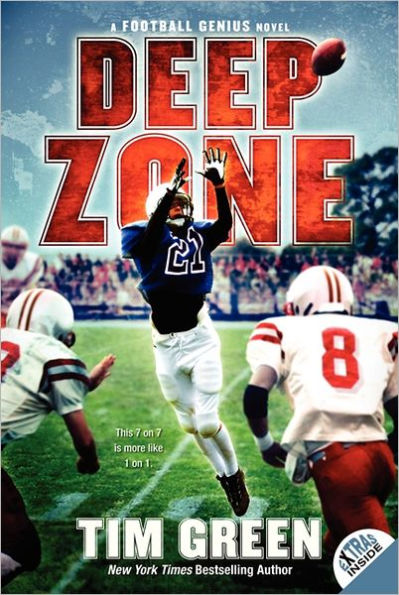
Deep Zone

Ty just made the team that will play the seven-on-seven tournament for middle-school athletes, coached by former NFL star Mark Bavaro. If his brother Thane’s NFL team makes it to the Super Bowl, they would be living their football dream: both brothers playing for a championship game in one weekend. Unfortunately, Thane injures his knee in a game and is out for the season. Still, Thane supports Ty as they travel to Miami with Ty’s team. There, Ty meets Troy, another football player his age who has an uncanny knack for guessing which way Ty will run. Will Ty be able to outsmart Troy in the championship game?

In addition to football, Ty has other worries. Ty is visited by Agent Sutherland, who is assigned to protect him and Thane from the mob. Last season, Ty accidentally gave the mob inside information so they could bet on who would win the Super Bowl. Now, two mobsters are loose and may have Ty marked as a target.

Football fans will appreciate the large amount of football terminology, descriptive game scenes, and discussions of strategies. Ty and Thane have a great relationship, and readers will be impressed by all the things they get to do as a result of Thane being in the NFL, such as riding in limousines and going to exclusive parties. While the lavish lifestyle is realistic, these scenes do not help advance the plot and make it difficult to relate to the characters.

Even though the mobsters add mystery to the plot, they are completely inept and do little to make the main characters shine. Unfortunately, Ty is not very relatable because he is one-dimensional. However, he has a couple of positive personality traits, such as being caring and hardworking. The story can drag at times, and although satisfying, the climax doesn’t come until the very end of the book. Deep Zone is a book for football fans looking for an easy read.

 Even though the publisher recommends Deep Zone for readers as young as eight years old, there are scary scenes, such as Ty and Troy being kidnapped by mobsters. Deep Zone is the last book in the five-book Football Genius series. The books follow Ty and Troy’s stories separately, and they meet in Deep Zone. Although Tim Green summarizes the story thus far so readers can understand Deep Zone, reading the previous four books would make the plot easier to understand.

Sexual Content

  • None

Violence

  • During a game, Thane catches a ball and gets tackled. Thane “got hit by all three Ravens players at once. Thane’s body pinwheeled in the air, and he landed somewhere in the pile of arms and legs right at the goal line.” He injures his knee.
  • Ty swings a bat at an intruder in his house. “Ty reared back and swung the bat. It connected with something. The man yelped and fell at Ty’s feet . . . Ty swung the bat again. Klunk. The man collapsed in a pile.”

Drugs and Alcohol

  • Troy’s dad tells the two mob men to “have a drink” to celebrate winning a lot of money. Ty hears “the clink of glasses as they toasted their success.”

Language

  • A fan for the opposing team shouts, “You stink!” at Ty.
  • Heck is used several times. For example, Thane turns quickly and re-injures his knee. He says, “Man, that hurt like heck.”
  • Ty calls himself a “stupid chicken” because he is easily scared.

Supernatural

  • None

Spiritual Content

  • Agent Sutherland tells Thane, “Thank God everything worked out.”
  • Thane’s uncle Gus “nodded like a Sunday school teacher.”
  • When Ty is stuck on a swamp tour and it starts to storm, he “closed his eyes, crossed his fingers, and said a prayer.”
  • Ty thinks he is about to die, so he “prayed to God there was a heaven and that he really could be with his mom and dad. But he was afraid heaven wasn’t true . . . Afraid God was just words. He didn’t think that, but he couldn’t help being afraid.”

by Jill Johnson
The Best Bad Luck I Ever Had

Dit is looking forward to the new postmaster’s arrival. Dit was told that the new postmaster would have a son his age. But when the postmaster and his family arrive, everyone is surprised that he’s black. Dit is also upset that the postmaster has a daughter, not a son. Dit has no desire to be friends with Emma, a well-educated girl.

Dit’s mother has a rule. “We didn’t have to like anyone, but we had to be nice to everyone.” Dit’s mother orders him to show Emma around. At first, Dit doesn’t like Emma. She doesn’t play baseball, fish, or climb. She’s smart and talks properly. But Emma is also the first person to ever listen to Dit, and in a house with ten children, that’s important.

Emma forces Dit to think about the difference between the colored kids and the white kids. Then when the town barber, Doc Hadley, is accused of murder and sentenced to be hanged, Dit is faced with an ugly truth. A white man’s word will always be believed, even if it is not true. Dit and Emma know Doc Hadley doesn’t deserve to be punished, so they come up with a daring plan to save Doc from the unthinkable. But if they are caught, the consequences could be disastrous.

Set in 1917 in Moundville, Alabama, and inspired by the author’s family history, The Best Bad Luck I Ever Had takes a look at race relations. The story is told through Dit’s perspective, which allows the reader to see Dit’s personal growth as he comes to understand the inequalities between blacks and whites. Because of Dit’s growing friendship with Emma, he is targeted by bullying. Soon, Dit is faced with a terrible decision—doing what is right or closing his eyes to injustice.

While the story is full of interesting characters, Dit is the only character who is well-developed. Even though the friendship between Dit and Emma is wonderful, a hint of romance at the end is far-fetched. Much like To Kill A Mockingbird, a man is unjustly sentenced to hang. However, this subplot was not fully explored, limiting the emotional impact of the story. Even though Dit is a compelling narrator, the story has several scenes that do nothing to advance the plot but instead make the story drag.

The Best Bad Luck I Ever Had explores the time period between the end of slavery and the beginning of the civil rights movement. The main lesson that readers will take away is, “Some things are worth fighting for. . . You want to do something for this town? Next time you see an injustice, take a stand. It’s worth the risk.”

This coming-of-age journey allows readers to learn positive lessons about social justice, making mistakes, and friendship. While many of the events in the story are predictable, teens will enjoy the surprising conclusion. Unlike Levine’s book The Lions of Little Rock, The Best Bad Luck I Ever Had doesn’t have much of an emotional impact. The Best Bad Luck I Ever Had imparts important life lessons, but the slow pacing will make it hard for some readers to stay engaged. Readers who want to explore racial relations during the 1900s should read To Kill a Mockingbird by Harper Lee. I’m Not Dying with You Tonight by Kimberly Jones & Gilly Segal also explores racial inequality, and how it still exists today.

Sexual Content

  • Several times, Dit’s friends tease him about kissing Emma. For example, when they see him talking to her, “Chip snickered and made kissing sounds.”
  • Dit tells his friends that he hasn’t seen Emma. Chip replies, “Course you ain’t. ‘Cause you got your eyes closed when you’re kissing her.”
  • A black boy’s grandfather was white. The boy explains, “My grandpa was a white man, a big plantation owner. Took my grandma out in the woods and nine months later she had my pa.”
  • Dit and Emma hear noises in the barn. “It sounded like two people, whispering and laughing. . . there, sitting on a bale of hay, was my oldest sister, Della. And she was kissing Mr. Fulton’s oldest boy.”
  • Emma tells Dit, “You’re the best friend I’ve ever had.” Then she kisses him on the cheek. Later, Dit kisses her on the cheek. They kiss on the cheek three times in total.
  • Emma and her parents are moving. As Emma and Dit say goodbye, he asks her, “Can I kiss you goodbye?” After getting permission, Dit kissed her “right on the lips and everything. I probably should say it was gross or something. But it was actually kind of nice.”
  • The town has a different cemetery for “fallen women.”
  • Dit asks his dad, “Are you ever gonna give me the talk?” His father replies, “The part about girls, it’s just too embarrassing. Ask Raymond.”

Violence

  • Dit uses a flip-it to kill a bird. “The bird was stretching out its neck for another ant. When the rock hit it, the yellowhammer fell to the ground.” Dit feeds the bird to a caged eagle.
  • Dit shoots a buzzard out of the sky. “The bird jumped up and let out a terrible scream.”
  • When someone calls Dit a “nigger lover,” Dit “slugged him. Hit him right in the nose. He staggered but didn’t fall over, so I punched him in the stomach.” Several kids break up the fight.
  • In the past, the sheriff killed a man “in a bar fight. Claimed it was an accident, but everyone knew it wasn’t.”
  • A woman paid Dit to throw a bag of kittens into the river. Dit “closed my eyes and with a deep breath hurled the sack up over my head and into the water. Took off running before I even heard the splash.” Later, Dit and Emma go to the river and find the sack with the kittens still alive.
  • Someone tells Dit about a man who died and that “He lay perfectly still with his eyes wide open.”
  • Emma’s mother tells her, “Your great-grandmother used to get up before sunrise and work in the fields all day without a rest. If she didn’t work fast enough, she was whipped until the blood ran down her back.”
  • Two of Dit’s friends lock him in a prison cell. They want him to “admit you love that nigger girl.” When they let Dit out of the cell, his “fist hit Chip square in the jaw. He fell to the ground.”
  • Someone makes a reference to “the poor Negro who was lynched in Jefferson County last month.”
  • When Emma was practicing for the school play, Big Foot comes into the schoolhouse to kick her out. He tells her to leave. When she doesn’t he “picked up Emma and threw her over his shoulder like I’d seen my pa do with a sack of potatoes. . .” A black man named Doc tells Big Foot to put Emma down. “Big Foot dropped her then. Just let go of Emma’s feet and she slid right down his back. Her head made a loud thwack as it hit the floor. . . Blood was pouring out of a gash on her forehead.” Emma’s wound needs stitches.
  • When Doc stands up to Big Foot, “Big Foot punched him in the jaw. Doc staggered but remained upright. Big Foot slugged him again. Doc fell to the ground this time. Blood flowed from his lip to his chin. . . Big Foot charged Doc Hadley then, ran at him like a crazed bull. . . We could hear punches being thrown and then there was a crack of something like a broken bone.” Doc Hadley is knocked unconscious and has several wounds. The scene is described over three pages.
  • Later, Doc Hadley’s wounds are described. “Doc Hadley was hurt bad. His left arm was broken; he had two black eyes, a split lip, a twisted ankle, a couple of bruised ribs and a lump on his head the size of an old twine baseball.”
  • Big Foot goes into Doc Hadley’s barbershop.” Big Foot “punched him in the stomach. Doc doubled over in pain and Big Foot hit him again, knocking him to the ground.” Both men pull a gun. Big Foot yells, “Get up off the floor so I can shoot you like a man!”
  • Big Foot shoots his gun. “Big Foot approached the barber chair, his boots crunching on broken glass. He was too close to miss now, and his finger was on the trigger. Doc aimed for Big Foot’s leg, but the sheriff spun the chair around, hitting Doc’s arm. Both pistols went off at once. The sheriff gasped and fell to the ground, twitching wildly.” Big Foot dies. The scene is described over three pages.
  • Big Foot’s mother talks about the past. “But he was always a violent boy. Got in fights at school, tortured stray dogs around town. . . He only got worse as he got older, drinking and brawling in bars. Then there was that man in Selma. I knew it wasn’t no accident.”
  • Dit and Emma come up with a plan to free Doc Hadley from jail. In order to get blood for their plan, Dit catches a rabbit. “It quivered in fear, its dark eyes huge in the candlelight. . . .With a snap, I broke the rabbit’s neck. It twitched for a moment, then hung limp as an old hat, warm in my hands.” Dit feels guilty about killing the rabbit.

Drugs and Alcohol

  • After Big Foot beats up Doc Hadley, “Big Foot didn’t leave his front porch for that whole week, just sat there and drank beer.”
  • An old man walks around town. He thinks he is sleepwalking. He tells Dit, “My daughter warned me about drinking a whole bottle of whiskey in one sitting.”

Language

  • When a new postmaster and his family move to town, they are referred to as “niggers” ten times. For example, someone says, “Only one school around here for a nigger. And if you ask me, that’s one too many.”
  • Someone tells Dit, “I think it’s terrible that a nice boy like you runs around with a nigger.”
  • Several times, someone calls Dit a “nigger lover.”
  • When a plane lands in a field, someone exclaims, “Jesus, Joseph and General Lee.”
  • When assigning parts for the school play, the teacher asks a boy to be the ringmaster. The boy refuses because “I don’t want to be no Chinaman with slitty eyes!”
  • A boy calls Emma an egghead.
  • Attempting to stop a fight, Emma throws hot grease on Big Foot. He yells, “Goddamn it!”
  • When the mayor discovers that someone killed himself, he says, “Oh my God!”

Supernatural

  • None

Spiritual Content

  • Dit and Emma find an old pottery bowl with a drawing on it. Someone tells them, “This bowl was used by the Indians. When someone died, they filled it with water and placed it in the fire so their loved ones would not go thirsty on their journey to the underworld. The hand and the eye stand for the God who made everything and the God who sees everything.”
  • When a man tells Dit about his dead wife, Dit’s “lips moved briefly in a silent prayer.” Later the man tells Dit that he was, “angry at God for taking her away.”
  • After Dit throws a sack of kittens into a river, he feels guilty and goes to church. Dit “folded my hands in prayer and tried not to think about the kittens.” During the service, the reverend says, “Our sermon today is entitled ‘How Long Will Hell Last.’ Those who have been unjust and have inflicted suffering on those smaller and weaker than themselves will burn in hell. . . Those who harm innocent creatures will suffer in hell as surely as those who’ve broken all Ten Commandments.”
  • When Dit and Emma find the kittens alive, Dit thinks, “God had worked a miracle in exchange for my dime.”
  • Dit goes to church on Christmas Eve. He listens to a sermon about “the Star of Bethlehem and how amazed the shepherds had been when they had seen it.” Dit tries to pay attention because he “didn’t want to accidentally end up going to hell.”
  • While driving, a car spins out of control. Dit, “started praying, but the only prayer that came to mind was Jesus, Joseph and General Lee.”
  • Doc Hadley’s son wants to see his father’s body. Someone tells him, “Your daddy’s moved on to a better place.” Someone else asks, “He was a suicide. Don’t they go to hell?”

I Survived the Attacks of September 11, 2001

The only thing Lucas loves more than football is his dad’s friend Benny, a firefighter and former football star. He taught Lucas the game and helped him practice. So, when Lucas’s parents decide football is too dangerous and he needs to quit, Lucas has to talk to his biggest fan.

On a whim, Lucas takes the train to the city instead of the bus to school. It’s a bright, beautiful day in New York. Just as Lucas arrives at the fire house, everything changes…and nothing will ever be the same again.

Lucas’s story will capture readers’ attention because it begins by focusing on Lucas’s love of football. At first, Lucas is devastated that his parents want him to quit football, as he has had three concussions in two years. Like many preteens, Lucas is impulsive and doesn’t think through his plan to skip school and go into New York to talk to Benny. However, as Lucas witnesses the attacks of September 11, he realizes that football is not the most important thing in life. At first, Lucas was worried that he would lose the friendship of his football friends. However, he realizes that his football friends still have his back, even if he isn’t on the field.

The blending of football and the attacks on the Twin Towers is a little awkward at first. However, the mix of the two topics allows Tarshis to highlight the importance of family, friends, and supporting each other through many situations. Even though the story gives details about the attacks of September 11, the events are described in a kid-friendly manner. The story does not go into vivid details, but it allows younger readers to get a glimpse into the tragedy of September 11. The end of the book has a timeline of the events of September 11 as well as questions and answers about the tragic day.

I Survived the Attacks of September 11, 2001 answers the broad questions about the day’s events without giving readers a graphic image of the death and destruction. Readers who are curious about the attacks will see the events through Lucas’s eyes and understand his fear and worry. Not only will readers learn facts about the attack, but they will also learn the dangers of concussions and the importance of friendships.

The story is accessible to all readers because Tarshis uses short paragraphs and simple sentences. Realistic black and white illustrations are scattered throughout the story and help bring the story alive. I Survived the Attacks of September 11, 2001 uses suspense and a simple plot that will answer readers’ questions about the attacks on the Twin Towers. Although the story doesn’t go into detail, the story is a good starting point for curious readers.

Sexual Content

  • None

Violence

  • Lucas is near the Twin Towers when the first plane hits the Twin Towers. “There was a thundering explosion. People all around Lucas screamed. And then the bright blue sky filled with black smoke and fire.”
  • When the plane hit the tower, “black, fiery smoke gushed out of a huge gash in the building’s side, billowing into the sky. Lucas turned away. He couldn’t look anymore.”
  • A news reporter says, “We have just witnessed the horrific sight of a second plane hitting the other tower—the South Tower… There was a massive explosion.”
  • Lucas and his father were fleeing to safety when one of the towers collapsed. “There was the sound of shattering glass and a powerful blast of hot wind. Minutes passed. Lucas squeezed his eyes shut and covered his ears. His mouth and nose filled with gritty dust. It was hard to breathe.”

 Drugs and Alcohol

  • None

Language

  • Lucas watches the news on TV. The man on TV says, “Oh, my God! What was that? Another explosion!”

Supernatural

  • None

Spiritual Content

  • When the firefighters began returning to the station, Lucas kept praying that Uncle Benny would be alright.

Heart of Iron

Twenty years ago, when a deadly plague was sweeping its way through the Iron Kingdom, salvation came in the form of androids, known as Metals, created by Lord Rasovant to care for the sick without risk of infection. Seven years ago, the once benevolent Metals turned against the kingdom, attacking the royal family as they slept in the North Tower of the palace. Ever since, Metals have been something to be feared and controlled.

But seventeen-year-old Ana isn’t afraid of most things. As the adopted daughter of notorious outlaw, Captain Siege, she’s been raised to be a fighter. In fact, her best friend, D09 or Di for short, is one of the few remaining Metals in the Iron Kingdom. But Di’s memory core is glitching, and Ana believes the key to saving him lies on the Tsarina, a legendary spaceship lost to time that once belonged to the creator of the Metals. Ana would do nearly anything to save Di, including kidnap a member of the Ironblood nobility.

Robb Valerio has never believed that his father burned in the North Tower alongside the royal family. He believes that his father escaped on board the Tsarina, and he’s finally managed to secure coordinates that seem to point towards the lost ship. When Ana, Di, and their annoyingly handsome Solani friend Jax, kidnap him, Robb finds himself having to cooperate with criminals to get the information he’s desperately seeking. But the Tsarina holds more secrets than any of them anticipated, and as the past comes back to haunt them, it appears that Di and Ana might be the key to discovering what really happened in the North Tower all those years ago.

Ashley Poston’s Heart of Iron is an exciting Space Opera-esque story, loosely inspired by Fox Animation Studios’ Anastasia. It’s sci-fi geared more toward fairy tale fans than the truly scientifically minded. Poston takes classic fairy tale tropes—a lost princess, star-crossed lovers, an ancient evil threatening the kingdom—and mixes them with thrilling sci-fi elements like spaceships and androids. The resulting world-building isn’t the most unique, but it works as a backdrop for several plot twists and turns. The story relies heavily on the characters and their relationships, adding a layer of complexity to an otherwise standard plot.

Heart of Iron doesn’t focus on just one point of view. Instead, all four characters tell their own version of the story, which makes each of them compelling and intriguing in their own way. Stubborn fighter, Ana, will go to any lengths to save the people she loves but finds herself questioning everything when she learns the truth about her past. Charming Robb, who grew up fighting for his own interests among ruthless royalty, finds unexpected friendship among outlaws. Jax, a Solani with the ability to see into the future, struggles to come to terms with the idea of destiny. And then there’s Di, an Android grappling with what it means to love and be human. As their world is changing quickly around them, they must work together to survive.

Readers who are familiar with Poston’s previous work might expect Heart of Iron to have more in common with Starfield, the fictional space-opera TV show from the Once Upon a Con series, than the geek-tinged contemporary stories she’s primarily known for. Heart of Iron may be set in a sci-fi world filled with space-ship battles and evil androids, but the characters have all of the heart and humor one may come to expect from an Ashley Poston book. The ever-changing complexity of the relationships is what makes the book really shine.  At its heart, it’s a story about learning how to love and be loved.

Sexual Content

  • Ann is leaving to infiltrate an Ironblood party. Before she leaves, Ana kisses Di. “She pressed her lips, briefly, against his metal mouth.”
  • When Jax and Robb are reunited on the wreck of the Tsarina, they share a kiss. “Robb’s mouth was hungry and desperate, tasting like honey and salt and surprise. Jax’s skin buzzed at their nearness, and he wanted to sink into the kiss and rebel, to be closer and a thousand light years away.”
  • Ana jokingly asks Robb if there will be “drunken orgies” at the upcoming ball.
  • When Ana and Di are reunited, she kisses him. “Ana pressed her lips against his. They were warm and soft. It was like the kiss from Astoria, a second, a moment, a breath—”
  • Ana tries to apologize for kissing Di without asking first, but he pulls her in for a second kiss. Di “wrapped an arm around her waist and pulled her into another kiss, and she melted into him, pressing as close as she could, and still he wanted to be closer. Her fingers threading into his hair, his around her waist, moving exploring . . . His tongue tried the contour of her lips, memorizing her taste, her motion, her method. The kiss lit a million sins in between his zeroes and ones, and made him infinite.”

Violence

  • Di has several dents on his body from different scrapes he’s gotten. Ana “felt bad for a particular ding on his forehead, but she had apologized a thousand times for accidentally running him over with a skysailer.”
  • Ana and Di are tracking a weapons dealer who is attacked by a group of androids known as Messiers. Ana tosses a grenade as a distraction. “Giving it a good luck kiss, she lobbed the flash grenade high into the air. It arced across the domed ceiling—and exploded in a dazzling blast of solar white.” It’s implied that only the Messiers are injured in the blast.
  • Robb tries to run away with the chip, but Di and Ana stop him. They get into a skirmish. “With a cry [Robb] reached for his sword—the girl tackled him from behind and slammed both him and the Metal into the door. It gave a groan and swung outward onto a staircase and into the grimy alleyway. He grappled for the railing, trying to catch his footing, but his ankle bent. He tumbled down the steps, striking his head against the cement.”
  • Di and Ana run into some security Messiers. Di pulls the memory core out of one of them. Di “punched his hand into the weakest part of the Messier’s torso and ripped a small glowing square out of its body. Strings of optical wires came with it, stretching like sinew. With one final tug, the wires popped away. The Messier’s eyes flickered out, and it dropped onto the docks.”
  • The waitstaff at the Valerio garden party is wearing Vox collars that would send “a thousand volts of electricity straight to the neck” if they made a noise.
  • Robb implies that the last boy he was in a relationship with committed suicide by jumping out a window. “Robb had tried to talk him out of the window, laying their entire relationship bare to all the nosy, shitty people who watched from below. How words didn’t matter.”
  • The Grand Duchess explains how the royal family died at the hands of Metals. “On the eve of the nine hundred and ninety-third anniversary of the Goddess, Metals laid siege to the Iron Palace and burned the North Tower where my family slept, destroying the heart of our kingdom.” The actual deaths aren’t described in great detail.
  • At a party, Ana and Robb get into a fight. “Around them, Ironbloods applauded over the sound of their scuffle. Trumpets sounded as the Grand Duchess departed, so no one heard Ana slam her fist into his face.”
  • Robb’s brother tries to stop Ana from escaping. He grabs her and “the girl slammed the back of her head into [Robb’s] brother’s face. Erik gave a cry and she twisted her wrist out of his grip. Blood poured from his nose and onto his crimson evening coat.”
  • Messiers corner Robb and Ana as they’re escaping a party, and demand they return the chip with the coordinates. Robb defends himself and Ana with his lightsword. “Reaching back, he pulled out his lightsword and slammed the superheated blade into the middle guard, carving a line down its front like it was soft butter.” The description of the fight lasts about a page.
  • As they escape, the royal guards shoot their skysailer out of the air, and Robb is caught in the fire. “He became distinctly aware of the pain in his side. Why did it hurt to breathe? He looked down. Blood stained the side of his favorite evening coat.”
  • As they get off the planet, the royal guard shoots missiles at the ship that Ana and Di live on, the Dossier “The white-hot missile spiraled closer. [Jax] spilled the sails and drew them back into the sides of the ship, banking the ship left as hard as he could. The missile screamed past them like a streak of white and exploded.”
  • Ana describes Talle, Captain Siege’s wife, as having “hands so steady she could slit a throat clean while navigating the skyways of Nevaeh”
  • Jax catches Robb trying to escape the Dossier and they get into a brief fight. “Robb jumped away, spinning [the lightsword] behind his back to his other hand and sliced at [Jax]. The sword flashed through the air like a bolt of lightning. Jax cursed—nothing around to block the blade—and raised his arm. Jax saw Robb’s lips parting in surprise a moment before the blade slammed into Jax’s forearm. The lightsword bounced off like steel on stone.” The description of the fight lasts about two pages.
  • Di and Ana sneak onto the Tsarina and are attacked by a Metal. “Di dodged as the Metal’s fist sailed past his cheek and sank into the wall. He planted his hand on the side of the Metal’s head and spun it under his arm into a headlock. The Metal didn’t even have a chance to parley before Di gripped it by its jaw and ripped its head clean off.” The fight is described over three pages and Ana sustains minor injuries.
  • Robb watches Captain Siege kill a member of her own crew. “A bullet pierced Berger’s chest. A flower of blood bloomed on the grease-stained back of his spacesuit. He began to reach for the wound, confused, before melting to the floor.”
  • Di and Ana encounter a violent, sentient piece of malware on the wreck of the It is controlling the Metals that attacked the crew. The malware attempts to overwrite Di’s code, and tells Ana, “You should have burned.” Di sacrifices himself in order to stop it. Di “hesitated for a moment—long enough to realize there were no good-byes. Then he shoved his hand into the console, wrapped his fingers around the hard drive, and pulled. The program retaliated, digging into his mainframe, clawing him apart.” Di’s body is damaged beyond repair, but his memory core is still functional.
  • Robb’s mother sends ships to track down the Dossier. The crew is ambushed in a firefight and Captain Siege is injured. “Ana scrambled over to the captain lying on the floor a few feet away, grabbing a fistful of Siege’s coat to roll her onto her back. A nasty gash bled down her forehead, soaking into her black hair.” The firefight is described over three pages.
  • Robb’s mother shoots one of her own soldiers with Captain Siege’s gun, providing false justification for boarding the Dossier. “The woman took Siege’s pistol out of its holster and fired a bullet into one of her own guard’s knees. The guard gave a shriek, collapsing to the floor, before two others dragged him back to the other ships, leaving a smeared trail of blood.”
  • Robb’s mother tries to shoot Jax, but a crew member named Wick pushes him out of the way and takes the bullet instead. “Wick looked down at the hole in his chest and gave a gurgle—wet and gasping. Ana could only watch in horror, her hands bound behind her, as the man who’d taught her how to clean a pistol, speak Cercian, and darn her own socks, slumped onto the floor and went still.”
  • Robb takes Ana onto his mother’s ship, but Ana fights back. Ana thrashes “against him, getting her hand free of his grip, and grabbed at his side where his stitches were. He let out a painful gasp—and that only made her curl her fingers into the wound, squeezing harder, until blood soaked the shirt Jax had lent him.”
  • Ana has a nightmare about being trapped in a fire. “And it was so hot—burning, bubbling hot—she tried to scream but nothing came out. The side of her face lit with unimaginable pain. It hurt, it hurt so fiercely she could feel the fire against her cheek as she tried to claw it away. She felt her nails dig into her skin, scratching, drawing blood, but she couldn’t wake up.”
  • Di saves Captain Siege from the guards who have taken over the He knocks out one of the guards by throwing the ship’s cleaning bot at them. “He grabbed EoS out of the air and threw the bot at the female guard. With a pitiful bloop it struck her in the side of the head. It must have been with more force than he realized, because the female guard slumped to the floor, unconscious.”
  • Robb thinks that his brother Erik, who was next in line to become emperor, will want to kill him for bringing Ana back. “He’s going to hire an assassin and literally kill me. And wear my skin as shoes.”
  • Di encounters a mob of people harassing an innocent Metal and she gets into a fight with a man who threatens to burn it. “The temper inside Di turned his thoughts white-hot. The next he knew, he had the man by the hand and was twisting his arm behind his back. There was a crack. The man gave a cry, dropping the lighter. Di caught it, flicking the flame on, holding so tight to the man’s broken arm, twisting so terribly that bone protruded from the skin.” The incident is described over two pages.
  • At a party, Ana embarrasses herself in front of a group of girls. As they giggle at her she wonders, “She could gut them from stomach to spleen right there, didn’t they know?”
  • Ana is lured into the North Tower by the same malware that targeted her on the Tsarina. She is then attacked by Messiers. “The blue-eyed Messier picked up a piece of broken mirror and lunged. She dodged its first attack, snagging up a blackened metal tray from the floor, and deflected the next. The sound of the mirror shard against the tray made a loud ping, and shattered in the android’s grip.” The incident is described over five pages and Ana sustains minor injuries.
  • The malware tells Ana that it was responsible for burning the tower and killing her family, but that it was Rasovant’s idea. The malware says, “[Rasovant] lost his patience with the Emperor. He did not mean to kill him.”
  • Di saves Ana from the Messiers. “’You shall burn…,’ the red-eyed Metal said. ‘She shall not,’ the guard hissed, wrapping his arm around its neck, then prying his fingers underneath its chin and ripping its head off.”
  • Erik tries to stop Robb from saving Jax. The brothers get into a fight that ends when Jax puts a voxcollar around Erik’s neck. “Fifty thousand volts of electricity sparked through the nodes of the voxcollar, sending [Erik] convulsing to the floor.” The fight is described over two pages.
  • Under the influence of the HIVE, Di and the other Metals attack Ana’s coronation, killing multiple people. Di “swung his aim toward the Grand Duchess and pulled the trigger. It was not his aim that had made his hand shake after all. The old woman slumped back, painting a red streak across the base of the Goddess’s statue as she slid to the ground.” The fight is described over about five pages.
  • Mellifare, the humanoid Metal that houses the HIVE, tried to shoot Robb, but his mother leaps in front of the gun. “A firework of red exploded into the air, and warm droplets splattered on [Robb’s] He quickly wiped them away—blood. The world came into focus with a jolt, and his mother stood in front of him, arms outstretched. Blood stained her beautiful white dress.”
  • Lord Rasovant stabs Riggs, one of the Dossier crewmembers, in the back. Riggs “choked, his reply cut short. Blood dribbled from his mouth. Ana gave a cry as Lord Rasovant pulled the dagger out of Riggs’s back, letting him drop to the ground.”
  • Ana threatens Rasovant with a dagger, but decides to show mercy on him. Then he tries to pull a gun on her. “Goddess bright, [Ana] prayed the moment before her dagger sank into Lord Rasovant’s stomach, give me a heart of iron.”
  • After Ana kills Rasovant, Di attacks her with a lightsword. Ana tries to reason with him, but he stabs her anyway. “’I should have let you burn,’ he whispered, and sunk his blade into her.” Their fight is described over six pages.
  • After Di stabs Ana, Robb and the Dossier crew fight their way out of the palace. Di uses his ability to control technology to burst the tracking chip in Robb’s hand. Robb “screamed. Pain curled up around his shoulder, seized hold of his heart, and squeezed. It squeezed so hard he barely felt it when the chip burned away the nerves in his wrist. When it tore apart the blood vessels in his hand.”

Drugs and Alcohol

  • Di and Ana sneak into a party where alcohol is being served.
  • After Ana kisses Di, he notes that she’s never kissed him on the mouth before, only on the cheek, “when she’d drunk too much of Wick’s Cercian ale.”
  • Captain Siege smokes a cigar. “The captain took a cigar out from her desk drawer and lit it, the smoldering orange end matching the fiber optics in her hair.”
  • The crew of the Dossier toast to the crew members they lost on the wreck of the Tsarina. “The captain retrieved an old bottle of bourbon, opened only for rare occasions, and set out five shot glasses, filled them, and slid them to the crew.”

Language

  • The phrase “Goddess’s spark” and “Goddess blast” are used as curses throughout the book. For example, Captain Siege tells Jax to “get us off this Goddess-blasted space station before the entire Messier military arrive.”
  • Jax uses the Solani curse “Ak’va” three times.
  • The word “ass” and related phrases such as “asshole” and “smartass” are used at least nine times. For example, when Robb gets into the skysailer for the first time, Jax tells him, “Buckle up, little lord. Don’t want your pretty ass falling out.”
  • Jax implies that the crew of the Dossier might turn Robb in. Robb replies “Goddess be damned you will.”
  • Di tells Captain Siege that he’s not her enemy. She responds, “Piss you aren’t!”

Supernatural

  • Ever since a group of androids known as Metals killed the royal family, Metals have been forced to join the HIVE. “The HIVE was the Iron Kingdom’s way of dealing with misbehaving, or rogue, Metals. Instead of imprisonment, the kingdom stripped Metals of their free will and assimilated them. Then, with them obedient and unthinking, the kingdom used them as guard dogs—Messiers.”
  • Jax has some supernatural abilities. “He had a knack for flying, and when he closed his eyes he could feel the stars orbit around him no matter where he was, so he could never get lost.”
  • Ana promises “on iron and stars” that she will always come back for Di. “It was said that such promises could never be broken; the Goddess would not allow it.”
  • Before he dispersed, Rob’s father gave him a piece of iron. “It was a piece of the same iron that made the crown, and like the crown, it rusted for anyone who touched it. Except those chosen by the Goddess to lead the kingdom.”
  • Jax says his people know how to read the future in the stars. “What may be, what will be, and what will never be.” This knowledge made their empire great, “Until one day, the stars began to blink out, and the D’thverek—what your lovely people call the Great Dark—came for our sun. We had relied on the stars for so long that we didn’t know how to defend ourselves, so we took what remained of our people and fled where the stars pointed—here.”
  • Jax has the ability to read people’s futures through skin-to-skin contact. When he kisses Robb he sees parts of Robb’s future. “There was a jolt—like touching a live wire. A burn. A hiss. Then the star-stuff inside Robb swirled, brighter and brighter, sending his fate through Jax with the sharpness of a knife. A black collar. A marble palace. Ana touching iron. Moonlilies. The glint of knuckle rings. A bloodied crown—”
  • Di wakes up in the humanoid Metal, with oddly human emotions, and a new ability to control the technology around him. “A tingling spread across his fingertips, and instinctively he lowered his hand to the ports on the computer’s dash. An electric sensation coursed over his skin, and he found himself—his code, his programming—pulled toward the console like a magnet. Then he was rushing across the electrical currents of the ship, spreading across the motherboard, sinking into the programs. He was the ship, but he was also in his body. He was soaring through space and staring at the holo-screens. A hundred places at once, seeing everything.”
  • Ana discovers old files in the North Tower, including the file “METAL CREATION,” which reveals that Metals were all once human victims of the plague. “All the plague victims were burned after they died, so no one would know the difference if their bodies went missing. The disease was so contagious, if you so much as touched an infected person, you would also begin to rot. The kingdom sent out guards to take the infected away, so no one was there when they died. Or when they were put into Metals.”
  • Di asks Rasovant why he created a body that could feel emotions, and Rasovant explains that it was for his dying son to inhabit. “When I created Metals, I took away your emotions. I didn’t realize how important they were. None of my creations retained their memories. This was not a problem but a curiosity. Where did I go wrong? Memories, it turns out, are laced with emotion.”

Spiritual Content

  • People in the kingdom worship a moon goddess who, according to the Cantos of Light, drove a Great Darkness from the universe. “Far above the crown of stars, there lay a kingdom cast in shadows until a daughter born of light drove the night away. And so the Great Dark waited a thousand turns around the sun and promised on its heart of iron to once again return.”
  • Ana does not believe in the moon goddess. “Ana curved a crescent moon across her chest—in honor of the Goddess she didn’t believe in—to disguise tucking three coppers from the offering tray into her burgundy coat.”
  • Ana and Di go to a Shrine to the Moon Goddess. “An abbess passed down the almost-empty aisle. Ana could hear her humming a sad, lonely hymn from the Cantos of Light as she swung a thurible, carrying with it the heavy scent of moonlilies. At the head of the shrine stood a statue of the Moon Goddess, seven men high, her arms outstretched as she looked to some distant point in the domed ceiling, where murals of the Moon Goddess’s story, the kingdom of shadows and the girl of light, were painted.”
  • Ana doesn’t really believe in the Goddess, but she knows her origin story well. “How, in a kingdom of shadows, the queen bore a daughter of light who chased the Dark away.”
  • Ana is unsure that the Moon Goddess would protect an outlaw like her, but she still prays to her when in danger. Ana prays, “Goddess bright, bless my stars and keep me steady.”
  • The Goddess can reincarnate. “All the royal women are married into the family, because the crown had sired only boys for the past thousand years. Until a daughter was born seventeen years ago. The Goddess returned, everyone said. But then she died with the rest of her family in the Rebellion.”
  • According to The Cantos of Light, The Goddess created the Iron Kingdom from the Chaos of the Great Dark. “It was said that after a thousand years the Goddess would return to defeat the Great Dark again.”
  • When the skysailer is falling out of the sky, Robb prays to himself, “Goddess bright, please don’t let us die.”
  • When Robb and the Dossier crew are being shot at, Rob prays, “Merciful Goddess, if you exist, please hand my ass to me some other day. I don’t want to die. I haven’t kissed Jax yet.”
  • When Ana thinks she is going to be killed for treason, she prays to the Goddess. “Goddess bright, let me see Di again, she prayed for the first time in her life.”
  • Lord Rasovant, the creator of the Metals and the HIVE, considers himself to be Ana’s spiritual advisor. He tells her that Metals cannot see the Goddess’s light, and therefore must be HIVE’d. “We are a kingdom of many after all. We are of different planets and different beliefs, but we will all be stronger with an army under the Goddess.”

by Evalyn Harper


Flamecaster

Set in the world of Chima’s critically acclaimed Seven Realms series, Flamecaster is the beginning of an exciting new series full of suspense, magic, love, and danger. War has overtaken the realm, leaving two young, yet determined characters on their own in their fight against the cruel king of Arden.

Ash wants nothing more than to get back at the king that murdered his father. But after he’s forced into hiding, that goal only gets farther out of reach. Once he gets close to his father’s murderer, will he succeed in getting revenge? Or will he sacrifice his life for nothing?

Ash isn’t alone in his hunt for revenge. For as long as she’s known, Jenna Bandelow has had a strange magemark on the back of her neck. When the King’s Guard begins hunting for a girl with a mark like hers, Jenna must figure out why she’s being hunted. Does it simply have to do with the fact she’s been fighting against the king of Arden? Or is it something more? Danger lurks around every corner, and Ash and Jenna will need each other if they are to survive.

Flamecaster, a fantastic first book in the Shattered Realms Series, follows Ash’s and Jenna’s quest to take down the ruthless King Gerard. The engaging story is full of wizards, intrigue, revenge, and multifaceted characters. Both Ash and Jenna are interesting, complex characters who become King Gerard’s victims and lose those they love. Told from both Ash’s and Jenna’s point of view, it’s easy to understand each of their motivations as they grow and become obsessed with killing King Gerard. Both are angry and hateful after King Gerard kills people they love, which fuels their desire for revenge. While working towards their ultimate goal, each finds themselves alone, yet determined. Flamecaster weaves a compelling mystery, but doesn’t conclude with a typical resolution. Instead, some of the story arc is left with unanswered questions which will leave the reader eager to read the next book in the series, Shadowcaster.

 Chima’s expert storytelling allows the story to unfold gradually and with humor. Even though the story pairs Ash and Jenna as lovers, the focus remains on survival and intrigue. Another positive aspect of Flamecaster is the world-building, which builds on the previous series, the Seven Realms series. This is constantly in the background, as the war personally impacts both Ash and Jenna. Through the war, religious and cultural differences between the two nations emerge. This highlights how in the Fells wizards are free and help rule over the Queendom, yet in Arden wizards are enslaved and distrusted. Overall, the backdrop serves well to push the story forward.

The theme of revenge is prevalent, as both Ash and Jenna are fueled by their desire to get revenge against King Gerard. Luckily this theme isn’t overbearing, and is paired well with the theme of hope. The universal theme of hope wins out in the end, as Ash and Jenna learn to overcome their doubts and survive their time in Arden. Flamecaster is both fast paced and engaging, a story that will entertain both Chimas’s loyal fans as well as readers new to the fantasy series.

Sexual Content

  • Ash was in a relationship while attending an academy. He thinks, “Suze was a plebe at Isenwerk. She and Ash had walked out together for a few months, but had recently called it quits. At least he had.”
  • In the past, King Gerard attempted to marry the Queen of the Fells. Ash’s father says, “Your mother rejected him in a very public way.”
  • Ash comes to buy poisons from Taliesin, his mentor. She tells him, “Other young men your age come to me seeking love potions. I suppose you’re not in need of those.”
  • During a staged fortune-telling, a seer tells a young man the fortune, “says, ‘I’m not going to sleep with you anymore, you faithless bastard.’”
  • Someone says “The northerners spend their days picking wildflowers and dreaming and their nights fornicating under the stars.”
  • Ash and Jenna share a romance. After making love, Jenna tells Ash, “It’s just—in Bruinswallow, I think we’d be considered married.” The love making isn’t described, only implied. Later, Ash thinks about his feelings for Jenna, “I am in love with this girl.”

Violence

  • In a confrontation with King Gerard, Ash sees him die. Ash, “flattened himself against the tower wall to avoid being struck as the king screamed past him like a falling star. The screaming ended abruptly when he hit bottom.”
  • While battling priests, Ash kills some of them. Ash attacks one priest and “immolated him before he hit the floor.”
  • Ash is a trained killer. Ash thinks that he is “good with poisons, garrotes, and the small daggers known as shivs. Poisons were his weapons of choice.” Later, Ash tells someone, “Consider how many premature deaths I’m preventing. The lives I take are balanced by those I save.”
  • A young boy throws some sort of powder in Ash’s eyes. “When the trailing edge of it caught him [Ash] in the face and in the eyes, it was as if someone had taken a torch to him.”
  • Ash is forced to put down a horse. Ash, “insisted on doing it himself, by using magic to stop the blood as it rushed through the great artery in his neck. It was a painless death, as far as he could tell, but that didn’t make it any easier.”
  • In a conversation about Delphi, Clermont, a Guard Captain, says, “When things get really bad, I just kill a few Delphian rats. That never fails to raise my spirits.”
  • During a royal party, one of the king’s thanes kills some of the king’s guard. The thane “turned, a blade in each hand, and cut the throats of the blackbirds nearest to him.”
  • King Gerard has his mistress killed. Ash remembers, “But Estelle was dead—killed for the crime of hosting an assassination attempt on the king.”

Drugs and Alcohol

  • At a tavern at an academy, Lila sees a fellow student drunkenly fall into a chair. She watches as, “He all but fell into it, clunking his mug down on the table. It was nearly empty.”
  • Ash thinks about Lila, his classmate. “Drunk or sober, Lila didn’t miss much.” Just after that, Lila says, “A girl can learn a lot from a drunken southerner.”
  • After a fire breaks out in the palace kitchens, Ash, “realized that Hamon was blaming himself and his drinking for the fire.”
  • Destin notices that “The more Clermont drank, the louder he talked.”

Language

  • Lila calls a fellow student, “Ardenine swine.”
  • Ass is used frequently. For example, someone tells Ash, “You have to keep moving or grow a crop of moss on your ass.”
  • King Gerard calls his queen, “You stupid slut of Tamron.”
  • Clermont, a guard captain in the city of Delphi, cusses out a waitress. He says, “You tell that insolent whey-faced tavern rat. . .”
  • Marin Karn, Destin’s father, talks about Lila. He says, “The bitch has a mouth on her that’s going to cost her if she isn’t careful.”

Supernatural

  • Wizards, also known as mages, are commonplace. They are not welcomed in every country. Ash Hanson and Destin Karn are wizards. Ash thinks, “Wizards were arrogant by nature.”
  • Wizards often see a glow around other wizards. Ash notes, “Western wizards glowed a cool bluish-white. Strangward’s aura came closest to that. He lit up the entire room with a brilliant white glow. The other delegates glowed a faint red, like dying coal.”
  • Talismans often are used as protection against magic. When Lilia is interrogated by a mage, “The Talisman at her neck sizzled against her skin. Protection against magic.”
  • Talismans are usually created by the Clans in the Fells. Lila thinks, “Crafted of rowan, ebony, and ivory, it had been given to her by her clan friend and sometime partner, Shadow Dancer.”
  • Dealing with a wounded ankle, Ash thinks, “A wizard can’t use his gift to heal himself.”
  • In Arden, Wizards are shunned and are generally considered to be demons. When King Gerard confronts Ash about being a “demon,” Ash says, “Hang on—you think I’m an actual demon?”
  • Destin often uses magic to interrogate people. Destin thinks, “That made torture unnecessary for the most part, unless he was dealing with other mages, who could resist his mind magic.”
  • When trying to interrogate a boy, Destin “released magic into him, let if flow as if to fill him up, then reached through it to find the boy’s mind. And couldn’t. He tried again, and it was like searching an empty room.”
  • Jenna has a unique ability to speak to dragons. When Flamecaster, a dragon, speaks to her, she thinks, “At first, she thought he [the dragon] was asking for help, but then she realized that it was offering help.”

Spiritual Content

  • Arden is heavily influenced by the Church of Malthus, the dominant religion. God is the main deity of the Church of Malthus.
  • The Maker is the main god of the Fells, a nation to the north. Jenna Bandelow tells her father, “The Maker helps those who help themselves, isn’t that what you said?”
  • King Gerard asks of one of his subjects, “Are you saying that you will not submit to the command of your sovereign, anointed by God?”
  • Ash saves the palace cook, Hamon, from a fire. Hamon says, “They say it was a miracle. Come here, my boy, so I can feel of you, for surely you were the instrument of Holy Malthus in this.”
  • The Church of Malthus paints mages as demonic. Someone says, “Magic, my lord? I want nothing to do with that. The Fathers say that mages are idolators and devils.”
  • Priests of the Church of Malthus are often referred to as crows. Someone says, “Those black-robed crows of Malthus can prattle on about martyrdom and Paradise all they want. I’m not signing on.”

by Jonathan Planman

Terror at Bottle Creek

Cort’s father is a local expert on hunting and swamp lore in lower Alabama and has been teaching his son everything he knows. But when a deadly Category 3 storm makes landfall and his father disappears, thirteen-year-old Cort must unexpectedly put all his skills—and bravery—to the test.

One catastrophe leads to another, leaving Cort and two neighbor girls to face the Gulf Coast hurricane the best they can. Lost in the middle of storm-thrashed wetlands, the three face dangerous, desperate wild animals, it’s up to Cort to win—or lose—the fight of their lives.

Terror at Bottle Creek sweeps readers into the Alabama swamps and shows the dangers that lurk beneath the water and on land. With the Bottle Creek Indian Mounds as a backdrop, the story creates an eerie and terrifying tone that will have readers biting their nails. Vicious hogs, deadly alligators, and other swamp creatures all head to higher ground during the storm. In order to survive, Cort and his two neighbors must face a hurricane, wild animals, hypothermia, a venomous snake bite, and their own fears.

Readers will relate to Cort, who is embarrassed to live in a houseboat and wishes his life was different. Cort also struggles to understand his changing feelings for his childhood friend, Liza. As Cort tries to save Liza and her sister, he faces difficult choices, but he tackles them with bravery and compassion. As he fights to survive in the swamp, he thinks of the lesson his father taught him. However, his memories also reveal angry feelings towards his father. Cort’s emotional struggles are interwoven with intense survival scenes, allowing the reader to empathize with Cort. By the end of the story, Cort realizes his value does not come from where he lives, but from his character.

While Terror at Battle Creek has some typical elements, the story’s suspense and unexpected events will have readers jumping with fright. Terror at Battle Creek is an excellent survival story that will leave readers with an appreciation of the beauty and dangers of the Alabama swamps. Readers who enjoyed Terror at Battle Creek will also like

Sexual Content

  • None

Violence

  • Cort thinks about hunting swamp animals. Some people use dogs to track and corner hogs. “The dogs are often gored or killed in the fight. I’ve seen them back away with their cheeks hanging open or their intestines hanging from their belly, blue and bloody and leaf-pasted.”
  • When Cort was ten, he got out of the boat to pick grapes and a hog charged at him. The hog “bowled me over, bit onto my thigh, and shook me like a doll. It happened so fast I didn’t have time to react. Dad was quick to fire a shot into the air with his rifle. That startled the sow. . . I learned that wild pigs won’t hesitate to attack. And kill you. And eat you.”
  • Cort helps get Francis and Liza into a tree. “A sharp pain sliced across my leg and something bulky and hairy knocked me against the tree. . . The hogs closed in beneath us, blocking our escape. . . I came up the opposite side from them, my leg throbbing with pain. I put the light on it and saw a three-inch tear in my thigh. Blood ran down my leg, thick and pink and watered down like cherry Kool-Aid.”
  • A wild hog named Rusty attacks the tree that Cort, Liza, and Francis are hiding in. “The other pigs were picking through the leaves, finding dead and live snakes and eating them. Rusty suddenly charged one of them and toppled it into the underbrush. What followed was a deafening blend of squeals over a blur of brown and black hair. . .” Rusty reappears with bloody tusks.
  • Rusty attacks the boat that Cort and his dad are in. Cort’s dad is able to get a rope loop around Rusty’s head, and Cort “slammed the boat into reverse as Rusty squealed and swung his head and battered the side of the boat like someone beating a metal barrel with butcher knives.” Cort’s dad is able to tie the hog to a tree.
  • Rusty and a bear get into a fight. “Bear and hog rolled in a tangled blur of snarling and squealing frenzy. Teeth and claws and tusks and hooves gleamed and slashed beside us like a whirlwind of knives. . . The hog managed to get on top again and I thought I detected the bear weakening. The wounds in his chest were deep, and his fur was wet and matted and gleaming a purplish color from all the blood. While the hog had gaping wounds about his body from the tearing claws, he didn’t seem slowed. . .The bear kept his lock on the hog, his snarls sounding more like weak sighs. Rusty gurgled and kicked occasionally, the life slowly leaving him.” The fight is described over three pages. The bear kills Rusty and the story implies that the bear will die as well from his wounds.

 Drugs and Alcohol

  • When Cort’s father takes two men on a hunting trip, the clients “both cracked a beer and toasted each other.” After the men get a gator, they “popped more beer and celebrated.”

Language

  • Hell is used three times. When an alligator almost bites Cort, his dad says, “What the hell you doing? . . . Lord, you know better than to dive in there like that.”
  • Lord is used as an exclamation twice.
  • Crap is used four times. When Cort’s dad calls for an ambulance, he is told it can’t get to them. Cort’s dad yells, “Don’t give me that crap, Curly! Make it happen.”
  • When a snake bites Liza, Cort says, “Dammit. Dammit. Hold on.”
  • Damn is used twice. When Cort’s dad sees snakes all over, he says, “Damn snakes.”
  • When Cort asks Liza about the shape of the snake’s head, she says, “I didn’t study its head, you idiot!”
  • When Cort falls into the swamp, his father says, “God almighty!”

Supernatural

  • None

Spiritual Content

  • Cort’s dad says, “Snakes are just cold and evil. You can’t breed it out of them. It’s like reptiles got a different God.”

The Archived #1

Contrary to the popular adage, the dead do in fact tell tales. Many of them. The dead, or Histories, are kept in a place hidden from the living world called the Archive, where only the Librarians can access them. But sometimes they wake, and they make it into the Narrows (the world between) and some are willing to kill to get back to the living world. Keepers are tasked with returning the lost Histories back to the Archive, and sometimes things get . . . messy.

When Da brought his twelve-year-old granddaughter, Mackenzie Bishop, into the Archive to have her take his place as Keeper, she quickly became a young, ruthless prodigy. After a tragedy, Mackenzie starts to see her brother in the eyes of the Histories that she has to return to the Archive. Mackenzie must confront the lines that separate the living and the dead. With the increases in disturbances in the Archive and someone erasing Histories, Mackenzie uncovers the secrets that keep the Archive in one piece.

Mackenzie and the other characters are extremely realistic, despite their fantastical stories. Headstrong and fiercely independent, Mackenzie struggles with grief over her brother’s death and the secrets about the Archive that she must keep from her family. She shows strength in her ability to own up to and correct her mistakes. Mackenzie’s struggles are wide-reaching and she is a sympathetic character. Her relationships with other characters, including the Librarian Roland and fellow Keeper Wes, help her improve as a person and bring some light to an otherwise somber story.

Despite the gothic nature of the titular place, the Archive itself is beautiful. Housing and tracking the Histories of the dead is a macabre business, and as one of the main locations in the novel, the Archive ironically has a life of its own. With a curious cast of Librarians and other personnel working within the structure, at times the Archive seems more alive than the outside world.

The Archived presents strong themes about grief, memories, and the line that separates life and death. Mackenzie, being only a teenager, tackles these topics that haunt all the characters—young, old, dead, and alive. The various ways her parents deal with death versus the ever-secretive Librarians’ ways of dealing with the dead serves to enhance the discussion about death and memories in particular. All the characters have regrets and push the line between the world of the living and the Archive, and their stories are ultimately determined by their abilities to deal with grief and the past.

Victoria Schwab paints an atmosphere that is equal parts magical and spooky in The Archived. Readers who want a darker book will be delighted by Schwab’s prose and wildly inventive world. The Archived sets up an interesting series with much to discover. In the sequel, The Unbound, more secrets are revealed through Mackenzie’s next adventures. The Archived shows that the dead never really leave us, as long as their memories live on in those that they loved.

Sexual Content

  • Mackenzie dreams of being normal, and in her dreams, she “kisses a boy.”
  • Mackenzie’s very elderly neighbor confuses Mackenzie for a kiss-a-gram. Mackenzie eventually tells him, “Sir, I’m not here to kiss you.”
  • One of the escaped Histories kisses Mackenzie. She says, “as his lips press against my skin, the silence flares in my head, blotting something out. Heat ripples through my body, pricking my senses as the quiet deadens my thoughts. He kisses my throat, my jaw. Each time his lips brush my skin, the heat and silence blossom side by side and spread, drowning a little bit of pain and anger and guilt, leaving only warmth and want and quiet in their place.” The description continues for a couple of pages, and this situation happens a couple of times.
  • Fellow Keeper Wes kisses Mackenzie. Mackenzie describes, “I’m about to speak, about to tell him that, tell him everything, when he brings his hand to the back of my neck, pulls me forward, and kisses me . . . all I can think is that he tastes like summer rain. His lips linger on mine, urgent and warm. Lasting.”

Violence

  • Mackenzie’s little brother Ben was killed in a hit-and-run accident. Mackenzie describes the accident. “It was a normal day, right up until the point a car ran a red light two blocks from Ben’s school just as he was stepping from the curb. And then drove away.” Later, she recalls a memory. “The cops are talking to Dad and the doctor is telling Mom that Ben died on impact, and that word—impact—makes me turn and retch into one of the hospital’s gray bins.”
  • Some Histories, or ghosts from the Archive, are called “Keeper-Killers, the Histories who manage to get out through the Narrows and into the real world.” As the name suggests, these Histories kill Keepers to escape.
  • Mackenzie had to face trials to become a Keeper. In a memory, Mackenzie narrates, “Da told me to be ready for anything, and it’s a good thing he did, because between one moment and the next, [the examiner’s] posture shifts . . . I dodge the first punch, but he’s fast, faster even than Da, and before I can strike back, a red Chuck connects with my chest.” This sequence continues for a couple of pages.
  • One of the Histories has a knife and attacks Mackenzie. She saw metal, “and jump[ed] back just in time, the knife in his hand arcing through the air, fast.” Other Histories escape and attack Mackenzie as well.
  • Da taught Mackenzie how to fight. In her memory, she recalls, “You take me out into the summer sun to show me how to fight. Your limbs are weapons, brutally fast. I spend hours figuring out how to avoid them, how to dodge, roll, anticipate, react. It’s get out of the way or get hit.”
  • With her Archive-granted ability to see into the past, Mackenzie sees the memory of a guy murdering a girl in a hotel. The guy swipes “a large shard of glass from the floor . . . He’s on top of her, and they are a tangle of glass and blood and fighting limbs, her slender bare feet kicking under him as he pins her down. And then the struggle slows. And stops . . . I can see her, the lines carved across her arms, the far deeper cut across her throat.”
  • A series of deaths occurred within months of each other, some look like suicides and some look like accidents. Mackenzie learns that the circumstances for each death are fuzzy at best. She wonders, “Did he jump or was he pushed? Did Marcus hang himself? Did Eileen trip?”
  • A History stabs Wes. Mackenzie watches as “Wes throws another fist, and Owen catches his hand, pulls him forward, and plunges the knife into his stomach.” Wes is severely injured but survives.

Drugs and Alcohol

  • Da smokes “a cigarette.” He is a lifelong smoker.
  • Mackenzie can “read” objects by touching them. When she’s reading a bloodstained floor in the hotel, she sees a boy who “judging by his feverish face and the way he sways, he’s been drinking.”
  • Mackenzie’s very elderly neighbor shows up and “a thin stream of smoke drifts up from his mouth, where a narrow cigarette hangs.”

Language

  • Profanity is occasionally used. Profanity includes damn, ass, bastard, and hell.

Supernatural

  • Mackenzie is a Keeper who returns wandering Histories, or ghosts, back to the Archive, which is “a library of the dead, vast and warm, wood and stone and colored glass, and all throughout, a sense of peace.” Mackenzie travels between worlds and encounters quite a few dead people.

Spiritual Content

  • Da shows that he’s somewhat superstitious/spiritual, and Mackenzie has the same superstitions. Before entering the Narrows, Mackenzie says, “I pull Da’s key from around my neck, running a thumb over the teeth the way he used to. For luck, Da used to rub the key, cross himself, kiss his fingers and touch them to the wall—any number of things. He used to say he could use a little more luck.”
  • Wes refers to his dad’s new fiancée as “Satan in a skirt.”
  • Wes reads part of Dante’s Inferno. He says, “When you think about it, the Archive is kind of like a Hell.”

by Alli Kestler

Mooncakes

Teen witch, Nova, hears rumors of strange lights in the forest. When she goes to investigate, she sees a white wolf and discovers her childhood crush—werewolf Tam Lang. Tam is trying to outrun a cult of witches, who want to use his werewolf magic to unleash a demon. With the help of Nova’s Nanas, Tam and Nova try to stop the dark forces that want to claim Tam’s magic for evil.

Mooncakes’ illustrations use darker fall colors to beautifully show a world where magic exists. One of the best aspects of Mooncakes is its large cast of diverse characters. Both Nova and Tam are Chinese American, and Tam is non-binary and uses the pronoun “they.” Nova’s family is completely accepting of Nova and Tam’s romantic relationship. Nova’s two Nana’s are charming, accepting, and support both Nova and Tam. In addition, Nova relies on hearing aids and even uses them as part of her magic.

Mooncakes is a story of friendship, family, and romance. One of the best aspects of the story is the characters who accept and support each other. Despite this, the character development and the weak plot leave a lot to be desired. While the story shows some of Nova’s and Tam’s backstory, the plot moves too quickly for readers to really care about the two main characters. They fall in love quickly, and predictably. It is this love that allows Tam to overcome the demon.

The story revolves around magic, and the characters are seen making potions several times. However, the magic is mostly represented through bright lights, and the scenes that rely on magic are often confusing. Likewise, when Tam is introduced to Nova’s family, their celebration is too short and leaves too many questions. For example, why are Nova’s parents ghosts? Why do Nova’s parents want her to move away from her Nanas? Why does her uncle have the head of a bird?

Mooncakes will appeal to a large audience and is a good choice for reluctant readers. The pages are broken up into panels and have 2 to 7 simple sentences on each page. The illustrations show the characters’ emotions and use colors to switch from the warm feelings of Nova’s house to darker colors for the creepy, dangerous scenes. Readers interested in magic and romance will enjoy Mooncakes’ fast pace; however, the characters will quickly fade from their memory.

Sexual Content

  • Nova and Tam kiss on two separate occasions.

Violence

  • Nova goes to investigate strange lights in the forest, and sees a white wolf. A large horse attacks the wolf and a bloody fight ensures. Nova uses magic to chase the horse away. The fight is illustrated over four pages.

 Drugs and Alcohol

  • None

Language

  • When Nova’s friend shows up unexpectedly, Nova tells her, “You’re an asshole, you know that?”
  • Nova says both damn and crap one time.
  • When Nova sees a horse attacking a wolf, she says, “Screw horses.”
  • Nova introduces her friend to Tam, saying, “this is Tatyana royal pain in my ass.”
  • “Oh my God” is used as an exclamation twice.

Supernatural

  • Most of the characters are witches who study magic and make magic potions. For example, when Nova’s friend is injured, she makes them a healing potion.
  • A book of magic tries to bite Nova.
  • A cult wants to use Tam’s magic to release a bound demon. Tam says, “There’s a bound demon buried in the forest. Legend says that only the power of a wolf can raise it.” However, Tam doesn’t understand wolf magic enough to know how the cult will use him.
  • One of the Nana’s tells Nova to be careful when trying new spells because once Nana tried a spell and “was stuck in a jar for a week.”
  • The two Nanas use magic to bind a demon and put him in a cage. Most of the spell is shown through different colored lights. The scene is illustrated over four pages. Once the demon is put in a cage, spirit animals come out.
  • When Nova’s relatives come to visit, an uncle has the head of a bird. Her dead parents also appear as ghosts.
  • Nova uses stones “that allow witches to enter each other’s minds. It’s meant to strengthen connections, get new perspectives.” Nova uses the stones on herself and Tam. Six pages show both Nova’s and Tam’s past and thoughts.
  • When a witch tries to uncage the demon, Nova steps in and uses magic to stop the witch, who is seen lying on the ground.
  • When Tam tries to banish the demon, a witch stops him. The witch tells him, “you are the creature’s vessel child. It was meant to take hold of you.” The witch captures Tam and puts him in a cage until she and others can perform the ritual.
  • Nova and the Nanas use a location spell to find Tam. “The smoke from the cauldron rises and points to the place on the map where Tam is being held captive.” With the aid of animal spirits, Nova and the Nanas try to help Tam.
  • During the battle, the demon and Tam begin to meld. However, when the demon and Tam connect, Tam realizes that “I guess we’re not so different after all. . . But see, there’s someone out there who believes in me. Loves me even. I have to go back to her.” The demon releases Tam’s body and Tam uses magic to change the demon back into spirit form.

Spiritual Content

  • None

The Ghost Collector

Ghosts don’t scare Shelly. As an apprentice to her ghost-hunting grandma, Shelly catches ghost cats, dogs, and raccoons in her hair. She helps them move on to wherever comes after death. Shelly watches her grandma do the same with people. It’s what the Cree women in their family have always done.

When Shelly’s mom is in a terrible accident and dies, Shelly’s world is completely shattered. Now, Shelly wants to know what happens after death. Where do all of the ghosts go? Why do some spirits stay as ghosts? Shelly is in a desperate search to find her mother’s ghost. She wants to talk to her mother one last time. If Shelly’s mom loved her, wouldn’t she come back as a ghost?

Without her mom, everything has changed. Now, Grandma doesn’t take Shelly to hunt ghosts. Shelly feels lost and alone. She knows she’s breaking the biggest rule of ghost-hunting: it’s not right to force spirits to stick around. Shelly never intended to keep ghosts hidden in her bedroom, but when she’s surrounded by ghosts she doesn’t feel as lonely. If she keeps hunting ghosts, maybe she will eventually find her mother’s ghost.

The Ghost Collector uses a unique premise to show one girl’s struggle with grief. In a desperate attempt to understand her mother’s death, Shelly questions several ghosts about the afterlife. At first, Shelly is angry and confused because her mother doesn’t reappear as a ghost. However, by the end of the story, Shelly accepts her mother’s death and is able to put away the belief that if her mother loved her, she would have come back as a ghost. The Crees’ beliefs are intertwined with the story, which gives Shelly an added depth.

As Shelly’s grandmother teaches her about ghosts, she also teaches her a set of rules. For example, Grandma teaches Shelly that “we’re not supposed to charge everyone for their ghost.” However, after Shelly’s mother dies, everything begins to change and Grandma begins breaking her own rules. Grandma says, “Sometimes the rules are what you make them. Sometimes they need to be bent—broken. Sometimes the world is made of hard choices.” Shelly is angry and confused that Grandma doesn’t follow her own rules, and soon Shelly thinks she also doesn’t need to follow the rules.

Shelly encounters a variety of ghosts who have various reasons for not passing on, including confusion, fear, and unfinished business. One of the ghosts encourages Shelly to spend more time with the living. The ghost tells Shelly, “I’ve got nothing but time. You, on the other hand, still need to get through the business of living. Enjoy it. Being dead isn’t all it’s cracked up to be.” Some readers, especially ones who are experiencing grief, may be disturbed by the way ghosts are portrayed (see below for specifics). The Ghost Collector allows the reader to see Shelly’s mixed emotions and understand her grief. At times Shelly’s grief is heart-wrenching, but her personal growth is also inspiring. The Ghost Collector is an engaging story that will allow readers to explore the topic of death. Parents may want to use the story to begin a discussion of the difficult topic of death.

Sexual Content

  • None

Violence

  • Shelly thinks back to when she was younger and a classmate “cut off the end of her braid and when she hit him the principal said they were both wrong and called their parents. . . Shelly’s mom said she didn’t see how her daughter hitting a kid after he cut her hair was an unreasonable response.” Later Shelly’s mother told her, “Hitting people shouldn’t be your first response, but fighting back when someone tries to bully you isn’t a bad thing.”

Drugs and Alcohol

  • None

Language

  • None

Supernatural

  • The women in Shelly’s family can see ghosts. “Shelly’s grandma teaches her about ghosts, how to carry them in her hair. If you carry your ghost in your hair, you can cut them off when you don’t need them anymore. Otherwise, ghosts cling to your skin, dig their fingers in under your ribs, and stay with you long, long after you want them to.”
  • Shelly’s grandmother helps people get rid of ghosts, and Shelly often goes with her. One woman asked for Shelly’s grandmother’s help. When Shelly and her grandmother go to the woman’s house, “Shelly can see the ghost that haunts the lady’s apartment dancing around her feet. It’s a little dog with a constantly wagging tail, trotting around on tiny paws with nails that click against the hardwood floors. . . Shelly catches the dog in the ends of her hair then scoops it into her arms . . . when the puppy licks her face it feels like someone is rubbing an icicle against her cheek.”
  • Several times in the book, Shelly’s grandmother helps animal ghosts move on. “Animal ghosts tend to be simple—the spirits of creatures that haven’t realized they’re dead yet. Being outside helps them fade away because a ghost removed from an anchor—whether that’s its home where it died, a favorite place, or a grave—will start to fade unless someone tries to keep it around. . . Shelly and her grandma use their hair like a net, like a fishing lure. They let ghosts cling to them and act as a hook to carry the dead to new places, places where they won’t be tied to anything and will be able to fade.”
  • One of the characters is the ghost of a teen, who sits on his gravestone. When he talks, “his mouth moves, but his voice comes from the headphones around his neck. . . Ghosts don’t usually come with accessories—Joseph having the player and headphones means he was buried with them.” Joseph tells Shelly, “I don’t know why some people stay and some people go. I don’t know why I stayed, except I was less scared of being a ghost forever and being stuck here, alone, than of whatever comes next.’
  • Estella stays at the graveyard where she was buried. She wants to wait and see her headstone.
  • Shelly and her grandmother help a raccoon move on. When Shelly first sees it, she thinks, “It’s an easy ghost. A raccoon that got stuck in the chimney. He looks furious about being stuck. When Shelly lets down her hair, he grabs hold of it eagerly, pulling himself free from the shaft and climbing straight into her arms.”
  • Shelly and her grandmother go to a friend’s house to get rid of a ghost. Shelly “feels the ghost as soon as she steps into the house. . .There’s nothing nice feeling about this ghost at all. It’s like static electricity all along her skin—a prickling sensation that makes the hair on her arms stand up and has her shivering.” When the ghost appears, “It looks like static, too, all flickering black and white and gray. . . it doesn’t walk, just flashes on and off, on and off. . .” The scene is described over two and a half pages.
  • While learning about ghosts, Shelly learns that “sometimes the dead are just confused about what happened, so they don’t move on. Sometimes they’re angry or upset. Sometimes, like Estelle, they do want to stay so they can do one last thing. But ghosts can get stuck, and that’s when hauntings happen.” Sometimes when “people throw out old things, ghosts go with them on their way to find a new home—confused spirits Shelly and Grandma used to snip off objects and bundle up to set free later.”
  • Shelly and her grandmother go to a house because a ghost was knocking pictures off the wall. When they arrive to set the ghost free, they see a “bird is sitting on top of a bookshelf. Its feathers are ruffled up and it looks about as disgruntled as a bird can look. . . Grandma bundles her hair up around the bird and holds it there until she’s sure it’s caught.”
  • Shelly meets the ghost of a little boy, who is confused and angry. He wants to know where his mother is.
  • When Shelly gets mad at Joseph, she “lashes out and kicks her foot through Joseph’s immaterial body and he topples over from the force of it, coming uprooted from his spot on the ground by his grave. . . He flickers, like the man who Grandma once dredged up from the river.” Joseph is scared and confused “as he twists in place and tries to claw his way back toward his grave, his spot.”
  • Shelly learns that “Death is going to happen to everyone, but knowing when it’s going to happen, choosing when you make the transition from life to death, choosing whether or not you’ll be a ghost and stick around a little longer, isn’t something most people get the chance to do.” She also learns that “Ghost are echoes of the person they once were. They fade away slowly, personalities and memories eroding over time.”

Spiritual Content

  • Shelly’s mom asks her if she wants to eat or go to the thrift store. Shelly says she wants to eat. Her mother replies, “Thank God, I’m starving.”

The Four Guardians

When Prince Leo’s devious cousin seizes control of Singara, Leo is forced to escape into enemy territory until he can return and claim the throne. Trapped among his enemies, Leo discovers they know a lot more about him than he knows about himself. With some guidance from unlikely allies, Leo is poised to fulfill a destiny greater than he ever imagined.

Can Leo harness his power, stop a war, and prevent a monstrous demon from escaping and destroying the world? In the second book of the Pride Wars series, Leo’s identity as a Spinner—once thought to be his greatest curse—may just become his greatest weapon.

When Leo flees Singara, he goes into enemy territory and learns about the neighboring Maguar tribe. The Four Guardians mixes fierce battles with scenes where Leo learns more about being a Spinner. With the help of a Maguar ally, Leo learns that he is a Shakyahs—a Spinner who is able to bring Jins to this world. While Leo hopes that the Maguar’s Shakyah, the Twelver, will help him stop the war, it soon becomes apparent that the Twelver’s one true desire is revenge.

Leo’s quadron joins him on his quest and are dedicated to keeping Leo safe, even if that means death. Once they make it to enemy territory, two spiritual guides help Leo understand what it means to be a Spinner. Unlike The Spinner Prince, the second book digs deeper into understanding the Maguar god, Alayah. The story highlights the importance of faith, and readers will recognize areas that are similar to the Bible. As one character says, “Yet faith is the most basic thing there is. Faith is the crying of a cub for its mother. Faith is one candle in overwhelming darkness. Faith is the light of Alayah in every living thing. Every breath, and every step we take, is an act of faith.”

The Four Guardians battles are fierce and may frighten some readers. The Maguar Shakyah, the Twelver, only has one true desire, which is to kill the demon Hasatamara. However, this desire has made the Twelver a truly evil enemy who is willing to bring death to anyone who opposes her. Unlike the Twelver, Leo’s journey is based on the desire to save lives and bring both tribes together. That is why Alayah praises Leo for showing “humility, bravery, and compassion, even toward your enemies.”

The action-packed sequel, The Four Guardians, allows the reader to step into an imaginative world that has clear villains. While the story has some surprises, the long explanations of Spinners and Alayah slow down the plot. In the fight against good and evil, Leo is an imperfect character who relies on his friends to guide him. Readers will enjoy the relationship between Leo and his friends and celebrate their wins. The complicated plot, large cast of characters, and spiritual content make The Four Guardians better suited for strong readers. The Four Guardians doesn’t resolve any conflicts, but leaves room for another sequel.

Sexual Content

  • None

Violence

  • Leo and a group of his friends travel into enemy territory. When they arrive, “The Maguar rushes Anjali with astonishing speed. He guides his spear to the edge of Anjali’s throat. The tip is made of sharpened flint… The Maguar spits at her feet.” The Maguar takes them captive.
  • Anjali makes a deal with the Maguar leader, who wants to kill all of them. She says, “I have a deal for you. If one of you can defeat me in combat—no weapons, no claws—you can feed three of us to your slaycons, except him [Leo]. You will take him to your high command.”
  • Anjali fights a Maguar. They get into combat position and “with blinding swiftness, she [Anjali] fires a double strike: a blow beneath his ribs with her fist and a simultaneous uppercut to his chin with her left. Then she sweeps one of his legs, sending the stunned Maguar sprawling to the ground… In less than three seconds, the Maguar is a heap of striped fur on the ground.” The two continue the fight for two pages. The Maguar wins the fight when “the Maguar catches her on the shoulder with a double kick, knocking her off balance… She crashes to the ground with a yowl. Knowing the danger she’s in, Anjali rolls away, but not before the enemy drives a devastating kick to the side of her head. Anjali flops to the ground and doesn’t move.”
  • After the fight, Anjali jumps up and “tackles the leader [Kaw]… Anjali thrust a fist at his head, pounding his muzzle into the earth. She follows up relentlessly, thumping Kaw again and again and again until he goes limp.”
  • When Leo and his friends are taken to a village, an archer fires. “The arrow punctures Zoya’s ear, pinning it to the tree. She winces but makes no complaint.”
  • When a Singa looks Mandar in the eye, “the elder strikes Mandar in the face, raking his muzzle with extended claws. Mandar yowls and crumples to the ground.”
  • Leo and his friends are offered a squirrel for a meal. “Zoya bites the head and half the body from the squirrel…” Singas don’t usually eat rodents.
  • The village leader wants Leo to trust a Maguar named Wajid. The leader “removes the bone dagger strapped to his chest. Before I know what has happened, Abba swipes my hand and then Wajid’s hand… pressing my stinging palm into Wajid’s.” Mixing blood will bond the two.
  • As Leo and his group are traveling, they are attacked by slaycons. Anjali’s “first and second arrows find two slaycons behind their foreleg, penetrating their hearts and killing them instantly… One beast, punctured with three arrows, floats away in water tinted with its own blood.” During the fight, “Stick’s face is sprayed with slaycon blood. His cry of complaint is drowned out by the wail of the wounded beast. It spins for a bite at Wajid as we roll by, but Wajid swings his weapon and chops off the slaycon’s lower jaw.” Stick is bitten in the leg, but the others are uninjured. The slaycon attack is described over seven pages.
  • When Mandar reports to Tamir, Tamir wants to keep Mandar’s secret from being told. Tamir’s daughter “draws a blade and strikes the unarmed Mandar… Dead. Tamir steps over Mandar’s fallen body. Amara sheaths her blade and follows.”
  • When Abdu finds Leo and his group in a temple, he goes to hit Wajid, but a Jin stops him. The Jin’s “moves are unnaturally quick, flashes of silver and white in the dim firelight. She grabs Abdu’s attacking arm and redirects his motion until he is off balance. In a blink, she steps behind the big Paladin and sweeps his legs, sending him crashing to the floor.” The Jin changed from the form of a squirrel to a lion until all of the attackers are defeated. The fight is described over two pages.
  • When Tula, who is a Jin, begins to shift, he “must be destroyed before the transformation is complete.” Two other Jins attack and “pounce on their fellow Jin. The battle is brutal and swift… Kaitan finishes Tula off by stomping on his skull with a sickening crunch of bone.”
  • When the Paladins try to bind Leo and his group, a Jin “rises up in Leo form and throws a surprised Paladin away. She does the same to one after another, throwing, flipping, knocking them to the ground… In seconds, eight Paladins are sprawled out on the grass, gasping and confused.”
  • Wajid and the other Paladin lift Leo, and “they dangle me over the edge of the tower… The two Paladins pitch me over the edge of the tower.” One of the Jin transforms and saves Leo.
  • The Paladins “waste no time marching my friends to the edge of the tower and hurling them both into the air. Stick wails like a wounded cub…” A Jin of a spider saves them.
  • When birds attack Leo and his friends, the spider “pulls them close and spools the beasts in layer after layer of webbing. He mercifully lowers his prisoners to the sea face-up, so they can breathe.”
  • More birds attack and “the minokaw latches on to Zoya’s arm with its foot, digging sharp claws into her flesh. She yowls. Stick sinks his teeth into the minokaw’s foot while Wajid sends three rapid punches into the minokaw’s stomach until it releases Zoya. . . Magmar drives his two feet into the minokaws’ chest, killing them instantly.”
  • Leo is told how the demon Hasatamara came to be. Before he was a demon, he killed his brother.
  • Leo and his friends hide in a cave, but soldiers find them. “Magmar drops from the ceiling and quickly pins one intruder to the floor, while Wajid tackles the other… Wajid’s challenger wriggles free and knocks Wajid to the ground, then swings a blade at Magmar. The giant spider dodges the attack and seizes the soldier by the throat.” No one is injured.
  • Leo’s mother is thrown over a cliff. “Mira plunges below the edge of the cliff and out of sight. Magmar bounds after her, but he’s too late.” The Red Firewing saves Mira.
  • Leo and his friends battle the Maguar leader and her friends over several chapters. During the fight, soldiers “roll Magmar to the lip of the cliff, brutally stabbing and tearing his body as they go. Screeching with pain and fury and gushing blood… a badly wounded Magmar tumbles over the edge to the sea, where he will surely meet his death on sharp rocks.” Several people are killed.
  • When Leo is about to lose the battle, he calls for a legion, and “the whole battlefield trembles and shifts like ripples of wind on water. All at once, millions of mice rise up from the dirt, announcing themselves with terrible squealing.” The mice swarm the soldiers, “pulling warriors down, filling their mouths and ears, smothering and suffocating.” Leo calls off the mice before the men are killed.
  • During the battle, a group of Maguar helps Leo. “…Not only Abba but several members of his family are among the dead.”

 Drugs and Alcohol

  • None

Language

  • Zoya calls her brother “brick brain” once.
  • The Maguar calls Leo’s race “demonics.” In one scene, a Maguar calls them “stinking, sneaking, demonics.”

Supernatural

  • The Maguar leader wants to find the Axis of the Ancients. “Somehow the Axis makes it possible for the Four Guardians to be on earth at the same time without killing the Shakyah or causing devastation to the world around them.” The Maguar leader is hoping the Four Guardians will go into battle with her.
  • Leo is a Spinner who is compelled to tell stories. When they are telling a story, a vision appears, which only the Spinner can see. When the story ends, “a character or creature is always left behind when the disease hits me. These beings are faded, ghostly, and freakish.” Leo tries to hide the fact that he is a Spinner, but he often has these visions. When a character from the vision appears, Leo can talk to them.
  • Leo learns that Spinners “are gateways to and from another world. The fictions are gifts from Alayah, sent through Spinners, gifts of wisdom and truth. For a few powerful Spinners, beings from the stories are pulled into our world to protect and serve the one who brought them here.”
  • When a Spinner is a Shakyah, they have special power. When they say, “the name of a Jin, it is flesh and blood like all creatures in this world. When its earthly body is destroyed, or when the Shakyah who brought it dies, the Jin returns to the haven.”
  • Leo has dreams that “let me see things that have happened, or things that will happen.”
  • Hasatamara is a demon locked inside a mountain. “Hasatamara is the fabled sea demon who was drawn onto land by the salty scent of blood spilled in a prehistoric war… He rose up with a mighty wave and flooded much of the earth.”
  • When Leo spins a story, a ghostlike, transparent tortoise appears. When an archer shoots at his friend, Leo says the tortoise’s name. “The Black Tortoise’s name is accompanied by a thundering boom, like having your head dunked underwater. The air ripples outward from Lamasura [the tortoise]. Everything becomes deadly still, frozen in time.” Leo is able to grab the arrow and save his friend. Then, “the boom sounds again, and things return to normal.”
  • When a being comes from “the Haven, a world beyond ours,” they are called Jin. The being wants to return to their world. In order to send them back, Leo only has to say “I am willing.”  When he says the words, “Instantly a fluttering sensation fills my chest. A cavity of light blasts out of my ribs. The brightness swirls and expands until my upper body is replaced by a vision of the Haven, where countless beings orbit an unearthly light.” The tortoise steps into the light and disappears.
  • Leo discovers that “if Jin are kept in this world too long, they become sick. Eventually they shift and become servants of the demon.”
  • Lamasura, one of the Four Guardians, can bend time.

Spiritual Content

  • Singas believe that the Maguar’s god, Alayah, is a “make-believe god.”
  • Leo questions, “If Alayah is so powerful and so good, couldn’t Alayah free the Jin?” Leo and a Jin discuss Alayah’s nature and how Alayah wants people to decide to do what’s right.
  • The Jin of a spider appears. The Jin, Magmar, is known for being deceptive. Leo wonders, “If Alayah is tricking him again by sending him here. Maybe what the spider means for bad, Alayah will use for good.”
  • Daviyah was a Maguar who died and “Daviyah’s spirit dwells in the Red Firewing, like all he Shakyahs before him.”
  • One of the Jin says, “The Ancients say if we trust Alayah with every step, Alayah makes the path clear.”
  • A Jin says, “Trust in Alayah with all your heart, and do not lean on your own understanding.”

The Forgotten Girl

On a cold winter night, Iris and her best friend Daniel sneak into the woods to play in the freshly fallen snow. There, Iris makes a perfect snow angel—only to find the crumbling gravestone of a young girl named Avery Moorse right beneath her.

Soon strange things start to happen to Iris. She begins having vivid nightmares. She thinks she sees the shadow of a girl lurking in the night, and she feels the pull of the abandoned grave calling her back to the woods…

Obsessed with figuring out what’s going on, Iris and Daniel start to research their town. They discover that Avery’s grave is actually part of an abandoned black cemetery, dating back to a time when white and black people were kept separate in life—and in death. They become determined to restore Avery’s grave and have proper respect finally paid to Avery and the others buried there.

Unfortunately, they have summoned a jealous and demanding ghost, one who’s not satisfied with their plans. She is tired of being overlooked and wants Iris to be her best friend forever—no matter the cost.

The Forgotten Girl is a heart-stopping ghost story intertwined with the historical significance of racism. As Iris and Daniel research their town’s history, they learn about when their junior high was desegregated and the history of segregated cemeteries. The story delves into history, but the examples of racism are completely integrated into the story and never feel like a lecture. Through the characters’ eyes, readers will be able to understand how racism isn’t always overt, but it is always painful.

The story also shines a light on how grief can change people’s lives. When Daniel’s father dies, Daniel becomes fearful and cautious. He spends more time at home and no longer spends time with his friends. However, Daniel is not the only person affected by a death. When Daniel’s grandmother, Suga, was a teenager, her best friend died during a snowstorm. The loss of her friend caused Suga to become fearful and superstitious. Through their experiences, the reader learns the importance of not allowing fear to control your life.

Iris and Daniel’s friendship will draw the reader into the story, but readers will keep reading because of the creepy events that happen. The Forgotten Girl uses an engaging story to present historical information that is both interesting and relevant. At the end of the book, the author’s note gives historical information about abandoned graveyards and her inspiration for the story. However, sensitive readers should be wary of reading The Forgotten Girl because the ghostly events are frightening; readers will be able to imagine the events happening to them. Despite this, The Forgotten Girl should be on everyone’s reading list because of the historical information and positive lessons.

 Sexual Content

  • None

Violence

  • While doing research, Iris and Daniel learn about when Nelson’s Pond Middle School was desegregated. “There were protests…Avery and the others were spit on, their hair was pulled, and things were thrown at them, when all they wanted to do is go to school. To learn.”
  • A ghost tries to drown Iris so they can be “forever friends.” Daniel sees Iris. “Iris’s head broke the surface of the pond, her mouth open to take a loud gasp of breath, before she was pulled back underwater…she’s pushed Iris into the pond and held her under. Iris tries to fight her, but couldn’t, her arms going right through her instead.” Iris survives the attack. The scene is described over six pages.

Drugs and Alcohol

  • None

Language

  • None

Supernatural

  • Suga has many superstitions. Suga believes that “Babies can talk to angels, you know.”
  • Suga believes that the snow spirits snatch children. She tells Iris the tale. “When you hear the winter wind, that’s the sound of their screaming. That’s when you’ll know spirits of the snow are ready for their feeding. Wandering children are their prey, lonely in the night. They take the children in the snow, feeding on their fright.”
  • When someone drops their fork, that means they will get an unexpected visitor soon.
  • Suga tells Iris, “If you looked over your left shoulder and saw a ghost, it was probably the devil. If you looked over your right, it was likely an angel.”
  • Suga tells Daniel, “Well, if a ghost is attached to a person, they’ve lost their way to where they were trying to go in the first place… They need to be led to where they need to go, so they can rest. A ghost obsessed with a person is a lost spirit.”
  • When Iris and Daniel are lost in the woods, Daniel “silently prayed, thought about his father… Daniel saw a light. He let himself become relieved. He was starting to see houses!” Iris is afraid that the light is a trap, but Daniel “didn’t think so. He didn’t feel afraid. The light felt like basketball and comic books and trying ties and haircuts…” When Daniel touches the ball of light, “a familiar, warm comfort washed over him. He felt the excitement he used to feel from holding a basketball. He felt his dad telling him that it would be all right, that he was proud of him. That he was at peace.”

Spiritual Content

  • While sneaking out of the house, Iris “tiptoed down the stairs praying that they wouldn’t creak.”
  • When Iris hears a tap-tap-tap, she “prayed that the spirits of the snow wouldn’t come for her tonight in her dreams.”
  • Iris falls asleep. When a noise wakes her up, “she stared straight at the ceiling, realizing she’d fallen asleep praying.”
  • Iris and her family go to church. “The pastor talked about the importance of helping those in need, talking about some of the community service drives they were holding…” During the church service, “they prayed their benediction.”
  • When Daniel’s family go to visit his father’s grave, “Suga closed her eyes in prayer.”
  • Before the meal, Iris’s sister “said a singsongy prayer.”
  • When Iris sneaks out of the house, the neighbor turned on the porch light and yelled to see if anyone was near. Iris “ran past the neighbors’ house, praying that they were already back in bed, not looking for anyone anymore.”

Forged by Fire

Gerald’s mother, Monique, has always been unstable. When his mom goes to jail, Gerald goes to live with his Aunt Queen, who gives him a stable, loving home. After six years, Gerald’s mom returns. Gerald has no desire to spend time with Monique. When Aunt Queen dies, Gerald’s life dramatically changes.

Monique and her husband, Jordan, bring Gerald into a home filled with anger and abuse. Jordan, a brutal man, doesn’t hesitate to use his fists. The only bright spot in Gerald’s new home is his stepsister, Angel. Living in a home of misery and despair, Gerald tries his best to protect Angel. When Gerald learns that Jordan is sexually abusing Angel, he finally reaches out for help.

When Jordan is behind bars, Gerald hopes their lives will get better, but his substance-addicted mother rarely pays attention to her two kids. Drug, violence, and uncertainty surround Gerald and Angel. When Jordan gets out of jail, he says he has changed and Monique welcomes him back home. Gerald doesn’t trust Jordan, but is he strong enough to face Jordan’s anger and protect Angel?

Forged by Fire vividly paints a picture of the devastation caused by addiction and abuse. As a three-year-old, Gerald was already consumed with the fear and pain of living with a neglectful, abusive mother. After a fire that almost killed Gerald, his mother spends six years in jail. When Gerald is thrust back into an abusive home, his apathetic mother refuses to acknowledge the physical, sexual, and mental abuse that is a daily part of Gerald’s and Angel’s lives.

Gerald is an admirable character, who tries to keep his stepsister safe. Despite his best efforts, Gerald cannot always shield his sister from abuse. To make matters worse, both Gerald’s friends and the adults in his life fail him because they casually accept the abuse and provide little support. Instead, they act as if the abuse is just something that Gerald needs to deal with.

Forged by Fire vividly describes Gerald’s abuse, which allows the reader to feel Gerald’s despair. In a world surrounded by violence, the brutal details of Gerald’s life come into focus. Since the story accurately portrays an abusive home, some readers may be disturbed by the images of abuse. Even though the story is engaging, the conclusion hints that Gerald’s life will always be full of turmoil.

Gerald’s story will stay with readers for a long time. Even though readers will admire Gerald’s perseverance, the story ends with a hopeless tone. Readers are left wondering if any adult will step in and help Gerald and his sister. Without assistance, Gerald’s future will be grim.

Forged by Fire is the second installment in the Hazelwood High Trilogy; however, the story can be read as a stand-alone. The events from Tears of a Tiger are mentioned, but they do not have the same emotional impact as they did in the first book of the series. While the story will spark conversations, both Tears of a Tiger and Forged by Fire don’t offer solutions. While both stories are engaging, they describe situations in detail that will make readers uncomfortable. In the end, the Hazelwood High Trilogy is an engaging, easy-to-read series that tackles difficult topics that are relevant to teenagers.

Sexual Content

  • Gerald’s mother was abusive, and “Mama got really mad when you woke her up, especially if she had somebody in bed with her.”
  • Angel’s father sexually abused her. “Terrified, she could only weep silently as he touched her, rubbing his hands over her arms, her back, her legs. He had done this many times before, ever since she was a baby… Jordan whispered in her ear, his breath hot and foul, ‘You remember our secret game, Angel… Touching is good. Telling is bad. If you tell, your mama will put you out in the snow all alone, and you will die. Now, let’s play.’”
  • When Angel gets chickenpox, Jordan stays home. “Angel tearfully removed her T-shirt while Jordan watched… He touched her back and she tensed at the roughness of his fingers. Angel wept silently while he explored her body for chickenpox spots. He took his time. He found all of them.” In order to keep Angel quiet, Jordan says, “Oh, by the way, if you’re lookin’ for the stinkin’ cat, it’s in the oven. Don’t worry, I didn’t turn it on. But if you say one word to anyone—I swear I’ll kill that cat and cook it!”
  • One of the boys on the basketball team jokes that college scouts are “knockin’ on my door, beggin’ me to drive six new Cadillacs to their school, to instruct the women in the dorms on the finer points of, shall we say, scorin’…”
  • When a girl calls Gerald looking for her boyfriend, Gerald says, “I bet he’s in the backseat of his car, kissin’ all over some real sexy woman!”
  • Jordan comes home drunk and finds Angel home alone. When Jordan grabs her, “Angel, eyes wide with fear, yanked free of his grip and ran screaming toward the door… He grabbed her again, both arms this time, and dragged her, kicking and screaming, toward her bedroom door.” The story implies that Jordan rapes Angel.

Violence

  • When Gerald was three, his mother caught him playing with a lighter. Mama “made the fire come out and she held his hand over the flame…” The flame “made his hand scream and made him dizzy with pain, and he could smell something like the meat Mama cooked, but it was his hand.”
  • Gerald’s mother “yells and gets her belt or her shoe and hits, and hits, and hits…” During his mother’s bad days, “she would slap him and he’d cry and he’d cuss at her and then she would slap him until his head hurt.”
  • Monique’s husband was “mean, and Monique was truly afraid of him. He would hit her whenever she made him angry, which was often… When he was drunk, it was worse.”
  • Angel tries to avoid Jordan. Angel “took a deep breath, lowered her head, and curried past him. But she wasn’t quick enough. His fist, like a hammer, connected with her back as she ran. She groaned in pain, but dared not stop.” Gerald tries to help. He “leaped into the room, jumped between Angel and Jordan, and the blow came down on him instead. Gerald was tough and strong, but the force of that punch almost made him lose his breath.”
  • When Gerald accidently walks in on Jordan molesting Angel, Jordan “slapped Gerald full in the face.” Gerald is too afraid to do anything.
  • Gerald tries to avoid Jordan, but “Jordan was mean—he smacked Gerald on the back of his head if he got a C on his report card, he punched him on his arm if he spilled milk, and he whacked his legs for not bringing him a beer fast enough.”
  • Gerald’s mother is hit by a taxi. The driver says, “She ran right in front of me! I didn’t see her!” Monique is injured.
  • Jordan gets angry at Monique, and “he raised his arm above his head and slapped Monique with the back of his hand so hard that she fell onto the bed. Pain and confusion filled her face… Gerald was coming back from his job. His fist hit Gerald full in the face. Blood spurted from Gerald’s nose and lip as he staggered to the floor.”
  • Gerald comes home to find the house on fire. “Angel lay on her bed, barely conscious. Jordan was walking slowly toward the foot of her bed…” Jordan and Gerald get in a fight. “With the steel toe of his cowboy boots, Jordan kicked Gerald squarely on the shin. Gerald screamed in pain. He heard the bone crack. He fell once again.” Jordan leaves the two kids to die in the fire.

 Drugs and Alcohol

  • Gerald learned to avoid his mother when “she sniffed the white stuff.”
  • Gerald’s step-dad Jordan gets drunk often.
  • When Jordan goes to jail, Monique “had not returned to the drugs, but she had developed a taste for whiskey and was finding more and more excuses to go out and drink with her friends.”
  • After Monique’s accident, the doctor prescribes pain pills. “She keeps insisting that her head hurt…but that’s only when she runs out of her pain pills. Jordan kept her supplied with refills of her prescription, and when the doctor wouldn’t give her anymore, he bought these weird-lookin’ shiny red pills…”
  • After a while, Monique “used beer now, instead of water, to wash down the pills that Jordan bought her.”
  • Several of Gerald’s friends go out drinking after a game. They are in a fiery car crash, and one of the boys dies.

Language

  • When Angel tells her mother about Jordan’s abuse, Monique calls her a “filthy liar.”
  • Jordan calls Monique a “witless idiot!”

Supernatural

  • None

Spiritual Content

  • When Gerald almost died in a fire, his aunt says, “Well, Praise the Lord, he didn’t.”
  • When Gerald’s aunt tucked him into bed, she “prayed for strength.”
  • Before breakfast, Gerald’s aunt prays, “Dear Lord, be with this family. We’re gonna need you. Bless this food, and please be with Gerald on this special day. Amen.”

The Legend of Zelda: Twilight Princess Vol 3

Link continues on his quest to save the children from his village and dispel the dark clouds that are threatening to take over the land. Link returns to the Twilight Realm in the form of a wolf and quickly discovers that the children are stuck in the Twilight Realm as lost souls! With the help of an unlikely wolf ally, Link must learn to become a much stronger warrior if he wants a chance to save those he loves.

Much like the previous two installments, this graphic novel closely follows the plot of the video game with a few diversions and added elements. For intense Zelda fans, another taste of Twilight Princess will make this graphic novel enjoyable. However, casual gamers will likely be bored due to the repetitive plot, and those who are not familiar with the Twilight Princess game may be confused in a few places. All in all, this graphic novel is best for readers who are already a part of the Link fandom.

Link is a lovable character that will capture readers’ interests. While one of the children becomes slightly more developed in this installment, Link is mostly surrounded by two-dimensional characters. There is more action in this book than in the first book, but aside from the last battle, most of the battle images are not graphic. In Twilight Princess Vol 3, Link continues to explore what true strength really is, and he finally realizes that strength lies in protecting the innocent.

Twilight Princess Vol 3 has intense fighting and a dark tone. Even though the manga artwork is incredible, the fight scenes are a bit confusing because there is so much going on. Unlike the previous books, this volume shows different characters’ points of view, which helps develop the characters and gives the story an interesting twist. Twilight Princess Vol 3 continues to develop Link and his world. Although Twilight Princess Vol 3 contains action and adventure, the slow pace of world-building may make it difficult for some readers to get through the story.

Sexual Content

  • None

Violence

  • While in his wolf form, Link kills two monsters by ripping them apart with his teeth.
  • Link fights a skeleton warrior as part of a training session. At the end of their fight, Link cuts off the skeleton warrior’s head. The skeleton warrior then stands up, picks up his head, and congratulates Link.
  • A captured village girl considers committing suicide. The girl wonders, “Rather than living alone with monsters…” and almost cuts her wrist with the pottery shard, but is interrupted by a kitten that needs her help.
  • Link battles a monster and his minions during a 32-page battle. In the end, Link slashes the monster across the chest with his sword, and the reader sees the monster bleeding profusely before he falls into a gorge.
  • A monster clubs a village boy in the head, and then is attacked by a mob of village children.

Drugs and Alcohol

  • None

Language

  • None

Supernatural

  • Link lives in a world with magic, shadow beasts, and demons. When people from the land of light are engulfed by the Twilight Realm, they turn into lost souls. This is what happens to the children from Link’s village. When he finds them, he cannot interact with them, as they are merely lost souls.
  • When Link travels to the Twilight Realm, he is transformed into a giant wolf. While in his wolf form, Link can communicate with animals.
  • Link learns that “humans aren’t the only race living in Hyrule” when he meets a Goron. Gorons are giant rock-like creatures that “live in Death Mountain and eat rocks.”
  • Link meets a magical wolf that transports Link to his realm in the clouds. Once there, the wolf shows himself as a skeleton warrior and trains Link to be a better swordsman.

Spiritual Content

  • There is a legend that when evil people tried to use magic to take over the land, “the goddesses grew angry at this affront and sent four spirits of light to seal the upstarts’ magical power away in the shadow crystal. Furthermore, the mirror of shadow prevented these wizards from entering the world of light. They were exiled to the twilight realm.”
  • Renado, a shaman and physician, takes the children to his village to protect them.
  • The children hide from the monsters in a house. There is a statue of a spirit in the house. The shaman says, “perhaps the power of the spirit Eldin does not allow the monsters to enter.” Link later meets the Eldin, “one of the spirits of light who gather in Hyrule and protect this land.”
  • Renado says, “thank the gods,” when his daughter is saved by monsters.

by Morgan Lynn

Race to the Sun

Lately, seventh-grader Nizhoni Begay has been able to detect monsters, like the man in the fancy suit who was in the bleachers at her basketball game. Turns out he’s Mr. Charles, her dad’s new boss at the oil and gas company. He’s alarmingly interested in Nizhoni and her brother, Mac, their Navajo heritage, and the legend of the Hero Twins. Nizhoni knows he’s a threat, but her father won’t believe her.

When Nizhoni’s dad disappears the next day, he left behind a message that said “Run!” The siblings and Nizhoni’s best friend, Davery, are then thrust into a rescue mission that can only be accomplished with the help of Diné Holy People, who are all disguised as quirky characters. However, their aid will come at a price. The kids must pass a series of trials that seem as if nature itself is out to kill them. If Nizhoni, Mac, and Davery can reach the house of the Sun, they will be outfitted with what they need to defeat the ancient monsters Mr. Charles has unleashed. It will take more than weapons “for Nizhoni to become the hero she was destined to be.”

Middle-grade readers will relate to Nizhoni, who wants to be good at something but just isn’t. When her emotionally distant father is kidnapped, Nizhoni embarks on a quest to save her father. However, she isn’t alone; Nizhoni’s book-loving best friend and annoying brother join her adventure through the Southwest. On the quest, Nizhoni and her friends meet the “Holy People” as well as some scary monsters.

The fast-paced story combines Navajo mythology with moments of humor, unexpected twists, and timeless lessons about friendship, family, and failure. The importance of hard work and helping others is weaved into the story. Spider Woman says, “All good things come through hard work. If something is too easy to get, it isn’t worth much, is it?”

At first, Nizhoni doesn’t feel like she has the qualities to become a hero. However, Nizhoni learns that she doesn’t need to change. One of the story’s recurring themes is: “Don’t worry about what you’re supposed to be. Just be who you are.” While Nizhoni shows bravery, she is able to defeat the monsters only with the help of others.

Race to the Sun will take readers on an action-packed quest and introduce them to Navajo mythology. Nizhoni is an interesting but imperfect narrator. Readers will relate to Nizhoni’s insecurities and her moments of courage. The conclusion is rushed, and there are several holes in the plot, but this doesn’t take away from the book’s enjoyment. For readers looking for more marvelous mythology books, the following books will delight you: the Storm Runner series by J.C. Cervantes and the Pandava series by Roshani Chokshi.

Sexual Content

  • When Nizhoni’s parents are reunited, they kiss.

Violence

  • Charles tells Nizhoni that he wants her dead. Without thinking, Nizhoni runs “full tilt at Mr. Charles. His startled eyes are the last thing I see before I kick that knife right out of his hand… I’m not done. I head-butt Mr. Charles in the stomach… And for good measure, I execute a perfect elbow strike to the cheek, just like I learned in self-defense class Coach taught in PE last year.” Nizhoni’s dad comes in and stops her.
  • In the past, Nizhoni had to attend anger management classes for “punching Elora Huffstatter in the nose.”
  • Adrien, a bully, and his friends corner Mac. “Mac screams, an animal-like bloodcurdling cry of rage. He slams his hands onto the ground, palms flat… A low rumble rolls across the baseball field, like an army of badgers tunneling through the earth, and then, suddenly, all the sprinklers turn on…” Mac makes the sprinklers shoot at the bullies. “The jets are all pointed at them, zipping back and forth in sharp slashing cuts, or pulsing bursts aimed at their eyes.” The bullies eventually run away.
  • To save Black Jet Girl, Nizhoni needs to get by two buzzards. She throws a feather into a fire and “it explodes into a million tiny salt crystals that pop and sizzle. Hot granules fly everywhere… The salt strikes their protruding eyes and they stumble around, screeching in pain.”
  • Some people believe that Spider Woman eats children. However, Spider Woman helps Nizhoni and her friends.
  • Nizhoni and her friends are following the Rainbow Road. They enter a corridor surrounded by rocks. When Mac disappears, Nizhoni runs after him. When she finds him, “he’s staring right at me. With big red eyes… He bares his sharp teeth and hisses… Monster Mac takes a swipe at me, and I see that besides having long, pointy teeth, he has long, pointy claws, too.”
  • When Nizhoni sees monster Mac, she turns to “launch a swinging kick right at the monster’s stomach. It lands with an Oomph! I elbow him in the chest and he doubles over. One more kick—this time to his ribs—and he’s down. He’s on all fours, panting.” Monster Mac “becomes a cockroach. It scuttles off…” The fight is described over one page.
  • In a multi-chapter battle, Nizhoni and her friends fight to keep the monsters from returning to earth. “Nizhoni lifts her bow and…release. The arrow flies true, a streak of white lightning that hits the banáá yee aghání in its veiny red eyeball. The monster screeches and veers away…”
  • A banáá yee aghání goes after Nizhoni’s mother. “Mom waits until the buzzard is practically on top of her, and then she swings the sword. Lightning crackles from its tip, slashing the monster’s face. Ligai drops, almost too quickly, streaking under the buzzard and dragging its beak across the monster’s underside, tearing it open.”
  • During the fight, Mac falls off a flying bird. “A shimmery substance unfurls in the air underneath him like a silver net. He falls into the glimmering stuff, and it completely envelops his body, rolling him into what looks like a giant burrito.” Later, Mac finds out that Spider Woman put him in a spider web to keep him safe.
  • When Mr. Rock points a gun, Nizhoni’s mom “launches herself into the air, her sword slashing downward, and Mr. Rock’s gun goes flying—while still attached to his hand.”
  • Mr. Charles shoots an arrow at Nizhoni. “It’s a direct hit right over my heart. I scream as fire radiates through my body… I struggle to breathe, my pulse beating too loud in my ears… I fall to the canyon below.” Nizhoni discovers that she cannot be killed by her own arrow.
  • Nizhoni uses lightning “that’s been building up in my blood. And I blow Mr. Charles to smithereens… And then a sound like a bubble popping. And then more pops as all the banáá yee aghání in the sky above me burst into a blaze of white lightning and turn into ash that rains down on me.”

 Drugs and Alcohol

  • None

Language

  • A girl tells Nizhoni that her mom “left us because I was a dirty Indian. Then she made war-whopping noises like something out of a bad Western.”
  • Adrien, a bully, and his friends bother Mac. The bully says, “Marcus Be-gay! Oh, please be gay!” The rest of the boys chant, “Gay! Gay! Gay!”
  • Adrien calls Nizhoni a loser.
  • “Oh my God” is used as an exclamation one time.
  • Heck is used three times. For example, when Mr. Charles meets Nizhoni and her brother, who are a mess, Mr. Charles asks, “But holy heck, what happened to you all?”
  • Nizhoni calls her brother a dork.
  • A buzzard tells his brother, “Don’t be an idiot.”
  • Nizhoni says her mom is “badass.”

Supernatural

  • Nizhoni can tell if a person is a monster in disguise. When she sees Adrien, a bully, “his eyes meet mine and that horrible sensation—my monster detecting—springs to life. The hair on the back of my neck rises, and a chill like the trail of an ice cube scuttles down my spine.”
  • Nizhoni knows the “language of animals” and can see in the dark.
  • Marcus can control water. He tells Nizhoni, “I’ve made water move before. Like in the bathtub.”
  • Nizhoni’s stuffed horned animal comes to life. Nizhoni had “been raised to take seemingly supernatural things in stride. Up to now, talking animals hadn’t been a part of my everyday life, but my shimásání taught me there’s more to the world than we humans can see…”
  • Mr. Charles is a shape-shifter who can look human. He is related “to a nasty kind of monster called a banáá yee aghání. These are vicious bird creatures.”
  • Nizhoni meets a crystal boy, who is made of white crystal rock, and a girl, who is made out of black rock.
  • Nizhoni and her best friend Davery go into a school that is having a prom. They are tempted to stay, but when they leave, “in an instant, the whole gym shimmers and disappears.”
  • Nizhoni looks into a mirror. She “leans forward to press my hands against the mirror, and suddenly the surface is not there anymore… I go plummeting into the glass.” Nizhoni is transported to a glade, “where she can see people, but they can’t see her.”
  • Nizhoni meets the sun, who is “wearing blinding bright armor and carrying a golden shield. And step-by-step on an invisible set of stairs, he appears to be climbing into the sky.”
  • Nizhoni finds her mom, her friends, and others encased in amber. When the amber cases shatter, Nizhoni looks up, and “Mac is standing on a platform, yawning and stretching his arms over his head.” All the people in the amber come back to life.
  • Nizhoni and her friends must fight a group of buzzards, but “only a monster slayer can look into their eyes.”

Spiritual Content

  • Along the journey, Nizhoni meets the Holy People. Someone tells her, “The tricky part is that the Holy People don’t always answer, or at least not in ways that you might recognize. But they are always there.”
  • After Nizhoni’s father is kidnapped, she prays “with all my might that he’s out of that trunk and getting food and water.”

Some Places More Than Others

For her birthday, Amara wants to visit New York City and visit her father’s side of the family. She wants to meet her grandpa Earl and cousins in person. When her father has a business trip in New York, Amara is determined to get permission to go.

When Amara’s teacher gives the class “The Suitcase Project,” which requires Amara to look into her family’s past, Amara thinks this is the perfect way to convince her parents to allow her to go to New York. As Amara looks for family keepsakes, she looks at the family Bible and learns that her grandma Grace died on her birthday. After Amara overhears a conversation, she learns that her father hasn’t talked to his dad for twelve years. Amara isn’t sure how the two events are connected, but she’s determined to find out.

When Amara finally gets to New York City, it isn’t what she imagined. As she explores the city and asks questions, Amara learns more about this place, her father, and their history. Her experience helps her see how everything in her family connects and helped make Amara the person she is.

Some Places More Than Others explores family relationships and the shared events that combine to knit a family together. As Amara explores Harlem with her family, she begins to understand the importance of honoring those who came before her—Adam Clayton Powell, Harriet Tubman, Langston Hughes, etc. While the story doesn’t go into depth explaining the historical people’s contribution to society, readers will feel Amara’s awe and pride as she begins to understand how these people made her life possible.

Like all families, Amara’s family dynamics are complicated. Though she doesn’t always get along with her relatives, she knows that love binds them together. While in New York, Amara tries to help her father and grandfather put the past behind them and begin talking. The past has caused lingering pain and resentment in Amara’s father. However, by the end of the book, the two men are able to forge a new relationship. By watching her family, Amara learns that “The sign of true maturity is when you’re able to end the argument first, to forgive a person even if they haven’t asked for it.”

Middle-grade readers will relate to Amara, who is often confused and searching to find herself. She feels unloved because her mother wants her to be more girly and wear dresses. When Amara meets her cousins, their view helps Amara see how lucky she is to have a stable, two-parent household. However, Amara also struggles with her mother’s pregnancy. Because her mother has had a string of miscarriages, Amara is afraid to get excited about a new baby. Through Amara’s story, the reader will learn important lessons about family, forgiveness, and the people who shaped her. Even though Some Places More Than Others imparts important lessons, the lessons are integrated into the story and never feel like a lecture. While the characters are not well-developed, Some Places More Than Others would be a perfect way to introduce historical figures and the idea of exploring your family’s past. Readers who enjoy realistic fiction should add Caterpillar Summer by Gillian McDunn and Listen, Slowly by Thanhhá Lai to their reading list.

Sexual Content

  • When in New York, Amara sees “two men are walking and holding hands.”

Violence

  • None

 Drugs and Alcohol

  • While waiting for a subway, Amara sees a “man leaning against the green pillar in the middle of the platform holding a sign that says, ‘I Ain’t Gonna Lie, I Just Want a Beer.’”

Language

  • None

Supernatural

  • None

Spiritual Content

  • Amara’s family attends a church service and they pray.
  • Before dinner, Amara’s family prays. For example, Amara’s father prays, “We thank you, God, not only for this food, but for this family. Bless us, and keep us, and please—” Amara interrupts and prays, “Let me go to New York with Dad to meet Dad’s side of the family.”
  • Several times Amara prays to her dead grandmother. For example, “I whisper a prayer to Grandma Grace, ask her to help me.”
  • While walking in New York, Amara sees “a man not too far away speaking into a megaphone about Jesus being the white man’s god.”
  • When Amara wakes up, she says a prayer. “God, please let my baby sister be okay.”
  • While traveling home, Amara whispers “a prayer for Mom, for my baby sister, for all of us.”

Out of Step

Mercy loves to dance, but she has been having trouble lately. She just can’t seem to get the steps, let alone land her cartwheels, round offs, walkovers, or handsprings. After a particularly hard practice, Mercy’s mom provides some insight into her struggles: Mercy’s four-inch growth spurt has thrown off her center of gravity.

Mercy’s mom suggests asking the dance coach, Sara, for some extra lessons. Mercy is hesitant though because she doesn’t want Coach Sara to think she isn’t good enough for their upcoming competition. One of Mercy’s friends suggests booking a private lesson with another dance coach. Mercy, excited at the prospect of a private lesson but knowing her family doesn’t have a lot of spare money, decides to get a job walking her neighbor’s dog every morning before school in order to save up enough money for the lesson.

Mercy discovers having a job is tiring and now her dancing is worse than ever. When she messes up at a dance competition, she finally comes clean to Coach Sara. Graciously, Coach Sara offers to stay after dance practices to give Mercy extra help. These extra practices, along with Mercy’s determination, finally pay off at the quad city tournament, where her team wins first place.

Out of Step focuses mainly on Mercy’s inner conflict. She is admirable for her resolve, but she relies on herself too much instead of asking others for help. Mercy suffers from a lack of adult leadership; her parents see her struggling but do not intervene. Coach Sara only offers Mercy extra lessons when she messes up at a competition. In addition, Mercy’s feelings are hurt when one of her teammates, Jill, makes a snarky remark about how tall Mercy is. Eventually, the two girls make amends when Mercy finds out Jill takes extra lessons, too.

Mercy is an overall good example for readers, especially dancers. She never gives up and does everything she can to make herself a better dancer, thus making the team stronger. At a competition, she makes the difficult and selfless decision to sit out on their routine because she is too tired to perform. Mercy’s dance team also highlights how teammates should be steadfast in their support for one another.  After reading Out of Step, readers will learn it’s okay to ask for help and being a teammate means doing what is best for the whole team.

Out of Step is part of the Jake Maddox JV Girls series, a series of standalone sports books. It has a simple plot and is separated into short, easy-to-read chapters, making it good for reluctant readers.

Some readers will need to use the glossary to understand the scenes where the choreography is described in detail. However, readers do not need to have an understanding of dance to enjoy the book. The back of the book also has discussion questions and writing prompts. Out of Step is a feel-good book that will inspire readers to overcome their challenges.

Sexual Content

  • None

Violence

  • None

Drugs and Alcohol

  • None

Language

  • None

Supernatural

  • None

Spiritual Content

  • None

by Jill Johnson
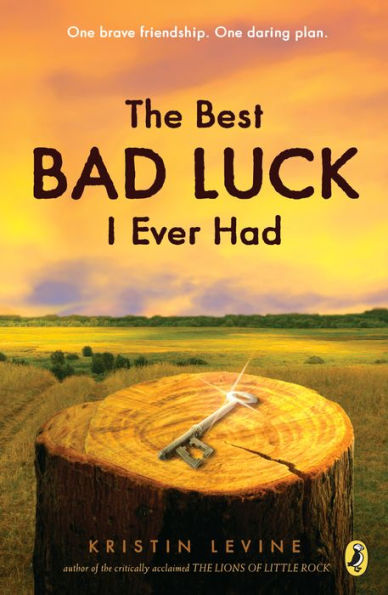
The Siege of MacIndaw

The kingdom is in danger. Renegade Knight Sir Keren has succeeded in overtaking Castle MacIndaw and now is conspiring with the Scotti. The fate of Aralean rests in the hands of two young adventurers: the Ranger, Will, and his warrior friend, Horace. Yet for Will, the stakes are even higher because inside the castle, held hostage, is someone he loves. Now the time has come for this once apprentice to grow up.

Will and Horace join together to free Alyss, defeat Keren, and return the castle to its rightful leader. Along the way, Will and Horace must work with the Sorcerer of the North and the Skandians. As the allies work together, they learn that things are not always as they seem. The group of unlikely allies will put their lives on the line when they siege the castle MacIndaw.

Fans of the Ranger’s Apprentice series will enjoy this action-packed story that shows Will’s and Horace’s personal growth. They are no longer apprentices who can rely on others for advice. In order to survive, they need to use their individual strengths to overcome Sir Keren. Unlike previous books in the series, Sir Keren is a well-developed villain who shows moments of weakness and uncertainty. Sir Keren’s behavior highlights the importance of keeping a vow and the unintended consequences of being an oath breaker.

The sixth installment of the Ranger’s Apprentice series is full of action, intrigue, and unexpected twists. The story explores how people react to things that they don’t understand. When strange lights are seen in the forest, people believe that a powerful sorcerer is using black magic. Will and Horace are able to use this belief to their advantage. Even though the reader knows that the “sorcerer” uses illusions to trick people, the illusions still add interest to the story.

 The Siege of MacIndaw ends with an epic battle. However, the battle for MacIndaw is more violent, bloody, and descriptive than the previous books. In The Siege of MacIndaw both Will and Horace have grown into adults, so the story hits on more mature topics such as loyalty, love, and sacrifice. However, the story leaves the reader with a satisfying picture of Will and Horace, who have built a stronger friendship and turned into trustworthy men who have each other’s backs. The Siege of MacIndaw will satisfy fans of the Ranger’s Apprentice series and leave readers reaching for the next book, Erak’s Ransom.

 Sexual Content

  • None

Violence

  • The Skandians plan to sell Buttle into slavery. When the Skandians’ ship begins to sink, they unchain Buttle. He “seized his chance. He grabbed a knife from one man’s belt and slashed it across his throat. Another rower tried to stop him, but he was off balance, and Buttle struck him down as well. Then he was over the rail and swimming for the bank.”
  • A Skandian wearing a horned helmet questions Horace’s ability to lead. “Horace stepped forward, grabbed a horn in each hand and lifted the helmet clear of the head. Before the man could properly protest, Horace had slammed the unpadded heavy iron headpiece back down, causing Nile’s knees to buckle and his eyes to cross slightly under the impact… He felt the iron grip seize his beard and was jerked violently forward.”
  • Will, Horace, and a group of Skandians ambush a party of Scotti in order to get information. Will shoots an arrow at a Scotti general, and “the arrow seared through the tendons and nerves in the wrist, the immediate shock of the wound depriving the hand of all feeling… robbing MacHaddish of the strength to brandish the huge sword.” Two other Scotti come to MacHaddish’s defense. Will fired an arrow “dropping one of them to the snow, dead in this tracks. Then the other was all over him, screaming hate and revenge, sword going back for a killing stroke.” Horace jumps in and throws “a solid right uppercut to his [the Scotti’s] jaw. The Scotti’s eyes rolled up in his head and his knees collapsed under him. He fell face down in the soft snow, unconscious.” The battle is described over three pages.
  • When MacHaddish escapes, Will goes after him. When MacHaddish sees Will, he “reacted almost without thinking, hurling himself forward… he lowered his shoulder and drove it into the cloaked figure.” As they fight, MacHaddish slashes with his dirk. Will “felt the blade slice easily through his cloak and kicked out flatfooted at the Scotti’s left knee.” When Will reaches for his scabbard, MacHaddish attacks. “Desperately, Will skipped backward, feeling the blade slash through his jerkin, a trickle of blood running down his ribs. His mouth had gone dry with fear.”
  • As Will and MacHaddish fight, MacHaddish uses his body weight to pin Will down. Horace appears just in time. “The heavy brass pommel of Horace’s sword slammed into the Scotti’s temple twice in rapid succession,” knocking MacHaddish unconscious. The fight between Will and MacHaddish is described over seven pages.
  • While seizing the castle, Horace uses a ladder to get over the castle walls. Horace “cut the first man down with ease. The second came at him, Horace deflected his halberd thrust, seized his collar and propelled him over the inner edge of the walkway. The man’s startled cry cut off abruptly with a heavy thud as he hit the flagstones of the courtyard.”
  • Will joins the fight and begins firing arrows. One of the men “staggered, screaming, as an arrow appeared in his thigh. Three men dead or wounded in a matter of seconds.”
  • In order to free a prisoner, Will tries to climb the stairs leading to the tower. Will surprised a man who was waiting above him. Will “continued his upward movement and lunged, feeling the saxe knife bite into flesh. The man cried out in pain and stumbled forward.” In order to get up the stairs, Will sends a “volley of ricocheting shots” up the stairs and injures the man. “Will grabbed his shirt front and heaved him down the stairs, sending him crashing into the outer wall, then tumbling head over heels down the staircase. Then he was silent, the only sound his inert body sliding a few meters farther down the stairs.”
  • During the attack, Horace and Buttle fight. Another man joins in to help Horace. When Horace looked back, “he saw the club fall from Trobar’s nerveless fingers as Buttle withdrew the sword from a thrust in the giant’s side. Trobar clutched at the sudden fierce pain, feeling his own hot blood course over his fingers… He saw that Buttle was about to thrust at him again and, hopelessly, threw up his arm to ward off the sword. The point of the blade thrust into his massive forearm, sliding through muscle and flesh, jarring the bone.”
  • Horace steps in to defend Trobar. When Buttle realizes he will lose the fight, he begs for mercy. When Horace thinks back to all of Buttle’s cruel deeds, he “grabbed Buttle by the front of his shirt and heaved him to his feet. As part of the same movement, Horace hit him with a short, savage right cross, perfectly timed, perfectly weighed, perfectly executed… Buttle screamed as he felt his jaw dislocate.”
  • Keren mesmerizes Alyss and commands her to kill Will. Will is able to break Alyss’s trance. While Will is comforting Alyss, Keren attacks. “Will regained his feet, the saxe knife sliding from its scabbard just in time to parry a side cut.” When Keren gets the upper hand on Will, Alyss picks up a bottle of acid. “She seized the weapon and moved to where Keren had trapped Will in a corner. The point of the sword was now leveled at Will’s throat… Keren smashed Will’s grip by the massive force of a two-handed overhead stroke.” Alyss throws the acid at Keren, and “his scream was terrible as the acid burned into his skin and eyes. The pain was excruciating, and he dropped the sword, clawing at his face, trying to ease the dreadful burning.” Keren eventually falls out the window. “His scream was long and drawn out—a mixture of pain and blind fear. It hung in the night above his falling body, like a long ribbon trailing behind him. Then, abruptly, it stopped.” Keren dies. The seize of the castle is described over 36 pages.

Drugs and Alcohol

  • Will thinks back to a banquet where ale was served.
  • Buttle went to the inn and demanded: “the finest food, wine and ale when he was visiting…”
  • Many of the Skandians had “bellies on them that suggested they might be overly fond of ale.”
  • A Skandian gave Horace a “beaker full of spirit.”
  • After Alyss broke out of her prison, a “healer had given her a sleeping potion and had put her to bed.”

Language

  • Will surprised a Skandian who cried, “Thurank’s horns! Where the devil did you spring from?”
  • Horace jokingly calls Will an oaf.
  • A man calls someone an idiot.
  • A man calls someone a fool.
  • After MacHaddish almost kills Will, Will yells, “Of course I’m not all right, you idiot! He damn near killed me!”
  • “For god’s sake” is used as an exclamation three times. For example, when Horace questions Will, Will says, “For god’s sake! Stop trying to make me worry!”
  • “My god” is used as an exclamation twice.
  • Damn and hell are used occasionally. For example, when a man interrupts Keren, he yells, “Get out, damn you!”
  • Hell is used several times. For example one of the Skandians says, “He’d better be one hell of a warrior.”
  • The Skandians use the exclamations “For Loka’s sake” and “Gorlog’s beard.”
  • Keren yells at one of the soldiers, “Get up, you yellow-skinned coward!”
  • A man calls Keren a fool.
  • Horace asks a man, “You really are a gutless piece of scum, aren’t you?”

Supernatural

  • Keren used a blue gemstone to hypnotize Alyss. “The stone had become the trigger for his posthypnotic suggestions. All he had to do was order her to look at it and within a few seconds, she would be mesmerized again.” When Keren uses the stone, Alyss’s “eyes fell to the beautiful orb as he rolled it gently back and forth on the tabletop. As ever, she could feel it drawing her in, filling her consciousness.”

 Spiritual Content

  • Horace saves Will from being killed. “Thank God, he thought, he had made it just in time.”
  • In order to get information out of MacHaddish, trickery is used. MacHaddish is lead to believe that “the dark demon Serthreck’nish is abroad in this forest, watching us stand here.” Serthreck’nish is a demon that is known as the soul stealer, “the flesh eater, the renderer, the tearer of limbs—Serthreck’nish was all these things and more. It was the demon, the ultimate evil in Scotti superstition. Serthreck’nish didn’t just kill his victims. He stole their souls and their very being, feeding on them to make himself stronger. If Serthreck’nish had your soul, there was no hereafter, no peace at the end of the long mountain road. And there was no memory of the victim either…”
  • “Gorlog was a lesser Skandian deity who had a long beard, curved horns and fanglike teeth.”
  • While seizing the castle, Will “breathed a silent prayer of thanks that there were not archers with longbows or recurve bows on the castle wall.”
  • After saying goodbye to his friends, Will tells his horse, “Thank God I still have you.”

How to Steal a Dog

Georgina Hayes’ life was turned upside down when her father left and they were evicted from their apartment. She hates living in a car with her mother and brother. Her mama is trying the best she can. Mama works two jobs trying to get enough money to find a place to live, but now Georgina is stuck looking after her younger brother, Toby.

Without a home, Georgina begins to look unkempt, and the kids at school notice. Georgina is angry and flustered because she’s also lost her best friend and her good grades. Georgina is desperate to make things better. When Georgina spots a missing dog poster with a reward of five hundred dollars, the solution to all her problems suddenly seems within reach. All she has to do is “borrow” the right dog and its owners are sure to offer a reward, but nothing goes how Georgina planned.

Georgina’s story sheds light on the problem of homelessness. Because the story is written from Georgina’s point of view, readers will be able to understand Georgina’s conflicting emotions and her desperation to live in a home. Georgina is frustrated and angry, which causes her to be mean to her brother. When Toby asks Georgina what’s wrong, she thinks, “How could I answer that? Should I start with that big F at the top of my science test today? Or should I jump right on into how mean our daddy was to leave us in this mess? And then should I move on to how bad it felt to live in a car while my best friend went to ballet school with somebody better than me?”

How to Steal a Dog shows readers how people often misjudge others based on their living situation. For instance, Georgina misjudges Mookie because he is a “bum.” Even though Mookie is homeless, he is kind and helps others. Although Mookie knows Georgina stole Willy, he keeps her secret and helps guide Georgina into making the right decisions. However, when Georgina skips school, Mookie tells her, “School’s about as useful as a trapdoor on a canoe.” Through her interaction with Mookie, Georgina learns that “sometimes the trail you leave behind is more important than the path ahead of you.”

How to Steal a Dog tackles the issue of homelessness in a kid-friendly manner that highlights the importance of being kind to others. Readers will relate to Georgina’s desire to keep her situation secret so kids don’t make fun of her. The conclusion shows Georgina’s family finally finding a house, but it also leaves several unanswered questions. How to Steal a Dog is an easy-to-read story that will help readers grow empathy. For more books with a homeless character, add Crenshaw by Katherine Applegate to your must-read list.

Sexual Content

  • None

Violence

  • None

 Drugs and Alcohol

  • Georgina’s family moves into an abandoned house that has a hole in the roof. When they first enter, Georgina sees “a wobbly table was covered with empty soda cans and beer bottles. Cigarette butts were scattered on the floor beneath it.”

Language

  • “Hot dang” is used twice. Dang is used once.
  • “Dern it” is used eleven times. For example, when Georgina’s mom loses her job, she says, “Maybe I better get out of the whole dern world.”
  • Georgina frequently calls her brother names, including idiot, ninny, dumbo, and dummy.
  • Heck is used once.
  • When Georgina hides in the bushes, a man says, “I ain’t scared of a coward that won’t even show his face.”
  • One of Georgina’s classmates calls her a dirtbag.

Supernatural

  • None

Spiritual Content

  • Georgina is upset that her family doesn’t have a home to live in. When Georgina asks her mother when they will have a house, her mother says, “I swear, every night I pray for a miracle but I reckon nobody’s listening.”
  • When the car won’t start, Georgina “Stared out the window, praying that old car would start.”
  • When a friend of Georgina’s mom gives the kids a ride to school in her beat-up car, Georgina prayed, “Please don’t let anybody see me.”
  • When the car starts, Georgina’s mom “clasped her hands together like she was praying and hollered up at the ceiling, ‘Hallelujah, praise the Lord.’”
  • When Georgina sees the dog’s owner, the owner tells her, “Now all I have to do is hope and pray somebody brings my Willy home.”

Swing

Despite their love for baseball, Noah and Walt are terrible players. Walt, who now requests to be called Swing (a request that Noah ignores), is undeterred. As with everything else in his life—jazz, love, and becoming cool—Swing is always willing to take a chance and wants to convince Noah to take swings in his life too.

Noah has been pining after his childhood best friend, Sam, since third grade. When Noah uncovers a set of love letters, he uses his art skills to adapt the letters to help him articulate his feelings for Sam. When Walt anonymously sends one of Noah’s letters to Sam, Noah must decide whether to put himself out there, even if it means rejection.

While Noah grapples with his emotions, many American flags are being left around town. Some think it’s a prank, but others seem to think that something more sinister is going on. The rising tensions and prejudices of their town come to light as Noah struggles to find confidence.

Despite being the main character, Noah is a shadowy figure compared to Swing. Swing’s vibrant sense of humor and optimistic outlook never waiver, and he has endless methods for trying to get Noah to see that life can be sunnier with a little effort. Noah, who can be petulant, drags his feet at most of Swing’s suggestions and comments. Many of Noah’s problems could be fixed if he earnestly took Swing’s advice. However, as the story progresses, Noah learns to take life in stride.

Most of the novel focuses on Noah’s conflicts with his unrequited love for Sam. Noah thinks he’s superior to Sam’s current boyfriend, Cruz, who is a varsity baseball player. Much of Swing’s advice for Noah surrounds this topic, as it consumes Noah’s every waking moment. There are moments where Noah’s passion for art comes up, but often it is to impress Sam in some way. Occasionally, Noah’s pining and self-pitying nature can be overbearing. However, he eventually finds the courage to tell Sam how he feels.

Although Swing, Noah, and Cruz all enjoy baseball, the main focus of Swing is not baseball. Instead, baseball is used to highlight Swing’s willingness to go after what he wants. Unlike Swing, Noah’s reserved nature holds him back from going after what he wants, and Noah himself gives up baseball early in the book.

 Swing tackles a lot of themes, including love, friendship, and prejudice. Not all the topics are fully expounded upon, and because of the twist ending some narratives are shortened. Swing is also told in free verse, and various art pieces appear as part of the story. These creative elements enhance Noah’s emotions and the reading experience. Overall, Swing shows that life is what people make of it. The most important lesson Swing offers is that people should find the courage within themselves to swing for worthy goals.

Sexual Content

  • According to Noah, his crush and best friend Sam, “was busy being cool, and fine.” He thinks he’s in love with her, and he claims that she is his inspiration when he draws.
  • Swing says to Noah, “Seven years is a long freakin’ time/ not to hook up with your/ self-proclaimed soulmate.”
  • Swing claims that his cousin, Floyd, is his romance guru because Floyd “used to date a reality TV/ star, and he knows a thing/ or two about love. Girls are always/ fighting over him.”
  • Sam indirectly tells Noah that her boyfriend, Cruz, is trying to pressure her into sexual activities which makes her uncomfortable. She says, “Cruz is kinda putting pressure on/ me…How do I tell him to slow down?
  • Swing tells his cousin Floyd that he’s “saving [his] paper for some nice frames the chicks will love.” Floyd reprimands Swing for being sexist and calling women chicks.
  • Floyd says to Swing, “Your future stepdad is a lucky man/ Aunt Reina was/ always fine as full-bodied wine.” To this comment there is silence and then Floyd adds, “What? It’s not like Floyd’s trying to Oedipus your mom. . .
  • Noah wants to write Sam “maybe a love song/ or a sonnet.” Unsure of how to convey his feelings, he listens to Swing’s recommended podcast, The Woohoo Woman, which dispenses love and life advice.
  • In a thrift store, Sam and her boyfriend Cruz kiss twice much to Noah’s chagrin. Noah describes, “they kiss like nobody/ and everybody’s watching.” The second time, Noah’s details about the kiss increase. He thinks, “I try not/ to pay attention to how long it lasts/ –eleven seconds—or how his hands move up and down/ her back (slowly), or/ how her eyes are closed and his are/ looking at—” Cruz then says to Noah, “Hey you, stop staring at my girl’s/ haunches.”
  • The employee in the thrift shop, Divya, shows Swing and Noah a purse. After she explains what it is, Swing says, “Striking. Exquisite…/looking not at the bag, but/ at her.” He makes several more passes at Divya. Swing even “grabs her hand/ with a confidence/ [Noah’s] never seen/ in mixed company/ and kisses it.” From this scene on, Swing is infatuated with Divya and expresses his feelings to Noah frequently.
  • Noah shares his first attempt at writing a song for Sam. The song is crude, and Swing points this out. Some of the lines include, “Your moist lips/ the oboe/ my tender mouth/ sings through.”
  • Noah finds a stack of love letters from the 1960s. In these letters, the writer, Corinthian, sometimes talks about how he wants to kiss Annemarie, his love.
  • Swing asks Noah to think about what he feels while listening to jazz. During a jazz song, Noah imagines “ending the day with a mad kiss/ under the jungle gym.”
  • Noah sees Sam and Cruz kissing at school. Noah notices that “She kisses him/ loudly.”
  • Noah asks who Sam thinks is sending her love letters/art pieces. Sam says, “whoever/ is doing this is/ smart and sexy.” In a separate thought, she muses, “Maybe it’s a girl.”
  • Cruz asks Swing and Noah how to “close the deal with Sam.” In this case, it is implied that Cruz wants to have sex with Sam.
  • Sam tells Noah why her parents got divorced. She says, “five years ago, our German/ shepherd Lucy ate some/ woman’s lingerie. When they/ recovered the skimpy outfit/ from Lucy’s gut, things got a little/ awkward when Mom/ realized the vet tech wasn’t holding/ up her lingerie.”
  • Sam, Noah, and Swing look at a Dali painting with a girl in it. When asked about what he sees, Swing says, “A girl with a big rump-shaker staring out/ the window.”
  • Sam gives Noah a parting kiss, “centimeters from/ [his] lips.”
  • Sam stays over at Noah’s house and they lay in bed. They talk all night and into the morning.
  • Sam says to Noah, “let’s go back to your/ place, and I can show/ you how a sophisticated lady acts.” This is seemingly sexual, but it is not explained further.
  • Sam kisses Noah on the cheek.
  • Noah describes one of his kisses with Sam. He says, “Our noses touch./ Our breath quickens./ We’ve kissed/ at least a dozen times,/ but this feels/ like the first,/ the only.”
  • Swing is miserable because Divya kissed him “on [his] neck.” For Swing, this means that she doesn’t want “to engage in witty/ conversation/ and occasional verbal sparring,” but rather she wants to do potentially more sexually explicit activities.
  • Noah describes his classmates and friends at prom. He notes, “Everyone’s either/ smiling or smirking,/ twirling or twerking,/ posing or posturing,/ kissing or wanting.”
  • Swing tells Noah that Divya kissed him. Swing describes, “Divya kissed me, really kissed me,/ and it was an out-of-body/ experience. It was heaven, Noah,/ and she was an angel.”

Violence

  • While in the third grade, a bully named Zach punched Noah. Sam, in retaliation, “pushed Zach Labrowski/ out of the seat, then/ squeezed in next to me/ and offered a tissue.”
  • Noah thinks that Swing snuck the love letter/art piece that Noah made into Sam’s bag. Noah is furious and thinks, “Never/ been/ a/ violent/ person/ but/ right/ now/ I/ feel/ like/ going/ to/ batting/ practice/ on/ Walt’s/ head.”
  • Noah compares his confrontation with Cruz and Sam to an old cowboy movie. He describes, “and the drunk fool will answer,/ I reckon this is none of your business,/ stranger,/ and clumsily pull out his six-shooter,/ at which point/ he will get shot dead/ between the ears/ by the handsome stranger,/ who will then/ ride off/ into the sunset/ with the lady/ on his arm.”
  • At a party, one of the seniors, who is very drunk, jumps from the upstairs railing to the couch. He’s in a lot of pain, and the students decide to call an ambulance. Much later, it is explained that he “sprained/ his pinky toe/ trying to be Superman.”
  • Swing’s brother, Moses, fought in Afghanistan and seems to suffer from PTSD. Sometimes he makes references to what he saw in combat, though it is never graphic or explained. For example, he yells “BAM!” quite a bit, in reference to the explosions that he heard.
  • Noah has Sam listen to some jazz, and she doesn’t enjoy it. Noah says, “It’s not depressing, it’s yearning.” To this, Sam says, “Yearning for what, a bullet to the/ head?”
  • It is insinuated throughout the book that the police are harassing minorities about the flag vandalism occurring around town. One night, Swing and Noah realize that Swing’s brother Moses is behind the incidents. When Swing and Noah find Moses, Swing takes the baseball bat that Moses is holding because he’s worried that Moses might be unstable due to Moses’ personal history. The police arrive, and they shoot and kill Swing on sight. It is later stated that the officers perceived Swing as a threat because he was holding a baseball bat. It becomes clear that the officer’s prejudices influenced their decision, as Swing was black. Noah describes, “One/ shoots/ two/ shoot/ three/ shots/ slice/ through/ rain/ drops/ Walt/ drops/ blood/ drops/ I run/ I run/ to Walt.” Noah runs to Swing’s aid, but the cops tackle him to the ground. Noah later recalls, “The bat falling/ from Walt’s hands,/ suspended/ for too long./ The sound/ of gunshot/ piercing air/ and flesh.”

Drugs and Alcohol

  • Swing describes to Noah how they’re going to be cool one day. Swing says, “when people google/ cool a picture of me and you/ spitting seeds and tobacco/ with our hats to the back will pop/ up.” It is expressed later that they themselves do not chew tobacco.
  • Noah’s parents go to Barcelona for the International Hotel Association conference. According to Noah, this trip is where “hotel managers/ talk about hotels/ from sunup/ to sundown,/ then get drunk/ and post videos/ of horrible, late-night/ karaoke sessions.”
  • Before Noah’s parents go to Barcelona, they sit Noah down to talk about the house rules. Noah dryly jokes to his parents, “I think I’m clear on all the rules . . . no beer on an empty/ stomach, right?”
  • One of the love letters that Noah finds states that the writer, Corinthian, and the intended recipient, Annemarie, drank wine.
  • Noah and Swing listen to a podcast called Straight, No Chaser. The podcast’s content is never discussed.
  • Noah looks for the Corinthian, who wrote the love letters. All he can find is a Corinthian who wants to “turn up and sig a little/ drink.”
  • Swing suggests that he and Noah should “get pizza and beer.” Noah replies, “We don’t drink beer.”
  • Sam spreads the word that Noah’s having a party. Sam tells Noah, “I can ask/Cruz to get his older/ brother to bring some beer.” The beer is expressly for the partygoers rather than Swing, Sam, or Noah, who stated several times that they do not like beer.
  • At Noah’s party, there is “some sort of punch/ that some guy,/ who [Noah’s] never seen before,/ starts immediately spiking/ with a bottle/ from his backpack.” Many of the teenagers at the party drink out of it and from the beers they’ve brought.
  • Sam speculates that Moses may have been “on drugs” when he showed up at Noah’s party.
  • Sam admits that she’s tried weed, “just once.”

Language

  • Words like weird, idiot, dang, friggin’, shut up, suck, pissed, and dayum appear infrequently.
  • Sam and Noah have creative insults for each other, though these jabs are light-hearted. For example, they call each other, “Sucknerd,” “Toadlip,” “Horsehead,” and “Big butt.”
  • On The Woohoo Woman Podcast, Marj says, “We’re back for the last half/ hour of Woohoo Woman,/ hopefully with a little less profanity/ in this segment.” Jackie later almost says various swear words, but she catches herself or is cut off by Marj each time. For instance, Jackie says “DAYU-“ instead of damn.
  • Noah’s Granny calls some of her card-playing buddies “SHYSTY FELLAS.”

Supernatural

  • Swing is very superstitious. Noah says that Swing “can’t walk/ up or down/ the same side of the street/ on the same day,/ or in and out/ of the same door/ when he’s coming/ or going somewhere.”
  • Noah describes art to Swing. Noah says, “Art is…finding yourself/ under the spell of/ Gustav Klimt’s/ The Kiss.”

Spiritual Content

  • Many years ago, Noah and Sam went to the same “Jesus camp.”
  • In the third letter, Corinthian makes many religious references. Corinthian tells Annemarie, “i went to church with nothing but a penny for an offering. inside i prayed a thousand prayers sacredly and secretly holding the memory of your hand in mine. . . all the mysterious and magnificent things that make music will be ours under notes of heaven above and earth below. our love provides god’s angels with trumpet and song. . . [you] gave me everything, like the goddess of muses. heaven may be a place where artists go when they die, eternally playing songs, painting scenes, writing plays, or else napping, but i regret to inform the big man that i’m not leaving for eternity until u and i can be seen as an ‘us’ on this same earth.”
  • Swing paraphrases the Bible’s book of Matthew. Swing tells Noah, “If your brother pisses you off, tell him about it. If he listens to you, he is your brother for life.” Noah replies, “I doubt the Bible says pissed off.”
  • Noah and Swing listen to a jazz album. Noah describes the experience by saying, “We listen/ like we’re in church, on/bended knee, and our god/ is Dexter Gordon.”
  • Noah describes art to Swing. Noah says, “Art is…Monet’s/ Impression. Sunrise/ carrying you away on a harbor of dreams/ that only God/ knows about.”
  • After an officer interrogates Noah about Swing, Noah thinks about the officer, “You are not/ God. Here. You are/ not God. You/ are no God. You/ are no good.”

by Alli Kestler

Clean Getaway

For the life of him, William “Scoob” Lamar can’t seem to stay out of trouble—and now the run-ins at school have led to a lockdown at home. So, when G’ma, Scoob’s favorite person on Earth, asks him to go on an impromptu road trip, he’s in the RV faster than he can say “freedom.”

With G’ma’s old maps and a strange pamphlet called the Travelers’ Green Book at their side, the pair takes off on a journey down G’ma’s memory lane, but adventure quickly turns to uncertainty. G’ma keeps changing the license plate, dodging Scoob’s questions, and refusing to check Dad’s voicemails. The farther they go, the more Scoob realizes that the world hasn’t always been a welcoming place for kids like him, and things aren’t always what they seem—G’ma included.

While Scoob gets a glimpse of G’ma’s youth, the events are often disjointed and slightly confusing. During the trip, G’ma shares a secret that has been haunting her for the majority of her adult life. Soon after G’ma married her husband Jimmy, the two took off on a cross-country trip, hoping to end up in Mexico. As G’ma retraces her steps, Scoob is left wondering how all the pieces fit. When the reader finally learns G’mas secret, many of the facts just don’t make a lot of sense and there are many questions that are unanswered.

Most of the story’s action happened in the past, which makes the details less exciting and not well-developed. For example, G’ma stops at Medgar Evers’s house and tells Scoob about his death. Even though the events were tragic, the significance of Medgar’s life and death is lost because there is so little information about him. Instead of feeling like a well fleshed-out story, Clean Getaway brings up a topic and quickly moves on, leaving the reader with a list of people and events that lack historical significance.

Even though the story is disjointed, middle school readers will still enjoy the relationship between Scoob and G’ma. As they travel, Scoob gets a clearer picture of the difficulties that existed in the segregated south, especially for a biracial couple. Despite the great gains America has made, Scoob realizes how the past has helped shape his life.

Told from Scoob’s point of view, middle-grade readers will understand Scoob’s confused emotions and his anger at his father. When Scoob enters a state, a map of the state appears, which gives fun facts. The maps help the reader keep track of G’ma’s route as well as some of the important places the pair go to. Clean Getaway explores the difficult themes of racism, regret, and the complicated nature of humans. Black and white illustrations appear throughout the story, which will help the reader visualize the story’s events. As G’ma tells about her days of youth, readers see how G’ma’s choices have affected not only her son but also her grandson.

Sexual Content

  • None

Violence

  • Scoob tell his grandma about his friend, Drake, being bullied by Bryce. Bryce would “tap Drake on the back of the head as he’d shout ‘Sup, Drakey-Drake?’ loud enough for the whole room to hear. After a few days of this, the tapping turned to shoving, turned to smacking. There was one morning Bryce hit so hard, Drake cried out in pain.”
  • Bryce makes fun of Drake’s epilepsy. Bryce “passed by and hit him, and Drake’s whole body lurched forward like a board… He pointed of his fat, pink fingers at Drake and laughed…” Bryce imitates Drake’s seizure and says, “‘Too bad it’s not the type where he shakes and his tongue falls out.’ And he stuck his big, ugly tongue out and pretended to convulse.”
  • When Bryce teases Drake, Scoob “leapt from his seat, hopped the table, and tackled Bryce. Then they were on the floor. Bryce was on his back. Scoob on top of him. Punching. Punching. Punching.”
  • G’ma tells Scoob about April 3rd, 1968 when Martin Luther King’s assassination occurred and a “colored” church was bombed and “four little girls were killed.”
  • G’ma stops in front of Medgar Evers’s house. She tells Scoob, “It was built to house Medgar Evers’s family. Medgar was known for helping black folks get registered to vote back in the day. Also drew national attention to the horrible crime committed against the Till boy, Emmett. He was killed just a few hours north of here… He [Medgar] was shot as he got out of his damn car.”

 Drugs and Alcohol

  • G’ma drinks bourbon from a flask. She says bourbon “was your G’pop’s favorite.”

Language

  • Heck is used nine times. For example, Scoob thinks, “What the heck was he thinking letting G’ma drag him out into the Mississippi wilderness?”
  • G’ma and Scoob eat at a place called “Damn Yankees.”
  • G’ma calls Bryce a “bonehead.”
  • Darn is used five times. For example, G’ma says, “Not as nimble as I used to be, but this old bird can still start a darn good fire.”
  • G’ma says, “Good lord. Haven’t laughed like that in years.”
  • Damn is used once. Dang is used once.

Supernatural

  • None

Spiritual Content

  • Scoob tries to find a TV channel, but “the antenna only picks up four channels. One is religious, of the cowboy-looking guy hopping around.” The man says, “I said-ah, the good Lord-ah, he is among us-ah.”

The List of Things That Will Not Change

When Bea’s parents get divorced, Bea gets shuffled between her mom’s house and her dad’s house. In order to help Bea process her emotions, her parents give her a notebook that has a list of things that will not change. Eventually, Bea meets her father’s partner, Jessie. When the two decide to get married, Bea’s biggest wish is about to come true—Bea’s finally going to have a sister!

Bea has a lot in common with her soon-to-be sister, Sonia. Both Bea’s and Sonia’s parents are divorced. Both of their dads are gay. The one thing that is different is that Bea lives in New York while Sonia lives in California. When Bea finally meets Sonia, Bea has a hard time understanding some of Sonia’s actions. Bea wonders if Sonia and she will ever be like real sisters. Will the wedding turn them into a real family?

Even though Bea’s parents try to make the transition easy, Bea is confused because her parents have a different set of rules. In order to help Bea work through her emotions, she goes to see a counselor who helps her deal with her emotions in an appropriate way. For example, a counselor named Mariam teaches Bea how to worry. “She wanted me to worry for five minutes straight, two times a day… And if my worry showed up at any other time, like during school or at Angus’s house, Miriam said I should tell it ‘Go away, and I’ll see you later.’”

The List of Things That Will Not Change is told from Bea’s point of view, which allows the reader to understand her insecurities, fear, and anger. However, the story jumps back and forth between the “Year of Dad Moving Out” and the “Year of Dad and Jessie Getting Married,” which can cause some confusion. Some of Bea’s thoughts are revealed through letters that she writes to Sonia. Bea’s vast emotions are explained in ways that every child can understand.

As the story progresses, Bea learns that not everyone is accepting of her Dad and Jessie getting married. Someone tells Bea, “Family can turn their backs on you, just like anyone else.” Bea finds out that Jessie’s family doesn’t talk to him anymore because he is gay. Jessie’s sister tells Bea that when people take away their love, “It makes you smaller. Sometimes it makes you disappear.”

Another important lesson Bea learns is that “Life is like a trip. A very long one. And what matters most is the people you travel with.” While The List of Things That Will Not Change teaches some important life lessons, readers may have a difficult time finishing the book. The majority of the book focuses on Bea’s emotions, which slows the pace and makes the book difficult to read to the end. The List of Things That Will Not Change will help readers who are facing a life-changing event process their emotions. We Are All Made Of Molecules by Susin Nielsen tackles some of the same themes and contains more action; however, it is only appropriate for more mature readers. Readers who are plagued by anxiety and need help understanding their emotions should read Guts by Raina Telgemeier.

Sexual Content

  • Bea’s father told her, “He would always be attracted to some men the same way some men were attracted to some women. It’s the way he’s felt since he was little.”

Violence

  • Bea’s cousin calls her a ping-pong ball because she goes back and forth from her mother’s house to her father’s house. Bea “was on top of her in three steps. First, I yanked her ponytail, and then I smacked that ball off her hip, down to the dirt.”
  • When Bea was eight, she was invited to a birthday party. While playing musical chairs, she “didn’t want to lose… But when the music stopped the second time, the closet chair already had someone sitting in it…” Bea shoved a boy off the chair onto the floor.
  • When Bea was leaving the birthday party, she “threw my party bag at Carrie’s mom. It hit the wall right behind her, and everything inside—candy corn, mostly—exploded all over the floor.”
  • Bea is upset at a girl in her class. She tricks the girl into putting her hand up to her nose. Then Bea “bashed it into her face. Carolyn’s eyes teared up. She cupped her hands around her nose for a few seconds and then took them away, slowly.” Carolyn tells Bea, “You’re mean sometimes, you know that?”
  • Bea feels guilty because she “pushed my cousin Angelica off the loft at our summer cabin. Uncle Frank says her head missed the woodstove by four inches.”
  • Bea’s cousin shows her a scar and says, “That’s where James threw a piece of wood at me when he was ten. It had a nail sticking out of it! Blood everywhere!”
  • Jessie’s brother comes to the wedding and “pushed the cake off the table.” Then he runs out of the wedding.

 Drugs and Alcohol

  • Bea’s cousin said she saw a guy that “was totally drunk.”

Language

  • While at the family’s summer cabin, Bea’s cousins begin commenting on people’s butts. One cousin says, “Hey, hey, my name is Bill, but my butt is bigger than Hamburger Hill.” Another cousin says, “Hey, hey, my name is May—and my butt’s not big, but my daddy’s gay!”
  • Bea calls her cousins “a bunch of jerks.”

Supernatural

  • None

Spiritual Content

  • Bea’s cousin thinks she was injured because she had bad karma. She says, “I was vacuuming—I have to vacuum the whole house. And I heard this noise in the hose… And when I looked, I saw this little toad in the canister… I didn’t do anything. I left it there, to get dumped.”

Undefeated: Jim Thorpe and the Carlisle Indian School Football Team

In 1907, the Carlisle Indian School in Pennsylvania became one of the most innovative football teams in the United States. Lead by Ivy League graduate Pop Warner and star player Jim Thorpe, this team would go on to challenge the most prominent football teams of the day, including Harvard, the University of Pennsylvania, and Yale.

This narrative nonfiction story highlights the history of football and of the United States’ direct involvement in the mistreatment of Native Americans. The Carlisle Indian Industrial School was the first government-run boarding school meant to assimilate Native Americans into white society. The school opened after the Black Hills war and centuries of violent conflict. Native American children were taken from their homes to live in military-style schools, where they were not allowed to dress in traditional Native American clothing nor speak their native languages. This practice became standard in the U.S., effectively cutting children off from their parents and their cultures. This is the context that surrounded Jim Thorpe and the Carlisle Indian School football team. It is a history unknown by most and not widely discussed.

Undefeated weaves the history of football and the Carlisle Indian School Football Team into the United States’ treatment of indigenous people. Sheinkin masterfully presents history without holding back on the grim reality of boarding schools or the overwhelming obstacles Native American students faced both on and off the football field. Sheinkin effectively balances a creative narrative nonfiction style with more strait-laced historical aspects. These two facets create an engaging view of a lesser-known aspect of one of the United States’ favorite sports without sacrificing accuracy or becoming boring.

The football-heavy parts of this story delve into the danger the players faced before football was modernized. Sheinkin makes the game descriptions digestible even to those who don’t know football or the sport’s history well. Undefeated takes readers through the highs and lows of practices and games, giving readers the feeling of being there in real-time. Ultimately, Undefeated shows a love for football that is untarnished by time.

Undefeated is not a typical football story about the underdog team fighting for first place. The story is far more complicated and interesting, and it breathes life into its historical cast of characters. History rarely comes with clean-cut lessons, but Undefeated presents the need for perseverance when the going gets tough. The world that Jim Thorpe and his classmates from the Carlisle Indian School lived in was unfair to them, and their stories deserve recognition in American history. Their legacy lives on in one of America’s favorite pastimes and their influence upon football will carry forward for generations to come.

Sexual Content

  • Jim Thorpe liked classmate Iva Miller and told her upon meeting her that, “‘You’re a cute little thing.’ Iva was not impressed.”

Violence

  • Jim Thorpe attempts to try out for the football team, but Pop Warner sends him out to get tackled by the current varsity players. No one can touch Jim, though, because he’s incredibly agile and fast. Warner yells, “Hit him down so hard he doesn’t get up!”
  • Football-related violence occurs throughout the book. One memorable line comes from the first official American football game in 1869. During the game, “One of the Rutgers men, George Large, took a blow to the head and came up woozy. He stayed in the game. For the rest of his life, Large would boast that he was the first man ever injured playing American football.”
  • The football-related violence is heightened because early football had few real rules. In one description, “[The play] wasn’t over until the man with the ball quit moving. So while he squirmed and wriggled forward, more defenders piled on, and plays ended in massive, writhing mounds, inside of which guys would throw elbows and knees, scratch and bite, spit and choke, until the refs could untangle the heap.”
  • When Jim was young, his father Hiram “strode into the river in his boots, grabbed [Jim], hauled him out to deep water, and dropped him in the current. Hiram then waded back to the bank and watched.” This was Hiram’s way of teaching Jim how to “man up.”
  • Hiram carried “bullets in his belt.”
  • The story discusses the historical treatment of Native Americans by the United States government, including the Indian Removal Act of 1830. For instance, “President Andrew Jackson explained the objective in bluntly racist language. Native Americans were surrounded by what Jackson called ‘a superior race.’” Describing the Trail of Tears, Sheinkin writes “an estimated four thousand people died of disease, cold, and starvation before the nightmare journey ended.”
  • Of a town near Jim’s birthplace, one stagecoach driver said you could, “stay for half an hour and see a man killed.”
  • Losing one of Jim Thorpe’s childhood games came with a price. Anyone who fell behind or lost had to endure the slapping machine. He describes it as, “This consisted of scampering on hands and knees between the legs of others in the game, assisted by a brisk paddling.”
  • Jim hiked 23 miles home from school and Hiram “gave Jim a whipping” and took him straight back to school. This happens several times, as Jim tended to skip school and return home.
  • A player from Georgia died during a football game. The player “hit the ground headfirst . . . The blood drained from his face. His eyes were open, his lips quivering. A doctor ran onto the field and diagnosed a fractured skull . . .  he died the next morning.” Similar injuries and deaths are described in similar detail.
  • Thorpe and two of his teammates were going to the baseball field when a large white man stepped in their path. The white man said, “When a white man approaches, you get off the sidewalk and get into the street.” In response, Thorpe punched the man in the face, and the trio “walked around [the white man’s] fallen body to the baseball field.” They then “spent that night in jail.”
  • The Carlisle Indian School staff mistreated students, and the 1914 Congress investigated the claims. Students “came forward to testify about skimpy meals for non-athletes and cruel treatment, including beatings, by teachers.”
  • Coach Pop Warner reported that “If a player was too good-natured or easygoing . . . the coach would tell one of his own mates to sock him in the jaw when he wasn’t looking and then blame it on the other team so as to make him mad.”
  • As a child, Pop Warner stood up to his bullies. “One of the class bullies grabbed Pop’s hat, tossed it into a slushy puddle, and stomped on it . . . In a burst of rage, [Warner] pounced on the bully, knocked him down, and started pummeling him.”

Drugs and Alcohol

  • Jim grew up near Keokuk Falls. The story was that “it was a place where even the pigs got drunk—a whiskey distillery near town dumped used corn mash behind the building, and hogs gorged on it and staggered down the dirt streets.”
  • After a game in Chicago, “the [Carlisle] players collapsed onto couches at their hotel and lit up cigars.”
  • Pop Warner smokes during practices with the Carlisle players.
  • The Carlisle football players were allowed to drink at the local bars, which “weren’t supposed to serve Carlisle students, but exceptions were made for football players.”
  • Jim Thorpe occasionally smokes cigars.
  • After a game, “Thorpe and Welch sat together with glasses of beer.”
  • Thorpe and his daughter Charlotte told stories one night “over drinks.”

Language

  • Profanity is limited. Derogatory terms include “sissy” and “crippled.”
  • Many derogatory names are referenced in quotes toward Native Americans. For instance, the founder of the Carlisle Indian Industrial School fought in land disputes against Native Americans on behalf of the U.S. He said, “I had concluded . . . that as an army officer I was there to deal with atrocious aborigines.” In another example, newspapers referred to the Carlisle football team wins as “scalpings” and “massacres.” This occurs somewhat often throughout the book.
  • Pop Warner’s childhood nickname was Butter— “It was not a compliment . . .  [His classmates] pelted his broad backside with beans shot through straws, and pebbles launched from slingshots.”
  • When the first group of Native American students was brought to the Carlisle Indian School, “the townspeople waved their arms and made grunting sounds—mimicking their idea of Indian behavior.”
  • Pop Warner had a colorful vocabulary and used it during some practices with the Carlisle players, who did not appreciate his rudeness. The book quotes Pop as saying such things as, “Play @#$& football!” and “What in the %&*# you think you’re doin’?” It does not use the actual swear words.
  • At one point, Thorpe says to Pop “Aw, hell . . . what’s the use of going through ‘em when I can run around ‘em?”

Supernatural

  • None

Spiritual Content

  • None

by Alli Kestler

The Crossover (Graphic Novel)

Twelve-year-old Josh and his twin JB Bell are the kings of the basketball court. Untouchable and unstoppable—the sons of former professional basketball player Chuck “Da Man” Bell couldn’t be anything less than excellent. But when Alexis walks into the twins’ lives and steals JB’s heart, Josh is left without his best friend by his side. Meanwhile, the boys’ father’s health is on the decline, despite Chuck’s utter denial. Josh and JB must deal with the consequences of everyone’s actions—including their own.

The illustrations in the graphic novel, The Crossover, bring the story to life. Illustrator Dawud Anyabwile’s comic book style illustrations match the high-pace action of the novel, especially during the basketball scenes. Most of the illustrations are in black and white with detailed shading, but Anyabwile frequently utilizes orange to help features pop off the page. The text changes in size and shape which helps to capture the rhythm of the poem. Even though this is a graphic novel, the poetic language makes The Crossover a good choice to read aloud.

The pages vary in the amount of text and pictures. Some pages have full-bodied scenes with a few sentences, while others have smaller pictures with mostly narration or dialogue. Alexander’s free-verse poetry moves very well and, thus, lends itself to these variations in page styles. The text placement only serves to emphasize parts of the story. Even though the graphic novel has some difficult vocabulary, the words are often defined and the repetition of the words allows the reader to understand the term. Readers will learn new vocabulary, but the more advanced vocabulary is balanced with realistic dialogue and trash talk during the basketball scenes.

The words themselves rarely vary from the original book, though the verse orientation on the page serves to emphasize different phrases. Those who have read the original text will still find that the graphic novel conveys characters’ moods and personalities in different ways due to the addition of illustrations. Josh, JB, and their friends and family are all vibrant characters and the pictures give them new life and add to the reading experience.

The Crossover was already a moving story, but the story benefits greatly from the addition of illustrations. The illustrations enhance the characters’ emotions and the story’s stakes feel heightened. The story speaks truths about grief, love, and basketball, and the pictures serve to bring those wonderful themes to another dimension. Newcomers and fans of the original story will find this edition to be a worthy addition to their shelves.

Sexual Content

  • Josh and JB’s dad, Chuck “Da Man” Bell, tells his sons about how back in the day, he “kissed/ so many pretty ladies.”
  • Josh says that the only reason why JB has been “acting all religious” is because classmate “Kim Bazemore kissed him in Sunday/ school.”
  • Josh does his homework while “Vondie and JB/ debate whether the new girl/ is a knockout or just beautiful,/ a hottie or a cutie,/ a lay-up or a dunk.”
  • Josh teases JB and asks if “Miss Sweet Tea” (Alexis) is his girlfriend. JB dodges the question. However, it is clear that he likes her a lot because “his eyes get all spacey/ whenever she’s around,/ and sometimes when she’s not.”
  • Chuck faints, and his wife, Crystal, demands that he see a doctor. Chuck refuses, and they argue. In an attempt to diffuse the tension between them, he says, “Come kiss me.”
  • After Crystal and Chuck stop arguing about Chuck’s health in the bedroom, Josh narrates, “And then there is silence, so I put the/ pillow over my head/ because when they stop talking,/ I know what that means./ Uggghh!” This happens a couple times throughout the book, though it is never illustrated.
  • Alexis wants to know “am I [JB’s] girlfriend or not?”
  • Josh likes Alexis romantically as well, but JB doesn’t know that.
  • JB and Alexis walk into the cafeteria, and she’s “holding his/ precious hand.”
  • JB and Alexis kiss in the library, and Josh sees them. The kiss is illustrated.
  • JB tells Alexis “how much she’s/ the apple of/ his eye/ and that he wants/ to peel her/ and get under her skin.”

Violence

  • JB plays with Josh’s locks of hair. Josh “slap[s] him/ across his bald head/ with [Josh’s] jockstrap.”
  • JB accidentally cuts off five of Josh’s locks of hair. Josh gives JB several noogies over the course of a few interactions.
  • Josh nearly breaks JB’s nose with a hard pass during a basketball game. He does it on purpose because he’s upset with JB, and Josh is suspended from the team. The description is only a couple of words long.

Drugs and Alcohol

  • Crystal’s younger brother “smokes cigars.”

Language

  • There are a few rude terms used occasionally by the younger characters. Some terms include crunking, stupid, and jerk.
  • When Josh narrates his plays in games, he talks big about his game and this leads to him occasionally threatening physical contact during the game. For instance, Josh says in part of his beginning speech, “Man, take this THUMPING.”
  • Josh’s nickname is “Filthy McNasty.”
  • JB suggests a bet against Josh. Josh responds with, “You can cut my locks off,/ but if I win the bet,/ you have to walk around/ with no pants on/ and no underwear/ at school tomorrow.”
  • JB responds with, “if you win,/ I will moon/ that nerdy group/ of sixth-graders/ that sit/ near our table/ at lunch?”

Supernatural

  • None

Spiritual Content

  • JB only went to one basketball summer camp because “he didn’t want to miss Bible/ school.”
  • The Bells go to church on Sundays before basketball. Josh says, “When the prayers end/ and the doors open/ the Bells hit center stage,” meaning the basketball court. Josh sometimes mentions team prayers or praying to win games.

by Alli Kestler


Latest Reviews