Where the Red Fern Grows

Billy has long dreamt of owning not one, but two dogs. So when he’s finally able to save up enough money for two pups to call his own, he’s ecstatic. Soon, Billy and his hounds become the finest hunting team in the valley. But tragedy awaits these determined hunters—now friends—and in time, Billy learns that hope can grow out of despair.

Where the Red Fern Grows is a beloved classic that captures the powerful bond between man and man’s best friend. It will stand the test of time as long as there are boys and girls who love their dogs—and dogs who love them.

Where the Red Fern Grows has been taught in schools for decades because of its message and endearing characters. The story is told from Billy’s point of view, which allows the reader to connect with Billy and understand his emotions. Anyone who has loved a pet will connect with Billy and his dogs—Old Dan and Little Ann. Billy works hard in order to earn enough money to buy his dogs. When he brings Old Dan and Little Ann home, Billy spends almost every night hunting with them. These experiences show the two dogs’ dedication to each other and to Billy, which is why many readers will cry at the story’s conclusion.

Throughout the story, Billy has positive interactions with his family, including his grandfather. Through his interactions with his family, his dogs, and others, Billy’s character slowly unfolds. Billy clearly loves nature, his dogs, hunting, and his family. The detailed descriptions of the Ozark Mountains highlight Billy’s love of nature as well as his belief in God. As Billy struggles to understand his world, he often seeks out his parents in order to ask questions about God. In the end, Old Dan and Little Ann were an answer to Billy’s prayers and his mother’s prayers. While the conclusion is likely to cause tears, it effectively highlights the selflessness of love.

Despite the positive aspects of the story, some readers will struggle to understand the culture of the Ozark Mountains during the 1920s and might be upset by the bloody hunting scenes. Unlike many books today, Where the Red Fern Grows isn’t an action-packed story, but instead draws the reader in slowly and makes them fall in love with Old Dan and Little Ann. As a coming-of-age story, Where the Red Fern Grows illustrates the importance of hard work, dedication, and love. The story also focuses on themes of family, sacrifice, God, and death. As Billy matures, he learns valuable life lessons, which are still applicable to today’s readers.

Sexual Content

  • None

Violence

  • Billy sees a pack of dogs attack another dog. “Twisting and slashing, he found his way through the pack and backed up under the low branches of a hedge. Growling and snarling, they formed a half moon circle around him. . . He came out so fast he fell over backwards. I saw his right ear was split wide open.” Billy swung his coat at the dogs, and they scattered and left.
  • When Billy went into town, a group of boys ganged up on him. The leader of the group “stomped on” Billy’s foot. Billy “looked down and saw a drop of blood ooze out of a broken nail.”
  • Billy stands up to one of the town boys. His fist “smacked on the end of Freck’s nose. With a grunt he sat down in the dusty street.” His nose begins to bleed. Then the other kids gang up on Billy. Billy tries to fight, but there are too many of them. “By sheer weight and numbers, they pulled me down. I managed to twist on my stomach and buried my face in my arms. I could feel them beating and kicking my body.”
  • When the marshal sees the kids beating Billy, the marshal planted “a number-twelve boot in the seat of the last kid.” The fight scene is described over two pages.
  • When a coon gets stuck in one of Billy’s traps, his puppies bark at it. The male pup got too close and “the coon just seemed to pull my pup up under his stomach and went to work with tooth and claw.” The female pup helps her brother. “Like a cat in a corn crib, she sneaked in from behind and sank her needle sharp teeth in the coon’s back.”
  • Billy and his family go back to see the trapped coon. Billy’s dad “whacked the coon a good one across the head. He let out a loud squall, growled, and showed his teeth. . . Papa whacked him again and it was all over.”
  • Often Billy describes Old Dan and Little Ann killing a coon. For example, while coon hunting, Little Ann caught a coon, and “the coon was all over her. He climbed up on her head, growling, slashing, ripping and tearing. Yelping with pain, she shook him off . . .” The coon escapes, but the dogs find him again. “They stretched Old Ringy out between them and pinned him to the ground. It was savage and brutal. I could hear the dying squalls of the coon and the deep growls of Old Dan.”
  • Billy and two boys, Rubin and Rainie, get into an argument. Ruben “just grabbed me and with his brute strength threw me on the ground. He had me on my back with my arms outspread. He had one knee on each arm. I made no effort to fight back. I was scared. . . He jerked my cap off, and started whipping me in the face with it.”
  • Little Ann and Old Dan get into a fight with another dog. Billy “could see that Little Ann’s jaws were glued to the throat of the big hound. She would never loosen that deadly hold until the last breath of life was gone.”
  • Rubin accidentally falls on his ax. As Rubin lays dying, he asks Billy to remove the ax. Billy “saw his hands were curled around the protruding blade as if he himself had tried to pull it from his stomach.” Billy pulls the ax out and “The blood gushed. I felt the warm heat as it spread over my hand. . .” Rubin tries to talk but, “words never came. Instead, a large red bubble slowly worked its way out of his mouth and burst. He fell back to the ground. I knew he was dead.”
  • While hunting, a coon fights back. The coon “had climbed up on her [Little Ann’s] back and was tearing and slashing. . . Old Dan came tearing in. . . . When the coon was dead, Papa picked it up. . .”
  • A bobcat attacks Billy and his dogs. Billy “was in the middle of it all, falling, screaming, crying and hacking away at every opportunity. . .” Billy hits the bobcat with his ax and “the heavy blade sank with a sickening sound. The keen edge cleaved through the tough skin.”
  • Old Dan tries to protect Billy and Little Ann. “Old Dan, spewing blood from a dozen wounds, leaped high in the air. His long, red body sailed in between the outspread paws of the lion. I heard the snap of his powerful jaws as they closed on the throat.” The bloody attack is described over six pages. The bobcat is killed and Old Dan dies from his wounds.

 Drugs and Alcohol

  • When Billy went to town to pick up his dog, he saw a drunk.
  • When getting ready to go on a trip, Billy’s grandfather packs “corn liquor.”

Language

  • Damn is used three times. For example, when Billy asks his grandfather to help him purchase the dogs, his grandfather said, “Well, Son, it’s your money. . .You got it honestly, and you want some dogs. We’re going to get those dogs. Be damned! Be damned!”
  • When Billy doesn’t want to kill an old coon, a boy says Billy is “chicken-livered.”
  • Twice, the female dog, Little Ann, is referred to as a bitch.

Supernatural

  • Billy hears two screech owls. He believes this means he will have bad luck.
  • Billy finds a red fern growing over Old Dan’s and Little Ann’s graves. According to an Indian legend, “only an angel could plant the seeds of a red fern, and that they never died, where one grew, that spot was sacred.”

Spiritual Content

  • Throughout the story, when Billy is in a difficult situation, he prays. For example, Billy tries to cut down a huge tree in order to catch the coon hiding in it. He is about to give up, when he decides to pray, “Please God, give me the strength to finish the job. I don’t want to leave the big tree like that. Please help me finish the job.” A wind blows the tree down and Billy believes that God sent the wind.
  • Billy takes care of a stray dog. When the dog is ready, he left. The dog “was going home to the master he loved, and with the help of God, he would make it.”
  • When Billy was a kid, he wanted two hunting dogs. When Billy comes up with a plan to get the dogs, he thinks, “The good Lord figured I had hurt enough, and it was time to lend a helping hand.” Billy finds a magazine with an ad selling hound dogs.
  • When Billy begins saving money for his hound dogs, he “remembered a passage from the Bible my mother had read to us: ‘God helps those who help themselves.’ I decided I’d ask God to help me. . . I asked God to help me get two hound pups.”
  • After Billy is able to save the money to buy two dogs, he thinks, “I knew He [God] had surely helped, for He had given me the heart, courage, and determination.”
  • Billy’s mother “prays every day and night” for the family to have enough money to move into town so Billy and his sisters can get an education.
  • When Billy tells his mother about all of the events that led to him getting his dogs, she asks, “Do you believe God heard your prayers and helped you?” Billy replies, “Yes, Mama. I know He did and I’ll always be thankful.”
  • When Billy runs toward the house yelling, his mother thinks a snake bit him. When she finds out that he is fine, she says, “Thank God.”
  • When Billy goes hunting, his mother says, “I’ll pray every night you’re out.”
  • Billy’s mom says that God doesn’t answer every prayer. “He only answers the ones that are said from the heart. You have to be sincere and believe in Him.”
  • Billy believes that nature is a “God-sent gift.”
  • After his dogs die, Billy wonders why God allowed it to happen. His mother says, “At one time or another, everyone suffers. Even the Good Lord suffered while he was here on earth.”
  • Billy’s father tells him, “The Good Lord has a reason for everything.”
  • Billy’s parents believe that Old Dan and Little Ann were an answer to prayers. Even their deaths served a purpose. Billy’s father believes that Old Dan and Little Ann are in heaven.

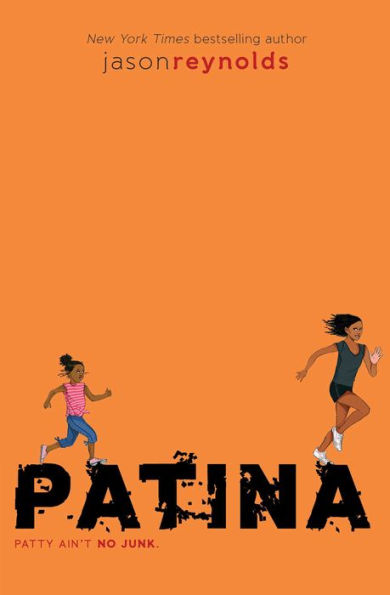
Patina

Ever since Patina and Maddy’s mom got diabetes and lost her legs, their lives have changed dramatically. Now they go to the fancy Chester Academy and live with Aunt Emily and Uncle Tony. Patina has fears other than trying to fit in at her school, though. She’s afraid “The Sugar” will take her mom from her too. Patina is finding that no matter how fast she runs, she can’t outrun her fears.

Even worse, Patina’s attitude has slipped, and Coach is making her run in a relay with the people she argues with. Depending on her teammates, especially the ones she doesn’t get along with, seems, well, impossible. When her aunt and Maddy get in a car crash, Patina realizes that depending on others is necessary. When her uncle steps in, it only shows further that she isn’t alone and doesn’t have to be the parent to her younger sister—or herself. She doesn’t have to do everything alone, including the relay. It’s okay to wait for the handoff, both in track and in life.

In the second installment of Reynolds’s Defenders Track Team series, Patina takes over as narrator. Tragedies shape her life: when she was young, one morning her dad never woke up. Her mother then developed Type II diabetes, or what she calls “The Sugar,” and lost her legs. Now, Patina lives with Emily and Tony, and although they’re good people, Patina misses her parents. For someone with her history, it’s no wonder why Patina runs with a chip on her shoulder. Anything less than first place, as far as she’s concerned, is losing. Because she runs for Ma and Maddy, she feels that anything less than first is her failing her family.

Patina is intense and often confrontational, but her fierce loyalty and love for her family make her relatable. With the help of her coaches and teammates, she is able to let go of her independent streak enough to let others in. Patina shows that the world needn’t be entirely on anyone’s shoulders. Not all burdens, especially emotional ones, should be carried alone.

Reynolds has a knack for writing unique characters in specific situations that, despite their specificity, contain universal themes. The power of each book in this series resides within the characters’ capacities to overcome their daunting situations. Patina knows her mom is living on borrowed time and that one day, she will lose her, too. What makes Patina strong is that she’s able to keep running, and she runs for her mom, her sister, her adoptive family, and her teammates. Family, blood-related or otherwise, remains a key component of the Defenders Track Team series, and particularly in Patina’s life.

Patina is a strong sequel to Ghost. The returning cast and newcomers blend together to create a realistic environment for Patina and her cohorts to flourish on and off the track. Track fans and non-sport readers alike will find that this story places importance on friendship and family. Patina’s story emphasizes one of the really beautiful parts of life: no one is ever really alone.

Sexual Content

  • Sunny likes Patina. They stretch together at practice and Sunny stares at her legs. Patina thinks, “Was Sunny checkin’ me out? If he was, now was not the time. Also…no…gross…stop it…right now…seriously.”
  • Cotton, Patina’s friend, likes Lu, who is one of the other runners. Cotton says to Patina, “’You think if I wink at Lu on the track, he’ll wink back?’”

Violence

  • Patina and Krystal, another runner, get into an argument while practicing the relay. Krystal says to Patina, “What makes you better? Your white mother?” To which Patty goes on a page-long rant that ends with her saying, “Better watch who you playin’ with.” Coach Whit “grabbed [Patina] by the arm and dragged [her] off the track to the gate.”
  • Patina has a temper. When she gets mad, she will imagine “breaking invisible teacups.” This is her way of dealing with grief and stress.
  • Patina thinks that she was “about to give Krystal a good old-fashioned Beverly Jones Funky Zone beat-down.” She does not do this.
  • Patina teases Lu, another runner, about Cotton. Then Patina ays to Lu, “Don’t deny my girl, Lu, or I’ll leave you laid out across this track.”

Drugs and Alcohol

  • Patina’s aunt Emily is on “heavy-duty pain meds” after her surgery and is a little loopy.

Language

  • Stupid, fool, and shut up are all used frequently.
  • Of two girls in Patina’s class (Taylor and Teylor/TeeTee), Patina thinks, “They’re like attached at the ponytail and call themselves T-N-T, which is funny because most of the time I just wished they’d explode.”
  • Patina has names for the different types of kids in her school. She thinks, “The mess of hair-flippers, the wrath-letes (kids feel like it’s a sport to make everyone’s life miserable), the know-it-alls, the know-nothins, the hush-hushes…The YMBCs (You Might Be Cuckoo)- the girls who wear all black and cover their backpacks with buttons and pins- and the girls whose boyfriends, brothers, and fathers all wear khaki pants.”
  • At one point, Patina’s nicknames for Taylor and Teylor are “Bony McPhony and her cousin Lie-Lie.”

Supernatural

  • None

Spiritual Content

  • Patina’s mom (Ma) references God and Jesus frequently. There is a scene in their church where Patina says that Ma yells, “Yes, Lawd! Yessssss!” After, Patina thinks that Ma is in a good mood because “Ma’s all high off Jesus.”
  • Ma prays for people throughout the book. In one instance, she says to Patina, “You know I pray for you. I pray God put something special in your legs, in your muscles so you can run and not grow weary.”
  • Patina thinks church is “a whole lot of talk about grace and faith and mercy and salvation, which, to me, all just equaled shouting, clapping, and singing in a building built to be a sweatbox.”
  • Patina explains Ma’s religiousness. She thinks, “after Dad passed, that’s when Ma got all churchy-churchy. The beginning of catching the spirit and dancing in the aisle and ‘praying of peace in the eye of the storm.’”

by Alli Kestler

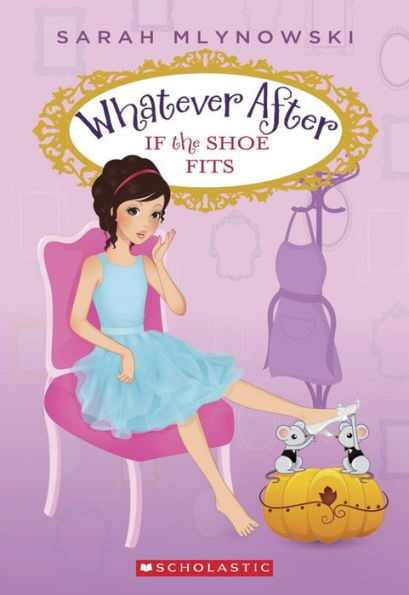
If the Shoe Fits

When Abby and Jonah step through the magic mirror, they travel to Cinderella’s fairy tale. Cinderella has met a prince at a ball and dreams of marrying him. When Abby and Jonah try to help Cinderella, the two siblings accidently change the story and end up making everything worse. Soon, Cinderella’s foot is broken, swollen, and her glass slipper won’t fit! How can Cinderella prove she’s the prince’s true love if her foot can’t fit into the glass slipper?

Abby and Jonah ask Cinderella’s fairy godmother, Farrah, for help, but Farrah isn’t impressed with Cinderella’s desire to have the prince save her. Farrah tells Cinderella, “rescue yourself. You need to learn to stand on your own two feet.” This sends Cinderella on a journey to find a way to support herself financially and free herself from her evil stepmother. Abby and Jonah promise to help Cinderella. Is there any way for Cinderella to become self-reliant? Can Abby and Jonah help Cinderella find her happily ever after?

If the Shoe Fits gives Cinderella’s character a new spin. Cinderella embarks on a journey with Abby and Jonah’s help. This journey allows Cinderella to learn that she doesn’t need a prince to rescue her because she is capable of saving herself.

All the original Cinderella characters make an appearance. However, the fairy godmother doesn’t just grant wishes. Instead, she wants to teach Cinderella a valuable lesson. The two stepsisters, Beatrice and Kayla, are interesting. And the stepmother? Well, she’s just evil. Even though the characters are not well-developed, younger readers will enjoy the new changes in Cinderella’s story.

The original Cinderella was written in French by Charles Perrault in 1697, but Mlynowski uses names and terms that are not consistent with the original story. The fairy tale characters talk like modern-day teens. For example, one character uses the term “knock yourself out.” Another character asks Cinderella, “You don’t mind if I crash your new digs until the wedding, do you?” Even though this doesn’t interfere with the story’s enjoyment, stronger readers will notice the unrealistic dialogue.

The conclusion adds in a dash of magic that will have readers smiling. The ending also shows that girls do not need a man to save them. In the end, Cinderella rejects the prince’s proposal for two reasons. Cinderella tells the prince, “I don’t really love you…not the way Kayla does. You deserve someone who loves you for the right reasons. Everyone does.” Cinderella adds, “Two days ago, there was nothing I wanted more than to marry you. I wanted you to rescue me.” Since then, Cinderella has become self-reliant, and she doesn’t want to give that up.

With a high-interest topic, easy vocabulary, and a smattering of magic, If the Shoe Fits will have younger readers eager to jump into the fairy tale world. More advanced readers, who love fairy tales, should add The Prince Problem by Vivian Vande Velde to their reading list.

 Sexual Content

  • None

Violence

  • In order to steal Farrah’s magic wand, “Beatrice jumps onto Farrah’s back, the wand flies out of Farrah’s hand, and Beatrice and Farrah tumble to the ground. The wand goes rolling across the floor. Betty scoops it up.”
  • In order to get the magic wand out of the stepmother’s hand, Jonah, who was turned into a mouse, annoys the stepmother. She then “swings her foot back and sends him flying across the room. He somersaults through the air and lands in the fireplace.”

 Drugs and Alcohol

  • None

Language

  • Cinderella’s stepmother calls the fairy godmother a “fairy freak.”
  • Beatrice pretends to be the prince’s true love. In order to warn the prince, “Kayla-rat scurries up the couch, jumps on her sister’s shoulder and tries to bite her.”

Supernatural

  • Abby and Jonah use a magic mirror to travel into the fairy tale world. When Jonah knocks on the mirror three times, the mirror spins, hisses, and turns purple. The siblings then walk into the mirror.
  • Using the fairy godmother’s wand, “Betty swished toward Cinderella and hurls a zap her way. There’s a burst of yellow sparkle and then Cinderella starts to shrink. She gets smaller and smaller and then even smaller. And turns grey. And grows a tail.” Betty turns Cinderella into a mouse.
  • When Betty turns Abby into a mouse, “All I can see is yellow, and then zoom! The room is suddenly increasing in size. I feel sick. It’s like I’m on a Tilt-A-Whirl. And then—plunk. I’m on my tush with my legs in the air in front of me.”
  • Betty turns the fairy godmother into a lizard. “Farrah yelps as she starts to shrink and turn green and scaly.”
  • Betty turns her daughter Kayla into a rat. “Betty just turned her own daughter into a mouse. A very large, brown mouse with very sharp teeth.”
  • Betty tries to make Beatrice’s foot fit the glass slipper. Betty “points the wand at her daughter’s left foot and zaps it. It resizes all right. It expands… and then it turns orange. It’s a pumpkin.”
  • The fairy godmother Farrah reverses the stepmother’s magic spells, turning everyone back into humans. Then Farrah turns the stepmother and her daughter into birds. “They instantly shrink into two little birds. Two caged little birds.”
  • Abby and Jonah learn that the portal home doesn’t have to be a mirror because a fairy can “enchant different household objects and appliances.”

Spiritual Content

  • None

Benchwarmers

Jeff and Andi, both sixth-graders at Merion Middle School, are trying out for the boys’ soccer team. There is just one issue: Andi is a girl, and the head coach, Coach J, thinks having a girl on the team would lower the boys’ moral. The principal forces Coach J to let Andi try out. But, Coach J, who has the final say on who makes the team, cuts Andi despite her more than competent tryout.

Both Andi and Jeff are furious because of the coach’s decision. Jeff made the team, but he knows Andi would be an asset to the team. The situation seems hopeless until he has an idea. His dad works at NBC Sports-Philadelphia as a reporter. Together, Andi, Jeff, and his dad devise a plan to get the media involved in Andi’s situation. They hope to pressure Coach J into letting Andi on the team. They were right; Andi is finally allowed to play soccer on the boys’ team.

It’s not smooth sailing once Andi makes the team. Coach J punishes both Andi and Jeff by benching them during games. There is a division on the team between the boys who think Andi should be included and those who don’t. This division costs the team the first few games of the season. When Andi makes a good play in the short amount of time she is on the field, Coach J realizes he is making a mistake. He learns to value Andi as a skilled player and eventually promotes her to a starter. By reluctantly acknowledging Andi’s skill, Coach J sets an example for the rest of the team. The boys come to appreciate Andi and they become a strong and cohesive team.

Benchwarmers is told in third person and focuses on Jeff, Andi, and Coach J’s points of view. This allows readers to understand each character’s background. Each character has to overcome adversities. For example, Jeff has to work hard to improves his soccer skills. Andi fights for her place on the team, taking a lot of bullying but eventually becoming a valued player. Coach J overcomes his chauvinistic beliefs and learns to appreciate Andi.

 Benchwarmers’ main theme is doing what is best for the team. Andi is such a good player because she “creates chances for other people.” In addition, the team only starts winning games when they play to each other’s strengths. By the end of the book, good sportsmanship is important to all of the players. The boys support each other and Andi on the field. Even the opposing teams apologize for roughhousing Andi and compliment her skill.

While Benchwarmers focuses on soccer, the story also gives a good, age-appropriate insight on how the media works. It shows how a media story is approved, planned, and rehearsed. Learning about the media is interesting, but the many meticulous play-by-play game scenes might get old to readers who are not soccer fans. However, the characters are relatable and admirable for their perseverance and for supporting one another. Andi and Jeff work hard to prove themselves on the field. At the beginning, Coach J is stuck in his ways, but he redeems himself by the end. Although slightly dragged out, Benchwarmers will entertain soccer fans as it encourages them to work hard for what they believe.

Sexual Content

  • O’Shea, a female soccer player from another school, takes Andi aside after their match to warn Andi about the next team they’ll play, King of Prussia-North. O’Shea says King of Prussia-North’s coach doesn’t like girls on the boys’ soccer team, and he “makes your guy [Andi’s coach] look like a leader of the Me Too movement.”
  • After Andi asks Jeff to the Halloween dance, she “gave him a huge hug and a kiss on the cheek.”

Violence

  • During practice, Andi gets hit after scoring a goal. “Arlow, peeling back too late, slammed into [Andi] from behind and took her down.” Jeff and Diskin, another teammate, are furious because they think Arlow did it on purpose. One of the players “slammed into Arlow and sent him flying.”
  • Diskin “jabs a finger into Arlow’s chest.” Diskin asks, “What is your problem, Arlow? Do you have something against girls? Is that it? Just admit it.” In response, Arlow “grabs Diskin’s arm and tries to wrestle him to the ground.”
  • During a match, Andi gets kicked in the head by another player. “She felt a foot slam into her head. She cried out in pain and rolled over, holding the spot where the kick had landed.”
  • A player from the opposing team “piles into” Andi, making her do a “face-plant.” She sees someone running towards the guy who had just taken her down and realizes it’s Arlow. “[Arlow] was screaming angrily as he pushed the guy down and began swinging at him.”
  • During a soccer game, Jeff “slid a pass forward to Arlow, who pushed the ball to his left to Andi just as a KP-North defender plowed into him.” Jeff “went down” but “jumped up” and continued playing in the game.
  • Jeff sees a player from the opposing team angrily rush towards Andi. Realizing the player intended to harm her, Jeff “cut the kid off with a diving tackle before he could pile into Andi.”

Drugs and Alcohol

  • None

Language

  • The boys debate over whether Andi should be on the soccer team. One player says if Andi wants to be on a team with boys, she has to understand she may get knocked around. Another player who supports Andi retorts, “Don’t be such a tool.”
  • After Coach J is rude to Andi, Jeff tries to comfort her. Jeff says, “Just when you think he’s backing off acting like a jerk, he goes and proves again that he’s a jerk. Don’t let it bother you.”
  • Heck is used three times. For example, Andi is upset because Coach J is bullying her. She takes it because she wants to remain on the team. “The worst part of it is, if I just say ‘The heck with you,’ and walk away from this team, he gets what he wants.”
  • During a match, one of the players on the opposing team takes down Andi. Craig yells at him, “What the hell do you think you’re doing?”
  • In regards to King of Prussia-North, another middle school female soccer player tells Andi, “I’d love to see you knock those jerks off their pedestal.”
  • Jeff wants to ask Andi to the Halloween dance, but he is nervous. His friend tells him, “You can still be Prince Charming if you get off your butt and do something.”

Supernatural

  • None

Spiritual Content

  • Jeff asks Andi if she is going to church Sunday morning because he wants to take her to an Eagle’s game. Andi laughs and replies, “My parents tried it with my brothers and me until I was about eight. Then they figured out we were all going just for the doughnuts. So we haven’t gone for a while.”

by Jill Johnson

My Lady Jane

According to the history books, Lady Jane Grey became the Queen of England for nine days before quite literally losing her head. But according to authors Cynthia Hand, Brodi Ashton, and Jodi Meadows, there is definitely more to the story.

Edward hasn’t done very much in his lifetime. Sure, he’s been the King of England since he was a child, but he’s never even kissed a girl—and now he’s caught a deadly illness known as “the affliction,” which means he’ll be dead within a year. Unable to trust either of his sisters to take the throne, Edward decides to rewrite the line of succession, leaving the throne to the future male heir of his cousin, Lady Jane Grey.

Sixteen-year-old Jane would love nothing more than to escape from her life. Her nagging mother and a never-ending string of unfortunate engagements are positively boring compared to the adventures she reads about in her favorite books. She might want her life to be more exciting, but getting married to a complete and total stranger was not what she had in mind.

The stranger in question, Gifford Dudley (please call him G), isn’t too thrilled to be getting married either. Every morning G transforms into a horse and stays that way until sunset. He’s gotten used to the fact that he’s cursed, but he’s not totally sure how to explain that to his pretty new wife.

My Lady Jane is a fascinating alternate history adventure; it is set in a world where people called Eðians have the ability to transform themselves into animals. Despite being based on 16th-century British nobility, Edward, Jane, and Gifford all read as super-relatable to a modern teenager. Stubborn, bookish Jane and sweet, clueless Gifford certainly don’t know how to make a relationship work, let alone run a kingdom. Edward might have been the King of England, but that can’t protect him from being totally awkward around the girl that he likes.

Serious history buffs might not appreciate the extreme liberties that the authors take with the timeline, but the story will definitely appeal to open-minded historical fantasy fans and anyone looking for a good laugh. The story takes readers on a rollicking adventure across England, complete with attempted regicide, a giant bear, and lots of romance. Jane and Gifford’s slow, often awkward progression from unfriendly strangers to loving partners is equal parts endearing and frustrating. Readers will surely be rooting for the protagonists as they learn that sometimes your heart’s desire can be found in the most unexpected places.

 Sexual Content

  • According to rumor, King Henry’s second wife was an Eðian, “who every so often transformed into a black cat so she could slip down the castle stairs into the court minstrel’s bed.”
  • Edward is described as having “the correct genitalia” to rule England.
  • Edward thinks that if he had been born a commoner, “at least he would have had an opportunity to kiss a girl.”
  • Edward thinks that producing an heir would be fun because it would “definitely involve kissing with tongues.”
  • Edward is reluctant to approve of Jane’s marriage because “in the back of his mind he’d been holding on to the idea that perhaps someday he’d be the one to marry Jane. This was back when it was slightly less frowned upon to marry your cousin.”
  • Edward’s advisor says, “Life would be a lot simpler if I only had to attend to my wife in the hours between dusk and dawn.”
  • Gifford’s father tells Edward that Gifford is “a little too easy on the eye for his own good, I’m afraid. He tends to attract…attention from the ladies.”
  • Gifford’s brother mistakes Jane for one of the women he thinks Gifford has been sleeping with. This causes Jane to panic about her wedding because “Her husband to be was a philanderer. A smooth operator. A debaucher. A rake. A frisker.”
  • Gifford lets his parents believe that he is “carousing with the ladies” so they don’t discover that he’s been spending his time writing and performing poetry.
  • Gifford’s father says that Jane is “as far as can be anticipated” fertile.
  • Jane’s mother explains sex using the euphemism “a very special hug.” She says that although the hug might be unpleasant, “it’s part of the wedding night, and part of your duty as a wife.”
  • At the end of their wedding ceremony, Jane and Gifford kiss. “The kiss came quickly. It wasn’t anything more than a touch of his lips to hers, so light it might not have happened at all.”
  • Gifford says that “not one in twenty men” would find Jane unseemly, and that “the supple pout of her lips” could inspire poetry.
  • Gifford, annoyed at how concerned everyone seems to be with the consummation of their marriage, thinks, “at least the nobility of England no longer required live witnesses to the event.”
  • Edward and Jane seem so close that Gifford thinks they might be “kissing cousins.”
  • Edward says that he saw a “flicker of surprise and definite male interest” in Gifford’s eyes when he first sees Jane at the wedding.
  • As Edward watches Gifford and Jane leave their wedding feast, he thinks, “I am never going to consummate anything. I’m going to die a virgin.”
  • Jane gets angry at Gifford and calls him a “drunken lothario.”
  • After bonding during their honeymoon, Jane and Gifford almost kiss. As they stand alone in the parlor, Jane realizes they’ve gotten quite close and wonders, “Would he kiss her? Part of her hoped he would. A big part maybe. Multiple parts: her butterfly-filled stomach, her thudding heart, and her lips, which remembered the gentle breath of a kiss during their wedding.”
  • When Edward transforms back into a human, he finds himself naked and alone in a strange village, where a woman accuses him of being a pervert. She says, “This was a decent village, you know, before your kind came around spoiling it. Thieves and murderers, the lot of you. Like those dogs that watch me get dressed through the window and then run away. Perverts!”
  • Gracie is an Eðian who can turn into a fox, which is ironic considering how attractive Edward finds her. The narrators take the opportunity to tell the reader that “the term fox, used to convey the attractiveness of a woman, was not invented until Jimi Hendrix sang ‘Foxy Lady’ in 1967.”
  • Edward wants to kiss Gracie but can’t because “he wanted her to want him to kiss her.”
  • Gifford and Jane share a single set of clothing while they are on the run from Mary’s soldiers. Jane describes the situation as an “awkward (and scandalous, though they were married, so did it really count as scandalous?) clothing situation.”
  • Jane reflects on her growing feelings for Gifford. “He teased her, but never with an intent to hurt her feelings. He often held her hand. He called her pet names like ‘my darling’ and ‘my sweet.’ Those things shouldn’t have had such an effect on her, but they did. Being with him made her breath come quicker and her heart pound and her palms get all clammy. It made her wish she could remain human all the time so that they could stay together.”
  • The King of France tells Edward to find a wife and produce some male heirs as soon as possible. The King says, “I have three sons, myself, and a number of bastards. It’s very comforting for me to know that I will never find myself in your predicament. My bloodline is secure.”
  • Edward finally asks Gracie to kiss him by saying, “I’ve never kissed a girl before and I want it to be you. Will you?” She considers it, but ultimately she isn’t able to get past the difference in their stations and runs away.
  • On the morning of a battle, Jane finally kisses Gifford for real. As they were saying goodbye, Gifford “kissed her. Softly at first, but then she pulled him close and pressed her lips harder to his. And that was it. She could feel him giving in by the way his body pressed against hers, the way one of his hands cupped her cheek, and the way the other slid down her arm. She could feel his desire to stay human in the fevered, desperate way he kissed her.” The description lasts about half a page.
  • Gifford reflects on the kiss. “How had a girl like Jane kissed him like that? With her whole heart and her whole body? She’d probably read a dozen books with titles like The Kiss: It’s Not Just About the Lips. The way Jane kissed, it was like an art. She kissed by the book.”
  • After breaking into the castle, Jane and Gifford are reunited. They finally say “I love you” to each other, and Gifford is able to stay a human. “The two lovers embraced, while Edward and your narrators turned their heads to give the lovebirds their moment of blessed union.”
  • After the battle, Edward can’t stop thinking about Gracie. “Because he wanted to tell her that he’d stepped down from the throne and see that surprised look on her face. And (let’s be honest) he still very much wanted to kiss her. He thought about it embarrassingly often.”
  • Edward tells Gracie that he gave up the throne, and they finally kiss. “Edward closed the space between them in two strides. He didn’t really know what he was doing, only that he had to do something right now or he’d explode. Her warm heart-shaped face was in his hands, his fingers caught in her curls. She opened her mouth to say something and he kissed her.” The scene lasts about a page.
  • At Jane and Gifford’s second wedding, “Jane didn’t wait for instructions to kiss. She stood on her toes and wrapped her arms around her husband’s shoulders and kissed him as the guest clapped and clapped.”
  • After the wedding, Jane and Gifford have a conversation that devolves into kissing. “Lips met lips, soft and questioning at first, then suddenly desperate and wanting. And at their first wedding, their wedding-night chamber seemed full of the echoes of strangers eager to have their say, tonight, they were very much alone.” The narrators cut in before it gets too steamy but do assure the readers that “they totally consummated.” The scene lasts for about a page and a half.

Violence

  • At the beginning of the book, the narrators summarize the historical version of what happened to Lady Jane Grey: “She was queen for nine days. Then she quite literally lost her head.”
  • There is a group called the Verities who believe that all Eðians are an abomination, “And because Verities were largely in charge of everything, Eðians were persecuted and hunted until most of them died out or went deep into hiding.”
  • When King Henry discovers his own ability to turn into a lion, he decrees that Eðians aren’t so bad after all. “The head of the Verity Church was not pleased with King Henry’s decision, but every time Rome sent a missive denouncing the decree, the Lion King ate the messenger. Hence the phrase don’t eat the messenger.
  • Edward says one of the things he wants to do before he dies is to beat the weapons master in a sword fight because “[he] was the only person [Edward] knew who forgot to let him win.”
  • Because of rumors of his second wife’s infidelity, “the king had her head chopped off.” It is also briefly mentioned that his fifth wife was beheaded too.
  • Edward says the only time he’s seen his sister Mary enjoying herself was “when some traitor was beheaded or some poor Eðian got burned at the stake.”
  • An Eðian group called the Pack has been “raiding and pillaging from Verity churches and monasteries.”
  • While traveling, Jane and Gifford come upon a group of villagers being attacked by wolves. “A handful of people brandished sticks and pitchforks and various other farming tools, attempting to block the path of the Pack of wolves.” Some of the villagers have been injured and Jane wants to help them, but Gifford stops her. The description of the event lasts about three pages.
  • When his nurse tries to feed him poisoned food, Edward imagines her “less-than-slender form stretched on the rack while he dropped poisoned berries in her mouth.”
  • Edward’s sister, Mary, tells him that when she becomes queen, “We will root out this Eðian infestation, starting with that horrible Pack that everyone’s talking about. I’ll see them all burn.”
  • After Edward refuses to eat his poisoned food, he is attacked by his would-be murderers. “Before he was even fully awake, rough hands were upon him, forcing his arms up painfully. Hooded men loomed all around his bed. Someone had latched one of his wrists to the bedpost.” The description of the scene lasts about three pages.
  • As a bird, Edward kills and eats a mouse. “Edward-the-bird struck the mouse with tremendous force and snatched it from the face of the earth. The poor thing gave a rather awful shriek, which was understandable, and then went quiet.”
  • Edward meets Gracie, a Scottish Eðian and thief who threatens him with a knife. “If he told her who he really was chances were that a) she wouldn’t believe him, and she’d cut his throat, or b) she’d believe him, and because he was the ruler of England and she was Scottish and this was the year 1553, she’d get even more pleasure out of cutting his throat.”
  • Gracie and Edward get into a fight with a farmer. “The bird that was Edward descended on him, talons clawing at the man’s face. The farmer screamed and released his sword. The girl took this opportunity to knee the farmer in the acorns. He dropped to the floor. She kicked him.”
  • Mary and her army show up to take the throne away from Jane. Jane and Gifford refuse to cooperate with her and are ultimately held captive. “[Jane] tried to wriggle away and Gifford snapped and kicked, but then one of the men held a sword to Gifford’s long neck. Someone else pressed a knife to Jane’s throat.”
  • When Gifford transforms into a horse, Mary tells Jane, “In the morning, he will be burned at the stake.” Jane can swear allegiance to Mary and the Verities, or she will be beheaded too.
  • When Gifford and Jane attempt to escape the castle, they are confronted by several guards. “The first guard [Gifford] dispatched quickly in a move that Jane would probably describe as elegant swordsmanship, but he knew was really the result of the sword slipping from his sweaty hand. As he lunged to retrieve it before it hit the goring, he plunged he sword through the heart of a guard who was just rounding the corner.”
  • Gracie bests Edward in a sparring match. Gracie “bashed him in the ribs. If it’d been a real sword in her hand, instead of half of a broken broomstick, he would’ve been done for.” The scene lasts about four pages.
  • Gracie tells Edward about how her family was killed by British soldiers because they were Eðians. “That night I woke to our cottage burning. We were all inside, my ma and dad and brothers—I had two brothers—and they’d blocked the door from the outside, boarded the windows too.”
  • Edward and Gracie come very close to kissing, but they are interrupted by his grandmother. “At that moment we should confess that Edward briefly considered murdering his dear sweet grandmother. And he might have gotten away with it, too, on account of the rest of the world thinking the old lady was already dead.”
  • Gifford, Jane, and Pet get into an altercation with the Pack and Jane gets injured. “All at once [Gifford] became aware of the blood soaking the front of his shirt and how unusually quiet she was. Jane was never quiet. She was hurt.” The description of the fight lasts about three pages.
  • In order to get the Pack to help Edward take back his throne, Edward and Gifford must kill the Great White Bear of Rhyl. When the bear attacks them, Gifford tries to play dead. “The bear sniffed G’s leg. G tried to make his leg look less like food. The bear pushed G’s shoulder and pushed again as though trying to turn him over. G wasn’t sure if complying would make him seem more or less dead.” Ultimately Edward is able to kill the bear. The description of the fight lasts four pages.
  • Edward is concerned about meeting with Mary Queen of Scotts because of the bad end of their engagement. “When King Henry received word that Mary’s regents had accepted another offer of marriage, this one from the King of France, pairing her with the French dauphin, Francis, King Henry had eaten the messenger immediately and remained a roaring lion for days. And then he’d invaded Scotland.”
  • During their siege on the castle, Jane, Edward, and Gifford run into some guards who want to kill them. “The guard on the right re-raised his sword and took a deep breath as if to speak, but he didn’t get a sound out before a loud bang rang out and he dropped like a stone. Jane stood behind the guard, her frying pan raised to where the man’s head had been.” The conflict is described over three pages.
  • As Gifford, Edward, and Jane attempt to break into the castle, Gifford’s father and brother confront them. Gifford “looked at his father’s outstretched hand and it made him sick that he shared the same blood as this man… With a flick of his sword, he cut a gash in Lord Dudley’s palm.” The confrontation lasts about three pages.
  • Gracie tells Edward that she’s the new leader of the Pack because the old leader has died. “He took an arrow to the chest in the first ten minutes of the siege.”

Drugs and Alcohol

  • At the wedding feast, Gifford gets very drunk because he’s too nervous to tell Jane about his horse curse. “Every time G thought about how to break the news to her, he gulped down a cup of ale. And he thought about it a lot. Every time he looked at his new bride. And he looked at her a lot.”
  • When he turns back into a human, Gifford goes to a tavern attached to a brothel to steal some clothes because “There it was easy to grab clothes strewn about, the owners of which would be too sloshed to care.”

Language

  • When he learns he’s going to die from the affliction, Edward says, “bollocks,” twice.
  • Damn is used once. Gifford tells Jane she should abdicate, “Well tell them thank you so much for the very kind offer of running the country, but no thank you. I have no desire to honor my cousin, the king’s, wishes. Now where are my damn books?”
  • During a sparring match, Gracie and Edward trade insults, including “Lilly-livered scutt” and “beef-witted varlet.”
  • Edward calls Mary a “poisonous bunch-backed toad.”

Supernatural

  • The book is set in an alternate world where certain people, known as Eðians, have the ability to turn into animals. “Certain members of the general public could turn themselves into cats, which greatly increased the country’s tuna fish population, but also cut down on England’s rat population. (Then again, other individuals could turn into rats, so nobody really noticed.)”
  • King Henry VIII was an Eðian, who “during a fit of rage transformed into a great lion and devoured the court jester.”
  • There’s a rumor that Jane’s mother is an Eðian, which caused Jane and Edward to try to uncover their own Eðian forms. “Jane had read in a book that Eðians often manifested into their animal forms when they were upset. They’d cursed each other and slapped each other’s faces, and Jane had even gone so far as to throw a stone at Edward, which actually did rile him, but they had remained stubbornly humanly human throughout the whole ordeal.”
  • Edward’s dog, Pet, reveals herself to be an undercover Eðian. “Pet stood up, then lifted her front paws to the edge of Edward’s bed, her neck thrown back like she was stretching. There was a flash of light, as painful as if Edward had accidentally glanced into the sun, and he closed his eyes. When he opened them again there was a naked girl standing at the foot of his bed.”
  • Jane is locked up in a tower, hopelessly anticipating her upcoming execution, when she finally unlocks her Eðian powers and turns into a ferret. “A brilliant white light flared about her, making her blink back stars. When she could see again, everything was different. The room was bigger, for one, and she felt…funny. Shorter, which was saying something, but oddly long.”
  • Edward’s grandmother tries to teach Jane, Gifford, and Edward how to use their Eðian powers. She tells them that the secret to changing into your animal form is to know your heart’s desire. Edward’s grandmother says, “If, in the moment you want to change, you do not know why you want to become a bird or ferret or horse or human, then you will stay exactly as you are.”
  • When Edward shows up to take his throne back, Mary gets so angry that she turns into a mule. “Then Mary let out a bellow of rage and barreled toward Bess with outstretched hands, as if she would choke the life from her sister. But before she could reach Bess, a light flashed. The onlookers gave a collective gasp. Where Mary had been standing, there was now a chubby mule.”

Spiritual Content

  • Edward believes he was “designed by God” to be the king of England.
  • Jane’s mother says that her Eðian form is unnatural, but Jane disagrees. “In one of my books about Eðians, the author said that long ago, in ancient times, all people were able to change into their animal form. Everyone was Eðian. It was considered their true nature. It was considered divine.”
  • Edward feels bad about having bad-mouthed women, thinking, “He’d only said what Bess had told him to say, and besides, it was true, wasn’t it? Women were the weaker sex were they not? Wasn’t that even written in the Holy Book?”
  • While Jane is breaking into the castle, Gifford says several prayers. “He closed his eyes and sent a quick prayer to the heavens that he would see her again. He prayed Edward would keep her from harm. He prayed if Edward failed, she would turn into a ferret and hide. He prayed if she was discovered she would slip from the soldier’s clumsy fingers. And that if she couldn’t escape, they would kill her quickly.”

by Evalyn Harper

Love Like Sky

G-baby and her younger sister, Peaches, are still getting used to their “blended-up” family. They live with Mama and Frank out in the suburbs, and they haven’t seen their real daddy much since he married Millicent. G-baby misses her best friend back in Atlanta and is crushed that her glamorous new stepsister, Tangie, wants nothing to do with her.

G-baby is so preoccupied with earning Tangie’s approval that she isn’t there for her own litter sister when she needs her most. Peaches gets sick—really sick. Suddenly, Mama and Daddy are arguing like they did before the divorce, and even the doctors in the hospital don’t know how to help Peaches get better.

It’s up to G-baby to make things right. She knows Peaches can be strong again if she can only see that their family’s love for her is really like sky.

Youngblood creates a cast of realistic characters and tackles themes that are relevant. The story is told from G-baby’s point of view, and many readers will relate to G-baby’s difficulty figuring out how to navigate life in a blended family. G-baby has an array of feelings that often interfere with her ability to think logically. Instead, she is often overcome by anger and guilt. For instance, G-baby clearly loves her little sister, Peaches; however, when Peaches gets sick, G-baby feels guilty for not treating Peaches better.

Love Like Sky tackles many themes, including death, divorce, stepparents, racial inequality, peaceful protest, police brutality, growing up, and more. The story’s many themes are undeveloped and often do not feel like a natural part of the story. The story gives some examples of police brutality, but all of the events are relayed to G-baby. This allows the content to be appropriate for middle school readers. Love Like Sky’s many themes may spark readers’ interest in learning more about each topic.

The story’s main conflict is G-baby’s changing family. Throughout the story, G-baby discovers that even though her family may argue, they will always support each other to the best of their ability in the end. Despite the positive message, G-baby is not necessarily a likable character because she is sneaky, self-centered, and mean to those around her. When G-baby interacts with her best friend Nikki, the two spend so much time arguing, keeping secrets, and being snarky that it is difficult to understand why they are friends. Another negative aspect of the story is that Nikki, G-baby, and her stepsister all take unnecessary risks, like sneaking out of the house, that could have dire consequences. Instead of having to fess up to their parents, other people cover for their misbehavior.

Love Like Sky’s suspense revolves around G-baby’s conflict with her family and friends. While middle school readers will understand G-baby’s conflict, they may wish for more action. The story’s many topics and characters make Love Like Sky appropriate for strong readers. Readers interested in learning more about racial injustice should add A Good Kind of Trouble by Lisa Moore Ramée to their must-read list.  Caterpillar Summer by Gillian McDunn is perfect for readers looking for an entertaining story about family relationships.

Sexual Content

  • G-baby doesn’t want to talk to her mom about “how to kiss a boy, or when it’s time to sneak a few cotton balls into my bra.”
  • G-baby’s stepsister has a boyfriend. G-baby thinks, “I know why Frank called the college boy ‘an octopus,’ and it wasn’t good. He might be like that one boy at my old school who got sent to the principal’s office for pinching girls on the behind.”
  • G-baby was spying on her stepsister when she “heard whispering and then…smacking. Loud smacking. Kissing.”
  • When G-baby’s stepfather leaves the house, he “kissed Mama’s lips and both cheeks… Mama walked to the door and kissed him again. A loud smack like Tangie and Marshall.”
  • G-baby’s best friend tells her, “I bet Tangie kisses boys. Just like you and your boyfriend.” G-baby gets upset because she has never kissed a boy and doesn’t have a boyfriend.
  • G-baby’s friend Kevin kisses her. She “felt his lips on my cheek like a buzzing bee had landed on it… I stood there with my hand on my cheek, like the kiss was gonna fly away.”
  • G-baby’s stepsister, Tangie, talks about her first kiss, which happened when she was 13. “One day he walked me to the porch. And I kinda knew it was coming because I closed my eyes… It lasted about five seconds. When it was over, he ran down the stairs… Neither one of use knew what we were doing. It was okay.”

Violence

  • When G-baby’s mother sees news stories on TV about Michael Brown, who was shot by a police officer, she says, “Bless his mama, Lord. Bless his mama.”
  • Tangie wants to go to a protest for Roderick Thomas. She says, “A boy at Marshall’s school got beat up pretty bad. Roderick Thomas. Busted lip. Black eye. Police stopped Roderick on his way home from a friend’s house…”
  • When Tangie goes to the protest, “the police told us to leave. Marshall’s roommate started shouting. Others joined in. Next thing I know, Marshall’s roommate was on the ground. When Marshall spoke up, they put him in cuffs, too.”

 Drugs and Alcohol

  • One of the character’s moms is a drunk. The character is talked about several times but never appears in the story.

Language

  • Darn is used three times.
  • Dang is used four times. For example, G-baby says that her stepmother can’t cook worth a dang.
  • “Oh my God” is used as an exclamation twice.
  • Lord is used as an exclamation once.
  • Tangie calls G-baby a “snoop tattler.”
  • When G-baby swears to God, she thinks, “Grandma Sugar was about to strike me for using the Lord’s name in vain.”
  • One of G-baby’s friends says, “No shit Sherlock” one time.

Supernatural

  • None

Spiritual Content

  • When G-baby’s mother sees news stories on TV about Michael Brown, who was shot by a police officer, she says, “Bless his mama, Lord. Bless his mama.”
  • Tangie’s little sister was killed in a car accident. G-baby’s mom says, “Some hurt only God Himself can heal.”
  • When Peaches gets sick, G-baby prays, “God, I know I want a big sister, but Peaches is the best little sister in the world. Please, don’t let her die like Tangie’s little sister. I’ll do anything to make Peaches better, anything.”
  • G-baby prays. “Dear God, I’m so sorry for not being a better big sister. Please keep making Peaches better and don’t let her fall out of Your hands…”
  • G-baby’s best friend, Nikki, takes off. When she can’t be found, G-baby prays. “Oh, God. Please, please… don’t let my best friend be an Amber Alert.” When Nikki is found, G-baby thanks God.
  • When Peaches is moved out of ICU, someone says, “Thank the Lord.”
  • When G-baby lies, she “mentally asked God for forgiveness.”

Rescue Mission

During one of Ben’s baseball games, his dad is tasked with finding two escaped convicts. Ben promises his mom that he’ll stay home and be safe. Once he hears that his dad is missing, Ben knows he can’t keep his promise. After gathering supplies and sneaking out, Ben and Hero, his retired search and rescue dog, meet up with the police to find his dad.

Ben and Hero do everything they can to find his dad’s trail. Even with help from Officer Perillo and his new friend Tucker, finding his dad is tough. The duo fight through the forest, deal with dangerous snakes, and put their lives on the line. Ben’s dad is a cop – a hero in his own right – but the two convicts are clever and dangerous, forcing Ben and Hero to be extra cautious. The two escaped convicts won’t go down without a fight. Will Ben and Hero rescue his dad, or will the convicts win the day?

Hero: Rescue Mission is a very fast-paced story that centers on Ben. Through his point of view, the reader can understand his worries, fears, and frustrations surrounding his dad’s disappearance. Readers can also understand why Ben is so reckless. From the outside, it may look like Ben doesn’t seem to care about his own safety; however, he’s simply afraid he might never see his dad again.

The third installment in the Hero series focuses on how worry can make someone reckless. Ben wants to save his dad as fast as possible, but this also leads to him being bitten by a snake. That snakebite puts Ben in the hospital, which only makes the search more difficult. There are many times where Ben loses his cool and shouts at others because he thinks they aren’t moving quickly enough. Yet, through this adversity, Ben learns to take things slowly. He learns the value of caution, as well as careful planning.

Once again, Hero stars as one of the main characters of the story. The retired search and rescue dog is eager to find Ben’s dad. At the start of the story, Hero is just as anxious and reckless as Ben is. Through bonding and training, Ben and Hero begin to work as one. They need each other in order to save the day. Hero: Rescue Mission focuses on Ben and Hero’s fears as they race to find Ben’s dad. Despite the story’s fast pace, most of the story is about Ben learning to control both Hero and his emotions. Much of the conflict with the convicts occurs at the very end of the story. Once Ben finds his dad, he and Hero must battle the convicts and prevent them from robbing a convenience store. This mimics real police work and illustrates both the importance of the police and the danger they put themselves in.

Newcomers to this series do not need to have read the first two books in order to understand the plot. While there are references to the first two books, Ben explains the references. This book will appeal to young readers that have a parent or family member in the police force. With a realistic protagonist, an engaging emotional story, and a truly heroic search and rescue dog, Hero: Rescue Mission is a fun, exciting entry in Jennifer Li Shotz’s series.

Sexual Content

  • None

Violence

  • During Ben’s baseball game, his friend Noah is injured. The injury “had come when a foul ball had barreled toward Noah and hit him in the arm—hard. Noah had yelped in pain, and Coach Lee had called a time-out and jogged over.” After the game, Ben’s “best friend sat slumped over on a deck chair, his very swollen arm cradled in a sling.”
  • When thinking about Hero’s abilities, Ben thinks, “And… well, if it came down to it, Hero was pretty great at attacking bad guys too.”
  • Ben recalls a memory from his past when Hero was “getting attacked by two vicious dogs at the dogfighting ring.”
  • After picking up a rock, Ben is bitten by a snake. Before he “had time to process what it was, Ben felt a sharp sting, burning, and warmth spreading up his arm.” Immediately after that, Ben falls. He “staggered backward and fell to the ground. His arm was on fire, and he was so woozy he couldn’t even lift his head.”
  • Ben’s new friend Tucker carries around a slingshot. Tucker shoots a rock at one prisoner, “and the escaped prisoner let out a yell as it bashed him in the forehead. Blood spouted from a gash above his right eye, and he clutched at it with a meaty hand. He howled in shock and pain—and fell away from the window.”
  • The second convict has a gun. He points the gun at Ben and Hero. “There was no way Ben was going to let Hero get hurt—and this man clearly wouldn’t hesitate to shoot any of them, human or canine.” Ben then learns that the convicts are “going to rob [a convenience store] for supplies and cash and then head south for Louisiana.”
  • Ben’s dad attacks the convict without a gun. Ben’s dad, “swung the board in a high arc and brought it down on the man’s head with a deep, dull thwack.”
  • The convict with a gun goes to rob a convenience store. Ben sees “the prisoner, holding a gun. It was pointed straight at [the shop owners].” Hero leaps on the convict with “a thunk, and the man grunted as the air was knocked out of his lungs. He fell forward like a bag of rocks, hitting the ground so hard Ben felt the floor vibrate.” Tucker also “swung his mother’s bat with all his force. The sound it made when it connected with the convict’s leg was flat and disgusting.”

Drugs and Alcohol

  • None

Language

  • The second convict tells Ben that the first convict will be, “real pissed off when he wakes up.”

Supernatural

  • None

Spiritual Content

  • None

by Jonathan Planman

I Survived the Japanese Tsunami, 2011

Ben’s father had always wanted to take his family to his hometown in Japan. After he dies, Ben thinks his mom will cancel the trip, but Ben’s mom is determined to visit Shogahama. While in the small coastal village, Ben tries to avoid his uncle. Ben doesn’t want to see the pine forest his father explored, and he doesn’t want to see the cherry tree his father thought was magic. Consumed with grief, Ben refuses to think about his father.

A massive earthquake rocks the village, nearly toppling his uncle’s house. Then, the ocean waters rise and Ben and his family are swept away—and pulled apart—by a terrible tsunami. Ben is alone, stranded in a strange country millions of miles from home. Can he fight hard enough to survive one of the most epic disasters of all time?

When Ben is being swept out to sea, he doesn’t know if he has enough strength to survive. While he is floating in the sea, he thinks back to his dad’s words: “the fear is always there, but you can’t let it take over.” When Ben is trapped in a car, he thinks about his father’s water survival drills. Ben uses this knowledge to break out of the window and escape. Before the tsunami, Ben doesn’t want to think about his father. After the tsunami though, Ben realizes, “It was Dad who got Ben through his moments of panic in the quake, who helped him escape from that drowning car. It was Dad’s wisdom that echoed through Ben’s mind in those dark moments when he was alone in the ruins.”

Full of suspense, I Survived the Japanese Tsunami, 2011 uses kid-friendly descriptions to show the devastation of the tsunami. Even though Ben is scared, he shows bravery when he protects his brother during an earthquake. While the story focuses on the disaster, the story also gives readers a glimpse of Ben’s father’s experiences, which adds depth to the story. Even though the story is about survival, it also highlights the importance of relying on others in difficult times.

I Survived the Japanese Tsunami, 2011 is told from Ben’s point of view, which allows the reader to see the events without graphic details that might scare them. Throughout the story, Ben learns to deal with his grief over his father’s death. Even though the story deals with a natural disaster, it has some unexpected humor that breaks up the tension. In addition, Star Wars fans will enjoy the references to Darth Vader.

The story is accessible to all readers because Tarshis uses short paragraphs and simple sentences. Realistic black and white illustrations are scattered throughout the story and will help readers visualize the events. The story also shows people coming together to help each other during a difficult time. While the story weaves interesting facts throughout, the book also ends with more facts about the earthquake and tsunami of 2011. The I Survived Series gives readers a glimpse into deadly situations without including scary details. Each book is told from a young person’s point of view, which will help readers connect with the narrator.

 Sexual Content

  • None

Violence

  • After surviving an earthquake, a tsunami appears. “The wave carried parts of houses, a smashed car, an entire pine tree, slabs of wood and metal. It was devouring everything in its path. Two men were running on the sidewalk. Ben gasped as the wave swallowed them whole.”
  • Ben’s family jumps into a car and attempts to race away, but the water catches up to them. Ben’s mother, brother, and uncle are swept out of the car, but Ben is stuck inside of it. “But the water was higher now, thrashing the car back and forth. The door slammed shut. Waves crashed over the roof of the car. Freezing water gushed in, surrounding Ben. In seconds, it was up to his chest.”
  • Ben escapes from the car and still almost drowns because “the water seemed to be alive, with powerful arms that thrashed Ben, tore at him. Each time he fought his way to the surface to take a breath, the water grabbed him and pulled him down again.”
  • After Ben gets to dry land, he walks through the wreckage. “Ben hoped that one day he’d forget the terrible things he’d seen as he walked: the arm sticking out from under a pile of wreckage, the old man carrying a lifeless-looking woman on his back.”

 Drugs and Alcohol

  • None

Language

  • None

Supernatural

  • None

Spiritual Content

  • None

Rebound

Ever since Chuck “Da Man” Bell’s father died, Chuck’s turbulent emotions are holding him back from his relationships. When his mom sends him to his grandparents’ house for the summer, Chuck finds healing through basketball. With the help of his friends and relatives, Chuck also learns about his family’s past.

Chuck is an emotional 12-year-old who disobeys his mother and gets into trouble with his friend, Skinny. However, Chuck’s attitude towards life adjusts as his grandparents and cousin, Roxie, teach him wisdom and basketball. Chuck realizes that his grandparents are suffering after their son’s death as well, and Chuck makes an emotional connection with them. This story presents the multifaceted nature of grief through Chuck and his family. The narrative emphasizes this shared humanity rather than suppressing the trauma that the family has endured. The family helps Chuck come to terms with his emotional turbulence, and the end shows him as a happy adult who learned how to cope.

Chuck’s story pairs well with Alexander’s creative narrative styles. The poetry might be off-putting to some readers, but the flow is similar to reading prose fiction thanks to his free verse. The graphic novel panels help build excitement in the basketball/daydream sequences and give a different look into Chuck’s imagination. This book is a good introduction into poetry for younger readers.

Told in free-verse poetry and graphic novel panels, Rebound shows the turbulent healing process after tragedy strikes. As Chuck learns about basketball and how his family members deal with loss, he begins to understand the world outside his emotions. The book is told from Chuck’s perspective, but his grandparents are a large focus of the story. His grandfather, Percy, uses humor and tough love to help Chuck come to terms with his father’s death. However, Percy is serious and kind when Chuck is struggling the most, but Percy never comes off as preachy.

Alexander’s writing style is unique, and it switches between poetry and graphic novel panels. However, the story flows well and has many fast-paced basketball scenes. Alexander uses different poetic techniques to emphasize sounds, emotions, and dialogue. These portions and the graphic novel panels depicting Chuck’s daydreams help enhance his narrative voice and his dreams of success. Rebound is the prequel to Kwame Alexander’s book Crossover, but Rebound can be read as a stand-alone book.

Rebound tells a story about shared humanity and suffering, and it reinforces the need for family in difficult times. Alexander writes interesting and complex family dynamics, and his integration of basketball and comic books into the text feels natural with these themes. He grounds the abstract nature of grief in a manner that is digestible for younger readers. Rebound is a good read because it presents a character who rises above self-pity and gains perspective in dire times. Anyone who has faced a difficult situation will enjoy Rebound’s blend of poetry and graphic novel elements because they effectively portray themes of grief, love, and the power of family.

Sexual Content

  • Chuck’s friend CJ likes Chuck, a topic that is revisited somewhat often throughout the book.
  • CJ pulls Chuck out on the roller rink and “kisses [him]/on the cheek,/and, just like that,/ lets go/of [his] hand,/ and skates away,/and [his] heart/ almost jumps/ out of [his] chest.”
  • Chuck’s grandparents, Alice and Percy, kiss. Percy says to Alice, “Now give me some sugar.”
  • Chuck’s friend, Skinny, meets Chuck’s cousin, Roxie, and calls her “a pretty young thing,” which does not make Roxie or Chuck very happy.
  • Uncle Richard brings his boyfriend to the Fourth of July party.

Violence

  • Skinny mentions that his cousin “Ivan got into a fight” when his team lost a basketball game, but no other context is given.
  • Chuck says, “I remember/my father spanking me/when I was little,” as his mom tries to hit him for smack talking.
  • Chuck’s mom tries to hit him when he talks back. Chuck says, “Her hand/is like/a razor-sharp claw/about to slice/the air/lightning fast/in the direction/of my face, /but I duck/before the blast/almost rips/my head off.”
  • In her way of showing affection, CJ occasionally gives Chuck “a punch/to [his] stomach/that hurts/in a good/kind of way.”
  • Chuck says to his mom, “Some of my friends’ parents got divorced, /remarried, and the new fathers abused the/ kids, and that’s not cool.”
  • On a walk, Percy tells Chuck, “My/mother wasn’t so easy. Used to make me/get a switch from our peach tree, then we/ got whupped good.”
  • When Roxie sees Chuck sitting in the truck, she “punches [Chuck]/ in the arm.”
  • After Roxie and Chuck lose a game, one of the boys on the other team taunts them. The other boy says, “Maybe you should play on a girls’ team,” and Chuck narrates, “She raises/HER fist, / ready to punch, but I grab it, / and get/in HIS face.” Percy pulls them apart before an altercation can occur.
  • While waiting outside the rink, Skinny’s cousin and his friends run over to “this other/ crew of guys/ like they’re about/ to throw down.” It is implied later that they fight off-screen.
  • Ivan walks into the roller rink “with specks/ of blood/ on his shirt/ and a sneaker/ in his hand.” It is inferred that he was in the fight that occurred off-screen, and that someone was seriously injured. No other details of the fight are given.
  • Chuck says that Ivan is bragging about “the beatdown/ they just dished out.”
  • Someone brings a gun to the rink, and everyone scatters.

Drugs and Alcohol

  • Before Chuck’s father died, “he promised/to get me/ some fresh sneakers/and let me/taste beer, /as long as/You don’t tell/your mother, Charlie.”
  • At the end of the book, Chuck narrates, “my mom/ let me taste beer/ and it was disgusting.”
  • Skinny has an uncle that “smokes incessantly.”
  • According to Chuck, “Ivan/used to be/pretty cool/and fun/to be around/till he started/smoking/and hanging out/with a group/of delinquents/he met/in juvie.”
  • It is insinuated that the older guys hanging with Skinny’s cousin are drinking alcohol “hidden in/ brown paper bags.”
  • The police stop Skinny and Chuck outside the rink, and they unknowingly have Ivan’s bag containing “three sandwich bags/ filled with/ cannabis.” They are arrested for possession.

Language

  • Words like stupid, sucks, punk, wimp, nerd, loser, and fool are used frequently throughout the book.
  • There are some loud altercations near the beginning of the story when Chuck’s mom yells at Chuck in creative ways. For example, when Chuck defies his mom and slams his door in her face, she yells, “Boy, I am this/ close to wringing your neck.”

Supernatural

  • None

Spiritual Content

  • After Chuck scores the winning point in a three-on-three basketball game, he thinks, “The gym / roars like / a hyped-up choir / in church /after a sermon.”
  • Of Chuck’s father’s death, Alice says, “There’s a masterplan, and I’m not the / master. We just have to trust in the plan.

by Alli Kestler

The Outcasts

Hal never knew his father, a Skandian warrior. But unlike his esteemed father, Hal is an outcast. In a country that values physical strength over intellect, Hal’s ingenuity only serves to set him apart from the other boys his age. The one thing he has in common with his peers is Brotherband training. Forced to compete in tests of endurance and strength, Hal soon discovers he’s not the only outcast in this land of seafaring marauders—and that his battle for acceptance has just begun.

Hal and his best friend, Stig, have always felt like outsiders. People have looked down on Hal because he is half-Araluen, and they look down on Stig because his mother makes a living doing other people’s washing. When the two boys go to Brotherband training, Tursgud and Rolland choose their team members, and the eight boys who were not picked form the third Brotherband. Hal is chosen as the reluctant leader of the third Brotherband, the Herons.

As the three teams compete against each other, the Herons learn to help and rely on each other. While few people believe the Herons can be turned into warriors, Hal and his ragtag group find creative ways to defeat the other teams. Even though many of the Herons do not have physical prowess, each member of the Brotherband has an important role. Everyone—even a half-blind boy—can contribute. Through their experiences, readers will learn the importance of controlling their anger, working as a team, taking responsibility for their actions, and using their intelligence.

Middle school readers will relate to Hal and the other Herons as they fight to prove their worth. The story focuses on Hal, who is often criticized for his creative intelligence. However, it is this very intelligence that allows the Herons to win competitions. The Skandia society admires warriors who have strength, courage, and are not afraid of going to battle. These Skandian qualities allow the fast-paced story to have many exciting scenes as well as many descriptions of bullying and violence.

The connecting story arcs, difficult vocabulary, and huge cast of characters make The Outcast best for stronger readers. The conclusion connects all of the story arcs together and ends with a surprising twist. The Brotherband Series features several adults that also appear in the Ranger’s Apprentice Series. Despite this, readers do not need to read the Ranger’s Apprentice Series in order to understand the Brotherband Chronicles. Both series appeal to a wide audience because of the engaging plots, the likable characters, and the life lessons.

Sexual Content

  • The Herons are declared champions and, “Hal was delighted when a certain blond-haired girl slipped her arms around his neck and kissed him on the lips.”

Violence

  • During a raid, village soldiers go after the Skandians. One of the Skandian warriors “slammed the flat of his ax into the shoulder of the charging horse, throwing it off balance. As it stumbled, he drove forward with his shield, hitting the animal again and sending it reeling to one side.” The rider falls off and when the Skandian scares the man, he runs away.
  • As the Skandians are heading back to their ship, one warrior named Mikkel is injured by a spear. “The heavy iron head penetrated underneath Mikkel’s raised arm, burying itself deep in his upper body. He let go a small cry and fell to his knees, then crumpled sideways.” Mikkel dies from his injuries. The raiding scene is described over three pages.
  • A known bully, Tursgud, insults Hal and Hal’s mother. Hal “thrust forward and shoved both hands into Tursgud’s chest, sending the bigger boy stumbling and falling in the soft sand.” The bully “grabbed Hal’s shirt front in his left hand and drew back his right, fist clenched.” An adult breaks up the fight.
  • Pirates attack a group of cargo ships. When the pirates board one ship, the ship’s captain “hears the sounds of battle, axes and swords clashing against each other. . . He heard men shouting, heard the defiant war cries of the Rainbow’s crew.” The Rainbow’s crew was “murdered in a few brief seconds.”
  • The pirates board another ship, the Golden Sun. “The clash of weapons had died away and there was a series of splashes alongside. He [the captain] realized that the pirates were throwing the crews’ bodies overboard.”
  • The pirates overtake a third ship. The Skandian crew “smashed into the disorganized pirates, their heavy oaken shields used as weapons of offense, slamming into the pirates and hurling them to either side. The first rank of the pirates fell before the massive onslaught. The deck ran red with their blood. . .” The pirates throw the captain and his nephew overboard and kill the entire crew. The pirate scenes are described over 10 pages.
  • One of the boys misinterprets an instructor’s command. Next, the instructor “realized that the tree trunk-sized club was whistling through the air at blinding speed, and in the next half second would knock his head clean off his shoulders. With a startled yelp, he dropped flat on the still-wet ground, feeling the wind of the massive weapon as it passed over his skull, missing him by a few centimeters.”
  • Tursgud and his brotherband corner Hal. Hal “sent two lightning left jabs into Tursgud’s face, feeling the other boy’s nose crunch under the impact of the second, then stepped forward and hooked savagely with his right at the big boy’s jaw, hoping to end it there and then.” The last punch misses and the fight continues.
  • Tursgud’s friends grab Hal and hold him captive. “Hal’s ears were ringing and he realized that consciousness was slipping away from him. A hand grasped his hair and pulled his head up, sending tears flowing from his eyes with pain. . . the fist scrape painfully along the side of his face, tearing at his ear, so that blood started to trickle down his face.” By the end of the fight, Hal is semiconscious. The vicious fight takes place over six pages.
  • During the fight, Tursgud’s brotherband ties up Stig, stopping him from helping Hal.
  • One of the brotherband’s competitions is a wrestling match. During a match between Bjorn and Stig, Bjorn throws insults. Stig angrily attacks, which allows Bjorn to pin him. Bjorn “raised his right foot and placed it in Stig’s belly. At the same time, he fell smoothly back onto the grass, then straightened the leg, adding his left leg to the thrust as he rolled backward into the grass.” Bjorn was able to pick up Stig and “the Herons’ representative flew for several meters, landing heavily on his back with an ugly thud that drove the air out of his lungs.” There are three wrestling matches that are described over sixteen pages.
  • During a competition, Stefan mimics Tursgud’s voice in order to confuse Tursgud’s brotherband. When Tursgud sees Stefan, Tursgud runs after him. Tursgud “rapidly overtook Stefan and hurled himself on him, driving him to the ground. Stefan curled in a half ball, elbows and knees up to protect himself from the wild punches Tursgud was throwing.” An instructor breaks up the fight.
  • Pirates sneak into town and kill two of the town watch. Someone reports, “Their throats had been cut.”

 Drugs and Alcohol

  • Thorn becomes a drunk after his best friend dies in battle. At one point, Thorn “had become so drunk the previous night that he had lost his way while heading back to the boatshed where he lived. He had crawled into the shelter of the wall, out of the wind, and laid down, vaguely hoping to die.” While Thorn stops drinking in chapter two, others often talk about his drunkenness.
  • After his friend’s death, Thorn became depressed and looked “for comfort in an ale or brandy tankard. There was very little comfort in either, but there was oblivion, and a strong drink helped him forget his loss, albeit temporarily.”
  • After the Herons are forced to surrender their title, Thorn thinks about Hal’s dismal future and he wants to drink. He gets a strong brandy that was hiding in his room. He is able to resist the temptation because he realizes, “If he drank himself insensible, he would eventually wake up. And this situation would not have changed.” His struggle is described over three pages.
  • A ship was carrying “valuable goods—oil, wool, fleeces, and brandy.”
  • A pirate ship lands in Skandia; the ship is carrying wine.
  • When the Herons are declared champions, the town throws a celebration and many of the adults drink ale.

Language

  • The Skandians often use their gods’ names as exclamations. For example, when someone sees a drunk, Hal says, “Oh, by Gorlog’s claws and nostrils, Mam! He stinks.” Later, someone uses “Gorlog’s breath” as an exclamation.
  • Someone uses “Gorlog and Orlog” as an exclamation. Orlog “was Gorlog’s lesser-known brother, only invoked in moments of great stress or surprise.”
  • When two brothers argue they call each other names such as a “bowlegged monkey,” “ugly gnome,” and “numbskull.”
  • A boy calls Thorn an “old wreck” and a “dirty old cripple.”
  • While fighting, someone calls Tursgud a coward and another boy calls him “coward scum.” As Tursgud punches Hal repeatedly, his brotherband yells, “Kill him! Kill him!”
  • Hal is often reminded that he is half Araluen. One boy calls him an “Araluen weasel.” Later, another boy calls him a “mongrel.”
  • The characters call each other idiots a few times. For example, Hal yells at two arguing brothers, “You blasted, blithering idiots. . .”
  • When an instructor sees two brothers arguing, he tells the group leader, “Gorlog help you if they’re always like that.”
  • An adult calls someone a fool.

Supernatural

  • None

Spiritual Content

  • The Skandians believe “if a sea wolf died in battle without a weapon in his hand, his soul would wander in the netherworld for eternity.”
  • Gorlog “was one of the second rank of Skandian gods, like Ullr the hunter or Loki the liar, although unlike them, Gorlog had no specialized skills.”
  • When Hal saw a boy fell, he “breathed a silent prayer of thanks” because the boy’s fall ensured Hal’s brotherband would not be punished.
  • Stig calls Thorn a “broken down tramp.” Later Stig apologizes. When Thorn accepts the apology, Stig says, “Well, praise Gorlog for that!”
  • While getting ready to sail, Hal tells one of his team members, “ ‘All right Ingvar, pull as if Hulde herself was on your heels.’ Hulde was the goddess of the dead, and definitely not someone you would ever want close behind you.”
  • After the Herons fail at protecting an ancient relic, someone says, “Orlog curse the lot of you!”
  • When the Herons leave Skandia, someone says, “ ’May Ullr guide you.’ Ullr was the god of hunters.”

The Paper Cowboy

More than anything, Tommy wants to be a cowboy just like the great Gary Cooper or the Lone Ranger, but really he’s more of a bully. He picks on other kids at school, gets into fights, and acts more like one of the bad guys than the cowboy he wants to be. But there’s a reason Tommy misbehaves: things at home are bad. After his sister is badly burned doing a chore that it was Tommy’s turn to do, his mother’s usual moodiness and scoldings turn into beatings. Tommy is racked with guilt. And without his sister, who is hospitalized, he’s left alone to face his mother’s anger.

As the beatings get worse, Tommy’s bullying spirals out of control. He’s even caught stealing from the neighborhood store. Instead of taking his punishment as a true cowboy would, Tommy seeks revenge on the store’s owner, Mr. McKenzie, by framing him as a communist. The results are disastrous.

But in his heart, Tommy knows a cowboy would make things right, so he sets out to find the real communist. But when the real communist is uncovered, it may make Tommy question what it really means to be one of the good guys.

The Paper Cowboy is a compelling story told from Tommy’s point of view. As Tommy navigates through life, he takes inspiration from the cowboys he has seen in movies. Tommy “longed to be a cowboy. Not a bully. But a cowboy who stands up to others. Who fights for the people he loves, for the town they live in.” After Tommy frames Mr. McKenzie for revenge, Tommy is racked with guilt and he becomes convinced that finding the real Commie is the only solution. As Tommy talks about his dilemma, one character says, “It only takes a little poison to ruin a well on a farm, or to spoil a reputation in a big city.” Later, someone tells him, “It doesn’t matter what you intended. The damage has been done. It’s easy to start a rumor. Much harder to stop it.”

The Paper Cowboy portrays the fear of the McCarthy Era by focusing on the townspeople Tommy comes into contact with. It is through these interactions that Tommy stops judging people based on their appearances and instead judges them based on their character. When Tommy is determined to prove that his neighbor, Mrs. Glazov, is a communist, he begins spending time with her hoping that he can find evidence. He thinks she is a communist, but as he learns more about Mrs. Glazov, he begins to like her and wonders, “What was wrong with me?” In the end, Tommy comes to the conclusion that Mrs. Glazov doesn’t belong in jail, even if she is a communist.

Readers will quickly get caught up in Tommy’s world. While Tommy isn’t always likable, readers will empathize with him as he struggles to become a better person, to right his wrongs, and to understand others. The Paper Cowboy takes readers back into time and allows them to understand how the politics of the McCarthy era affected one small town. In the end, Tommy grows into a cowboy, is able to emulate Gary Cooper’s good qualities, and makes his father proud. Tommy’s dad says, “It wasn’t the shoot-out that made Gary Cooper a great man. It was that he cared for others. He faced his problems. He didn’t walk away. He solved them. A good cowboy is a leader who looks after his heard and his posse. No one goes missing.” Tommy’s well-developed voice jumps off the page and his experiences will show readers the importance of finding your own voice and doing what is right.

Sexual Content

  • Tommy’s sister Mary Lou wanted to wear lipstick, but her mom “wouldn’t let her. She said it was only for loose women. I wondered what that meant. . .”

Violence

  • Tommy’s mom is abusive. She frequently yells and slaps him. After Tommy steals two yo-yos, his mother makes him take his pants down. “This was standard procedure for a whipping. I didn’t mind so much with my dad, but it was humiliating to pull down my pants and underwear in front of my mom. I put my hands on the kitchen counter. . . The belt whipped through the air. Eight, nine. It made a whistle and then a slap as it hit me. Ten, eleven. She didn’t stop. Mom kept hitting me, again and again, until finally the belt snapped back and hit her on the chin. . . In the quiet, I could feel each individual welt on my buttocks. There were tears on my face, but I wiped them away.” Tommy thinks he deserved the punishment.
  • Tommy mentions Mr. and Mrs. Rosenberg who were “convicted of spying for the Soviets.” They were executed. During recess, Tommy and his friends like to play “electric-chair tag.”
  • One of Tommy’s classmates has a burn scar on his face. The boy’s father explains, “It happened during the war. There was an air raid and we’d made it to the shelter. We thought we were safe. . . But a bomb caused a water heater to explode and it scarred his face.”
  • When a boy tells the store owner that Tommy stole the yo-yos, Tommy punched the boy in the stomach and the boy “bent over double.” Later, Tommy shoves the boy, who “lost his balance and fell into the dirt.”
  • Tommy’s mom gets upset at him and commands him to take his pants down. “When Mom started whipping me, I tried to make myself concentrate on normal things. . . But Mom just didn’t stop. I could feel the welts forming on welts on my butt. And when a lash went wild and hit my back, I couldn’t help crying out. . . Mom kept hitting me. It felt like a thousand bees, stinging me at once. . . Mom kept on. And Dad never came in to see if I was okay.”
  • Tommy’s neighbor tells him why she came to America. “The Nazis not just throw me in camp. They kill my boys and my husband.”
  • Tommy’s mom is upset that Tommy gave Mary Lou a pain pill. “Mom yelled at me to stop [crying], and I tried to, I really did. I wanted to be tough and stoic, but the tears kept coming. . .” Mary Lou told their mom to stop. “I knew Mary Lou was trying to help, but it was mortifying to have my older sister see me, my pants around my ankles, crying like a baby. . .Mom just ignored Mary Lou and kept hitting me. . .Mom paused, the belt dangling from her hand. . .Mom was breathing hard, sweat on her forehead, even though it was cold in the room.” Tommy’s dad intervenes.
  • Tommy and his friend, Eddie, play a mean joke on Little Skinny. At school, Little Skinny confronts them and “punched Eddie in the stomach. . . Little Skinny had his full weight on top of Eddie and was pounding away. One hit after another, I could see the blood pour out of Eddie’s nose.”
  • When Tommy is late, his mother slaps him. Tommy tells her, “’Go ahead. Slap the other side.’ She did.” One of the school nuns intervenes.
  • Tommy’s dog is hit by a car. “There was a huge red gash from one end of his belly to the other. . . I was pretty sure I could see his guts hanging out.” Tommy takes the dog to an adult friend, who is able to sew the dog’s wound. The dog lives.
  • When Tommy misses the bus, his mom “didn’t wait for me to pull down my pants this time, just slammed my hands down on the counter and started hitting me. . . I was too terrified to cry. Her blows were wild now, as likely to hit my back or my legs as my buttocks.” Tommy’s sister Pinky tries to stop her mom. “The belt flew through the air again. Pinky gasped. A big welt rose up on her skinny little arm.” Tommy yells and runs out of the house. The scene is described over three pages.
  • Tommy doesn’t keep his best friend, Eddie’s, secret. So at school, Eddie, “slugged me in the stomach. I wasn’t expecting the blow and I fell to the ground. My belly ached, twisted in knots, and for a moment, I thought I was going to throw up.” Tommy thinks about his mom’s beatings and doesn’t hit back.
  • Tommy, Eddie, and their dads go fishing. Eddie’s dad, Mr. Sullivan, gets drunk and the men start arguing. Mr. Sullivan “slapped Eddie on the cheek” for being disrespectful. Then Mr. Sullivan began shaking Eddie. Tommy thinks, “I bet it hurt being shaken like that. It had hurt when Mom had hit me.”
  • As the men’s arguing escalates, Mr. Sullivan “pulled out a handgun and pointed it at my dad’s face. . . Dad picked up the knife we used to gut fish.” Tommy and Eddie work together to diffuse the situation. Mr. Sullivan, “still had the gun pointed at my dad, but it was a bit lower now. . . Eddie and I both jumped onto his father, knocking him to the ground. The gun went off, but the bullet went wild, into the marshy grass.”

 Drugs and Alcohol

  • While Mary Lou is in the hospital, the doctors give her morphine for the pain. Her mother worries that “she’ll become an addict!”
  • When Mary Lou is allowed to go home for a visit, her mom “started rationing Mary Lou’s pain pills.” Her mom is worried that Mary Lou would become a drug addict.
  • When the sheriff goes to talk to the store owner, the owner gives the sheriff a beer.
  • On Halloween, a doctor gives Tommy’s mom “a pill” to help her sleep. After that, Tommy’s mom continues to take the pills and sleeps a lot.
  • After Tommy’s father goes to see Mary Lou, he comes home smelling like whiskey.
  • On Thanksgiving, Tommy’s father leaves and when he comes back, he “smelled like alcohol again.”
  • While in a courtroom, Tommy “listened to the next case: a man who had had too much to drink had backed his car into his neighbor’s bed of prize-winning roses.”
  • A man is fired because he was drinking at work.
  • While eating lunch with a friend, Tommy’s dad has a beer.

Language

  • The kids in the book occasionally call each other names such as stupid, jerk, and idiot.
  • Crap is used once.
  • A boy tells the store owner that Tommy stole the yo-yos, and Tommy calls the boy an idiot and a rat. Tommy’s friend calls the boy a tattletale.
  • Tommy calls a fat classmate, “Little Skinny.” Tommy often calls Little Skinny names such as idiot and fatty.
  • Tommy’s mom has to go in front of a judge for a speeding ticket. She curses to the judge in Polish, saying “pieprzony dupku!”
  • Tommy calls a girl, “Lizard-Face.” One of his friends joins in and calls someone else, “Monkey-Head.”

Supernatural

  • None

Spiritual Content

  • Tommy’s family is Catholic and he goes to a Catholic school. When Tommy’s sister is burned, his mom says “prayers to the Virgin Mary.” Tommy says, “so many Hail Marys, it seemed like those were the only words left in the world.”
  • At school, the students have mass “every morning. That meant thirty-five minutes of peace and quiet—well, except for the standing up and kneeling, and chanting in Latin, but I could do all that in my sleep.”
  • After Tommy’s sister is injured, several people tell him, “We’re praying for your sister.”
  • When Tommy sees his sister for the first time after the accident, he begins to cry. He thinks, “I know I should be happy and thanking God, but I couldn’t stop crying.”
  • Tommy thinks the “Commies didn’t believe in freedom of religion either. Heck, they didn’t believe in religion at all.”
  • One man doesn’t want to include Sam when planning an event because his dad was rumored to be a communist. However, someone reminds the group of, “Ezekiel 18:20. The son shall not bear the guilt of the father.’”

Eclipse

Now that Edward is back, Bella wants things to go back to the way they were…but too much has changed. Her best friend Jacob happens to be a werewolf, the mortal enemy of vampires. She is desperate to keep her friendship with Jacob, but she isn’t sure how that will be possible. Edward actively stops her from seeing Jacob, and Bella is constantly hurting her best friend by not loving him the way he wants her too.

Even worse, old enemies are on the prowl. The Vulturi will be a threat until Bella is changed into a vampire. She wants to change immediately, but Edward’s family insists on waiting until after her high school graduation. To Bella, it seems a terrible time to remain human, especially as Victoria is back, and more elusive than ever on her quest for revenge.

Eclipse spins out a heartbreaking love triangle among constant danger and suspense, which forces Bella to decide how much sacrifice love is worth. This installment in the Twilight Series will captivate readers of both Team Edward and Team Jacob, and it will leave them in breathless suspense until the end. As the series hurtles towards its final book, Bella will make a heartbreaking decision that will decide the trajectory of her life.

Eclipse combines Edward’s family and their enemies from Twilight with the werewolves introduced in New Moon. The interactions between these two sets of immortals will excite readers and keep them turning the pages long into the night. Parents may not like that Bella pushes to sleep with Edward, but they will appreciate that Edward says no – he will not sleep with her until they are married. Overall, Eclipse continues to uphold the quality of this engaging series.

Sexual Content

  • Bella and Edward kiss several times. Some are described in detail, such as “My arms locked behind his neck . . . One hand slid down my back, pressing me tighter against his stone chest . . . Making the most of my last seconds, I crushed myself closer, molding myself to the shape of him. The tip of my tongue traced the curve of his lower lip.” Other kisses are briefly described, such as, “He interrupted me with a quick kiss,” or “then he pulled the helmet off so that he could kiss me.”
  • When Bella’s dad tries to talk to her about being safe “when you’re physically involved,” Bella exclaims, “Please tell me you are not trying to have a sex talk with me.” When her father refuses to drop the subject, she says, “I really wish you were not forcing me to say this out loud, Dad. Really. But . . . I am a . . . virgin, and I have no immediate plans to change that status.”
  • Angela and Ben, two friends from Bella’s school, are dating. Ben “threw his arm around Angela’s neck and pulled her face down to his height so that he could kiss her enthusiastically.”
  • Edward kisses Bella to make Jacob jealous. “I turned my face up for a goodbye peck, but Edward took me by surprise, fastening his arms tightly around me and kissing me with as much enthusiasm as he had in the garage—before long, I was gasping for air.”
  • Jacob thinks Bella is in love with him, and to prove it he kisses her. Jacob’s “lips crushed mine, stopping my protest. He kissed me angrily, roughly, his other hand gripping tight around the back of my neck making escape impossible . . . Acting on instinct, I let my hands drop to my side, and shut down. I opened my eyes and didn’t fight, didn’t feel . . . It worked. The anger seemed to evaporate, and he pulled back to look at me. He pressed his lips softly to mine again, once, twice . . . a third time. I pretended I was a statue and waited.”
  • Edward and Bella make out in bed. “His hand curved around my elbow, moving slowly down my arm, across my ribs, and over my waist, tracing along my hip and down my leg, around my knee. He paused there, his hand curling around my calf. He pulled my leg up suddenly, hitching it around his hip . . . he rolled to the side, pulling me on top of him.”
  • Bella wants to sleep with Edward, but he insists they be married first.
  • Bella kisses Jacob twice. The first time, “my lips were moving with his in strange, confusing ways they’d never moved before – because I didn’t have to be careful with Jacob, and he certainly wasn’t being careful with me.” Then, Jacob’s “hands were soft on my face and his warm lips were gentle, unexpectedly hesitant. It was brief, and very, very sweet.”

Violence

  • Two vampires, Victoria and Riley, attack Bella. Edward and Seth, a werewolf, defend her. “Riley was on his feet again, looking misshapen and haggard, but he was able to fling a vicious kick into Seth’s shoulder. I heard the bone crunch . . . Riley took a swipe at him with one mangled hand . . . Riley bellowed and launched a massive backhanded blow that caught Seth full in his broad chest. Seth’s huge body soared ten feet and crashed into the rocky wall over my head with a force that seemed to shake the whole peak.” The fight takes place over eight pages.
  • Edward and Seth dismember and burn the bodies of the two vampires that attacked them. “Swift and coolly businesslike, [Edward] dismembered the headless corpse . . . I didn’t have time to recover before both he and Seth were back . . . Seth was carrying a large chunk – the torso – in his mouth.”

Drugs and Alcohol

  • Rosalie tells a story about her former fiancé. “I’d never seen him drink before. A toast, now and then, at a party. He’d told me he didn’t like champagne. I hadn’t realized that he preferred something much stronger.”

Language

  • Damn is used several times. When Bella discovers her friend Jacob isn’t aging, she says “Damn it! What kind of world is this?” Another time, when Jacob hurts himself he says, “Damn it! Ouch!”
  • Crap is used several times. Bella tells Edward, “Screw the protecting me crap, please.”
  • Hell is used a few times. Once, Bella demands, “What the hell is all this?” Later when Jasper is telling a story, he says, “All hell broke loose.”
  • Pissed is used once. Jacob thinks, “Pissed as I was, I still felt guilty when I watched the spasm of pain shoot across her face.”

Supernatural

  • Edward and his family are vampires, and Bella meets other vampires that pass through Forks. Unlike most vampires, Edward and his family survive off the blood of animals, so they do not have to murder people.
  • Some vampires have special abilities. Edward can read minds; his brother Jasper can control the emotions of those around him; his sister Alice can see bits and pieces of the future.
  • Jacob and his tribe can transform into giant wolves. “With another sharp tearing sound, Jacob exploded, too. He burst out of his skin—one second it was Jacob diving into the air, and then it was the gigantic, russet brown wolf—so enormous that I couldn’t make sense of its mass somehow fitting inside Jacob.”

Spiritual Content

  • None

by Morgan Lynn

The Spinner Prince

Prince Leo is next in line for the throne of Singara, a land ruled by super-evolved felines. As a thirteen-year-old, Leo is small for his age. But like all thirteen-year-olds, Leo must prove his worth by hunting a deadly beast called a slaycon. If Leo kills the beast, he will still face many obstacles, including keeping his uncle from taking the thrown. Leo’s uncle will stop at nothing to gain power and control. And once he does, he will invade the neighboring pride.

In Singara, all fiction is outlawed and anyone who tells a story is exiled. Leo must hide the fact that he is a Spinner. Leo has been taught that, “Spinners are cursed with a dangerous disease officially known as the fiction affliction or story sickness, which causes them to spew fiction without warning.” When Leo tells stories, they come alive in visions. After Leo tells a story, one character is left behind. Leo can make the character disappear or he can bring them into his world. Each character wants to help Leo, but Leo just wants them to go away.

The future of Singara is in Leo’s hands. Can he conceal his curse, claim the throne, and protect his realm? Or will he embrace his power and discover a far greater destiny?

Leo’s adventure will take readers into an interesting world where felines consider fiction to be poisonous to the mind. The pride values strength, tradition, and science. Even though Leo’s grandfather has declared Leo the heir to the throne, some of the pride believe Leo’s uncle should be king because Leo’s father is unknown. Much like the Lion King, The Spinner Prince is a story about political unrest, friendship, and fighting evil.

Leo tells his own story which allows readers to understand his fears and concerns. While Leo has a good heart, he often makes unwise decisions. However, along the way, Leo learns the importance of relying on and trusting others. Each member of Leo’s group must work together if they are to succeed in stopping the war.

The Spinner Prince isn’t only a story about Leo. Because Leo is a Spinner, he often recites stories that are based on folktales from many cultures and traditions. However, readers who are familiar with the Bible will recognize the parallels. Each chapter begins with Sayings of the Ancients, which give a piece of wisdom, such as, “You make yourself by the choices you make.”

The Spinner Prince is full of action, intrigue, and interesting characters. Both Leo and the reader will wonder who can be trusted. Although the story is interesting, the complicated plot and large cast of characters make The Spinner Prince best for strong readers. As Leo learns untold truths, he will begin questioning his societies’ beliefs. A wise shepherd tells Leo, “It is hard to be a Spinner. It is much worse to hate yourself for it. We have been raised to view ourselves as afflicted instead of gifted, but that is just another lie we Singas tell.”

Sexual Content

  • None

Violence

  • Leo is hiding the fact that he is a Spinner because “if the disease is proven, Spinners get banished and live among the exiles on the other side of the Great Mountain, right after having their tongues cut out of their heads and nailed to a post in the city.”
  • As a rite of passage, Leo must kill a slaycon before the slaycon kills him. The hunt is described over 17 pages.
  • When Leo sees the slaycon, Storm, he uses a slingshot to throw a stone. “The stone sails across the water and pounds the brute in the snout. . . Storm recoils and whimpers with the impact. He shakes his head, snarls, and charges straight into the river.”
  • Strom struggles to cross the river. Leo believes he can slay Storm, but when he approaches the slaycon, “His tail blurs and I’m knocked off my feet. The blade flies from my hand. I hit the ground and roll away while Storm springs to his feet. . .” Leo runs and Strom falls behind.
  • Leo pretends to be injured and writhes. When Storm pounces, Leo loops “the bag over his head, yanking it all the way up to their ears, and pulling the drawstring. . .I reach for my dagger as Storm’s tail sweeps the ground and flings my legs out from under me. . . I land in a heap and scamper on all fours like a panicky insect to my blade.”
  • While Storm’s head is caught in the bag, Leo hesitates to kill him. When Storm gets the bag off of his head, he “charges, preparing to bite. I [Leo] dodge and my blade lands behind his head, lopping off an ear as I roll to the ground. . . Strom howls, spins, and leaps. I dive under him and land a decent slice to his underside and another to his right back foot. Blood squirts into my face and torso.” Then, Leo climbs into a tree.
  • Leo uses his sling to shoot at Storm. “The pellet vanishes into the tunnel of Storm’s throat. However, Storm is too focused on my foot to notice or care. His mouth does not close. Instead it reaches higher, mouth agape, pushing himself on his tail. His jaws snap, and I feel teeth puncturing my right leg.” Leo goes numb and falls from the tree.
  • During a meal to celebrate Leo as the official heir to the throne, his cousin Tamir makes a scene. A soldier, Kayden, “hisses and thumps Tamir on the side of the head, raking his face with extended claws. Tamir makes no effort to defend himself, and the blow sends him staggering to his knees. . . Kayden hits him again with such force, I want to look away. Another blow follows. And another.” Leo’s grandfather orders Tamir to be killed, but Leo steps in. Tamir’s tail is cut off and he is thrown in prison.
  • When Leo gets to the academy, he must walk in the middle of two lines of cadets. As Leo walks, a cadet “huffs a little roar and thrust her blade at my head. I instinctively dodge the attack, and a cadet from the opposite line sweeps my leg, sending me crashing to the ground. . . The next cadet comes at me with his blade, this time a jab to my ribs. I bend my body around the blade, and a different cadet from the opposite line once again sweeps my leg and drops me.” After being hit, Leo closes his eyes and continues the walk. He can feel “a breeze pass over my muzzle. With another step, a blade whistles behind my head and down my back.” He makes it through the line uninjured.
  • During a practice battle, “Zoya and 10-2 square off. The brawny 10-2 surges forward, plowing into Zoya’s middle and forcing her down. He backflips over Zoya, but Zoya locks her hind legs around 10-2’s waist and uses their combined momentum to launch herself upright and on top of 10-2. Zoya slams 10-2 to the ground, sits on his torso, and bashes him in the head with one fist, knocking him momentarily senseless.” Leo steps in to help and conjures Rukan, who “snatches me up in his great mouth. With a flick of his head, Rukan launches me into the crowd. . . Rukan snatches her [Amara] in midair between his teeth and flings her aside. She too crashes into the crowd.” The cadets attack Rukan, who runs away. The scene is described over eight pages.
  • During feeding time, Leo’s cousin, Amara, approaches Leo. “Her claws sink into my pelt, causing me to wince and tremble.” Zoya sticks up for Leo and “tackles Amara, and pulls her to the floor. Amara kicks and screeches, but without success. Zoya has her pinned to the floor. . .Then we are all on our feet, lashing out like wild animals defending their last scrap of territory.” Leo’s friends are getting “pummeled.” The cadets fight until the Alpha stops them. The scene is described over three pages.
  • While leaving the academy, Leo and his squadron are taken through a mountain tunnel, where giant leeches live. “The slimy wretches circle around Stick’s and Zoya’s feet, then latch on to the legs of my karkadann. He rears up and kicks.” Anjali tries to hack off the leeches and “drives a blade point into the head of a leech. . . the skewered creature squeals and twists under the blade.”
  • In order to repel the leeches, Leo rubs their blood over his pelt. Someone “snatches the tail end of the nearest one, lifts it high with one hand, and plunges her blade deep into its wriggling body.” The leeches are held over Leo’s head and, “Hot sticky blood spills onto my head and shoulders.” The leech scene is described over three pages.
  • A group of soldiers surrounds Leo and his friends. In order to escape, Leo summons a draycon, who “leaps at the soldiers and knocks five of them off their feet with one swat of his tail.” Leo and his friends flee, but they tell the draycon, “Make sure those soldiers stay far away from here.”
  • While riding in a carriage, soldiers try to take Leo and his grandfather hostage. Leo uses a trap door to get out of the carriage. When the soldiers see him, they shoot arrows. “The first arrow zings harmlessly overhead. The second implants itself in the rump of one Karkadann. He screeches and quickens his pace, forcing his partner to keep up.” Leo is the only one that escapes.

 Drugs and Alcohol

  • Someone gave Leo a pellet that would mask Leo’s scent. Leo discovers that the pellet was poison.

Language

  • Someone calls Leo a “royal bastard” because no one knows how his father is.
  • One of the cadets tells Leo, “Prince of not, you have to watch your step with Jakal and Alpha. If you cross them, they will put a foot so far up your dirt hole, you will cough out a big toe.”

Supernatural

  • Being a Spinner is considered a disease. A Spinner is compelled to tell stories. When they are telling the story, a vision appears that only the Spinner can see. When the story ends, “a character or creature is always left behind when the disease hits me. These beings are faded, ghostly, and freakish.” Leo tries to hide the fact that he is a Spinner, but he often has these visions. When a character from the vision appears, Leo can talk to them.
  • Leo learns that Spinners “are gateways to and from another world. The fictions are gifts from Alayah, sent through Spinners, gifts of wisdom and truth. For a few powerful Spinners, beings from the stories are pulled into our world to protect and serve the one who brought them here.”
  • Leo has a vision of a great hunter. He describes it as a “three-sixty waking dream.” The story of a hunter is described over two pages. When the story ends, the hunter is “in the halfway state: ghostly, phantasmal. I can almost look through him. . .”
  • Leo can summon the characters from his stories. During the slaycon hunt, Leo summons a hunter, Oreyon. “When Oreyon appears, he is no longer a phantom, a quasi-physical apparition. He is real. Vivid. Solid. Completely in the world.” Oreyon gives Leo advice on how to win the hunt.
  • When Leo is bitten by the slaycon, he dies. Leo meets Daviyah the “Eleventh Skahyah in your world.” While there, Leo thinks, “We Singas don’t believe anything goes on after death. When you die, that’s it. You’re done.” Daviyah explains, “What you call death is only a door. You have crossed the threshold of that door, but you cannot stay.” When Leo returns to his body, Daviyah tells him, “I am always with you.”
  • During a story, a sage appears and “wraps her hands around my [Leo’s] wound and mumbles strange words. I tremble. . .” Because of the sage, Leo’s wound heals quickly.
  • Grandfather tells Leo about the great war. One of the Maguar was “in some sort of a trance, and yet he spoke with a commanding voice. . .As he spoke, a horde of beasts appeared, slaycon and draycon, giant wolves and bears, serpents as wide as this carriage, and other horrible monsters unknown to the earth.” The creatures attacked the Singa and the “battlefield was awash in blood and covered with bodies of Singas and Maguar alike, though the casualties were heavier on our side. We lost many, many fine warriors in the effort. . .”
  • When Zoya breaks her leg, Leo conjures up a healer. “Instantly, Vishna appears at my side. Without glancing at me, the strange elder squats down and lays her hands on Zoya’s damaged leg. She mutters something in the Old Language.” After healing Zoya’s leg, Vishna leaves.
  • Leo sends the characters from his stories back to where they came from. “Where I would normally find my chest and stomach, there is a patch of blue sky and that glorious light spinning over an infinite sea. Countless winged beings soar and swirl around the light, singing with joy.” One by one, the fictions walk into Leo “disappearing in a flash of light. . . Each creature departs with a flash as it dives into me.” Once every fiction has returned, Daviyah says, “I am proud of you. Alayah is pleased with you.” The scene is described over five pages.

Spiritual Content

  • The Singa and the Maguar are enemies. Leo has never met a Maguar, but he has been told, “They are a superstitious breed, head so full of stories and fantasies about their gods, they wouldn’t recognize a scientific fact if it bit them on the nose . . . Consider the sun. The Maguar believe the sun is a servant of their god, which flies around our planet every day. What nonsense!”
  • The Singa find a hole in a border fence. Leo’s grandfather is afraid that the Maguar will attack. Leo’s grandfather says, “Perhaps their make-believe god has spoken or they have invented a new fiction about the future.”
  • Leo meets a shepherd who can speak the “Old Language.” The shepherd sings “a song of praise to Alayah, blessed be the name.” The shepherd explains the song, “Alayah is known by many different titles. . . One of them is the Lord of Lights. . . We come from the light and we return to the light. A beautiful image, don’t you think?”
  • Leo learns the meaning of faith. An elder tells him, “Faith is a special kind of knowing outside of the evidence, sometimes even contrary to the evidence.”
  • A shepherd tells a story about when humans ruled the earth. Humans “were violent. Greed, bloodshed, and war were common. In time, all the spilled blood flowed like rivers and formed one big pool. Drawn to the scent of salty blood, the great and horrible sea demon, Hasatamara, rose up with a mighty wave and flooded the land to claim it for himself. . . But Alayah, blessed be thy name, punished the sea demon Hasatamara and sealed him into the heart of the mountain.” Alayah saved two humans, who were changed into a new species.
  • The firewing is a messenger of Alayah.
  • The shepherd sings “a prayer of thanks to Alayah for the return of the sun.”

The Quest for the Golden Fleas

Welcome to Mount Olympus, a pet supply and rescue center that sits high on a hill in Athens, Georgia. By day, the overconfident hamster Zeus, wise cat Athena, proud pufferfish Poseidon, loyal grasshopper Demeter, and treat-loving pug Ares are under the watchful eye of their caretaker, Artie, who is obsessed with Greek history. Her favorite podcast, “Greeking Out,” so enthralls her pets with its legendary tales of heroes and heroines that they believe themselves to be the actual megastars of mythology!

Under the cover of nightfall, this gang of gods pursues quests bestowed upon them by the magical, all-knowing Oracle of Wi-Fi. From an accidental plunge into a raging whirlpool (a toilet), to an epic voyage aboard the Argo (a robot vacuum), join Zeus and his minions in this romp through Greek mythology.

The Quest for the Golden Fleas is a strong start to the Zeus The Mighty Series. The hamster Zeus’s arrogance and desire to prove his worth gets him into hilarious situations. Readers will laugh when Zeus and the other Greek gods find wonder and danger in everyday objects. For example, when Zeus and his friends inspect the contents of a purse, they are amazed by the “artifacts” and believe “this relic is surely enchanted.” Similar to the ancient Greek gods, Zeus and Poseidon often disagree, which adds suspense and humor to the story.

Zeus is convinced that finding the golden fleas will prove he is worthy of ruling Olympia. While Zeus looks for the golden fleas, he abandons Demeter, who is being chased by a dragon (an iguana). All of the danger comes to life in black and white illustrations that excellently show the emotions of all of the animals. The illustrations show Athena racing through the store on a robot vacuum and bats chasing Zeus as he wields his shield (a tape measure) and blasts the bats with torchlight (a flashlight). While much of the plot is humorous, Zeus learns an important lesson—friendship is more important than a “furry old Fleece.”

While readers may not understand all of the references to Greek Mythology, the non-stop action will keep readers entertained. Zeus and the other gods are all completely different in a loveable way. The unique story combined with the funny illustrations will appeal to young readers. The Quest for the Golden Fleas will spark readers’ interest in Greek Mythology. The back of the book gives historical information about the Greek gods and The Myth of Jason and the Argonauts. For more humorous mythology, readers should add the Odd Gods Series by David Slavin & Daniel Weitzman to their must-read list. For readers who desire a more action-packed mythological story, the Underworlds Series by Tony Abbott will keep you at the edge of your seat.

Sexual Content

  • None

Violence

  • A colony of bats (Harpies) attacks Zeus. When Zeus tries to turn on the light, “Another Harpy barreled out of the blackness. Zeus blinded it but not before it lashed out and nearly knocked the torch from his arm.”

 Drugs and Alcohol

  • None

Language

  • When Poseidon gets out of his fishbowl, Zeus asks, “What is that fool doing?”
  • An old hamster calls Zeus a coward.
  • Heck is used once.

Supernatural

  • None

Spiritual Content

  • When Zeus opens a portal (a door), he says, “Thank gods.”

The Relic of Perilous Falls

Will Wilder didn’t mean to unlock his otherworldly gift, but that is exactly what happens when Will “borrows” a sacred relic believed to have protected the town of Perilous Falls for nearly a century. Even though Will’s intentions are good, the impulsive twelve-year-old unwittingly awakens an ancient evil that endangers all of Perilous Falls.

As boats sink and hideous creatures crawl from the rising waters, it is up to Will to confront a nightmarish enemy and set things right before it is too late. Along with his sweet—if lethal—great-aunt Lucille (the curator of a museum of supernatural artifacts), Will proves that the actions of one twelve-year-old boy can change the world.

In The Relic of Perilous Falls, Will goes into a vast underground chamber and must solve riddles to advance to the next room. Similar to Indiana Jones, Will must avoid traps in order to find the treasure. In this case, Will finds a religious relic that can heal people. However, Will doesn’t complete his task alone. Will’s two friends help him solve the riddles in the first two chambers. When Will finds the relic, he abandons his two friends, leaving them alone to fight demonic creatures that are similar to crocodiles.

The story blends humor, action, and adventure to create a fast-paced middle school novel. While these elements will engage readers, readers unfamiliar with the Bible may be confused by the Biblical references. Not only is a Catholic priest one of the main characters, but the relics are from Biblical times. They contain healing properties because “these relics are the remains of holy lives. Each and every bone or scrap of clothing is a physical connection to someone now in the presence of God.”

Like many middle schoolers, Will can be snarky and is often disobedient. Will’s flaws will make him relatable to readers and lead to some humorous scenes. One negative aspect of the story is Will’s parents, who argue often and disagree on how to punish Will. This negative relationship is balanced out by Will’s siblings, who play a minor, though important role. Also, Will’s elderly aunt shows that an older woman can still be physically strong and contribute to the world.

The story’s fast pace and surprises will keep advanced readers entertained until the very end. However, struggling readers may have a difficult time with the large cast of characters, the complicated plot, and the Biblical references. The Relic of Perilous Falls blends Biblical stories into a modern setting, much like the Percy Jackson series does with Greek mythology. In the end, Will is able to defeat evil with the help of other people. However, the conclusion leaves many questions unanswered, which will have readers reaching for the second installment in the series, The Lost Staff of Wonders. Readers looking for other action-adventure stories similar to The Relic of Perilous Falls will also enjoy the Addison Cooke Series by Jonathan W. Stokes.

Sexual Content

  • None

Violence

  • Jacob Wilder confronts a demon, who has taken over a dead man’s body. “As if wielding a weapon, Jacob Wilder raised a small vial filled with clear liquid and splashed it across the front of the Nazi… The officer quaked and grimaced, madly attempting to scrub away the fluid streaking down his face and uniform… Then as if he were a balloon suddenly drained of air, the Nazi crumbled to the ground.”
  • Will attempts to ride a donkey. The donkey goes crazy, and “the bouncing donkey sent the table’s edge and the cake flying into Aunt Freda’s jaw. She tumbled backward, her face covered in frosting.” Aunt Freda goes to the hospital because “her blood pressure is spiking, and she has a fractured jaw.”
  • When Will was riding the donkey, he accidentally hits a catapult lever and his brother flies out of it. “Leo flew much higher than Will thought possible… Leo smashed shoulder-first into a wooden slat, breaking the top off and flipping into the school yard.” Leo’s arm is broken in two places, and he dislocated his shoulder. The donkey scene is described over three pages.
  • Will watches a news story. A passenger explains that a boat was hit by something and “People were fallin’ off the decks. I grabbed hold of one lady and dragged her to shore. She was breathin’ and all, but couldn’t talk or even close her eyes. He was frozen. Couple of others like that too.”
  • Will’s father is told that “a couple of swimmers—teenagers—were attacked this afternoon downriver… One of the kids is missing.” The surviving teenager says a crocodile or a gator pulled his friend underwater. Later, Will’s dad finds out that the teenagers were “choked to death. Their mouths and lungs were filled with what Sheriff Stout called ‘river trash.’”
  • A pier collapses, and a group of wheelchair-bound kids falls into the water. Two of the campers died.
  • While Aunt Lucille and a man are on a boat, creatures scale the back of the boat. “The monster’s claws crushed the brass rails as it pulled itself up. The green beat with the pointy face of a dragon and round fish eyes expelled a guttural hiss.” Lucille “stretched her arms out, placed her index fingers and thumbs together to form a triangle… Then, extending her arms, a fiery ray of red-and-white light shot from the triangle of her digits. The twelve-foot-long beast was thrown backwards over the water and dissolved into a foul gray ash.” Aunt Lucille kills several beasts, and the man was “slamming his crutch into the creature’s sleek skull… the thing lifelessly slumped over the railing.” The fight is described over three pages, and a picture accompanies it.
  • The crocodile-like creature, the Fomorii, attacks a priest named Shen. The priest “hurled them to nearby rocks or plunged them into the waters with only a stick and his keen instincts… sensing danger, he raised his bloodstained pole. But before he could fully extend it above his head, Shen was lifted into the air by his left foot… The next thing he knew, he was flying toward the shore. Yowling as he drifted, Shen disappeared around a bend in the river.” The scene is described over three pages.
  • Will shows Captain Balor (a demon in disguise) a relic. When Will slips on the river bank, “a gray mass—a tentacle—smacked him hard across the jaw. The relic fell to the ground, as did Will.” After a brief conversation, the demon “held the boy’s lids open, forcing him to take in the full horror of that wicked red gaze. Will’s body went rigid, his eyes blank.” Later, someone puts Elijah’s mantel over Will, which wakes him from his comatose state.
  • While stuck under the church, Will’s friends are chased by giant crocodile-like creatures. Trying to get to the two boys, the creature “slithered inside the wide tunnel to the right. Within moments of entering the tunnel, a terrible grinding sound greeted the Bottom Dweller. It clawed at the walls, attempting to back out, but it was too late. The smooth walls pressed in on the creature, smashing its body in the darkness.”
  • The demon captures Shen and binds him. “Turning his head, Shen realized that he was attached to a slick, rocky wall. Neon green tentacles bound his wrist and ankles… His feet and hands felt numb, as if they had been stung—or were still being stung.” While he is restrained, he is struck. “After several blows, the old man’s shinbone gave way with a dull snap. Fresh blood pooled on his grey pants.” The scene is described over three pages.
  • Will’s friends are trapped under the church and creatures are trying to attack them. In order to help them, Leo “raised the mantel, and struck the oily water with it. A mighty gust of wind pushed the Wilders against the grille… ” The water is pushed to the side and the boys are able to escape. The scenes are described over several chapters.
  • Several times throughout the story, Lucille uses her powers to kill a demon. For example, “the demon wheezed. Its seven heads wriggled wildly in anguish as if they were roasting from the inside. Aunt Lucille showed no emotion. She simply stood her ground, projecting the steady laser of light.” The demons turn to ash.
  • In an epic, multi-chapter battle, Will and Aunt Lucille fight a demon and his Bottom Dwellers. Aunt Lucille uses her power and “the thing clawed at the walls, trying to steady itself. As it struggled, the seven heads glared at the Fomorrii in front of Aunt Lucille and Will… Aunt Lucille continued to pound the demon with her ray. Like insane dogs, the Bottom Dwellers sprang at Will, their jaws wide and bloodthirsty… One by one the reptilian crawlers were turned to reeking purple ash.”
  • During the battle, Will uses the relic to banish the demon. “‘Back, Leviathan!’ Will so wanted to yell. And though he didn’t, the moment he thought it, the Beast flew against the rear wall and slipped into the bubbling black Hell Mouth.” Although the demon is not dead, Perilous Falls is safe from it.

 Drugs and Alcohol

  • None

Language

  • Simon calls his friend a “Muttonhead” once and a moron five times. For example, Simon says, “I guess you’re embarrassed to admit that I saved you from sudden death, moron.”
  • One of Will’s friends says, “holy crab butts!”
  • Heck is used once.
  • When Aunt Lucille sees Will’s boys partly submerged, she says, “Oh, dear Lord!”

Supernatural

  • Several times, Will’s family hears strange sounds and finds “sea shells, fish bones, rocks, and dead beetles raining down in zigzag patterns… ” Once, the collection of trash fell onto the house’s roof. Another time, the trash fell in the house, and then “the flickering lights were gently disintegrating into the windows and up the chimney, and there before him was an immaculate den. Not a hint of a bone or a shell or anything out of the ordinary remained.”
  • A man is injured in a car crash. While the man was lying on the ground, Will saw “a dozen shadowy arms and hands—claws—reaching, grasping for the injured man… scores of smoky claws rising from the street, inching ever closer to the old man.” The claws disappear when Will screams, “Go away! Go away!” The scene is described over two pages.
  • Will is a seer and can see demons.
  • One character is a Sensitive and foresees an event’s outcome.
  • One character is a Repeller, “that means I can repel major demons when I touch my fingers together.” The Repeller uses “Rebutting illuminance… It’s merely spiritual light that repels evil.”
  • One character is a Summoner and “can call down the angels in time of need. The good ones.” The character can also heal people.
  • Simon learns that the Brethren can travel by “Saccophagal peregrination.” If they lay in a sarcophagus, it takes them to a predetermined destination.

Spiritual Content

  • The story revolves around a demon, who has seven faces. At one point, “Balor’s head now bobbed upon a lengthy serpent’s neck, wide and reptilian. Gray scales covered his hulking chest. Massive arms and a set of tentacles jutted out from his sides.”
  • Will must fight the Fomorii, which are minor demons “under the control of a major demon.”
  • A prophecy tells of a time when demons will come and “a young one will come” to unite the Brethren and defeat the demons.
  • Will has been seeing shadows. While he was riding a donkey, he saw a shadow that was “black, like a phantom—right next to me. Everything got icy cold.” Will’s Aunt Lucille tells Will that he has a gift that allows him to see spirits. She says, “…Everywhere we go, there are bright, good spirits and dark, malevolent ones.”
  • As punishment, Will has to help plant trees at a Catholic church. While he is working, a priest tells him about the relic of St. Thomas. The priest says, “People pray to the saint, and his prayers have great power in heaven. Miracles wait on his intercession. Like a magnifying glass focuses on light, so the relic focuses faith.”
  • The priest tells Will about St. Thomas. “The only way he would believe the Savior had risen from the dead was to shove his hand into the Lord’s side and his finger into the nail wounds of Christ.”
  • The relic, St. Thomas’ bone, is hidden inside the church. “For centuries people have claimed miracles happen just from touching it: healings, protection, amazing things.”
  • Aunt Lucille tells Will that the relics are “sacred touchstones. They’re antennae of faith—magnets that draw belief and devotion from us… These relics are the remains of holy lives. Each and every bone or scrap of clothing is a physical connection to someone now in the presence of God. They have real power!”
  • Aunt Lucille tells Will a story from the Bible where a man’s body “touched the bones of the prophet—POW! The man rose from the dead!”
  • A museum has the “remains of the prophet Elijah’s mantel, his cloak. History tells us it can control water and fire, and even allow the wearer to hear the voice of God.” Elijah’s Biblical story is told.
  • Someone tells the Biblical story of Saul becoming the apostle Paul, including how Paul was beheaded.
  • When Elijah’s mantel is put over Will, Will hears a voice that says, “Believe and keep your heart pure and I shall be at your right hand always. Will you heed my words?”
  • Elijah’s mantel heals Will’s brother’s broken arm.
  • Will uses the relic to heal a priest’s battered legs. “In amazement Shen ogled his bent limbs. The bloodstains dissolved from the gray pants, and his legs straightened. The pain that had afflicted him for hours melted away.”
  • When Will shows up, unharmed, his mother “thanked the Almighty.”
  • Two men discuss how “Every war ever started—all the problems of the world—was caused by some religious nut.”

The Legend of Zelda: Twilight Princess Vol 2

When Link travels to the Twilight Realm to save Ilia, he is transformed into a wolf and is quickly captured. A Twilight imp named Minda takes a liking to Link and helps him escape. Minda introduces Link to Princess Zelda, who explains how the King of Shadows has cast the kingdom of Hyrule into perpetual twilight. The King of Shadows seeks to rule everything under the light and dark. Princess Zelda is powerless to stop him. She prays every day that the gods will save her people. Is Link the prayed-for hero?

But as a wolf, what can Link do? He can talk to animals in his wolf form, but he cannot communicate with his friends or wield a weapon. As Minda leads Link on a quest, it is unclear to readers and to Link himself whether Minda is helping Link save his people or tricking him for her own gain. While this graphic novel has more action than the first book, video gamers who have played Twilight Princess may become bored, as this graphic novel follows the game so closely that it begins to feel like a recap. For readers unfamiliar with the games, this installment may be more interesting.

Link is a relatable character that readers will root for, but the other characters in the story remain two-dimensional, leaving much to be desired. This story has several battle scenes scattered throughout, but there are only a few violent images where Link is shown slashing monsters with his sword or attacking in his wolf-form. The images are not gory. The theme of Twilight Princess Vol 2 follows Link’s struggle to find his inner strength in order to protect his loved ones.

Twilight Princess Vol 2 is darker than the video game. However, the story will appeal to reluctant readers because the Manga-style illustrations tell the story through pictures and uses a limited amount of words. Each page contains 1-6 simple sentences, which appear in thought bubbles. Similar to the original Batman comics, Twilight Princess’s battle scenes use onomatopoeia words, such as “Bwommm” and “gyaaah.” Overall, Link fans may be better off sticking with the video game and skipping the graphic novels altogether.

Sexual Content

  • None

Violence

  • A “demon thief” is banished to the Twilight Realm. He is stabbed with a sword, and the flesh melts from his face before he is sucked into the Twilight Realm.
  • When Princess Zelda tells the story of her kingdom being attacked, the illustrations depict an explosion and a monster slowly crushing a guard to death.
  • Link battles a shadow monster and eventually kills it. The fight is illustrated over six pages.
  • A demon monkey lashes out with fire, burning the forest and killing several animals, who are drawn terrified, aflame, and wounded.
  • Link fights the demon monkey. Their first battle takes place over three pages. Their second battle takes place over five pages.
  • Link battles a giant plant monster and slays it. This battle takes place over nine pages.

Drugs and Alcohol

  • None

Language

  • None

Supernatural

  • Link lives in a world with magic, shadow beasts, and demons. When people from the land of light are engulfed by the Twilight Realm, they turn into lost souls.
  • When Link travels to the Twilight Realm, he is transformed into a giant wolf. While in his wolf form, Link can communicate with animals.
  • Link meets an alpha monkey who “absorbed the power of shadow… He was originally a monkey, but now he’s a demon. He can’t tell friend from foe.”
  • When Link unlocks his instinctive wolf senses, he’s able to see the insects that are “the true form of the shadow demons.” One of the insects is controlling the monkey demon, making him act cruelly.
  • Link finds a boomerang, which speaks to him. It says, “I am the fairy of winds that inhabits the boomerang. You freed me from an evil force, so I can reclaim my true power… Please, use the boomerang in which my power resides.”

Spiritual Content

  • There is a legend that when evil people tried to use magic to take over the land, “the goddesses grew angry at this affront and sent four spirits of light to seal the upstarts’ magical power away in the shadow crystal. Furthermore, the mirror of shadow prevented these wizards from entering the world of light. They were exiled to the twilight realm.”
  • Link meets a light spirit who tells him, “By orders of the gods, I am one of the four spirits of light who protect Hyrule.” The spirit asks Link for his help in saving the land from darkness.

by Morgan Lynn

Tears of a Tiger

After the basketball game, Andy and his friends just wanted to have a little fun. When they pile into Andy’s car and begin drinking beer, they think Andy’s swerving is funny. The fun ends when Andy plows into a wall, killing Rob, Andy’s best friend and the captain of the Hazelwood High Tigers. No one blames Andy for Rob’s death and soon everyone, except Andy, is moving on.

Andy is consumed with guilt. He can’t forget that one horrifying moment or the desperate screams of his friend’s last cries for help. Andy stops doing his school work. He begins acting out, but everyone thinks that Andy is fine – after all, he’s seeing a psychologist. Will Andy be able to move forward or will this one accident claim the futures of not one Tiger, but two?

Andy is consumed by guilt over Rob’s death. Even though he’s in pain, his friends, his family, and his psychologist think he needs to get over the guilt and get on with life. Andy’s psychologist tells him, “the answer is life, Andy, not death.” Andy begins acting out and crying for help. He thinks, “My heart is bloody, and my soul is on ice… Nobody cares.”

Tears of a Tiger tells the heart-wrenching story of Andy and his friends as they deal with Rob’s death. The story unfolds through conversations, English assignments, diary entries, and prayers. While these mediums give a unique perspective, at first the format is confusing. Through various mediums, the readers will come to understand Andy’s guilt, grief, and depression. Even though Andy desperately needs help, no one is there to bolster him up. In the end, the pain of losing Rob causes Andy to commit suicide.

Tears of a Tiger tackles some heavy topics such as death, depression, drinking and driving, as well as racism. The story will resonate with teenagers, especially those who have ever faced a difficult situation. Even though readers will understand the reasons Andy commits suicide, solutions are never discussed, which ends the story with a hopeless tone. The devastation of both Rob’s and Andy’s death will remain with readers for a long time. Tears of a Tiger is an engaging story that will leave readers questioning life and death, and they’ll be wondering if anything could have prevented Andy’s suicide.

Sexual Content

  • Rob brags that colleges will be, “Knockin’ on my door…to instruct the women in the dorms of the finer points of—shall we say—‘scorin’ and to teach skinny little farm boys what it is, what it is!”
  • Andy’s girlfriend calls a friend to ask about Andy. The friend replies, “I bet he’s in the backseat of his car, kissin’ all over some real sexy mama!!”
  • Rhonda writes a letter to her best friend saying, “Girl, that Tyrone can really kiss!!!!! Makes me want to stand up and shout Hallelujah!” In another letter, Rhonda writes about Tyrone, “That boy turns me on!”
  • When Andy gets out of high school, he plans to “use my lips for kissin’ beautiful women, not the soles of some bald-headed white man’s feet.”
  • When Gerald’s English teacher collects a poetry project, Gerald says, “Yeah, just like an English teacher—poetry turns her on.”
  • Andy’s brother goes to Andy’s grave and talks to him. “And how am I ever going to figure out girls? Do you know some girl tried to kiss me for my birthday? Gross!”

Violence

  • Rob was killed in a “fiery automobile accident.” Rob’s feet “stickin’ through the windshield. His legs was cut and bleedin’ really bad.” Rob was “screamin’ and hollerin’, stuck inside.” Rob’s friends tried to get him out of the car, but “The whole car is in flames, and Rob is still stuck inside, and we can hear him screamin’, ‘Andy! Andy! Help me—Help me—Oh God, please don’t let me die like this! Andy!’ He screamed for what seemed like a long time. Then it was real quiet.”
  • On the first day of junior high, Andy asked Rob a question. “He slowly put the pick in his back pocket, slowly looked at me, and then proceeded to beat the snot out of me. We’ve been tight ever since.”
  • Gerald’s stepdad is abusive. Someone says, “My friend Gerald—his dad beats him—he’s got this big scar on his face from when he had to get stitches when his dad knocked him against a radiator.”
  • Andy thinks about jumping off an overpass, but his girlfriend stops him. Afterward, he said, “‘Thanks.’ Then I kissed her real lightly on the lips and went home.”
  • Andy kills himself. Andy’s blood soaked through the ceiling, which caused his mother to run to his room. “Mrs. Jackson went to her son’s bedroom where Andrew’s body was found with a fatal gunshot wound to the head.”

 Drugs and Alcohol

  • Before the basketball game, Andy put four six-packs in the trunk of his car.
  • Gerald writes an essay saying he would get rid of five-dollar bills. “With a five-dollar bill, somebody’s stepfather can buy a bottle of whiskey, a nickel bag of pot, or a rock or crack. He smokes it, or drinks it, and goes home and knocks his kids around, or his wife… Andy and the guys bought a six-pack of beer. They ended up buying five dollars worth of death.”
  • Andy says that he and his friends would go into stores and bother the white sales clerk because they thought, “we’re all drug dealers.”

Language

  • Crap is used three times. After the accident, Andy felt like “a piece of crap.”
  • When Keisha finds out about her boyfriend’s accident, she says, “Oh my God, Rhonda, I’ve got to go. I’ll get my mom to drive me to the hospital.”
  • After Andy dies, Gerald writes, “You know what really pisses me off? You! You’re a coward and a sellout!”

Supernatural

  • None

Spiritual Content

  • After the accident, B.J. prays to God. “Is it my fault that Robbie is dead? I wasn’t drivin’… I don’t sleep at night. I keep seein’ the fire and hearin’ his screams and feelin’ so helpless… Was all this done to teach us kids a lesson?” The prayer is said over two pages.
  • B.J. writes a poem praying to “the lord…to send me a lady—someone to love.” The poem is one page.
  • Tyron writes a letter saying that “we didn’t’ die in that accident for a reason. B.J. says it’s because the Lord needed Robbie up there and he needed us down here.”
  • Keisha writes, “Some people say…that killing yourself is a sin and you’ll go to hell for it because you can never ask for forgiveness for that… I hope God is forgiving. I hope God understands that your heart was good, but your pain was so powerful.”
  • B.J. prays and wonders, “Will stupid keep him (Andy) out of Heaven? He never learned the power and hope that comes from Your forgiveness.” The prayer goes on for one and a half pages.

Step Up to the Plate, Maria Singh

Maria is a nine-year-old growing up during WWII in Yuba City, California. Like most of the families in her community, her father is from India and her mother is from Mexico. Maria spends her time going to school, collecting tin cans for ration stamps, watching her younger brother, Emilio, and helping around the farm, but what she really dreams of doing is playing softball. Luckily, her teacher has just started an all-girls softball team. While Maria learns lessons about teamwork and determination, she also faces prejudice and discrimination on and off the field. With a little help from her parents and her strong-willed aunt, Maria realizes people from different backgrounds may not be so different after all.

Step up to the Plate, Maria Singh gives a new perspective of discrimination and prejudice that existed during WWII.  Maria’s parents are not American citizens, so they cannot own land and must rent their farm. This becomes a problem when their landlord decides to move. Maria is subject to racism, and she gets into a fight when a classmate calls Maria’s friend a “dirty half-and-half.” Through Maria’s story, readers will understand how a culture can normalize prejudice. Although the racism and discrimination in the book occurred during WWII, readers will see that many of today’s problems are similar.

Because Maria’s parents are of different religions, the book focuses heavily on religion, which is a fundamental part of Maria’s community. Although her household leans a little more towards the Catholic side, Maria’s father talks about Sikhism and brings his family to a temple. Maria is not partial to either religion and includes both in her prayers. While Maria appreciates her parents’ cultures, she doesn’t feel they are completely her own.

Readers will relate to Maria as she tries to make sense of the world and find her voice. Maria is a relatable character who, like most people, has flaws.  Maria lies to her mother but then feels guilty. While playing softball, she learns the value of being a team player.  When she faces prejudice, she learns what it means to hate and the importance of forgiveness. Through Maria’s eyes, readers will learn the importance of speaking up during difficult times.

Step up to the Plate, Maria Singh is a great way to introduce readers to this little-known part of history. The end of the book has an author’s note that helps readers understand the story’s context. Lovers of softball (or any sport) will identify with Maria’s softball obsession and how she uses it as a means of escape and personal victory. This story also shows the value of sports as a means of bringing a community together.

Step up to the Plate, Maria Singh takes the reader into history and deals with difficult topics of immigration, racism, faith, and family. Despite the heavy topics, Step up to the Plate, Maria Singh tackles them in a way that is accessible to younger readers. History fans who love sports should add The Brooklyn Nine by Alan Gratz to their reading list.

Sexual Content

  • None

Violence

  • Maria’s friend’s father, Gian, dies in the war. Maria asks Papi if Gian has ever killed anyone, to which Papi doesn’t respond. Gian’s death prompts Maria and her friends to talk about their fathers getting drafted.
  • While she is supposed to be watching Emilio, Maria wanders off. Maria comes back to find Emilio and his friend play fighting, “slamming into each other with arms and legs and fists.”
  • Elizabeth, a white girl, calls Janie a “dirty half-and-half.” Janie retaliates by “throwing herself upon Elizabeth, grabbing her hair with both fists, pushing her down…scratching and pulling and tugging, and both of them shrieking.”
  • When Maria is up to bat, Elizabeth purposely pitched overhand to try and hurt Maria. Maria realized too late how hard Elizabeth was throwing. She was unable to get out of the way in time, and “the ball cracked her [Maria] in the head.”

Drugs and Alcohol

  • None

Language

  • When Maria tells Emilio that she can play softball, she says he is about to get “pig-headed.”

Supernatural

  • None

Spiritual Content

  • Maria explains the misunderstanding people have about her community. “People called the families Mexican Hindus even though the fathers were mostly either Sikh or Muslim in the God department.”
  • When Maria explains why she was late getting home from school, her mom “looked up at the ceiling as if she was asking God and the archangels for guidance.”
  • After lying to her mother, Maria guiltily looks at an altar in her house, on which stands “the Lady of Guadalupe, blessed Mother of Jesus,” a Sikh prayer book, “a wooden carving of the holy man who had founded Papi’s Sikh religion hundreds of years ago,” and “a rounded symbol…called Ikonkar, which meant ‘There is one God.’”
  • Maria goes to confession, which was “near torture.”
  • While the wives and children go to mass, the husbands stay outside and get a picnic ready. This is because, as Papi explains, “God is everywhere, so I will just pray to him out here, under this beautiful sky!” Their wives “would roll their eyes at their stubborn heathen husbands.”
  • Maria’s family attends Mass for Gian’s funeral. As Gian’s wife and daughters process in, someone whispers, “Was he ever baptized?” Maria thinks the service was so special, and “whether he was baptized seemed not to matter.”
  • During Gian’s funeral, Maria thinks, “grieving together for a good man, in the presence of the Holy Mother Church, did bring you closer to the Lord.”
  • Maria prays to Mary and the Sikh holy teachers, asking them to “make the world a better place.”
  • Papi says the bill that will allow people from India to become American citizens has to go to the Senate, and “God alone knows what will happen there.”
  • “Extra blessings were needed” when Papi announces their landlord is moving. “Papi prayed from his holy book and Mama said an Ave Maria. Sometimes life demanded help from every kind of god.”
  • When Maria is worried about not being able to play softball, Papi sings “an old Punjabi prayer” to comfort her. Then he tells her, “Don’t be afraid. God will provide.”
  • Maria asks Papi if he is sad that he can’t see his temple in India. He answers, “All the God you ever need, you carry in your heart.”
  • Maria suggests her parents buy their farmland in her name since she is an American citizen, and they are not. “Papi was singing ‘Waheguru satnaam.’ Mama crossed herself. There were many ways to praise the Lord for sending a really good idea into a girl’s mind.”
  • A minister prays before a softball game.
  • When Maria plays in her first softball game, “fly balls landed in Maria’s glove as if heaven itself was sending them there.”
  • After her team wins the softball game, Maria expresses her thankfulness in both of her parents’ religions. “Wahgeguru, Maria thought, and crossed herself in gratitude.”

by Jill Johnson

I’m Ok

Ok’s life takes a dramatic turn for the worse when his father dies. His mother works three jobs, yet barely makes ends meet. Ok feels that as the man of the house, he should help pay the bills. As a twelve-year-old, he has little opportunity to make money. He hopes he can win the cash prize at the school talent contest, but he can’t sing or dance, and he has no magic up his sleeves. With no talent, he has to come up with another business.

Soon, Ok is braiding hair for the girls at school, but the girls can’t pay him much. His braiding business makes Mickey McDonald notice him. The girl, with a larger-than-life personality, wants to be his friend. Ok is used to being by himself, and he doesn’t want to be friends with Mickey, who will distract him from his mission—making money.

Life gets worse when the pushy deacon at their Korean church starts wooing Ok’s mom. Ok doesn’t want his mom spending time with the deacon. His mom is so caught up in the deacon that she doesn’t even notice Ok anymore. Feeling lost and confused, Ok comes up with an exit strategy. Will being totally alone, give Ok the peace he needs?

I’m Ok deals with the difficult topics of grief, poverty, racism, and friendship. Even though the story highlights the importance of friends, Ok’s story is often dark and depressing. At school, Ok is bullied and made fun of because he’s Korean. He reluctantly becomes friends with Mickey, who is self-assured but also ignored by many of the students. The two team up to win the school talent contest, and Mickey begins teaching Ok to skate. Mickey spends time with Ok, gives him a pair of skates, and is kind to him. Despite this, the only thing Ok cares about is winning the contest’s money. At one point, Ok even steals from Mickey’s mother. While Ok’s homelife is understandably difficult, his negative reaction to all events and his self-centered, mean personality make it difficult to feel compassion for him.

Ok spends time reminiscing about his father, who he clearly misses. Even though Ok grieves for his father, most of Ok’s memories of his father are negative. His father treated both Ok and his mother terribly. For example, Ok’s father would talk under his breath, “loud enough that I could hear, but soft enough so I felt guilty about eavesdropping, ‘When’s this idiot going to be human?’” Ok’s father isn’t shown to have many positive aspects other than financially supporting the family.

I’m Ok shows the difficulties many Korean immigrants face. However, the story’s conclusion leaves several threads untied. Plus, for the entire story, the deacon is portrayed in such a negative light that it is difficult to understand why Ok’s mother marries him. Even though Ok and several of the supporting characters are well-developed, readers may struggle to relate to Ok, who often treats those who care about him poorly. If you’re looking for a book that tackles racism and/or poverty, you may want to leave I’m Ok on the library shelf. However, Katherine Applegate excellently tackles both issues in her books Crenshaw and Wishtree.

Sexual Content

  • While braiding each other’s hair, the girls discuss a variety of topics. For example, “Jaehnia is in love with Asa, and Asa is not at all interested in her in that way ’cause he’s not into desperate girls… Kym’s parents are getting a divorce… Claudio got caught sneaking around under the back staircase looking up girls’ skirts.”

Violence

  • Several times Ok thinks about his father’s death. When Ok makes a mistake, he thinks his dad would have called him stupid. Ok thinks, “At least I didn’t trip while working on a roof and come tumbling down and land so hard and wrong on concrete that my neck broke.”
  • Ok’s mother accidentally “ran into a parked car, smashing its headlight. My father called her an idiot, yelled at her, took over the wheel, and raced out of there like it was a getaway… He told her to shut up. I crouched on the floor of the backseat, scared my mother would get kicked out of the country.”
  • Asa and Ok wrestle, and Ok “bite[s] his finger, grab[s] his shirt, and stretch[es] it over his face. . . He punches me in the stomach. I cough and punch him back. . . We tumble around some more, no longer really hitting each other, holding and rolling disguised as fighting.” A neighbor tells them to stop and they do.
  • Ok steals $10 out of Mickey’s mom’s purse. The next day, Mickey shows up at school with “a bruise on her cheek.” Mickey says, “Ain’t you ever seen a bruise before? If you gotta know, Ma did it.”

 Drugs and Alcohol

  • Ok’s father would play cards with his friends and drink beer. Ok thinks back to a time when his father “let me take a sip of his beer. When I grimaced at the taste, he laughed.”
  • Ok’s father often had a Johnnie Walker in one hand and a cigarette in the other.

Language

  • After Ok’s father dies, a woman tells him that he will need strength to get through this hard time. “What a senseless mess. Makes you want to kick some idiot’s butt, she says, shaking her head…”
  • Pissed is used five times. When Ok is called to the principal’s office, he tells the principal he has to go to the bathroom and “pressing my knees together and making the I’m going to piss right here, right now face.”
  • A kid in Ok’s class makes fun of him, calling him “Okie Dorkie” and “Wong-chung-chung.”
  • Oh my god is used as an exclamation six times. For example, when Ok tells a girl that he saved a puppy’s life, she says, “Oh my God, you’re the bravest.”
  • Mickey McDonald uses “Oh my Lord Jesus Christ” once and “Oh my Lordy” as an exclamation seven times. For example, Ok accidently goes into the girls’ bathroom. When Mickey McDonald sees him, she says, “Oh my Lord, what on God’s green earth are you doing in the girls’ bathroom?” She then calls Ok a “perv.” Later, she calls Ok a “snothead.”
  • A kid calls a girl a moron.
  • Ok calls a kid a jerk; later, he thinks the deacon is a jerk.
  • A kid teases Mickey, calling her “Old McD. White Trish-Trash. Mick the Hick. Mickey Gives Hickeys… Mickey McDonald looks like Miss Piggy and a troll doll had a baby.”
  • Ok thinks the deacon is a jackass.
  • Badass is used once, and hell is used three times. For example, a woman tells Ok, “Let’s get the hell out of here.”
  • Ok tells Asa, “Aren’t you glad yo’ mama could spell? Otherwise yo’ name be like Ass… I’m calling you Ass ’cause you look like one, smell like one, and God knows you read and write like one.” Later, Ok calls Asa a butt-face and moron.
  • Ok calls Asa stupid and a nincompoop.
  • Ok tells Mickey that a classmate is a pervert.

Supernatural

  • None

Spiritual Content

  • Ok and his mother attend the First Korean Full Gospel Church. After a service, some of the women “moan and babble because the Holy Spirit has a hold on them.” Ok wishes “the Holy Spirit would get a hold of me so I could wail my sadness too.”
  • After his father dies, a woman from church tells him “to be good and strong for my mother and have faith in God’s will, because I’m the man of the house now. God works in mysterious ways.”
  • After his father dies, Ok’s mother tells him, “I’m not worried. God will take care of us. We just need to do our part and believe he loves us.”
  • When a classmate is mean to Ok, he “prayed I wouldn’t piss my pants, prayed I wouldn’t get beat up because I looked like one of those kids you couldn’t help but beat up.”
  • During church service, the pastor asks the congregation to pray. Ok closes his eyes and prays, “telling God that I need a talent for the talent show so I can win a hundred dollars…”
  • When a girl sees Ok writing in a library book, Ok “pray[s] hard that she doesn’t walk away and tell on me.”
  • After Ok earns some money, he wonders what to do with it. “I could offer the money to God tomorrow, drop my coins onto the plate… What blessing can $11.68 buy me?”
  • The deacon tells Ok’s mother, “Do not worry. What does the Bible say? Worrying is a waste of your time and energy. It is a sign of your lack of faith. Obey our Lord and don’t worry… All things work for the good of those who have faith in God.”
  • When Ok’s mother hurts her ankle, Ok prayed “that I had nothing to do with my mother slipping on some ice that had spilled out of a tub full of mackerel.” Ok wonders if God allowed his mother to get hurt because he stole something, then he blames God for allowing his mother to get hurt.
  • The deacon tells Ok, “God is in math. Oh sure. The concept of infinity. That is God.”
  • Many of the characters pray. For example, after making kimchi, Ok’s mother prays, “thanking God for her abilities, for our kitchen, and for me… She asks God to bless the kimchi, bless anyone who eats it, make the person strong and good and faithful.”
  • At church, the preacher told the congregation, “if we felt sad, we should count our blessings. Make a list of all the things we were grateful for. Not focus on what we lost.”
  • When the deacon is trying to teach Ok to swim, he says, “The Bible says that if you build a house on sand, that house will collapse, so you must build your house on stone, so it can withstand wind and storms.”
  • When the deacon clears his throat, Ok thinks, “here we go with the sermon about how God created the universe, the moon, and the stars, and how he created me in his image and loves me so much he killed his only son for the forgiveness of sins.”

Running Full Tilt

Summer is ending, which means Leo is about to start at a new high school. His family just moved from a neighborhood to a more secluded house because of his older brother, Caleb. Caleb has autism and cognitive delays, which have gotten him into trouble a few times, like when he broke into his neighbor’s house and started asking them random questions. While Leo’s family’s move may have left the neighbors with more peaceful lives, Leo’s life is anything but serene. Caleb has taken to attacking Leo in the middle of the night, and Leo can’t figure out why. To escape these fits and calm his anger, Leo goes for long runs.

Subsequently, this newfound talent for long-distance running lands Leo a spot on the cross-country team where he meets Curtis, the fastest runner in school. Seeing Leo’s potential, Curtis takes him under his wing. He devises running strategies for each meet, and he and Leo climb to the top of the state ranks. Leo also meets and eventually dates Mary, an artistic girl with piercing green eyes. Throughout the year, Leo’s relationships with Curtis and Mary grow, and they help him appreciate his brother. Caleb even picks up running and, with Leo’s help, runs a half marathon.

One day Leo comes home elated after qualifying for state at a track meet. His celebration is short-lived though, as his parents have tragic news. Caleb drowned in a community pool. Leo can no longer run away from his problems with his brother; he has to find a way to cope.

Running Full Tilt is told in the first person from Leo’s point of view, which will help readers connect with him. Readers will watch Leo grow as a brother, boyfriend, and friend. Although he isn’t always the best boyfriend, Mary teaches him it’s okay to confide in others. Curtis becomes a big brother to Leo, helping him be a stronger runner and person. Curtis, Leo, and Mary are very witty; readers will enjoy reading their playful banter. Runners will appreciate Currinder’s vivid depictions of races, strategies, and maybe even pick up a few tips.

In addition to being an excellent book for runners, Running Full Tilt also deals with the implications of having a family member with cognitive issues. Mary tells Leo she thought Caleb looked “normal,” causing Leo to jump to Caleb’s defense: “Who’s to say what’s normal?” Leo feels guilty for “always being a step ahead” of Caleb when he is the younger brother, which he suspects is the reason for Caleb’s outbursts. Leo’s parents are unhappily married (it’s hinted that both are having an affair) and deal with Caleb’s behavior in different ways. Leo and Caleb have their fights, but Leo learns not to dwell on them and appreciate the good days. Running Full Tilt is a good book if readers want to be invested in the characters. They are flawed yet endearing, and readers will relate to them. It is a fast-paced, entertaining story that will both break and warm readers’ hearts.

Sexual Content

  • Leo hears a guy called Itchy and thinks, “I figured Itchy was probably just some dude from their football team with ringworm or a bad case of jock itch.”
  • Stuper, one of the guys on the track team, was absent because he was at the hospital. His friend Rosenthal explains, “He’s got a bad case of poison ivy… he ducked into the woods to go to the bathroom. He wiped himself with it… At first he wouldn’t tell his parents. He thought it was herpes because he’d just seen pictures of it in health class… we reminded him that the only way you can get herpes is through sexual contact.” The guys laugh, suggesting Stuper has never had any sexual contact.
  • At the end of their first date, Leo and Mary kiss. Leo “slowly leaned toward her and closed my eyes, then felt our lips touch. I felt her hands gently moving up to my biceps… I just couldn’t believe how sweet her skin smelled and how soft her lips felt.” When they get back to Leo’s house they kiss again, but the kiss is not described. Leo thinks, “I probably should have kissed her longer.”
  • Leo sees his mom at the movie theater holding hands with a man who is not his dad. This upsets him because his parents are still married. Mary suggests his mom is having an “emotional affair.” Leo thinks, “I fought hard to block the images forming in my mind.” He asks Mary, “Like friends with benefits friends?” Mary answers, “No, it’s not like that. It’s like having some huge crush on someone but not really acting on it.”
  • At a Halloween party, a guy has “a potato dangling out of his fly from something that resembled a coat hanger.” He explains he is dressed up as a “dicktater.”
  • After Curtis tells Leo to “grow some balls” and rescue Mary from the guy who is flirting with her, Leo says, “screw you.” Curtis replies, “Leo, that’s fine by me. I’m not on that team, but I’m an enlightened individual. I’ve got no problem if you are.”
  • Leo says that he and Mary are “acting like old people, the kind who never get off their porches to do anything. That was, until Mary’s mother began dating some new guy. Then we started getting to know each other in new ways.”
  • Leo talks about how cold it is to run in the winter and how it affects his body. “Winter training included running in temperatures so frigid that even after a warm shower I didn’t see portions of my anatomy that had recently become very important to me for six hours. When I considered Mary in the equation, I wondered if it was all worth it.”
  • After running a race in the sleet, Curtis tells Leo, “If I don’t get under a hot shower soon, there’s a serious chance I’ll never see my testicles again.”
  • Leo’s family goes to the Special Olympics in Ford Leonard Wood. Leo asks his dad why there are so many massage parlors. His dad answers, “There are about ten thousand young men on that military base. And very few women. Do I have to give you a lesson on the birds and the bees, Leo?” Leo assures his dad, “I think I get it.”

Violence

  • Leo describes what it’s like being a distance runner in a race. “They run in packs, with steel spikes sharp as steak knives attached to their feet. Inside a tight pack moving at close to four-minute-mile pace, the spikes like barracuda teeth slashing at calves and shins from front and back, elbows and fists box for position.”
  • Leo witnesses a freshman being bullied. “The ringleader, a burly guy wearing a football jersey with the name Glusker plastered over numbers, had his victim down on his knees, hands behind his back, pushing a tiny peanut across the tile floor with his nose. Glusker guided the kid by nudging his ass with the tip of his Timberland boot along a parade route lined by laughing upperclassmen.”
  • Caleb is angry because Leo gets a higher allowance. Leo notices Caleb is getting agitated, and finally Caleb “smashed into me from behind. I smacked my head against an end table and collided with the wall… He slapped my head with one open hand and started pounding the other side of my face with his fist. Then he grasped my throat with his right hand and started trying to jab his left thumb into my eye… I fought to grab a handful of his hair with one hand and his ear with my other, and I pinched and pulled with everything I had before he finally screamed and released me.”
  • While Leo folds laundry, Caleb attacks. “He took me by surprise when he jumped me, but I managed to pull his hair, knee him in the groin, and take off running.”
  • Caleb attacks Leo in the middle of the night. Caleb “had trouble pinning me with his knees in the darkness, but he managed to slap my head a couple of times before going for my eyes. I got a knee into his crotch, pulled his hair, slipped out from under him.”
  • When Caleb attacks Leo in the middle of the night, Leo usually “smacked him on his back a couple of times [with a Little League bat], he usually rolled off me, and if that didn’t work, I pinched and pulled his ears and hair.”
  • Leo finds Caleb having a seizure. “Caleb was on the floor thrashing and writhing. His eyes were rolled back in the sockets, eyelids fluttering, and he was making this terrible wheezing sound like he couldn’t breathe. Both arms were stiff and extended, and his head lifted and thudded against the tile floor… His lips and face began to turn a strange bluish gray.” Leo and his parents bring Caleb to the hospital, and Caleb is okay a few days later.
  • At a Halloween party, Glusker mistakes Curtis for a guy who is dating his ex-girlfriend and beats him up. “Glusker came barreling across the lawn and blindsided Curtis, rolling him onto his back and pummeling his head with his fists… Curtis’s nose was gushing.”
  • Leo and Curtis are running on a golf course when they see a buck dart out from the forest. “The buck was in mid-stride when it suddenly stopped and fell to its side. The shaft and quill of an arrow were plunged deeply inside its heart… I looked at the fallen buck, its torso still rising and falling slowly, its legs still clawing at the earth as it clung to life.” Two men with bows emerged from the forest, and one “pulled a pistol from his pack, ready to finish off the job.”
  • Caleb was in a bad mood all day, so Leo was ready for him to attack that night. Caleb “came at me quick and had my shoulders pinned with his knees and both hands around my neck in seconds. I thrashed and kicked. He went for my eyes with one hand, pushing two fingers deep into my left socket… I grabbed the baseball bat tucked beside my mattress and smacked his shoulder blades sharply three times before he rolled off me.”


Drugs and Alcohol

  • Leo’s dad comes home late, and “he had a sheepish grin on his face like he’d already had a few.” Leo’s mom is upset with her husband for coming home late and for drinking. To try to make amends, Leo’s dad “grabbed two glasses from the cabinet. He snatched some ice cubes from the freezer and poured some vodka. When he set a glass next to Mom… she nudged it away with the tip of her knife.”
  • Leo goes to a Halloween party, and there is “a birdbath filled with ice and beer in the corner of the yard.” Leo and Curtis don’t drink because they have a race coming up.
  • Leo and his friends watch a guy flirt with a girl, then lead her away from the party. Curtis complains, “Why can’t I do that?” His friend responds, “I think she’s already had a few.”
  • Mary is drinking at a party. Angry with Leo for not calling her, she takes “another sip of liquid courage” and fusses at Leo. She says she waited all week for him to call and even drove past his house a few times. After she confesses this, she is ashamed and says, “I can’t believe I just told you all that crap.”
  • While Leo and Curtis are running on a golf course, they see two hunters “toting a couple of Budweisers.”
  • After visiting Caleb at the hospital, his dad “came into the kitchen, went directly to the cabinet, and poured himself a drink.”

Language

  • Profanity is used frequently. Profanity includes: damn, crap, holy crap, ass, jackass, smartass, shit, holy shit, chickenshit, bullshit, shit-eating, dipshit, shitload, shitting, frickin’, freakin’, hell, bitching, pissed, and prick.
  • “Christ,” “for Christ’s sake,” “Jesus,” “God,” and “Geezuz” are frequently used as exclamations.
  • After witnessing some guys bully a school janitor, Leo asks Mary, “Did you see what those morons were doing to the guy?” Mary responds, “What those idiots were doing was wrong on so many levels.”
  • Curtis tells Leo to “sit his butt down” when he calls Mary over to their lunch table.
  • When Leo sees a guy flirting with Mary, Curtis tells him to “grow some balls” and go rescue her. Leo replies, “screw you” and gives him “the one-finger salute.”
  • After Curtis yells at a man for killing a buck, the man tells him, “Why don’t you and your little faggot friend just run along.”
  • Leo’s maternal grandmother and his dad dislike each other. Leo’s grandmother frequently calls his dad “Flat Ass,” and his dad frequently calls her “Bubble Butt.”
  • When the track coach tells the track team they will be practicing inside due to the cold weather, Curtis complains, “Only wusses run indoors.”

Supernatural

  • None

Spiritual Content

  • Caleb keeps talking to Leo even though it’s late, and Leo “wished to God my older brother would stop talking nonsense and just close his eyes and go back to sleep.”
  • Caleb frequently asks Leo riddles that only make sense to himself. Caleb asks Leo what kind of car God drives and when Leo can’t answer, Caleb shouts, “God drive brown Thunderbird Ford!”
  • Every night, Caleb tells Leo, “Good night, Leo. God love you.” Leo wonders what Caleb means. “Did God love me, or him?”
  • After planting a nickel in a bully’s sandwich, Leo feels a hand touch his shoulder. He is scared, but turns around to see it’s a girl. He thinks, “Thank God.”
  • After going for a run, Leo finds Caleb sitting in the grass. Caleb “smiled and laughed as he talked about God and the Thunderbird Ford.”
  • Leo takes Caleb to the pool. In the car ride, Leo “spent the twenty-minute drive listening to Caleb laugh and chatter away about God and rocky road ice cream.”
  • Leo’s mom asks if Leo wants fish sticks or cheese pizza for dinner. He explains, “Our family abandoned the church a couple of years ago, but Mom still harbored some residual Catholic guilt and clung to a few traditions like no meat on Fridays.”
  • Leo invites Curtis over for dinner. Caleb insists they pray before eating dinner. In response, Leo whispers, “Amen!” to himself, and Curtis mouths, “Jesus!”
  • Caleb prays “his unique version” of grace: “Blessed our Lord, for these our gifts, about to receive, from my bounty, through Christ our Lord. Amen.”
  • After Caleb attacks Leo, Caleb asks him, “God not punish you?” and, “Jesus love you?” Leo answers no, God will not punish him, and yes, Jesus loves him.
  • Every time Caleb attacks Leo, he asks, “God not punish you, Leo?” Leo wonders what Caleb means and assumes when Caleb says “you,” Caleb means himself. Leo thinks, “‘For some reason he seemed to have a fear of God – even after we stopped attending church. How did someone like Caleb, who often struggled to understand the world around him, become so concerned about God—some abstract, invisible force that we barely mentioned in this house?” Every time, Leo assures Caleb God will not punish him.
  • Caleb’s dad threatens Caleb with committing him to the hospital after finding out Caleb has been attacking Leo at night. His dad gets frustrated and screams, “Jesus!” Caleb yells, “Make God angry!” His dad responds, “You’re making God and me freakin’ angry,” and Caleb apologizes, “Sorry God!”
  • Leo overdid it during track practice. “I spent the next two minutes bent over, clutching my knees, praying I wouldn’t throw up lunch.”
  • While Leo and his mom wait for Caleb in the emergency room, Leo thinks, “I couldn’t tell if her lips were trembling or if she was mumbling prayers.”
  • When Leo and Mary talk on the phone, there is a long silence that is finally broken by Mary. Leo thinks, “Thank God she was the one who finally spoke.”
  • Mary and Leo go to the movie theater but can’t find a parking spot until “the parking gods made a spot miraculously appear right in front of the theater.”
  • During a date, Leo wonders, “how in God’s name I’d scored a date with this girl.”
  • When they arrive at a party, Curtis tells Leo they are not drinking because they have a race coming up. Leo replies, “As you said, we shall treat our bodies as holy temples, Curtis, until our mission is completed next Saturday.”
  • During a race, Leo hopes he will have enough energy to overtake the lead runner. “I opened my stride on the downhill, breathed deeply, and said a quick prayer that I would have enough strength for when it was time to do the real work.”
  • While driving, Mary asks Leo for his life story. Leo thinks, “May the traffic gods be with me.” He hopes they’ll arrive at their destination soon because he doesn’t want to tell her about his life.
  • Leo asks Curtis why he runs, and Curtis responds, “I run to keep my demons at bay.”
  • Before Caleb participates in the Special Olympics race, he tells Leo, “Poke Leo’s eyeballs out middle of the night!” Leo says to not talk about that right now. Caleb says, “Sorry, Leo! What sorry mean?” Leo responds, “Sorry means God not punish you.”
  • When Caleb requests Long John Silver’s for dinner, his dad tells Leo, “Start praying that damn restaurant is still open.” Leo “starts praying.”
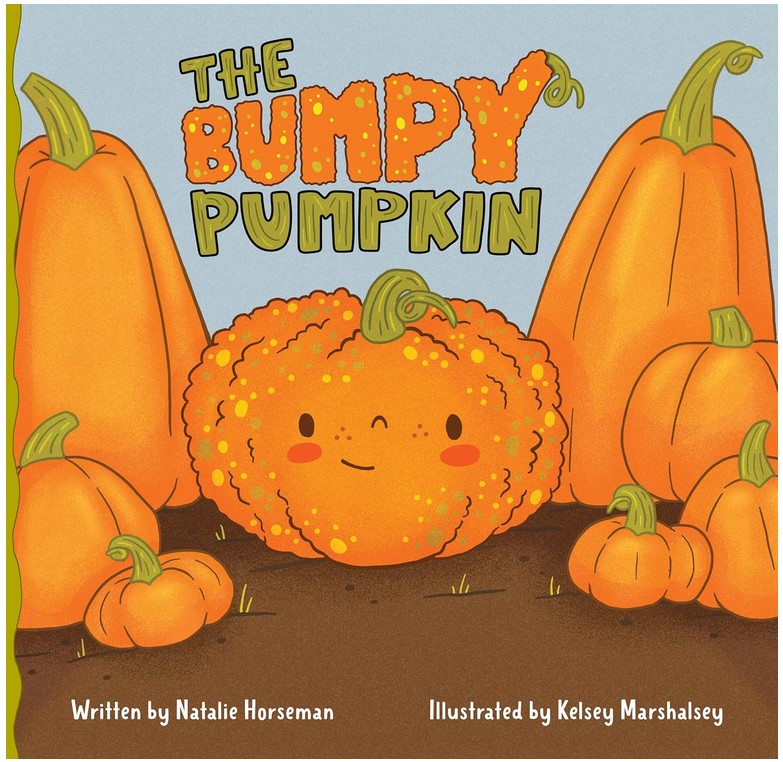
  • Mary asks Leo why Caleb makes little piles of grass in their yard. Leo jokes, “Our family belongs to a pagan cult that worships the moles that reside in the underworld. Our winter-solstice ceremony is fast approaching. Caleb has been commissioned by the high priest to create the burial mounds where we will make sacrifices.”
  • Caleb drowns in a swimming pool. Leo’s mom starts to say, “You know, Niles, I was the one who said-” Leo’s dad assumes she is starting to say it’s his fault Caleb drowned, and he explodes: “Oh no, Elise. You think I haven’t thought about letting him go swimming by himself? I hope to God you’re-” He is interrupted by Leo telling his parents to pull themselves together.
  • Leo approaches Caleb in his casket. He whispers to him, “Peace, brother. God love you.”
  • After seeing Caleb in the casket, Leo sobs. He composes himself and “stared blankly at a picture of Christ with his arms raised, thinking about all the times I had assured Caleb that God loved him.”
  • Curtis asks Leo why Caleb’s funeral is open-casket, and Leo says, “I think it’s a Catholic thing.”
  • Leo’s grandfather tells him he’s going to teach him how to play cards. Leo’s grandmother disapproves, saying, “For the love of God, let go of the past, Bernard.”

by Jill Johnson

Back on Track

Addison loves to run – she may even be the fastest runner in sixth grade. Unfortunately, she has no way of knowing because her mom won’t let her join the track team. Addison has to babysit her little brother, Charlie, every day after school while her mom works. When Addison’s PE coach specifically asks her to join the team, she and her best friend Sofia devise a plan. Addison secretly joins the track team and finally gets to pursue her passion.

The lies pile up though, and Addison can’t help feeling guilty. Finally, after lying about going to Sofia’s house when she really is going to a track meet, Addison gets caught. Although her mom ultimately decides Addison can stay on the track team, Addison is still punished for lying and has to make sacrifices, including waking up earlier for school.

Addison is a typical, likable twelve-year-old. She doesn’t always think through her decisions, like when she feeds Charlie ice cream for dinner and he ends up getting sick. She isn’t bitter about having to babysit Charlie. She appreciates how hard her mom works and doesn’t ask for new track shoes because she knows they can’t afford them. But every now and then, Addison wants the opportunity to be able to be a carefree sixth grader.

Back on Track is part of the Jake Maddox JV Girls series, a series of standalone sports books. Back on Track has a simple plot, short chapters, easy vocabulary, and a relatable main character. It is good for reluctant readers. At the back of the book, there is a glossary, discussion questions, writing prompts, and tidbits about track and field. Readers, especially those who run track, will enjoy reading the descriptive race scenes and easily relate to Addison’s passion for running. Although Addison is well-developed, none of the secondary characters have depth.

While Back on Track is a sports book, the story focuses more on the importance of honesty and sacrifice. The story focuses on Addison’s inner battle over whether she should tell her mom she joined the track team. Even though Addison ends up getting what she wants, she still appreciates the sacrifices her mom and Charlie make for her. Now that they are in the stands cheering for her, Addison enjoys the track meets more. She expresses this in her thoughts during her final race: “[Addison’s] family had made big changes just so she could run. She wanted to make them proud.”

Sexual Content

  • None

Violence

  • None

Drugs and Alcohol

  • None

Language

  • None

Supernatural

  • None

Spiritual Content

  • None

by Jill Johnson

Sergeant Stubby: Hero Pup of World War I

Stubby, a stray bull terrier from Connecticut, isn’t going to let anyone separate him from his human, Bob—not even a war. Determined to stay with Bob, Stubby sneaks onto the ship that is taking American troops to France. Soon Stubby and Bob are whisked off to the front lines of World War I. Stubby does his best to keep up the men’s spirits, and he can also warn the men when danger is approaching. He ends up saving the G.I.s from poisonous gas attacks and a German spy. Eventually, Stubby is promoted to the rank of Sergeant! Through it all, Stubby stays close to Bob as he makes his way across Europe, fighting to defeat the enemy.

Based on a true story, Hero Pup of World War I is told from Stubby’s point of view. Stubby is determined to help the soldiers as they go to battle. Through Stubby’s eyes, the readers will learn about the daily life of a soldier. Not only were the soldiers in constant threat, but they also had to deal with rats and lice. The story tells about life in the trenches as well as the military hospital. Although the story doesn’t go into gory detail about the soldiers’ deaths, Stubby does see the loss of human life and wishes he could do more to help the injured and dead.

Because the story is told from Stubby’s point of view, the human’s personalities do not come to life. Despite this, Hero Pup of World War I will introduce younger readers to World War I. The end of the book has pictures of Stubby and Bob as well as information about what started World War I. The end of the book also has a shortlist of other books for any reader who wants to learn more about animals in the military.

Although Hero Pup of World War I is the second book in the G.I. Dogs Series, the books do not need to be read in order because each book focuses on a different dog’s experiences. Hero Pup of World War I uses kid-friendly language to show the bravery and the hardships that G.I.s faced on the front line. Stubby is a likable character, who truly cares about the troops. His extraordinary life will inspire readers. Stubby says, “If a stray dog from the back alleys of New Haven, Connecticut can help win a world war and shake hands with the president, then anything is possible.”

Sexual Content

  • None

Violence

  • When a German spy comes into the U.S. camp, Stubby barks at him. The spy begins to run, and Stubby follows. “With one last bark, I leaped and planted my teeth in his backside, getting a mouthful of gray serge material. The German was face down in the mud, struggling to get free. I kept my jaws clamped shut. . .Three American G.I.s ran up to us, and I knew it was safe to let go.”
  • The G.I.s made Stubby a gas mask, but it didn’t fit correctly. “In March, we experienced our first poison gas attack. I smelled something strange—something I had never smelled before. . . Bob and I didn’t get our masks on in time. Hours later, when the shelling finally stopped, my eyes still burned and it was hard to breathe.”
  • One morning, the Germans sent storm troopers to rush the American’s front line. “The storm troopers overran the first trench and then advanced to the next. All the American soldiers joined the battle . . . Even the company cook jumped into the trenches and started swinging his meat cleaver at the German soldiers!” Some men were killed, and others were taken prisoners. Stubby is close to an explosive when it goes off. “A piece of fiery metal hit me in the chest. It hurt so much that I couldn’t move. All I could do is howl.” Stubby is taken to the hospital and recovers.
  • During a battle, Stubby tries to find wounded soldiers. When he finds one, he barks until a medic comes. He finds Smitty and “at first look, I thought he might already be gone, but when I licked his cheek, his eyes fluttered and he focused on me just for a second. . . I ignored the blood and snuggled up next to him. . . One tear slipped down his cheek. And then he was gone.”
  • The French and American troops attack the Germans. “There were shells landing, bullets flying and men screaming.” The troops freed a town of Germans.

Drugs and Alcohol

  • None

Language

  • None

Supernatural

  • None

Spiritual Content

  • None

Notorious

Keenan has lived all over the world, but nowhere quite as strange as Centerlight Island, which is split between the United States and Canada. The only thing weirder than Centerlight itself is his neighbor Zarabeth, a.k.a. ZeeBee. ZeeBee is obsessed with the island’s history as a Prohibition-era smuggling route. She’s also convinced that her beloved dog, Barney, was murdered—something Keenan finds pretty hard to believe.

Just about everyone on Centerlight is a suspect because everyone hated Barney, a huge dog—part mastiff, part rottweiler—notorious for terrorizing the community. Accompanied by a mild-mannered new dog who is practically Barney’s opposite, ZeeBee enlists Keenan’s help to solve the mystery.

As Keenan and ZeeBee start to unravel the clues, they uncover a shocking conspiracy that dates back to Centerlight’s gangster past. The good news is that Keenan may have found the best friend he’s ever had. The bad news is that the stakes are sky-high. And now someone is after them…

Centerlight’s history is full of gangster lore and hidden treasure legends that Zeebee is excited to share with her new friend Keenan. Middle grade readers will relate to both characters because they are interesting, flawed, and struggle with typical teenage problems. Most of the chapters alternate between ZeeBee’s and Keenan’s points of view. However, some of the chapters are told from other characters’ points of view, which makes it necessary to read the chapter titles. The changing points of view and the large cast of characters may confuse some readers.

Notorious blends mystery, adventure, and suspense into a story that is hard to put down. The story contains just enough gangster lore and teenage drama to hook the reader. Keenan thinks that ZeeBee’s stories are exaggerated, while some of the local kids think that ZeeBee is crazy. ZeeBee struggles with the fact that even though she’s always lived on Centerlight, she doesn’t feel as if she belongs. All of these conflicting plots are interconnected and form a fabulously fun tale that contains many surprises.

Sexual Content

  • None

Violence

  • ZeeBee is obsessed with the town’s prohibition past. When she gives Keenan a tour of the island, she takes him to a cliff. ZeeBee says, “They call it Ripley’s Point because that’s where the gangster Meyer Lansky dumped Reuben Ripley’s body when they caught him helping himself to some of the booze shipments to sell for his own life… You used to be able to see a red stain on that sharp pointed one [rock], but it’s faded over the years.”
  • ZeeBee tells Keenan about a fourth of July when “this crew out of Detroit” was trying to “muscle in on Capone’s business here in Centerlight… Capone’s guys tossed a lit match into the fireworks… There was a lot of noise, so nobody noticed a few extra booms, pops, and bangs in there. But when it was all over, the entire Detroit crew was scattered around the park, dead.”
  • ZeeBee and Keenan are out in the forest at night when two men approach them. ZeeBee’s dog Barney “leaps on the bewildered giant, burying his teeth in the already scarred forearm.” The two men threaten the kids, and Keenan twirls “around into the familiar tae kwon do stance, and my leg launches out into the kick I haven’t been able to execute since I got sick. My whole body tenses… Whack! The sole of my sneaker smacks into the heavy piece of gold, ramming it into the side of Bryce’s head… Bryce’s eyes roll back and he crumples, unconscious, in the dirt.” Keenan injures his foot. The police show up and arrest the bad guys.

 Drugs and Alcohol

  • Keenan finds dead animals in the forest. “There must be twenty-five or thirty of them—all small animals. This is a graveyard.” Keenan thinks the animals ate poisoned meat.
  • The local fro-yo shop makes rum raisin frozen yogurt.

Language

  • There is some name-calling, such as jerk, idiot, and moron. For example, ZeeBee gets upset when Keenan begins hanging out with some boys from school. She tells him, “You’re worse than Ronnie and those idiots! They’re just brainless. You’re a sleaze!”
  • When Keenan goes to visit an elderly man, ZeeBee wonders, “So why is Keenan visiting this jackass?”
  • ZeeBee is upset that Keenan went to a party. The kids broke into a lighthouse, and ZeeBee’s father went to break it up. ZeeBee thinks, “But Dad wouldn’t be much of a border officer if he didn’t have the brains to reconstruct a crime scene. He passed every single one of those boneheads as they biked away from the lighthouse.”
  • Keenan goes to talk to his friend’s father. Later, the father tells his son, “I don’t have time to waste on some twelve-year-old nutjob.”

Supernatural

  • None


Spiritual Content

  • None

The Sorcerer of the North

Will is finally a full-fledged Ranger, who has his own fief to look after. Will is just getting used to the sleepy fief when he is called away on a secret mission. Lord Syron, who is a master of a castle far in the north, is struck down by a mysterious illness. Some believe that Lord Syron has been struck down by an ancient enemy who is using dark magic. One thing is known for sure: many do not respect Lord Syron’s son, Orman. Will Orman be able to guide the fief during his father’s illness?

As Will is trying to determine who is loyal to Lord Syron, Alyss shows up disguised as a noblewoman. The two hope to discover who is to blame for Lord Syron’s illness. As Will battles growing hysteria, traitors, and most of all, time, Alyss is taken hostage and Will is forced to make a desperate choice between his mission and his friend.

The Sorcerer of the North has a slow start as Will travels to his new fief. Unfortunately, Will is called away almost immediately. During the first part of the book, Halt, Alyss, and several other known characters make a short appearance. Even though their appearance sets up the book’s conflict, the action is slow. Readers who have read the previous Ranger’s Apprentice books will continue reading because they are familiar with Will and the other characters; however, those who have not read the previous books in the series will not want to start with this one.

In The Sorcerer of the North, Will spends too much time traveling to meet different people in attempt to learn about Lord Syron’s kingdom. Instead of being interesting, the reader may quickly become bored. Once Will travels to Syron’s castle, he still spends much of his time collecting information. It isn’t until the end of the book that the action picks up, ending in a cliffhanger that will lead readers to pick up the next book in the series, The Siege of Macindaw.

Even though The Sorcerer of the North isn’t as entertaining as the previous books, readers will enjoy seeing Will become more confident as a Ranger. As Will investigates Lord Syron’s fief, he learns that things are not always what they seem. However, the story has few surprises, too little action, and an easily solved mystery. In addition, readers will miss Halt, Horace, and Evenlyn, who were prominently featured in the previous books. Despite this, readers will want to continue to read The Sorcerer of the North because they know that Will’s next exciting adventure is just around the corner.

Sexual Content

  • Will is happy to see Alyss, who “sensed his need for warmth and feminine company and affection and had been more than glad to supply all three. It hadn’t progressed past some tentative embraces and kisses in the moonlight. . .”
  • As Alyss leaves Will’s house, “she leaned forward and her lips touched his—light as butterfly wings and amazingly soft to the touch. They remained so for many seconds, then Alyss finally stepped back.”

Violence

  • Will catches a man spying on him. When the man tries to sneak into Will’s house, “Will moved quickly, grabbing the man by the wrist with his right hand and pivoting to jerk him forward into the room. At the same time, he let the pivot movement throw his left leg across the doorway as a barrier, so the outsider was jerked forward and tripped over the outstretched leg. . .” The man recovers and aims a war spear at Will, “the razor-sharp head weaving slightly as if to mesmerize his enemy.”
  • When the spy, Buttle, sneaks into Will’s house, Alyss tries to help by pointing a dagger toward the man. “Buttle swung instantly toward her, dropping into a defensive crouch, the spear ready to thrust. . . ” Will cuts the tip off of Buttle’s spear. Then, Will “brought the brass pommel of the saxe thudding into his temple.” Buttle is knocked unconscious and sold into slavery.
  • As Will and two other men try to leave the castle, guards shoot at them. “Will saw movement on the battlements ahead of them, and heard a crossbow bolt strike, skidding, on the stones in front of Tug. Without conscious thought, seemingly without aiming, he shot again and a figure tumbled from the parapet into the courtyard, his crossbow clattering on the stones beside him.” The men were able to escape.
  • When men follow Will out of the castle, Will shoots an arrow at one of them. “Instead of striking home into Buttle’s upper body, it came out of nowhere and slammed into his thigh, tearing through the fleshy part of the leg and pinning it to the hard leather of the saddle.”
  • Will tries to get Alyss out of the castle, but he is unable to. When he flees the castle, a sergeant recognizes Will and “lunged clumsily with the halbert. Will’s saxe knife was in his hand and he deflected the heavy ax head to one side. Grabbing the sergeant’s arm, turning and crouching in one movement, he threw him over his shoulder to the flagstone of the courtyard. The sergeant’s head slammed into the hard stone. His helmet rolled on one side and he lay stunned.”

Drugs and Alcohol

  • Will asks a stranger about an injured dog. The man replies, “John Buttle has a shepherd like that one. And he’d be the kind to injure a dog and leave it that way. Has a nasty temper, John does, particularly when he’s in the drink.”
  • The Scandians needed to raid a fief in order to get supplies, including wine.
  • Will invites the Scandians to a feast. He tells a man, “But don’t try to match them drink for drink. You’ll never manage it.”
  • Will goes into a tavern where the patrons were “tapping their wine mugs on the table” and singing along with a song. One of the songs is about a “drunken witch,” and another song talks about “the drunken king of Angledart.”
  • Will goes into the barracks rooms because he knew “nothing lessened men’s tongues like an evening of music and wine.” He gives the men “a large flagon of apple brandy to help the night along.”
  • Someone poisons Orman. Later, Will finds out the poison was “a particularly nasty toxin called corocore. It’s very obscure—not listed in any of the major texts on herbs and poisons. It takes about a week to take effect, so it was probably slipped into Orman’s food or drink sometime in the last ten days.”
  • Alyss, disguised as a noblewoman, asks for someone to bring her and her guest “the good Gallic white” wine.

Language

  • A man talks about his injured dog. He says, “little bitch tried to bite me so I taught her.”
  • Damn is used occasionally. For example, Will tells a Scandian that a man “made a damn nuisance of himself around here. . .”
  • “My God” is used as an exclamation twice. For example, when someone shows Will a weapon, Will says, “My God.”
  • “Oh God” is used as an exclamation three times. “Good God” is used as an exclamation once.
  • Alyss is working undercover as Lady Gwendolyn. She tells Will, “Now we can talk, while any eavesdroppers will hear the jongleur serenading that stuck-up twit, Lady Gwendolyn.”
  • Hell is used once. Will says, “Then we ride like hell for the gate.”
  • Someone calls a guard an idiot.

Supernatural

  • While in a forest at night, Will sees an apparition. “. . . A giant figure loomed out of the mist, towering high above the mere, seemingly to rise from the black water itself. One moment there was nothing. Then, in the blink of an eye, the figure was there, fully formed. . . This was no mortal figure he knew. This was something from the other side, from the dark world of sorcery and spells.” When the apparition tells Will to leave, Will quickly exits the forest.
  • Alyss is hypnotized.

Spiritual Content

  • As he was walking across the courtyard, Will “Breathed a silent prayer that they wouldn’t encounter Buttle on his way out.”
  • Will’s dog approaches a man. When the man begins petting the dog, Will’s friend says, “Thank God you didn’t shoot him.”

Latest Reviews