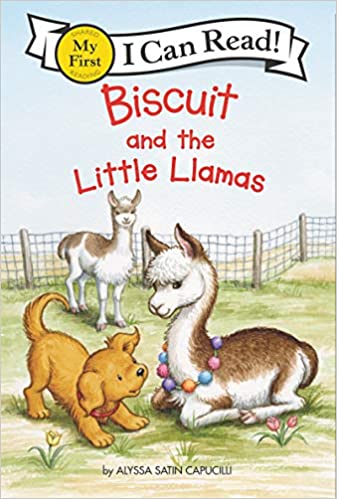
Biscuit and the Little Llamas

It’s springtime on the farm. Biscuit can’t wait to meet all the new animals. He makes friends with the piglets, the lambs, the chicks, and even the little llamas!

As Biscuit and a little girl explore the farm, Biscuit keeps tugging on a rope, trying to show the girl what he has found. The little girl is distracted by all the baby animals, butfinally she sees what Biscuit has found—a llama. Biscuit then proudly leads the llama to “the fresh green grass.”

As part of the My First I Can Read Series, Biscuit is perfect for emergent readers. The story uses basic language, word repetition, sight words, and sweet illustrations. Each page has one to three simple sentences and many of the pages have onomatopoeia animal sounds that make the story fun to read. Plus, the large pastel-colored illustrations are sweet and show all the cute baby animals.

Biscuit and the Little Llamas will appeal to young readers who love animals. As part of the My First I Can Read Series, the story will help build reading confidence in emergent readers. Plus, there are 35+ books in the Biscuit Series that cover many different topics. Readers who love animals and want to visit another farm should also check out Otis by Loren Long and The Apple Orchard Riddle by Margaret McNamara. 

Sexual Content

  • None

Violence

  • None

Drugs and Alcohol

  • None

Language

  • None

Supernatural

  • None

Spiritual Content
  • None

Exploring Flight

Why do airplanes look the way they do? Why can’t birds fly when they’re first born? And why do some paper planes fly farther than others?

Exploring Flight is the perfect nonfiction resource for all these questions and more. Discover everything there is to know about flight from Ada Twist, Scientist—from information about creatures that fly, to the history of aircraft, to modern technology that allows us to soar through the air faster than ever.

Fans of Ada Twist who are interested in flight will enjoy reading Exploring Flight and learning about how an object flies because of thrust, drag, lift, and weight. However, some readers may become frustrated by the quickly changing topics. For example, the text includes a poem written by Ada, brainstorming ideas and questions that Ada has. One page asks, “What could make a penguin fly?” The brainstorming answers include the following. “1. Wear a hat with a propeller. 2. I could make parrot wings for them to flap, flap, flap. 3. Buy a ticket on South Pole Airlines.”

The book’s format will appeal to young readers because each page includes large pictures, Ada’s drawings, and brightly colored fonts. The informational text appears in type and the important terms are in bold font. However, the bolded words are not always defined and there is no glossary. To distinguish Ada’s thoughts and questions, they appear in brown font that looks like handwriting. Many of Ada’s ideas add a little silliness to the topic. For example, Ada wonders “If a cat toots, will it scoot? If it toots a lot, will it fly to the moon?”

Exploring Flight will teach readers about many different aspects of flight and includes information about planes, birds, rockets, spiders and hot air balloons. There are also several pages that list important people such as Paul Cornu, who invented the first helicopter model. In addition, the back of the book includes two fun science experiments that will excite younger readers.

If your little reader wonders why things are able to fly, then Exploring Flight will delight. The book uses kid-friendly examples to help explain difficult concepts. Plus, the nonfiction book has plenty of fun illustrations as well as pictures from the Netflix Series. The text is broken up into manageable sections with one to seven sentences per page. However, readers may need help understanding some of the complex ideas. Exploring Flight mixes a little silliness in with fun facts to teach readers all about flight. To learn about different scientists readers should also read the picture book series Amazing Scientists by Julia Finley Mosca. Another excellent picture book series that will pique reader’s interest in space flight is Mousetronaut by Mark Kelly.

Sexual Content

  • None

Violence

  • None

 Drugs and Alcohol

  • None

Language

  • None

Supernatural

  • None

Spiritual Content

  • None

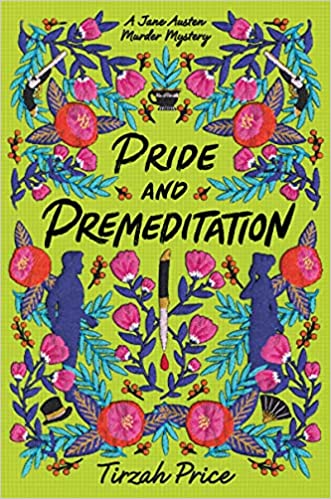
 Pride and Premeditation

Unlike other unmarried women her age, rather than a good husband, seventeen-year-old Lizzie Bennet wants nothing more than to practice law and work in her father’s law office. When there is a murder in high-society London, Lizzie jumps at the opportunity to prove herself worthy of being a litigator.

Although the authorities have charged someone with the crime, Lizzie has her doubts, promising to catch the real killer and clear the name of the man accused of the crime. But many obstacles stand in her way. For example, the man accused of the crime isn’t actually her client and is being represented by Mr. Darcy, a young lawyer and the heir of a prestigious law firm, who has no interest or patience for Lizzie’s antics. In order to uncover the truth and catch the killer, Lizzie pushes the boundaries of social and gender norms in this regency-era murder mystery.

Pride and Premeditation reimagines Jane Austen’s classic characters from Pride and Prejudice with a murder mystery twist. Following in the footsteps of the classic, Price examines gender roles and social standards of 19th century England. Lizzie is often pushing against preconceived sexist notions of what an unmarried, young woman should be doing. Rather than finding a husband of good social standing—as society and her mother tells her to—Lizzie would rather help her father around his office, and study contracts and case law. In conversations with her father or Mr. Darcy, Lizzie questions if she would be treated differently if she “weren’t a young lady.” Headstrong and extremely motivated, Lizzie explains she “will not live [her] life sitting by the side while there are so many men making a mess of things.”

The novel also looks at the classism and the social hierarchy of English society at the time. Lizzie feels as if she is looked down upon by those with higher social standing. The upper class often looks down on Lizzie, judging her based on where she lives or what she wears. But Lizzie, actively aware of this classism, simply sees this as another obstacle she must face in order to prove herself. Furthermore, Lizzie observes how people of her social standing look down on people of a lower class. In one instance, her mother scolds Lizzie for socializing with “street children” (or “urchins” as her mother would say).

Full of witty dialogue, Pride and Premeditation is a fast-paced story centered not only on the murder of a member of high-society London, but also on notions of justice, class, and the role of women in 19th century England. Readers will relate to Lizzie, who struggles with social and familial standards, and the people who are trying to dictate her actions when Lizzie is simply trying to pursue her interests. Readers can learn the importance of unabashedly being oneself and sticking to one’s convictions from Lizzie, no matter the obstacles society attempts to throw at you.

Pride and Premeditation has many familiar characters from Jane Austen, making it a great read for those familiar with Austen’s works (though knowledge of the original characters can make the twists and turns of this mystery slightly more predictable). However, the novel can also be enjoyed as a standalone novel for those unfamiliar with Pride and Prejudice. With a strong female lead, Pride and Premeditation is an inspiring and fun book with just the right mix of mystery, adventure, and a hint of romance, making this book is a must-read.  Readers who enjoy historical fiction and mystery should also read Enola Holmes and the Black Barouche by Nancy Springer.

Sexual Content

  • Lizzie and Darcy share one kiss. When Lizzie sees Darcy a few weeks later she is “reminded of the warmth of their kiss.”

Violence

  • The basis of this novel is the murder of Mr. Hurst, who was “stabbed with a fine penknife.”
  • There is a discussion about the blood spatter on the body, Lizzie notes “when a creature is killed, there is usually a bit more splatter.”
  • As she walks down the street, Lizzie is abruptly grabbed, as “a gloved hand” stops her from screaming and shoves her into a carriage. Lizzie is taken in order to talk to Lady Catherine de Bourgh, someone interested in Lizzie’s investigation, then freed.
  • Lizzie discovers the dead body of Abigail who was left in the river Thames to drown with her hands “bound with rope”.
  • After stumbling upon the ransacked offices of Pemberley and Associates, Darcy and Lizzie are shoved by the assailant “sending them tumbling into the records room.” As the assailant rushes back to the streets, Georgina, Darcy’s younger sister, “opened the door [of the carriage] as he went by and hit him quite hard,” but he gets away.
  • In a heated moment of action, as Lizzie and the others discover what Mr. Wickham has done, he holds Lizzie at gunpoint, digging “the muzzle into her ribs.”
  • Mr. Wickham drags Lizzie out of her house, threatening violence to anyone who interferes. A chase ensues. Lizzie manages to escape the grasps of Wickham, “plung[ing] the sharp end of her brooch into his thigh.” As Lizzie tries to run away Wickham shoots at her, just missing her. The scene lasts over ten pages.
  • Darcy catches up to Wickham and Lizzie and confronts Wickham with a gun. In order to stop them from shooting each other, Lizzie steps in between the two. There is a confrontation between Darcy and Wickham where they talk about Wickham and Darcy’s history. This is interrupted by the mastermind of the murder of Mr. Hurst and Abigail, who shoots Wickham. He “double[s] over …crumpl[ing] to the ground,” falling into the river Thames. This action sequence is described over a chapter.
  • When Lizzie confronts a suspect, he grabs her, but she pulls away, drawing “Darcy’s spare pistol, pointing it at [him] just as he brandished a knife.”

Drugs and Alcohol

  • Multiple times, Mr. Hurst is referred to as a drunk and he is “always drinking.” The night before he is killed, the man suspected of killing him finds him at a “club,” brings him home, and tells “him to sober up.”
  • There is a delay outside Darcy and Lizzie’s carriage, and the driver blames it on “a drunk.”

Language

  • Mrs. Bennet refers to Fred, Lizzie’s informant, as an “urchin.”
  • Words like “lord almighty,” “for heaven’s sake,” and “bollocks” are used once.

Supernatural

  • None

Spiritual Content
  • None

by Mikaela Querido

Every Reason We Shouldn’t

Sixteen-year-old figure skater Olivia Kennedy’s competitive dreams have ended. She’s bitter but enjoying life as a regular teenager instead of trying to live up to the expectations of having Olympians Midori Nakashima and Michael Kennedy as parents. . .until Jonah Choi starts training at her family’s struggling rink.

Jonah’s driven, talented, going for the Olympics in speed skating, completely annoying. . . and totally gorgeous.

Amid teasing Jonah, helping her best friend try out for roller derby, figuring out life as a normal teen, and keeping the family business running, Olivia’s got her hands full. But will rivalry bring her closer to Jonah, or drive them apart?

Olivia’s life is a mess. Her father is on the road working, her mother is so doped up on pain pills that she’s mostly absent from Olivia’s life, and Olivia’s best friend is dealing with her own set of troubles, including raising her daughter. Then, Jonah enters the picture. The “Ice Prince” may set Olivia on fire, but his cocky attitude puts a damper on the romance. Instead of being a sweet and sexy love interest, Olivia and Jonah sneak into storage rooms, behind counters, and even behind a dumpster to make out. The abundance of kissing makes their romance seem shallow and cheap. Instead of rooting for the two teens, readers will have a hard time believing the two are really in love.

Olivia’s parents are another negative aspect of the story. Olivia has no parental support. While Olivia’s mother’s excuse is her constant pain, her injury is never explained, which leaves the reader wondering if the pain meds are necessary or just a way for her mother to escape. To make matters worse, the book’s conclusion is unrealistic because it portrays Olivia and her parents as a cohesive group that supports each other when there is absolutely no evidence that supports this.

Unfortunately, Every Reason We Shouldn’t isn’t a fun, flirty romance that readers will enjoy. Instead, it’s full of forgettable characters that are hard to relate to. While both Jonah and Olivia hope to go to the Olympics, they spend more time kissing than they do on the ice. The story combines skating with romance and parental pressures; however, the book’s flaws will quickly damper reader’s interest. Instead of reading Every Reason We Shouldn’t, readers looking for an entertaining story that mixes sports and romance should check out the Hundred Oaks Series by Miranda Kenneally.

Sexual Content

  • The father of Mack’s baby asks her if she wants to go to his house. He says, “Derek will get us a six-pack or two. We’ll hang and stuff . . . My mom doesn’t’ care if you sleep over. Long as we’re quiet.”
  • Olivia watches Jonah skate. “Every time he stops, Jonah looks over at me and smiles. I’m melting. I fantasize about stepping up onto his bladed feet, wrapping my arms around his neck, and kissing him until we’re standing in a puddle of water in the middle of the rink.”
  • When Olivia asks a friend for boy advice, the friend texts, “and use protection. . . And he better not be sending you pictures of his junk.”
  • Olivia and Jonah lay on a couch. Olivia brings “my other hand up underneath his T-shirt until my palm rests over his heart. . . Jonah pushes me gently down on the couch until his whole body presses into mine. . . When Jonah’s lips find mine, the blanket becomes completely unnecessary.”
  • Olivia and Jonah go into a supply closet at the skating rink. “As soon as the door is closed, I launch myself at him, our lips connecting like I’ve wanted them to do all morning. . . Cold fingertips glide underneath the back of my T-shirt and up my spine. . . I pull the zipper of Jonah’s skinsuit down to mid-chest. . . Jonah’s breath hitches when I slide my cold hand underneath the fabric.” They part when Jonah’s father calls him.
  • At the skate rink, Olivia and Jonah kiss. Jonah makes a “trail of kisses from my ear to my throat.” Then Olivia pulls “Jonah down until we are both kneeling on the well-worn carpet behind the skate counter. . .” They are interrupted by Jonah’s father.
  • After being apart for several days, Jonah goes to the ice rink. Olivia goes to take out the trash and, “As soon as I walk out the front door, Jonah grabs the trash with one hand and my hand with the other and pulls me behind the building to the dumpster. His lips meet mine before the bag of trash even hits the bottom of the dumpster.”
  • Olivia and Egg (her old skate partner) go to Los Angeles for a skate audition. While driving, Egg says, “Do you know what this looks like? Human trafficking.”

Violence

  • Olivia’s school has a lock down because of an angry parent’s “disorderly conduct” and a “confrontation” with the school’s security officer.

 Drugs and Alcohol

  • Olivia’s mom has an injury so she takes muscle relaxants and pain medication. Olivia says the medication makes her mom “spaced out.”
  • Olivia thinks that some of the high achieving kids at her school “snuck into their parents’ medicine cabinet to take a Xanax or two because their anxiety was way off the charts.”
  • Olivia’s classmate has a panic attack. She says, “The new medication helps. I still spent the rest of the day in bed surrounded by all my dogs and watching sea otter videos though.”

Language

  • Profanity is used often. Profanity includes ass, crap, damn, freaking, hell and pissed.
  • OMG, God, and Lord are used as exclamations occasionally.
  • Mack calls two boys “boneheads.”

Supernatural

  • None

Spiritual Content
  • None

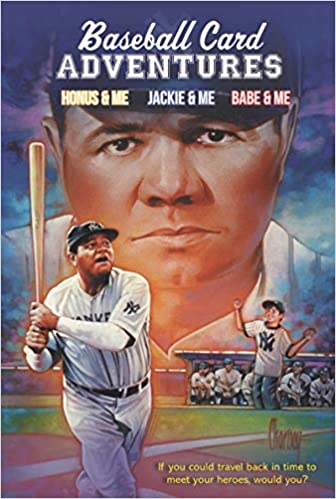
Babe & Me: A Baseball Card Adventure

On October 1, 1932, during Game Three of the Chicago Cubs–New York Yankees World Series, Babe Ruth belted a long home run to straightaway centerfield. According to legend, just before he hit, Babe pointed to the bleachers and boldly predicted he would slam the next pitch there.

Did he call the shot or didn’t he? Witnesses never agreed. Like other baseball fans, twelve-year-old Joe Stoshack wants to know the truth. But unlike other fans, Joe has the astonishing ability to travel through time using baseball cards—and now he’s determined to settle one of baseball’s greatest puzzles.

 Babe & Me explores the father-son relationship through both Babe Ruth’s eyes and Joe’s eyes. Even though Joe’s father has spent little time with him, Babe Ruth points out the good aspects of Joe’s dad. Despite this, Joe struggles with feelings of resentment because his father seems more concerned with coming up with get-rich-quick schemes than spending time with him. His father, who is often angry, blames his troubles on luck. He says, “You can try as hard as you want. Be as good as you can be. But a lot of what happens in the world is plain dumb luck.” Towards the end of the book, Joe’s dad finally realizes that his relationship with Joe is more important than money.

Throughout the story, both Babe Ruth’s public persona and his private, more serious side are shown. Babe Ruth is loud, reckless, and a big spender when around people. However, when he is alone with Joe and his father, Babe Ruth has a tortured soul because of his upbringing as well as his belief that he was not a good father. Historical pictures and partial news articles are scattered throughout the story. Plus, the author explains what events actually happened and which events he made up. In addition, there are four pages of quotes from baseball players that show that even now, people do not agree on whether or not Babe Ruth called his shot.

Joe is a likable main character, who has conflicting emotions about his father. Because Joe and his father were able to spend time with Babe Ruth, they witnessed Babe Ruth’s generosity, his reckless behavior, and his emotional turmoil. However, Joe’s father is not necessarily a likable man and his change of attitude is not believable. Despite this, the fast-paced time travel adventure will appeal to sport-loving readers even though the story has little baseball action. Readers who want to learn more about Babe Ruth should also read Babe Ruth and the Baseball Curse by David A. Kelly. Middle-grade baseball fans can also jump back into time by reading The Brooklyn Nine by Alan Gratz.

Sexual Content

  • Babe Ruth sees a woman crossing the road and says, “Got a load of the sweet patootie! She is one red-hot mama!”

Violence

  • While at a park, men stood on wooden crates making speeches. As one man spoke, “some people booed, and somebody threw a rock at the guy . . .” When two policemen show up, “somebody threw a rock at one of them, and it bounced off his helmet. The cop pulled out a nightstick and hit a guy with it. . . The people in the crowd began to hiss and boo and throw things at the cops. The second cop pulled out his pistol and fired it up in the air.” The scene is described over two pages.
  • Babe Ruth was signing his autograph when one boy dropped his paper. Joe picks it up and refuses to give it back to the boy. The boy’s father “reached into his jacket and pulled out a knife.” After the fathers’ argument, Joe gives the paperback to the boy.
  • As a boy, Babe Ruth stole money from his father. “Dad caught me and beat me with a pool cue.”
  • Babe Ruth’s father “got kicked in the head in a fight outside his saloon and died when he was forty-six.”
  • Babe Ruth tells a story about a baseball player who “didn’t see a pitch coming at him. It busted his skull. He crumpled like a rag doll right in the batter’s box.” The man died.
  • One of the reasons that Joe’s father is often angry is because of his family history. His grandparents and their children were rounded up by the Nazis. Joe’s father says, “Only my father escaped, by hiding under the house. The Nazis sent the rest of the family to Treblinka, a concentration camp. They were all killed. In the gas chambers.”
  • Joe’s father catches Babe Ruth’s home run ball. His father “and a few other guys dove for it, but I got there first. They tried to beat it out of me. That’s how I got the black eye, actually.”

 Drugs and Alcohol

  • Babe Ruth is seen smoking a cigar.
  • Even though it’s prohibition, Babe Ruth orders a pitcher of beer. During his meal, “he washed everything down with another pitcher of beer.”
  • Babe Ruth says that he “was drinking beer before I could read.”

Language

  • Several times cuss words are replaced with @#$%.
  • Someone calls Joe’s father an idiot.
  • Babe says heck once.
  • While at a game, some of the other teams called out insults. Someone calls Babe Ruth an “ugly tub of guts.” He is also called, fatso, a washed-up balloon headed meatball, old potbelly, lummox, and other names.
  • Some boys are playing baseball. A boy calls a player a dope.

Supernatural

  • For Joe, baseball cards function as a time machine. When he touches an old card, “that tingling sensation was the signal that my body was about to leave the present and travel back through time to the year on the card.”
  • In order for Joe and his dad to return from the past, Joe needs “to bring a new card. . . If I didn’t have one with me, we could have been stuck in 1932 forever.”

Spiritual Content

  • While men were giving speeches on the solution to the Great Depression, someone says, “God is the answer.”

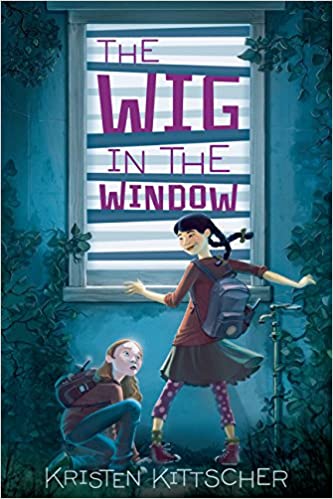
The Wig in the Window

Sophie Young and Grace Yang are best friends, seventh graders, and wannabe spies. The town of Luna Vista is quite boring, so they make a game out of spying on their neighbors. They even have a map of who and who not to spy on. But their game quickly becomes serious.  On one of their midnight stakeouts, they stumble across a terrifying scene at the home of their eccentric yet demure middle-school counselor Dr. Agford (also known as Dr. Awkward). The school counselor is hacking away at what appeared to be a piece of human flesh. Even though they are proven wrong about what Dr. Agford was chopping, the girls are still convinced that Dr. Agford is hiding a dangerous secret—and are determined to find out what it is.

Sophie and Grace attempt to uncover more about Dr. Agford, but Dr. Agford effortlessly evades the girls’ efforts to trip her up. Dr. Agford, as a respected adult, easily inserts herself into Sophie’s life. She slowly changes the girls’ neighborhood watch into a serious game of cat-and-mouse. As their investigation heats up, Sophie and Grace crack under the pressure. Their friendship, along with their investigative skills, are put to the test.

The narrative squarely focuses on Sophie’s perspective. This point of view helps the reader understand the workings of Luna Vista Middle School and Sophie’s personal life. Older readers will relate to the book’s portrayal of middle school, as the story is realistic in depicting Sophie’s thoughts about her classes, peers, and teachers. Like any preteen, Sophie also openly talks about her obsession: hers is Chinese culture, more so since Grace is Chinese American. Sophie gets “carried away with the traditional Chinese practice of feng shui . . . the idea that you can arrange your space to bring good luck and positive chi” and she takes the teachings of philosopher Sun Tzu as fact. This is notable when Sophie uses Sun Tzu’s tips about deception (when you are near, you must pretend you are far) to make sure she doesn’t reveal any information to Dr. Agford.

The story also covers cultural appropriation and interracial friendships, which is a point of conflict between Sophie and Grace’s relationship. Sophie dislikes that Grace is seemingly unengaged in Chinese culture, and Grace hates that Sophie practices activities relevant to Chinese culture without knowing their cultural significance. Grace accuses Sophie of “being superficial” because she talks about Sun Tzu, arranges her room with feng shui in mind, and practices kung fu. Sophie is performative in her adoration of Chinese culture. To Grace, Chinese culture is who she is. While Sophie never understands its importance to Grace, the two friends make up, but Sophie doesn’t move past her surface-level understanding of Grace’s culture. Through their exchanges, readers will learn the importance of being considerate of other’s cultures.

The Wig in the Window is a suspenseful yet fun story that focuses on relationships between authority figures and friends. The suspense comes from the girls avoiding Dr. Agford’s wrath, as she has a lot of sway in the community. Sophie’s narration about the school and the town gives the story a humorous and light tone. There is some name-calling that is typical of middle schoolers bad-mouthing each other, such as when Sophie’s classmates purposely mispronounce her French name as “AY-NUS” instead of “AN-YES.”

The consequences for the girls’ crimes—spying on their neighbors and breaking-and-entering—are nonexistent for the sake of the plot. Any adults that could stop the girls from investigating criminal activity are equally absent. Still, this book has lessons about appreciating other cultures and a good portrayal of interracial friendship, alongside the masterful way the girls uncover the mystery surrounding Dr. Agford. If readers enjoy the game of cat-and-mouse between Dr. Agford and the girls, and the girls’ friendship, then they should consider reading the City Spies Series by James Ponti.

Sexual Content

  • Grace is in love with one of the boys in their grade. She says “Score. He’s totally hot”
  • Sophie’s brother, Jake, says Sophie’s probably angry because it’s “probably that time of the month.”
  • Jake got busted for not being home. At first, Sophie thinks her brother, “had his own brush of death at his girlfriend’s.” However, upon closer inspection, she notices that “the red welts all over his neck proved to be hickeys.”
  • Sophie thinks of her crush, Rod. “Who cares if people still called him Rod Pimple? He was cute now.”
  • Sophie thinks about Rod’s appearance. “At Luna Vista the guys weren’t allowed to let their bangs hang over their eyes. It made him seem even cuter that he was so adorable and a rebel.”

Violence

  • Agent Stone tackles Sophie to the ground. Sophie “groaned in agony as he pressed his knee against my back and wrenched my arms behind me.” Sophie feels pain on one side of her body for the rest of the night.
  • Sophie gets out of Agent Stone’s grip so she can stop Dr. Agford from hurting Grace. The adults want to get rid of the girls because the girls were going to tell the authorities about their crimes.  “[Sophie] hoisted [her] knee up and rammed [her] foot down over his.” He loosens his grip. Then, Sophie “delivered a swift donkey kick square into his crotch.” He crumples to the ground, groaning. Finally, Sophie pepper sprays the man’s eyes. He “screamed. His hands flew to his face as he stumbled backward.”
  • Agford is trying to drown Grace, so Sophie sneaks up on Dr. Agford. Then, Sophie hits Dr. Agford so she can get Grace out of Dr. Agford’s grasp. “[Sophie] slammed the heel of Grace’s cowboy boot directly into the back of [Dr. Agford’s skull]. She let out a bloodcurdling yell and crumpled to the sand in front of [Sophie].” Dr. Agford is knocked unconscious.

Drugs and Alcohol

  • None

Language

  • Most kids at Luna Vista Middle School refer to Dr. Agford as “Dr. Awkward.”
  • Grace says “Oh my God” nine times.
  • “Thank God” is used as an exclamation five times.
  • One of Sophie’s friends says “Oh, my lord!”
  • Sophie calls herself a “psycho.”
  • After meeting with Agent Ralston, Sophie comments that the government “sure gives [FBI agents] crappy cars.”
  • When she is trying to figure out why Dr. Agford wasn’t smiling at one of the assemblies, Sophie thinks “for God’s sake.”
  • While watching an episode of Wheel of Fortune, Sophie’s grandfather yells, “Buy a vowel, nitwit!”
  • Grace and Sophie call themselves “crazy” for confronting Dr. Agford.

Supernatural

  • None

Spiritual Content
  • Sophie is obsessed with Chinese philosophy, and she explains the concept behind the teardrop-shaped half of a yin-and-yang pendant. “According to Chinese philosophy, yin and yang are opposite forces that interact with each other. Yin is dark, quiet, colder energy. Yang is active, bright, and warm energy. The two need to be in balance for harmony.”
  • Sophie’s brother likes to topple some of Sophie’s “Buddha figurines” because he thinks it’s funny to mess with her.

by Jemima Cooke

Nobody Knows but You

Kayla Martin has always been a bit of an outcast. That is until she meets Lainie at an eight-week-long summer camp. The two girls instantly become inseparable. Lainie is fun, charming, larger than life, and able to bring out a side of Kayla that she never knew she had. However, it isn’t long before another camper enters the picture.

Nerdy but confident, established playboy Jackson immediately grabs the interest of Kayla’s newfound best friend. The two begin a passionate, hot, and cold relationship. Though Kayla is less than thrilled about the effect Jackson is having on Lainie—and about becoming the third wheel—she remains fiercely loyal and hopes Lainie will come to her senses by the summer’s end.

But the summer ends with Jackson’s corpse being discovered in the lake. Foul play is suspected, and Lainie quickly becomes the prime suspect. As her friend awaits trial, Kayla grapples with the murder and the events leading up to it. Everyone else seems so sure of the truth, but she knows there’s often more to a story than meets the eye.

Nobody Knows but You is largely told from letters Kayla writes, but never sends, to Lainie. These letters describe her memories of that fateful summer as well as the aftermath. Kayla’s perspective, especially in the format it’s presented, is very unreliable. Early on she states, “even now, I am keeping [Lainie’s] secrets. Everyone that I can.” It becomes clear Kayla has a very biased outlook on the situation, and the reader is not necessarily meant to agree with how she perceives the events.

In order to give more perspective, the reader also gets glimpses of Kayla’s text exchanges with various characters. Kayla’s contributions to these exchanges tend to be very short and vague while the other person provides more substance, which shows that our narrator doesn’t reveal all that she knows. In addition, the narrative sometimes shifts to news articles and fellow campers’ transcribed statements. The articles and statements give the reader outside perspectives that highlight Kayla’s bias. The perspectives provided give the reader a very intimate (Kayla’s letters), semi-removed (camper’s statements), and outside (articles) look at the situation.

The story emphasizes the idea that strong connections and a deep sense of community are formed at camp. An unnamed camper muses, “I have friends I was tight with only the last ten days of camp and I know them better than people I’ve been friends with all of high school. You kind of have to experience it to know about it, but it’s true.” Teenagers who have been avid attendees of summer camp will likely be able to relate to this sentiment and understand why Kayla holds her bond with Lainie in such high regard. However, Kayla and most of the other characters are unlikable. This seems to have been the author’s intent, but it might make it difficult for some readers to get invested in the story.

Nobody Knows but You suffers from underdeveloped characters, particularly in the case of Kayla herself. Another negative aspect of the story is that the letter-writing format makes it difficult to gauge who she is outside of her relationship with Lainie. Furthermore, the final twist will be predictable for seasoned YA readers. However, this is a short and fast-paced read that is intriguing. While not a must-read, it is a gripping story that even the reluctant reader will be drawn into.

Sexual Content

  • Lainie and Jackson are often portrayed kissing and struggling to keep their hands off each other. A camper says, “you’d see them laughing and cuddling, or practically tearing each other’s clothes off in public.” The sexual nature of their relationship is heavily alluded to, and near the end of the story, Kayla states in one of her letters to Lainie that a scene flashed before her eyes of “letting [Jackson] kiss you. Kissing him back and running your hands under his t-shirt to feel his warm skin. Letting him unzip your hoodie and push it off your arms … leading him down the path toward the dock, where you can continue what you started, and more.”
  • Jackson, who is sixteen, hooked up with fellow camper Emma, who is only thirteen. A camper says regarding a statement Emma made, “sucking face with a notorious fuckboy doesn’t show you the depths of his soul.”
  • Kayla describes passionately kissing a boy named Ian at a Halloween party in one of her letters to Lainie. She says she knew she and Jackson gave each other scratches, and that some were “featherlight, and others harder, like the ones I gave Ian at the party tonight, experimenting.”
  • One camper states that they heard a rumor that “Lainie, Kayla, Nitin, and Jackson had a four-way orgy on the dock one night.”
  • Kayla recalls a late-night swim with Lainie, Jackson, and Nitin in which they all removed the majority of their clothes. She states that “only Jackson stripped completely – and only once he was underwater, thank goodness.”
  • Lainie tells Kayla that she went out with a girl in her school and that the two of them “hooked up at the Valentine’s dance.”
  • Kayla and Lainie kiss twice. Kayla says, “your lips were soft on mine, but what I felt was my insides plummeting.”

Violence

  • Jackson was murdered. He was bludgeoned in the head. He is hit twice, the first knocks him unconscious and the second “[breaks] the skin – a small gash, but still bleeding.”

Drugs and Alcohol

  • When Kayla and Lainie sneak out at night, Lainie offers her “contraband.” Kayla assumes she is referring to cigarettes or other drugs, but it turns out to just be gum.
  • Kayla describes a Halloween party where she unknowingly drinks spiked punch and becomes drunk.
  • Lainie jokes about the camp chef having Scooby Snacks in the kitchen. Kayla realizes she is referring to a drug, “though exactly what kind of drug, [Lainie] didn’t seem to know for sure.” She later concludes that it’s either Valium, pot, mushrooms, or club drugs.

Language

  • “Fuck” is said multiple times.
  • “Motherfucking” and “fuckboy” are both used on one occasion.

Supernatural

  • None

Spiritual

  • Kayla is pretty certain she does not believe in an afterlife but considers the possibility. As Kayla muses over her dislike for Jackson, she says, “I hope it’s fine. I don’t need [Jackson] to rot in hell for eternity.”

by Erin Cosgrove

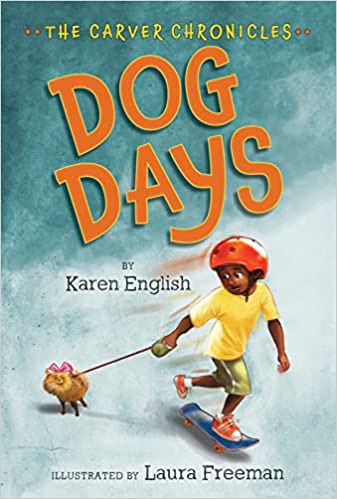
Dog Days

It’s tough being the new kid at Carver Elementary. Gavin had lots of friends at his old school, but the kids here don’t even know that he’s pretty good at skateboarding, or how awesome he is at soccer. And when his classmate, Richard, comes over and the boys end up in trouble, not only does Gavin risk losing his one new friend, but he has to take care of his great aunt Myrtle’s horrible little dog, Carlotta, as punishment.

To make matters worse, Gavin seems to have attracted the attention of the school bully. Will he be able to avoid getting pounded at the skate park? And how is he ever going to prove he’s cool with a yappy little Pomeranian wearing a pink bow at his side?

Gavin’s problem starts when he goes into his sister’s room to steal candy. While looking for the candy, Gavin’s friend, Richard, throws a snow globe that breaks. In order to earn enough money to pay for the snow globe, Gavin walks his aunt’s dog. However, Gavin never takes responsibility for his deeds. Instead, Gavin thinks “it isn’t his fault that Danielle’s snow globe got broken. Sure, he shouldn’t have been in her room—but then, she shouldn’t be keeping candy in her room to tempt him.”

Gavin’s problems continue when he walks Carlotta. Not only is he mean to the dog, but he also ties Carlotta to a park bench and leaves Carlotta alone so he can skate. When Gavin returns, he discovers that another dog has stolen Carlotta’s Chew-Chew. When Gavin sees the toy with another dog, Gavin asks the dog’s owner to return it, which the owner refuses to do. Gavin thinks, “It’s not fair. The guy is bigger than me. He’s older. And that means one thing. The older, larger person can tell a giant fib and the smaller person can’t do anything about it.” However, instead of being honest with his aunt, Gavin buys a new Chew-Chew for the dog. When he lies, “He’s proud that he’s managed not to tell a big lie.”

Dog Days will appeal to a wide range of readers, but parents may not like the story’s content. Even though Gavin is the narrator of the story, parents would not want their children to emulate Gavin’s behavior. He treats Carlotta terribly, he lies, and he blames his actions on others. To make matters worse, Gavin’s friend Richard is mean to Gavin and often ditches him to spend time with older boys. However, it’s not just the children in the book who behave badly. Gavin’s parents allow Aunt Myrtle to boss Gavin around, and in order to avoid Aunt Myrtle’s bad attitude, Gavin’s mom disappears which allows Aunt Myrtle to rule over Gavin.

Misbehaving and bratty kids give Dog Days some humor and suspense, but it also showcases bad behaviors. By reading the story, young readers will learn that telling small lies is okay. Because of the story’s lack of positive relationships, both with the adults and children, Dog Days lacks any educational value. If you’re looking for a fun dog-related book, there are plenty of other options including the Puppy Pirate Series by Erin Soderberg, the King & Kayla Series by Dori Hillestad Butler, and the Haggis and Tank Series by Jessica Young.

Sexual Content

  • None

Violence

  • After Gavin sees Harper stealing from a convenience store, Gavin tells his friend Richard. Richard then tells Harper what Gavin said. The next day at the skate park, “Harper gives Gavin’s shoulder a poke. A hard poke. He glares down at him.” After poking Gavin several times, an adult steps in and stops Harper’s behavior.

 Drugs and Alcohol

  • None

Language

  • Gavin’s sister calls him a bozo several times. She also calls him a dork.
  • As part of the narration, Gavin refers to his classmates as knuckleheads.
  • Gavin also thinks one of the girls in his class is stuck-up and snooty.

Supernatural

  • None

Spiritual Content
  • None

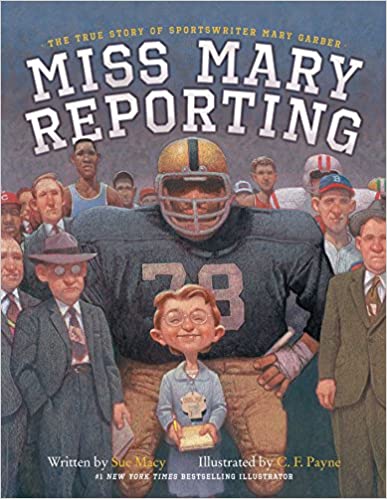
Miss Mary Reporting: The True Story of Sportswriter Mary Garber 

“Press Box: Women and children not admitted.” So read the press pass that Mary Garber had to wear as a reporter at sporting events. It was embarrassing, even insulting, but in the 1940s, sports—and sports reporting—was a man’s world.

Mary didn’t let that stop her. She never let anything stop her really. As a kid, she played quarterback for her local football team. Later, as a reporter, she dug in her heels and built up her own sports beat. For close to fifty years, Mary shined the spotlight on local heroes whose efforts might otherwise have gone unnoticed. “‘That’s Miss Mary Garber,’ one boy said at a soapbox derby. ‘And she doesn’t care who you are, or where you’re from, or what you are. If you do something, she’s going to write about you.’”

This is the story of a woman who pursued her dream and changed the world.

If you’re looking for an inspirational story that will encourage young readers to follow their dreams, then Miss Mary Reporting is the book for you. While the story focuses on the hard work and dedication that made Miss Mary an excellent reporter, the story also shows how others helped Miss Mary along the way. In addition, the book briefly mentions the segregated Negro leagues as well as Jackie Robinson and the discrimination he faced.

While Miss Mary’s story is inspirational, younger readers may have a difficult time sitting through a reading of the book because of the text-heavy pages. Each page has four to seven complex sentences and the text includes difficult vocabulary. The full-page illustrations use muted tones that reflect the serious topic of discrimination. The illustrations will give readers a peek into the past because it shows the clothing, hairstyles, and other aspects of the time period. Readers who want to learn more will find an author’s note, a timeline, and a list of more resources at the end of the book.

Miss Mary’s biography will inspire readers and show how one woman impacted the world of sports. However, the heavy topic makes the picture book more suited to older readers. While Miss Mary’s story is interesting, it’s not necessarily entertaining; the book is best read by those who have an interest in sports and journalism. Readers who would like to learn more about women in sports should also read Catching the Moon: The Story of a Young Girl’s Baseball Dream by Crystal Hubbard and She Persisted in Sports by Chelsea Clinton.

Sexual Content
  • None

Violence

  • None

 Drugs and Alcohol

  • None

Language

  • None

Supernatural

  • None

Spiritual Content
  • None

Time Between Us

Anna and Bennett were never supposed to meet. She lives in 1995 Chicago, and he lives in 2012 San Francisco. But Bennett’s unique ability to travel through time and space sends him into Anna’s life, and he brings with him a new world of adventure and possibility.

As their relationship deepens, they face the reality that time might knock Bennett back where he belongs, even as a devastating crisis throws everything they believe into question. Against a ticking clock, Anna and Bennett are forced to ask themselves how far they can push the bounds of fate, what consequences they can bear in order to stay together, and whether their love can stand the test of time.

Anna is an extremely relatable and likable character, who hopes to travel out of the small town she has always lived in. Then she meets Bennett, who at first confuses and frustrates her. Bennett makes it clear that he is not interested in getting to know Anna, but fate has other plans. Bennett’s ability to time travel complicates matters because his future self appears to Anna before his present self has met her. Despite this, Anna and Bennett fall in love and engage in a sweet romance that will leave readers smiling.

Time Between Us is a story about family, friends, and falling in love. But it also explores the timeless question: what would you do if you could go back in time and change events? When two of Anna’s friends, Justin and Emma, are in a terrible car accident, Anna wants Bennett to go back in time and change the day’s event. This dilemma threatens to tear Anna and Bennett apart as they debate whether changing history is the right thing to do.

Teen readers who want a heartwarming romance will enjoy Time Between Us because of the likable characters, the relatable conflict, and the added interest of time travel. Readers will also fall in love with Anna’s friends and family who are warm, supportive, and protective. The story has the perfect blend of high school scenes, family life, and suspenseful time-jumping action. This easy-to-read romance will have readers wishing they could step into Anna’s life. Readers will be excited to read the companion book, Time After Time, which focuses on Bennett’s point of view.

Sexual Content
  • Anna’s mom tells her a story about “one of the nurses who got caught kissing an EMT out by the ambulance bay.”
  • Anna’s best friend, Emma, teases her about a boy. Emma says, “You wanna shag Shaggy!”
  • Bennett and Anna are talking about their plans for the future when Bennett “reaches forward and slowly traces the line of my [Anna’s] jaw to my chin. I close my eyes as his thumb slides towards my mouth and brushes my lower lip. . .I wait for the touch of his lips. But the kiss never comes.”
  • While at the beach with Bennett, Anna thinks about “him pulling me into a kiss and rolling around in the sand like we’ve just been dropped into a photoshoot for some cheesy designer cologne. . . I can’t bring myself to touch him.”
  • Bennett and Anna kiss several times. When Bennett decides to stay in Anna’s time period, he “scoots in closer and brings his hand to my face, and I fall back into the bookcase as he kisses me with this intensity—like he wants to be here. . .”
  • While on a date, Bennett “kisses the back of my neck. . . he kisses my neck again and I lose my train of thought entirely.” Later in the date, Bennett “pulls me tighter and kisses me, warm and sweet and long and slow and never ending, and I know this is what I want.”
  • One night, Bennett uses his ability to appear in Anna’s room. “Without even thinking about it, I grab his arm and pull him down on my bed, and he lands sprawled out next to me, looking a little surprised. I roll over onto his chest and smile down at him. . . His hand finds the back of my neck, and he kisses me, harder than usual.” The scene is described over a page.
  • Bennett uses his ability to take Anna to Italy. He “takes my face in his hands. Buried deep in his kiss is a new kind of promise for our future. . . We spend the rest of the day in the Cinque Terre. And then we spend the night there.”
  • Before Anna leaves for a trip to Mexico, Justin (Anna’s best friend’s boyfriend) kisses her. Anna isn’t “quite sure how to stop it. I feel trapped between his mouth and the wooden CD bin. I turn my head so fast that when our lips brush, it’s an awkward, almost accidental movement.” Anna calls Justin an idiot, and he apologizes.
  • After being unable to time travel, Bennett appears in Mexico. When Anna sees him, “I feel tears slide down my cheeks. . . within seconds he’s right next to me, and all I can feel is his fingers on the back of my neck. His kisses land everywhere on my wet cheeks and my forehead, on my eyelids and my neck, and finally on my mouth, and we pull each other close, neither one allowing even the smallest gap between us.”

Violence

  • A robber comes into the bookstore while Anna is working. He demands money. Anna’s “attention is on the shiny metal knife he pulls from his baggy jeans. He points it straight at me. . . I keep my gaze on the floor and try not to think about the cold steel of the blade on my neck or his heavy breath in my ear.” Bennett uses his abilities to relocate himself and Anna. The scene is described over three pages.

 Drugs and Alcohol

  • None

Language

  • Profanity is used rarely. Profanity includes ass, crap, hell, and pissed.
  • “Dear God,” “Oh My God,” and “Good God” are occasionally used as exclamations.

Supernatural

  • Bennett can travel through time. “Bennett can disappear. And reappear. He can make other people disappear and reappear.”
  • Bennett can also “do over minor details in the past to affect the outcome, but you can’t erase an entire event. You can travel to any place in the world and into other times, but only within certain dates.”
  • Bennett loses his sister Brooke in the past. They traveled back to 1994, but Bennett “couldn’t stay because I didn’t exist in March 1994. . . Brooke did. She was born in ’93.”

Spiritual Content
  • After Bennett uses his abilities to take Anna to a different place, she becomes sick. She prays, “Please, God. Please don’t let me throw up in front of him. Please. Just this one thing.”


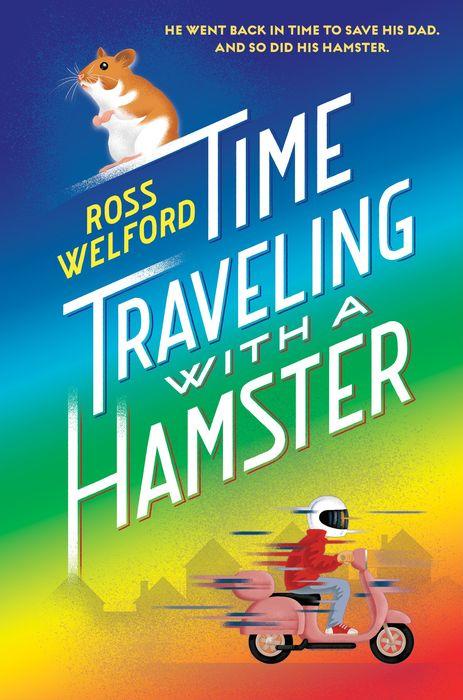
Time Traveling with a Hamster

On his twelfth birthday, Al Chaudhury receives two gifts: a hamster, and a letter from his dad who died four years ago. The letter points Al to a time machine, an unimpressive-looking zinc-tube-and-laptop contraption in the secret bunker of their old house. It also describes a mind-blowing mission: if Al can travel back to 1984 and stop a go-kart accident involving his dad as a twelve-year-old boy, then maybe he can alter the course of history—and prevent his dad’s death.

As Al soon discovers, whizzing back thirty years requires not only imagination and courage, but also garage break-ins, midnight rides on his grandpa’s mauve scooter, and even setting his school on fire. And through it all, he’s got to keep his hamster safe.

One of the best parts of the book is the relationship between Al and Grandpa Byron, who doesn’t think anyone should try to change time. Grandpa Byron says, “Life, Al, is such a wonderful gift that we should open our minds to every possible moment and cherish the memory of those moments. Because people change. Places change. Everything changes, but our memories do not. Accept life the way it is, Al. That’s the way to be happy.”

Despite Grandpa Byron’s advice, Al goes back in time several times and unintentionally makes his timeline change for the worst. When Al first meets his father, Pye, he is considering setting a cat on fire to prove he is friends with a group of bullies. Instead of being a sympathetic character, Pye is whiny and weak. While the story focuses on the father-son relationship, Al’s relationship with his father is underdeveloped. Instead, Al’s relationship with his grandfather is the central relationship. This relationship adds interest to the story because Grandpa Byron shares his Indian culture and his immigrant story.

Grandpa Byron tells Al, “Don’t dream of a different life, Al. Love the one you’ve got.” Despite this, the conclusion shows Al changing time and saving his father’s life. The conclusion is anticlimactic because after all the craziness of Al’s earlier time-traveling adventures, he ends up saving his father’s life by sending a note back into time. The ending also conflicts with the central theme.

The cover art and the title suggest that Time Traveling with a Hamster will be a fun romp through time. However, the story’s themes — grief, blended families, and bullying — are more suited to older readers. Plus, the advanced vocabulary, the explanation of the theory of relativity, and the workings of time travel may be difficult to understand for some readers. While the story is full of adventure, the complicated plotline is, at times, difficult to follow. However, strong readers who want to explore the serious consequences of time travel will enjoy Time Traveling with a Hamster.

Sexual Content
  • Al asks his stepsister if she is a virgin. She says, “as it happens, yes, if that’s any of your business, of course I am. Jesus.”
  • After Al’s father dies, his mother starts seeing a man named Steve. “The first time he stayed over at our house, I couldn’t sleep in case I would hear them, you know, doing it. But I don’t think they did.”

Violence

  • Al thinks back to a time in the past. “Back in primary school Hector Houghman stabbed Conrad Wiley in the thigh with a compass, and he wasn’t punished at all because his mum came to school and said he had ADHD and that it was the school’s fault. . .”
  • Al’s grandpa lived during a civil war. “When he was a kid, pretty much everyone in a family he knew, including a boy he played with, was murdered one night just because they were Muslim, or Hindus, or something.”
  • A boy shoots a cat, and his friends were planning on setting the cat on fire, but Al stops them.
  • A mean boy, Mecca, takes Al’s hamster. When Al tries to grab his hamster, the boy “shoves me away, then turns to grab me, one hand gripping my jacket and the other grabbing a handful of my hair. . .He practically picks me up and marches two or three steps up the grass bank before throwing me hard on the ground.”
  • When Al tries to steal something, the shopkeeper “slaps me across my cheek with the full force of the large man he is. My head is jerked to one side with the strength of the blow.”
  • Al sets a school on fire. “I’ve barely had time to stand up again and already the flames are surrounding me, getting hotter by the second. . .”
  • Al changes time so his stepsister Carly no longer knows who he is. When Carly finds Al in her room, she freaks out. Carly’s friend, Jolyon, tries to grab Al. Al distracts Jolyon and then “I draw back my foot and deliver a swift, hard kick right between Jolyon’s legs. The sound he makes is horrible. . .I feel sorry for him as he keels over sideways, clutching his groin and retching.” Al gets away.

 Drugs and Alcohol

  • Al’s dad would sometimes tuck him into bed and “sometimes chat with [him], especially if he’d been drinking wine.”
  • On New Year’s Eve, Steve got “a bit drunk.”

Language

  • Oh my Lordy is used as an exclamation once.
  • Oh my God, God Almighty, and God are all used as an exclamation several times.
  • Al reads a letter his mother wrote. The letter says, “Life’s a bitch.”
  • Damnit and crap are used once.
  • Twice, Al is told to “piss off.”
  • Al comes downstairs in the morning, looking terrible. His grandpa sees him and says, “Oh my flippin’ Lordy. What happened to you?”
  • Heck is used several times.
  • Hell is used three times. A mean boy finds Al’s hamster. The boy asks, “How the hell can it be yours? Don’t be such a moron—it’s a rat with a deformed tail.”
  • A man calls Al a “gaandu” which means ass.

Supernatural

  • None

Spiritual Content
  • None

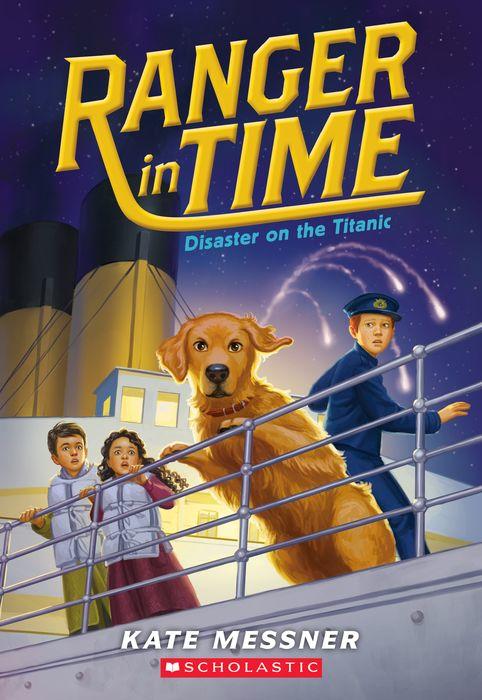
Disaster on the Titanic

Ranger, the time-traveling golden retriever with search-and-rescue training, finds himself in 1912 on the Titanic!

Everyone says the Titanic is unsinkable, and Patrick Murphy believes this most of all. He grew up near the shipyard where the magnificent ship was built and started working there when he turned thirteen. Then he was chosen to be part of the crew during the Titanic’s maiden voyage! Ranger meets Patrick before the ship sets sail, and once on board they befriend Maryam and Hamad. But one night, the ship hits an iceberg and starts to take on water. It’s a race against time, and Ranger and his friends must help get as many passengers as possible—including themselves—off the ship before it’s too late.

Even though Ranger helps people in dangerous situations, he has a playful disposition and likes to chase squirrels. While on the Titanic, Ranger wasn’t sure how to help the passengers of the Titanic, but he nuzzled some of the most frightened passengers. Ranger thought, When you couldn’t fix a problem, you could at least let a person know you were there.”

Even though the sinking of the Titanic is told in kid-friendly language, the story doesn’t skip over the horrible events. For example, some men snuck onto the lifeboats instead of allowing a woman or child to take the spot. In addition, after the Titanic sunk, many of the people in lifeboats were leery about helping passengers who were in the water. They didn’t try to help others even though their boat had room for more passengers. One group refused to help because “there are hundreds of people in the water. What if they swamp the boat?”

Disaster on the Titanic is an entertaining and educational story that has a unique perspective because it focuses on a golden retriever. Ranger’s perspective adds some humor, but it also helps reduce some of the fear of the situation because he interprets fear from his scent. For example, when Ranger follows Patrick below deck, Ranger thinks, “With every flight of stairs they descended, the air smelled more dangerous. Like metal and seawater and ice.”

Readers interested in the Titanic will enjoy Disaster on the Titanic, which has full-page, black-and-white illustrations approximately every six pages. Even though Ranger’s story is fictional, facts are woven into the story. The end of the book has more information about the Titanic as well as a list of further resources. Readers who want to read more about the Titanic should also read I Survived the Sinking of the Titanic, 1912 by Lauren Tarshis. For readers who love jumping back into time, the Time Jumpers Series by Wendy Mass would also be worth the read.

Sexual Content
  • None

Violence

  • Patrick’s father was working on the Titanic when “a section of the staging collapsed in the shipyard. Patrick’s father was killed in a fall.”
  • After the Titanic hit an iceberg, stewards were trying to get women and children out of the third-class floor and onto the lifeboats. “A mob of passengers crowded behind a gate that led up to the boat deck . . . They were arguing and surging forward. . . An officer shot a gun into the air.”
  • Some men tried to push their way onto the lifeboats. Patrick saw, “crew members firing pistols in the air, threatening men who tried to force their way onto boats.”
  • A teenage boy tries to board a lifeboat. When the steward sees him, he pointed a gun at the boy and said, “I’ll give you ten seconds to get back onto that ship!” The boy gets off the lifeboat and “collapsed on the deck” and begins crying.

 Drugs and Alcohol

  • None

Language

  • None

Supernatural

  • Ranger travels through time with the help of a first aid kit. When the first aid kit hums, Ranger puts the strap over his head. “The box grew warm at his throat. It grew brighter and brighter… He felt as if he were being squeezed through a hole in the sky. . .” When Ranger opens his eyes, he is in the past.

Spiritual Content

  • Patrick tells his mother that he will be working on the Titanic’s maiden voyage. His mother replies, “I’ll pray for your safety.”
  • Patrick wanted to keep a young boy and his sister together, so he helps the boy dress as a girl. When he was getting on the boat, “Patrick prayed that she wouldn’t call Hamad’s name.”
  • As the ship sank, some people “huddled in right little circles and prayed.”

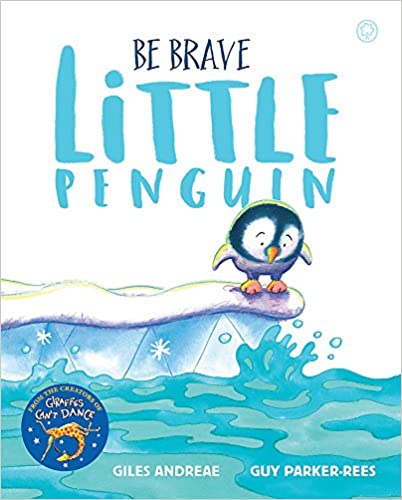
Be Brave Little Penguin

Little Penguin Pip-Pip would love to join in with all his friends swimming in the sea, but there’s just one problem . . . he’s scared of water. Can Pip-Pip overcome his fear and finally take the plunge? This irresistible story shows that sometimes all it takes is a little bit of encouragement – and a whole lot of heart – to finally make that leap and be brave!

At first, Pip-Pip watches the other penguins playing in the water. They tease him, calling him “Scaredy-Pip-Pip.” Little Pip-Pip is so sad that a single tear runs down his cheek. Pip-Pip’s mommy treats him lovingly as she reminds him, “we all have certain fears that might be hard to understand.”

Readers will relate to Pip-Pip, who worries about all the what-ifs. “What if the water’s freezing? And what if there are monsters who smell me from their den, and they slither up and eat me and I’m never seen again?” Mommy penguin asks Pip-Pip to turn his what-ifs into something positive. “What if in that water there are friends for you to meet? And what if it is light and warm and full of treats to eat?”

Pip-Pip finally takes the jump and discovers that swimming is so much fun. The cute story uses a beautiful blue color pallet that contrasts with the black-and-white penguins. The full-page illustrations are adorable and have fun elements, like the penguins playing with fish. Plus, the illustrations help readers visualize Pip-Pip’s fears. For example, one illustration shows a large, scary octopus deep underwater.

Be Brave, Little Penguin is a fantastic, fun story that uses rhymes to help young readers face their fears. Because Mommy penguin is loving and encouraging, she is able to help Pip-Pip learn that “sometimes all you have to do is just be brave and jump.” By the end of the story, Pip-Pip is smiling and laughing, which will leave readers with a big grin as well.

Readers will fall in love with Pip-Pip and the other penguins because of the adorably cute illustrations, but the story will become one of your child’s favorite picture books because of the relatable conflict. Each page has one to four sentences that are easy to understand. Plus, some of the words are in bold and some of the sentences are curved to add even more emphasis.

Be Brave, Little Penguin is a must-read because of the entertaining storyline as well as the positive message that will help readers overcome their fears and gain confidence. If you’d like to explore more books that will help young children face their fears, check out Otis and the Puppy by Loren Long and The Pout-Pout Fish in the Big-Big Dark by Deborah Diesen.

Sexual Content

  • None

Violence

  • None

 Drugs and Alcohol

  • None

Language

  • The other penguins tease Pip-Pip, calling him “Scaredy-Pip-Pip.”

Supernatural

  • None

Spiritual Content

  • None


32    3.3    5 worms   AR    picture book, must read


Amelia Earhart

When Amelia was young, she liked to imagine she could stretch her wings and fly away like a bird. As a grown woman, she set a new female world record for flying up to 14,000 feet. She also flew across the Atlantic and the Pacific oceans, and eventually undertook the most dangerous mission of all: to fly all the way around the world.

As part of the Little People, Big Dreams Series, Amelia Earhart retells the story of Amelia Earhart in a picture book format. Each two-page spread has one to two simple sentences that are easy to read. Another positive aspect of Amelia Earhart is the brightly colored illustrations. The simple illustrations are whimsical and beautiful. For example, one page features the ocean where a huge whale swims; Amelia flies over the whale, making her plane look tiny in comparison.

Because the picture book is intended for young readers, Amelia’s life is not explored in detail. However, the biography explains enough of Amelia’s accomplishments to show Amelia didn’t allow obstacles to stand in the way of her dreams. The back of the book also has a short timeline of Amelia’s life and includes four historical photos. There is also a list of other books about Amelia Earhart as well as a list of other books in the Little People, Big Dreams Series.

 Amelia Earhart’s story highlights her amazing accomplishments in a kid friendly format that won’t overwhelm young readers. Beginning readers will enjoy learning about Amelia’s bravery as she flew “thousands of miles, over oceans and jungles and over the savanna, where giraffes turned their heads.” By reading Amelia’s story, readers will learn that dreams do come true. Readers who are interested in flight should also read the picture book Wood, Wire, Wings: Emma Lilian Todd Invents an Airplane by Kirsten W. Lawson.

Sexual Content

  • None

Violence

  • Although the book doesn’t explain Amelia Earhart’s plane crash, it does say that “she flew on like a bird, farther than anyone had gone before. . . never to return.”

 Drugs and Alcohol

  • None

Language

  • None

Supernatural

  • None

Spiritual Content

  • None

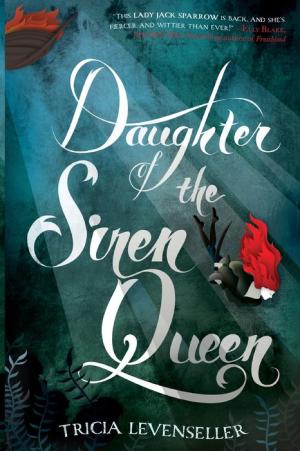
Daughter of the Siren Queen

Alosa’s mission is finally complete. Not only has she recovered all three pieces of the map to a legendary hidden treasure, but the pirates who originally took her captive are now prisoners on her ship. Still unfairly attractive and unexpectedly loyal, first mate Riden is a constant distraction, but now he’s under her orders. And she takes great comfort in knowing that the villainous Vordan will soon be facing her father’s justice.

When Vordan exposes a secret her father has kept for years, Alosa and her crew find themselves in a deadly race with the feared Pirate King. Despite the danger, Alosa knows they will recover the treasure first . . . after all, she is the daughter of the Siren Queen.

In Daughter of the Siren Queen, Alosa and her crew are only days away from being caught by the Pirate King. Both the Pirate King and Alosa hope to reach a legendary treasure that will allow them to rule the seas. However, Alosa’s crew faces many dangers, including an island of cannibals and the lack of drinking water. During this time, Riden helps Alosa try to understand her siren abilities. Unfortunately, once Riden and Alosa begin to work together, most of their fun banter ends. Instead, Riden becomes a submissive man, who stays mostly in the background.

When Riden fades into the background, Alosa’s crew of fierce, capable women are given center stage. Even though they are ruthless pirates, the crew respects and cares for each other. While Alosa is the captain of the ship, she still has enough confidence to leave others in command when necessary. One of the crew members has a six-year-old daughter, who adds humor and heart to the story. Unlike most pirates who are loyal to whomever has the most gold, Alosa’s crew are loyal to each other because of their friendship. The unique perspective of the women pirates makes Daughter of the Siren Queen interesting and enjoyable.

Readers will also get a look into the siren’s world. Alosa worries that her siren half turns her into a monster. However, when she is introduced to her mother’s world, Alosa realizes that the women are not heartless monsters. Instead, their world is full of beauty and love. Despite this, Alosa never loses her desire to remain in the human world. Alosa loves being a pirate, loves her crew, and loves the human world.

Full of friendship, battles, and complicated relationships, Daughter of the Siren Queen is a fast-paced story that takes readers on an exciting ocean adventure. Bloody battles keep the tension high, but Alosa’s crew balances out the action with friendship and humor. If you’re up for non-stop action, and high-stakes sword fights, then Daughter of the Siren Queen is a must-read. However, if you’re looking to set sail on a pirate ship without bloody fights, jump aboard Lintang and the Pirate Queen by Tamara Moss.

Sexual Content

  • Two of Alosa’s crew see her staring at Riden. A girl says, “he looks delicious.” Her sister replies, “From behind, anyways. Can’t judge the man properly until we see the front.”
  • Two of Alosa’s crew members were “whores.” She explains, “They were forced into that life. I broke them out when I witnessed them fighting off a couple of men who tried to take their services for free after hours.”
  • The Pirate King’s keep has a “brothel.”
  • To distract a pirate, Alosa slides “my hands up his arms to his shoulders. . .He crushes his mouth to mine. All intensity and passion.” As she kisses the pirate, she thinks about Riden, who will “pin me against some hard surface, place his hands on either side of my waist, and lean down until all the air between us is gone.”
  • Alosa gets upset at Riden. When he tries to comfort her, she “lunge[s] at him. . . I place my lips over his so quickly, I think his eyes are still open when I reach him. . . My fingers slide into his hair, silky smooth and wonderful. . .” Riden welcomes Alosa’s touch. “His tongue slides in, completely bathing me in sensations.” The scene is described over one page.
  • Alosa and Riden kiss several times. For example, Riden’s “lips brush my neck as he starts kissing his way up to my hairline. My body shudders, an uncontrollable reaction to him. . . His free hand slides around my waist, pressing me into him.” They stop kissing when they are interrupted.
  • After professing their love, Riden and Alosa kiss. “He kisses me softly, languorously, savoring every time our lips connect. I melt under the pressure but manage to yank at his still damp shirt. He helps me take it off. . .Without breaking the kiss, I start to pull him backward with me, toward my bed.” Riden hears a siren’s song and walks away from Alosa. The scene is described over three pages.

Violence

  • There is an overabundance of violence and not all scenes are described below.
  • Alosa and her crew begin killing the lookouts who are watching over Vordan’s crew. “The sound of [Alosa’s] knife slitting across a throat feels much too loud in the darkness. I catch the pirate before his corpse hits the ground.”
  • Alosa and her crew get into the inn where the pirates are sleeping. Alosa puts three men under her spell so they will fight on her side. Then Alosa rams her “shoulder into the pirate who dared to call me ‘the siren bitch,’ sending him over the railing. He screams until he’s cut off with a loud crunch. . .I’m already thrusting my sword through the belly of the next pirate. He collapses to the floor, and I walk over his twitching body to the next man.”
  • During the battle, Alosa sends her “elbow into the underside of [a pirate’s] chin. His head snaps back, and I cut off his grunt by raking my cutlass across his throat.”
  • Alosa and her girls blow up the inn. “The inn still stands, but it’s burning apart from the inside. . . The pirates still inside are burning husks on the ground.”
  • Alosa has Vordan put in a cage. When he protests, “he’s cut off by Sorinda’s fist slamming into his gut. She gags him and ties his hands behind his back.” The fight scene is described over 10 pages.
  • To get Vordan to talk, Alosa puts him under her siren’s spell and makes him hallucinate. “Vordan holds a knife in his hand. He glances at it in fear before thrusting it down into his own leg, the one that isn’t broken. He screams before changing the sound into an angry grunt.”
  • Alosa gets to her father’s keep, where “dead men dangle by ropes from the top of the tunnel… hooks that have been inserted into the mouths of traitors. They are hung up like captured fish for all to see. . .”
  • When Praxer upsets the Pirate King, the king cuts off Praxer’s hand. “Praxer screams as red sprays the nearby men and tables. . .Praxer has sunk to the floor. He muffles his screams long enough to meet my father’s eyes.”
  • Alosa and some of her crew go to an island where they find cannibals. “Deschel runs towards her sister’s remains. Lotiya’s throat has been ripped out. She’s missing a leg and an arm and so much blood. It’s all over the cave. . . Animal-like shouts and growls sound down the cave and grow closer, alerted to our presence by the gunshots.”
  • The cannibals chase Alosa and her crew. “Riden pours more gunpowder into his pistol, takes aim, and fires. The first cannibal in line falls, tripping those immediately behind. . .Riden is busy blocking the tunnel by himself now while I grasp around frantically for my sword. Eventually, my hand finds something hard and heavy. A human femur, I think. I bring it down on the cannibal’s head, which knocks him out instantly.”
  • When the Pirate King tries to take over Alosa’s ship, cannons are fired and “one blow[s] apart a group of men huddled together while the other nicked the mizzenmast. . . Gunfire ripples through the air on both sides. My girls are well protected behind their barrels, crates, rowboats, and other hiding places.”
  • During the fight, Alosa puts men under her spell and causes them to jump overboard. “Men shriek as the eels circle them. The eels like to toy with their food first.” When several of Alosa’s girls fall into the water, she goes in after them. “I reach for the dagger in my boot, launching myself at the eel from the side. Dagger connects first, then my legs wrap around the creature’s body, just long enough for my feet to connect on the other side of the massive water beast.” Alosa kills the creature and save her friends. The battle is described over eight pages.
  • During the fighting, one of Alosa’s crew dies. “Haeli. She took a bullet to the back.”
  • The book ends in a multi-chapter battle between Alosa’s crew and the Pirate King’s crew. Alosa’s father punishes her by shooting three members of her crew. The Pirate King “pulls the trigger. Niridia’s leg buckles, forcing her to the ground. Blood seeping through a hole in the leggings over her knee. . . Another shot fires. . . He has a new pistol, smoke coalescing from it. Reona, one of my riggers, jerks to the right and falls.”
  • The siren’s sing to the Pirate King’s men. However, the men have wax in their ears, so they remain safe. “Many of the men hold harpoons, waiting until the right moment to fling them into the sea at targets. . . Luminescent bodies float on the surface of the water in a tangle of rich hair and blood-stained skin. . . One siren flings herself out of the water, leaping over the boat as a dolphin might, and plummets into an unsuspecting pirate, knocking him into the sea below her.” Many men and sirens die.
  • Roslyn, a six-year-old, is part of Alosa’s crew. When Alosa and her crew are locked in cells, Roslyn is able to get the key. As she is letting the crew out, “A gunshot explodes through the mostly quiet brig. . . Blood spurts wildly from [Roslyn’s] head. And she falls. . . a pool of blood forms near Roslyn.”
  • Sorinda attacks a pirate who has Alosa cornered. “A sword point rips through his stomach. A labored sigh escapes him as he stares down at the metal. Sorinda doesn’t wait for him to drop before yanking her cutlass back through his gut and moving to the next target.”
  • Roslyn’s father attacks the man who shot her. Roslyn’s father has “got Tylon by the shoulders, and he slams his head into the ground over and over. I don’t know how long Tylon has been dead, but Wallov doesn’t seem to notice anything at all.”
  • The Pirate King captures Alosa’s mother. “She is strapped to a chair with ropes. They bind her shoulders to the chair’s back, her thighs to the seat, her ankles to the chair’s leg. Her wrists are bound together behind her back… her face is lightly swollen, starting to show the signs of the beating Kalligan no doubt gave her.” After capturing the Siren Queen, the sirens join the battle and manage to defeat the Pirate King’s men.

 Drugs and Alcohol

  • One of Alosa’s crew members is “a useless drunk most of the time.” When he realizes a girl cares about him, he goes through withdrawals and then stays sober.

Language

  • Profanity is used often. Profanity includes bastard, damn, hell, and piss.
  • A pirate calls Alosa a “siren bitch.”
  • Riden is upset that Alosa used her siren abilities on him. When he yells at her, she says, “You’re being a prick. I did nothing wrong.”

Supernatural

  • Alosa’s siren half gives her magical abilities. “I can sing to men and make them do whatever I wish… I can read the emotions of men… I can tell what any man wants in a woman, become it, and use it to manipulate him.”
  • Alosa tries to learn how to control her siren abilities. “When I take in the water, I become a creature with no knowledge of my human existence, no knowledge of those I care about or my human aspirations. I become what I would have been if I’d never known life above the sea.”
  • Alosa meets a charm of sirens, who show her the siren’s treasure. Alosa’s mother explains, “As soon as we knew there was treasure aboard, we sang to the rest of the men, demanding they throw everything valuable overboard. When they were done, we had them toss themselves in afterward. So we could enjoy them.”

Spiritual Content

  • When the mast breaks, Alosa says, “Let’s pray to the stars we can find a suitable trunk ashore.”
  • Pirates believe that “to not be buried at sea is to be damned for eternity, never finding rest with the stars.”
  • When a pirate dies, the crew “let the remains of Lotiya’s body drift off to sea, buried with the fallen pirates before her. When her soul departs from her body, it will follow the lantern light and find the water’s surface. From there, it will be able to see the stars and fly up to the heavens. Every soul parted from this world is a star in the sky.”


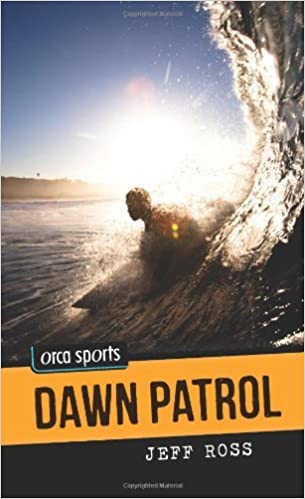
Dawn Patrol

Luca and Esme have more than monster waves to worry about.

When Kevin disappears, leaving only a cryptic note, his best friends Luca and Esme have no choice but to try and find him. Their journey takes them to the coast of Panama, where they confront monster waves, unfriendly locals and a surfer who seems bent on destroying them. As their hope dwindles and time runs out, Luca and Esme realize they may be in over their heads.

Because of the short length of the book, none of the characters are well-developed. However, the fast-paced mystery will still capture readers’ interest. The main plot focuses on Luca and Esme’s search for their missing friend. As the two friends search for clues, they meet Jose, whose strange behavior puts Luca and Esme on high alert. Between surfing monster waves, looking for clues, and trying to track down Jose, Dawn Patrol keeps the action and mystery high.

The story is told from Luca’s point of view. Readers will connect with Luca because he is an admirable character who is willing to go to great lengths to find his friend. The conclusion ends on a hopeful note but doesn’t wrap up all the story threads. Despite this, Dawn Patrol is a quick and easy read that will engage readers. As part of the Orca Sports collection, Dawn Patrol is perfect for reluctant readers because it uses a high-interest topic that will entertain teens and help them improve their reading skills.

Sexual Content

  • When talking to a girl, Luca tells her that he’s not interested in Esme. “Nor would I be interested in getting together in, um, that way with this Jose guy.”
  • Luca meets Alana and a few days later, “she leaned over and kissed me on the mouth.” Alana and Luca kiss two more times, but the kisses are not described.

Violence

  • While trying to chase down Jose, “a big guy in dark sunglasses ran out of a hut and barreled into us. . .I slipped and fell headfirst into the water. I popped up just in time to see Esme hit the water.”
  • Esme is kidnapped. When Luca finds the hut Esme is being held at, he tries to sneak up to it, but “Jose came out of the trees and tackled me to the ground. . . I was face-first in the dirt. I struggled to get away. Jose had his hand on the back of my head, pushing my face into the sand.” Luca gets away.
  • Kevin, Esme’s boyfriend, holds a knife toward Delgado, the man that kidnapped Esme. “Kevin hit Delgado’s throat with his forearm, dragged him to the ground, and smacked his head. There were tears on his cheeks.” Delgado lets Esme go.

 Drugs and Alcohol

  • While in the village, Esme and Luca pass a group of people who are drinking beer.

Language

  • Profanity is used frequently. Profanity includes ass, crap, damn, and hell.

Supernatural

  • None

Spiritual Content

  • None

Becoming Muhammad Ali

Before he became the legend, Muhammad Ali, young Cassius Clay learned history and card tricks from his grandfather, hid report cards from his parents, and biked around Louisville with his pals. But when his bike is stolen, Cassius decides there’s something else he wants: to be able to fend off bullies by becoming a boxer.

Cassius has a best friend, Lucky, who sticks by him whether his fists are raised in victory or his back is against the ropes. Before long, Lucky is cheering Cassius on in his first amateur fight. With the support of all his friends and family, will Cassius make it to the top?

Becoming Muhammad Ali focuses on Cassius’ younger years and highlights the importance of his family and his community. Cassius’ story is told from both his point of view and his best friend’s point of view. When Cassius is telling his own story, the words appear in poetry format. This narrows the story and allows Cassius’ swagger to shine. When the story shifts to Lucky’s point of view, the text appears in paragraph structure that uses a conversational tone. Lucky’s perspective allows the reader to see Cassius’ intense training schedule and shines a light on Cassius’ fear. The joint perspectives give a well-rounded picture of Cassius’ bold personality and personal struggles.

Because the story begins in the late 1950s, Cassius’ story isn’t just about boxing. The biographical novel delves into the racism prevalent during this time period. Each example of racism is described in a kid-friendly manner that allows the reader to picture the events. The descriptions all focus on events that affected Cassius. He explains the events in a way that shows the unfairness of the situation without sounding bitter or preachy. However, some readers will not understand the correlation between racism and Cassius’ desire to change his name to Muhammad Ali and “use his time to focus on black pride and racial justice.”

Becoming Muhammad Ali is an entertaining and engaging biographical novel that will inspire readers to fight for their dreams. Through Cassius’ actions, readers will see the hard work and dedication that allowed Cassius to become one of the best boxers in history. However, Cassius’ story isn’t just a boxing story, it’s a story about family and friends. Cassius’ story doesn’t gloss over some of the unfairness in life. Instead, Cassius shows how he overcame obstacles and, in the end, realized that there are some things that are more important than boxing.

When a reporter asked what Cassius wanted to be remembered for, he said, “I’d like for them to say, he took a few cups of love, he took one tablespoon of patience, one teaspoon of generosity, one pint of kindness. He took one quart of laughter, one pinch of concern, and then he mixed willingness with happiness, he added lots of faith, and he stirred it up well. Then he spread it over a span of a lifetime, and he served it to each and every deserving person he met.”

Cassius’ story comes to life in easy-to-read prose and includes full page, black and white illustrations that are scattered throughout. Becoming Muhammad Ali is a must-read because it highlights how hard work and dedication allowed Cassius to achieve his dreams. Readers who want to read another inspirational sports book should check out The Crossover by Kwame Alexander, which has also been made into a graphic novel.

Sexual Content

  • None

Violence

  • Since Cassius watched boxing matches and later fought in them, there are some descriptions of the matches. For example, Cassius describes a fight when Frank Turley “broke a guy’s nose with a left jab, then smiled when the joker went tumbling outta the ring, blood spurting everywhichaway.”
  • Cassius and his friends were walking along the street when a “car filled with men. White men” drove by. One of the men “flashed a knife—a switch blade. [Lucky] saw the guy with the knife say something to the driver. The car engine stopped. Then all four car doors opened at once.” Cassius and his friends ran away from the men and were safe.
  • Cassius tells a story about “how Tom the Slave escaped freedom by hiding in a casket on a ship of dead bodies on its way to London, England, and how when he got there he became a famous bare-knuckle boxer. . . the Brits rushed the ring in the ninth round, clobbered Tom, and broke six of his fingers.”
  • A kid from the neighborhood, Corky, bullied Cassius and his friends. Corky “stepped on my sneaks, and bumped Lucky with just enough force to make him lose his balance, and knocked Rudy backwards like a domino into a couple. . .” then Corky wandered off.
  • During a match, Cassius landed “a series of short pops to his head, one right below his left ear that makes him stumble into the ropes. . .” Cassius wins the match.
  • Cassius’ father showed him “a gruesome magazine photograph of a twelve-year-old faceless boy who was visiting family. . . when he was shot in the head, drowned in the river, and killed for maybe whistling at a white woman.”

 Drugs and Alcohol

  • None

Language

  • Darn is used once.

Supernatural

  • None

Spiritual Content

  • Cassius’ mom didn’t like him betting “on account of God not liking ugly, and all gambling is ugly.”
  • When Cassius says that the Bible didn’t get him and his brother into the whites’ park, his mother says, “Boy, don’t you dare blaspheme the Good book.”
  • During one match, Cassius “recited the Lord’s prayer.”
  • Cassius’ mother prays, “we gather together to send this boy out into the world, and ask that you hold his dreams tight, let them rocket to the stars and beyond.”
  • Cassius “joined the Nation of Islam—a movement that was founded to give black people a new sense of pride. A week later, he changed his name to Muhammad Ali.”


Fox at Night

Fox is up late in the night. There are shadows and noises everywhere. Fox is sure the night’s full of monsters! Then he meets the real creatures of the night and realizes they are not so scary after all.

Fox at Night uses illustrations to create suspense. For example, at first Fox looks at the “monsters” in the night through his binoculars, which allows him to focus on their scary features such as a bat’s wings and his pointy ears. But when he finally meets them face to face, he realizes that they are not monsters after all. Each new creature that Fox meets stays with him throughout the story. In the end, Fox and his friends do find a small, three-eyed, purple monster. In a surprising twist, the monster thinks the forest animals are the monsters and the purple monster quickly runs away.

As a My First I Can Read Book, Fox at Night is perfect to read to your little one. The story uses basic language, word repetition, and large illustrations on each page. Each page has 1 to 3 simple sentences that include dialogue and imagery.

Fox’s story is told through adorable pictures that have a hint of humor. For example, when Fox meets Skunk, Skunk is flying a kite in the middle of the night and Fox has his blanket over everything except his face. The humorous ending will have readers snuggling into bed with a smile on their faces. Young readers will fall in love with Fox and want to read about all his adventures. Readers who are ready for more silly monster fun should check out the Notebook of Doom Series by Troy Cummings.

Sexual Content

  • None

Violence

  • None

 Drugs and Alcohol

  • None

Language

  • None

Supernatural

  • None

Spiritual Content

  • None


Nothing Can Possibly Go Wrong

Charlie is the laid-back captain of the basketball team. Nate is the neurotic, scheming president of the robotics club. The two have been best friends their whole lives until Nate declares war on the cheerleaders and the cheerleaders retaliate by forcing Charlie to run against Nate in the class election. What’s at stake? Student funding which, depending on who wins, will either cover a robotics competition or new cheerleading uniforms.

Bad sportsmanship? Sure. Chainsaws? Why not? Running away from home on Thanksgiving to illicitly enter a televised robot deathmatch? Let’s do this!

The drama of high school comes to life in this hilarious graphic novel that focuses on two friends. Readers will love the interplay between Nate and the cheerleaders as they go head to head trying to best each other. The ridiculous student body campaign, the high school drama, and the crazy antics of Nate and Charlie will have readers laughing out loud. At first the characters argue or fight, but Nate’s experiences will ultimately teach the importance of working together, even when people dislike each other.

While a lot of the story’s action comes from humorous situations, Charlie also deals with some difficult family dynamics. His father travels for work, leaving Charlie alone most of the time. Charlie also has a hard time dealing with the trauma of his mother leaving town to live with another man. While this conflict is not developed in detail, Charlie does learn that he cannot ignore the situation and instead must talk to his parents about his emotions.

Nothing Can Possibly Go Wrong is a quick read and a fun graphic novel. Each page’s panels have zero to seven sentences that often contain onomatopoeia and interesting banter. A lot of illustrations show characters’ facial expressions; some facial expressions are over the top, but this adds to the humor and makes it easy for readers to understand the characters’ feelings.

Nothing Can Possibly Go Wrong focuses on high school drama and uses the typical stereotypes—mean cheerleaders, nerdy robot builders, and a basketball star—to create humor and keep the action moving. To increase the tension, the teens generally behave badly. For instance, one cheerleader uses her parent’s credit card without permission so the kids can sneak off to a battle bot competition. These episodes will appeal to a wide range of teenagers, who will enjoy watching Nate deal with the pressures of high school cliques. Nothing Can Possibly Go Wrong will grab readers right from the start and keep them smiling as they experience Charlie’s crazy high school drama.

Sexual Content

  • Someone uses bleach to write on the school’s sports field. The field says, “Nolan loves goats.” Underneath, someone else writes, “Yeah, well, Nate Harding bangs them.”

Violence

  • Nate slams Charlie against the wall and yells at him. Charlie runs and Nate gives chase. Then a cheerleader trips Nate, who falls to the floor. Later, the principal asks, “Mr. Nolan, why were you trying to make Mr. Harding eat your physics book?”
  • During a basketball game, a boy from the other team purposely elbows Charlie in the head, causing him to fall. Charlie is taken to the hospital and has a concussion.
  • One of Nate’s friends gets angry and tries to choke him.
  • While at a battle bot competition, two boys start picking on Joanna, so Charlie grabs one of the boy’s arms and flings him to the ground.

 Drugs and Alcohol

  • Charlie mentions that his father is out of town, so a bunch of kids go to his house to have a party. Nate finds Charlie hiding under his bed. Charlie says he did “not invite half the school to bring over their parents’ cheap alcohol and get drunk on my front lawn.”

Language

  • Profanity is used occasionally. Profanity includes ass, crap, hell, and dammit.
  • Charlie’s friend asks him, “Now you’re older and have since grown a pair, right?”
  • Charlie calls Nate a jackass and then flips him off.
  • Nate calls two boys “a pair of dicks.”
  • Oh God is used as an exclamation a few times.

Supernatural

  • None

Spiritual Content

  • None

The Eagle’s Quill

After barely escaping Death Valley, middle school geniuses Sam, Martina, and Theo head to Glacier National Park to find the second of seven artifacts—keys that unlock a secret weapon—left by the country’s Founding Fathers. The clues lead them to look for Thomas Jefferson’s Eagle’s Quill at a Montana ranch on the outskirts of Glacier National Park.

But the dangerous Gideon Arnold, a descendant of the infamous Benedict Arnold, is hot on their trail—or is he one step ahead? Gideon Arnold takes the kids’ chaperone and the ranch owners hostage until the kids deliver the quill. Can Sam, Martina, and Theo, with the help of rancher girl Abby, find a way to save everyone without handing over Jefferson’s artifact? They enter the wilderness to solve riddles and escape traps that have protected the quill for generations…but if they find it, can they keep it away from Arnold?

Arnold captures the kids’ chaperone and Abby’s parents, leaving the kids to follow Thomas Jefferson’s clues alone. Readers will have fun trying to decipher Jefferson’s words; the first clue is a compass that is engraved with “in matters of style, swim with the current. In matters of principle, stand like a rock.” Throughout their journey, Sam relates the founding of America to chess. For example, he thinks, “The important thing about chess wasn’t how powerful you were. It was all about where you were standing and who you were standing with.”

Throughout the story, readers will learn some facts about Thomas Jefferson, who wrote “all men are created equal.” However, the story doesn’t portray Jefferson as perfect. While he was pivotal in helping form America’s government, he also “owned slaves. He’d kept his own children as slaves. And it had probably never occurred to Jefferson, that women—like Marty and Abby, would grow up to be—would like to be considered equal too.” The text is never judgmental of Jefferson, but instead uses a factual tone that will leave readers thinking about some of the unjust aspects of colonial America.

The Eagle’s Quill introduces Abby, who is an interesting addition to the cast of characters. The story is not as fast-paced as the first book in the series, The Eureka Key, because the kids are not being chased by villains. Instead, they are navigating Glacier National Park and running from wild animals. Plus, some of the founder’s traps are unrealistic. Despite this, The Eagle’s Quill draws the reader into the kids’ conflicts and will have them trying to solve the clues. The ending has a surprise twist that will have readers excited to read the last book in the series, Ring of Honor.

 Sexual Content

  • Thomas Jefferson owned a woman, Sally Hemings, and “he had seven children with her. . . And they were slaves in his own house.”

Violence

  • While sleeping, Sam hears an explosion. When he and Theo go to investigate, they find men in black. “Theo stepped forward, pushing Marty behind him. . . instead of running, Theo turned sideways to the oncoming men and thrust one arm out. . . He pretty much ran into Theo’s fist, and he fell to the ground with a groan, clutching at his nose.”
  • As the men try to grab the kids, “it was Abby who stepped forward this time. One leg bent, the knee drawing up. Her leg snapped forward and her foot connected with Jed’s wrist just as his gun was coming forward to point at Theo’s head.”
  • During the attack, Sam “dove for his knees. They both went down, and the back of the man’s head bounced off the wall with a heavy, solid thud. He hit the ground and lay still.” Then Abby points a musket at the two men, who stood “blinking with shock. . .”
  • When the bad guys surround them, Theo uses “his candlestick to crack the one with the bloody nose across the side of the head, knocking him to the floor.” The kids hide in a safe room. The attack scene is described over eight pages.
  • Sam runs from a bear and climbs up a tree to avoid the giant bear. “Less than three feet below him, the bear snarled. Sam’s heart was pounding. . .” Marty chases the bear off with a bear whistle.
  • An injured mountain lion chases the kids. Theo grabs an animal bone. “Then Theo stepped forward and braced himself like a major league batter facing a pitcher with a wicked fastball. He swung his length of bone. It hit the mountain lion in the face, and the animal yowled, flung off balance. It twisted in the air to land on three feet, keeping its front left leg off the ground.” The injured mountain lion slinks into the shadows.
  • Arnold captures the children and his goons “pushed all three kids to the floor. . . one of his men stood guard with a gun while two more made quick work of tying up two more prisoners.” The kids are tied up in the barn, where they find two adults, who have been tied up for days without food or water.

 Drugs and Alcohol

  • None

Language

  • Marty tells Sam, “Don’t be an idiot.” Later, she uses a secret code to write, “SAM IS A DOOFUS.”
  • Marty calls someone a moron.

Supernatural

  • None

Spiritual Content

  • None

Skylark

Angie lives in an old car with her brother and mother. Homeless after their father left to find work, the family struggles to stay together and live as normally as possible. It is difficult though. Between avoiding the police and finding new places to park each night, it is a constant struggle. When Angie discovers slam poetry, she finds a new way to express herself and find meaning and comfort in a confusing world.

Living in a car makes Angie’s life difficult and she tries to hide the fact that her family is homeless. Performing slam poetry gives her an outlet to explore her feelings. While performing, Angie meets several people her age. However, these relationships are superficial and add no depth to the story. For example, one boy continually glares at Angie, but the reason for his hostile behavior is never explained.

Through flashbacks, readers also get a look into Angie’s family life before her father left. While Angie’s father left to find work, Angie still wonders if he will ever return. Through Angie’s experiences, readers get a glimpse into the world of a homeless teen and her complicated family life. However, Angie’s poetry and the poetry slam are the main focus of the story. Because of this, readers who aren’t interested in poetry or language may find Skylark a difficult book to complete.

Written as a part of the Orca Soundings books, which are specifically written for teens, Skylark is an easy to read story that uses large text, short chapters, and a relatable protagonist to keep readers engaged. Despite this, Skylark is not a typical, fast-paced story, but instead, Angie’s thoughts are what drive the story. Readers who love delving into the inner thought of characters will enjoy Skylark. However, none of the supporting characters have any depth; instead, they are flat and add little to the story.

Because of the story’s slow pace and lack of dynamic characters Skylark is not for readers who love action and adventure. Even though the book shines a light on homelessness, readers interested in the topic may want to read books with more depth and character development such as Almost Home by Joan Bauer.

Sexual Content

  • None

Violence

  • None

 Drugs and Alcohol

  • Angie’s mom gets injured, and her dad “got her painkillers from the drugstore and fed her a couple every few hours.”

Language

  • Crappy, hell, piss and ass are all used once.

Supernatural

  • None

Spiritual Content

  • None

 Ghost Squad

The supernatural has always been a part of Lucely Luna’s life. Her father runs a ghost tour, and her hometown of St. Augustine is known for being the home of Las Brujas Moradas, aka the Purple Coven. And Lucely can see and converse with spirits, notably the spirits of her dead relatives. When her deceased family members aren’t in their human forms, they inhabit the old willow tree in the backyard as firefly spirits. However, her firefly family members recently flickered in and out of view, and then the fireflies began to fade.

Lucely and her friend, Syd, investigate how to revive her deceased family members. After learning more about Las Brujas Moradas, they visit Syd’s grandmother’s shop and steal a spell book that they need to revive Lucely’s family members. But when the two girls recite the spell, they accidentally awaken malicious spirits. The girls fight the ghosts, but all their efforts are for naught. They ask Babette, Sydney’s grandmother, for her help in fighting against the evil ghosts and reversing the curse to save the town and Lucely’s firefly spirits.

The narrative focuses squarely on Lucely’s perspective. This close view allows the reader to understand the ghosts, magic, and Lucely’s personal life. The narrative’s linear structure, mixed with Babette’s conversations and the occasional inclusion of the school setting, makes the explanations about St. Augustine, the magic, and the Luna family history easy to understand. In addition, the Latino culture is on full display throughout the story, mainly through the mannerisms and the Spanish phrases that Lucely’s family members say to each other. Readers will relate to Lucely and Syd’s friendship and empathize with Lucely as she frets over her family members’ safety.

Lucely also learns about responsibility while getting rid of the evil ghosts. She is responsible for awakening the evil spirits, so she fixes her mistake and takes on more accountability for protecting the town. According to Lucely’s grandmother, their family has been “charged with keeping [St. Augustine] and its inhabitants safe.” By the end of the story, Lucely is assured of her identity and purpose in her community, which is an important lesson for younger readers.

Ghost Squad is a story that focuses on family, friendship, and culture. The story has a few slow moments, mostly spent establishing the town and the Dominican Republic and the Latino aspects of the Luna family. St. Augustine has many interesting characters, such as Syd, Babette, and the firefly spirits. Like the firefly spirits, Las Brujas Moradas and the human spirits are some of the many supernatural elements that add interest to St. Augustine. The story is also chock full of pop culture references, such as Harry Potter and the Ghostbusters, which adds a lot of humor. Readers of all ages will enjoy the story for its lessons on responsibility and friendship. Readers who like Ghost Squad by Claribel A. Ortega will also enjoy The Girl Who Drank the Moon by Kelly Barnhill and Anya’s Ghost by Vera Brosgol.

Sexual Content

  • None

Violence

  • The mist monster attacks the family tree. but the monster is injured when it claws the tree. “It clawed at the bark and howled, bringing its hand back against its chest as if it were burned.” The monster ran around the tree, growing in size until it became as big as a hurricane. The cocuyos repelled the mist monster with a spell. The monster was thrown back into the brush, but attacks the ghosts with fire: the fire misses, “the fire seemed to extinguish itself as soon as it reached her abuela.” The fight is described over two pages.
  • Babette fights a dragon to distract it from Lucely and Syd. The dragon attacked with a rain of fire, but Babette points her wand at the dragon and says a spell— “Reverse, rearward from whence you came! Back, back! Into the flames!” Violet fire shoots from the wand and hits the dragon in the eye. “It let out one final, bloodcurdling shriek, and then began to burn.” The fight lasts for one page.
  • Lucely and Syd use the Razzle-Dazzlers, which are enchanted flashlights, on the mist monster, causing the mist monster to vanish “in a shriek of pain.”

Drugs and Alcohol

  • None

Language

  • Lucely uses the phrase “God forbid.”
  • Lucely uses the word “God” twice.

Supernatural

  • Ghosts, as in the spirits of humans, take the form of what they looked like when they died. Most ghosts are peaceful and hang around the graveyard or haunt the places where they died. There are also vengeful spirits of the dead that can possess the living.
  • Lucely’s deceased relatives have two forms as spirits; their human forms, and they take the shape of a firefly, dubbed “firefly spirits.”
  • One of Lucely’s deceased cousins floats up to the ceiling and relives his death. Lucely “could almost smell the rubber wafting around her cousin, like a strange and deadly aura.” When he wakes up, the cousin comes back to his senses.
  • The family uses a spell to get rid of the mist monster: “Away, away/We shall not fear/Away, foul beast,/And far away from here!”
  • In order to reanimate the family spirits, Lucely and Syd recite a spell from a scroll. They say, “Lavender, lilies, blossom and bloom,/ I call on the spirits to enter this room…/Rotten and putrid/Beneath the trees,/ I call on the spirits and let them roam free . . . ” Instead, they accidentally unleashed the undead, vengeful ghosts.
  • Syd makes a circle with salt in order to keep the evil spirits away. “The creature crashed into the salt circle and cried out in pain.”
  • Babette says a protection spell over the willow tree.
  • Babette and Lucely attack a storm of spirits using the energy of the spirits of the Las Brujas Moradas and the family spirits respectively. Babette says, “Las Brujas Moradas, hear us tonight./No longer in hiding, no longer in fright./Las Brujas Moradas, come to our call./No longer afraid, to tumble and fall./Las Brujas, Las Brujas, answer our plea./ Come to us now, from land and from sea./Take this demon away, tonight,/ Las Brujas Moradas./Take this demon from sight!” And Lucely says, “A sprinkle of sun,/ A shimmer of light/Turn back the darkness,/ Turn back the fright…I call on the power/of my ancestor’s ghosts/And speak three names, I love most…/Simon Luna, Teresa Luna, and Syd Faires!” A massive gateway forms in the sky and sucks all the bad ghosts into the void.

Spiritual Content

  • According to Lucely, in the Dominican Republic, there is a belief that the “spirits of your dead loved ones [live] on as fireflies.”

by Jemima Cooke

Ty’s Travels: Lab Magic

Corey and Ty take an exciting trip to the museum, where they get to be scientists. First, they study bugs. Then, they study the wind. Ty is disappointed when he discovers that he is too little to do science experiments at the museum. But Ty doesn’t let that spoil his day.

Once Corey and Ty get home, Momma helps them set up a science experiment that is perfect for younger kids. Before they begin, Corey and Ty make sure they are safe by putting on a lab coat (Dad’s shirt), goggles, and gloves. With their parents’ help, Corey and Ty learn that they like being scientists.

Lab Magic is part of the My First I Can Read Series, which uses basic language, word repetition, and illustrations that are ideal for emergent readers. Each page has one to four simple sentences with large, brightly colored illustrations. The illustrations will introduce different types of science such as using test tubes or learning about butterflies. Plus, the pictures will help young readers understand the plot.

Young readers who are learning how to read will enjoy Lab Magic. The short sentences and large illustrations make the story accessible to emergent readers. Like the other books in Ty’s Travels Series, Lab Magic shows Ty’s two-parent family in a positive light. Readers will enjoy learning about Ty’s adventure and all of the different ways science can be studied. For more science fun, check out Cece Loves Science by Kimberly Derting & Shelli R. Johannes.

Sexual Content

  • None

Violence

  • None

 Drugs and Alcohol

  • None

Language

  • None

Supernatural

  • None

Spiritual Content

  • None


Latest Reviews